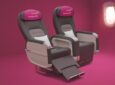


With modularity at the heart of its approach to aircraft seat design, Unum Aircraft Seating has carried over key elements of its Unum One outward-facing herringbone to its new 21.5″-wide Unum Two forward-facing offset staggered lie-flat seat, which was unveiled for the first time at this year’s Aircraft Interiors Expo (AIX) in Hamburg.
Pointing at the Boeing 787-optimized Unum One seat on the firm’s stand at AIX, founder and CEO Chris Brady noted that “the dentist chair part of the seat” — Unum’s patented Scimitar mechanism which delivers Zero-G recline angles — plus the table and suite door mechanisms have been incorporated into the cabin-ready Unum Two for widebodies, but “in a different shape.”
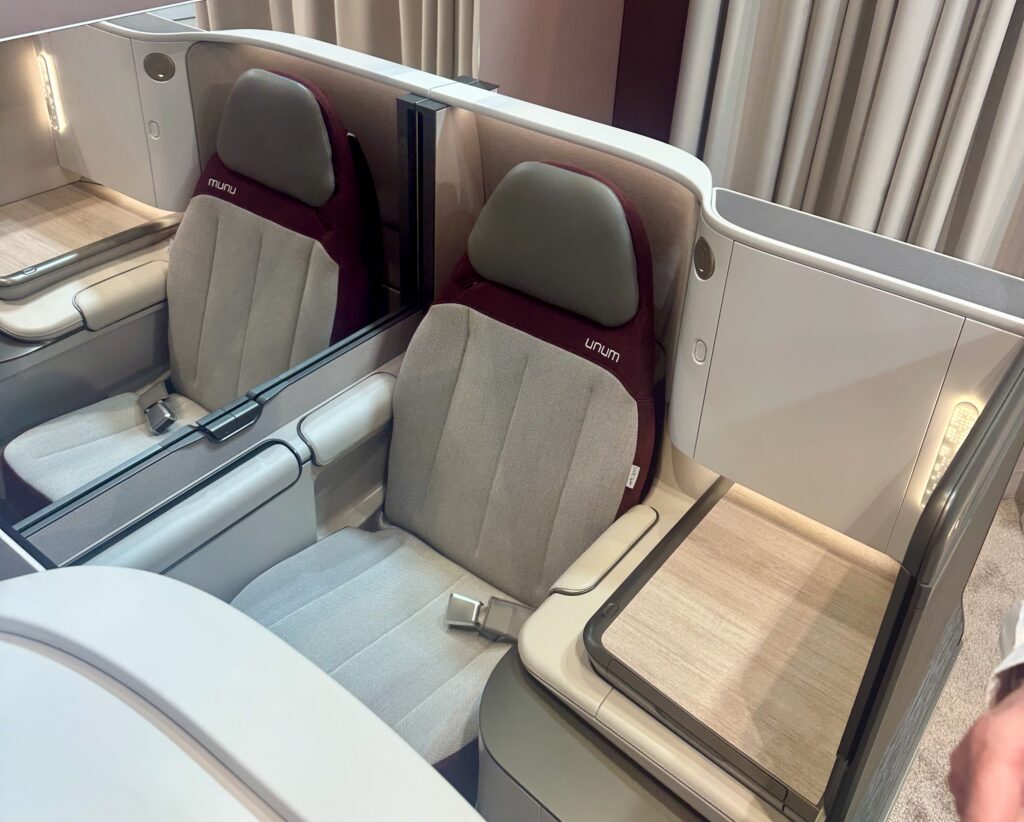
An Airbus A350-optimized version of Unum Two was displayed on Unum’s stand at AIX
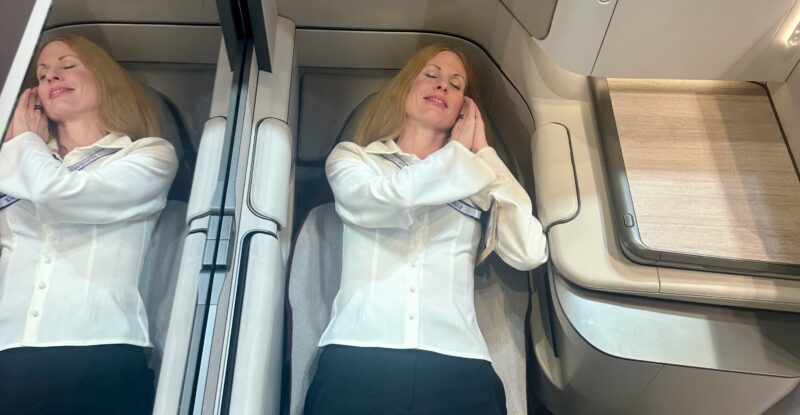
Your author confesses to being a huge fan of the Zero-G (zero-gravity) position, so I quickly tested what the challenger premium seatmaker calls its “comfort hero” after sliding into Unum Two on its stand. It was a moment of sheer bliss as the leg strain I felt from hours of sprinting across the show floor quickly dissipated.
I’m certainly not the only fan. “The best comment must always be from the customer. When we launched the Scimitar mechanism back at AIX 2022 [for Unum One], a leading airline said it was the best seat kinematic at the show. Since then, we have made further refinements on comfort and seat belt placement as we have successfully navigated our way through certification,” Brady said.
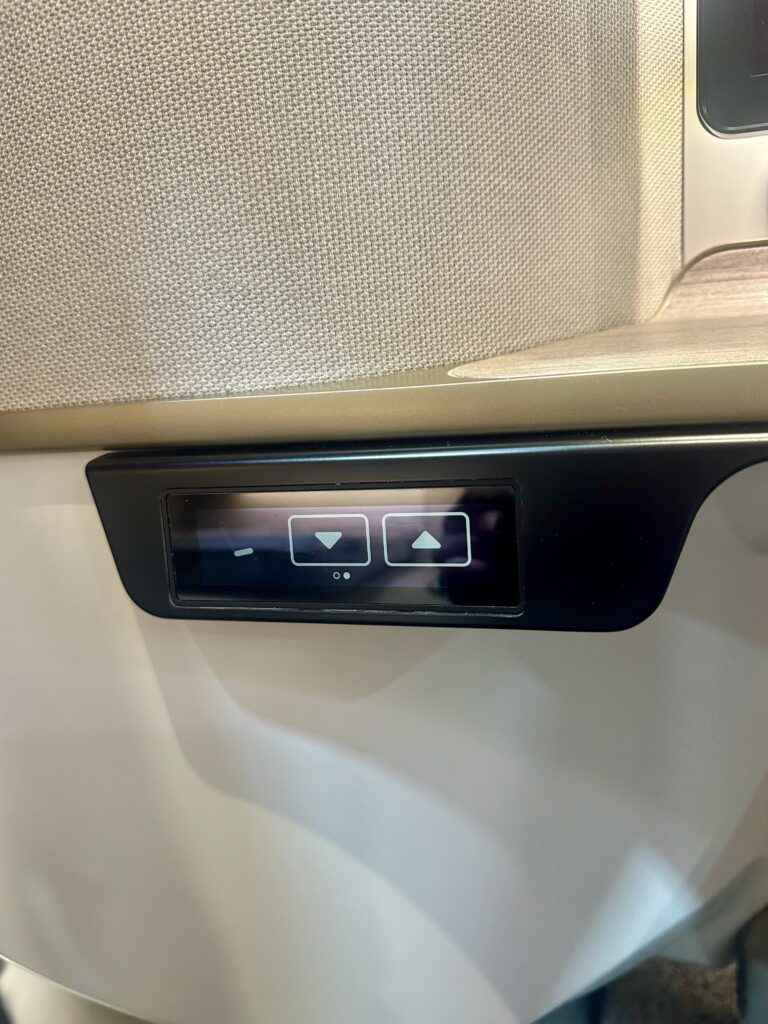
It is perhaps unsurprising, then, to learn that the Scimitar mechanism has not only been incorporated into Unum Two but will be a core feature of any premium seat developed by Unum in the future. In a follow-on interview with Brady, the Unum chief noted that the system “offers infinite adjustability and a consistent experience across aircraft fleets — both widebody and single-aisle — and business-class seat families.”
But there are other advantages to using it in Unum Two beyond the pleasing passenger experience. “Don’t forget that having this core element consistent across all products brings supply chain benefits for us, and spares holding benefits for our customers,” Brady said.
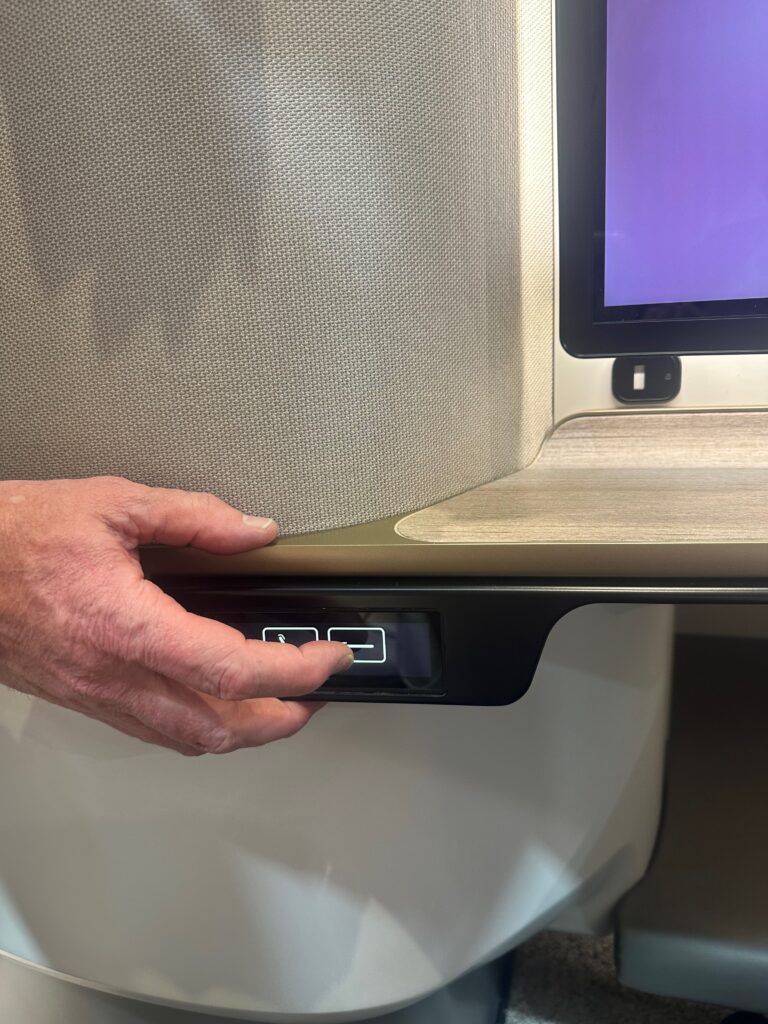
Another standout feature of the direct-aisle-access Unum Two lie-flat is its sizable, full-height footwell, which is less commonly seen in staggered seats. We asked how it was achieved.
“Overall, it is a result of following our core design philosophies of putting the passenger first and recognising that space equals comfort. The more room passengers have, the more comfortable they feel,” Brady explained.
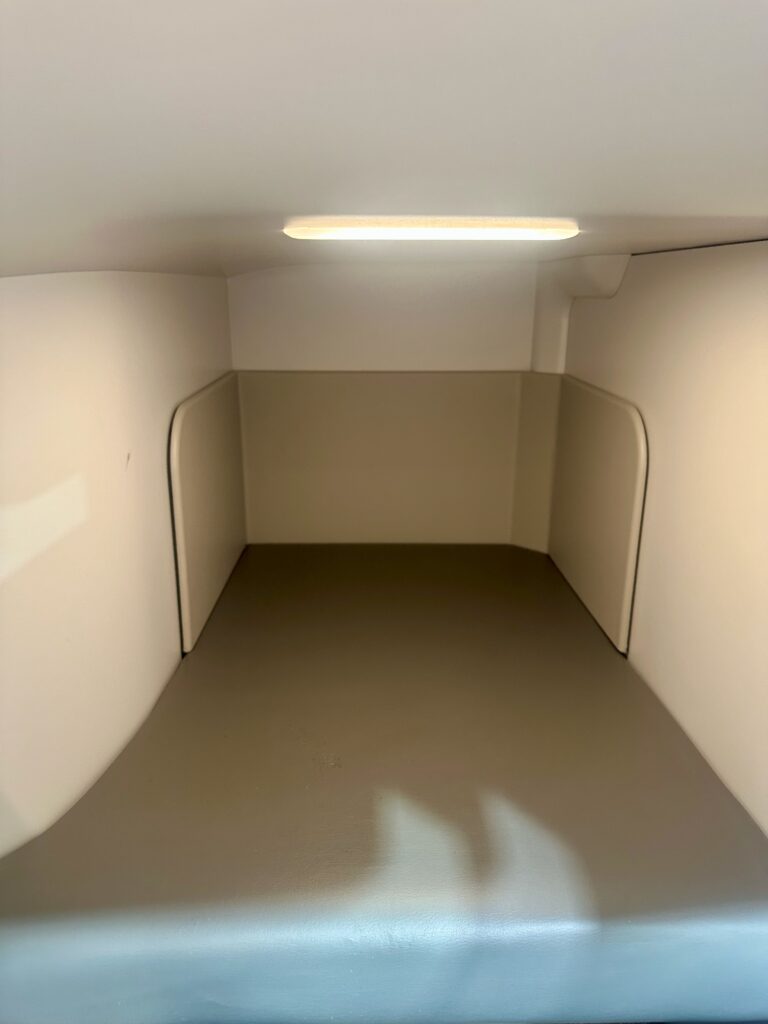
The single shell monocoque composite design philosophy embraced by Unum — in which structural loads are supported by the external skin — also plays a key role in helping to create space, Brady said, “but so does careful consideration of monitor placement, table placement and console design.”
The firm is, after all, keenly aware of the importance of IFE and connectivity to passengers, and believes the challenge for seatmakers is not simply how to integrate them, but how to design seating architecture that accommodates them from the outset.
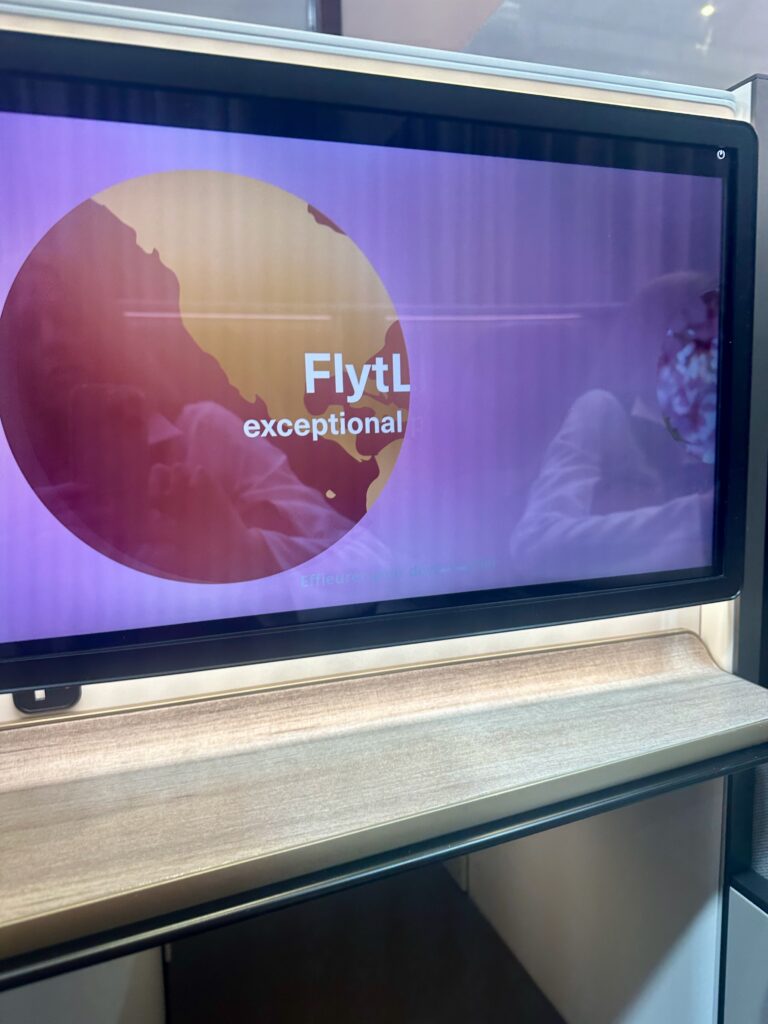
While the shell delivers weight benefits, and ergo fuel and CO2 savings, it also serves as the control surface for all the passenger-facing elements, such as the trim panels or console.
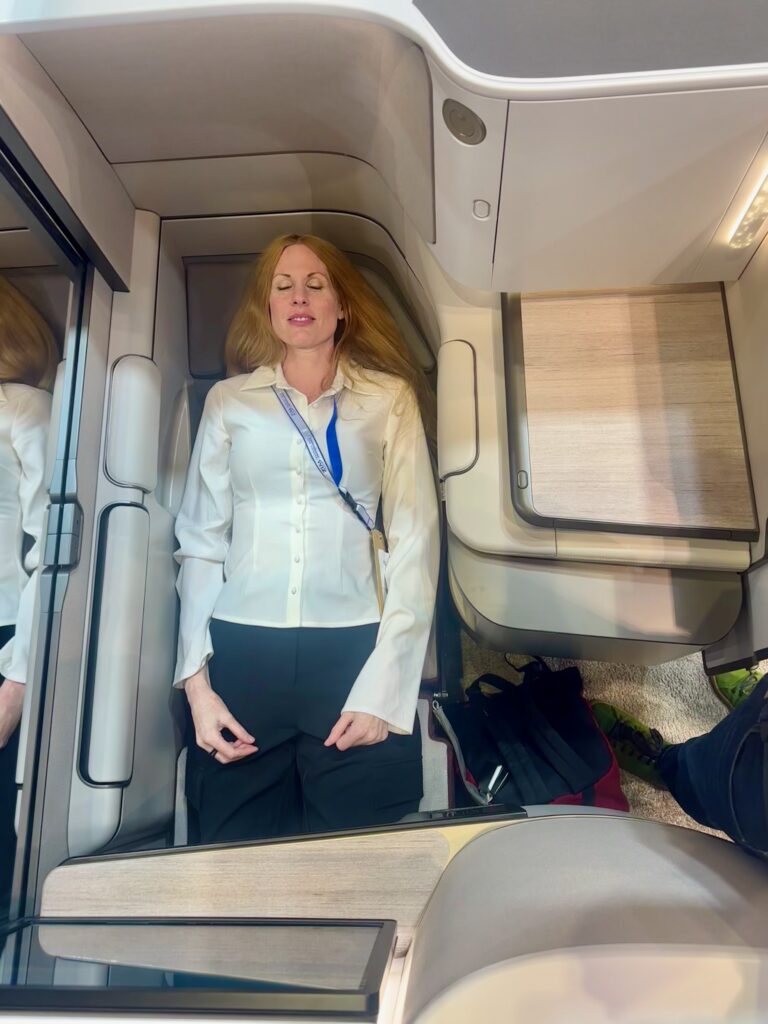
“Close control of tolerances in the monocoque enables us to deliver the fine details, such as controlled split lines. That’s the type of refinement that airlines are looking for in business class,” Brady explained.
“All of our products share the same approach to maintainability. All the key mechanisms, such as the table, are Line-Replaceable Units (LRUs) and can be changed on wing on turnaround in minutes.” Indeed, at AIX, Unum demonstrated a table replacement in just 90 seconds.

The show was Unum’s busiest AIX ever, Brady revealed to Runway Girl Network. “There was a lot of focus on Unum One, which will deliver for the first time later this year” — launch customers include TAAG’s 787s and Wamos’ A330s — plus “a lot of interest in Unum One for single aisle.” In the near term, Unum One “will be the seat where we can offer the shortest lead time.”
He continued, “On Unum Two, it was great to receive feedback from potential customers on the latest iteration we exhibited, and since April, we have been dealing with a stream of enquiries. Watch this space!”
Though Unum demonstrated Unum Two in its A350 layout at AIX, the platform adapts well to the other large widebodies. “At the end of the day, we will develop what customers ask us to, and regardless of what aircraft type you operate, you always have the ‘comfort hero’ of the Scimitar experience in every variant,” Brady confided.
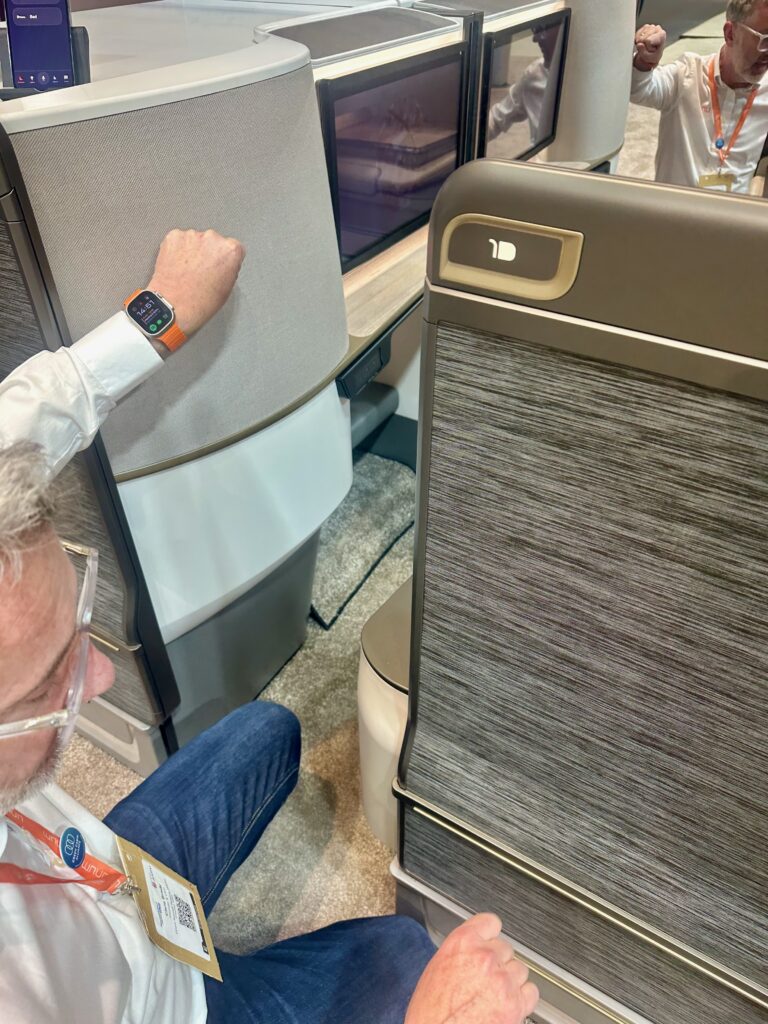
There are obviously some choke points in interiors and the wider supply chain right now, and several premium seating programs have faced certification delays as regulators enhance their scrutiny. We asked: are there any key features making certification a slightly more seamless process for Unum Two than, say, some of the more complex seats on the market?
“Our certification team would say that the process is never straightforward! However, with the current seat belt/neck contact interpretation issues affecting manufacturers across the board, it would be fair to say that certifying a forward-facing seat is typically more straightforward than certifying a herringbone layout,” Brady replied.
“At the same time, with our wealth of certification experience within the Unum team, we are an active participant in the SAE Committee, which works with EASA to remove some certification bottlenecks.”
Unum Two is now available for orders.
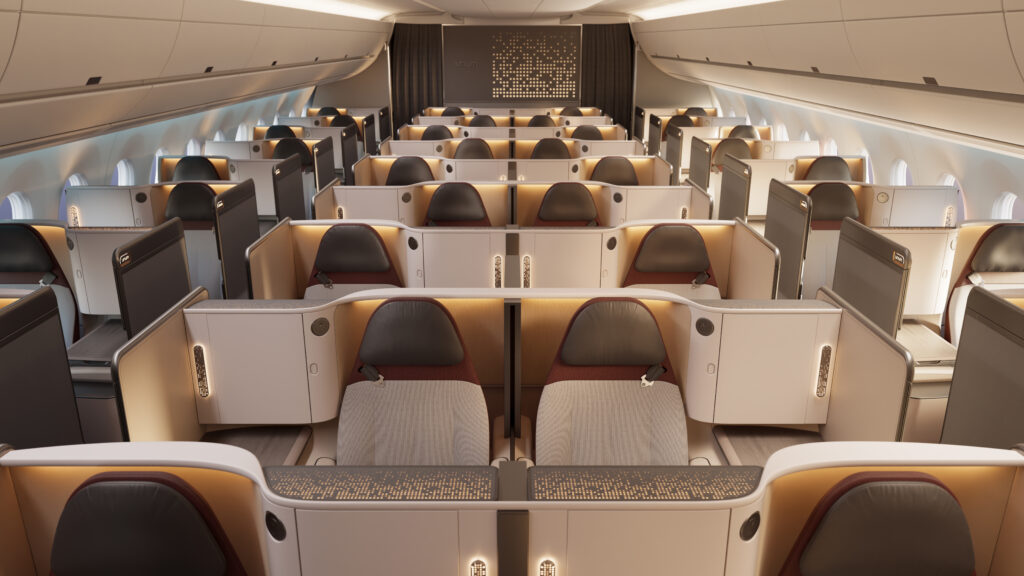
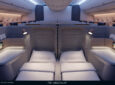
The alternating layout offers up to six different variations of seat, including the couples-friendly ‘honeymoon’ center pair arrangement. Image: Unum Aircraft Seating