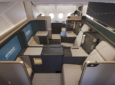


Executives at seatback IFE specialist RAVE Aerospace have for many years talked to airlines about bringing more content, higher resolutions and larger screens to the aircraft cabin. The Brea, California-based firm’s portfolio certainly reflects that evolution; its 4K miniLED HDR 10+ Liquid Crystal Displays can now be sized up to 32 inches, and its latest embedded IFE systems feature massive cloud networked storage and powerful processing.
But with hyper personalization and immersive digital experiences representing the new frontier for engagement — and as airlines seek to set new standards in luxury with opulent first class and front-row, business-plus suites — RAVE Aerospace sees an opportunity to reimagine the premium inflight experience. And a massive wraparound screen is part of that reimagining.
“We think that airlines can do more than just transport passengers from place to place physically. We think they can transport them someplace virtually,” Louis Poupard, RAVE’s staff product manager said at the Aircraft Interiors Expo in Hamburg, where, together with seatmaker Safran Seats, RAVE introduced the premium suite demonstrator Origin.
Made of micro-LED bendable panels, the Immersive Display Concept from RAVE that is at the core of Origin is complemented by advanced seating technology and Euphony headset-free audio from Safran Seats.
RAVE and Safran Seats are not alone in exploring how a deeply immersive IFE and engagement experience — as achieved with vast screen real estate and compelling content in a premium suite — can transform the passenger experience.
Origin’s reveal comes two years after Collins Aerospace and Panasonic Avionics at AIX 2024 unveiled MAYA, their next-gen business class seat concept featuring a 45” curved ultra-wide OLED screen from Panasonic. And it arrived on this year’s AIX show floor a year after Airbus first teased its ultra-luxe First Class Experience, with wraparound screens.

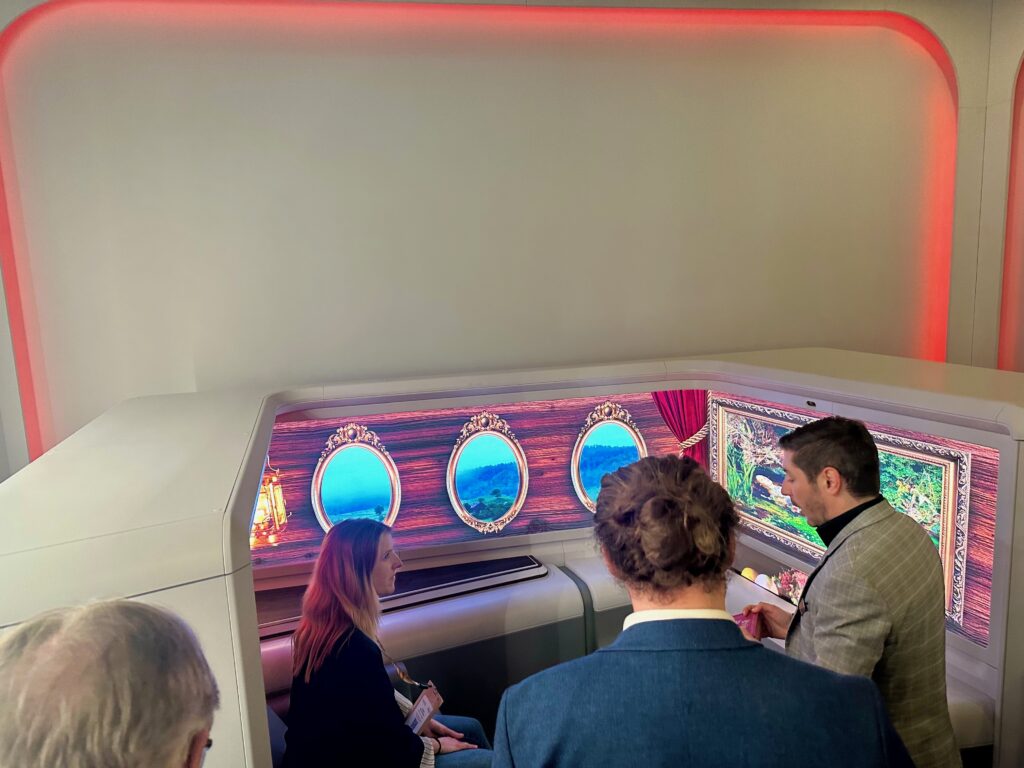
In terms of screen footprint, RAVE used the equivalent of 17.5ft in the semi-enclosed Safran Seats suite — including real estate above the passenger’s head — to transport attendees to another time or place.
“We think that the future of flight and concepts are really about something more, something about curating experiences,” Poupard said.
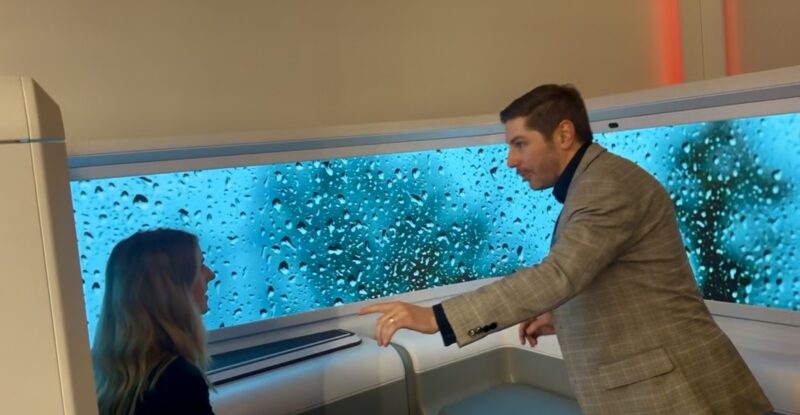
“We think that you can start looking at pairing your seat with wellness content, and maybe re-theming your seat based on the time of the year or the time of the day. We can look at even showing you someplace different based on the weather, maybe someplace a little more relaxing.”
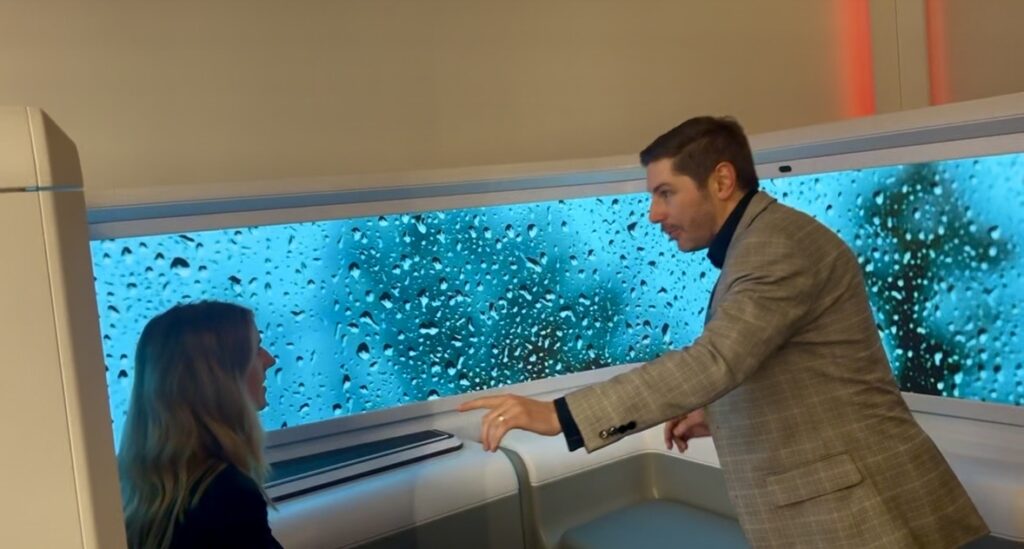 Perhaps the passenger loves to immerse in a book when flying. The Immersive Display Concept can set the scene with a perfectly matched aesthetic (RAVE demonstrated this pairing at the show by transporting your author to Jane Austen’s Regency England to pair with her novel Pride and Prejudice.)
Curated content can also be paired with food and beverages. “So, let’s say that you ordered a coffee, I can bring you a coffee and I can let you have your coffee in a [simulated] café,” noted Poupard, or perhaps you enjoy a cocktail and, as the cabin crew member hands it to you, maybe you’re “in the club in the RAVE rave.”
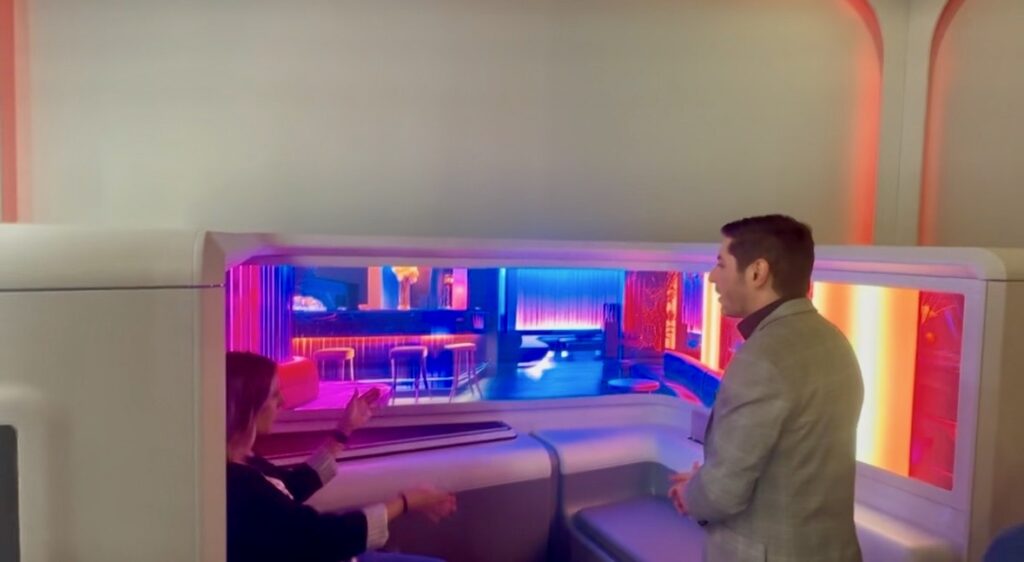
In a particularly compelling application, especially given the current fervor around soccer, Poupard demonstrated how the passenger can welcome a friend into their suite to watch a game – while being transported to a stadium surrounded by fans.
By enabling passengers to escape from reality beyond the aircraft, airlines can create “sticky, really cohesive experiences,” said the RAVE executive, confirming to RGN that the firm has “already filed a few patents” around this IFE/seat integration project.
Meanwhile, the Panasonic curved screen portion of MAYA, dubbed Astrova Curve, is expected to debut in first class. And Airbus has entered the development stage of its First Class Experience.
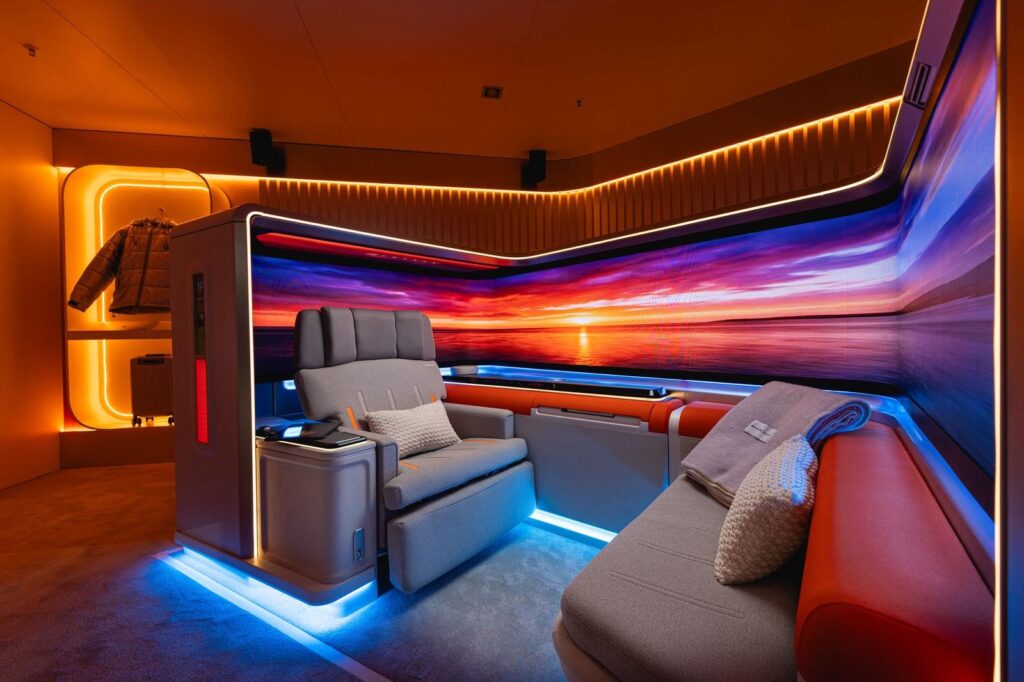
Origin’s wraparound, U-shaped micro-LED screen enables passengers to enjoy a fully controllable and adaptable visual environment, creating dynamic moods and ambiances. Image: RAVE Aerospace