
 When I was a young girl, I made a promise to myself that I would live my life with no regrets and make a conscious choice to embrace happiness.
While I did not know what life had in store for me, I knew I wanted to love my career and make a meaningful social impact through it.
Over 20 years later, I believe I have kept that promise to myself; I am building my life around all the things I loved as a child, including my love of planes.
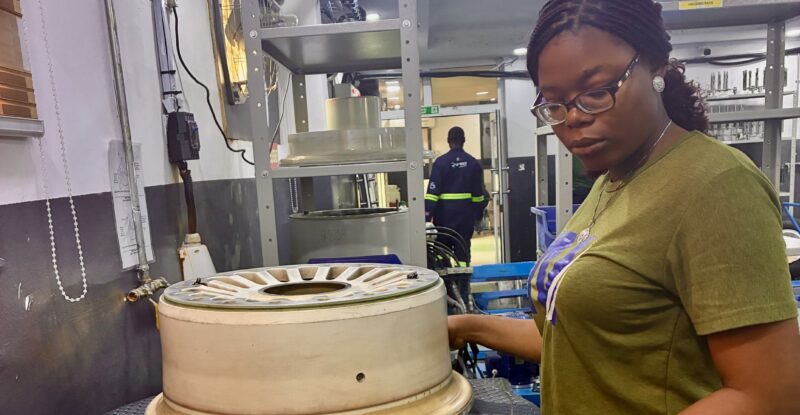
Today, I work in aerospace non-destructive testing (NDT) for an airline. My job is to inspect aircraft structures and components on the ground to confirm their structural integrity and continued airworthiness.
As a Mechanical Engineering graduate with a strong interest in propulsion, I never imagined that I would find myself specialising in aerospace NDT. But a senior female NDT Inspector convinced me to pursue a career in this field. I’m glad I did.
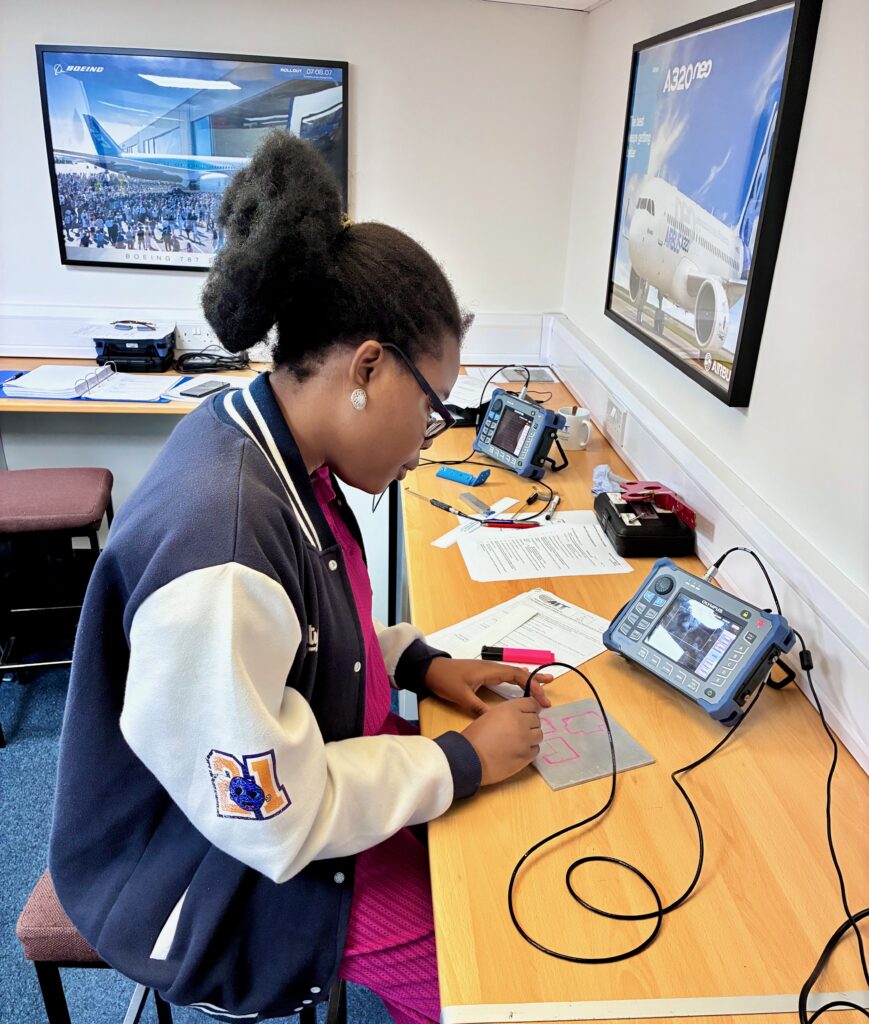
Within six months on the job, I was scheduled for an official training at the UK’s Aerospace Inspection Training facility. Earlier this year, I completed all the required coursework and examinations for EN4179/NAS410 Level II qualification in aerospace NDT. I still need to complete the experience hours for certification, but I have completed the qualification requirements.
It is rewarding to know that my work helps to ensure an aircraft is safe to fly.
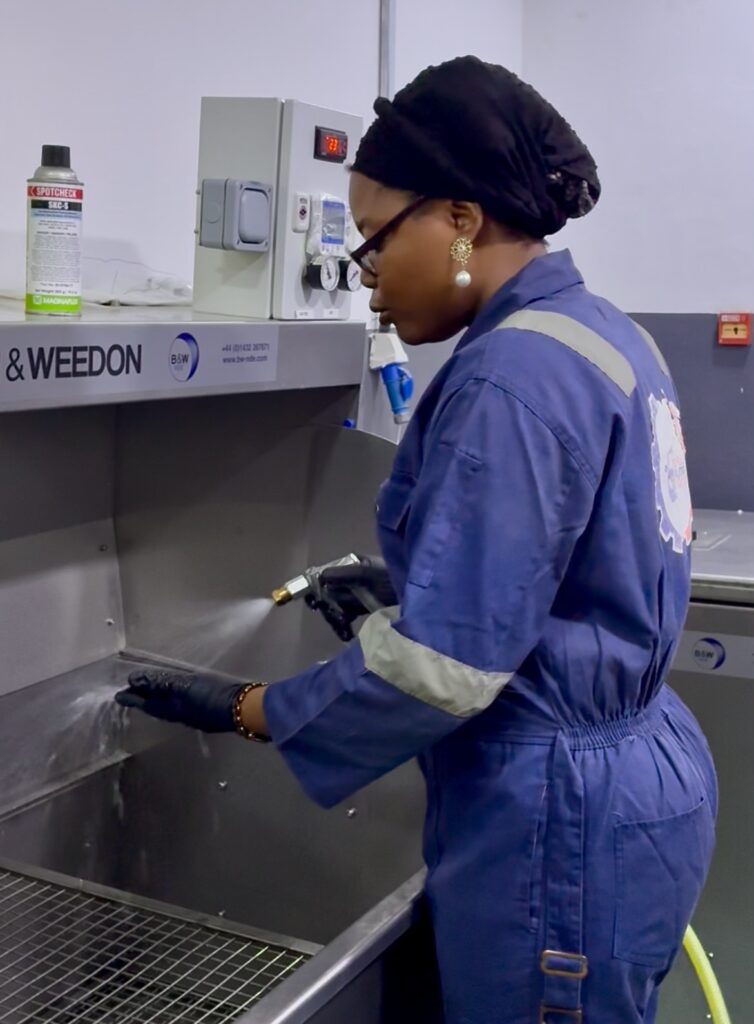
Depending on the day, I perform different inspections on aircraft, including liquid penetrant testing (PT), which is used to find surface-breaking defects; magnetic particle testing (MT) to discover any surface or shallow subsurface flaws; and eddy current testing (ET) to inspect electrically conductive materials for flaws, cracks, and structural changes without damaging them.
I receive a daily briefing where priorities are discussed and tasks assigned. Before each inspection, I receive the relevant task card and applicable NDT procedures for the component. Each NDT method requires technical expertise, accurate documentation and close attention to detail. Of the three methods I am trained and qualified in, PT is my favourite method and I always enjoy the long but rewarding process of obtaining results.
Of course, my job is not just about performing inspections. Technical documentation forms a big part of aircraft maintenance and the aerospace industry in general. This might be one of the least known facts about the industry and indeed, it was a big surprise to me when I began my career in 2021 as an intern in an airline’s Technical Library department.
Within four months, I was given the opportunity to carry out aircraft maintenance tasks on Boeing 737 and Bombardier Q400 aircraft. That’s when I understood the importance of record keeping in maintenance.
In candor, the first week was more difficult than I expected it would be; the job requires physical strength. I also had to understand how to read maintenance manuals, use tools and fill out technical documents. Getting the opportunity to fly as a flight engineer in-training was the highlight of my internship.

These experiences made a lasting impact on my career. They also inspired me to establish my own aerospace engineering mentorship initiative in Nigeria to help close the educational gap I identified during my internship.
Beyond the hangar, I also love to write about aviation, and pen articles for international aerospace news outlets and magazines.
I enjoy sharing technical knowledge and making it accessible to aviators and non-aviators alike.
Looking back, I realize that I’ve found my purpose and am making an impact in industry. And for me, that is the meaning of ‘leaning into aviation.’

Related Articles:
- Girls in Aviation Day drives global effort to change the status quo
- ICAO in push to advance women’s empowerment in aviation
- How Maseka Kithinji is making aviation accessible to girls in Africa
- The unique aviation career of Captain Ibironke Rotimi-Olajide
- Meet Aanuoluwapo ‘Annie’ Ojewunmi, the Airplane Girl
All images courtesy of Annie Ojewunmi