
 When it comes to airline partnerships, American Airlines and British Airways are about as tight as it gets. While I typically fly American for its generous change and cancellation policies, a combination of convenient flight timings and curiosity led me to split a trip between American and BA on an itinerary that would see me fly from New York JFK to London Heathrow and back to Los Angeles.
First up was AA142, a day flight that I have written about before as being quite possibly my favorite in the world. I have flown it many times in the past but this was the first time it would be operated by the mighty Boeing 777-300ER instead of the smaller, older 777-200ER. That might seem like a lot of lift for a transatlantic flight that most passengers don’t even consider, but we went out completely full.
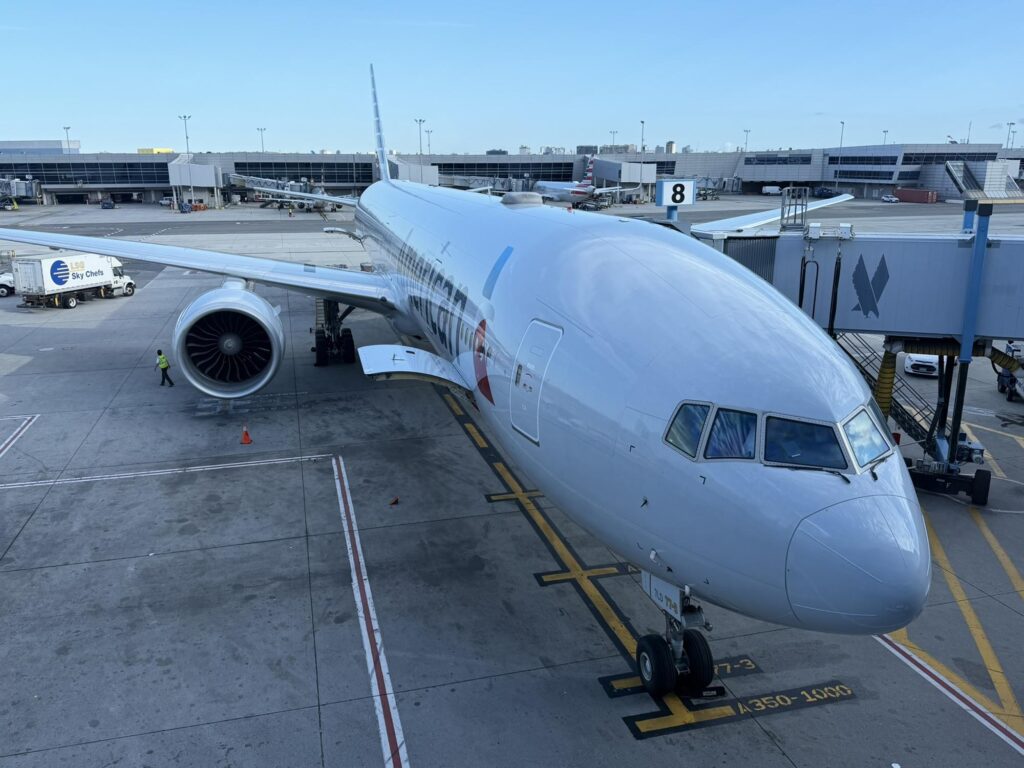
American had just put its first fully refurbished 777-300ER into service the prior week, and that aircraft operated AA142 one day before my flight. I was so close!
Designed before the merger with US Airways, this 777-300ER didn’t originally come equipped with Premium Economy. Instead, the cabin was added later in the twinjet’s life — and the afterthought nature of that decision really shows.
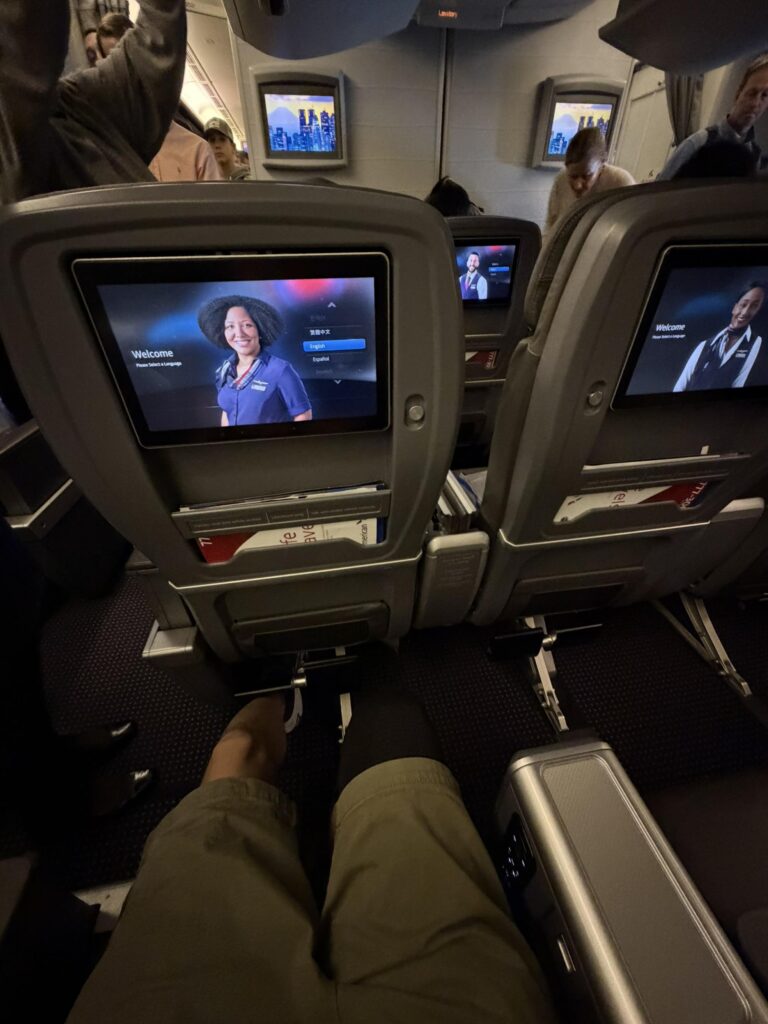
The first row is squeezed in just behind exit doors and doesn’t even include windows on either side of the aircraft. Additionally, the proximity to the lavatories is quite disruptive. In short, first row seats are really undesirable.
Row two is the sweet spot for me. While these aircraft aren’t old by any means, the interiors are drab and uninspired. That all changes as American sends its 777-300ERs into a full refurbishment befitting a Flagship aircraft, but until then, they just feel a lot older than they really are.
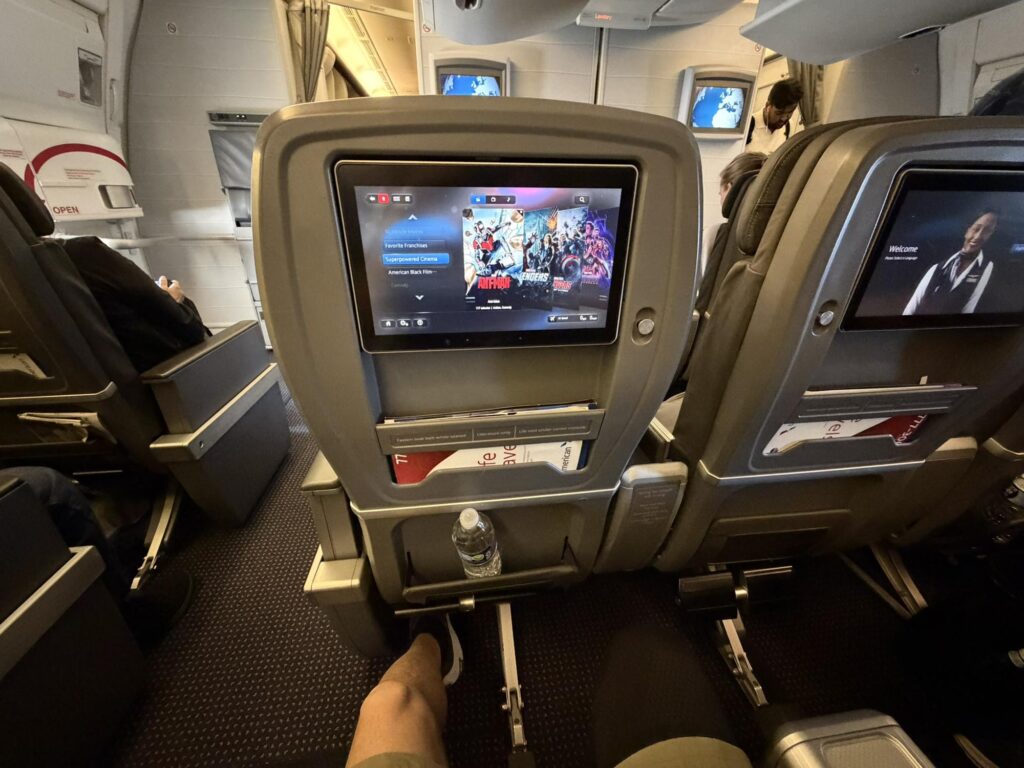
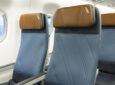
These Premium Economy seats were American’s first shot at the product nearly a decade ago and much like the rest of the aircraft, they are starting to show their age. My seat cushion was worn down to the point of being slightly uncomfortable.
The cabin is grey and bathed in a weirdly yellow tinted light, making everything look even older than it really is.
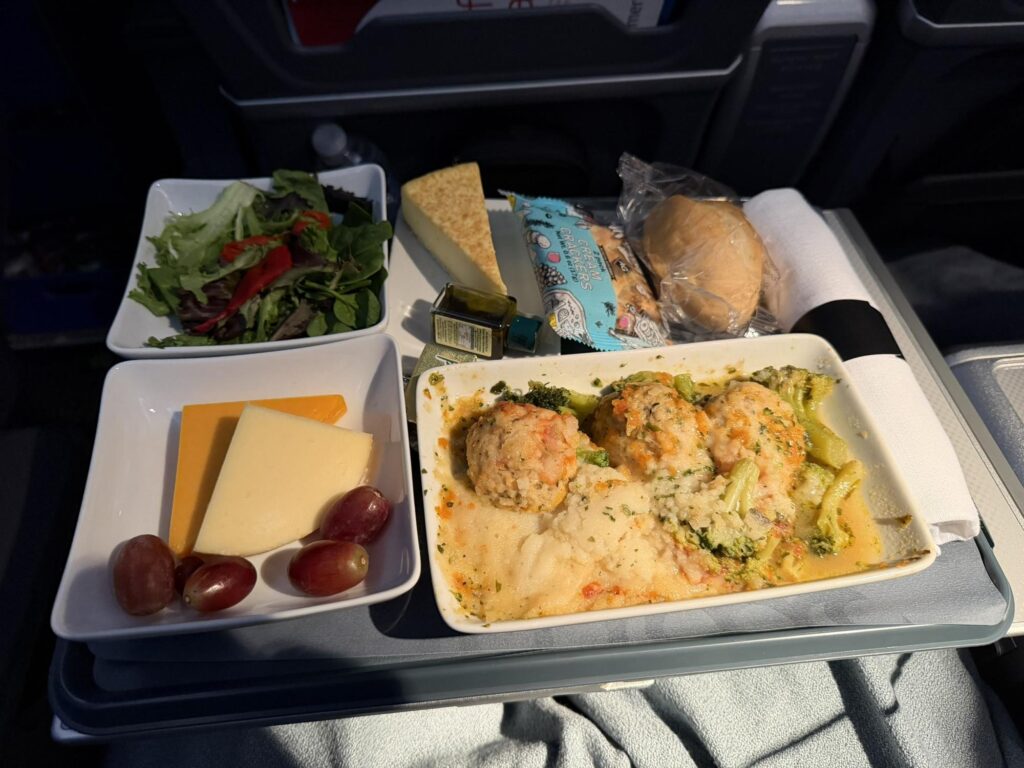
Outside of the hard product, I generally find American’s catering out of New York to be better than expected in Premium Economy. The chicken meatball dish was certainly not a looker, but it was a nicely complete meal.
The pre-arrival meal was a tasty little roast beef sandwich with orzo and a very healthy portion of fruit.
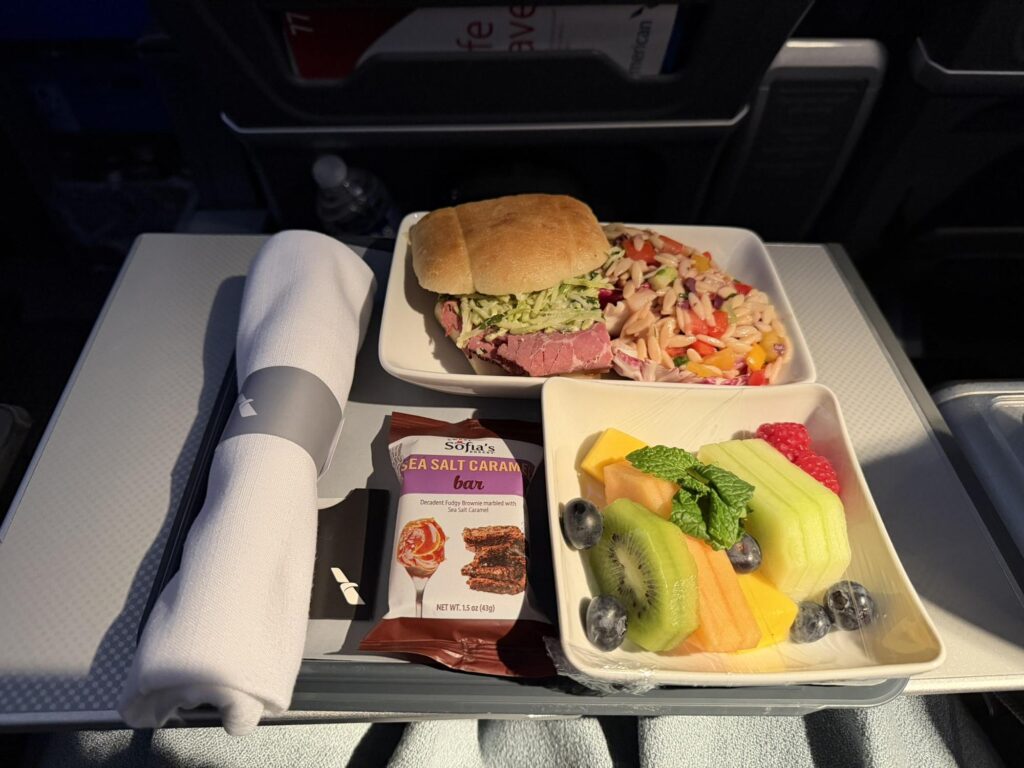
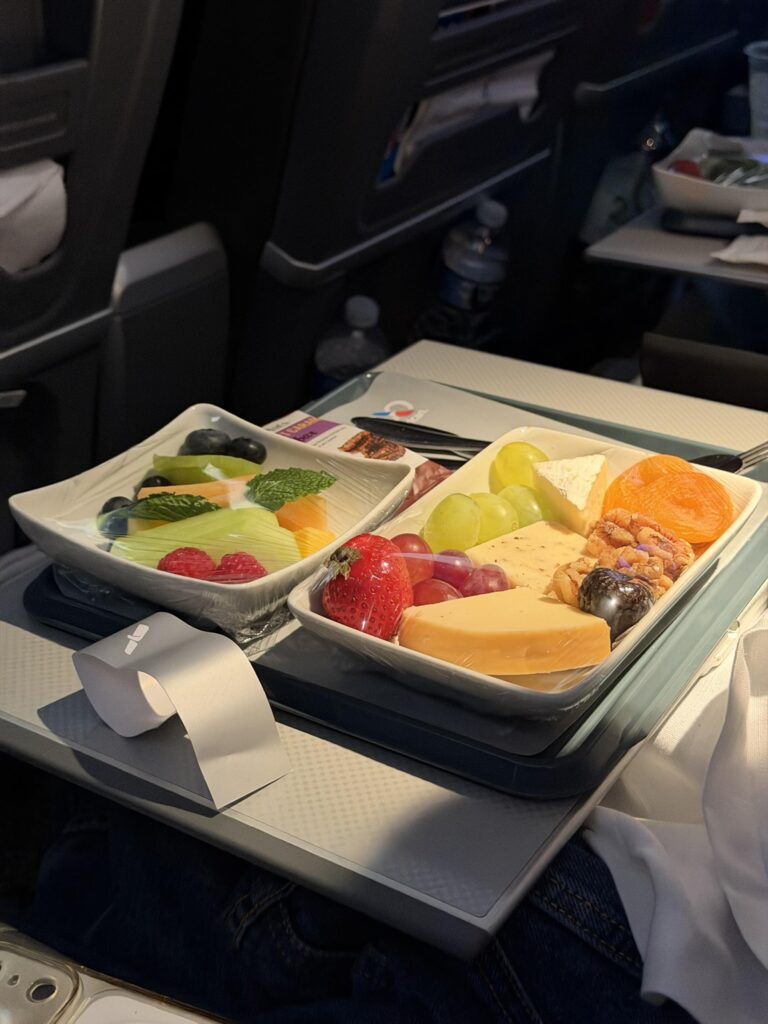
It was a little odd that the other meal choice was a fruit and cheese plate, which also came with the same side of fruit. Both looked great, though.
American’s legacy Panasonic Avionics Ku-band satellite-supported inflight connectivity was overly expensive and, in what has become a typical experience for me, it barely worked.
The U.S. major is swapping out Panasonic for Viasat Ka-band Wi-Fi as these aircraft are refurbished, but it will eventually move again to Starlink, as part of a wider plan to bring the Ku-band Low Earth Orbit (LEO) satcom service to its mainline fleet.
Panasonic refunded my $35 without question after I wrote in to complain about the service.

For my return trip to the United States, I would be heading to Los Angeles and opted to shift to fellow oneworld alliance member British Airways for a better timed flight.
Also operated by a Boeing 777-300ER, this flight would present an interesting opportunity to compare the two airlines, and test BA’s World Traveller Plus service on the longer leg.
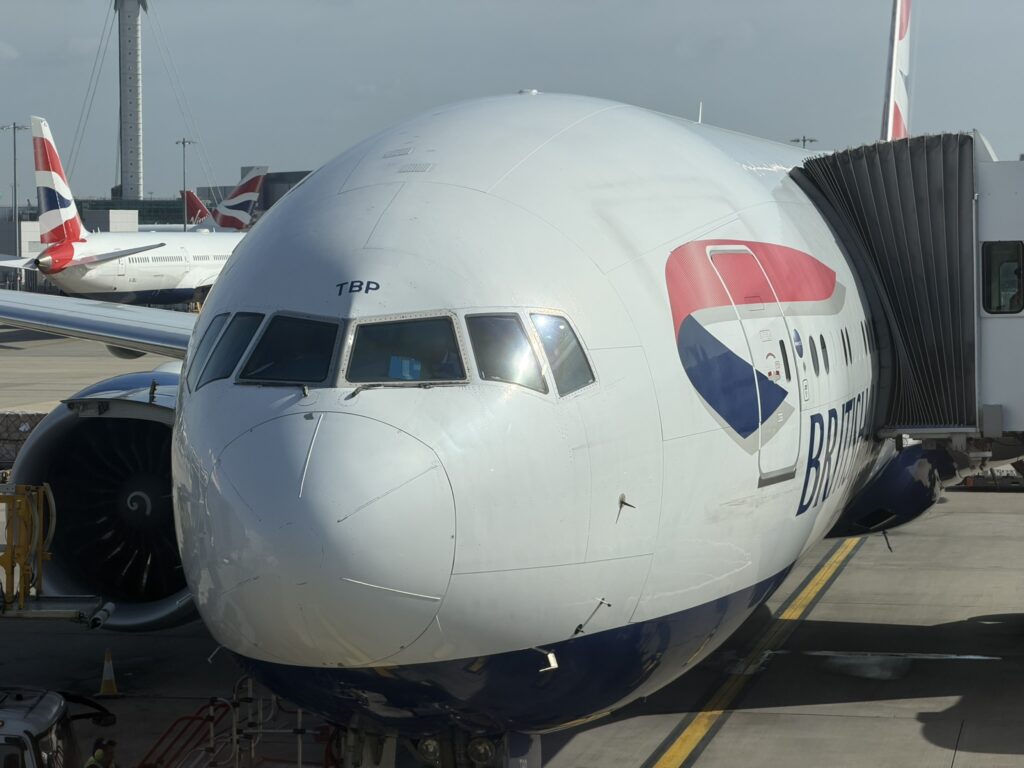
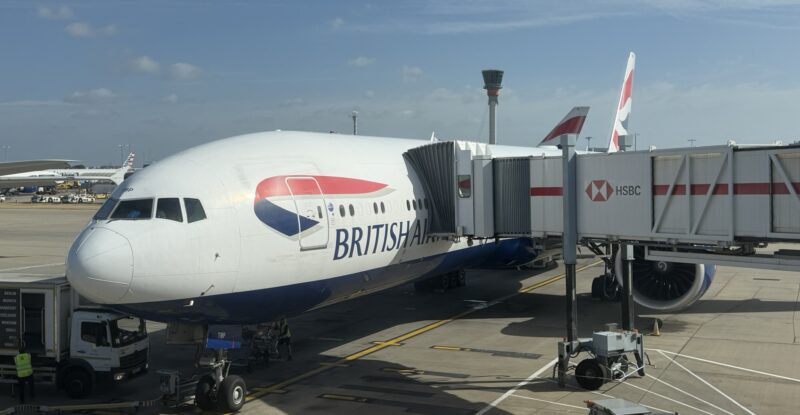
I ended up on what turned out to be British Airways’ newest 777-300ER, which was delivered in December 2020.
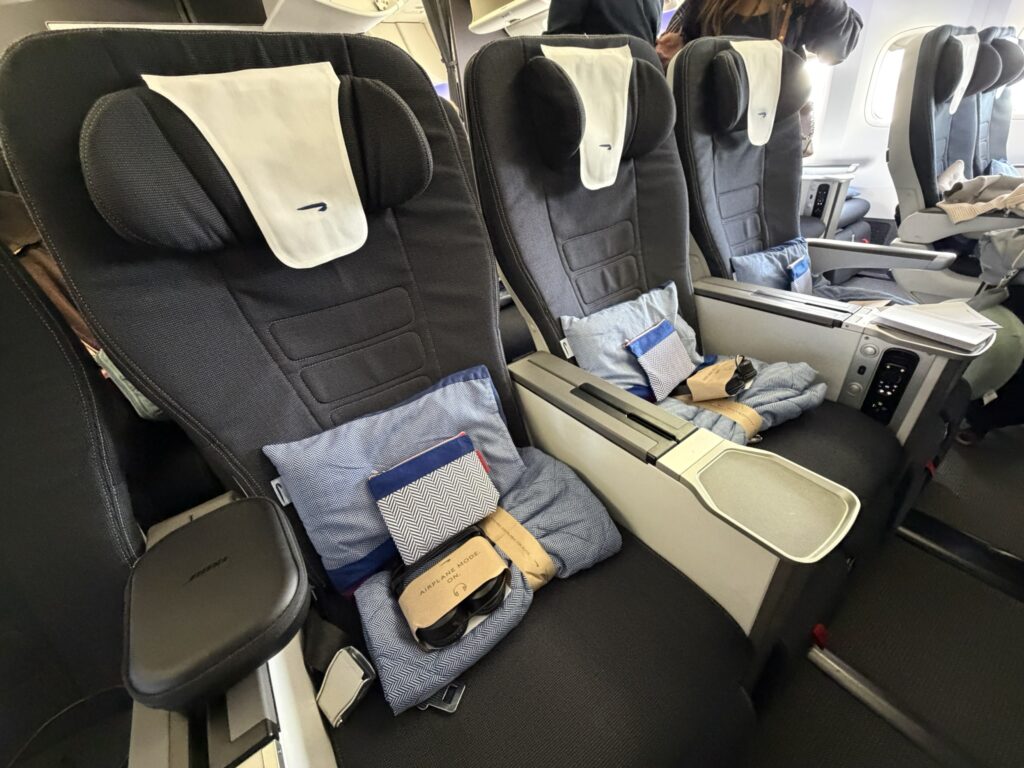
On entering, the cabin immediately felt more premium and updated over American. Instead of drab yellow lighting and grey leather seats, blue accent lighting really made the cabin and seats appear more welcoming.
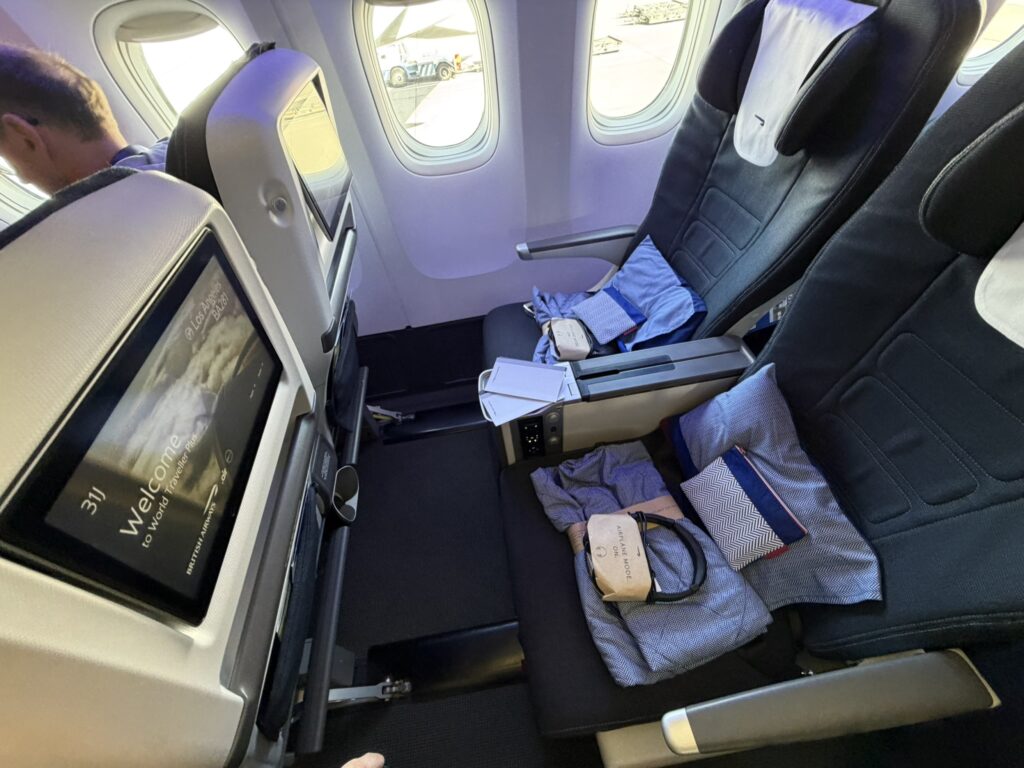
British Airways’ seats are more fully featured and complete, feeling more like a true Premium Economy product. For example, instead of just a flimsy footrest, a full calf rest can be deployed.
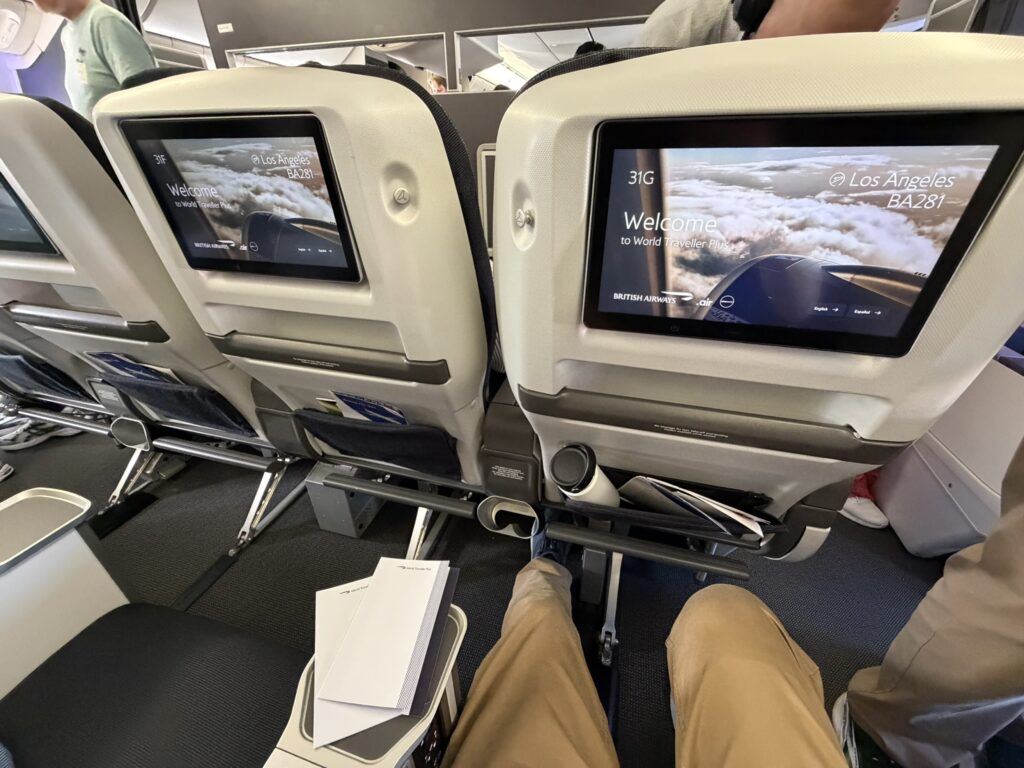
Water bottle holders are not just handy; for me, they are a necessity for this cabin class. However, they were too small for my personal bottle.
The headrest looked like it could actually support my napping needs on this 11-plus hour flight. It was just better in every way.
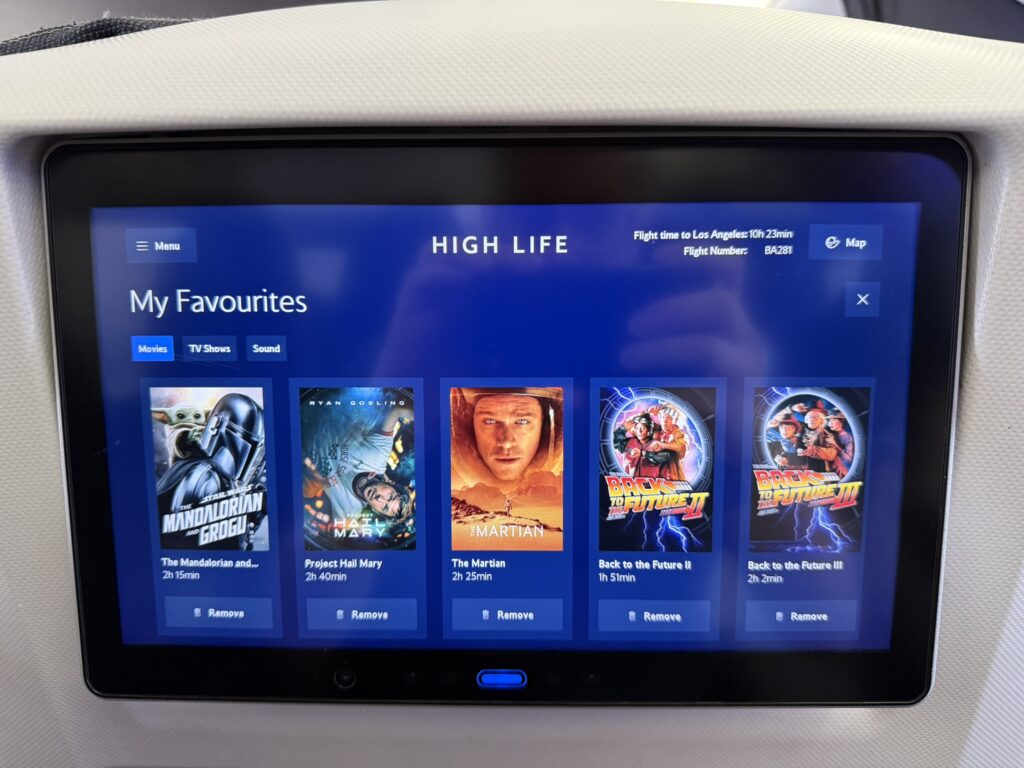
While this aircraft didn’t have the latest generation inflight entertainment system installed, it also felt like a big leap over American’s 777-300ER (pre-refurbishment). The user interface of the Panasonic Avionics IFE system was responsive and there was more than enough content to keep me entertained.
Outside of periods where it dropped out, the Intelsat-now-SES 2Ku Wi-Fi was was solid enough to watch a live stream of my own aircraft landing at LAX. Cool!

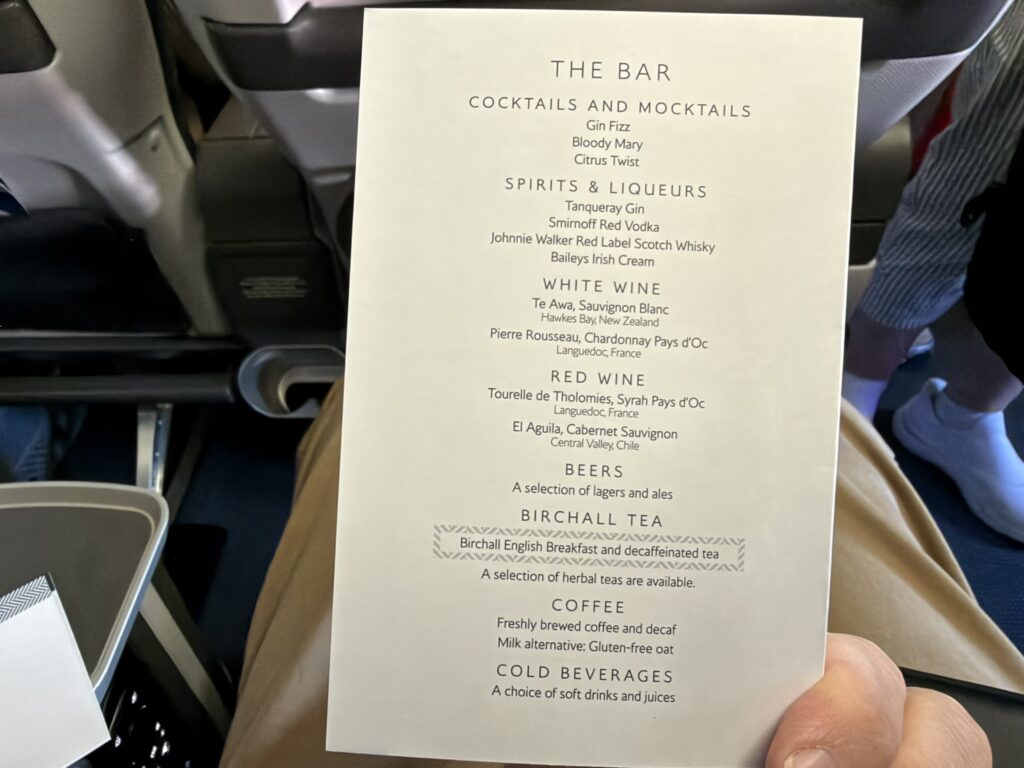
Printed menus outside of First and Business Class are increasingly becoming a thing of the past, but I still really like and appreciate this touch when available. It lets me study my choices instead of panic ordering in the moment.
I opted for the braised beef cheek for my main course. While not the most attractive dish, it was in fact quite tasty.
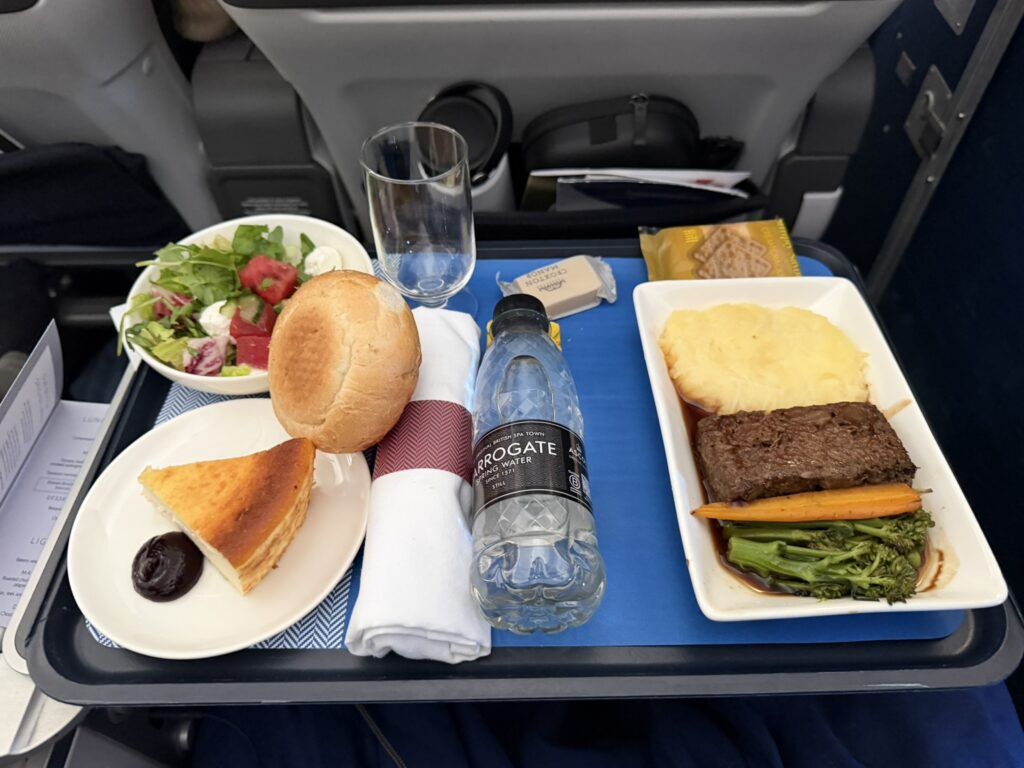
The pre-arrival meal was, thankfully, quite hearty and let me adjust to the major time difference better than if the meal was just a small snack.
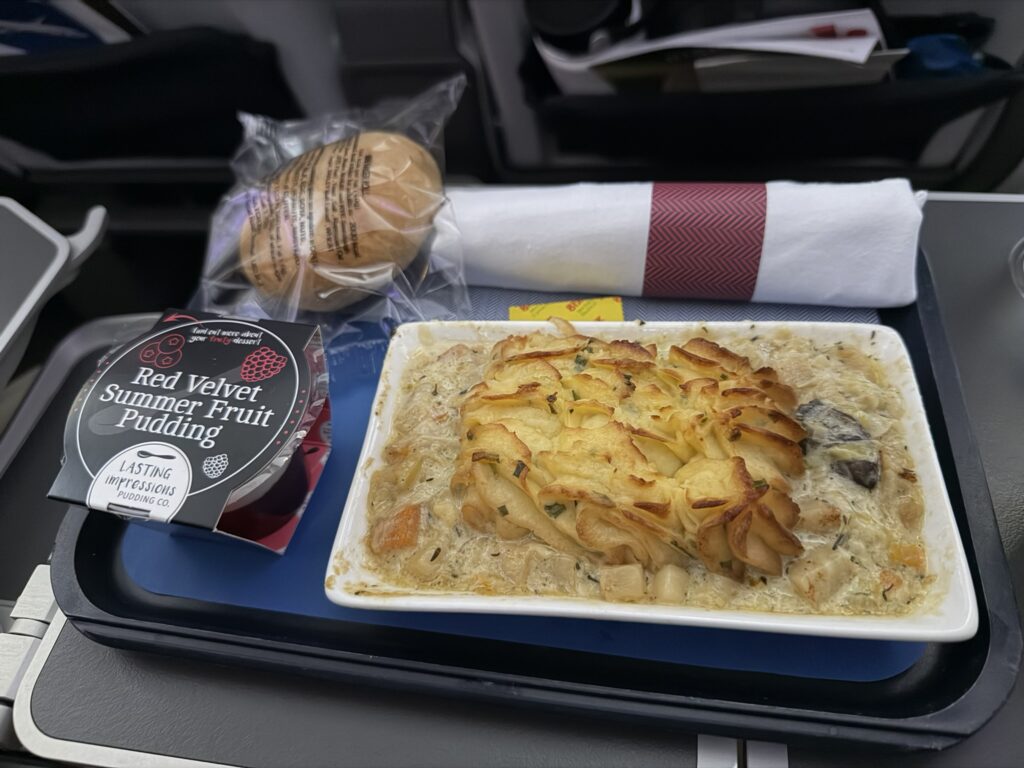
My experience on American, overall, was so typical I can barely distinguish this flight from previous flights in my mind.

My experience with British Airways, however, surprised me. It exceeded my expectations in just about every way.
Maybe that’s because I’m so used to flying on BA’s much (much!) older 777-200 aircraft and even the venerable 747-400 before the COVID pandemic, so it was great to finally get the chance to try a much more modern product.
Happily, as American refurbishes its 777-300ER fleet, the two partners will be much more closely aligned.
Related Articles:
- Inside American Airlines’ new 777-300ER Flagship widebody: Review
- Why American Flight AA142 might be my absolute favorite
- United Airlines’ marvelous app eases pain of connecting
- United Premium Plus aboard the 787: the pluses and minuses
- Blue Sky partnership benefits from uniform PaxEx at JetBlue, United
- British Airways goes super premium on A380 superjumbos
- American sets the scene for geek out on XLR — and at Cranky Dorkfest
All images credited to the author, Jason Rabinowitz