
 For the second time in my #AvGeek career, there’s a premium transcon arms race kicking off. The 2010s saw the introduction of a totally overhauled United p.s. service, American’s launch of the dedicated transcon Airbus A321T, and Delta’s entry into the ring with widebody aircraft.
The latter half of the 2020s saw this race restart. United has its A321 Coastliner, American has its A321XLR, and Delta is planning but is so far unable to launch its own premium A321 subfleet.
American was the first mover to get its latest and greatest Airbus narrowbody into service, and on a recent flight from Los Angeles to New York JFK, I decided to give it a go in the Main Cabin.
(You can check out Chris Sloan’s recent reviews of Flagship business and Premium Economy here on RGN.)
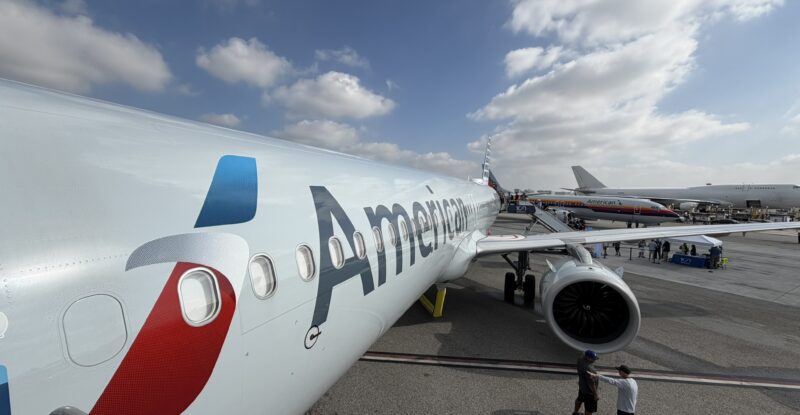
I was in Los Angeles to attend Cranky Dorkfest and to my surprise American had a couple of aircraft on static display, including the A321XLR.
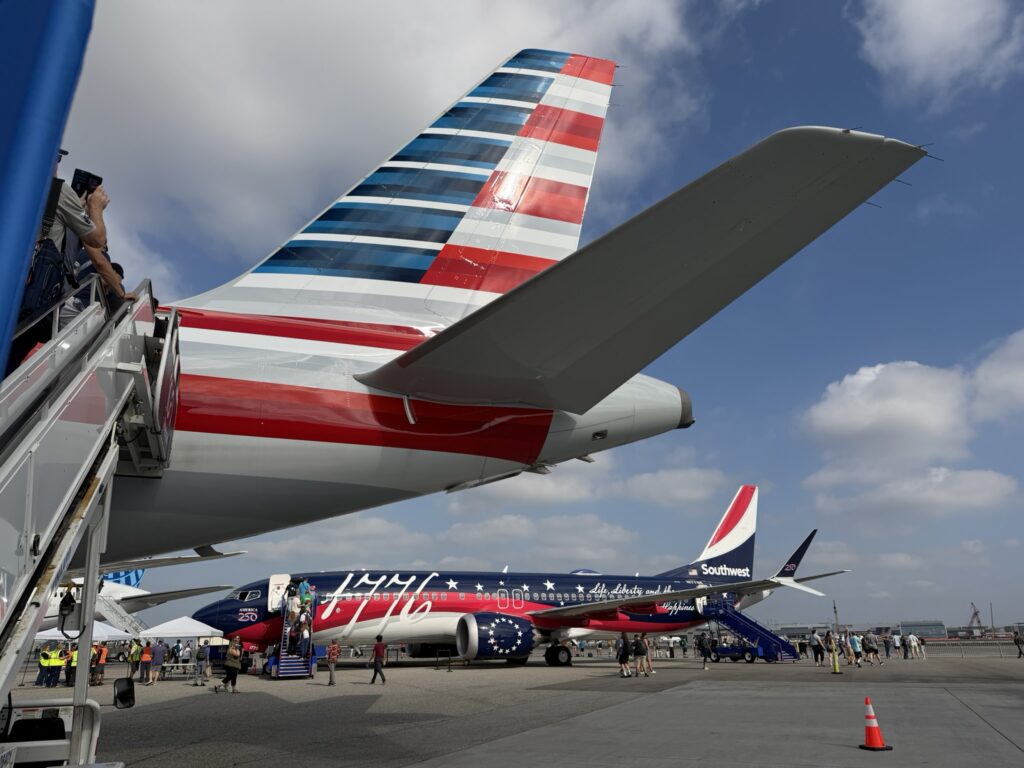
The U.S. major is clearly quite proud of the long-haul narrowbody, going as far as to print mock boarding passes to welcome Cranky Dorkfest attendees.
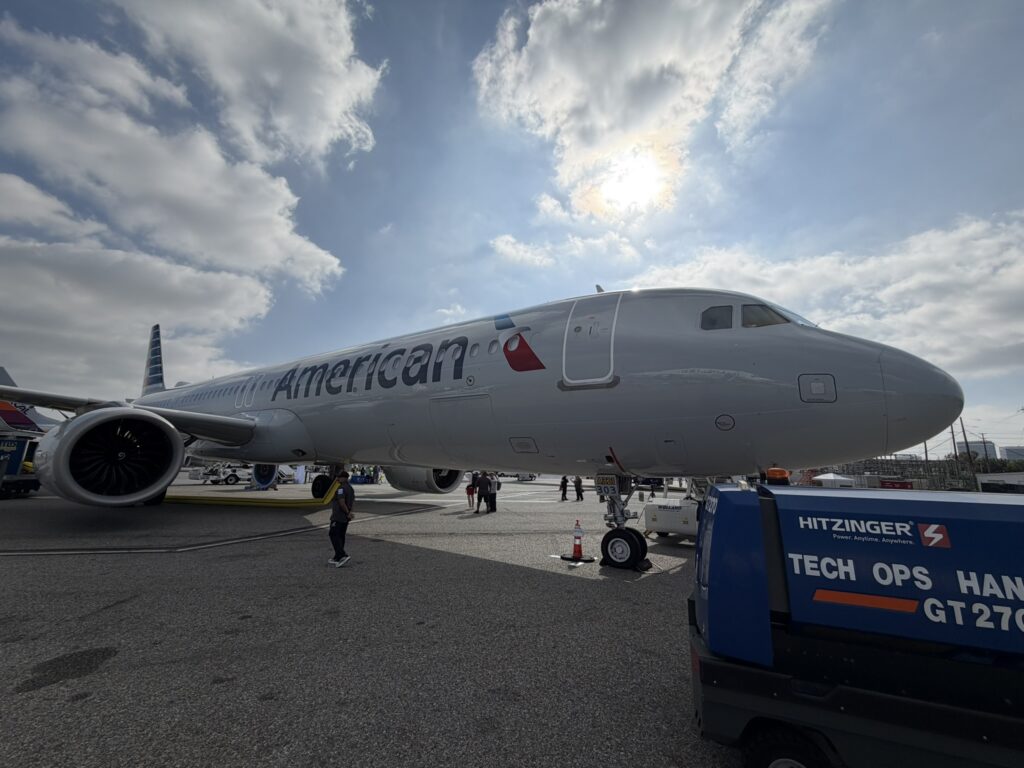
With the A321XLR on static, I was able to get some clean shots of the hard product before my flight to New York (which are interspersed throughout this trip report).
The aircraft features 123 seats in Main Cabin economy class, six fewer than United’s upcoming Coastliner.
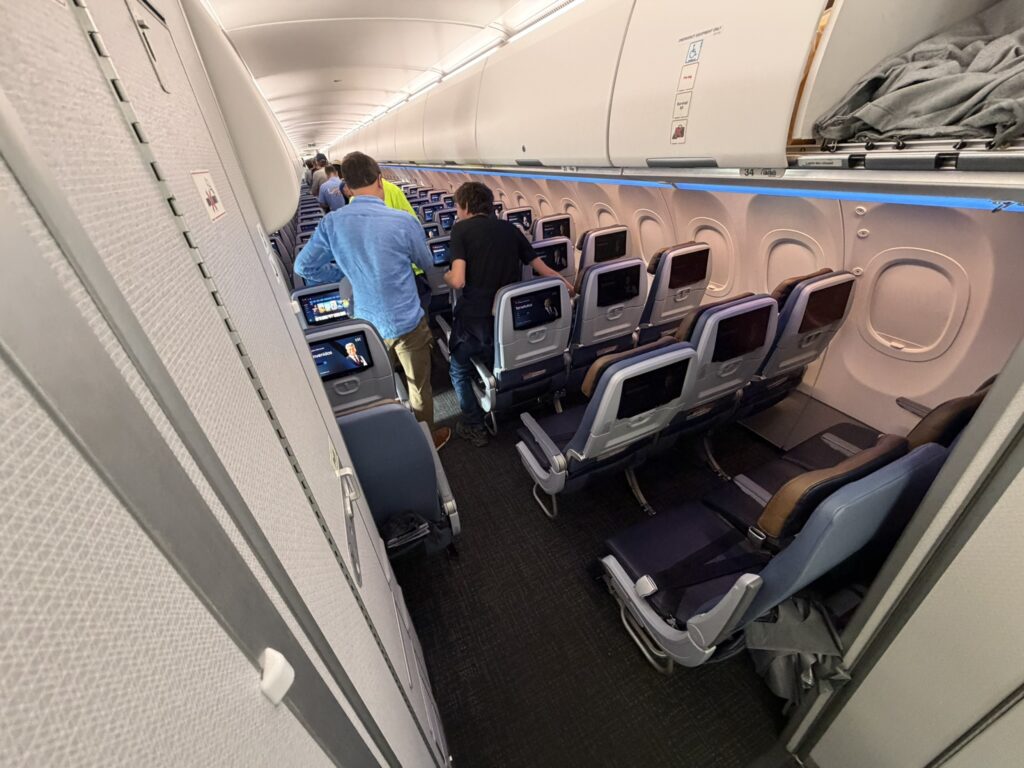
At the same time, American features just two rows of Main Cabin Extra seats at the front of the cabin. Although these seats feature extra legroom, it seems that neither row of seats reclines.
Given the long flights these aircraft will operate in Summer 2027, Main Cabin Extra may actually be seats to avoid.
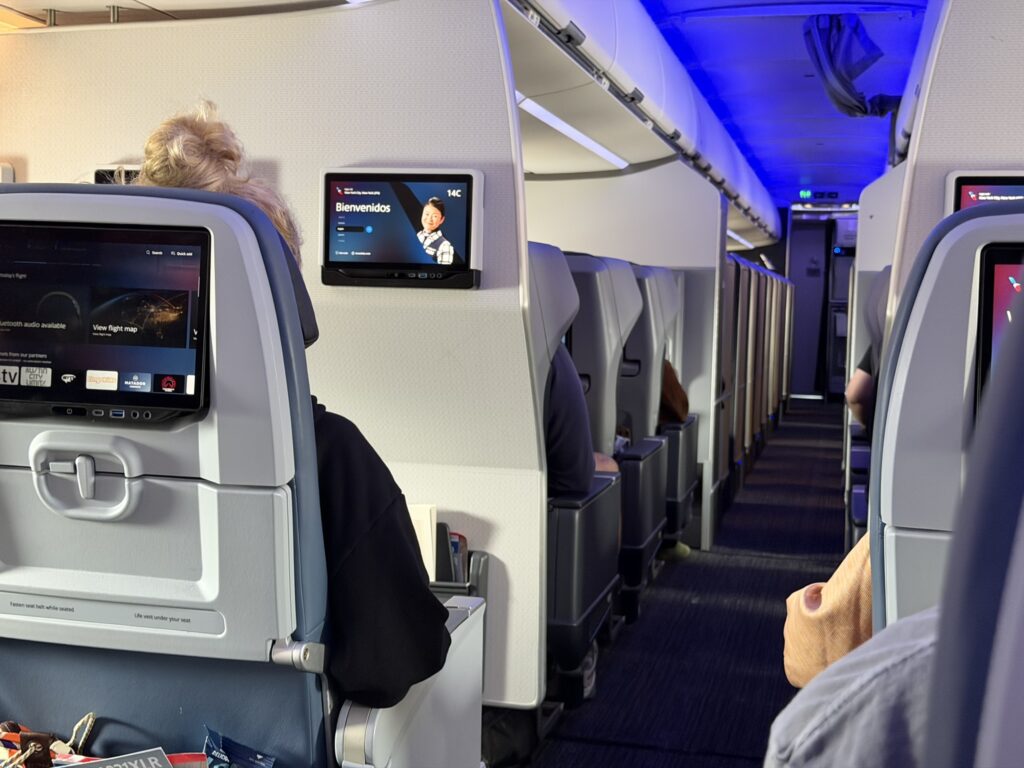
I sat in the row directly behind Main Cabin Extra, which may be the best Main Cabin row on the aircraft since the seats in front of you don’t reline.
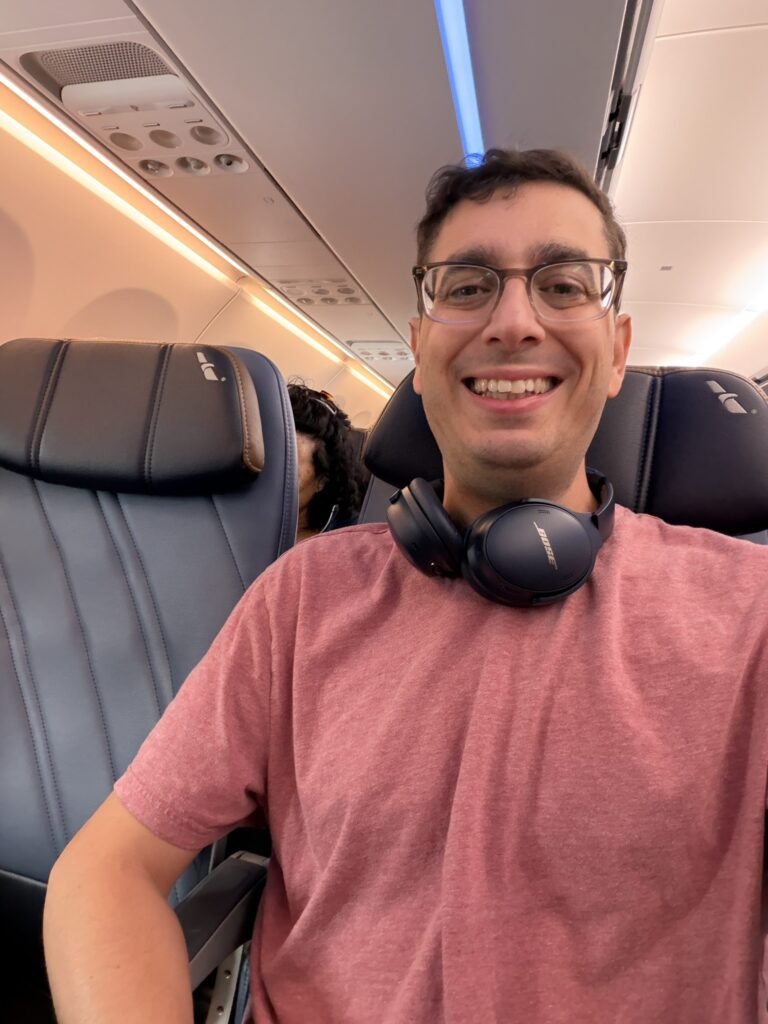
This product is quite simply very unlike the American Airlines I know.
The XLR was designed before American decided to reverse its decade-old course and announce it would bring back seatback screens to all narrowbody aircraft.
Though the XLR was intended to be something special and unique, it may now be the blueprint for the rest of American’s fleet.
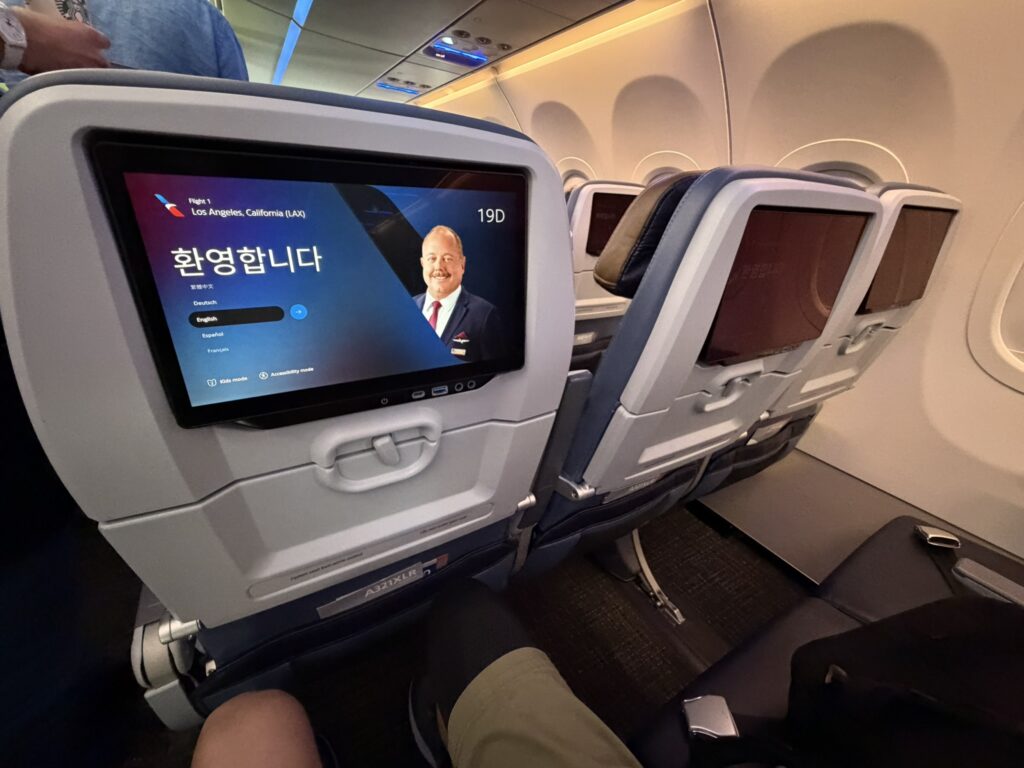
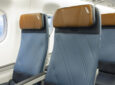
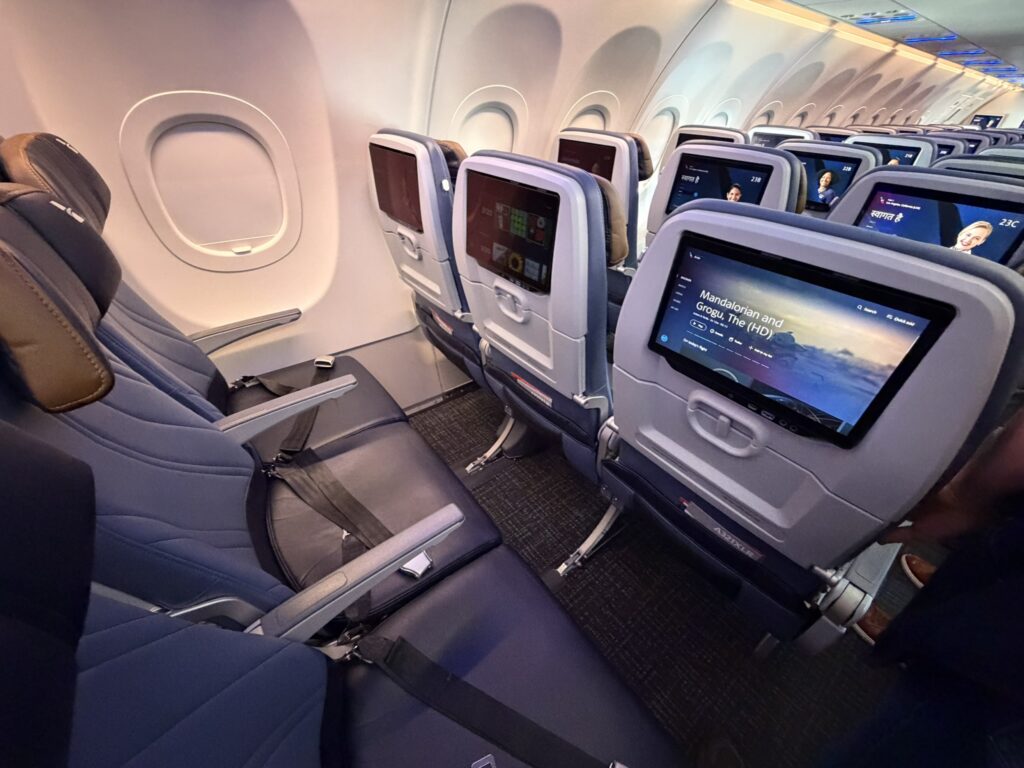
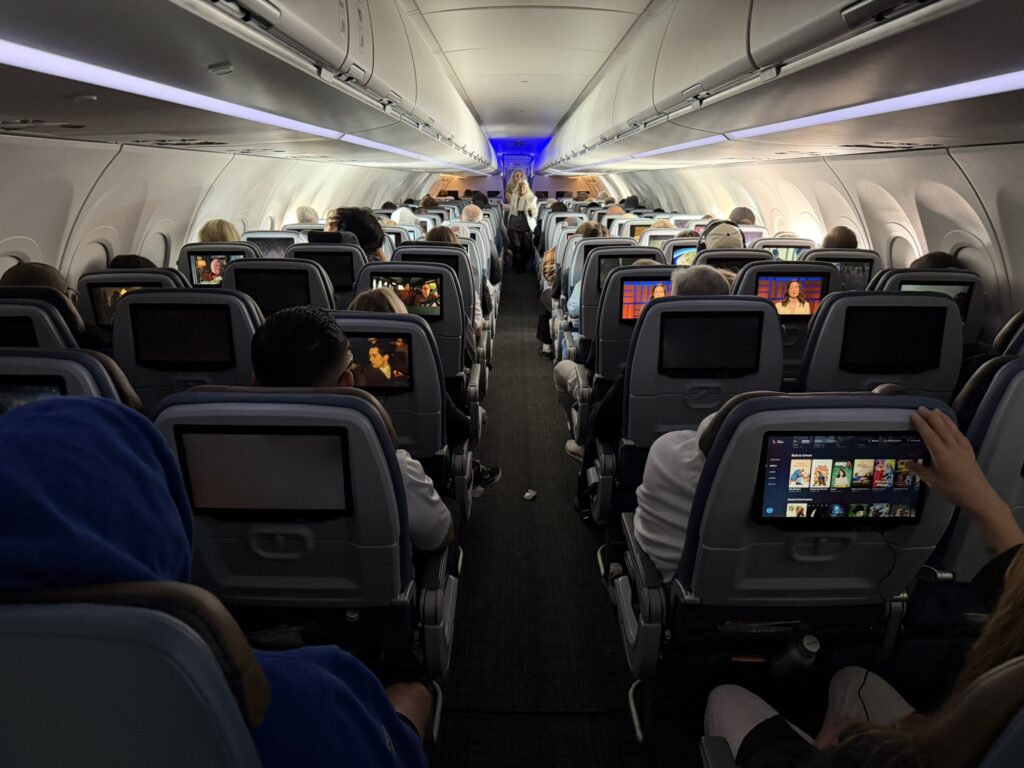
For an economy seat, it has everything. Enough legroom for a longer trip (an empty middle seat on my LAX-JFK flight helped, for sure), a big and modern seatback screen, USB-A and USB-C ports, an AC power outlet with yet another 60 watt USB-C port, Bluetooth audio and redundant 3.5mm headphone jacks.
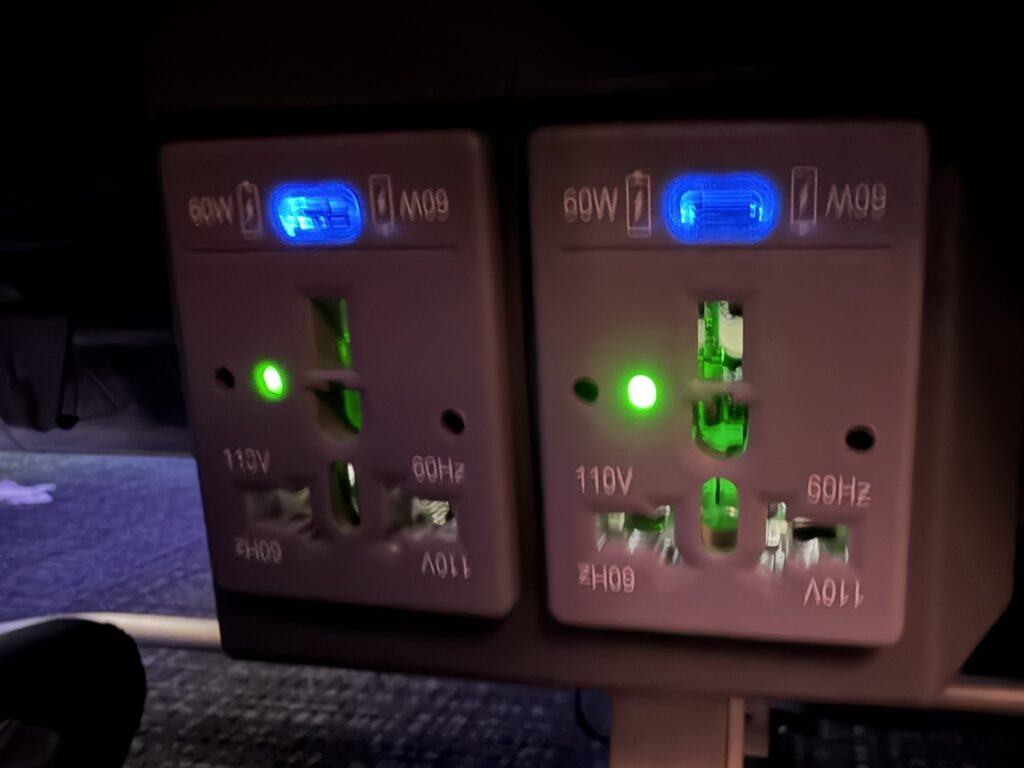
As far as a modern economy seat on a narrowbody aircraft goes, this is as good as it gets these days.
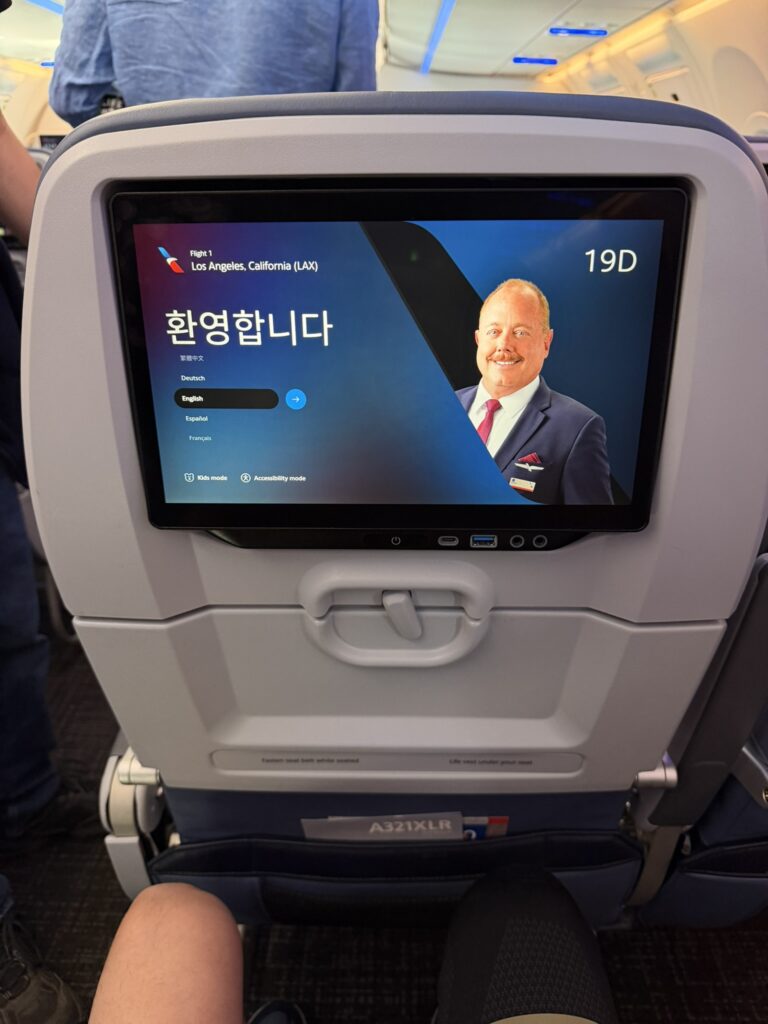
American’s XLR is equipped with Thales’ AVANT entertainment system with 4K HDR screens using Samsung’s QLED technology.
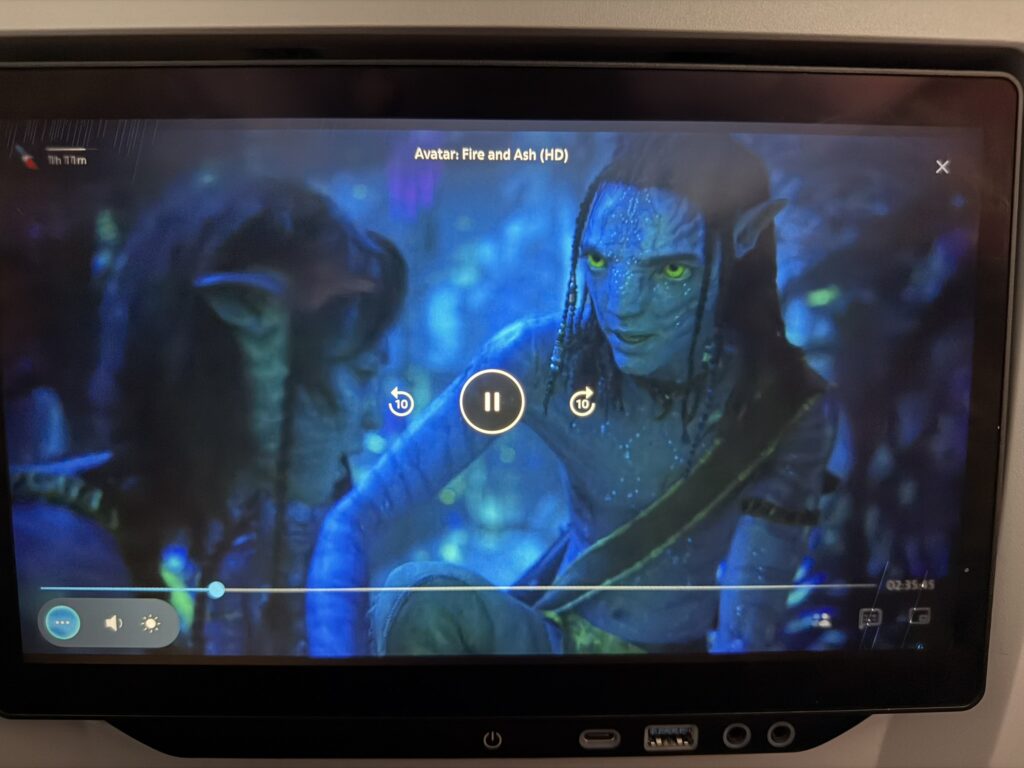
While all the specs and improved technologies are great, I was most excited to see American finally put some effort into its graphical user interface. (I don’t think it had changed the interface since before the US Airways merger when the Airbus A321T was introduced to the fleet.)
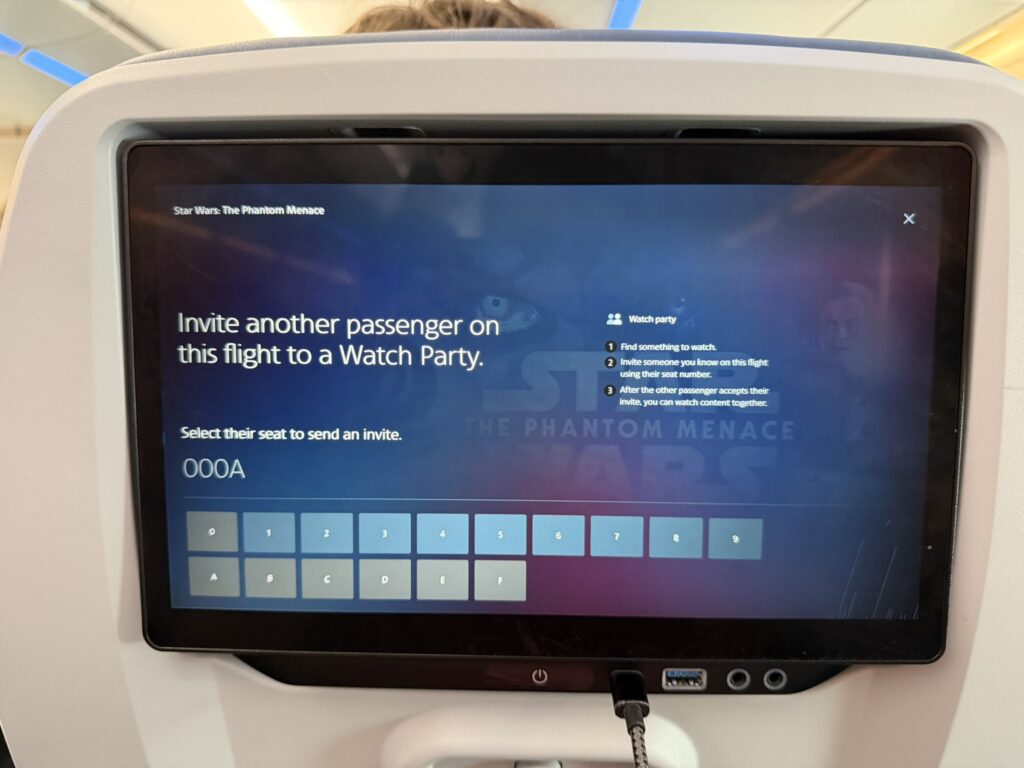
It became immediately apparent that this IFE system is leaps and bounds more modern than the legacy equipment.
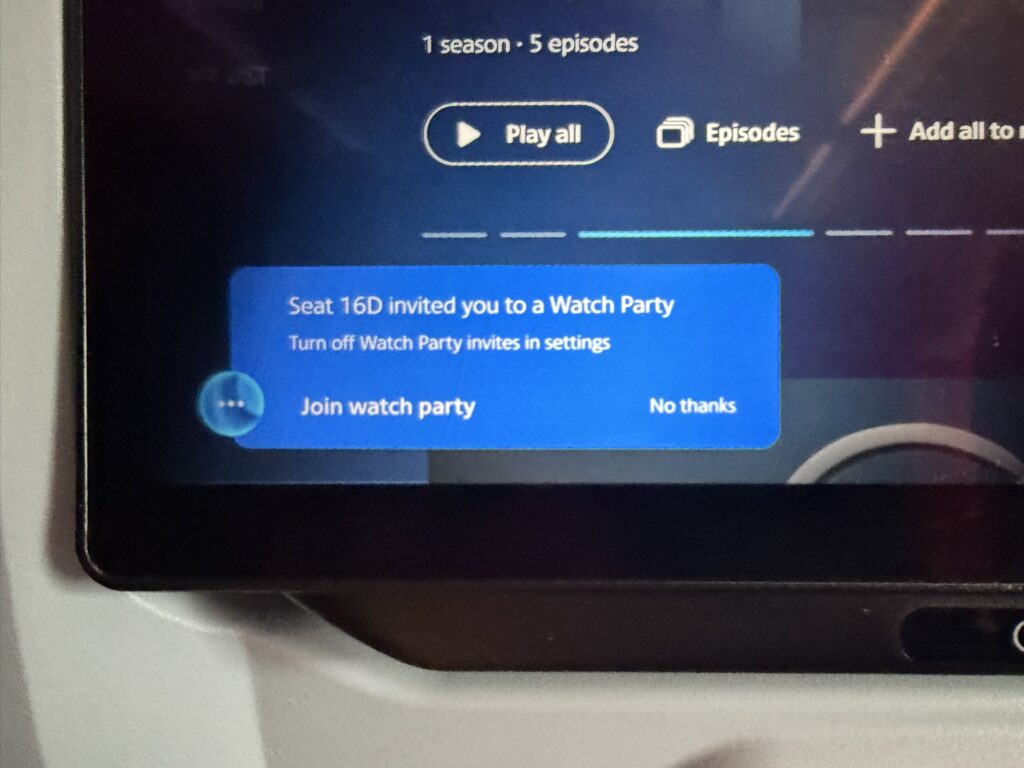
The GUI is intuitive and cleaner than what it replaced. It’s also fully featured with functions like Watch Party (though this activity didn’t work nearly as well as on a recent JetBlue Airbus A220 flight), and kept up with my interactions.
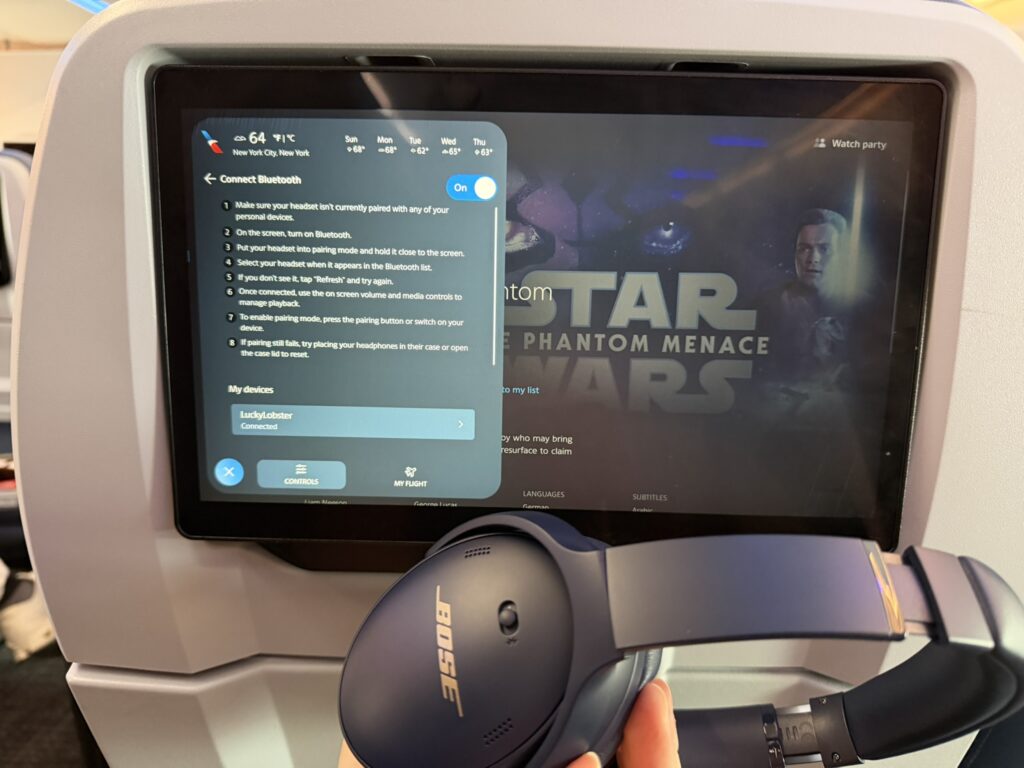
Bluetooth audio, a feature that is no longer just a nice to have option, is of course present and worked without issue. I couldn’t tell if any content was actually available in 4K, with only some movies including “HD” in the title.
The screens seemed to have a privacy film applied, making it difficult to see what was being displayed on other screens in the cabin. This typically reduces overall brightness.
However, I watched Avatar: Fire and Ash and it looked fantastic with rich colors and vibrant highlights.

In an interesting twist, American even offered a free small meal in Main Cabin on my LAX-JFK flight, and it does the same for a few other key premium routes.
This is a perk that Delta once offered on an array of transcon routes prior to the COVID-19 pandemic but never brought back.
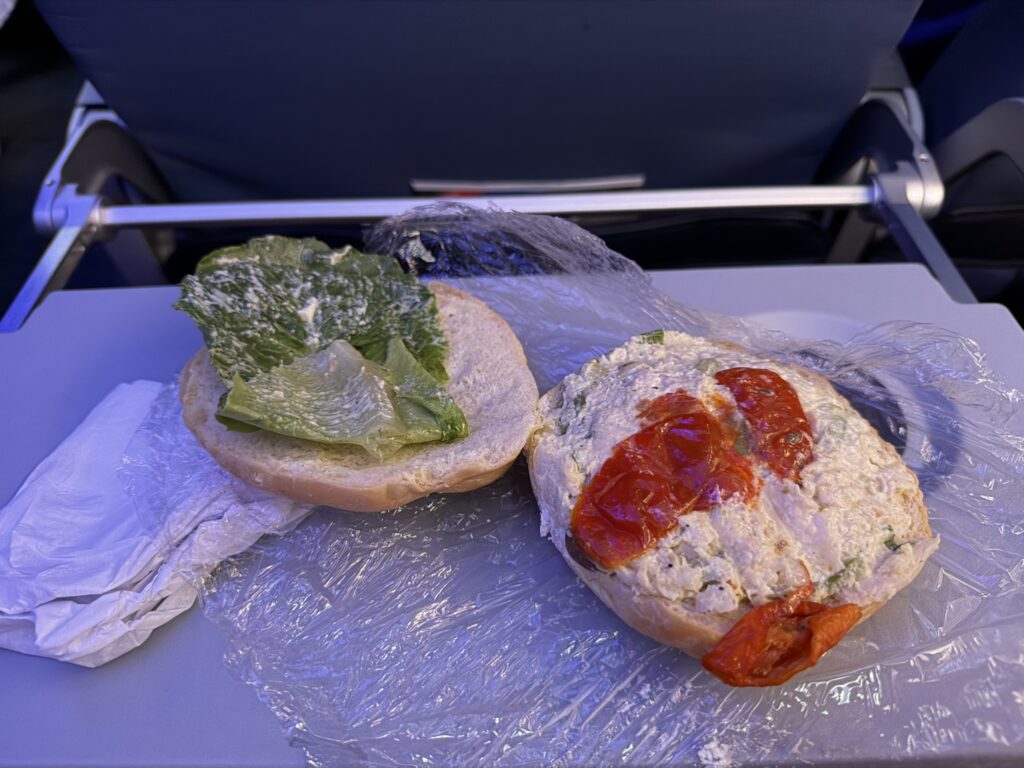
I opted for the curry chicken croissant sandwich which was packaged in a box alongside a bag of baked veggie snacks and a Brookie bar. A cheese tray and hummus dip alternatives were also available.
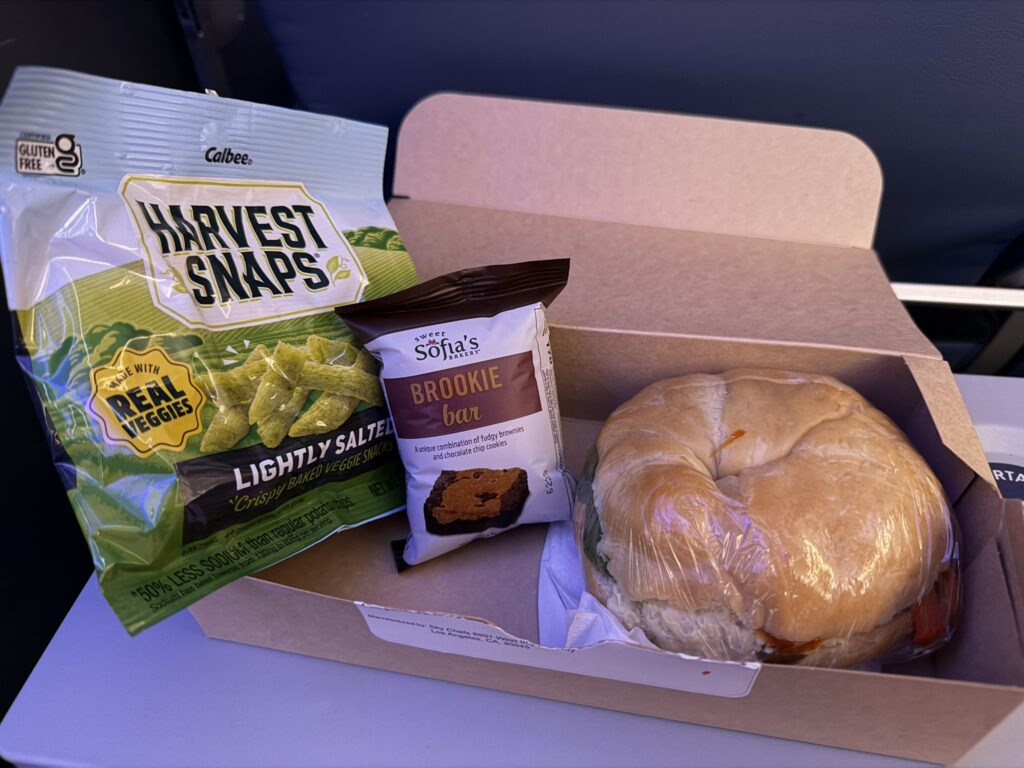
Expecting the meal on board to be small and inadequate, I had in fact bought a salad in the terminal before departure. But I was pleasantly surprised at the completeness of what was offered.
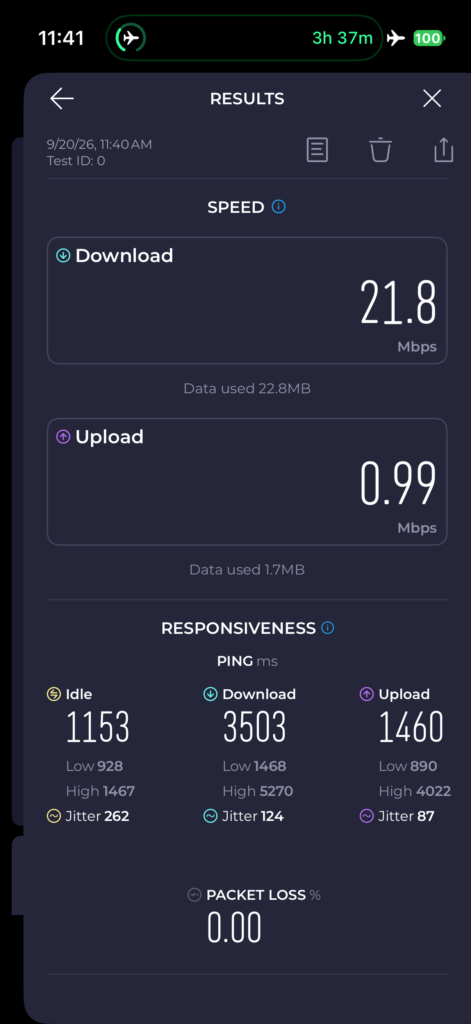
The XLR sports the typical Viasat-powered connectivity system, which performed about as well as usual for the system. It worked for a while, didn’t work at all for another while, but was generally just fine. Viasat suggests that passengers should expect to see reliably higher speeds as airlines are onboarded to its new ultra-high-capacity ViaSat-3 F2 satellite over the Americas.
It’s amazing how quickly LEO-powered systems like Starlink have spoiled me, however. American no longer charges for Wi-Fi, at least, so I can hardly complain.
While onboard, I couldn’t help but draw comparisons between American’s XLR transcon service and how I used to feel flying Delta before the pandemic.
Here, American is offering a seatback screen with ample entertainment, friendly service, free Wi-Fi that (mostly) worked, and even a free meal that I can only assume next to no passengers knew they’d be getting.
This is the type of service that kept me loyal to Delta until COVID changed the equation. I’m excited to see how American brings this experience back to the rest of its fleet.
Related Articles:
- Inside American Airlines’ new 777-300ER Flagship widebody: Review
- A321XLR set to shine as United, American reveal summer 2027 routes
- American talks RFP as it readies to bring screens to narrowbody fleet
- American pivots to Starlink for 500-plus Airbus narrowbodies
- Welcome to American’s A321XLR inaugural in a Flagship Suite
- American Airlines’ Premium Economy on the A321XLR is a delight
All images credited to the author, Jason Rabinowitz