
 Today, I stepped aboard an American Airlines Boeing 777-300ER (tail number N718AN) at the carrier’s Dallas Fort Worth hub to take part in a media flight and experience the newly-refurbished flagship widebody in all its premium glory.
American rolled out the red carpet, quite literally, for this twinjet, which boasts the highest number of premium seats ever installed on a U.S. carrier’s aircraft — at least for now.
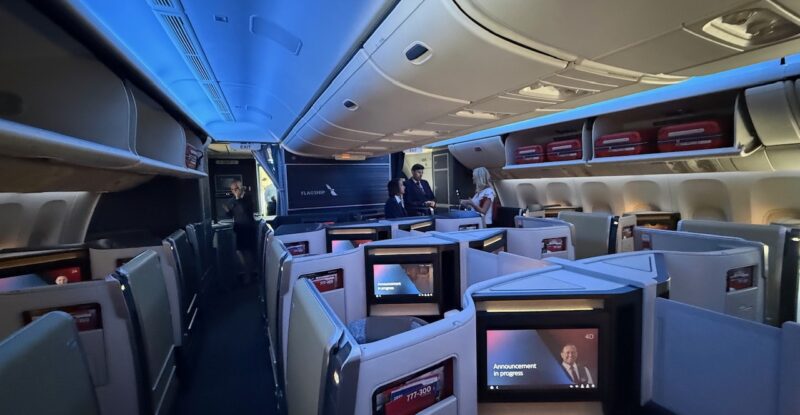
The 330-seat aircraft, known internally as Project Olympus, brims with 114 premium seats, including 70 Flagship Suite seats with privacy doors, and 44 Premium Economy seats.
While American’s new long-haul interiors, including Flagship Suite seats up front, are already flying on new-delivery Boeing 787-9s and Airbus A321XLRs (both of which I covered for RGN), the new-generation products have finally come to the fleet’s flagship.
The very thought of American doing something as audacious as a special media charter is, well, rather un-American.
United is the last U.S. carrier in recent memory to do something on this scale when it previewed its new Polaris product in 2017 (more recently, it hosted media flights as it rolled out SpaceX’s Starlink Low Earth Orbit satellite-powered inflight Wi-Fi.)
Desperate to rid itself of its whipping boy status amongst America’s ‘big three’ global carriers, American Airlines has been on a premium tear lately, awash in customer experience upmarket enhancements.
To wit, seatback IFE is making a much celebrated return on the carrier’s narrowbodies; it’s adding more premium seats; and Starlink has been earmarked for a portion of its fleet.
Taken together, this is nothing short of a giant leap as American tries to change the narrative.
Background: The History of American’s 777-300ER Fleet
Delivered in 2012, American’s very first 77W took the honors today, ferrying journalists from DFW to New York JFK so that they could experience the new products for themselves.
In a case of déjà vu, thirteen and a half years ago on January 13, 2013, I boarded this very same 777-300ER for a quadlet of American inaugurals: a new brand, a new livery, a new flagship fleet type, and the cabin that would define its long-haul ambitions for years to come.
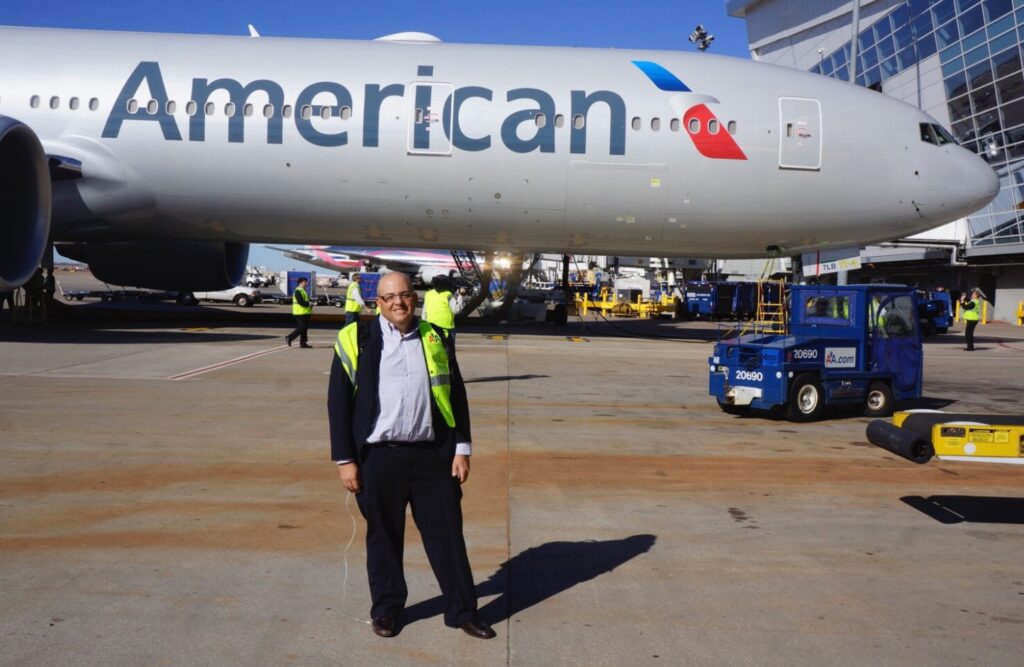
American, then as now, was at an inflection point. Having just emerged from Chapter 11 bankruptcy, its product was dated, its operations lagging, and its competition smelled blood in the water.
The oneworld alliance member had something to prove.
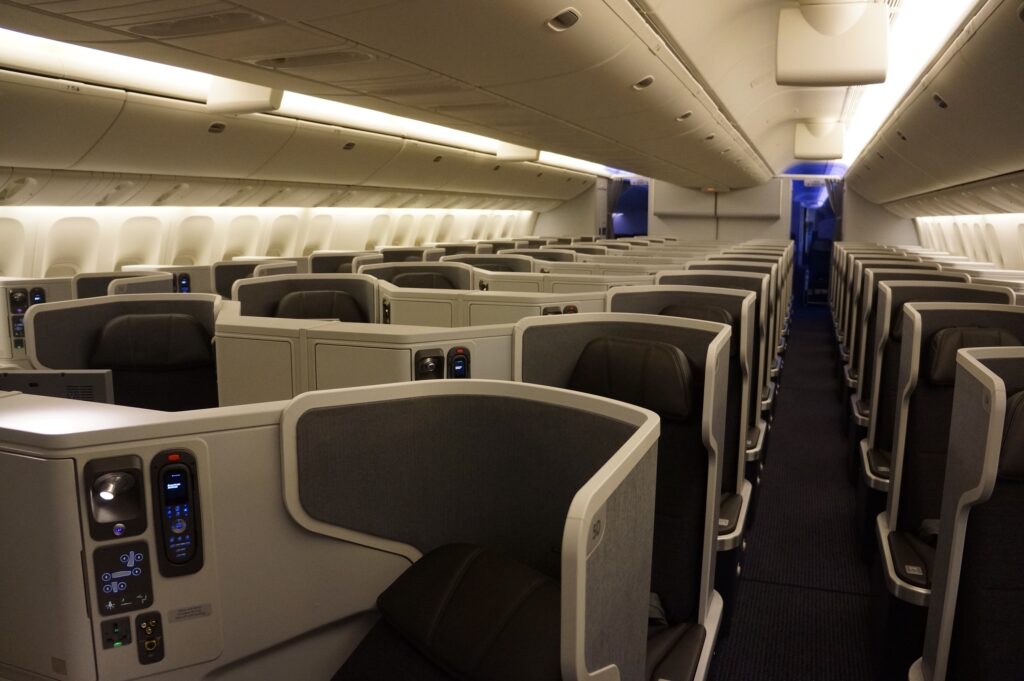
Its unveiling of the then-new Business Class cabin with 52 Safran Cirrus II lie-flats, configured 1-2-1 with direct aisle access, coupled with Panasonic Avionics’ eX2 inflight entertainment system, was a step change from the bemoaned 2-3-2 angled seats introduced in 2005.
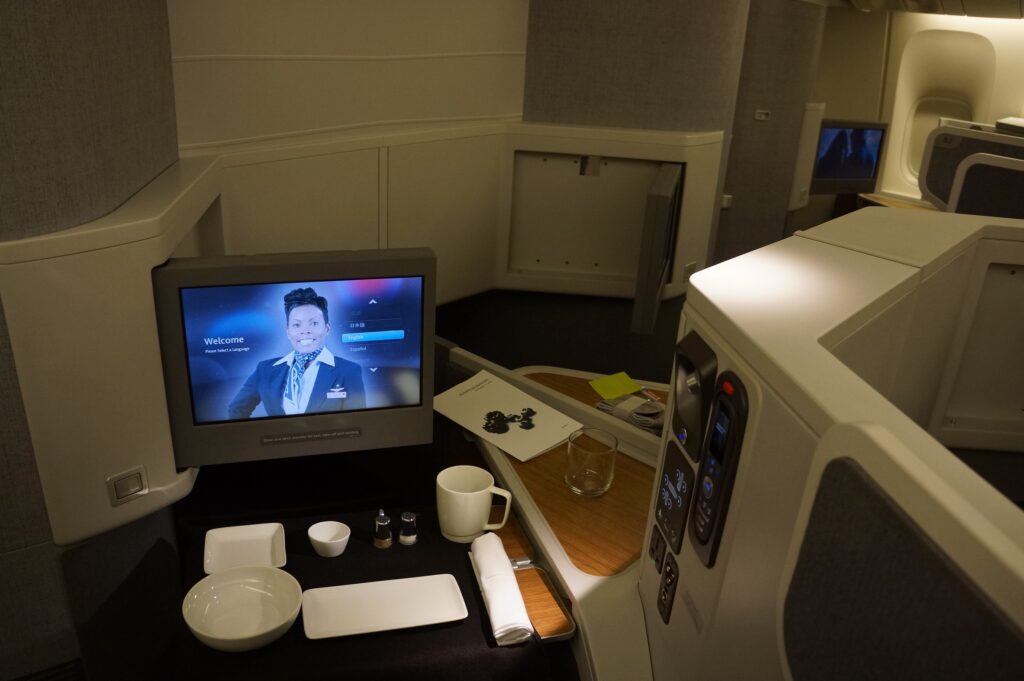
In First Class, American’s exclusive Safran (formerly Zodiac) seats, with signature rotating Captain’s thrones, were more evolutionary than revolutionary.
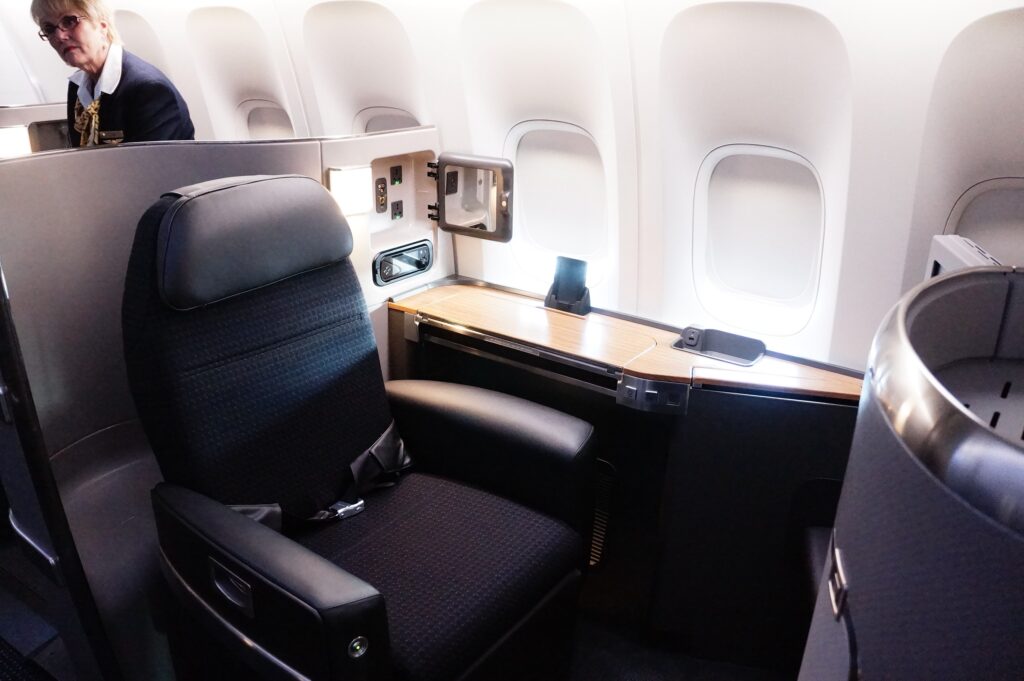
Nonetheless, this was a top-flight product before the era of widespread enclosed suites with doors.
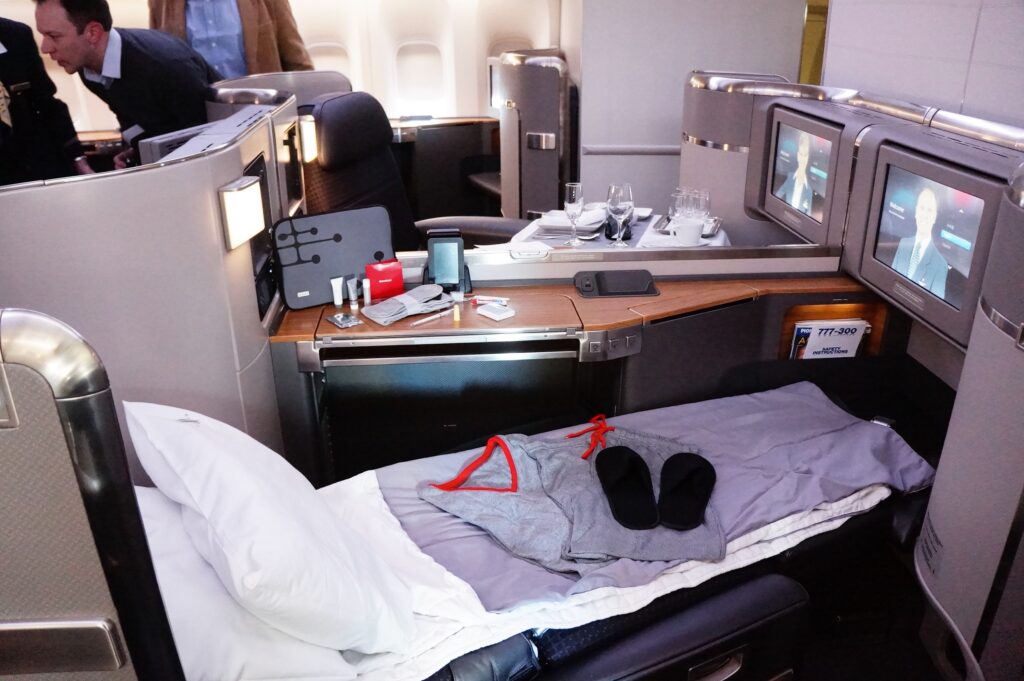
Overview: What’s New on the Refurbished AA 777-300ER (Project Olympus)?
Today, American finds itself in the unenviable position of being in catchup mode in the premium arms race, while not always getting credit for when it has been ahead.
Its new premium 787-9P and A321XLR twinjets beat United’s Elevated interiors into service, as well as Delta’s forthcoming next generation of premium products — much like it did before United’s Polaris took flight in early 2017, and Delta’s current generation of premium hard product with doors arrived shortly thereafter.
Now, after a two-year delay and an eight-month retrofit at HAECO in Hong Kong, American Airlines’ premium-heavy 777-300ER Heavy is finally ready for her closeup.
This big bird is destined for AA’s highest yielding, highest capacity, long-haul routes. The total aircraft capacity increases by 8.6%, expanding from 304 to 330 seats overall.
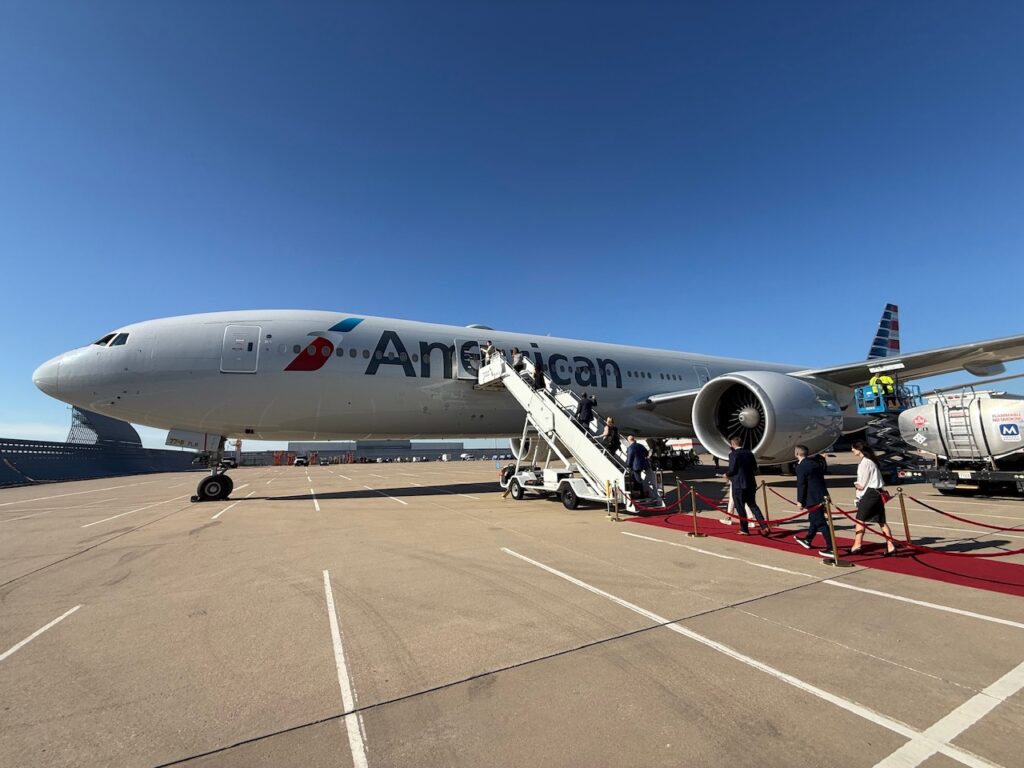
This LOPA (layout of passenger accommodations) is built for luxury. Still, the most noticeable difference is the elimination of Flagship First Class, with sales formally ending on November 19.
In its place are four business-plus Flagship Suite Preferred seats at the front of each of the two Flagship cabins onboard for a total of eight.
If you’ve flown American’s new 787-9P, the Flagship Suite aboard the reimagined 777-300ER will look very familiar. The same Elevate Aircraft Seating (formerly Adient Aerospace) Ascent platform introduced on the Dreamliner makes the jump to American’s largest widebody. There’s just a whole lot more of them.
Nineteen rows spread over two cabins — the larger rear one being especially vast — stretch all the way to the wing.
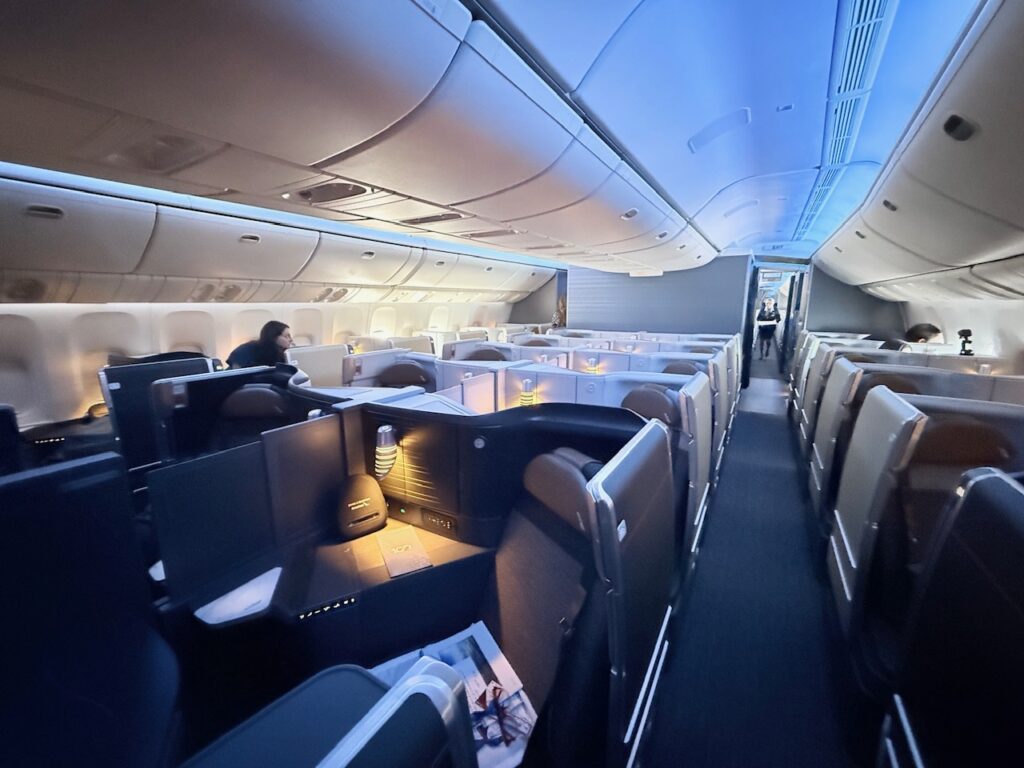
Center pairs face inward toward one another while window seats angle toward the window. And in an AA first, these sliding doors are certified to close from the get-go!
Let’s take a closer look.
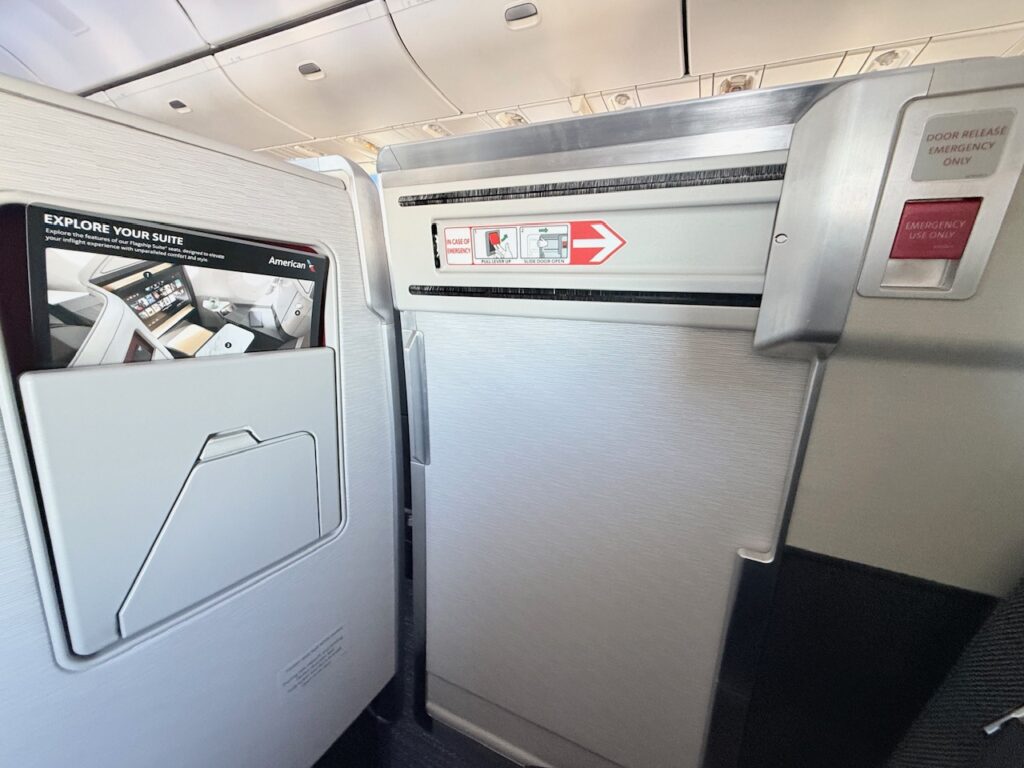
American Airlines Flagship Suite Preferred (Front Row)
Just as on the 787-9P, not all Flagship Suite seats are created equal on the 777-300ER.
AA’s Flagship Preferred Suites capitalize on the extra space available at the bulkhead to provide additional personal space and storage compared with the standard suites behind them.
The extra room is particularly apparent around the ottoman and footwell, creating a more open sleeping environment and providing space for a companion to sit opposite during the flight when circumstances permit.
American claims these supersized suites feature 19% more bed space and 42% more living space then their 789 brethren. As ever, the wider fuselage and cross section of the 77W provides more real estate to play with.
Design house Teague’s moody, high-contrast Flagship Suite Preferred aesthetic carries over from the 787-9P as well. The design combines dark finishes, charcoal upholstery, dark marble surfaces, and metallic accents, replacing the sea of grey that characterized much of American’s previous-generation widebody interiors.
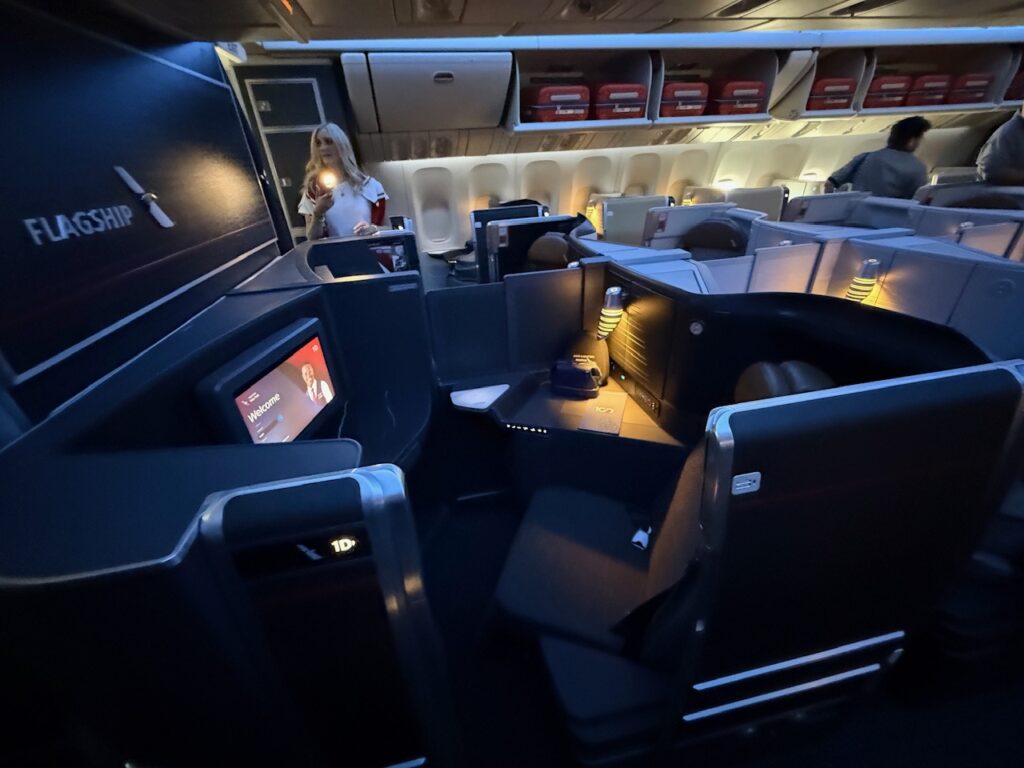
Passengers who secure these rows receive an upgraded sleep set, which includes two extra pillows and a high-end Nest Bedding throw blanket. The amenity kit has a host of additional goodies, including a cosmetic sheet mask… ooo la la! Catering is, however, identical to the standard Flagship Suite experience.
Flagship Suite Preferred currently carries a cost of zero dollars to select for anyone holding a confirmed business class ticket. While American intends to implement a paid seat-selection fee for these front-row spots in the future, they are presently available on a first-come, first-served basis regardless of elite status.
These elevated suites are sweet, but I do miss the small, exclusive First Class suites with the swivel seat that could face the window like a small office. Yes, they were ironically less private than the Business Class seat, but I am of a certain age and personally appreciate a more open experience!
Standard Flagship Suites: Seat Pitch, Storage, & Comfort
There’s plenty of useful real estate within the standard suite, too.
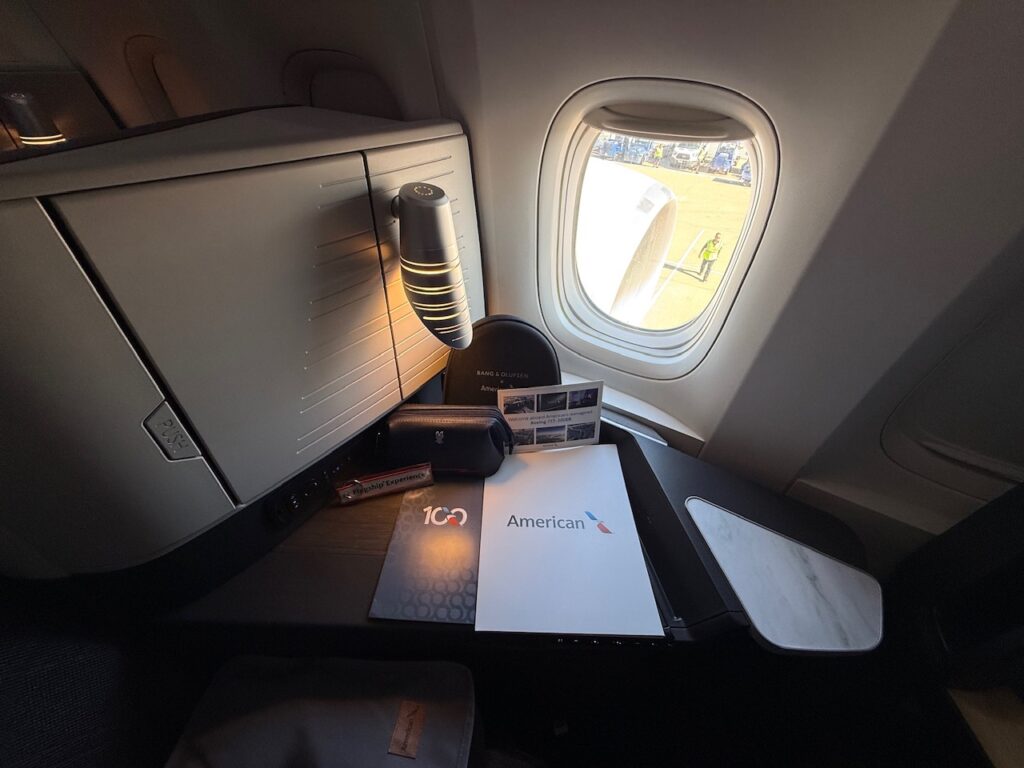
The wireless charging pad and separate drinks surface help keep the main table free, while the two-stage tray table provides a substantial work and dining surface. A flip-down drink holder next to the door is useful and doesn’t block the egress from the seat.
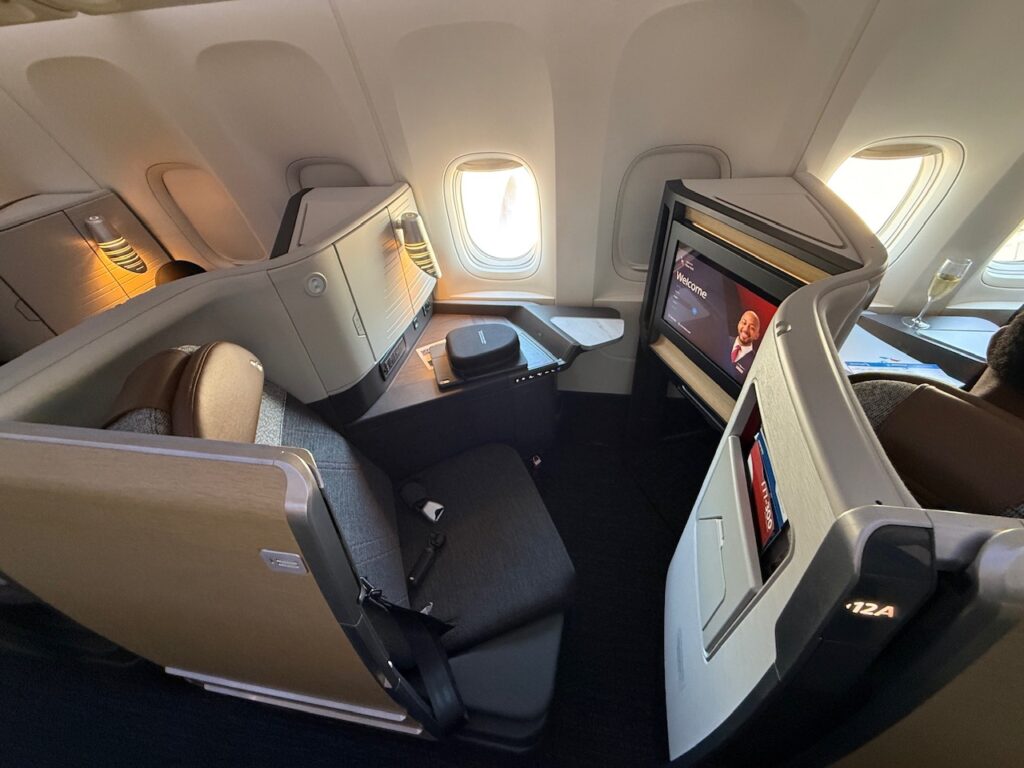
While the standard Adient Ascent bed length measures roughly 78 inches, American Airlines slightly reduced the seat pitch for the Flagship Suite by about an inch as compared to the previous generation seat. On this retrofitted 777-300ER, a seat pitch of 42” enables the airline to accommodate 70 suites.
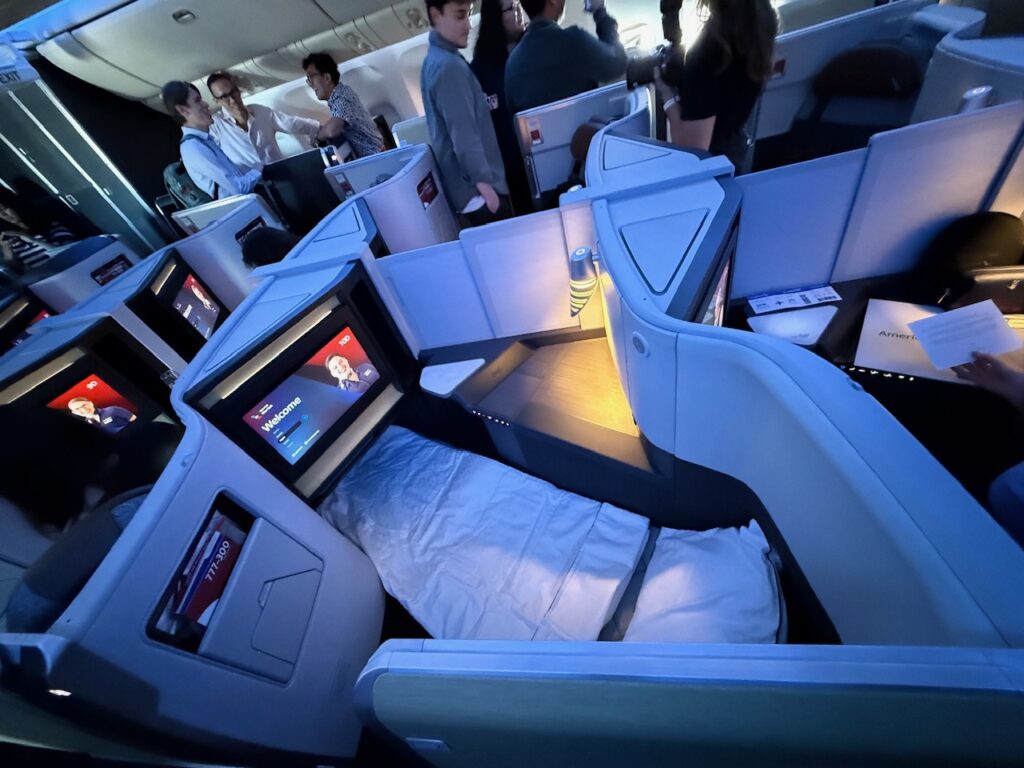
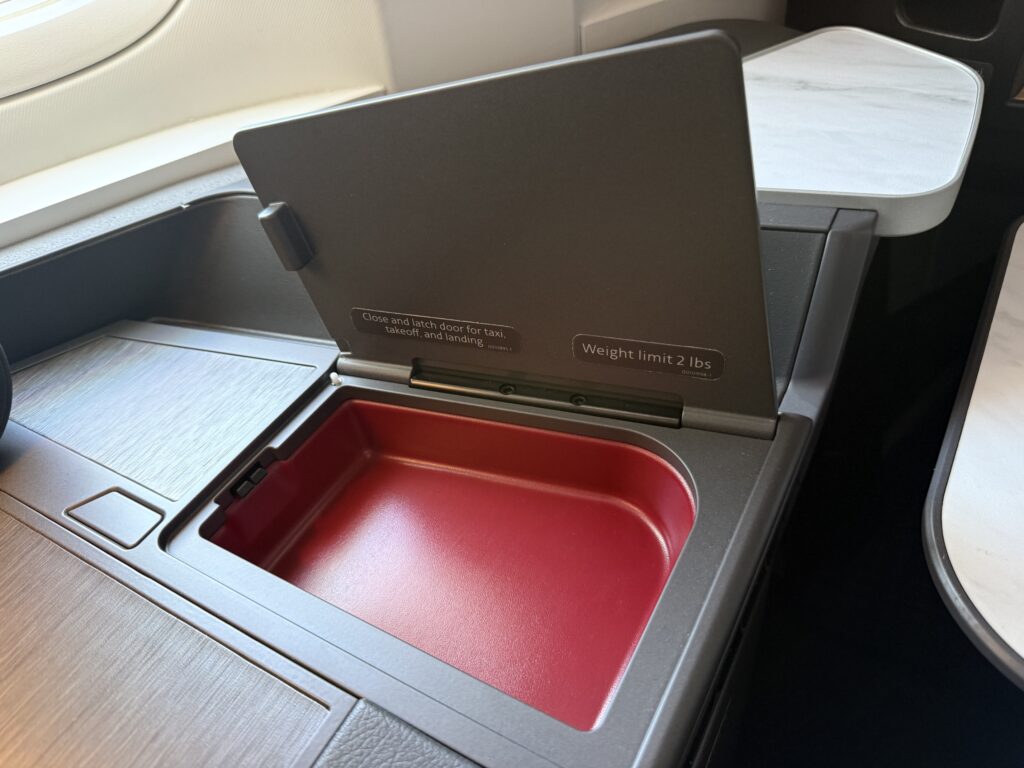
Storage is plentiful with cubbies next to the monitor, a small cabinet behind, and a red lined valuables nook. There is laptop storage. I didn’t see floor storage for shoes.
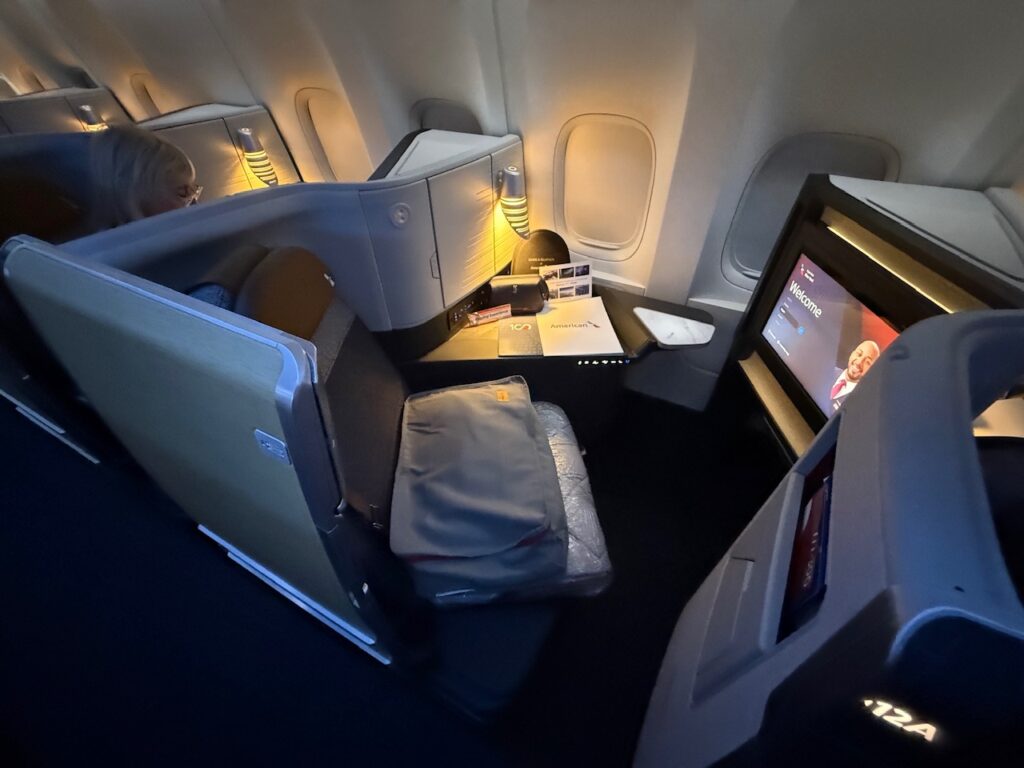
The warmer color palette of the seat upholstery, trim, and white marble surfaces in the standard Flagship Suite seats is more pleasing to my eye.
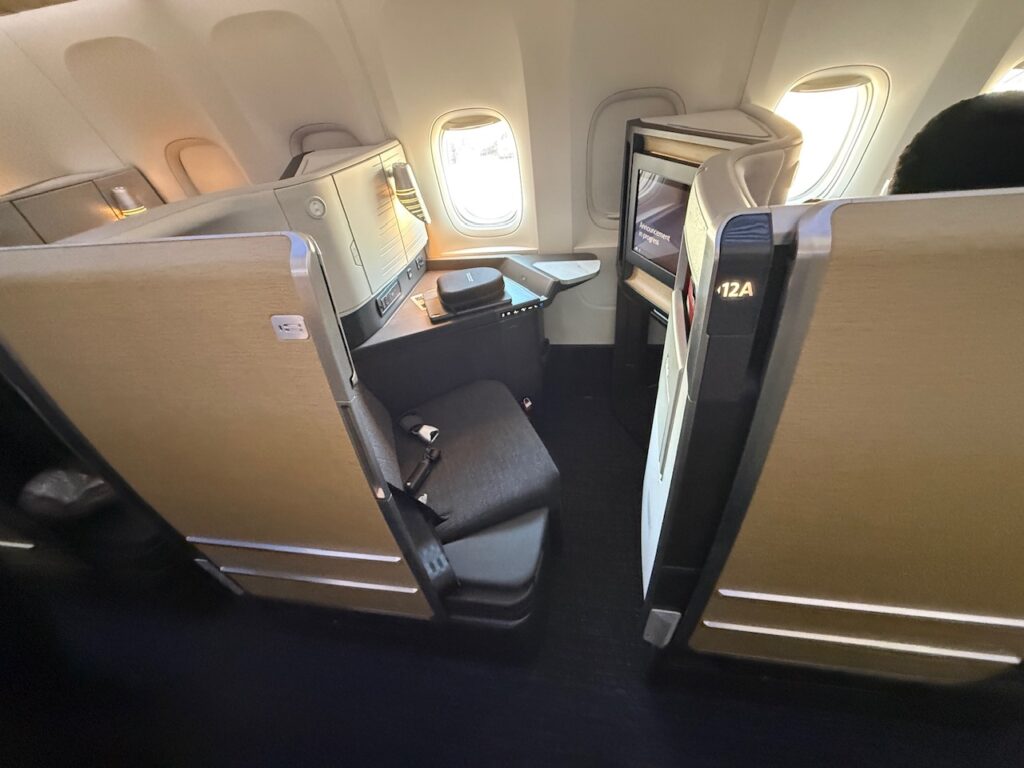
Seat controls include presets for takeoff, lounging and fully flat-bed positions, along with customizable ambient lighting and a ‘Do Not Disturb’ function.
American’s unusual, patented chaise lounge mode, enabled by a second seatbelt, also allows passengers to sit against the seat shell rather than conventionally in the seat.
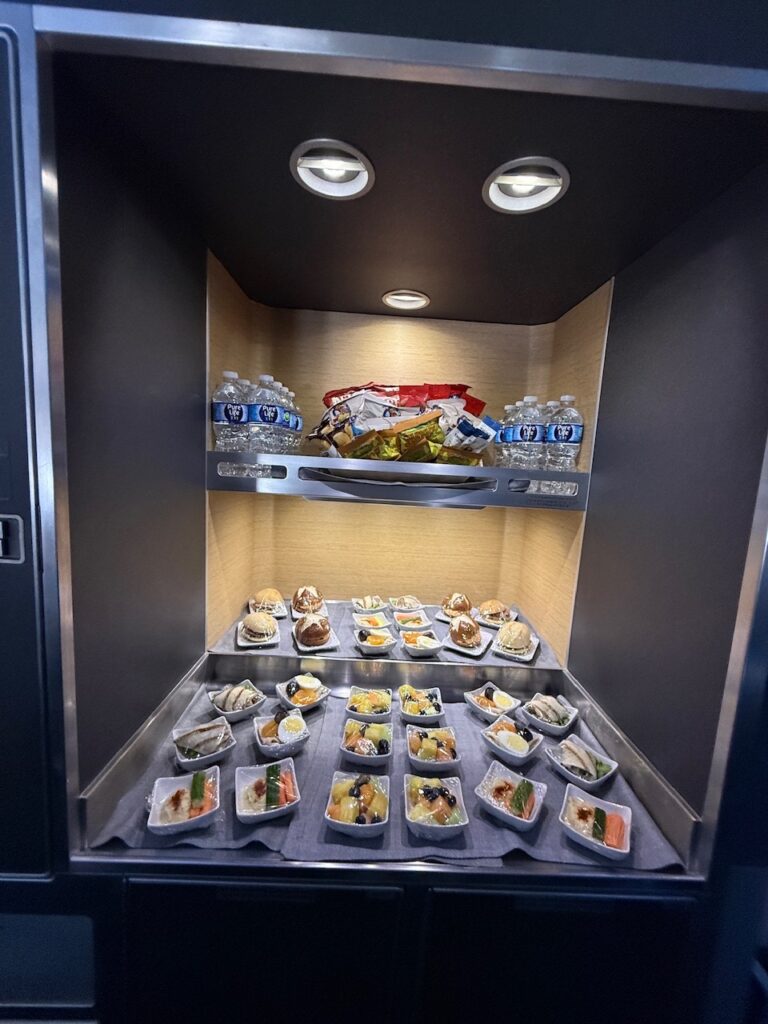
But scaling the premium cabin up to 70 suites comes with a tradeoff which I immediately noticed. The walk-up snack bar at the L2 door that distinguished American’s original 777-300ER interior is gone. A small crossover alleyway takes its place.
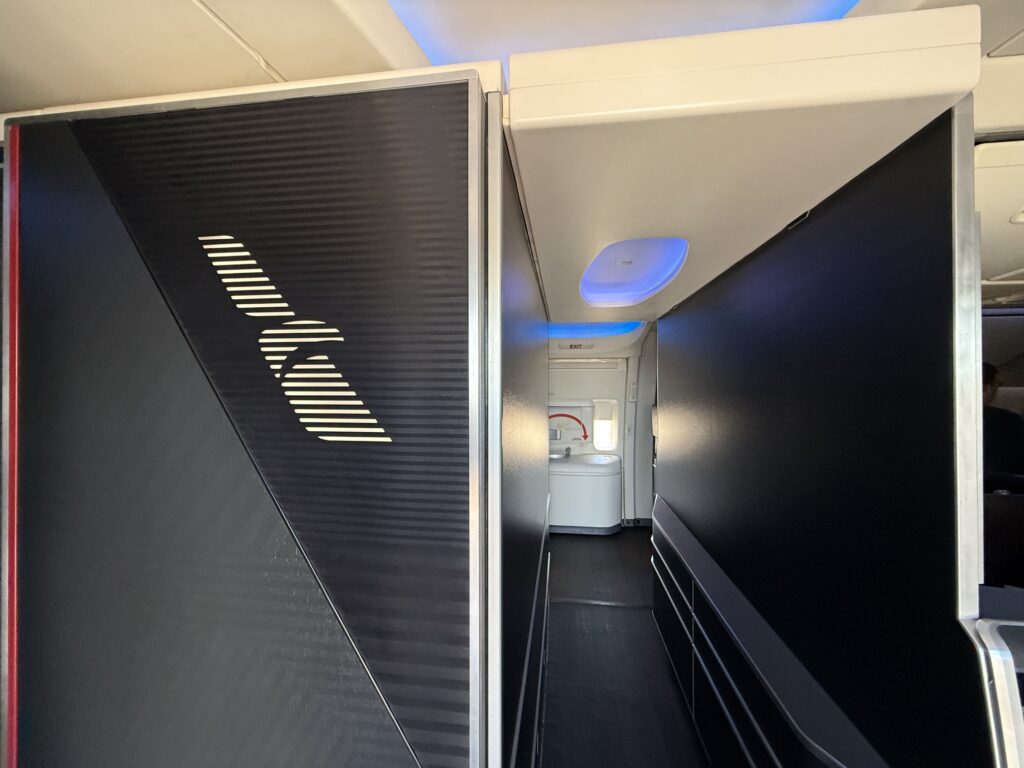
There is, however, a fully provisioned snack bar on the port side just aft of door L2.
Fewer lavs
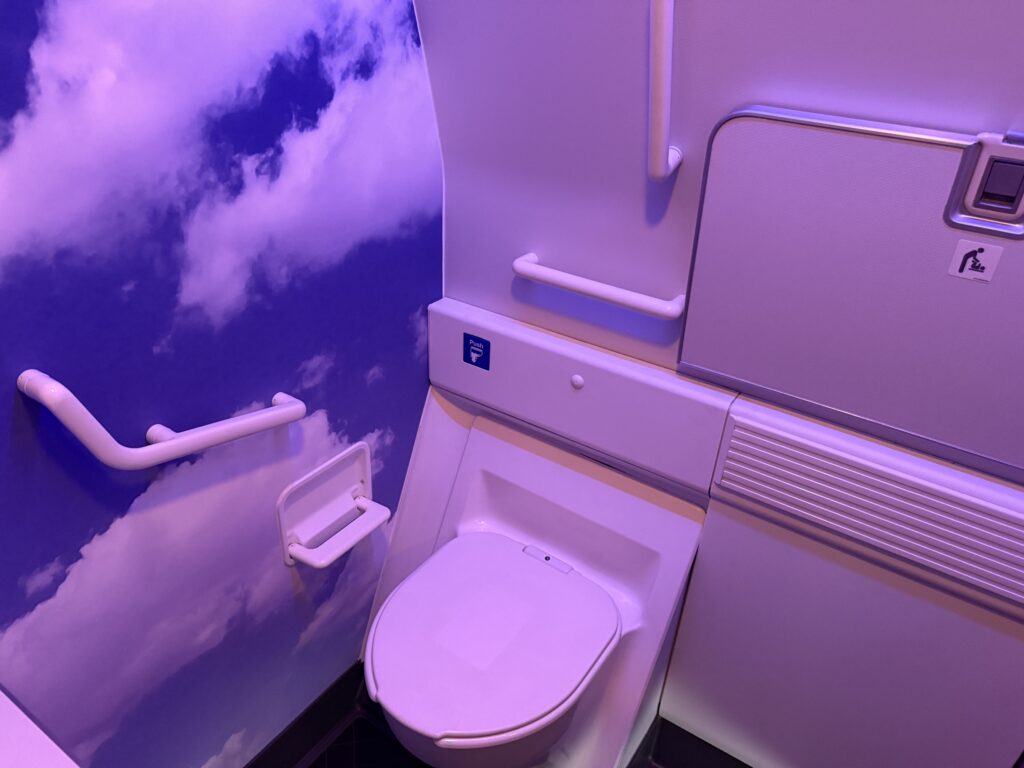
The lavatories present some room for concern, especially for the active bladder crowd, with just six reserved for the premium cabins, including the enlarged Premium Economy section, versus eight previously.
Overall, there are now nine lavatories onboard as opposed to 12 before – bladders be warned! The cloud pattern on the walls isn’t nearly as elegant as its predecessors.
Inflight Wi-Fi: Switching from Panasonic to Viasat
American has replaced the Panasonic Avionics Ku-band geostationary (GEO) satellite-based inflight connectivity system on the 777-300ER.

When Panasonic Wi-Fi rolled out on AA, it was billed by management as providing “a nice amount of bandwidth,” but your author has personally never found the speeds to be sufficient.
It has been replaced with Viasat’s Ka-band GEO-now, multi-orbit capable satcom solution, which is powering American’s complimentary high-speed Wi-Fi for AAdvantage members, as sponsored by AT&T.
Starlink, destined for 500-plus Airbus narrowbodies, isn’t slated for the widebody fleet.
On today’s flight, the Viasat Wi-Fi was sprightly in speed tests for downloading, albeit upload speeds were pokey.

Thales AVANT Up Inflight Entertainment (IFE)
Both the standard Flagship Suite and the more spacious Flagship Suite Preferred feature a Thales AVANT Up 17.5-inch 4K display with Bluetooth audio capabilities.
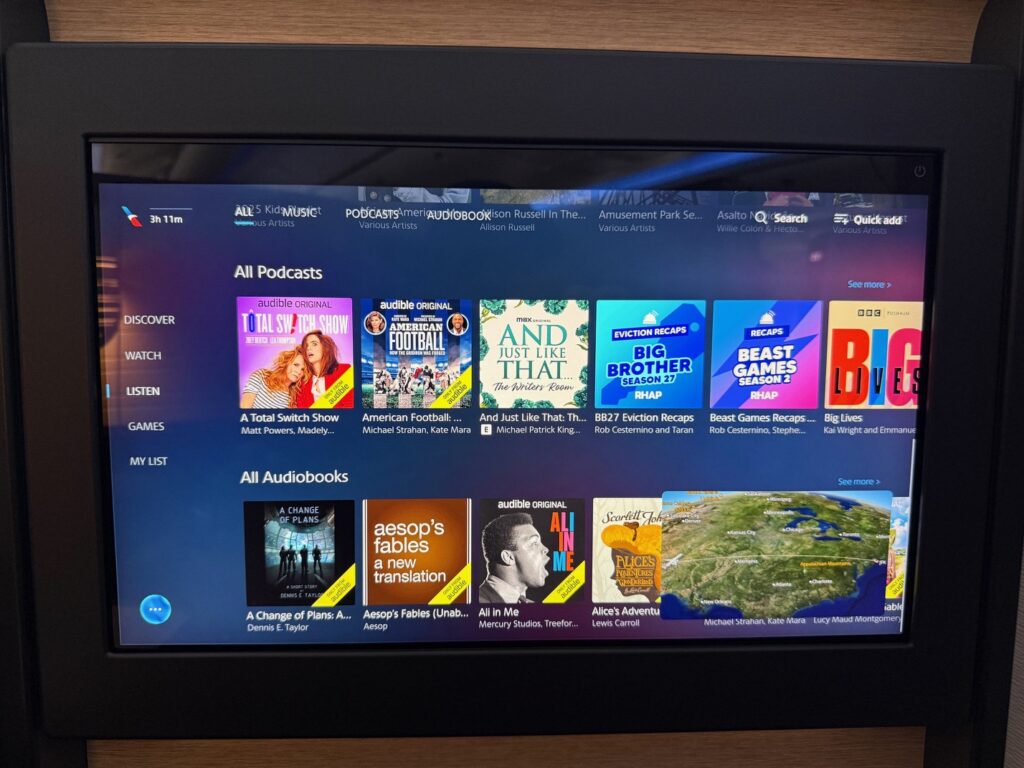
The fugly bezel around the screen, as seen on the 789s, are gone.
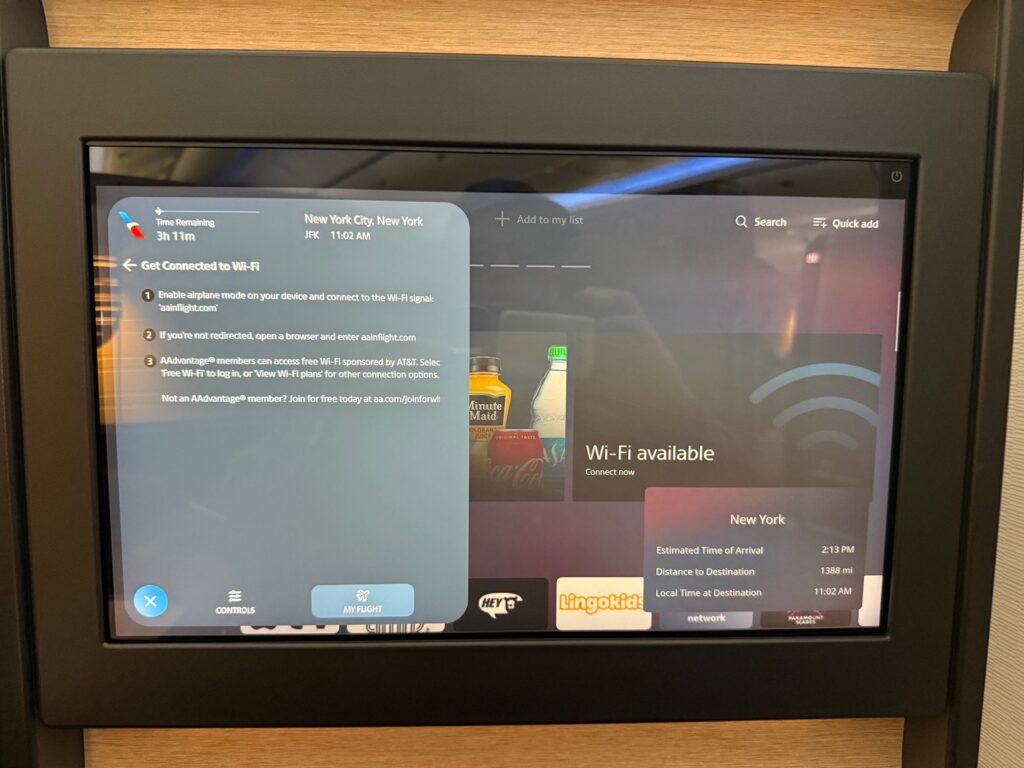
The AVANT Up software adds some genuinely useful functionality. Picture-in-picture lets passengers keep flight information or the moving map visible while watching other content. And a “finish before landing” feature filters selections according to the amount of flight time remaining.
Watch-party functionality can synchronize movie playback between two passengers, and Bluetooth audio eliminates the need to rely on wired headphones.
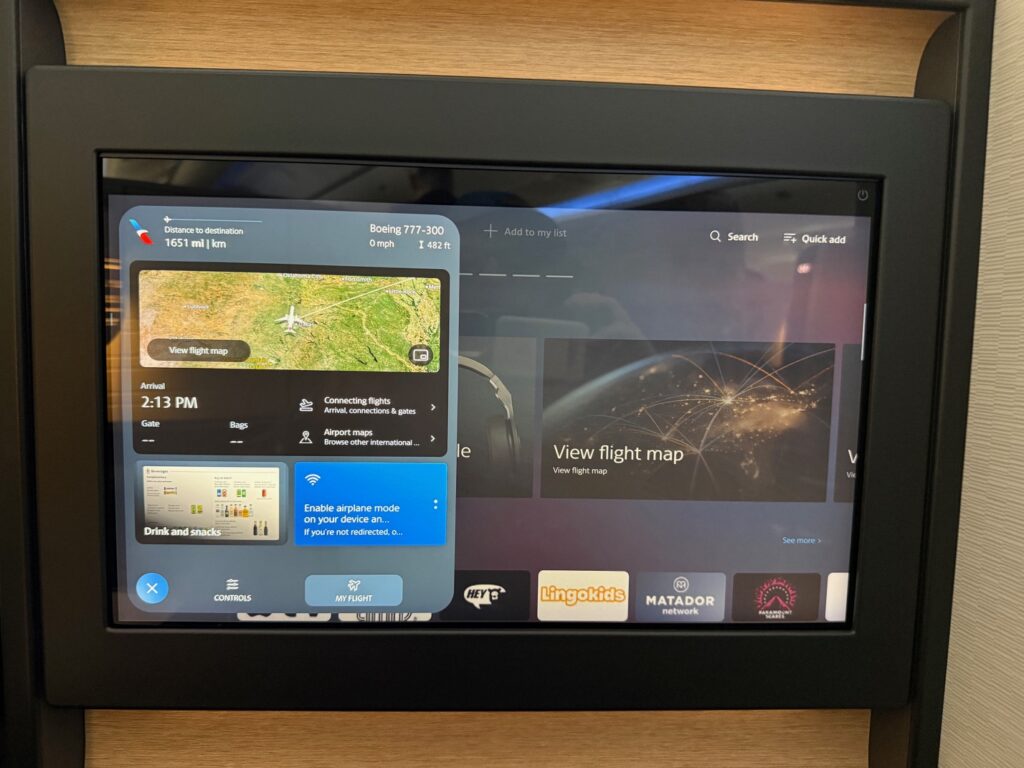
And let me tell you, the GUI was silky smooth as I scrolled through a terabyte of movies, TV shows, music, games, and films.
Passengers can also wirelessly stream the aircraft’s cached IFE library to their own phones or tablets, effectively creating a second-screen experience without consuming Internet bandwidth.
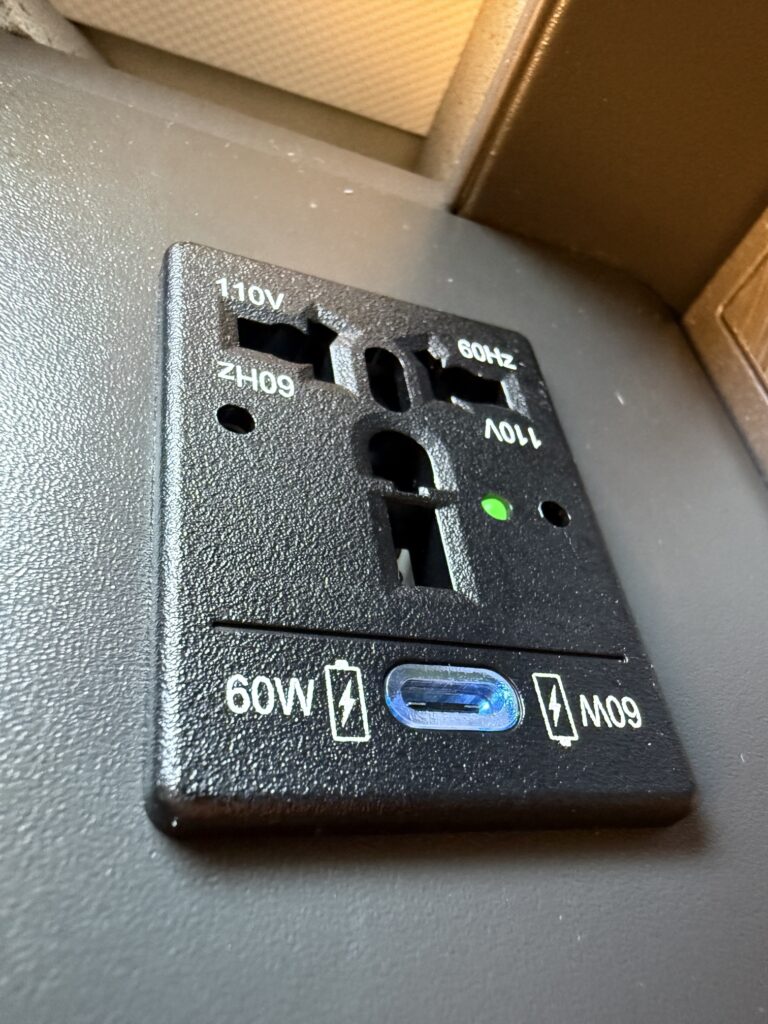
The full complement of power is on offer: USB-C, USB-A, and AC but try as I might the touted wireless phone charging wasn’t happening for me.
 Soft product
With the elimination of international First Class, questions arose about the fate of Flagship First Dining and check-in for that matter. The good news is that the sit-down à la carte dining experience has expanded to Flagship Suite business class customers.
The bad news is that more guests will be chasing the experience and Flagship Suite Preferred customers will not receive any preferential treatment.
A special kudos to the onboard catering on today’s flight. And a tip of the hat to the cabin crew, who couldn’t have been friendlier and prouder to show off their new baby.
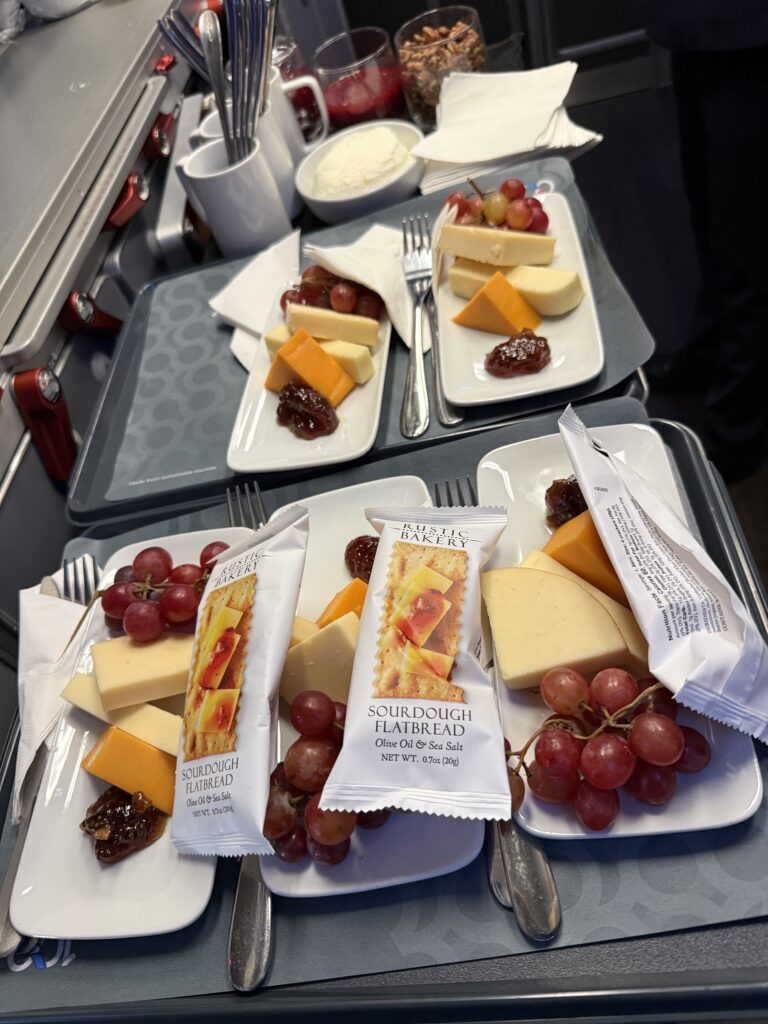
With four entrees on offer, I chose a hearty All Day Roast with rustic potatoes, peas, and turnips. The presentation and taste of my meal was top notch, tender, and juicy!
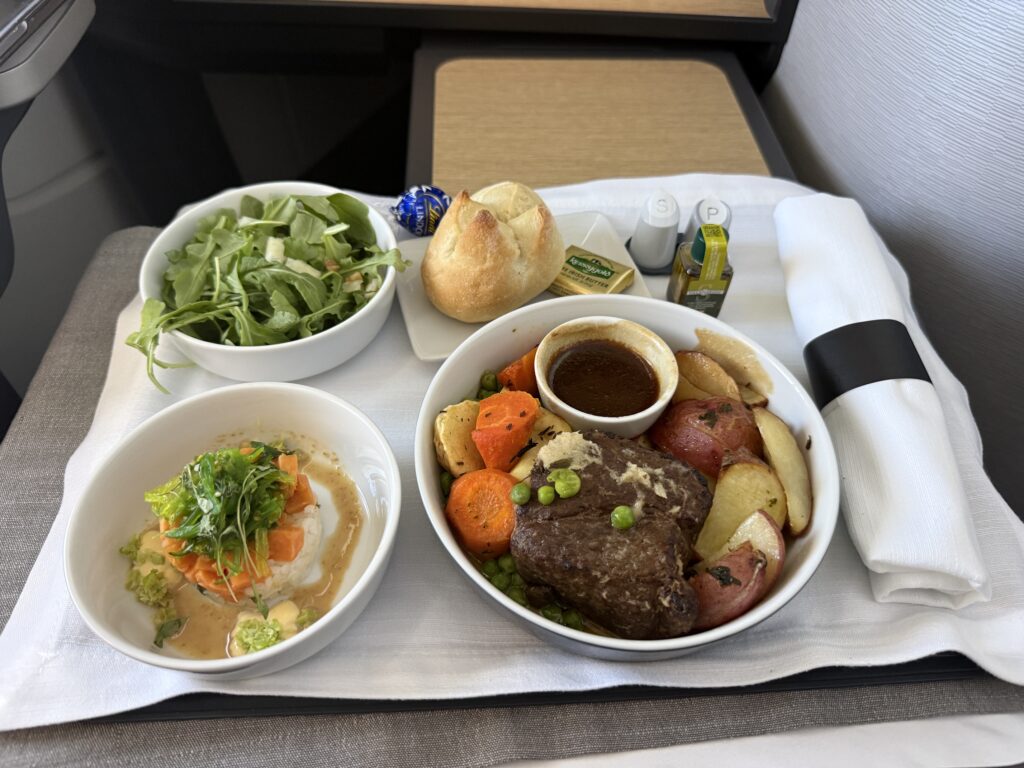
A true long-haul flight is a multi-course experience, though ours was served on one tray. The AA signature sundae was on offer!

Alas, my lactose intolerance made the sundae a no-fly zone. Instead, I opted for a pineapple upside down cake and wasn’t disappointed.

Bollinger champagne — yes, real champs, not the sparkling wine variety — served in flutes made an impression as well.
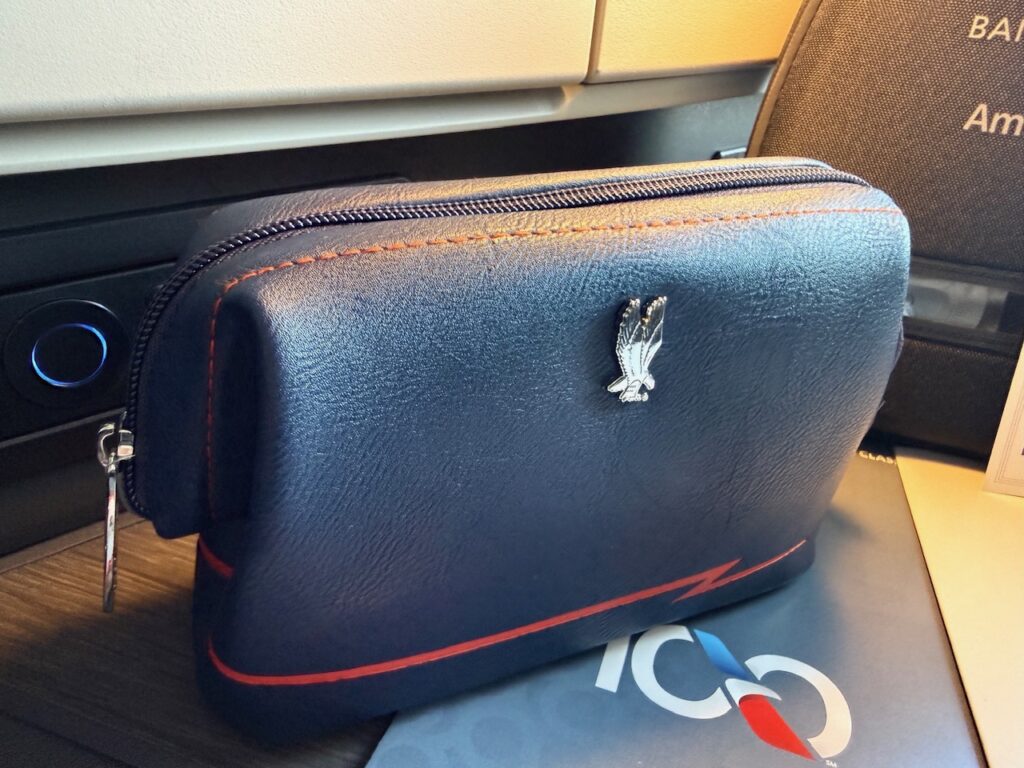
All Flagship Suite seats include a Nest Bedding mattress pad, pajamas and slippers, plus a duvet, a Cool Touch dual-sided pillow, and Bang & Olufsen noise-cancelling headphones which no longer must be collected an hour before landing.
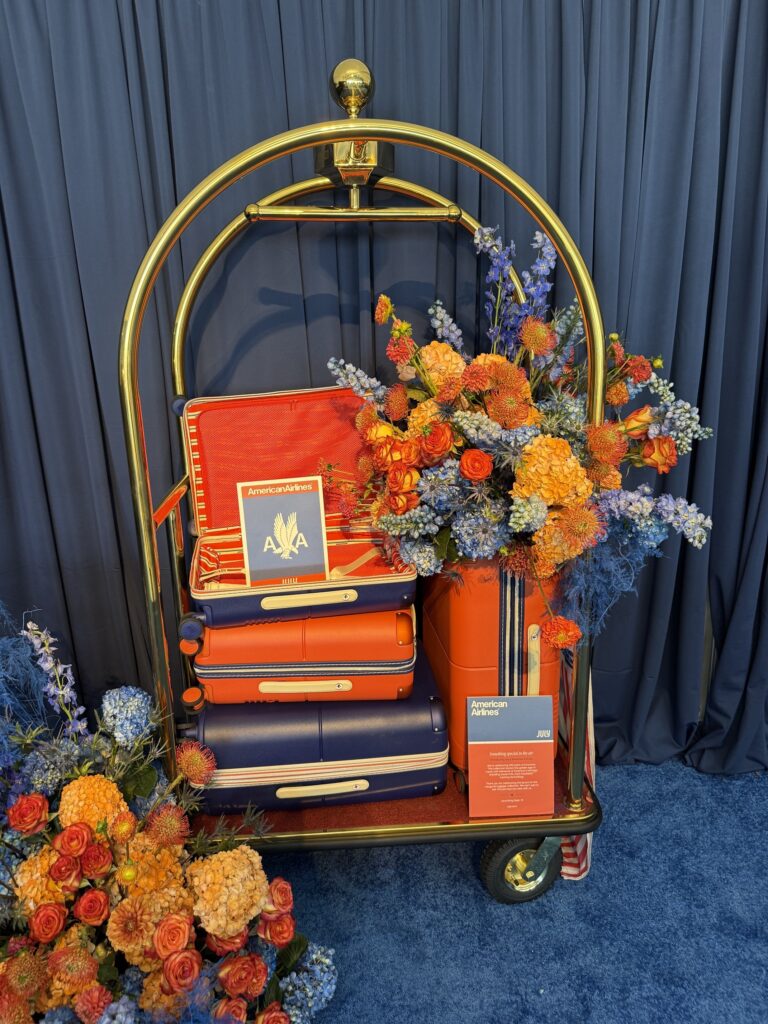
In a creative flair, American Airlines partnered with July for a special line of Flagship-branded luggage in vintage AA Astrojet livery colors. This symbolic touch suggests American has its eagle eye on the details. As a bonus, we were given our own such roller, which will be available for purchase.
A plumper Premium Economy, too
Behind the sprawling Flagship Suite cabin is the new 44-seat Premium Economy cabin, which represents a whopping 16-seat increase over the 28 aboard American’s prior 777-300ER configuration — roughly a 57% jump in PE capacity. This comes at a cost, however, with 1-inch less pitch, at 37″, than before.
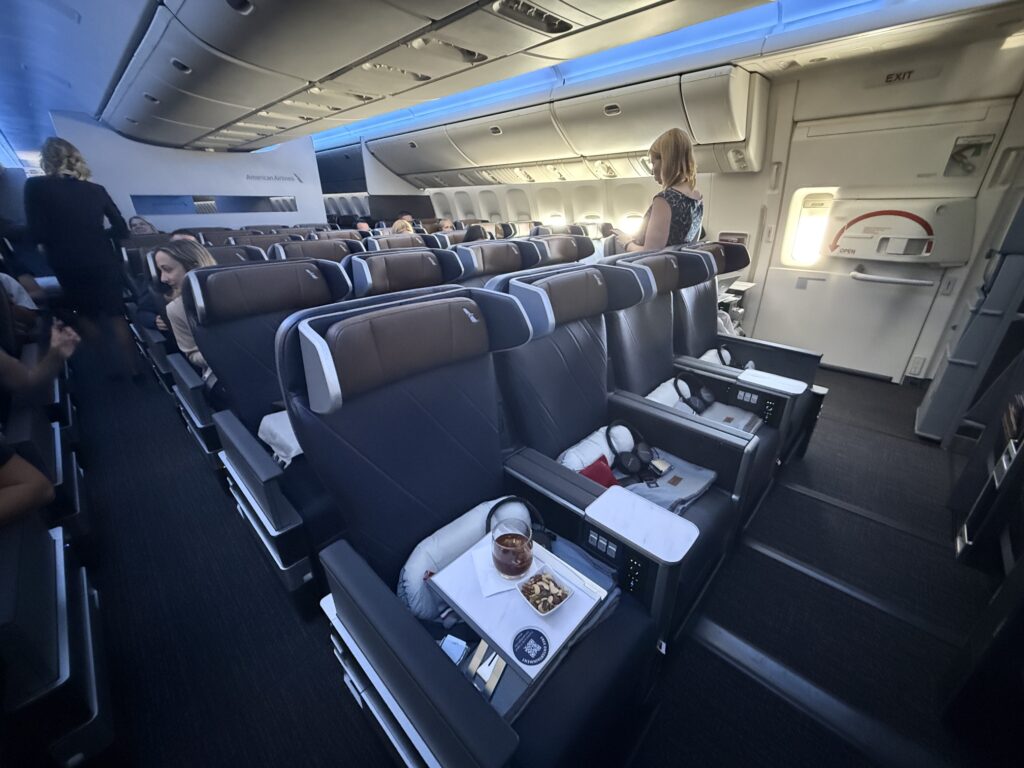
The seat itself, however, should be familiar to passengers who have sampled the 787-9P.
Developed with Teague, it trades the drab grey aesthetic of American’s previous-generation Premium Economy cabin for navy blue leather upholstery, tan adjustable headrests and subtle privacy wings. The seats also feature both calf rests and footrests, improved personal storage and integrated device holders.
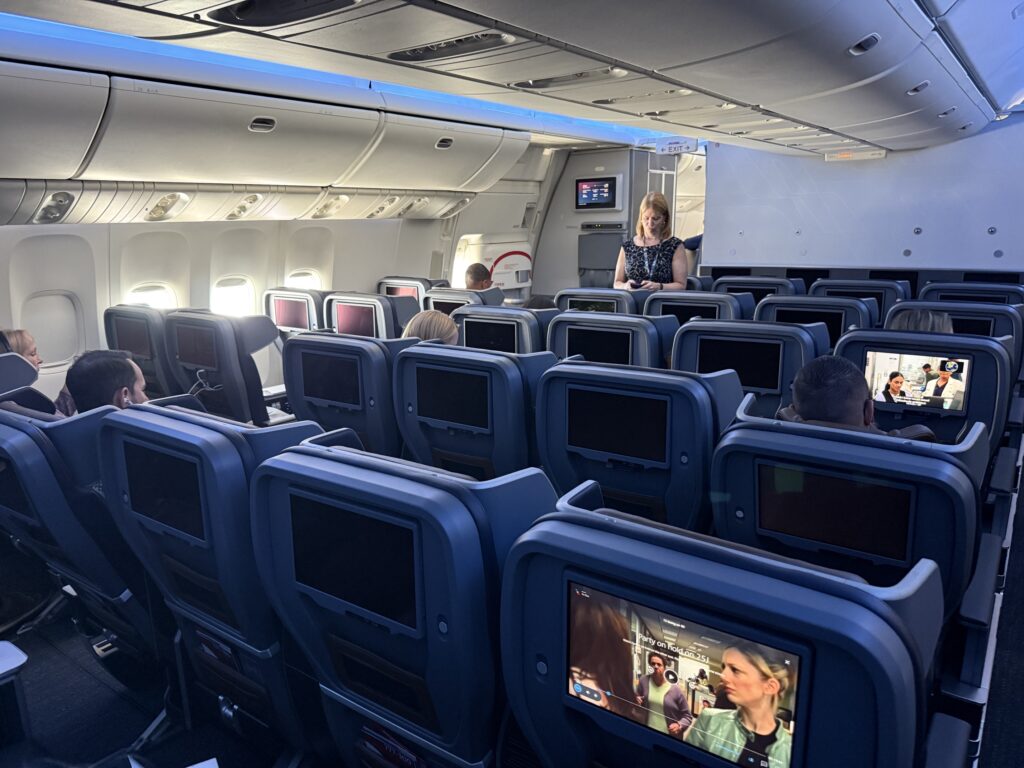 The tech-forward passenger experience carries over with AC and USB-C power, a 13.3″ 4K seatback screen, and bluetooth headphone pairing. I have a soft spot for this cabin, though with the added seats it isn’t as intimate as before.
Main Cabin
Farther aft, the numbers tell a different story. Despite all the changes taking place ahead of it, the economy class seat count remains 216 seats, exactly the same number carried by American’s previous 777-300ER configuration.
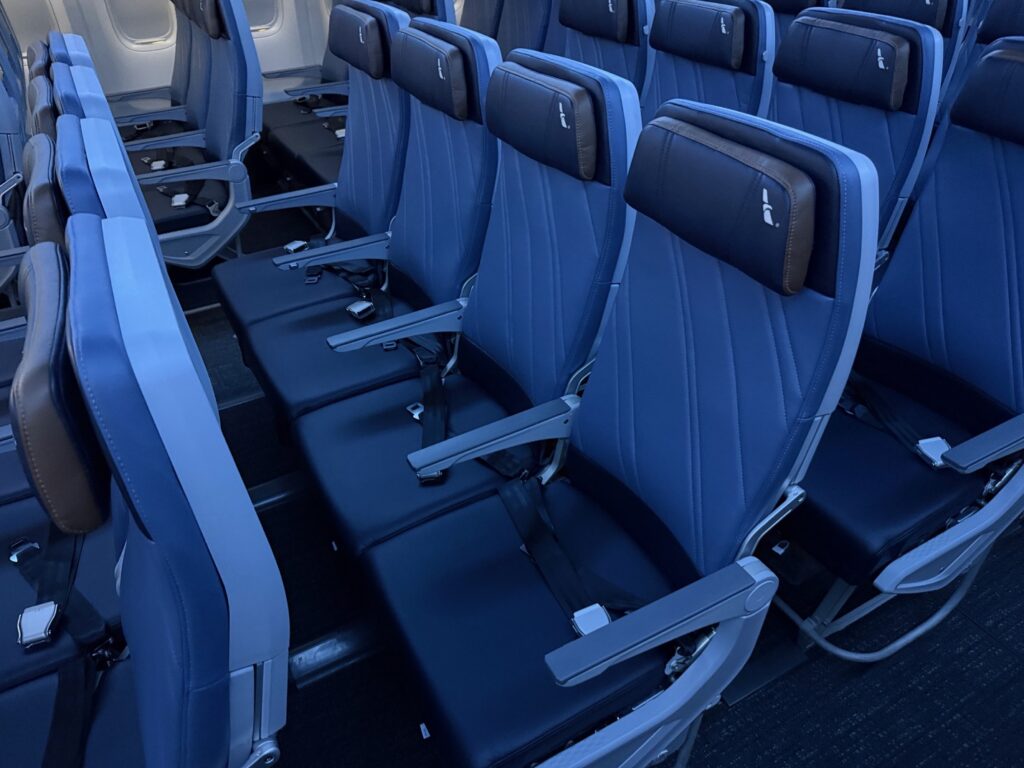
Those seats continue in the familiar 3-4-3 layout. But American has made a small adjustment to the mix between standard Main Cabin and its extra-legroom Main Cabin Extra product.
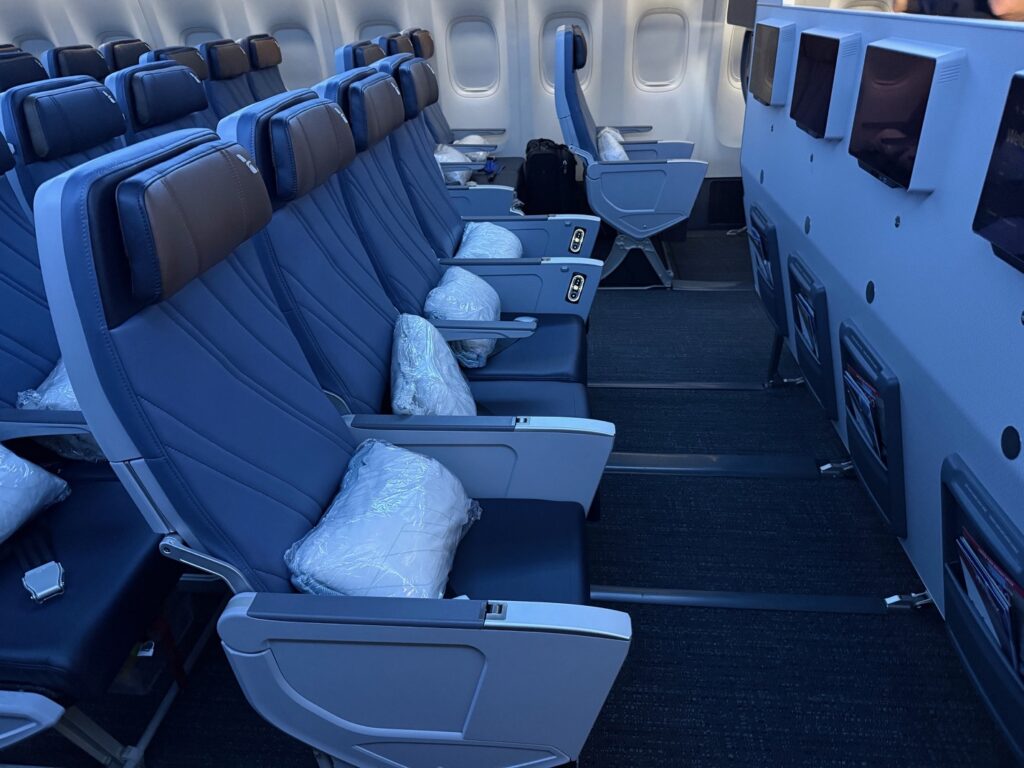
Whereas the prior 777-300ER layout carried 28 Main Cabin Extra seats and 188 standard Main Cabin seats, Project Olympus increases Main Cabin Extra by two seats to 30, while standard Main Cabin drops correspondingly to 186 seats.
The Safran slimlines have been supplanted by Collins Aerospace’s Aspire seats. MCE pitch remains at 34”, while Main Cabin is at 30″-31″. The seatback screens, sized 13.3″, should help to keep passengers’ minds off of the cramped living space of their seat.
Retrofit timeline
American’s first retrofitted 777-300ER enters revenue service on September 2 from JFK to Buenos Aires. The airline expects all 20 of its 77Ws to complete their conversions by the end of 2027. The 777-200ER fleet will follow by the end of 2029.
American has raised the stakes in the premium arms race. And for now, the longtime laggard is the leader.
Let’s hope that American is truly on its way back to being something special in the air.
 Related Articles:
- American Airlines’ Premium Economy on A321XLR is a delight
- American Airlines’ 787-9P ups the ante for Premium Economy
- Flagship Suite Preferred impresses on American 787-9P inaugural
- Welcome to American’s A321XLR inaugural in a Flagship Suite
- Service oddities mar otherwise solid American Airlines JFK-HND flight
All images, bar the final embedded image, are credited to the author, Chris Sloan. Final image credited to American Airlines