
 As a blind solo traveler, I find more value than most in the idea of a nonstop flight. Simply put, nonstops offer less opportunities for something to go wrong.
Austin-Bergstrom (AUS) doesn’t have nearly as many nonstop options as my former Phoenix home, so I have accepted that a flight connection is usually just a fact of life now.
For example, I regularly travel to Pittsburgh for meetings. Southwest offers a daily nonstop from Austin to PIT, but because the flight time usually doesn’t suit my needs, I book a connection through either Dallas or Houston on American or United Airlines.
However, on my most recent trip to the Steel City, I was pleasantly surprised that the schedule would in fact work for me. And so, for the first time in over a decade, I booked with Southwest via my employer’s travel portal.
After downloading Southwest’s iPhone app to manage my flight, I couldn’t remember the password for my old Rapid Rewards account.
Using the app to reset my password, I was told that my long-dormant account had been deactivated, making my reset an exercise in futility. I was, however, able to create a new account and tie my reservation to it easily.
Southwest’s app
I did find one issue with the accessibility of Southwest’s app.
When I navigated to a button to edit a portion of my booking, the built-in VoiceOver screen reader announced all the buttons as “icEditBlue button” whereas I expected to simply hear the word “edit,” followed by what was being edited, such as “edit traveler information button.”
Nonetheless, I found the app to be overall quite accessible — right up there with those from competitors United and American.
For my departure to Pittsburgh, I rode to the airport with my wife. She dropped me off at the Southwest counter where their navigation escort would meet me and accompany me to my gate. I was through security and at my gate in very short order!
Airport and onboard assistance
Before boarding began, a gate agent personally let me know that they were about to start preboarding, and helped me to the door.
I made my way down the jet bridge and, once on the plane, one of the flight attendants helped me to my seat.
The FAA mandates that individualized safety briefings be provided to passengers with disabilities. But a crew member told me to remain seated and wait for them to come get me in the event of an emergency. (I’m pretty sure the FAA would not consider this to be an acceptable briefing.)
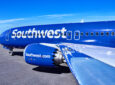
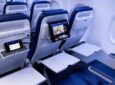
Settling into my assigned seat on the Boeing 737 MAX 8, I successfully plugged my phone into the USB-C charging port on the seatback in front of me. I did have a little trouble connecting to the inflight Wi-Fi. But once I figured out that I could go to southwestwifi.com on my phone’s web browser to sign on, I encountered no further issues.
After takeoff, flight attendants came through the cabin to provide a drinks service and pass out snacks. I selected the cookies and spent the rest of the flight scrolling on social media and listening to music on my phone. The Wi-Fi worked fine and, before I knew it, I was in Pittsburgh.
Upon arrival, a Southwest escort was already waiting for me; they walked me from the gate to PIT’s new landside terminal, and onward to the taxi stand.

After a day and a half of meetings in Pittsburgh, I grabbed a Lyft from downtown back to the airport.
Here again, Southwest was ready with an escort at the counter.
The boarding process was very similar to my outbound experience. The only notable difference was that a flight attendant urged passengers to load the bins with their bags positioned “upright like a taco, not flat like a quesadilla.” I texted this line to a friend of mine who’s a flight attendant for another airline and she told me she’s going to steal it.
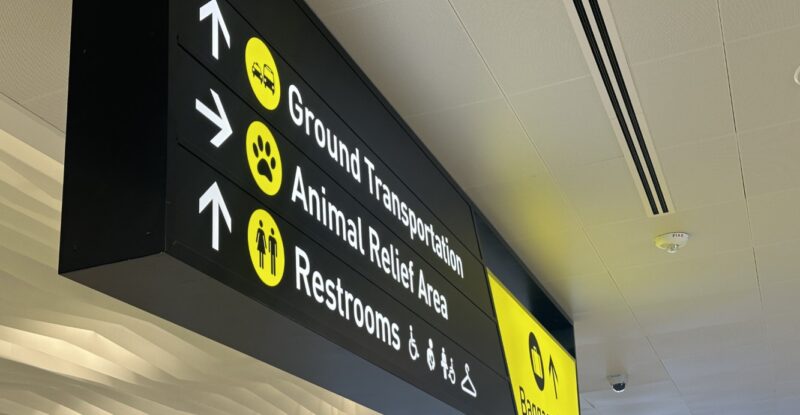
An escort was again waiting for me when I deplaned at Austin. They helped me with the long walk from the far-west gates of the terminal, through baggage claim, and onward to the airport’s mobility assistance zone. This is an area just outside baggage claim where passengers with mobility needs can wait for taxis or rideshares instead of having to walk to the rental car facility.
When arriving at the zone, airport staffers will either call for the next available taxi or stay on the lookout for the passenger’s rideshare. While this process can be a little clunky at times, especially for rideshare drivers unfamiliar with the process, it generally works pretty well. I was in a taxi and on my way back home in no time at all.
It’s safe to say that Southwest has gone through a lot of changes over the past few years. While the carrier is now much more like its legacy peers, with assigned seats and bag fees, it still has great people working for it. That can make all the difference in the world. After this experience, I wouldn’t hesitate to book with Southwest again.
Related articles: