
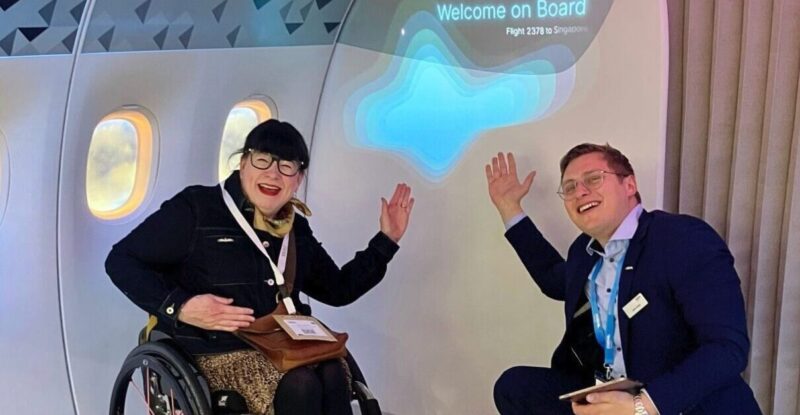

This year’s Aircraft Interiors Expo (AIX) in Hamburg was awe-inspiring, with a raft of exhibitors proudly displaying accessible air travel solutions that consider Disabled passengers’ lived experiences.
Whereas accessible solutions went mainstream at last year’s show, AIX 2026 was a true tipping point. After honing their designs based on robust feedback, exhibitors this year positioned accessible innovations front and center on their stands.
Your author, a wheelchair user, can’t shout about it enough. Let’s take a look.
Airbus: Airspace U Suite
Visiting Airbus’ stand, I felt seen.
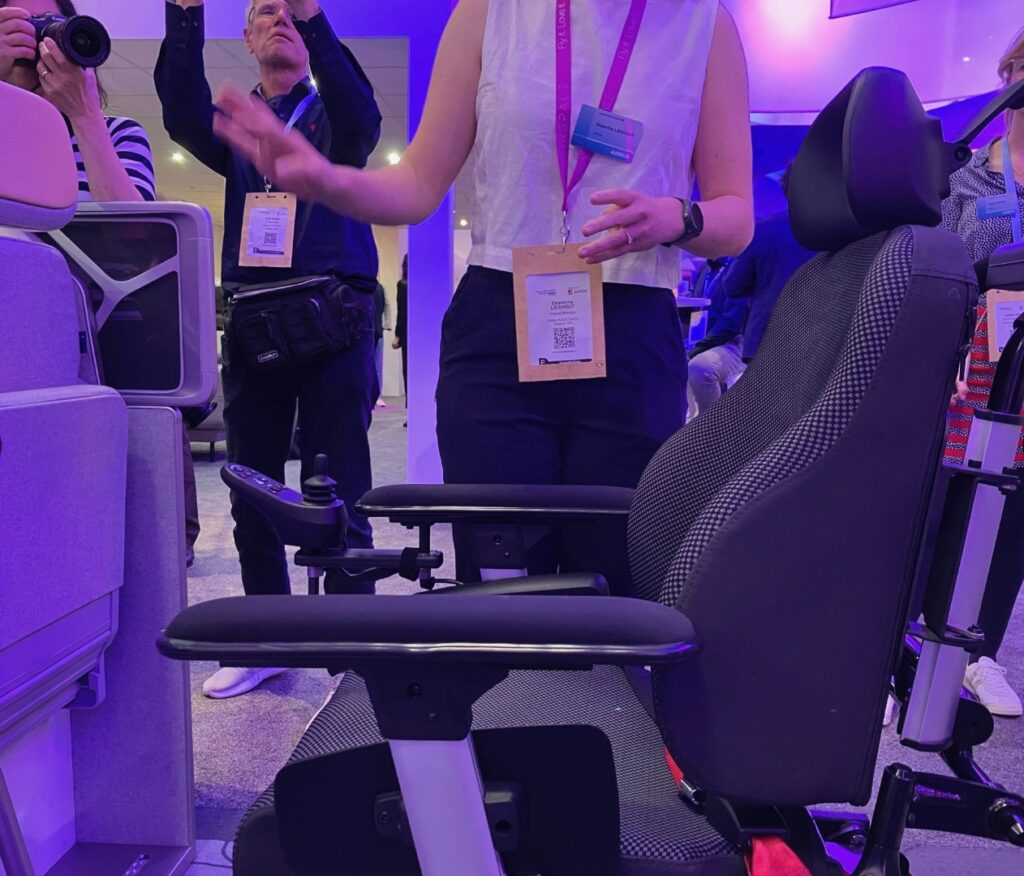
Continuing to enhance its ‘Magic Triangle‘ approach — with the aim of A) facilitating a wheelchair on board, B) ensuring there is a lavatory for persons with reduced mobility (PRMs), and C) providing digital solutions and services, all anchored by optimized interior layouts — the European airframer used the occasion of AIX to showcase a new cabin concept called Airspace U Suite, an aesthetically beautiful, multi-purpose space that can facilitate a wheelchair tie-down.
Shortlisted this year for a Crystal Cabin Award (CCA) in the Accessibility category, and developed in collaboration with Ipeco Holdings, accessible vehicle specialist AMF-Bruns and Sunrise Medical, Airspace U Suite enables a Disabled passenger to remain in their own wheelchair or assistive device, whilst also providing seating for their flying companions.
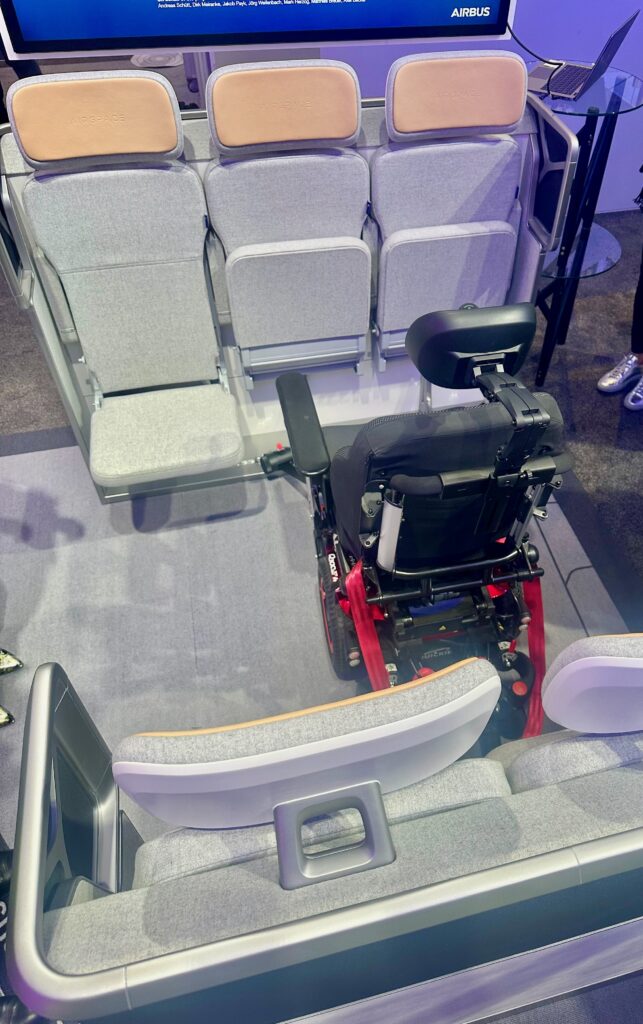
The wheelchair securement portion of this system has already undergone a successful test flight! The next stage is a full compartment test.
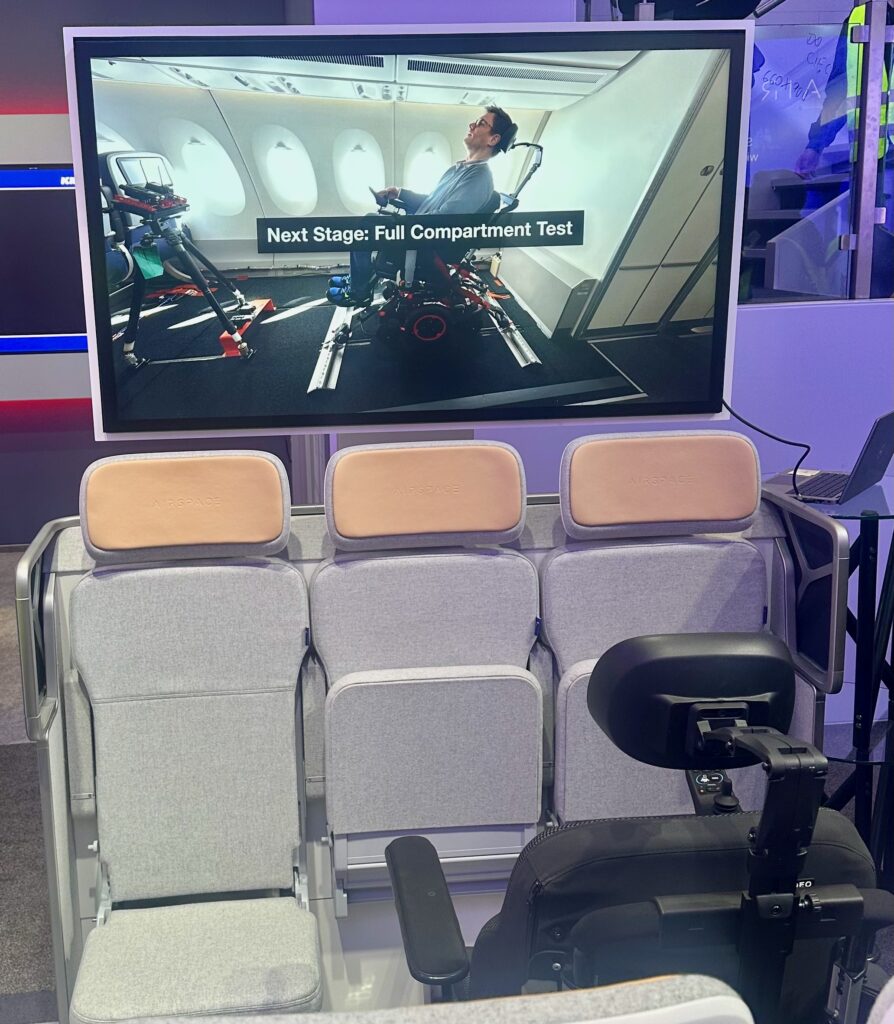
In addition to enabling a wheelchair user to remain in their own device, the Airspace U Suite is being positioned as flexibly able to support other use cases. It can, for instance, be used for “a tired traveler looking to rest in a lie-flat, a family wanting to share space, or a business team holding an inflight meeting,” Airbus suggested.
But the potential autonomy provided to PRMs can’t be understated. Airspace U Suite is already generating big excitement amongst my Disabled peers, as did the Air4All and Collins Aerospace Prime solutions shown in the past.
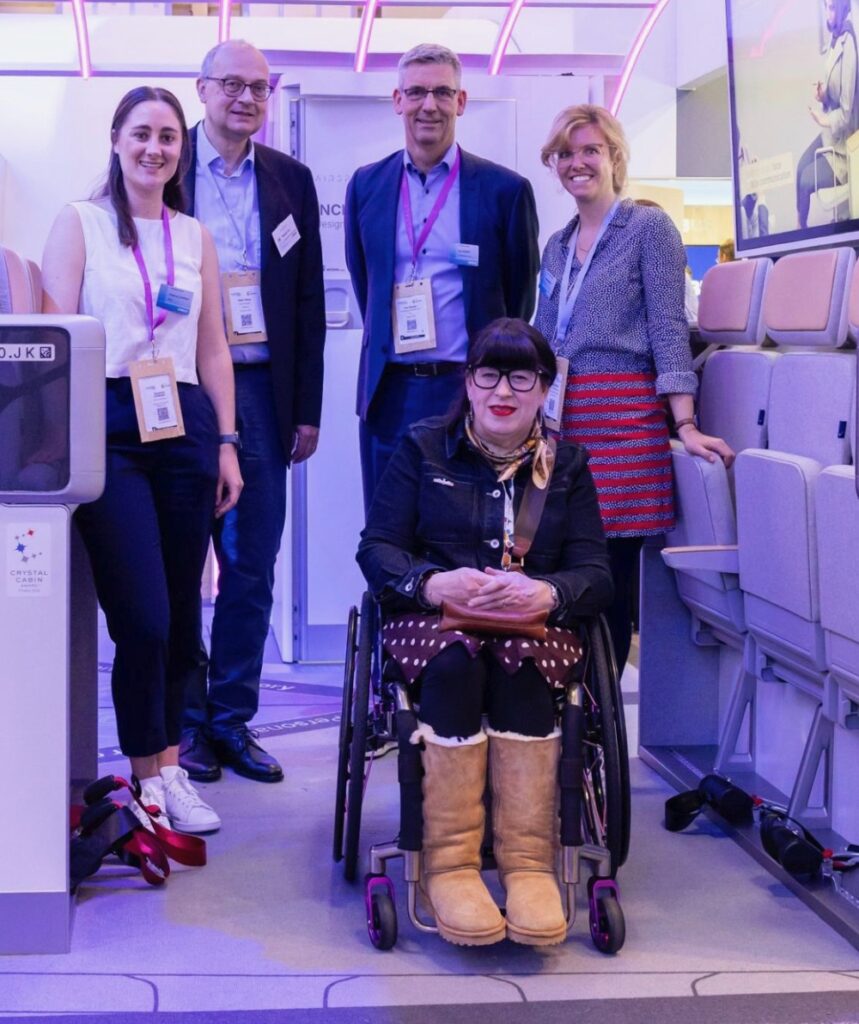
We now have at least three viable wheelchair-in-the-cabin options for Disabled passengers, and yes, I know there are still operational, certification and other hurdles to surmount. But I get choked up just thinking about what it would be like to simply roll on and off an aircraft with no painful transfers, and no wheelchair damage.
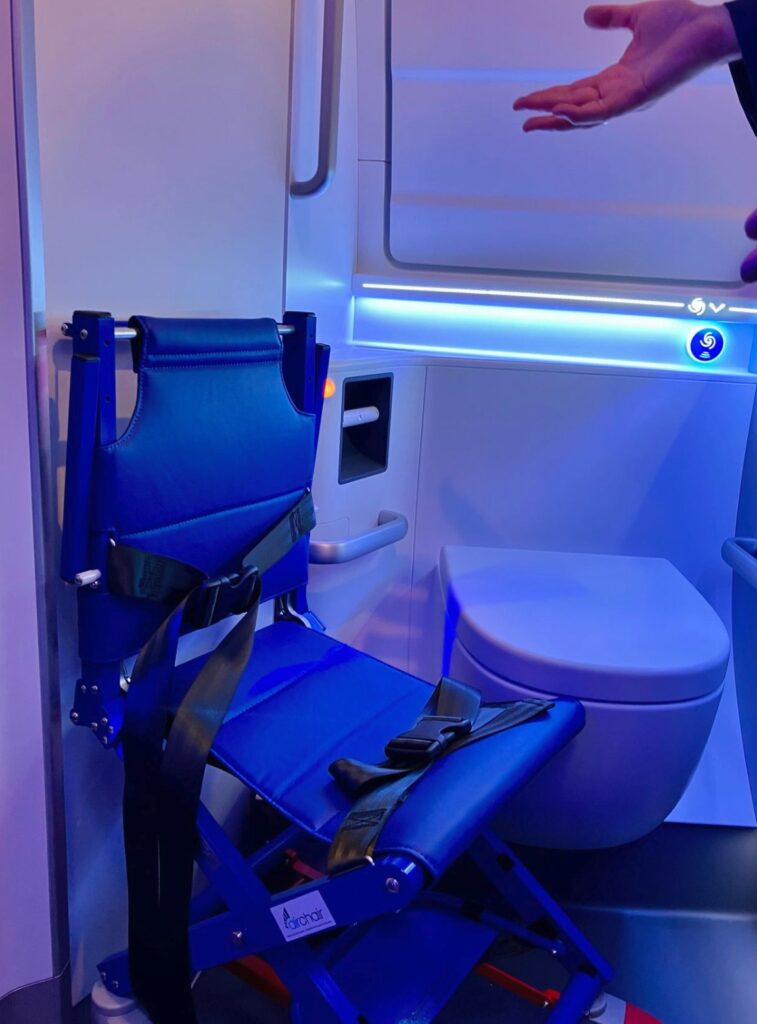
Underscoring its commitment to the Magic Triangle approach, and sitting right beside the Access U Suite on its stand, Airbus also displayed a fully accessible lavatory for narrowbody aircraft at AIX, complete with Airchair’s newest aisle chair.
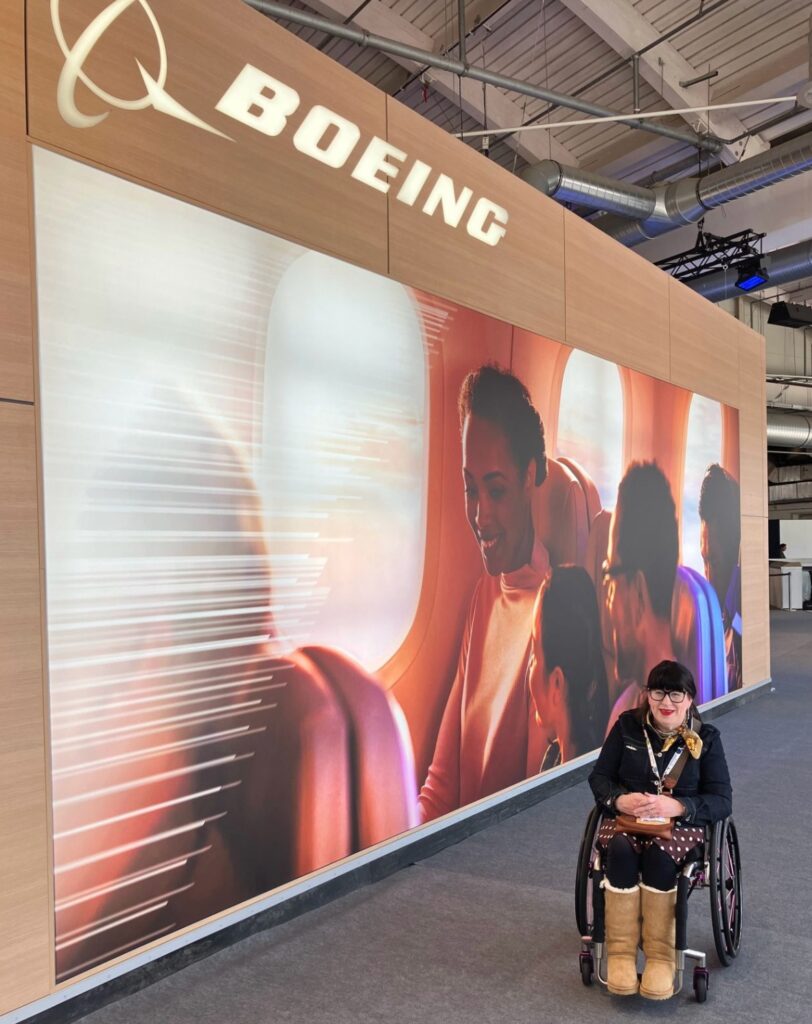
Boeing: HVCC for wheelchairs and a temporary ramp
Following an Inflight-hosted CabinSpace Live conference session, during which Boeing regional director, cabin marketing Stephanie Werner revealed that the US airframer is working with Airbus to jointly develop a tactile placard standard for aircraft, it was lovely to catch up with her on Boeing’s stand, where an array of solutions were showcased and discussed.
Boeing’s High Value Cargo Container (HVCC) is designed to more safely transport wheelchairs and other assistive devices in the cargo hold.
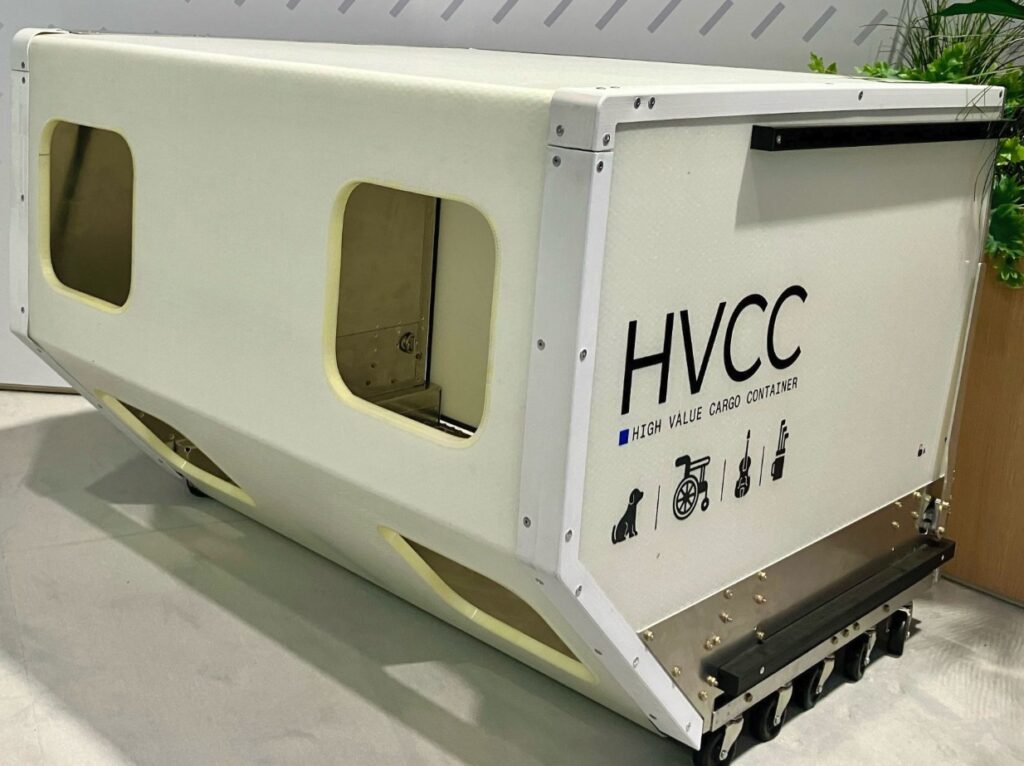
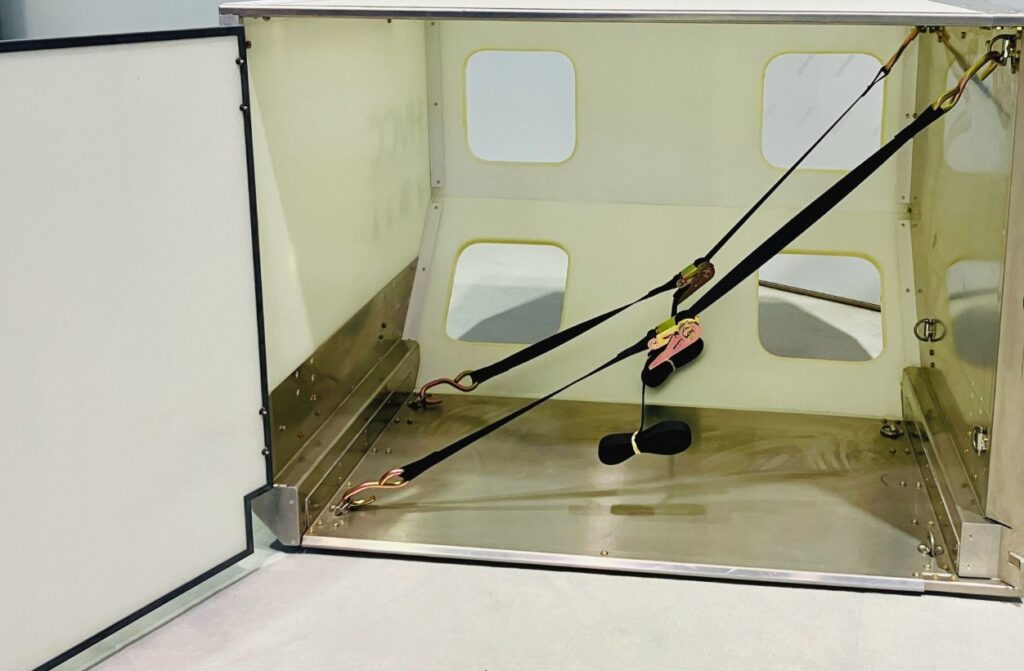
With multiple wheels, the HVCC is surprisingly maneuverable and can hold up to 450 pounds in weight. This prototype continues to evolve based on feedback from the disability community and operational staff.
A Boeing project is also underway to create a temporary ramp that would cross the threshold into the aircraft cabin.
Entering and exiting an aircraft is one of the most dangerous points in my journey, especially if the aisle chair wheels do not make contact with the transfer surface at the same time. A new temporary ramp from Boeing would remove a potential trip hazard for passengers, while facilitating easy entry for a Disabled passenger in an aisle chair.
There are already temporary ramps in use in the UK, though I have not yet personally seen one. I greatly welcome Boeing’s initiative.
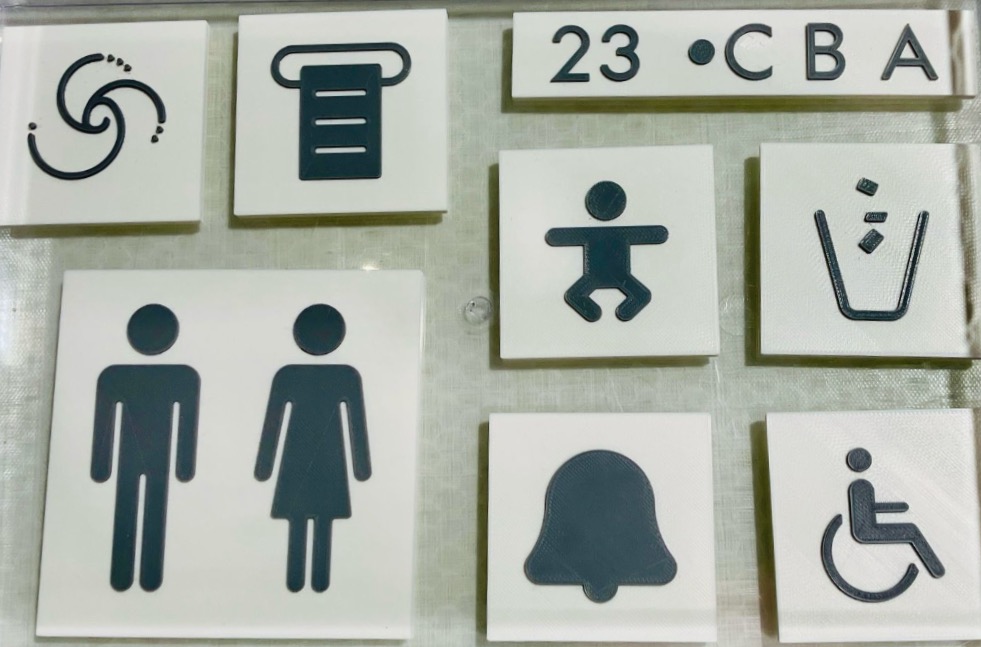
Kudos to Boeing for seeking to standardize signage.
Collins Aerospace: Prime, including for widebodies
Two years ago, Collins Aerospace revealed its wheelchair-in-the-cabin concept for narrowbody aircraft.
Later called Prime, the solution uses a standard wheelchair Q’STRAINT-style restraint system set into the floor, and features a custom, transformable monument that provides modern passenger amenities when PRM usage is required — or a flexible crew service station when not.
The monument houses all the passenger amenities enjoyed by other travelers, including a height-adjustable tray table with integrated tablet holder, power outlets, and a passenger service unit with reading light, attendant call button and public address speaker.
In short, it’s an equitable solution.
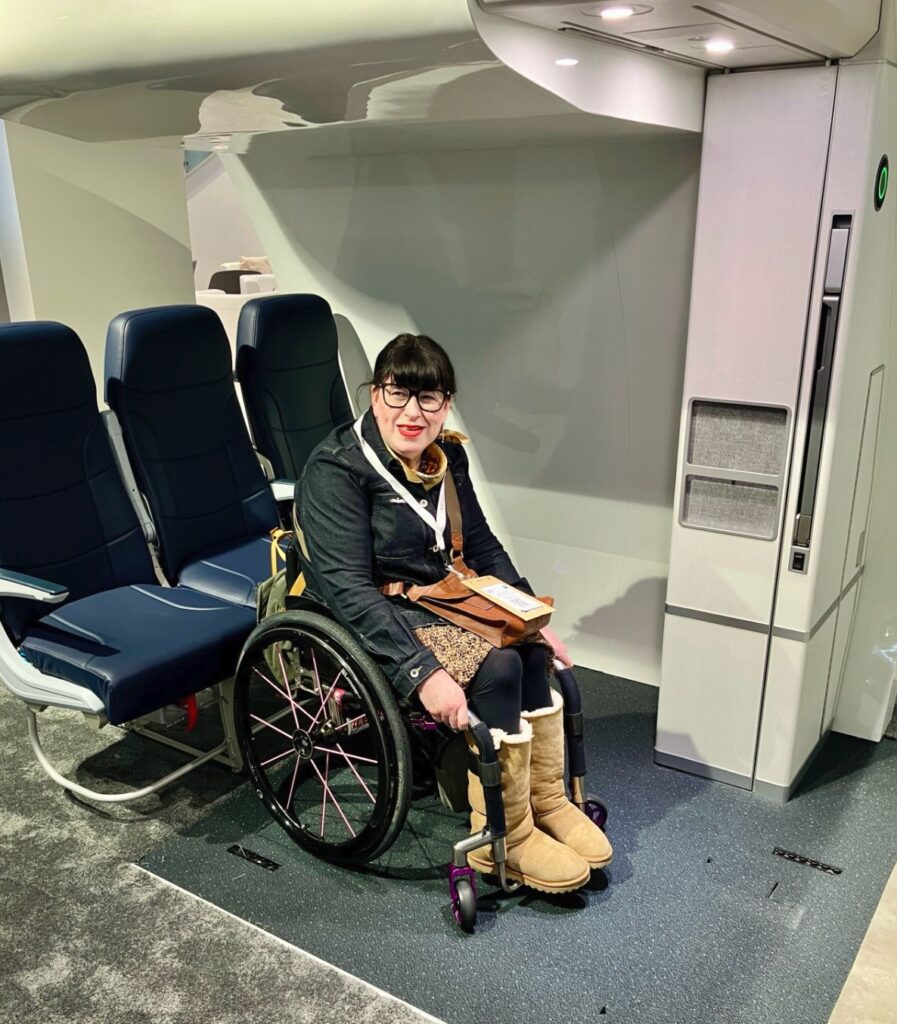
For narrowbodies, the passenger remains in their power chair for the duration of the boarding, pre-flight, flight and deplaning, including taxi, takeoff, and landing phases. Here I am positioned in the Prime footprint, but not using the tie-down.
Of course I was delighted to visit Collins’ stand this year, as the seatmaker is always iterating on its designs.

The good news is that Collins is looking to extend the concept to widebody aircraft, albeit with a twist.
The Prime widebody concept would require the Disabled passenger to use an airline seat, in this particular instance (shown in the firm’s renderings) the Collins MiQ seat for Premium Economy, whilst keeping their power or manual wheelchair nearby, and in the cabin.
This decision was made through direct passenger feedback based on the configuration, Collins said.
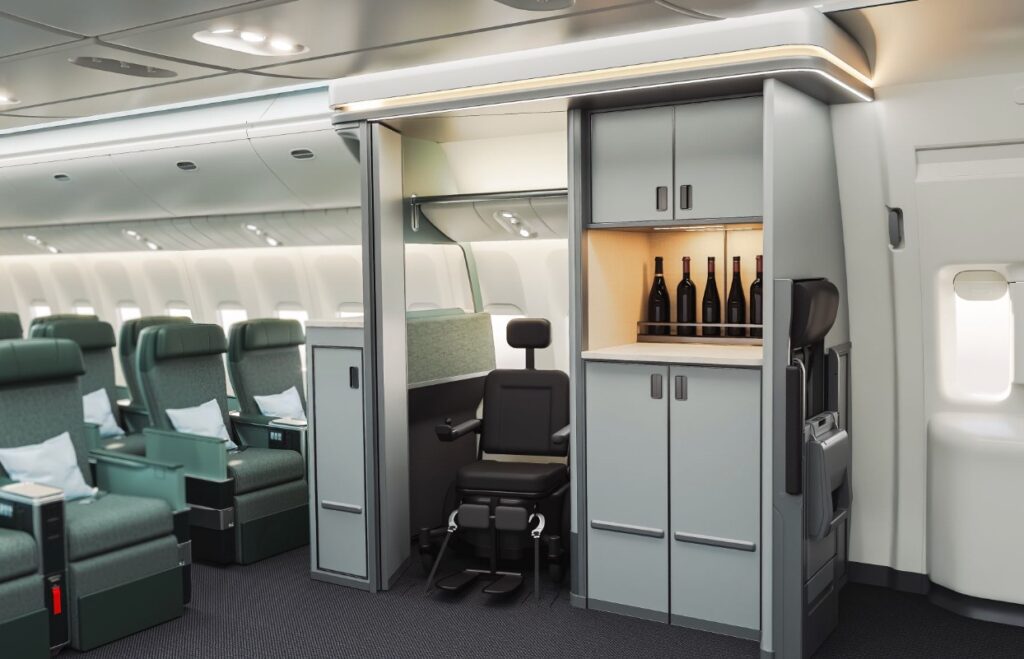
Knowing that one’s wheelchair is safely stored in the aircraft cabin, as opposed to the cargo hold, would provide peace of mind.

Also remember that wheelchair users still want the choice to sit in a business class/PE seat as it might be as comfortable as their customized seat. Collins Prime for widebodies recognizes the importance of passenger choice.
Diehl Aviation: AURS, Space³ and an overhead bin test
This year’s Crystal Cabin Award winner in the Accessibility category was Diehl Aviation’s AURS, an Adaptive User Routing System that makes aircraft lavatories navigable for passengers with visual or hearing impairments.
The solution combines an accessible layout with a digital interface that adapts to the passenger’s requirements.
For example, blindness is not always absolute; a lot of people can still see shape and light but not detail. So for them, a low-vision mode with high-contrast surfaces could be employed. Touchless features would then be deactivated, requiring the passenger to physically push the clearly distinguishable buttons.
With AURS, in-lav navigation can also be facilitated by tactile guidance, Braille, and a mirror display featuring voice-to-text announcements.
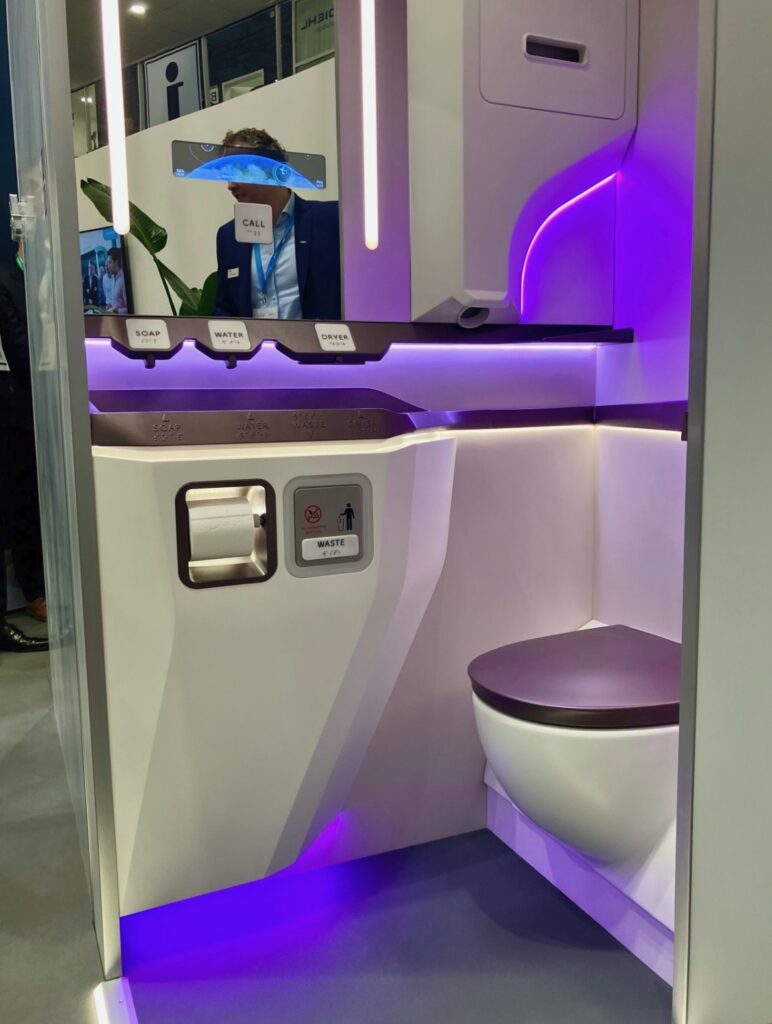
Diehl Aviation is considering integrating this type of accessibility personalization into an airline app. On entry, the room would activate the required tailored features, such as, for example, an audio guide.
It’s also extremely pleasing to see more accessible lavatories on the show floor.
Diehl Aviation’s Space³ innovation, which won last year’s CCA in Accessibility, allows two side-by-side lavatories to be turned into one larger-footprint space for widebody aircraft, by using a sliding interior panel.
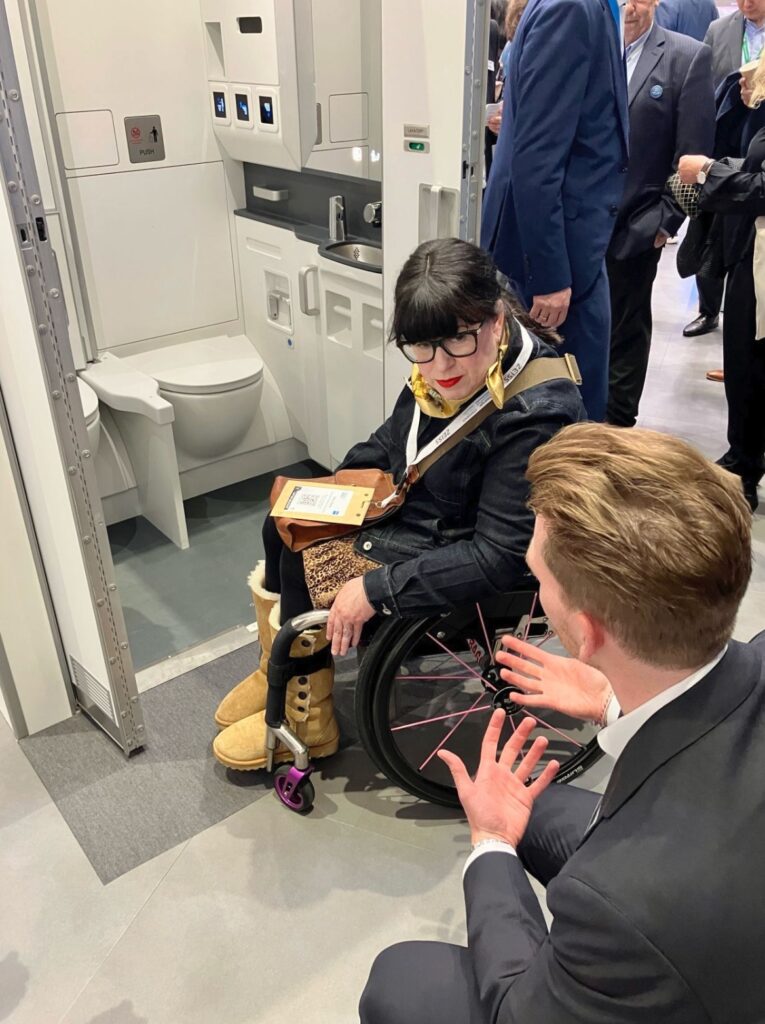
Space³ also features plenty of grab handles, plus a new easier ramp to ease entry and egress for the aisle chair user. The firm is now exploring how to adapt Space³ for narrowbodies.
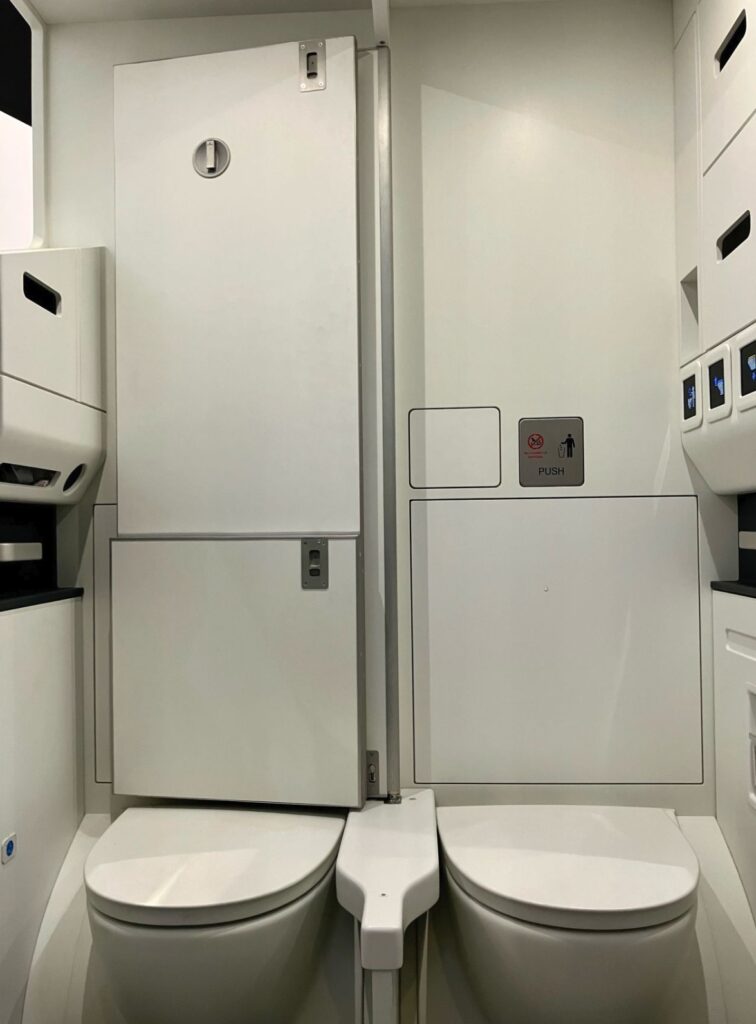
When I visit Diehl at AIX each year, I also like to check to see if its overhead bins can carry a manual wheelchair. They passed the test.
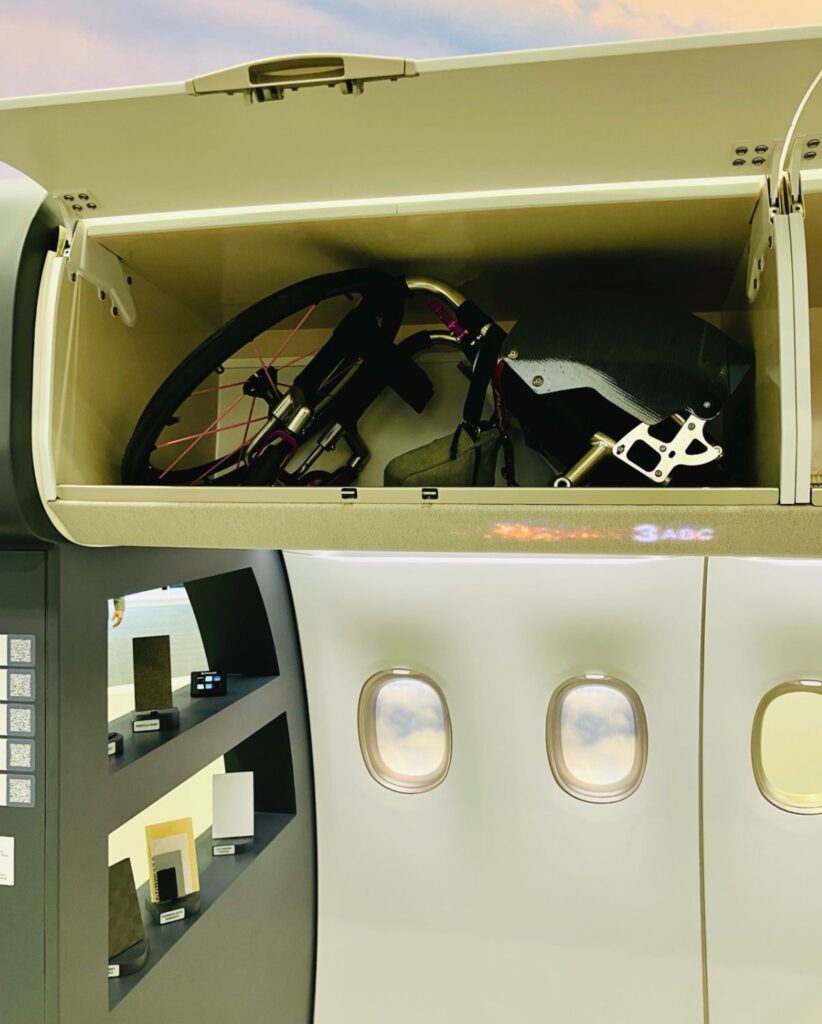
It’s certainly handy for manual wheelchair users to have the opportunity to store their wheelchair in the cabin space.
RAVE Aerospace and Safran: Origin demonstrator
Though not strictly an “accessible air travel” solution, the Origin demonstrator deserves a mention.
Jointly developed by inflight entertainment (IFE) specialist RAVE Aerospace and seatmaker Safran, the concept boasts a massive, U-shaped micro-LED screen, Safran’s Euphony headset-free audio solution, and dynamic comfort and temperature management systems to deliver a truly immersive experience to passengers.
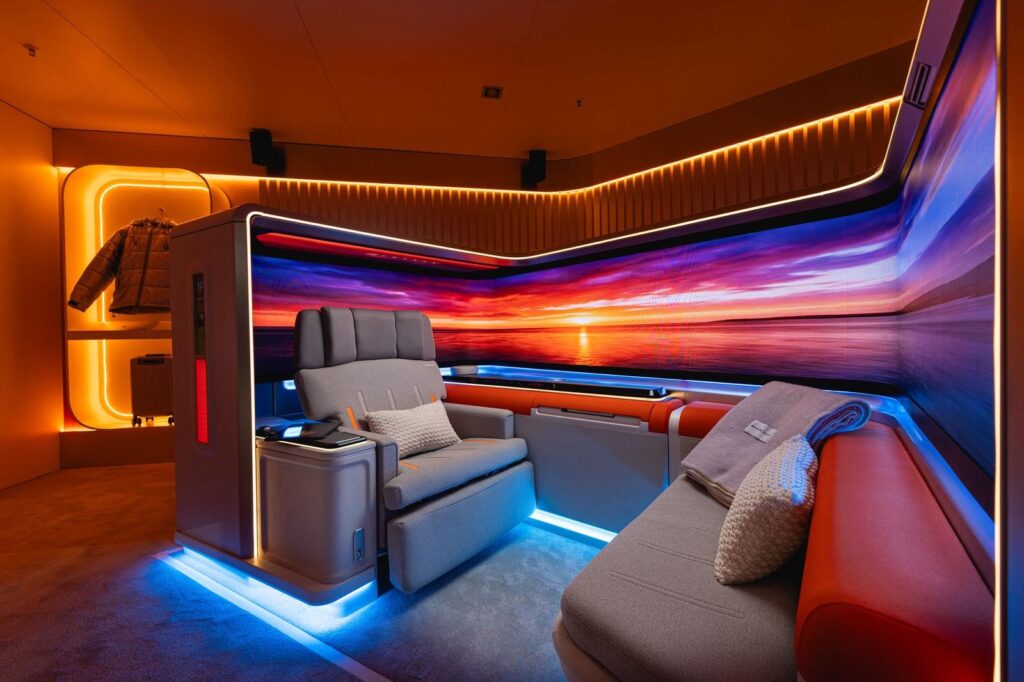
Experiencing Origin made me forget everything else that was happening around me. I found it to be magical and mind-blowing.
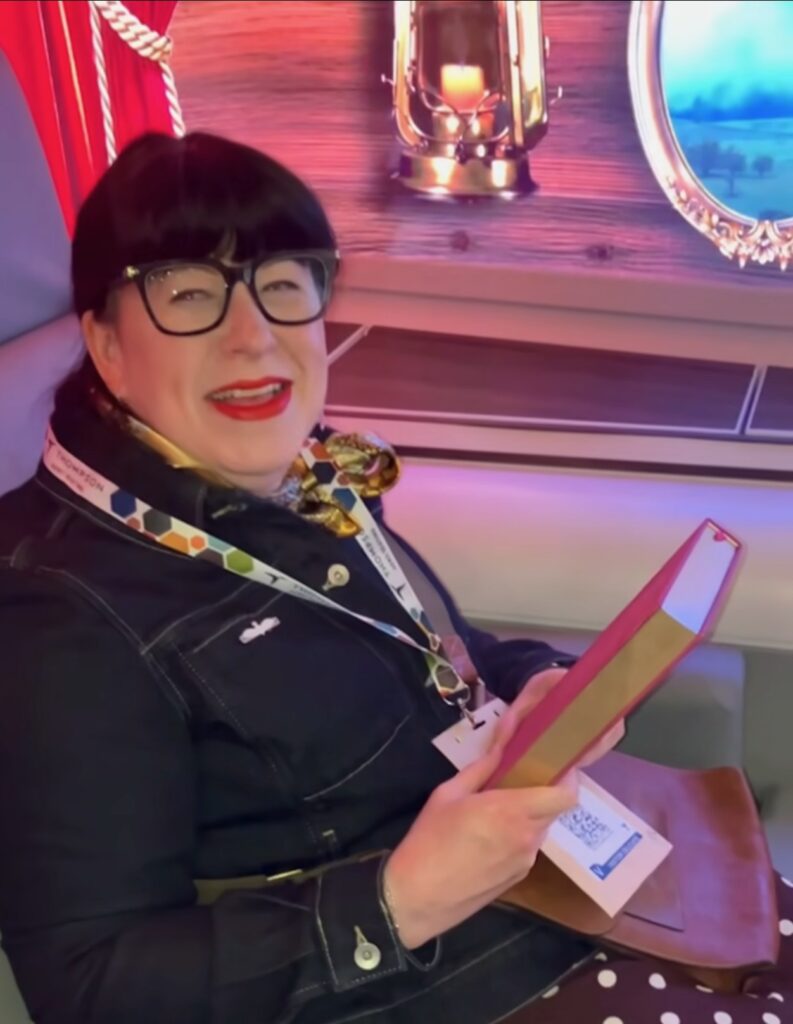
Formerly known as Safran Passenger Innovations, RAVE has worked diligently to expand accessible entertainment for passengers by making its accessible IFE standards and tools free to industry. This year, it was shortlisted for a CCA in the Accessibility category for a solution that speedily transcribes onboard announcements into text displayed on an IFE screen with real-time translation into the passenger’s preferred language.
Pairing Origin with RAVE’s full suite of accessibility solutions would be awesome indeed, and naturally is already something they’re thinking about.
Unum Aircraft Seating: Access-IQ partnership
Accessibility was once again a key focus on Unum Aircraft Seating’s stand.
As ever, the aircraft seatmaker is constantly working to make its lie-flats as accessible as possible, including for PRMs who require a transfer from the aisle chair.
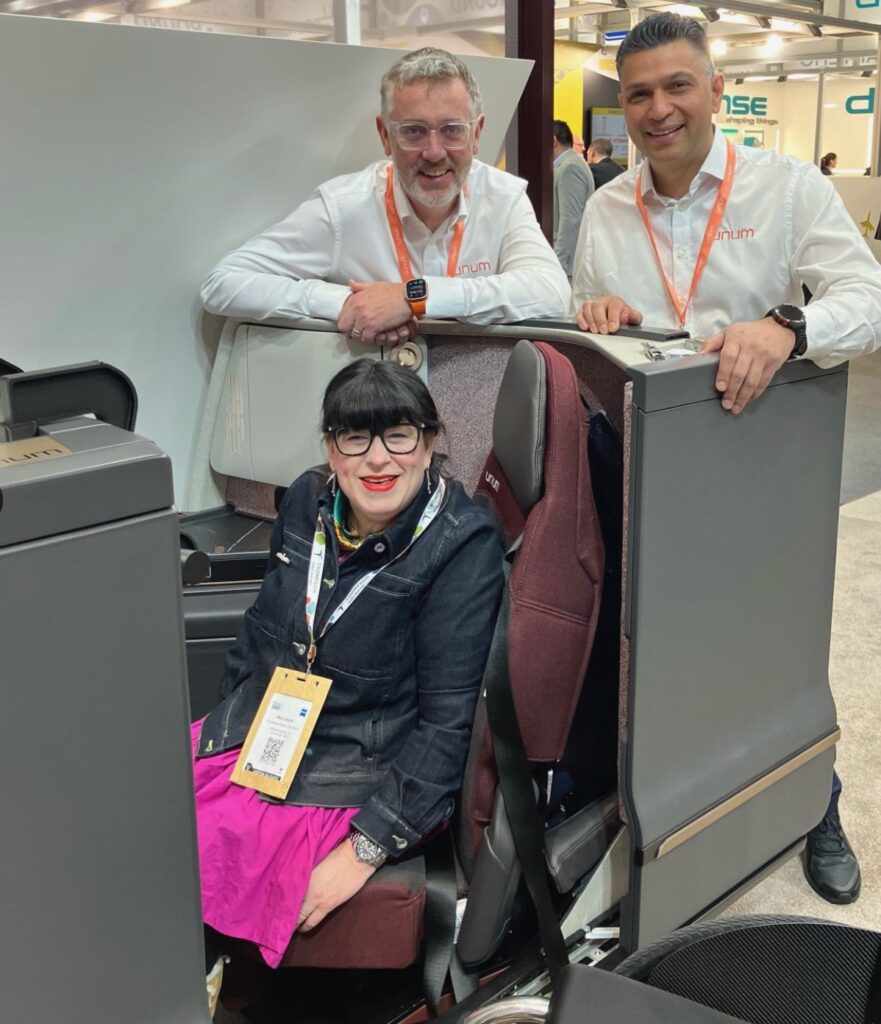
This year, Unum partnered with Access-IQ to further enhance the Disabled passenger experience. With Access-IQ, a blind or visually impaired passenger can control their seat recline and cabin environment with full autonomy by using their own assistive technology or personal electronic device (PED).
For D/deaf people, every cabin announcement becomes readable and is delivered directly to the passenger in their own language. The cherry on top is the ability to have direct and private communications with cabin crew by utilizing a call button and having the option to send a message via one’s PED.

Accessibility strategist and speaker Sass Wyatt, who lost her sight at 22, was on Unum’s stand, providing demos and showing the autonomy she has when the solution is implemented.
J&C Aero: Jump Seat Duo II
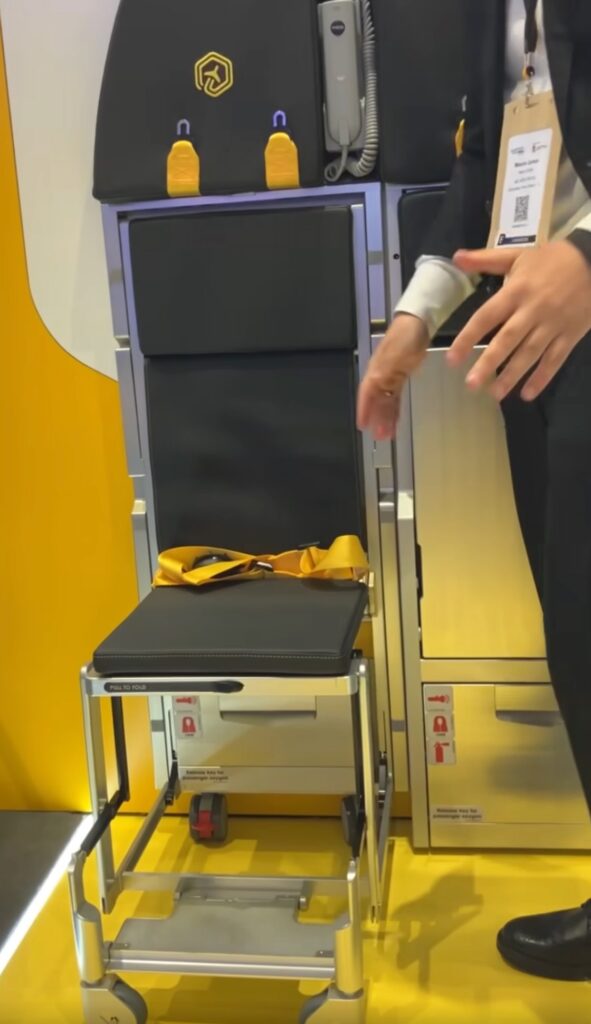
It was great to catch up with J&C Aero again to see how it has iterated on its Jump Seat Duo II innovation, which neatly combines a crew jump seat with an aisle chair. In situ, it is an engineering beauty.
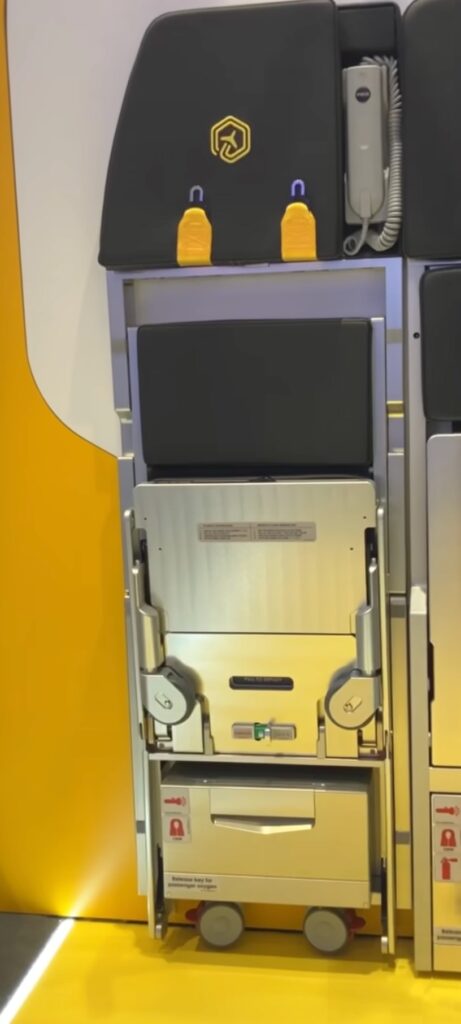
But how does it feel? The 13”-wide seat and seat cushion were surprisingly comfortable, and though lightweight, the overall structure felt even more sturdy than earlier versions.
Now, there’s no excuse not to have a wheelchair on board.
 Airchair: Airchair II
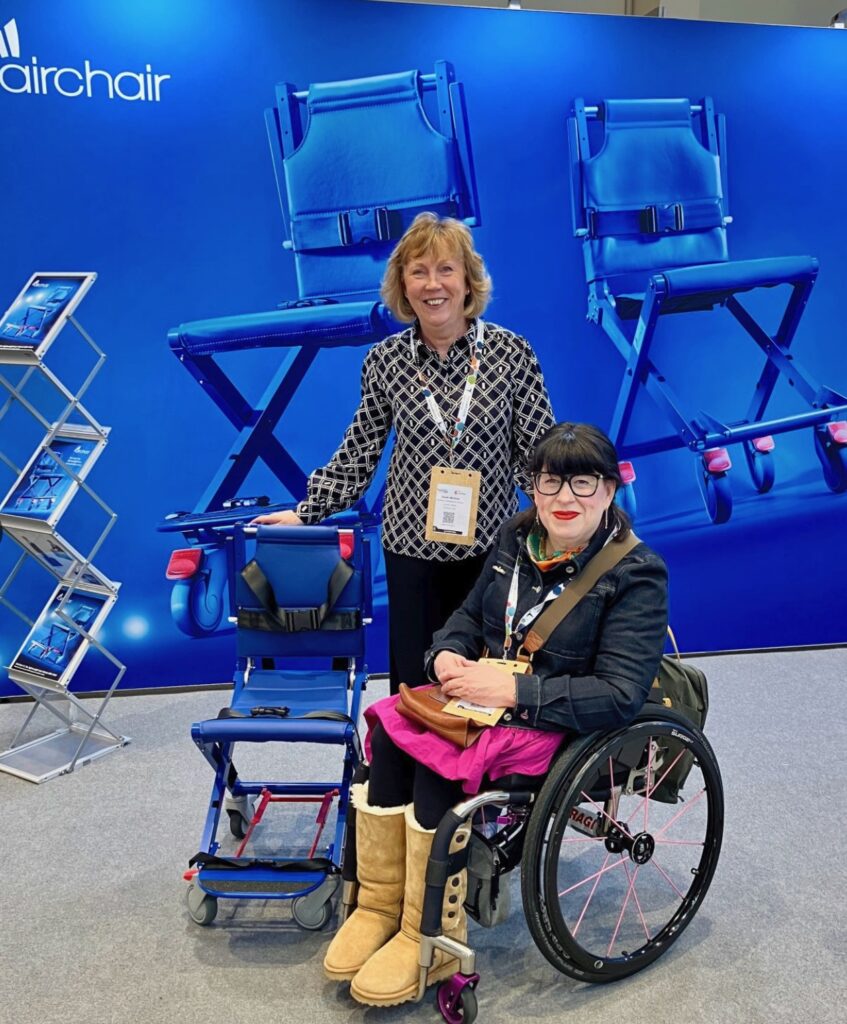
Onboard wheelchair manufacturer Airchair recently launched Airchair II, which has been specifically designed to comply with US DOT regulations.
It was wonderful to get up close and personal with this second iteration of the product, as well as to see it in ‘the wild’ at both the Airbus and Collins Aerospace stands at AIX.
Related Articles:
- Why aviation sustainability and accessibility are interconnected
- Diehl Space³ lav to enter service this year, narrowbody variant afoot
- Boeing and Airbus develop tactile placard standard for aircraft
- VIDEO: RECARO reveals AI-powered seat control for R7 premium seat
- Accessible air travel solutions go mainstream at AIX 2025