


The most powerful wind turbines are the largest. With blades more than 100m in length, they are the preserve of offshore installations where they are delivered by vessels using waterways and open ocean.
Onshore blade length is typically restricted to around 70m, the practical limit for land transport. Any larger and efforts to move them from manufacturing facilities into the field are stymied by seemingly fundamental challenges like negotiating corners and passing under bridges.
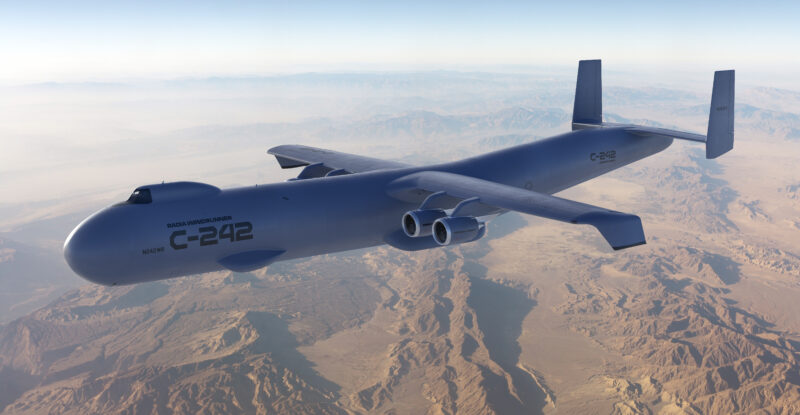
Enter Radia, an energy company turned aircraft design house that is proposing a giant aircraft able to carry a complete, 104m-long wind turbine blade. The idea is to load up close to the manufacturing plant and land as close as possible to the construction site, on a prepared natural surface if required, opening the door to massively more powerful onshore wind generation.
Speaking with RGN at the Farnborough International Airshow, Radia VP engineering and chief engineer Bruno Bachinger explained that while moving turbine blades will still be a primary WindRunner task, the airplane’s potential mission set has grown to encompass dual-use cases.
Considering complex missions beyond moving items that are simply huge, Radia realized that WindRunner’s 240,000ft3 cabin volume and 160,000lb payload were not enough.
“We’ve provisioned the electrical power system so that even in the most extreme operational conditions we have in the order of 70% excess electrical capacity,” says Bachinger. “That power could support a military satellite payload or a unique cargo handling system, or other power-intensive payloads” that require active thermal control and continuous monitoring.
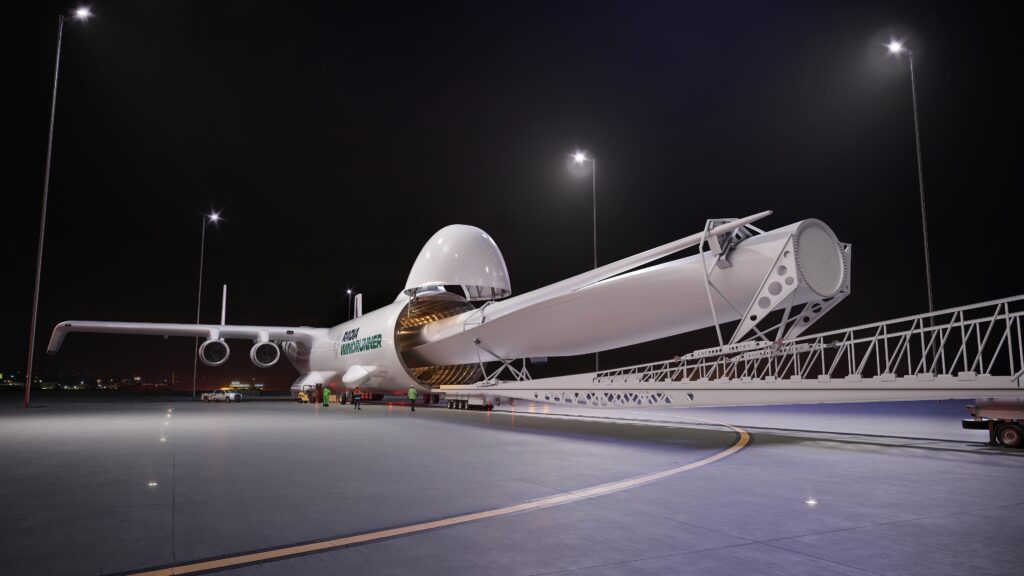
WindRunner was initially designed to carry 104m-long wind turbine blades. Image: Radia
Medical evacuation and disaster relief are well within WindRunner’s capability and Bachinger says ample power will be available for the medical equipment required to support multiple intensive care patients, for example.
“It’s very preliminary, but we’re even studying encapsulated hospitals. We have the volume to deliver care within the hold. Instead of picking people up and taking them somewhere, you could provide triage care inside,” he adds.
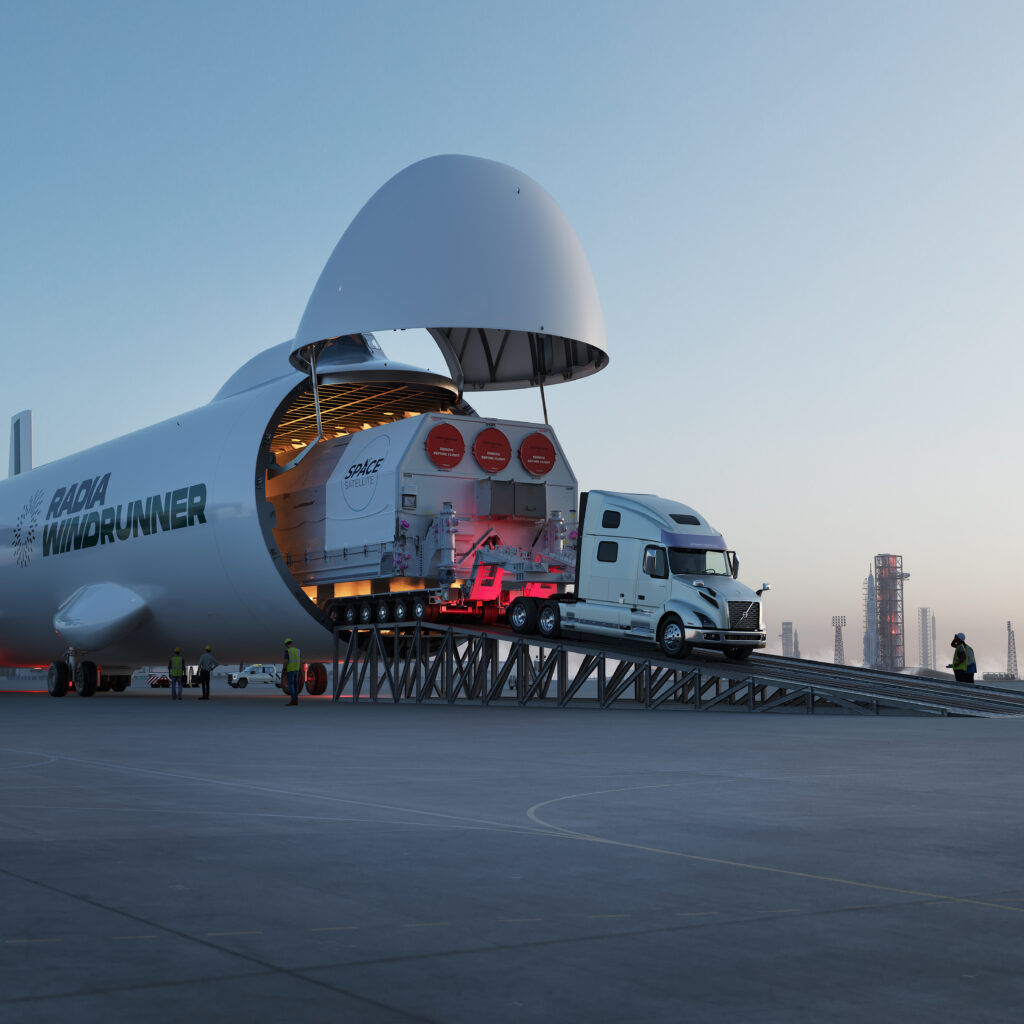
Radia chief engineer Bruno Bachinger says some satellite payloads have considerable power requirements. Image: Radia
Setting aside the aircraft’s dimensions, Radia is designing WindRunner well within current technological bounds — speed to market, Bachinger candidly admits, is a ‘bigger carrot’ than delivering an initial configuration featuring all ‘the bells and whistles.’ The company is aiming for a 2030 rollout. Nonetheless, provision is being made for some avionics capability in a nod to the defense side of the dual-use construct.
Radia’s C-242 concept envisages WindRunner moving military payloads, including helicopters and fast jets, to within easy reach of the front line. The giant machine will not be making tactical landings into airfields with smalls-arms toting insurgents at the fence, but its systems will be provisioned to counter tactics including GNSS denial on the periphery of conflict zones.

At first glance, the C-242’s maximum payload range of 1,200 miles seems restrictive. A C-17, by comparison, can cover around 2,400 miles with a payload of almost 160,000lb and refuel in the air, but Radia’s jet has a unique advantage — volume, because sizing the hold to take a 104m wind turbine blade means the space is wide and tall, as well as long.
Radia’s graphics show F-16s rolled directly into the hold and a capacity for six Chinooks, each with four of its six rotor blades folded. Loading helicopters into airlifters typically means removing rotor blades, and often also rotor heads, while landing gear must in some cases be adjusted to ‘kneel’ or be semi-retracted before the aircraft is inched carefully into a hold that is barely tall and wide enough.
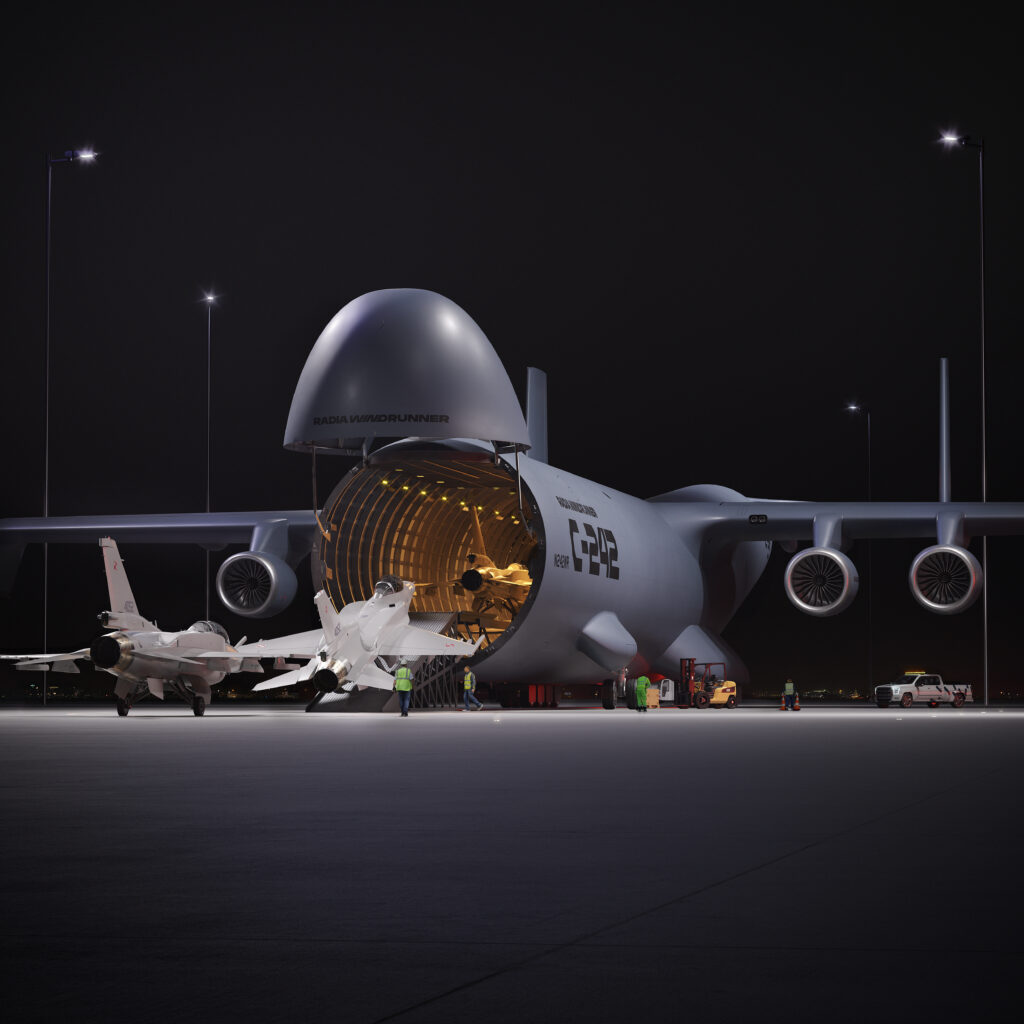
Radia suggests that F-16s could be towed directly into the C-242’s hold. Image: Radia
All this means a considerable engineering task before loading, repeating the process on delivery, and then air testing. The entirety of that procedure might take days, especially considering the multiple lifts required by anything smaller than a C-242 for the same number of helicopters moved.
Bachinger believes the week or more typically spent breaking down and then reassembling Chinooks in theater is a far greater time penalty for military commanders than the few hours spent on refueling stops by the relatively short-ranged C-242.
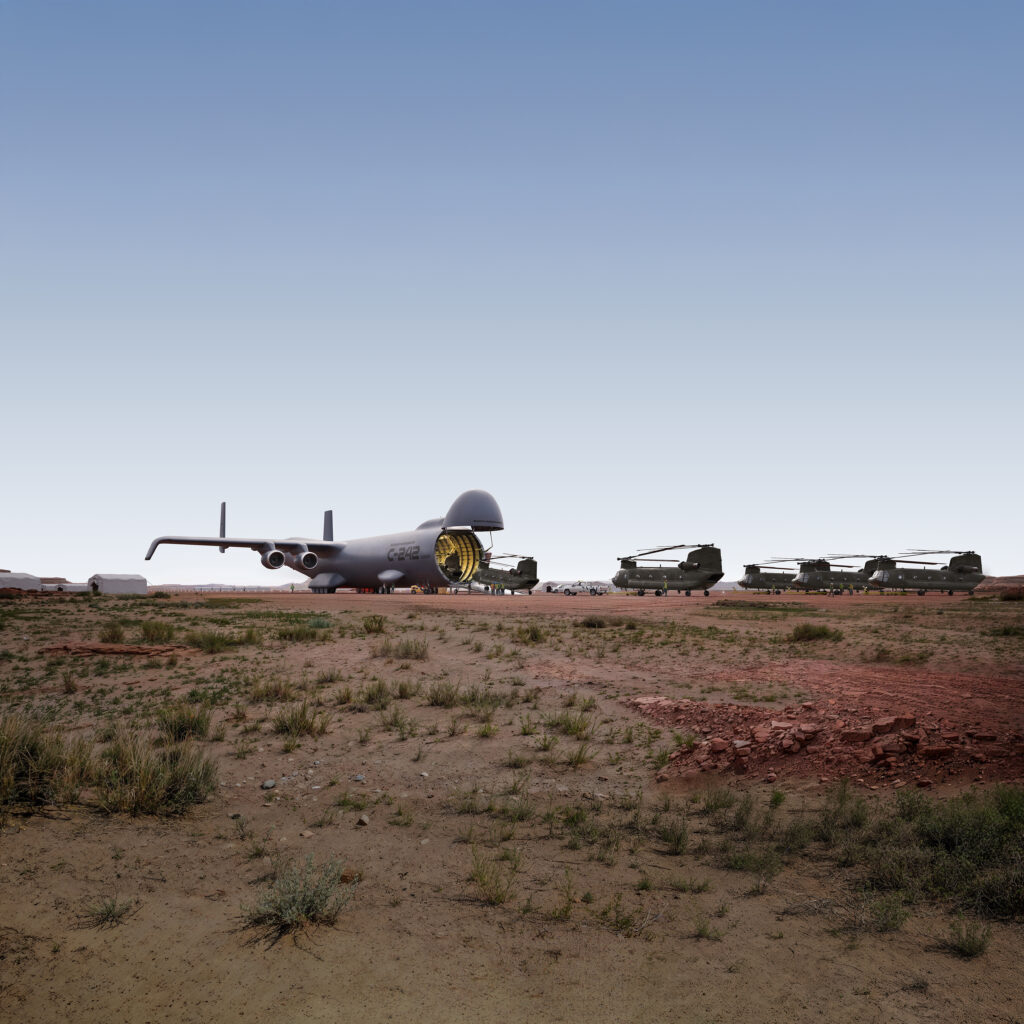
WindRunner could deliver six near mission-ready Chinooks into theater. Image: Radia
Related Articles:
- Rise in sovereign satcom presents GEO-capable hardware opportunity
- Merlin Labs sees incremental path to pilot-free passenger flights
- Vertical Aerospace chief engineer on rural and regional value of eVTOL
- Norwegian electric flying boat developer NOEMI reveals wider scope
- How UK air ambulance charity Lia’s Wings helps to save lives
- Jennifer Draughon of Neptune Aviation on aerial firefighting careers
- RAF’s Nina Wilkinson on managing the Typhoon Display Team
Featured image credited to Radia