
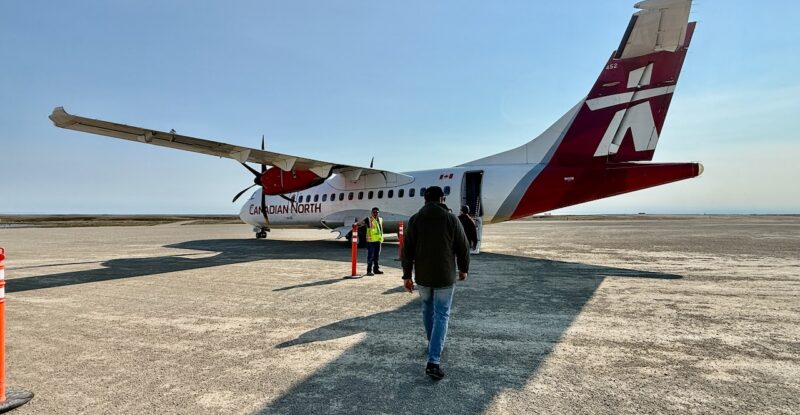
 If the Canadian North Boeing 737-300 Combi carried me to the edge of Canada’s North, the ATR 42-500 would take me well beyond it.
My destination was Cambridge Bay, Nunavut, a tiny Indigenous settlement on the southern shore of Victoria Island nearly 70 degrees north latitude. The destination is rare and exotic, and for an American, the aircraft is now a rarity, too.
These ATRs were ubiquitous until regional jets pushed them aside in the early 2000s. More recently, my hometown carrier in South Florida, Silver Airways, became the last significant ATR operator in the Lower 48. Here in Key West, they were as common as the chickens and the last aircraft to allow beloved tarmac boarding after our new terminal opened. Unfortunately, Silver liquidated in December 2025 before I had a chance for one last ATR dance.
The chance to reunite with my old ATR friend after 15 years was enticing, though admittedly there were less expensive and easier ways to do that. JSX now flies two ex-Silver ATR 42-600s on the West Coast, but that’s hardly the same as venturing into Canada’s High Arctic. And I was already in Western Canada on business and vacation.
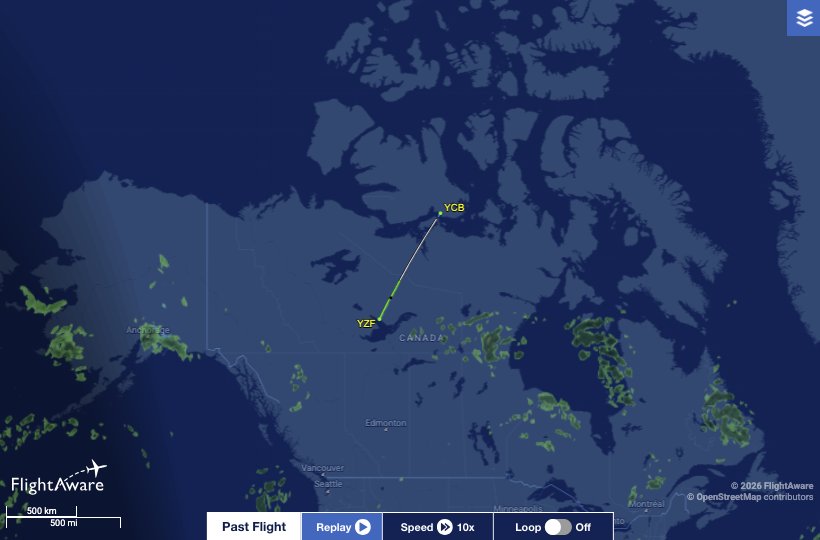
Now, remember what I said in Part One about the cost of flying in Canada’s North? This was a last-minute trip, so I couldn’t take advantage of the slightly less expensive advance booking fares. A last-minute roundtrip ticket from Yellowknife to Cambridge Bay cost an eye-watering $1,850 roundtrip. I checked my sanity at the door, bit the bullet, opened my wallet, and booked it!
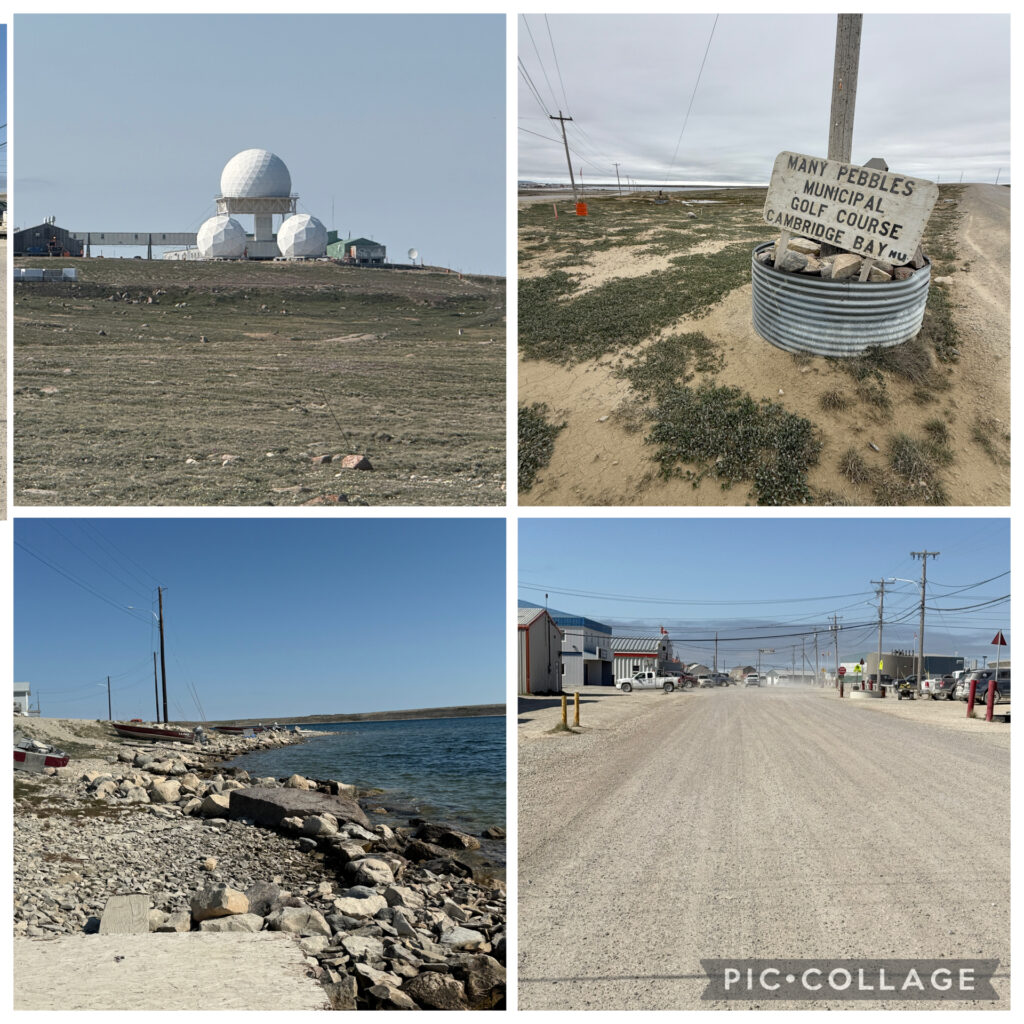
Oh, and what of this exotic destination? Cambridge Bay is home to roughly 1,850 residents. The community sits about 240 miles north of the Arctic Circle on the southern coast of Victoria Island in Nunavut. During the Cold War, it served an important strategic purpose as part of the Distant Early Warning, or DEW Line, a chain of radar stations stretching across the Arctic to detect incoming Soviet bombers. Today, Cambridge Bay is known as both a center of Inuit culture and an important hub for Arctic scientific research.
Its landscape is as barren as my tropical home is lush. Treeless tundra stretches to the horizon beneath enormous skies. The sea remains frozen for roughly ten months each year. Musk ox roam the surrounding wilderness. During summer, daylight barely ends. Winter brings months of near continuous darkness, illuminated only by the Aurora Borealis dancing overhead.
Standing here, it is easy to understand why visitors often describe the place as another planet. Life in the High Arctic comes at a price. Almost everything arrives by air for much of the year, and grocery store shelves make that painfully obvious. A bottle of orange juice selling for CAD$15 or laundry detergent priced around CAD$25 suddenly makes the airfare seem only slightly less outrageous.
The following morning began at 6:00 a.m. beneath surprisingly warm skies in Yellowknife.
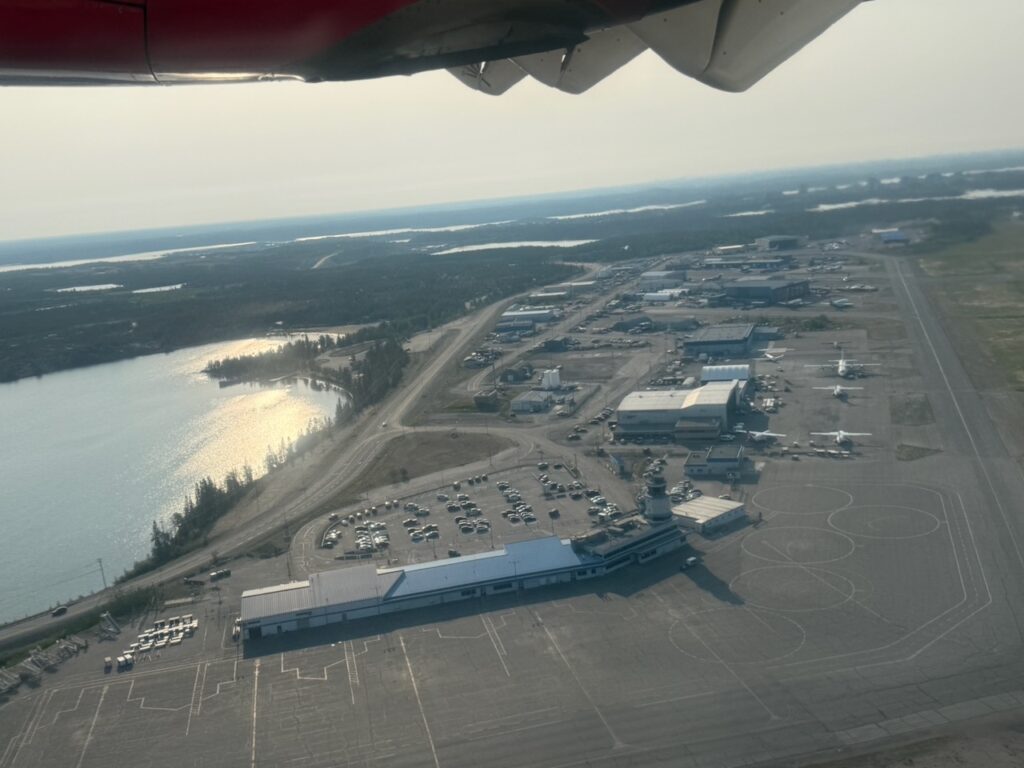
Wildfire smoke hung thick over the airport, softening the early morning sun while a steady procession of air tankers came and went from the ramp. Despite the smoky conditions, daylight had already been with us for hours. The sun had set shortly after midnight before climbing back above the horizon around 3:30 a.m.
Yellowknife Airport was every bit as quiet as it had been the previous evening. With only a backpack, I realized I could have arrived barely twenty minutes before departure. Flights heading farther north don’t pass through CATSA screening, making the morning routine easy and quick — despite warning of two-hour advance check-ins.
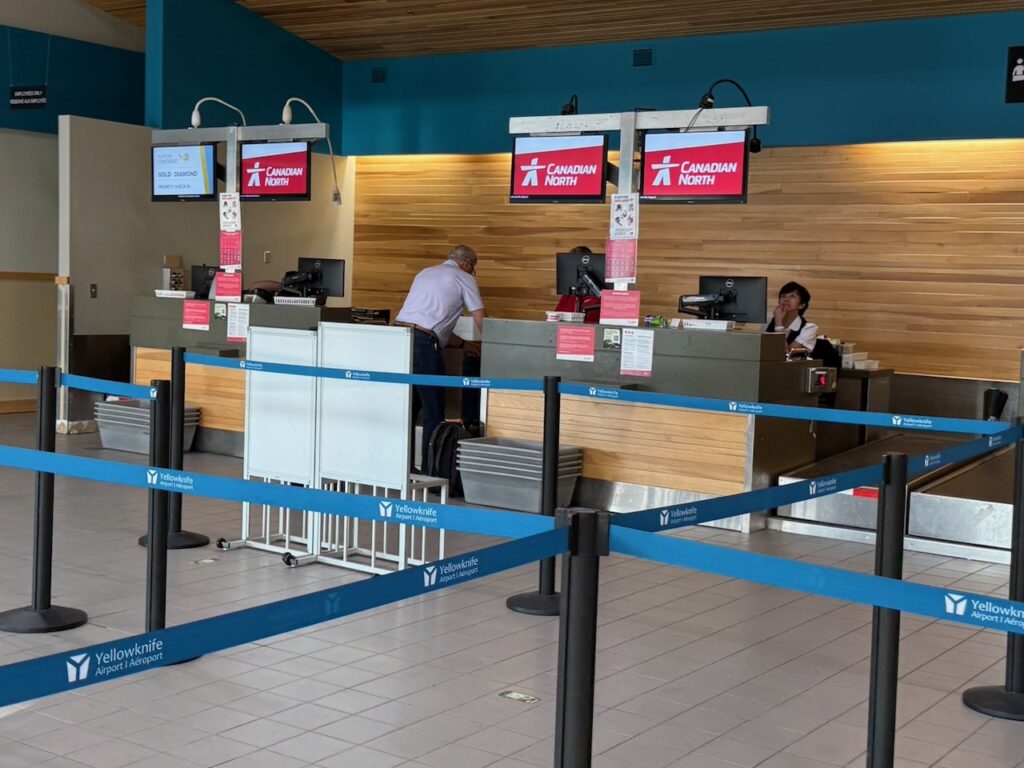
After grabbing a croissant, I wandered past the airport’s taxidermied polar bear and made my way to Gate 1.
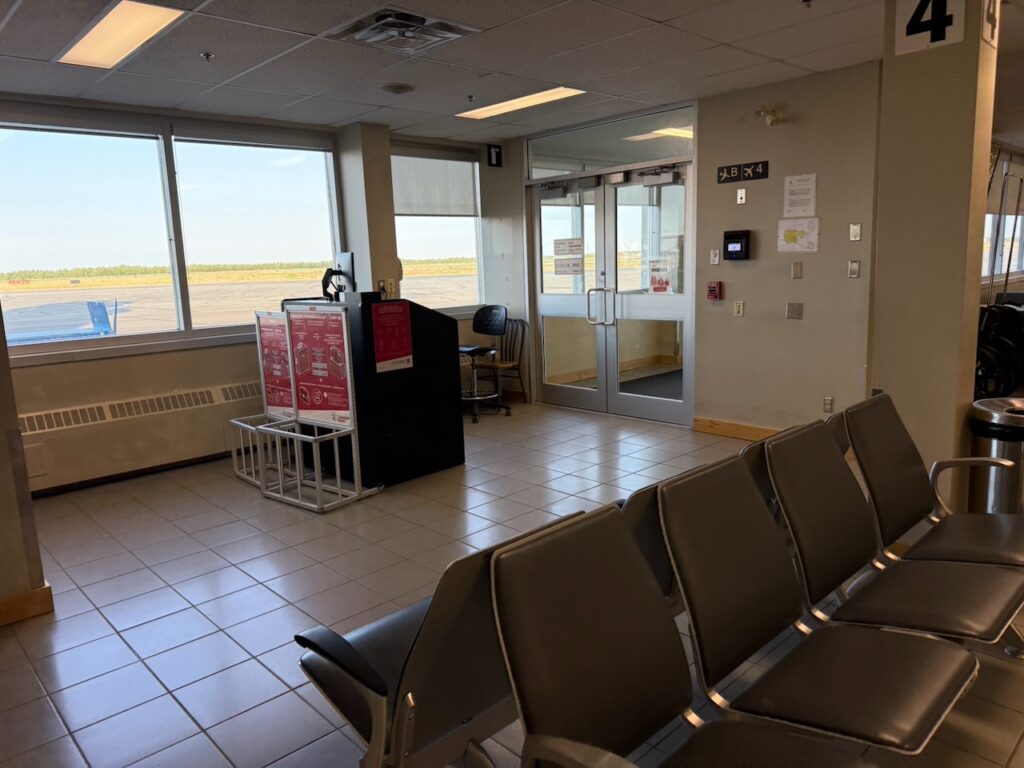
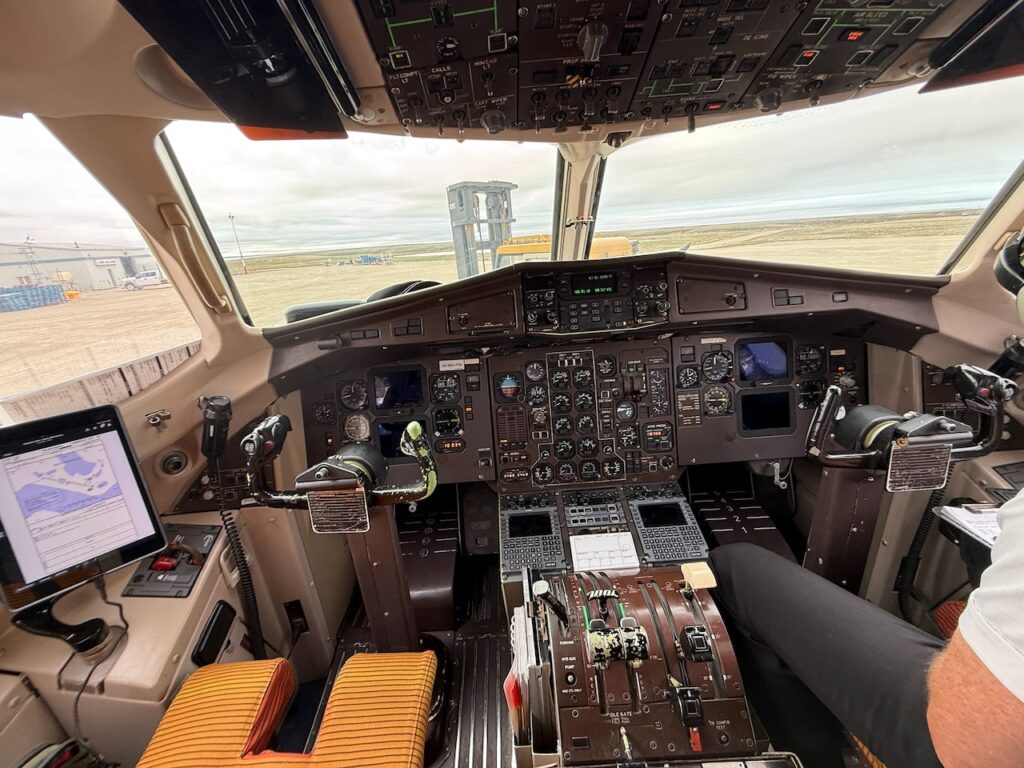
Waiting outside on the smoke shrouded ramp sat our ATR 42-500.
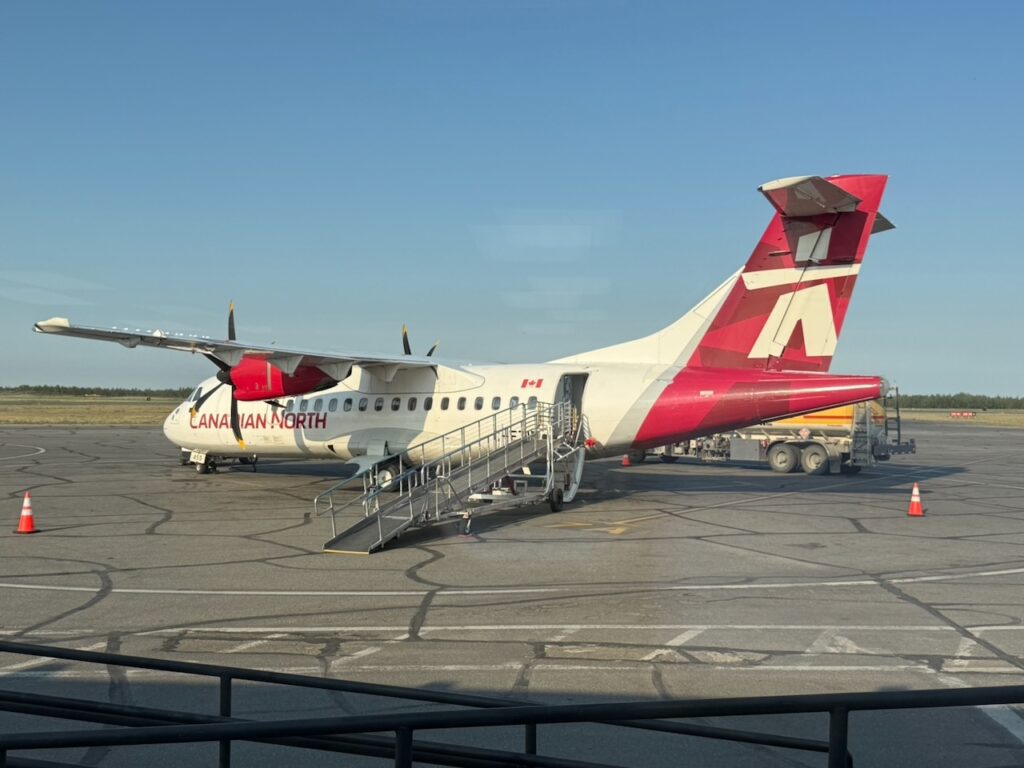
Delivered in 1999, this particular aircraft spent its younger years flying considerably warmer routes in Brazil and Italy before migrating North. Today, Canadian North operates fifteen ATR turboprops, with the ATR 42 fleet dedicated to all passenger operations throughout its Arctic network.
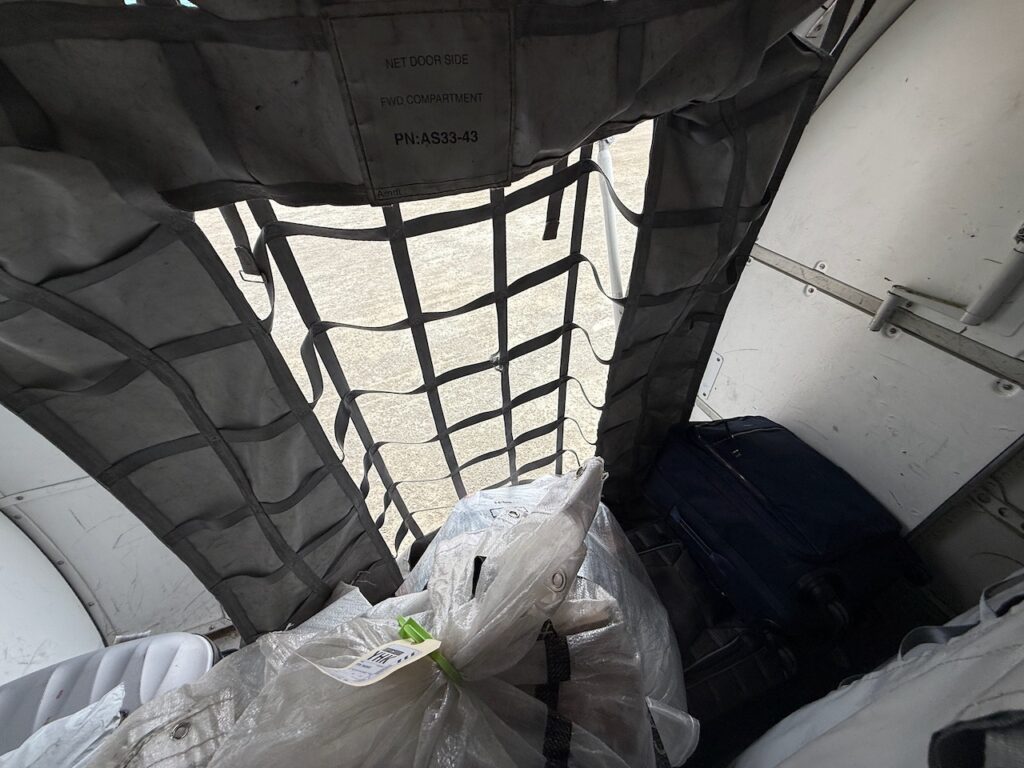
Like every ATR flight, boarding took place through the rear passenger door. The forward cargo hold had already been secured, and I couldn’t help wondering how enjoyable that job must be during the depths of winter when temperatures plunge toward minus 40 degrees and Arctic winds sweep across an icy ramp.
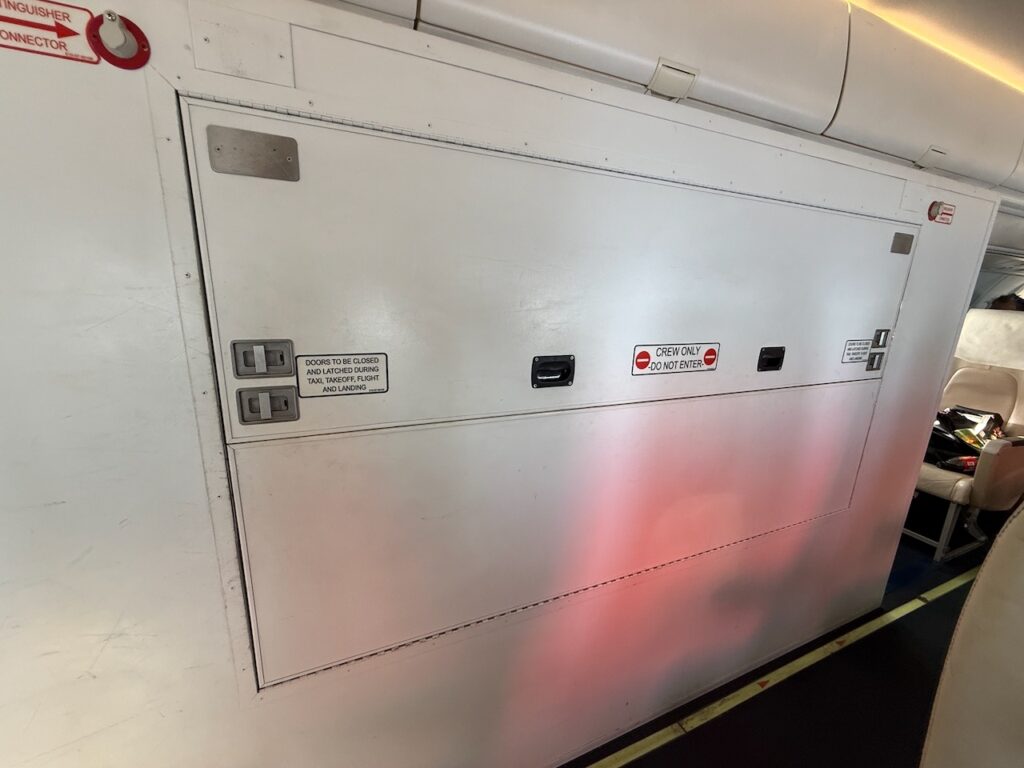
Stepping aboard revealed something I wasn’t expecting. Along the starboard side sat a large enclosed structure occupying the space where four passenger rows would normally be installed. Eight seats had disappeared, while an unusually large open area remained aft of the bulkhead. A forward standup bar or pilates station could’ve filled the void.
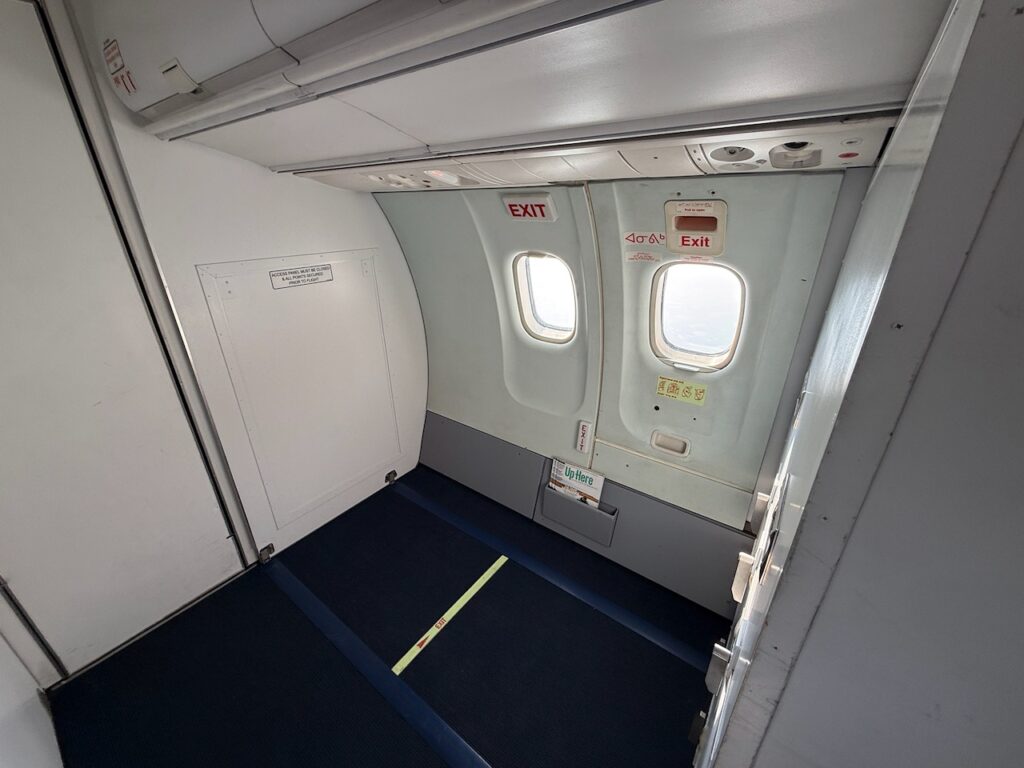
The mystery was quickly solved. Canadian North designed and installed the container to provide additional cargo capacity without converting the aircraft into a true combi. I immediately nicknamed it the “Kinda Combi.”
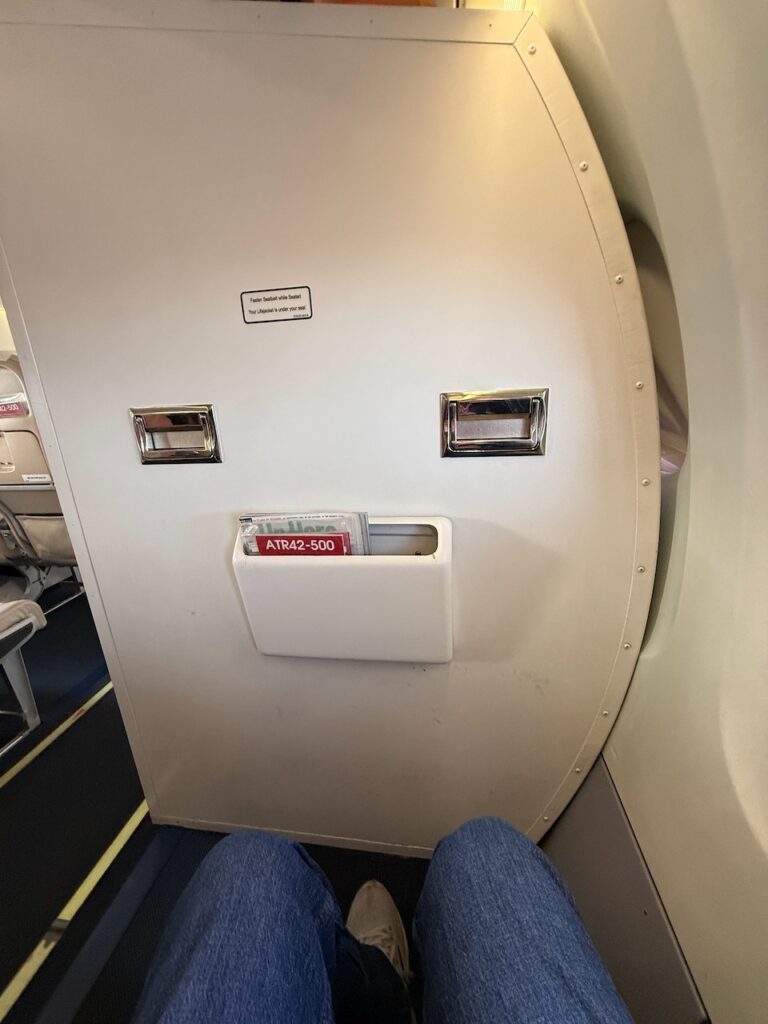
Seat 5D proved comfortably roomy, helped considerably by having the row to myself. Standard ATR seat pitch measures about 30 inches, perfectly acceptable for shorter sectors, although Canadian North regularly asks these turboprops to perform some of the longest ATR flights anywhere.
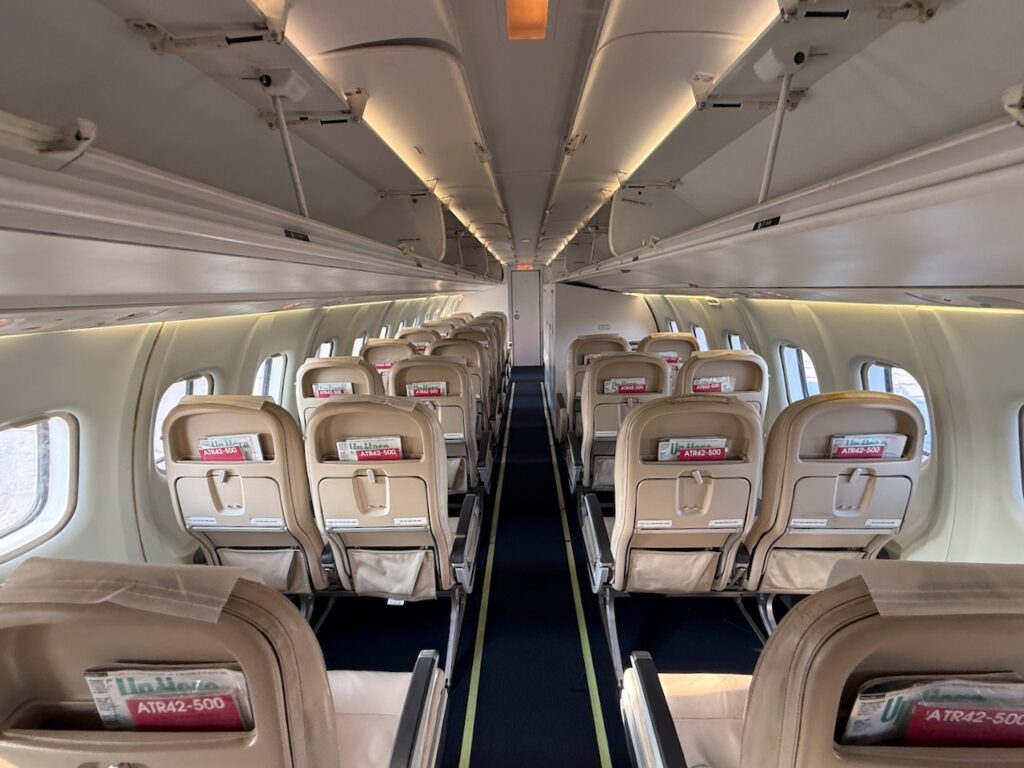
My journey to Cambridge Bay would last nearly two hours, pushing the upper limit of my personal ATR tolerance.
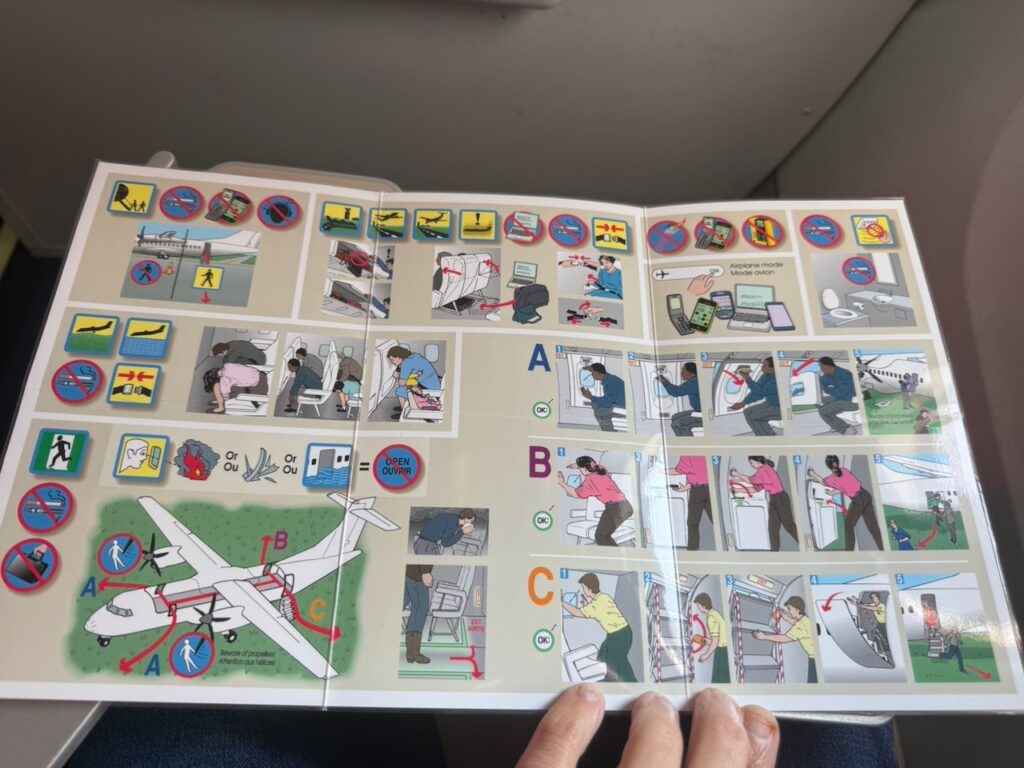
Following a brief welcome aboard, the safety demonstration was delivered in English and French, with a sprinkling of Inuktitut, another reminder that we were heading somewhere very different from southern Canada. The ramp was rolled away, the rear door closed with a thunk, and it was showtime!
One by one, each Pratt & Whitney Canada PW127E engine spooled its unmistakable electric whine before settling into the familiar rhythmic beat of a turboprop. The startup sequence sent a gentle shudder through the cabin as the six bladed propellers blurred into motion.
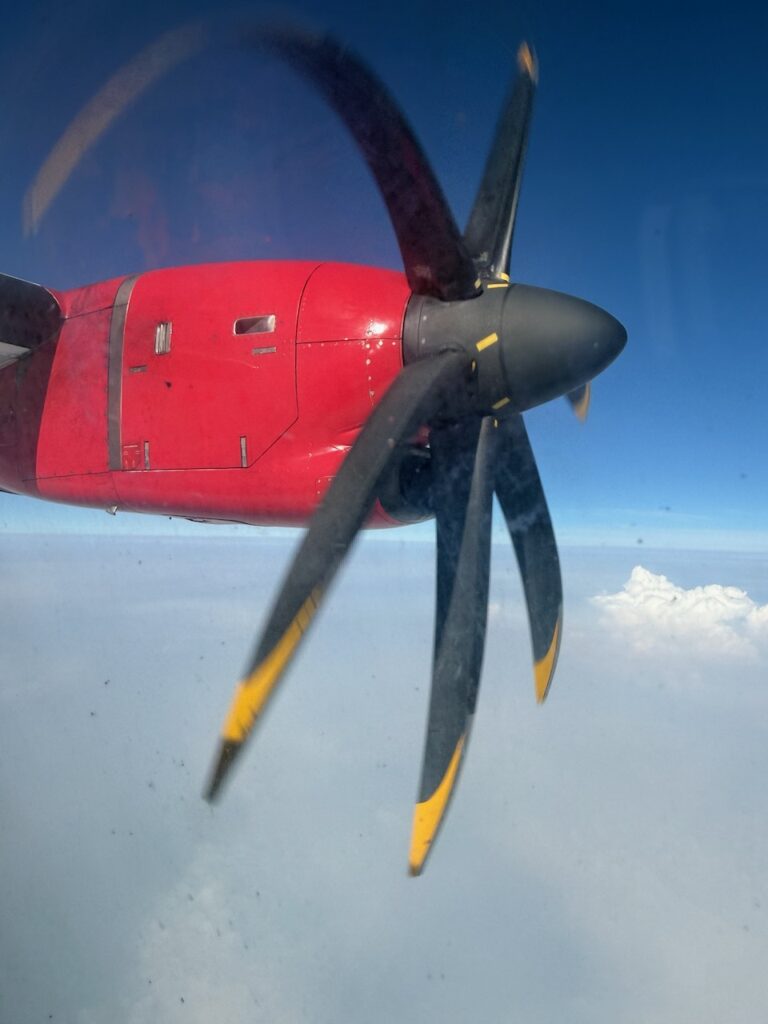
We taxied to Runway 33 under hazy skies, the lingering wildfire smoke giving Yellowknife an almost sepia tone.
Our ATR was lightly loaded, and it showed. The turboprop wasted little time accelerating before lifting eagerly into the morning sky. Even seated just aft of the propeller arc, where the cabin is among the loudest, the noise was all part of the experience. The Pratt & Whitney engines produced the unmistakable soundtrack that once defined regional flying throughout North America.
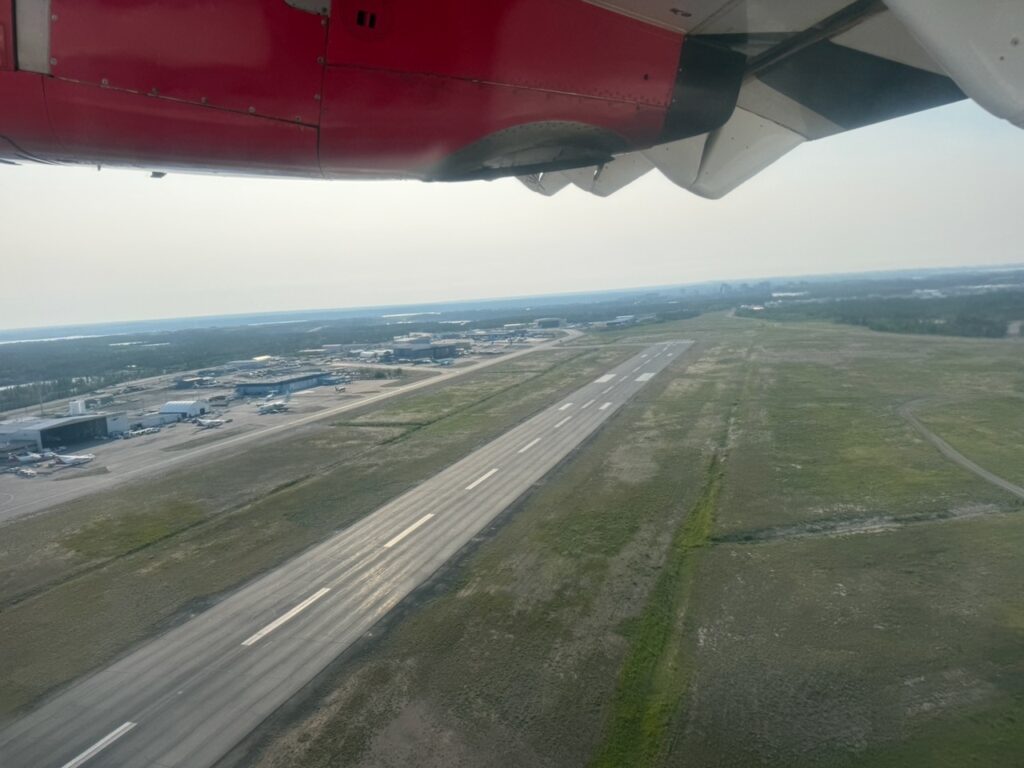
We climbed to a cruising altitude of 21,000 feet and pointed northeast toward Cambridge Bay, some 520 miles away.
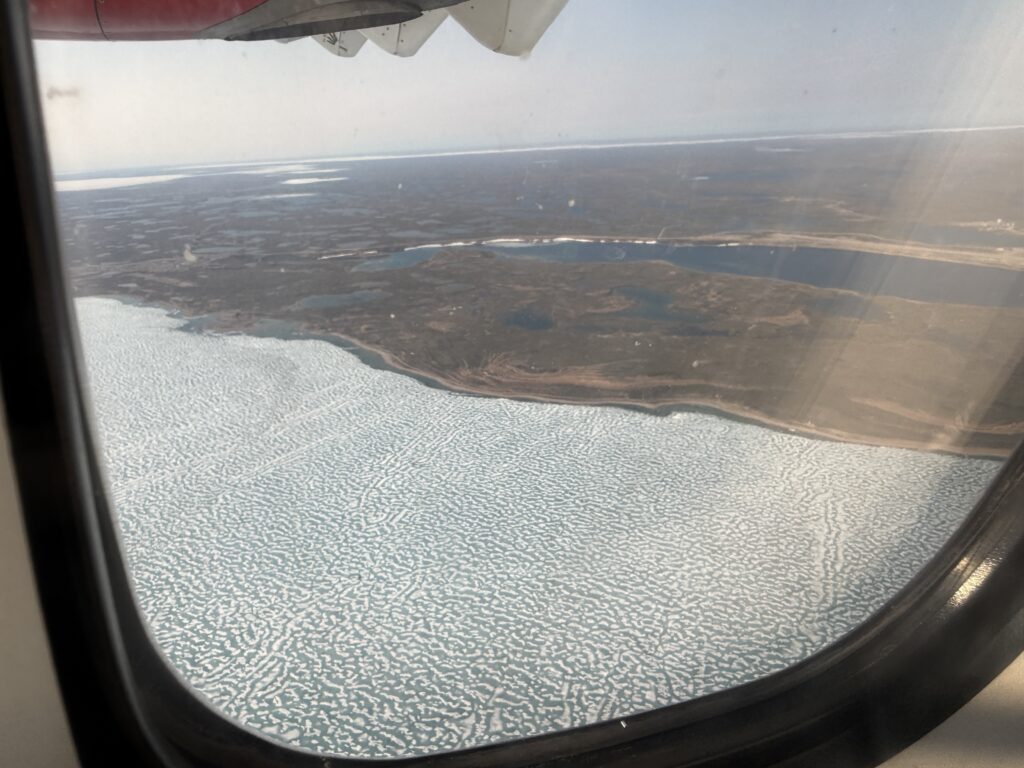
Outside, the landscape slowly transformed. The forests, exposed granite, and countless lakes of the Canadian Shield gradually yielded to an increasingly barren landscape of tundra punctuated by still more lakes, many of them still locked beneath sheets of melting ice despite the calendar reading late June. It would’ve been cool if the crew had announced “We are now crossing The Arctic Circle”, but the locals would have been unimpressed.
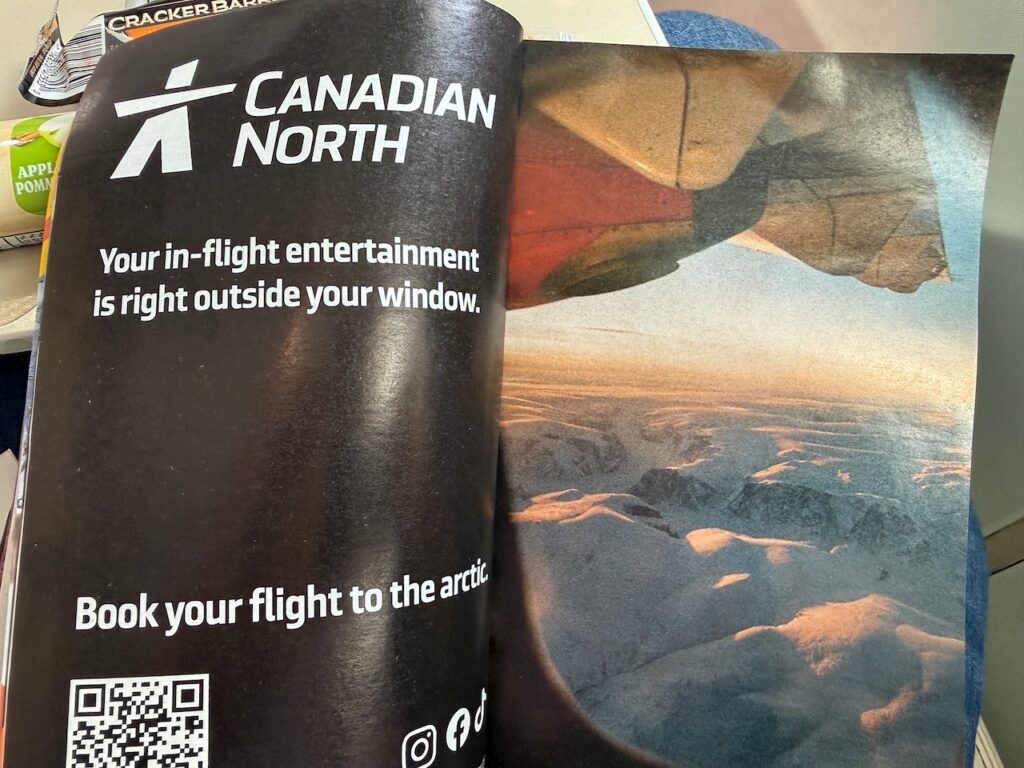
Canadian North’s inflight magazine featured an advertisement that couldn’t have been more accurate. “Your inflight entertainment is right outside your window.” It certainly was.
I briefly attempted to listen to a podcast, but between the cabin noise, which I estimated at roughly 85 decibels, and my 57-year-old ears, the effort was largely futile. Some flights are simply better experienced by looking outside.
Curious about the ATR’s once poor safety record for operating in icy conditions, I asked one of the crew members about the aircraft’s history. The response was reassuring. The issues that affected earlier ATR variants decades ago have long since been addressed through modifications, including improvements to the pneumatic deice boots protecting the leading edges of the wings and horizontal stabilizer. Today, the ATR has more than earned its reputation as one of the Arctic’s dependable workhorses.
Like the Boeing 737 flight the previous day, Canadian North treated inflight service as something far more substantial than the token offerings common on many southern carriers.
Our lone flight attendant made her way down the aisle pushing a miniature trolley loaded with attractively branded snack boxes. In fact, it’s so cute that I took one home and put it in my refrigerator.
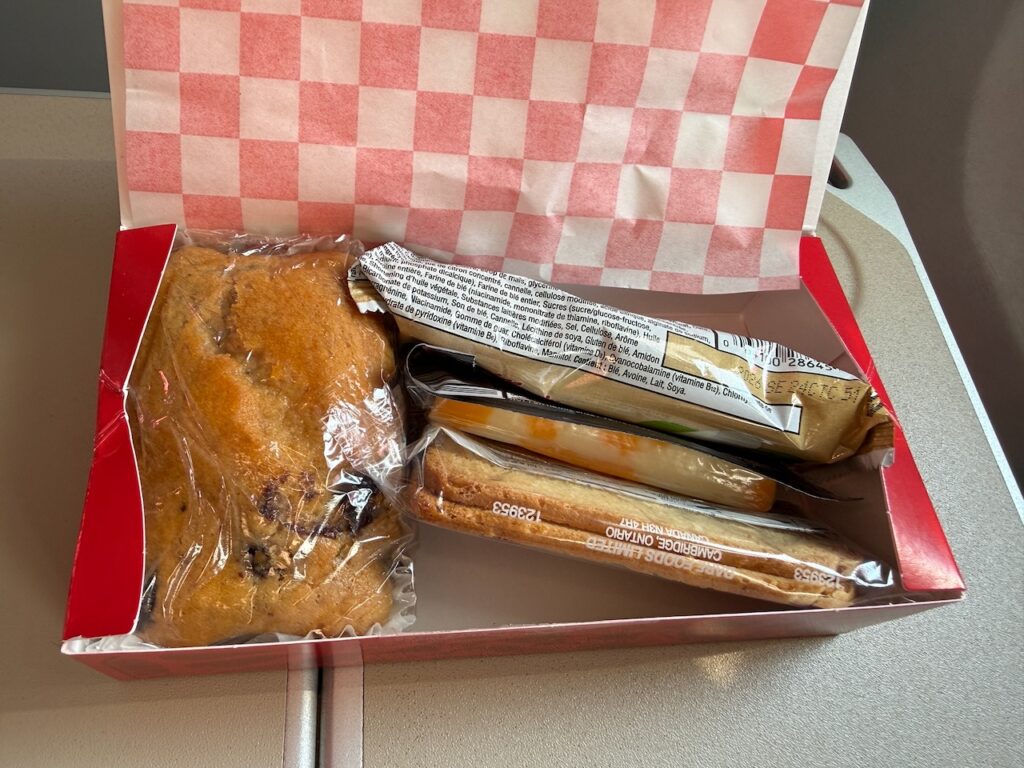
Inside were a blueberry muffin, a nutrition bar, Melba toast, and Cracker Barrel cheese. It wasn’t elaborate, but it was thoughtfully assembled and more satisfying than many flights of similar length elsewhere in North America.
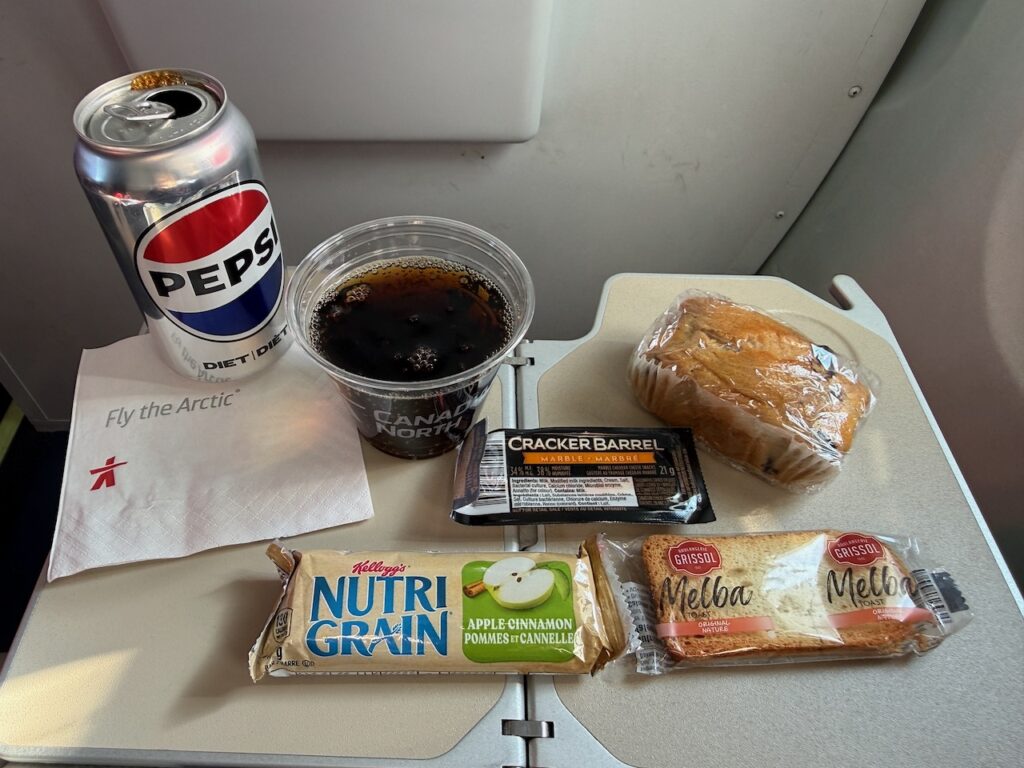
One surprise was what wasn’t available. Ice.
When I asked, the flight attendant explained there simply wasn’t room. Catering loaded in Yellowknife has to support multiple sectors before being replenished, leaving little capacity for frozen luxuries.
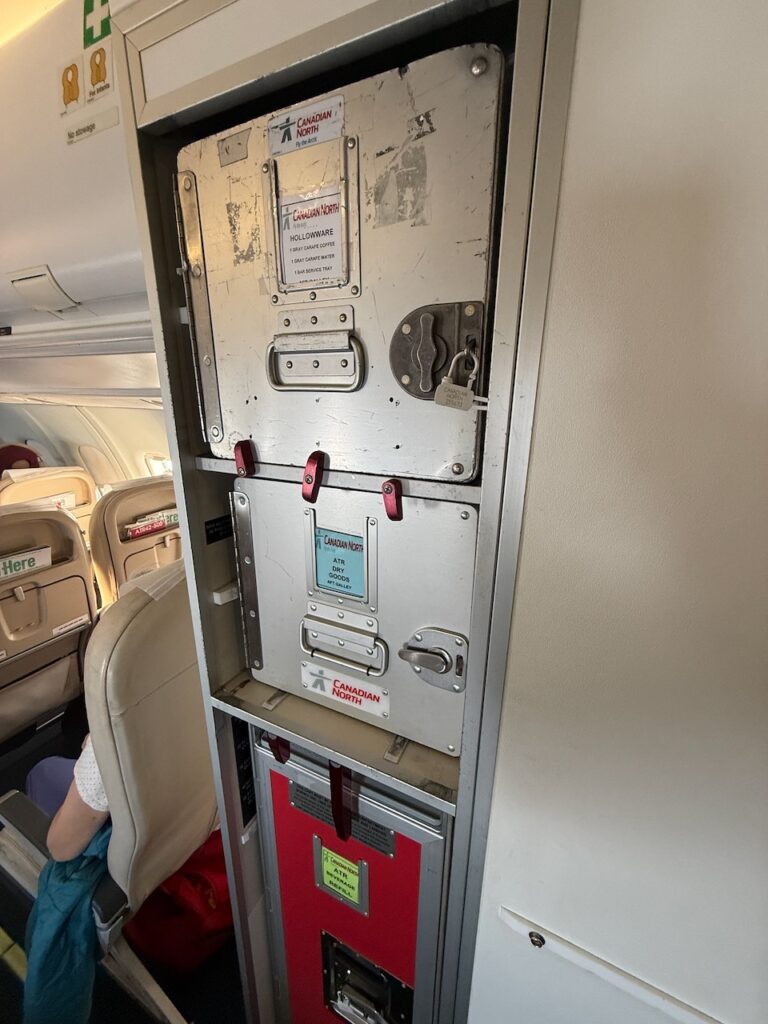
Alcohol was absent as well. Many of the communities served by Canadian North are dry, so the ATR fleet isn’t provisioned with alcoholic beverages. So I made due with warm soda… either that, or a cold coffee – take your pick!
After nearly two hours, the turboprop novelty was beginning to wear off as far as my ears were concerned… what a snow flake I must’ve become!
Soon the crew selected Flaps 25 and the barren landscape of Victoria Island filled the windows.
Ahead lay Cambridge Bay’s 5,076 foot gravel Runway 13.
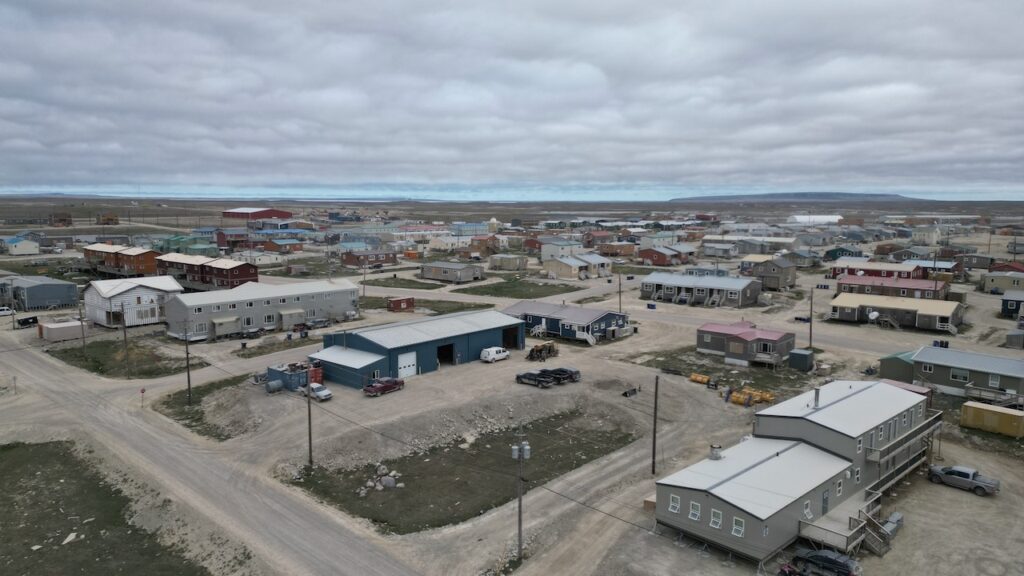
Coming from subtropical South Florida, the scenery felt almost lunar.
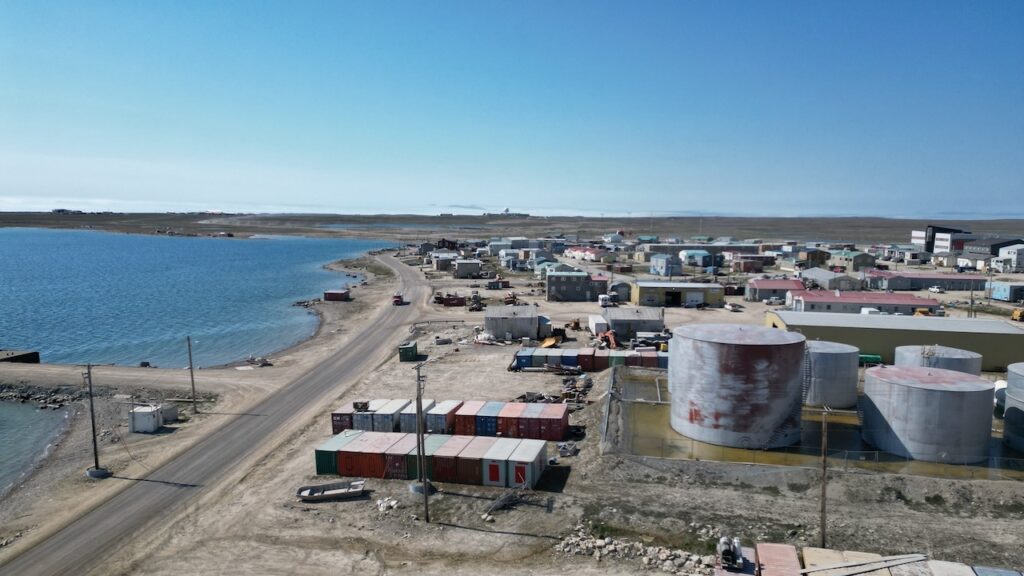
The flat Arctic desert, interrupted only by a scattering of buildings and work camps, stretched toward every horizon.
Touchdown itself was remarkably smooth. The unmistakable rumble of gravel striking the underside of the aircraft quickly reminded everyone we were operating somewhere very different from the average regional airport.
Small stones rattled beneath us like popcorn as reverse thrust brought the ATR to taxi speed. It was enormous fun. And yes, there was applause — and not just a smattering.

Stepping onto the ramp, I was greeted by a gray, breezy summer afternoon that barely reached 50 degrees Fahrenheit. Ahh yes, summer in the “balmy” Arctic where 60 degrees is considered a heat wave.
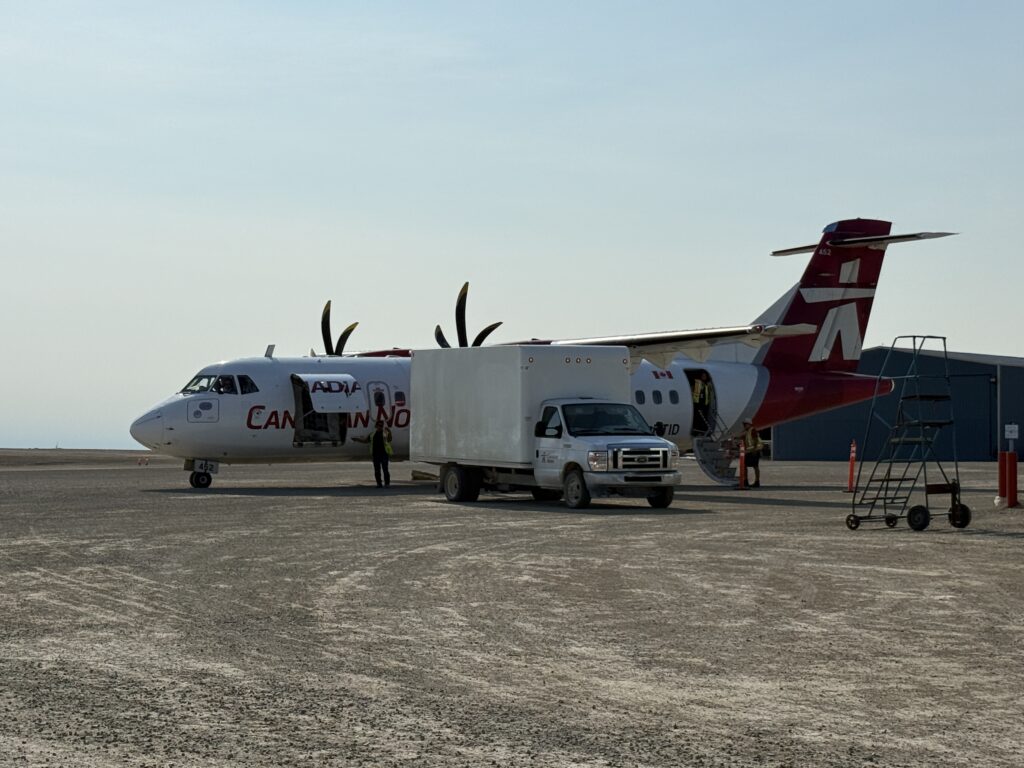
Everyone deplaned while the aircraft was refueled. Although annual sealift deliveries arrive through the Northwest Passage only a handful of times each year, sufficient aviation fuel is stored locally to support Canadian North’s operations without requiring aircraft to tanker fuel northbound.
While passengers made their way toward the terminal, I lingered outside watching the turnaround. A team of only three ramp workers, assisted by a single cargo van, efficiently unloaded baggage and freight before preparing the ATR for its next sector.
Photography on the ramp may officially be prohibited, but with the airport’s gate standing open to the parking lot, nobody seemed especially concerned.
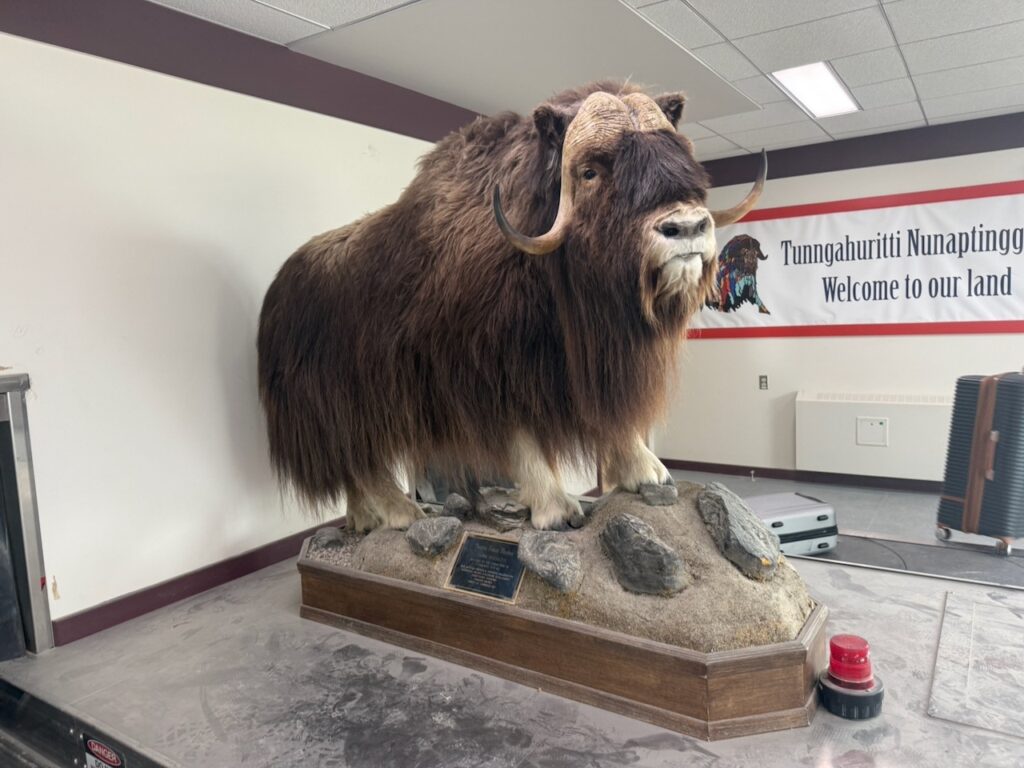
Inside the modest terminal, a stuffed musk ox watched over baggage claim while locals collected what seemed like enough luggage for extended expeditions. “Utilitarian” would be a generous architectural description.
Most passengers continued eastbound aboard the same ATR to Kugaaruk, another ninety minutes away.
I spent eight fascinating hours exploring one of the most surreal, remote communities I have ever visited — right up there with Barrow, Alaska fifteen years ago.
 Later that afternoon, when I reboarded for my return to Yellowknife, I experienced Canada’s version of the honor system for myself. Just like Yellowknife, there was no security screening. There wasn’t even a boarding pass check. The honor system is alive and well.
Departing Cambridge Bay offered one final Arctic spectacle. Below the aircraft, enormous sheets of sea ice still clung to the coastline despite it being late June. Over the coming weeks they would continue melting, opening the waters for the brief July and August shipping season before winter reclaimed the Arctic once again.
This kind of Northern Exposure was expensive, but worth every loonie penny.
Related Articles:
- A Northern Nose to Tail: Canadian North’s Boeing 737-300 Combi
- Why the JSX ATR 42 turboprop gamble could pay off
- Air Inuit captivates another AvGeek with 737-200 combi experience
- Pacific Coastal flying as WestJet Link delivers sightseeing adventure
- Exploring Air North, Yukon’s Airline, between Kelowna and Vancouver
- Harbour Air seaplane service on Victoria-Vancouver is an AvGeek dream
All images credited to the author, Chris Sloan