
 All airlines take you somewhere. Canadian North can also take you to the middle or, more accurately, the top of nowhere.
Across Canada’s Arctic, flying is far more than transportation. It is the only practical way to connect many isolated indigenous communities separated by thousands of miles of tundra, forests, and rock. The airline’s fleet reflects that remit. Combi aircraft still carry freight and passengers on the same main deck. Turboprops venture farther north on gravel runways where jets cannot.
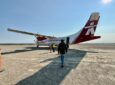
My fascination with Northern Canadian aviation began three years ago when I spent what most people would consider an outrageous amount of money to fly aboard one of the last passenger-carrying Boeing 737-200 Combis in the developed world. Air Inuit’s gravel kit equipped -200 Classic carried me into Nunavik in Sub Arctic Quebec, and the experience was nothing short of surreal. Here’s a snap of that beauty.
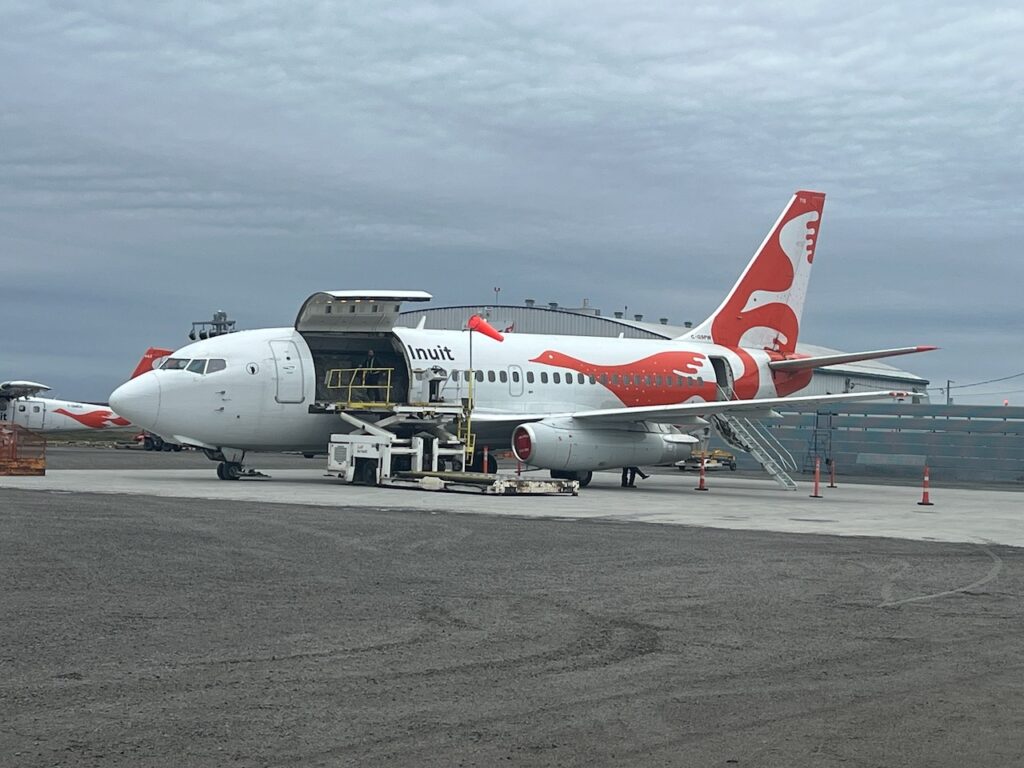
I immediately wanted another bite of the apple Tim Hortons Honey Cruller.
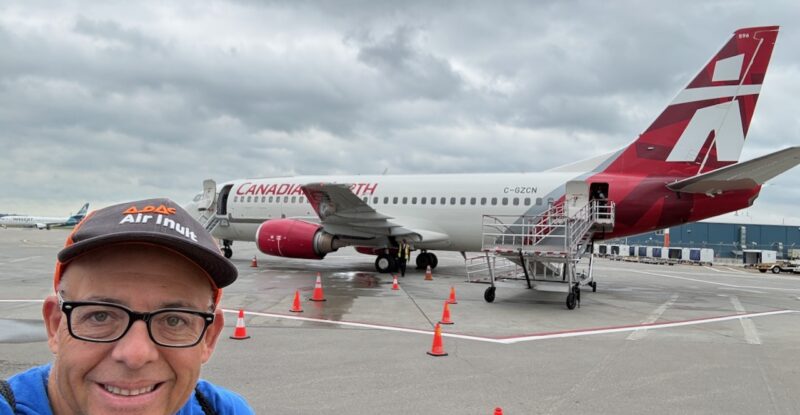
Unfortunately, by the time I planned this adventure, Canadian North had already retired its famous Boeing 737-200 fleet. Instead, I happily settled for second prize, the airline’s Boeing 737-300 Quick Change Combi.
Unless you live in Nunavut, Nunavik, or the Northwest Territories, (or are weird like me) Canadian North probably isn’t on your radar. Yet the airline provides scheduled passenger service, cargo, charters, and essential community services throughout much of Arctic Canada while linking The North with southern gateways including Edmonton and Ottawa. Its fleet combines Boeing 737 Classics, Boeing 737 Next Generation aircraft, and ATR 42 and ATR 72 turboprops in passenger and combi configurations specifically suited to the unique demands of Arctic operations.
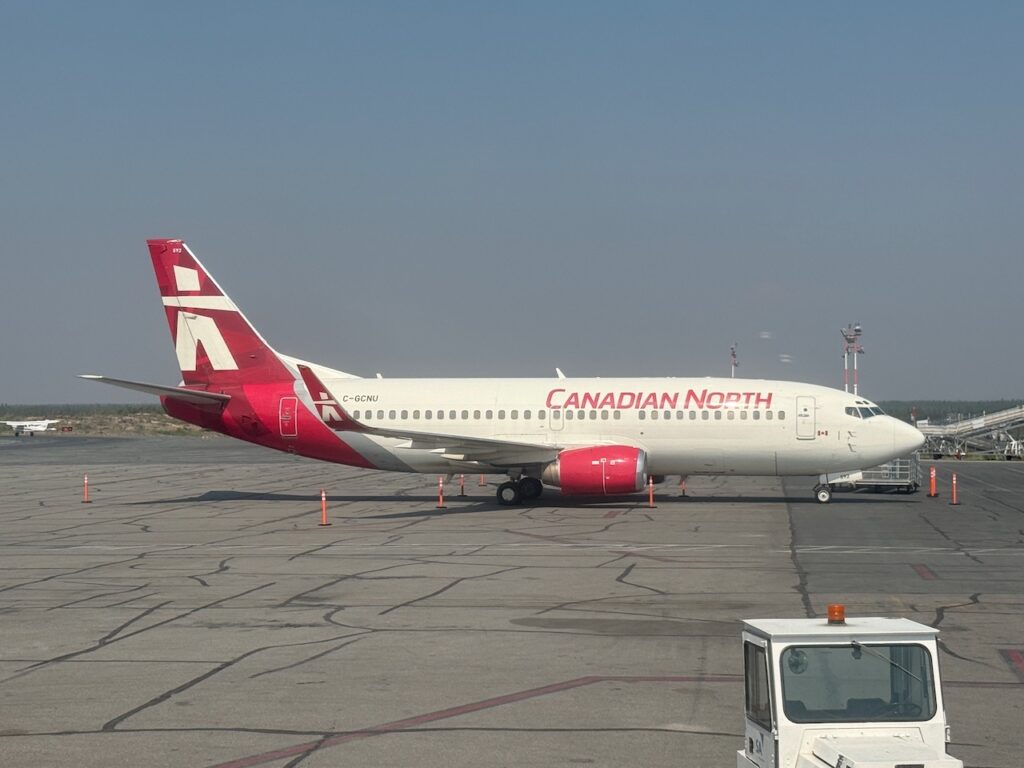
Among the three principal airlines serving Northern Canada, Canadian North operates the vastest central Arctic and Sub-Arctic network, connecting communities scattered across a region approaching the size of the continental United States. This trip would unfold in two parts. First, the Boeing 737-300 Combi from Edmonton to Yellowknife. The following day, an ATR 42 would carry me even farther north into the Arctic, which will be covered in Part Two.
Flying in Canada’s North is normally a sticker shock experience (at least for non-subsidized, non-local travelers) when you travel in the Arctic where there’s higher costs and a monopoly, but this route was more reasonably priced — certainly more reasonable than my trip on the Combi much closer to the Arctic.
A quick search on Google Flights suggested Canadian North was considerably more expensive than the competition. WestJet Encore serves the route with the De Havilland Dash 8 while Air Canada Jazz operates the Bombardier CRJ900. Digging deeper, however, revealed that Canadian North doesn’t sell a Basic Economy fare. Once comparable products are matched, the price difference becomes much smaller than initial search results suggest.
Canadian North’s Saver fare initially looked tempting. It includes one checked bag but comes with significant change restrictions. In the winter, given the possibility that weather, maintenance, or simply the realities of operating older aircraft in remote regions could disrupt my plans, flexibility seemed like money well spent. In the summer, it’s not much of an issue but I did need flexibility so I booked the fully refundable $291 U.S. Super Flex fare, which also includes a second checked bag.
That extra luggage allowance is hardly a luxury. With the limited selection and high prices of consumer goods across many northern communities, local passengers often travel back home with as much baggage stuffed with goods as airline rules allow. Empty suitcases checked in at the outbound are the norm.
Planning to check in on your phone? There isn’t an app for that.
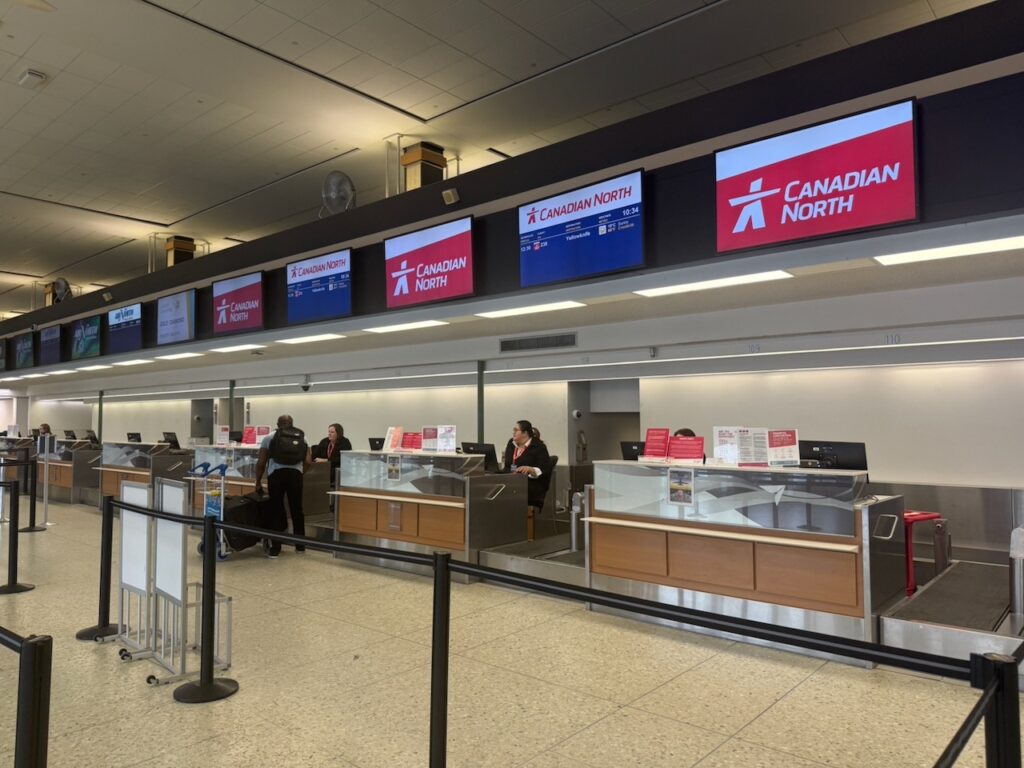
Instead, I headed to Canadian North’s modest check-in area tucked among Edmonton International Airport’s collection of northern airlines. There was no priority check-in lane, not even for the airline’s Aurora loyalty program, although there also wasn’t a queue. Within moments I had my boarding pass.
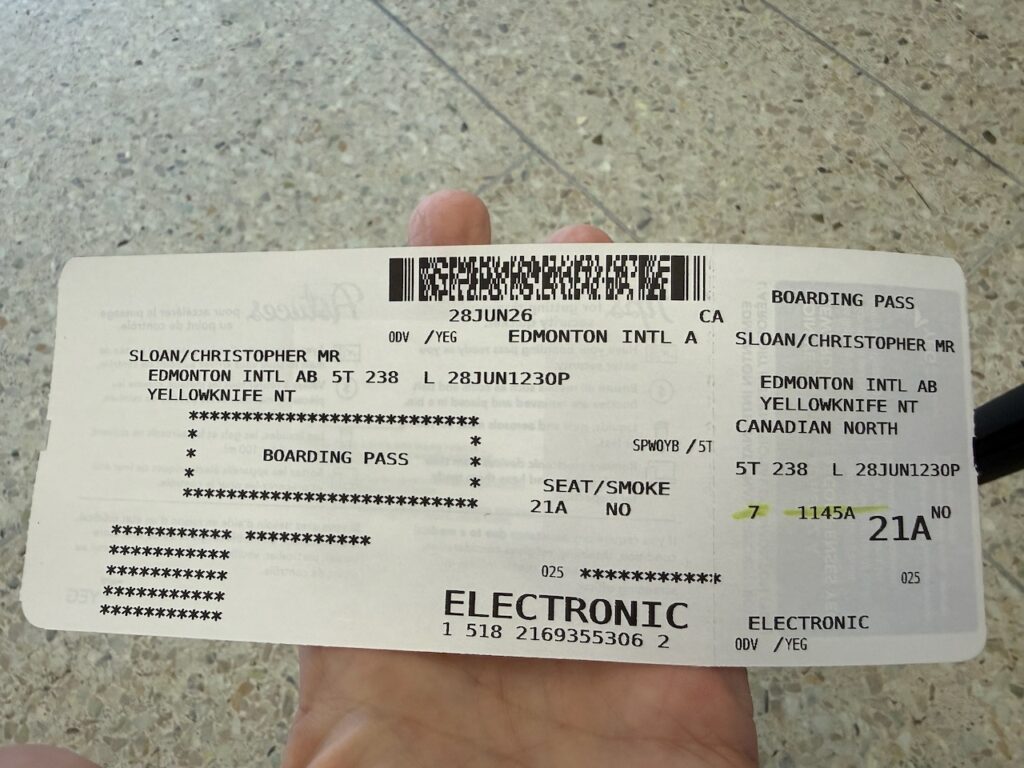
The same could not be said for security. Without priority screening, I joined everyone else for a particularly thorough and rather slow trip through CATSA’s security screening.
Airside, Edmonton International is bright, spacious, and filled with natural light. Canadian North passengers, however, soon find themselves heading downstairs to gates designated for the northern airlines – hence the décor on the walls of the gate hold.
Remote stand operations mean no jet bridges and no glamorous departure gates. Instead, flights depart from what could only be described as Edmonton’s Basement Gates.
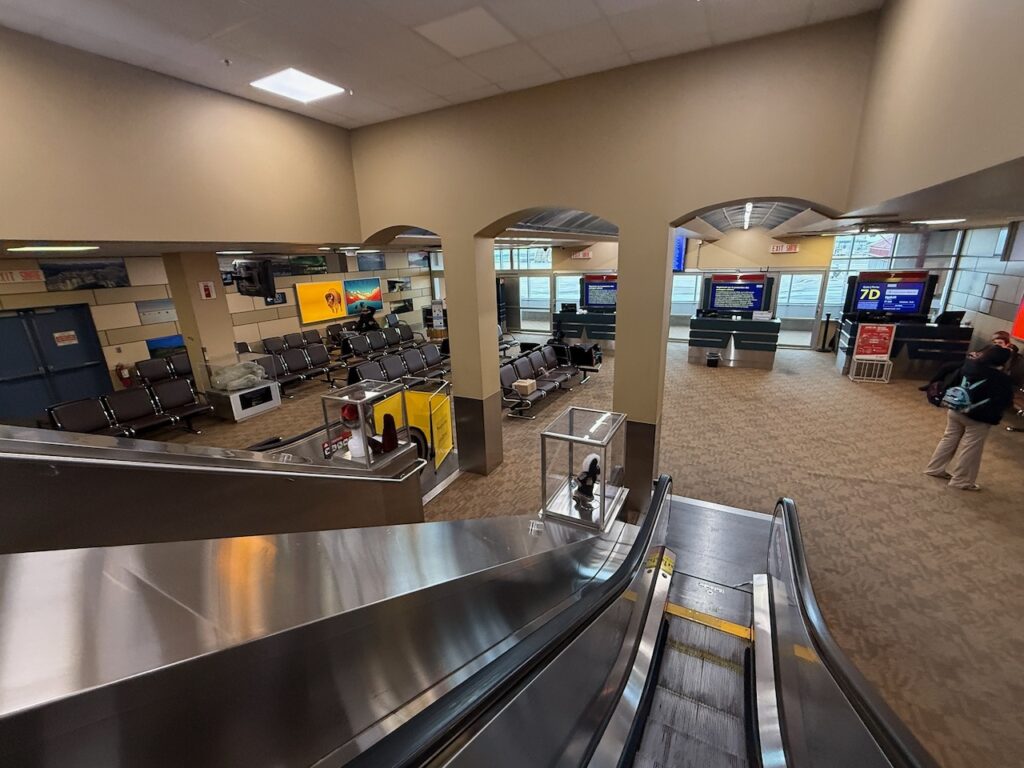
With light loads, boarding was a breeze. After pre-boards and the Aurora Loyalty members, we were allowed to board, though in reality everyone just kind’ve boarded together.
Our Boeing 737-300QC sat well away from the terminal. Initially I thought we’d be making a long trek across the apron. For an AvGeek in summer, that sounds wonderful. During an Edmonton winter with temperatures around minus 20 degrees Celsius, perhaps not so much.
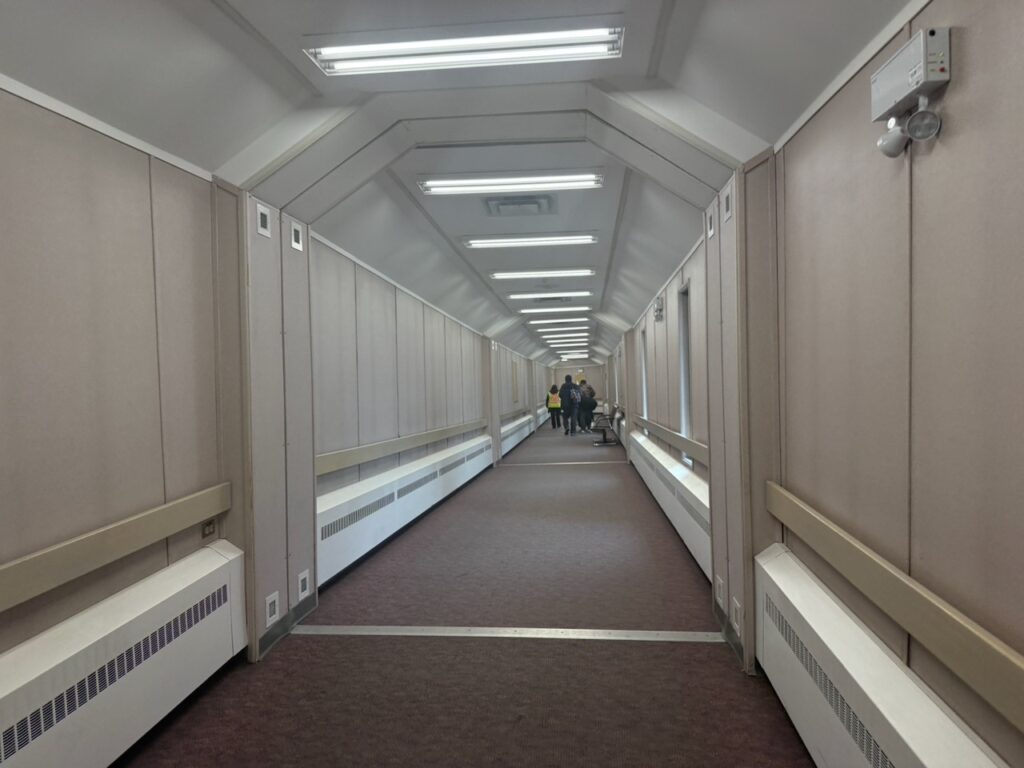
Instead, passengers followed an unexpectedly long enclosed walkway before finally emerging onto the ramp.
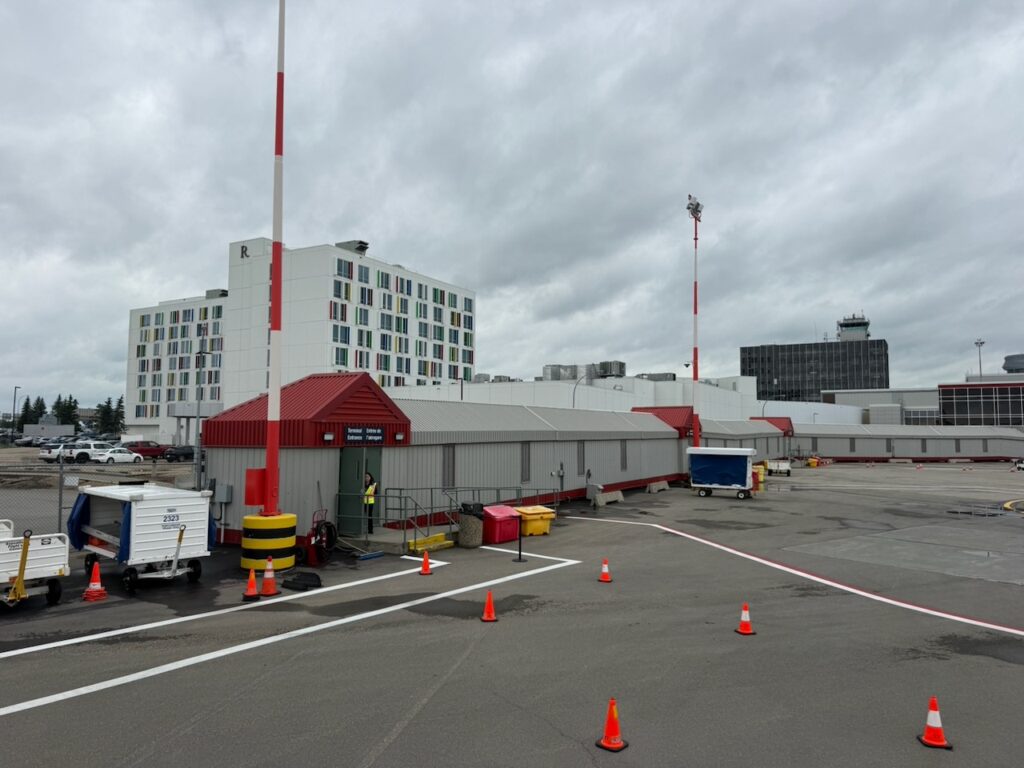
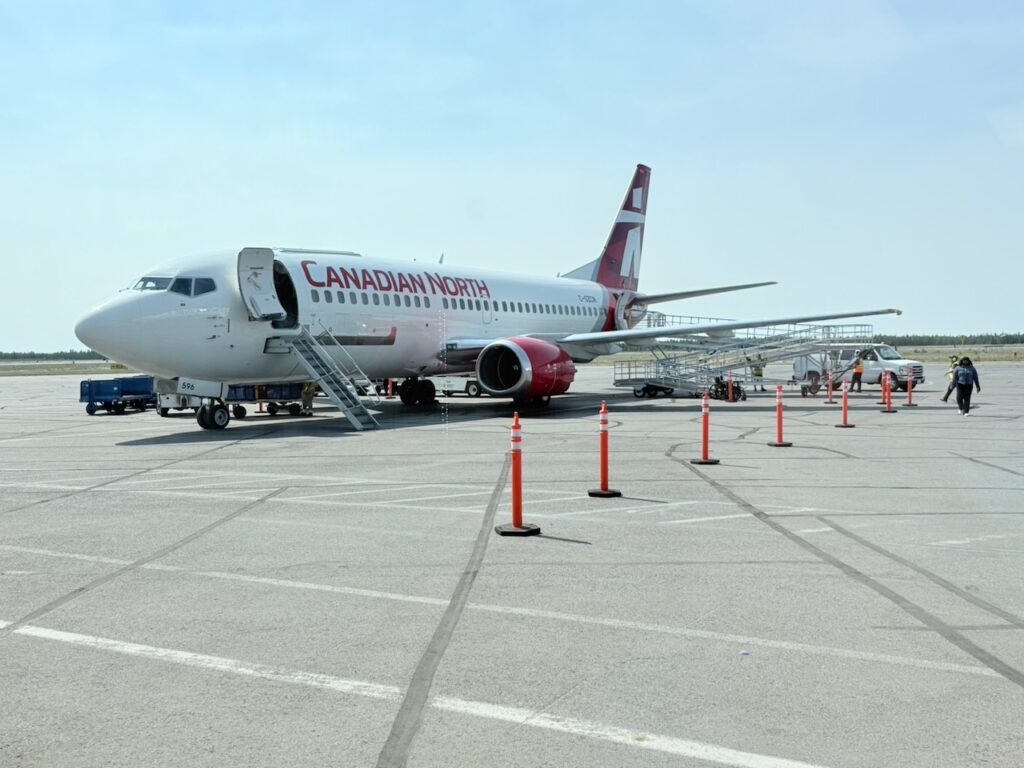
There she was. Canadian North’s Boeing 737-300 Quick Change Combi waited with her rear airstairs deployed, looking every bit the hardworking veteran she is.
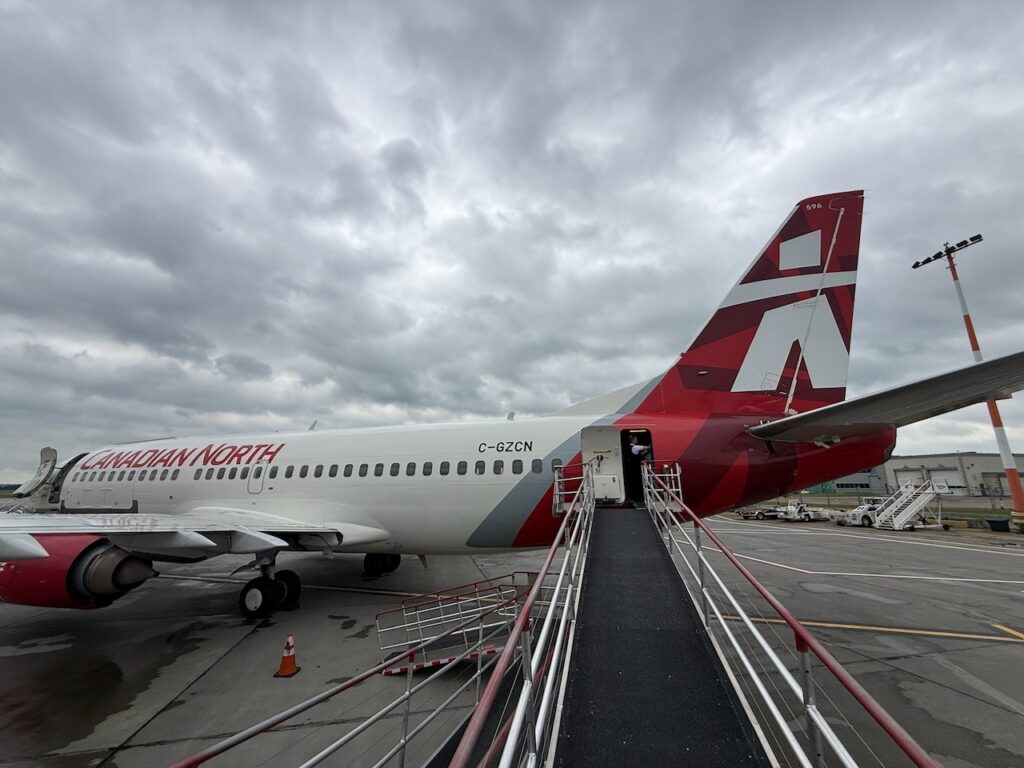
Our aircraft was among the last Boeing 737-300 Classics produced, entering service in 1999 before receiving a second career in 2015. That year, engineers fitted a large cargo door into the forward fuselage, transforming the aircraft into a combi capable of carrying passengers and freight simultaneously on the main deck.
Canadian North operates its Boeing 737-300 fleet in two principal layouts. Standard passenger aircraft accommodate 136 passengers in an all-economy cabin with 31 to 32 inches of seat pitch. The Quick Change configuration reduces capacity to 80 seats while making room for three main deck freight pallets forward of the passenger cabin. Cargo business in the front. Passenger party in the back.
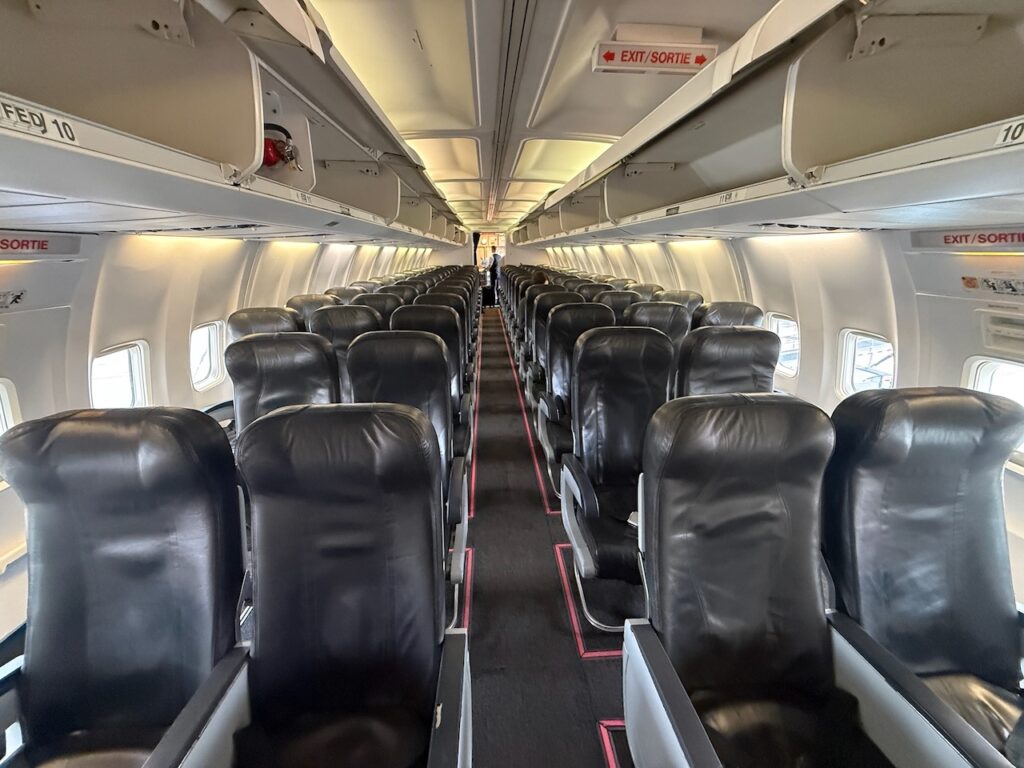
Cabin crew explained that the bulkhead can change depending on cargo requirements and passenger demand.
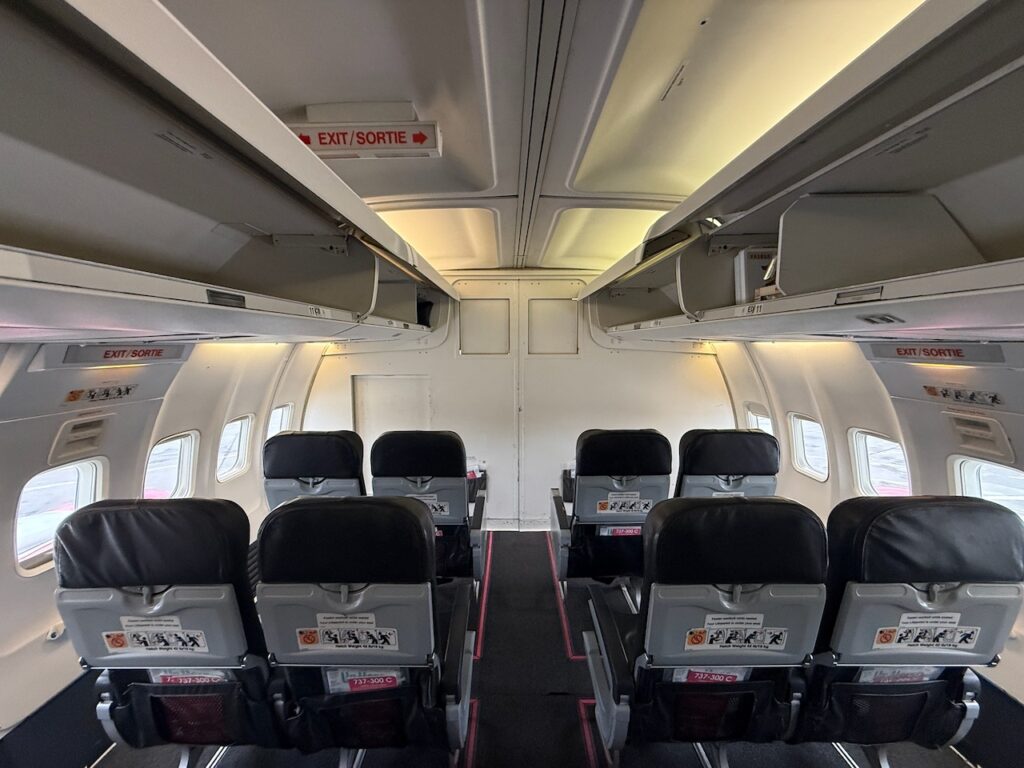
A solid forward bulkhead separated us from the freight compartment while the cockpit door occupied the center. I settled into seat 21A for what promised to be an excellent view of the wing.
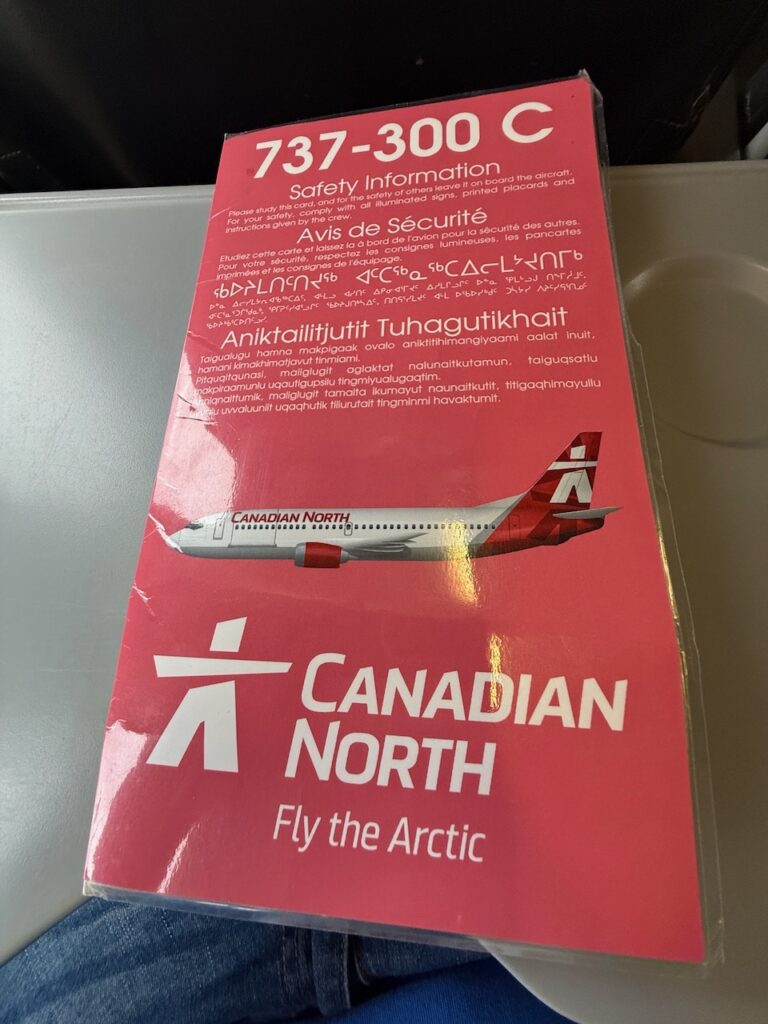
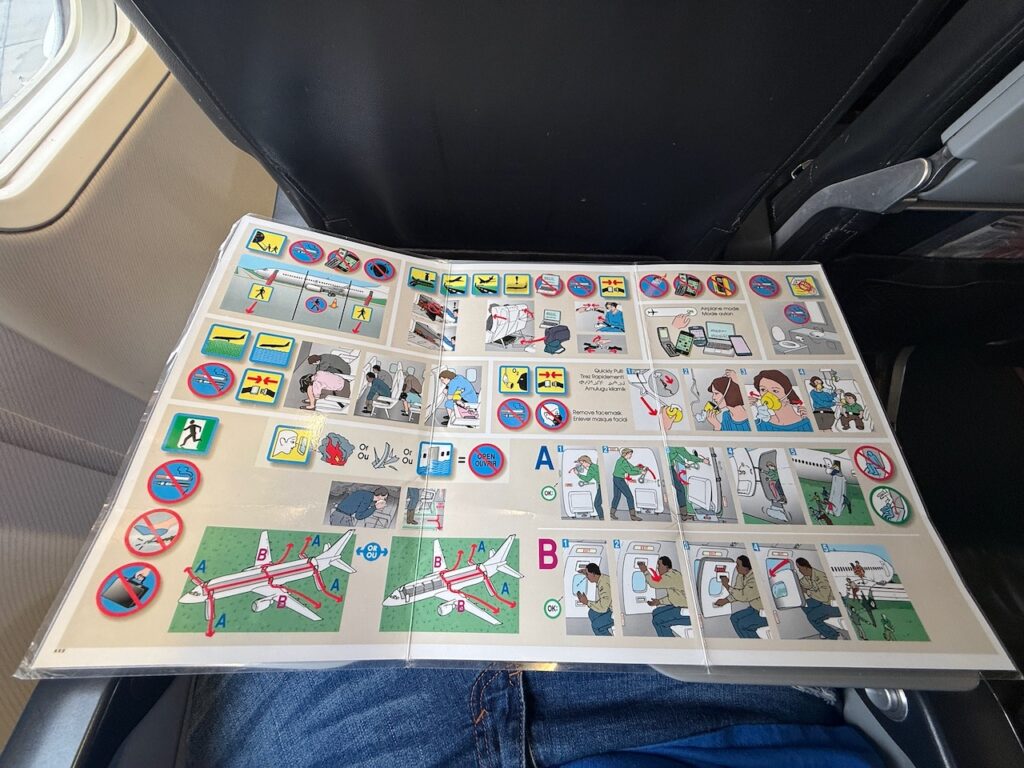
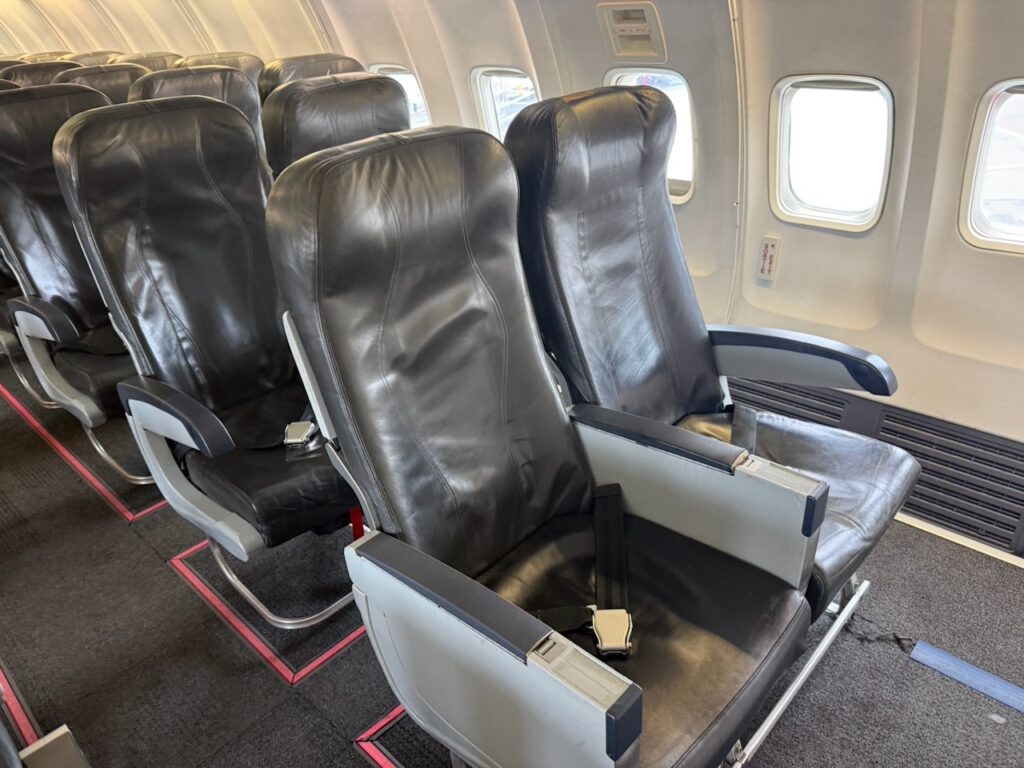
The slimline leather seats clearly showed the signs of a long working life but remained perfectly comfortable. Waiting in the seatback pocket were an inflight magazine (how retro!), safety card, and airsickness bag.
Even better, the flight was only about half full. I had earned the row to myself!
Beyond the seats, there was no hiding this aircraft’s vintage.
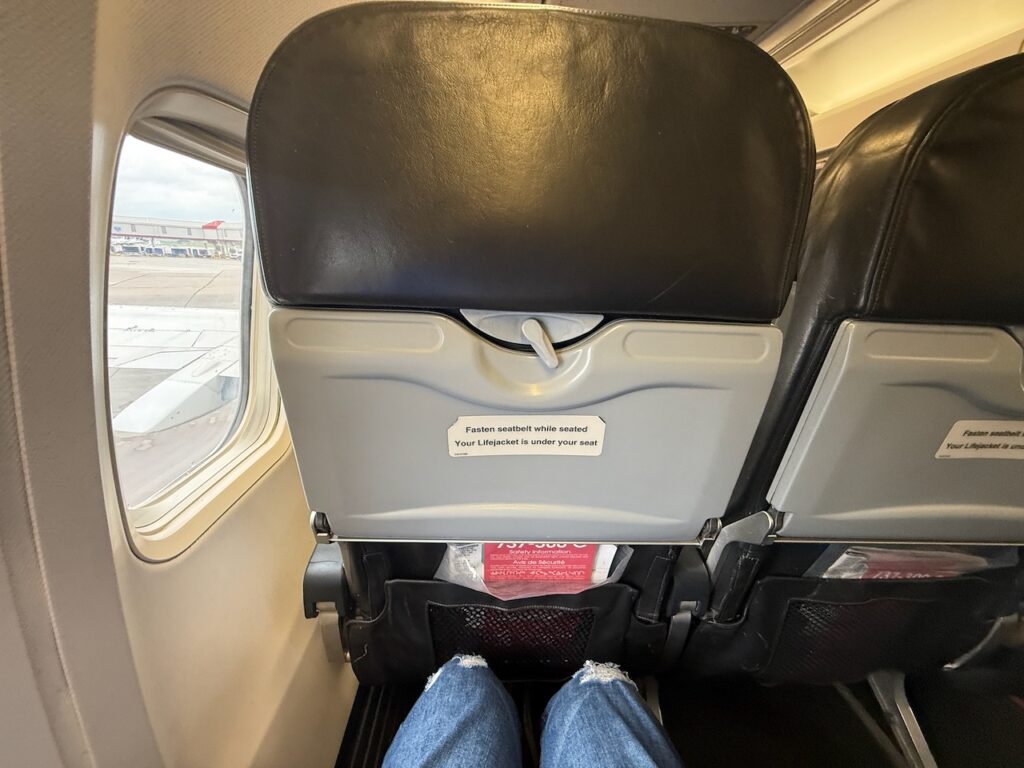
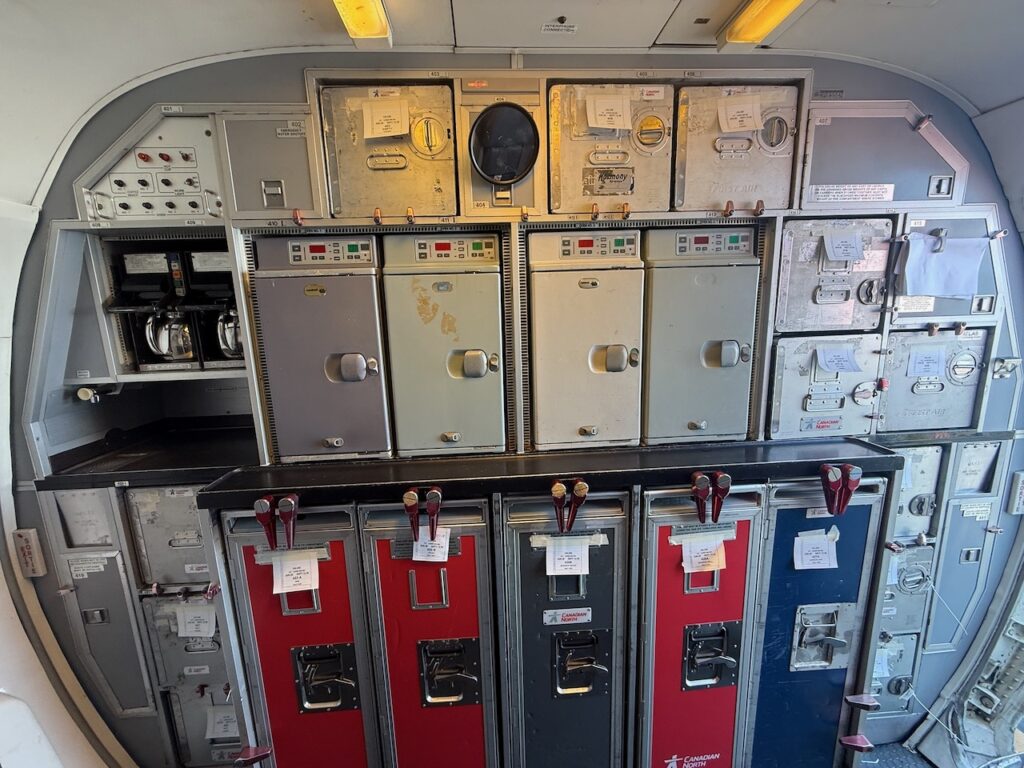
The classic passenger service units overhead, the compact lavatory, and perhaps most delightfully, a rear galley complete with working ovens were a 1980s throwback! I should’ve bought along a Member’s Only jacket.
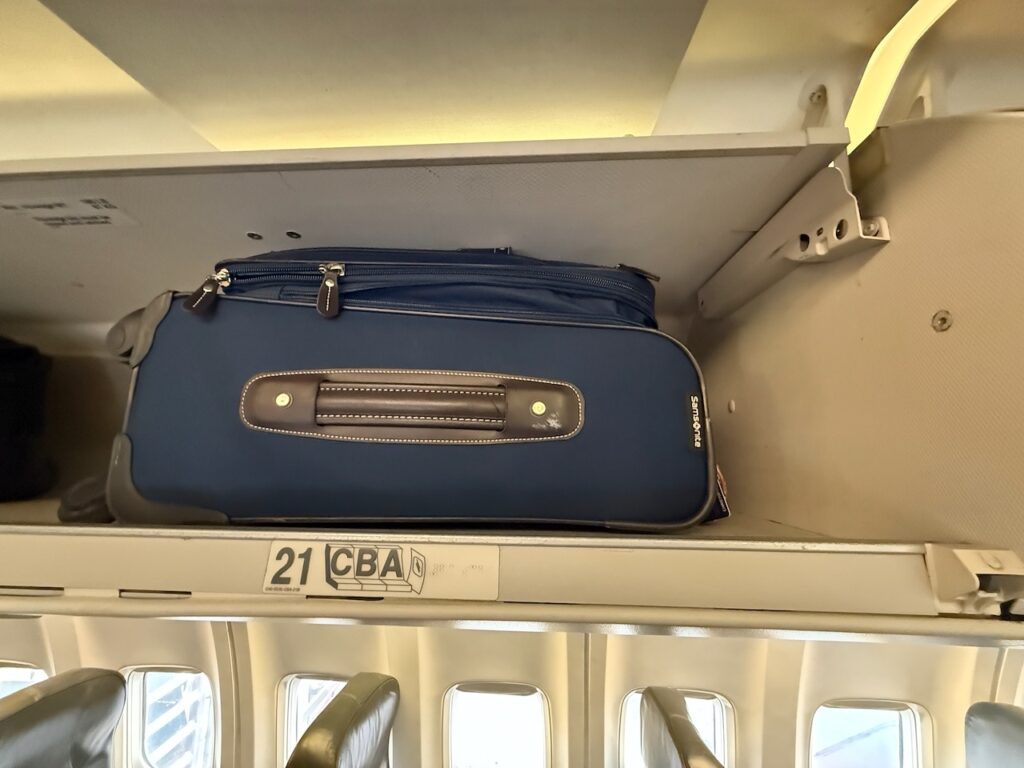
Our veteran crew cheerfully welcomed passengers aboard while somehow finding room for an impressive collection of bags inside the Classic’s modest overhead bins. I was genuinely surprised mine fit.
With the cabin only about half full, boarding wrapped up quickly. Looking around, it was obvious this wasn’t a flight filled with aviation enthusiasts chasing a rare aircraft type. Many passengers were traveling home, including Indigenous residents continuing beyond Yellowknife to Iqaluit, the capital of Nunavut, more than 1,400 miles farther northeast. Our first sector, by comparison, would cover approximately 630 miles.
Following a prerecorded safety demonstration in English and French, we pushed back and taxied for departure. The turnaround had the feel of old Southwest Airlines, efficient and fast with little time wasted. Moments after lining up on the runway, the flight crew advanced the throttles and the pair of CFM International CFM56-3B-2 engines answered with a wonderfully familiar growl.
No, they don’t produce the ear splitting soundtrack of the 737-200’s Pratt & Whitney JT8Ds, nor do they require those unmistakable clamshell thrust reversers. Still, there is something immensely satisfying about departing aboard a Boeing 737 Classic under full power.
Soon we climbed through the clouds and leveled at 34,000 feet.
There was no inflight entertainment system. No Wi-Fi. No streaming portal. No problem.
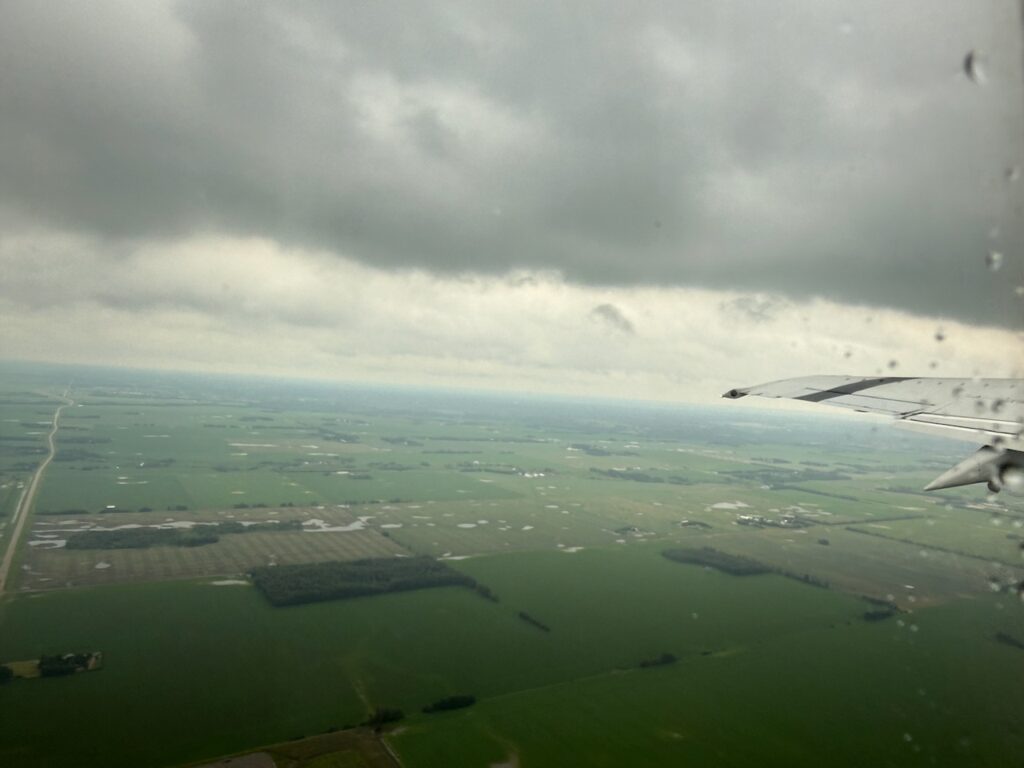
Instead, the skies provided the entertainment. Outside my window, the patchwork of Alberta’s prairie slowly gave way to the lakes, forests, and exposed granite of the Canadian Shield.
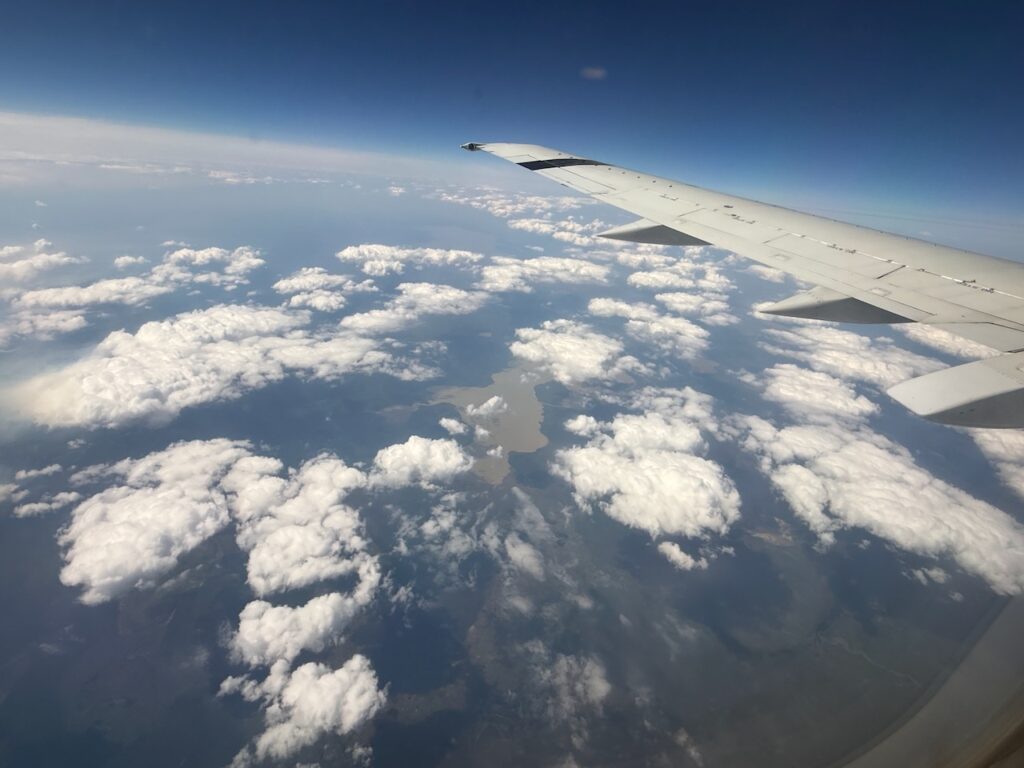
For anyone with even a passing interest in geography, it was impossible to look away.
Then another throwback arrived. The unmistakable aroma of hot food drifted through Economy Class. How many domestic flights of barely 80 minutes still serve a complimentary hot meal? None in the U.S. or Canada, except in The North. Air Inuit did the same thing!
The service unfolded in quick-step. One flight attendant rolled a cart down the aisle distributing meals while the second followed immediately behind with beverages.
Lunch offered a choice between a vegetarian entrée and chili chicken with pasta, accompanied by a side salad and what seemed to be a tapioca-based dessert. Economy airline catering has conditioned me to lower my expectations over the years, making this meal all the more surprising. It was hearty, flavorful, and far better than I had anticipated.
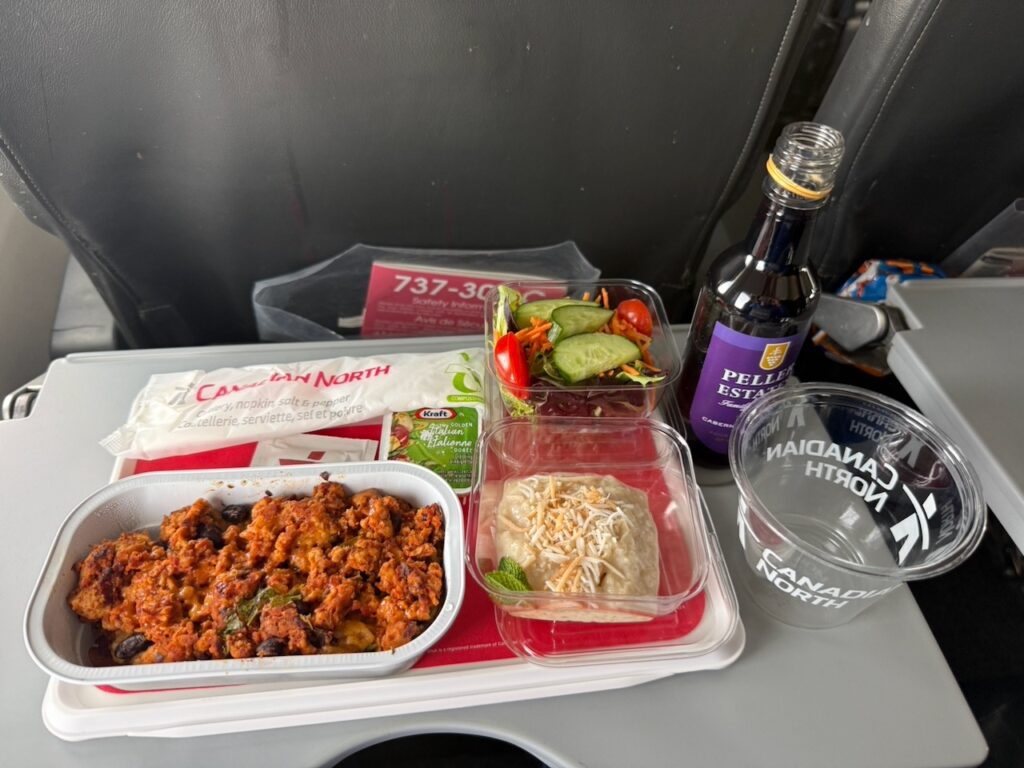
Equally unexpected was the beverage service because Canada’s northern airlines are generally dry as they serve dry communities. Since we were heading to Yellowknife — a major city — complimentary alcoholic drinks remain part of the offering, although passengers are generally limited to one.
I enjoyed my Cabernet enough that one of the flight attendants quietly bent the rules, discreetly slipping a second miniature bottle into my seatback pocket with a knowing smile. Now that’s Northern hospitality.

Barely 80 minutes after departing Edmonton, our Boeing touched down in Yellowknife, bringing my brief journey aboard one of North America’s increasingly rare combi aircraft to an end.
After a short taxi, we parked on the ramp and once again descended via the rear airstairs.
Even before entering the terminal, it was obvious I had arrived somewhere very different from southern Canada. Aircraft that disappeared years ago from most airline fleets still lined the apron, continuing to earn their keep in one of the most demanding operating environments on Earth. It was a living, flying museum.
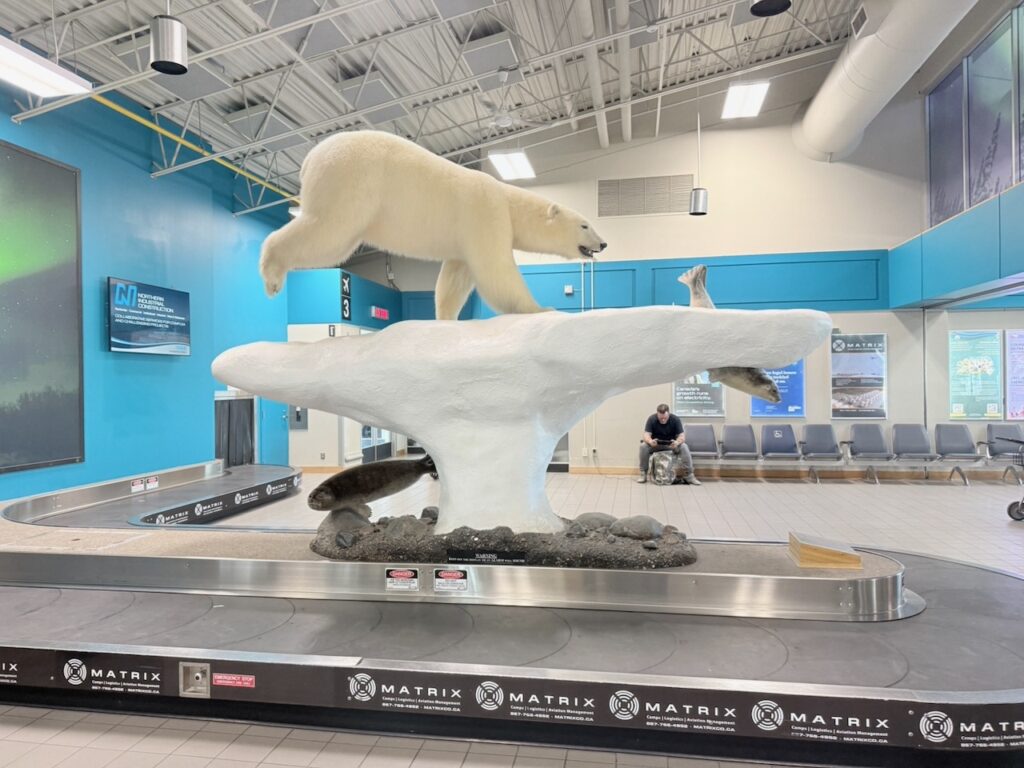
Inside the terminal, one final reminder awaited in baggage claim. A polar bear. Fortunately, only a model. Baggage arrived quickly on the sole conveyor belt.
You can’t compare these Northern flights to the standard airline criteria, but for pure AvGeek grin quotient, I’ll rate it a “8” — reserving “10s” for the almost extinct first generation short-haul jets like the 737-200 and trying it during the challenging winter under the Aurora Borealis. As I write this, I still can’t wipe that frozen smile off my face.
This trip back in time was just the appetizer; tomorrow I would take a trip to another planet: The Arctic. So, stay tuned for Part Two!
Related Articles:
- An even more Northern Nose to Tail: Canadian North’s ATR 42-500
- Fairmont Vancouver Airport hotel proves perfect AvGeek getaway
- Air Inuit captivates another AvGeek with 737-200 combi experience
- Different eras: trying Air Canada’s oldest and newest cabins
- Pacific Coastal flying as WestJet Link delivers sightseeing adventure
- Exploring Air North, Yukon’s Airline, between Kelowna and Vancouver
- The indignities of flying fluffy aboard a CRJ
- Harbour Air seaplane service on Victoria-Vancouver is an AvGeek dream
All images credited to the author, Chris Sloan