
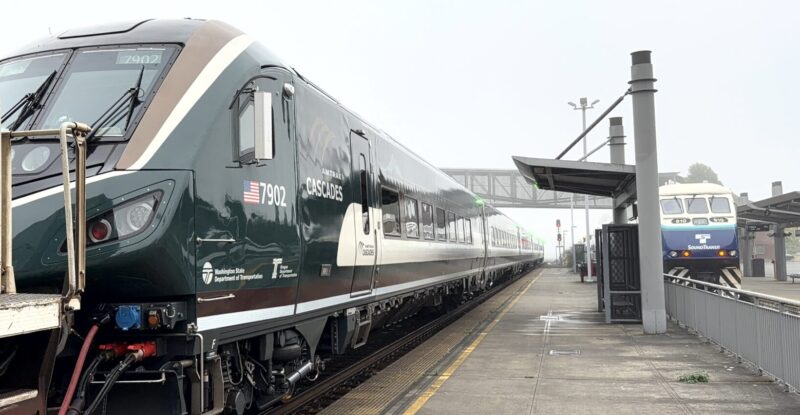
 Everybody loves a good redemption story. For Amtrak, redemption comes in the form of its brand new Airo fleet.
Amtrak placed a massive order with Siemens in 2022 to replace the bulk of its short- and medium-distance rolling stock, representing a complete reset of Amtrak’s passenger experience (#PaxEx on the socials).
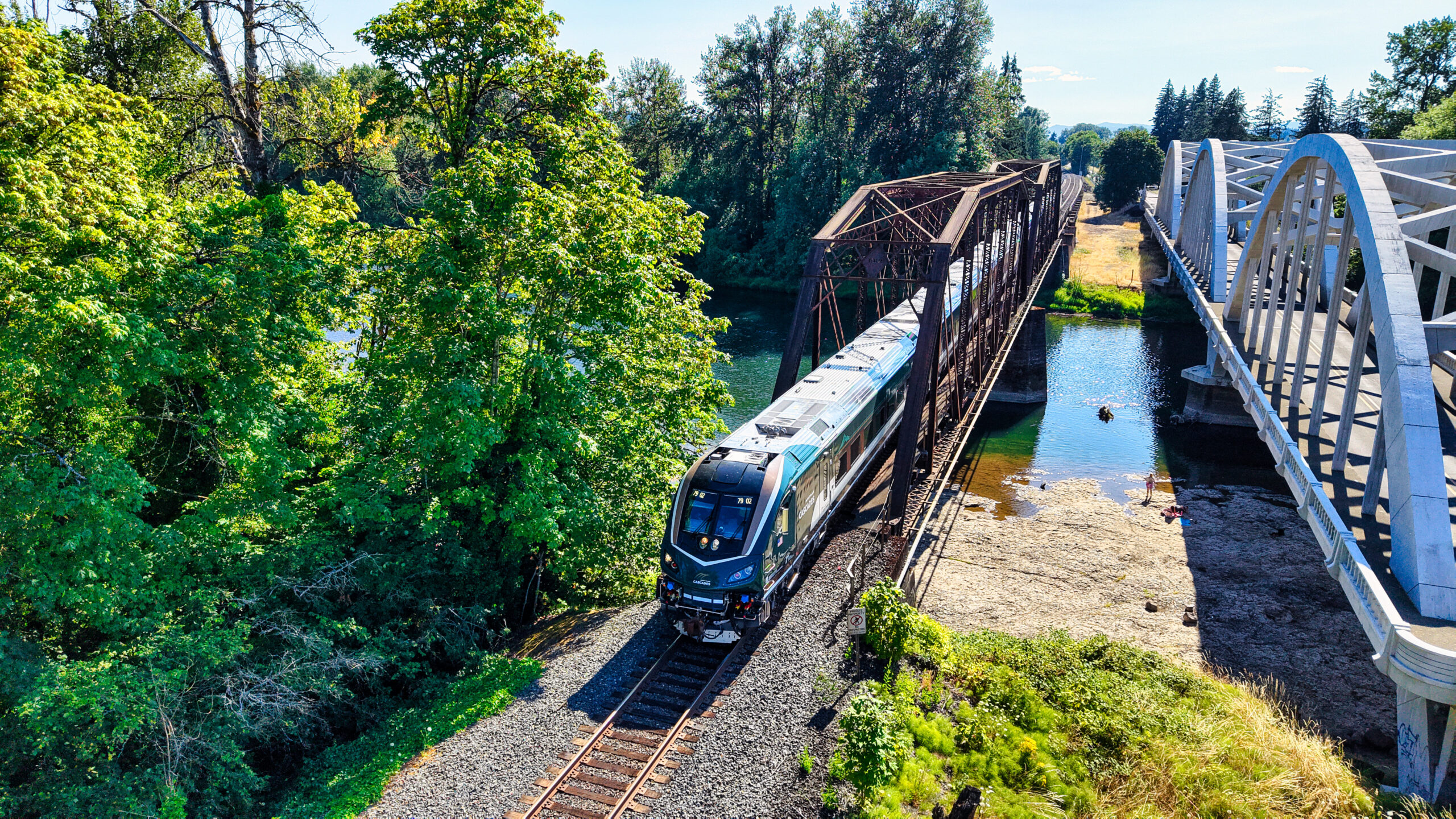
The Pacific Northwest Cascades route was first to place the new Amtrak Airo trainset into service, and your author just happened to be in Seattle for a test ride a few days after the launch.
Amtrak has tinkered with and upgraded its legacy equipment over the years, sprinkling refreshed seats here and upgraded Wi-Fi there, but there’s a practical limit to what Amtrak could accomplish with half-century old equipment.
The few chances Amtrak had to start from scratch in recent years with the Venture coaches in the Midwest and NextGen Acela, have largely been #PaxEx misses. Airo represents a total rethink, not just a touch up.
The exterior of the trainset is sleek, bringing forward the paint scheme and integrated cab car of the odd looking but iconic Talgo trainsets from the 1990s.
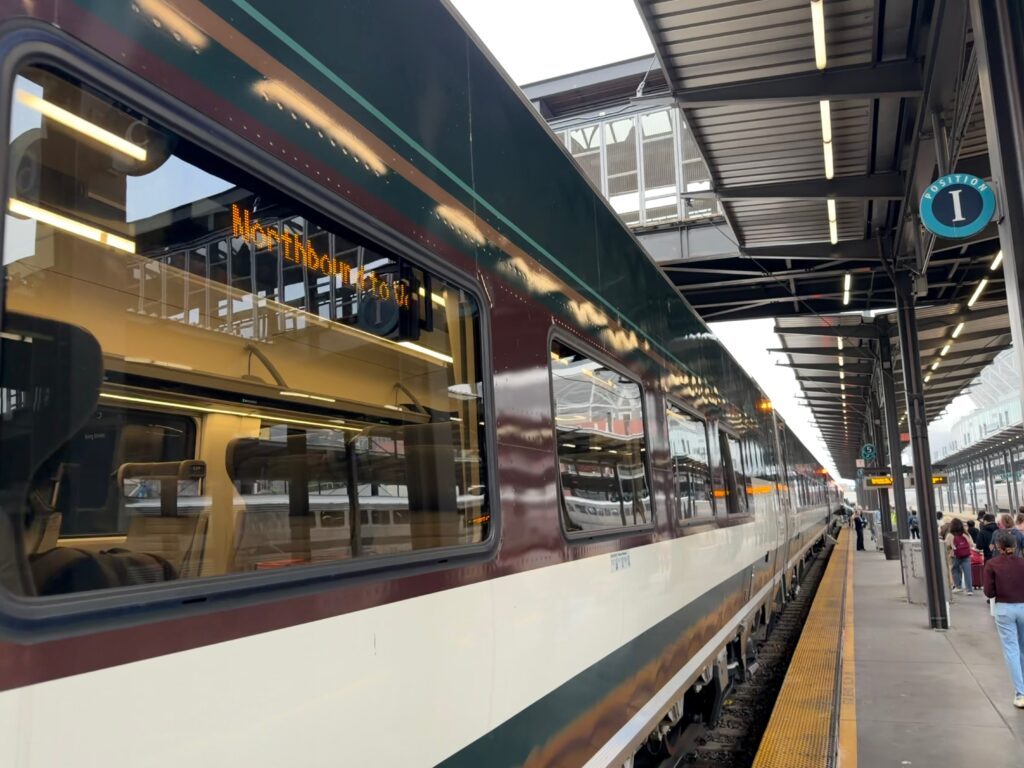
Before even boarding the trainset, new exterior digital signage confirms the direction and ultimate destination of the train, helping to inform infrequent riders.
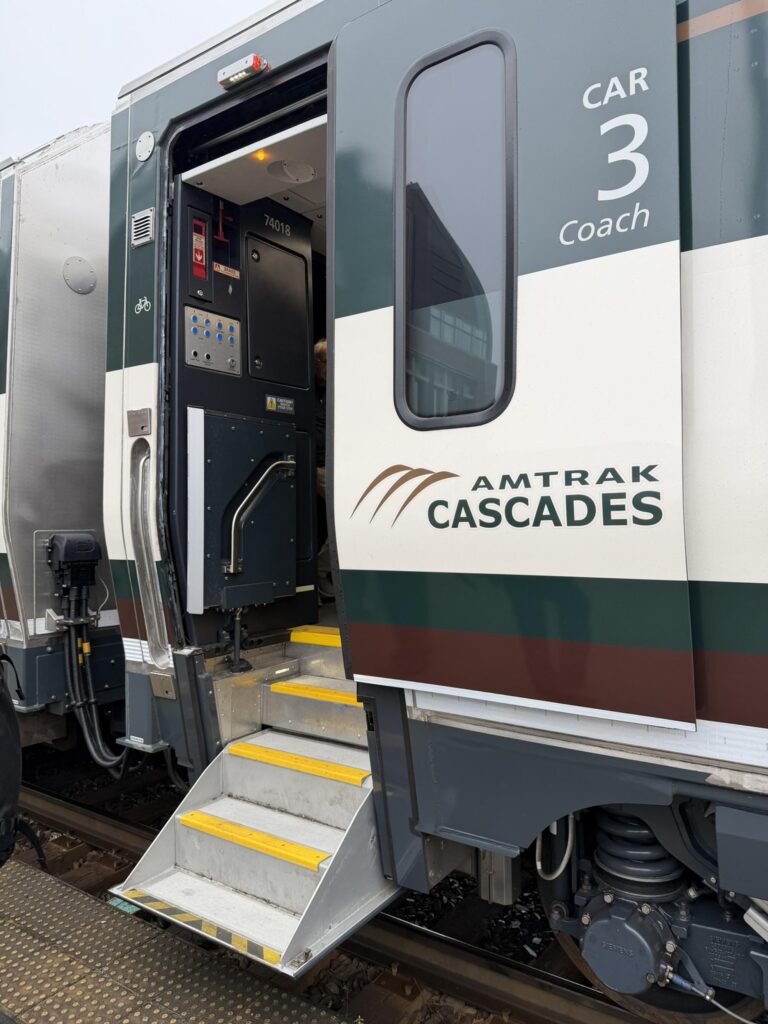
Unlike Amtrak trainsets of the past, stepping on board Airo is a pleasant experience.
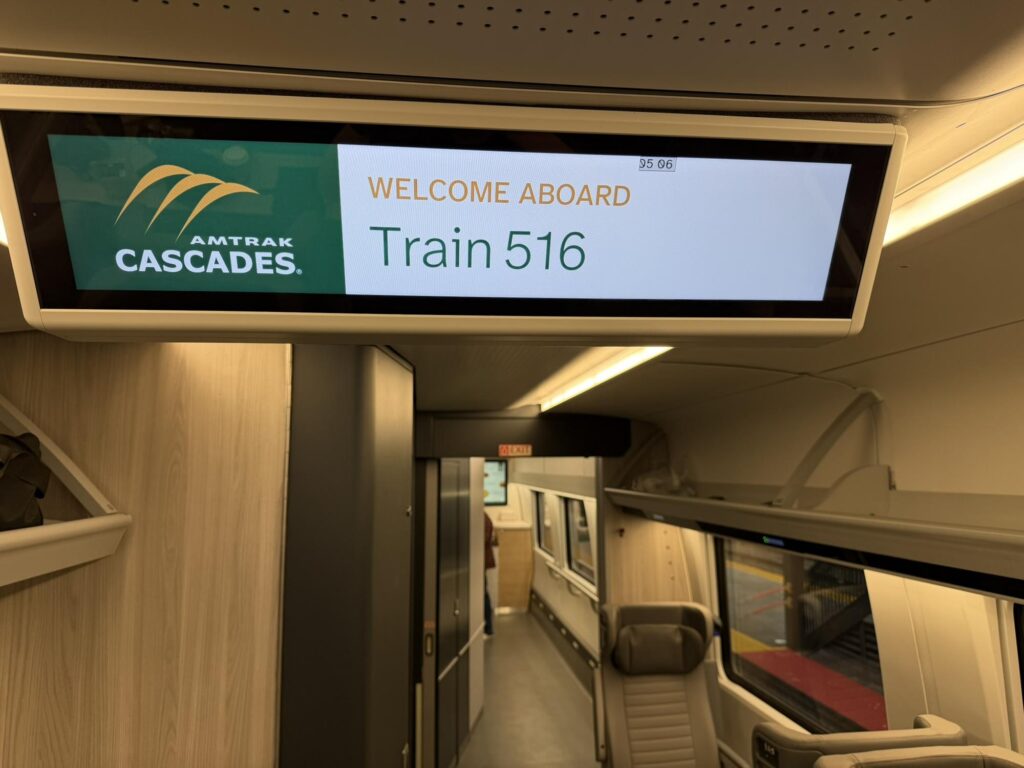
The national passenger railroad company has eschewed the use of bare stainless steel and opted for thoughtful finishes with integrated lighting.
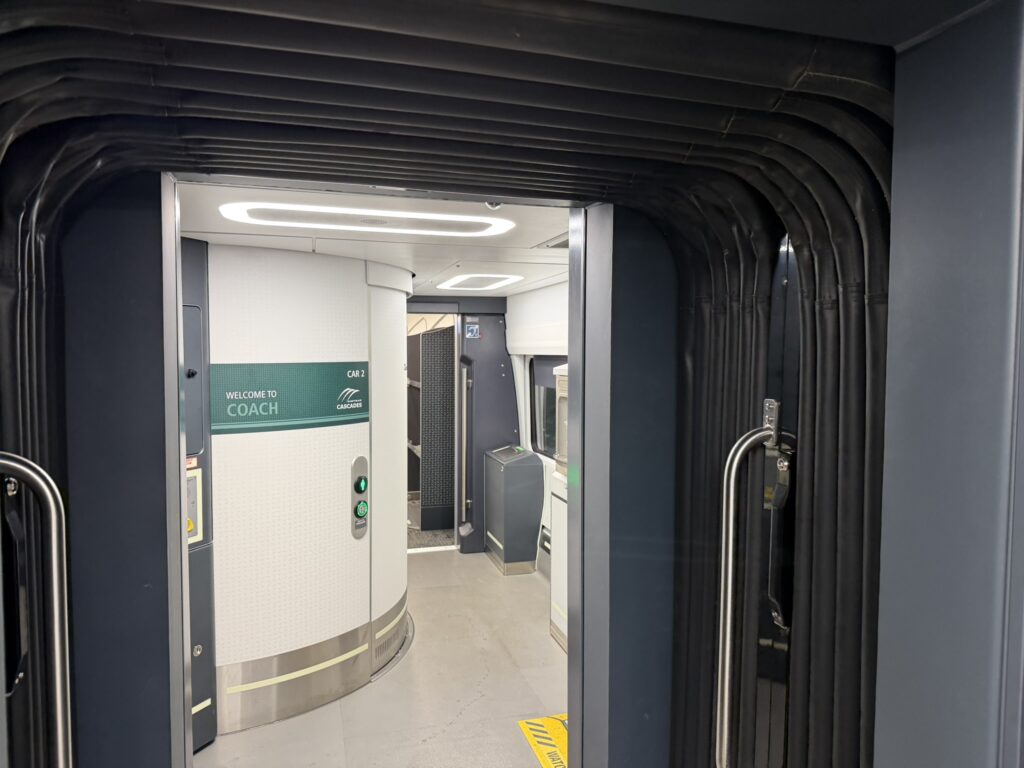
Individual coaches are joined with automatically opening doors and articulated connectors, making it feel less like a dangerous task to move between coaches and more like it’s actually something passengers need to do.
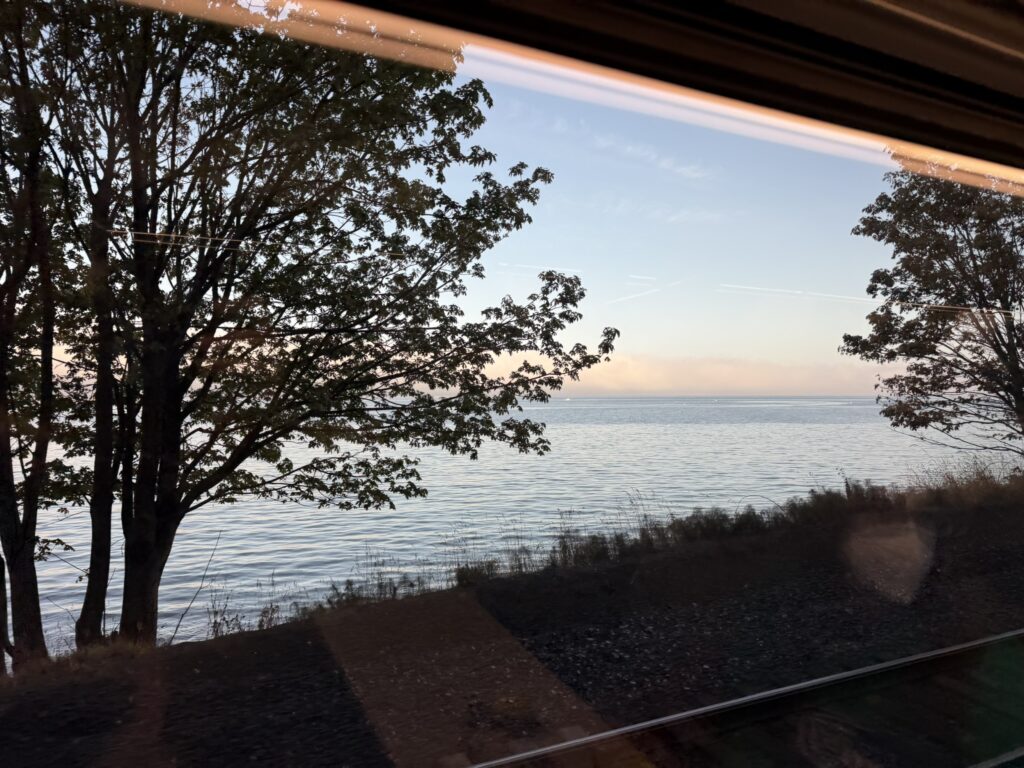
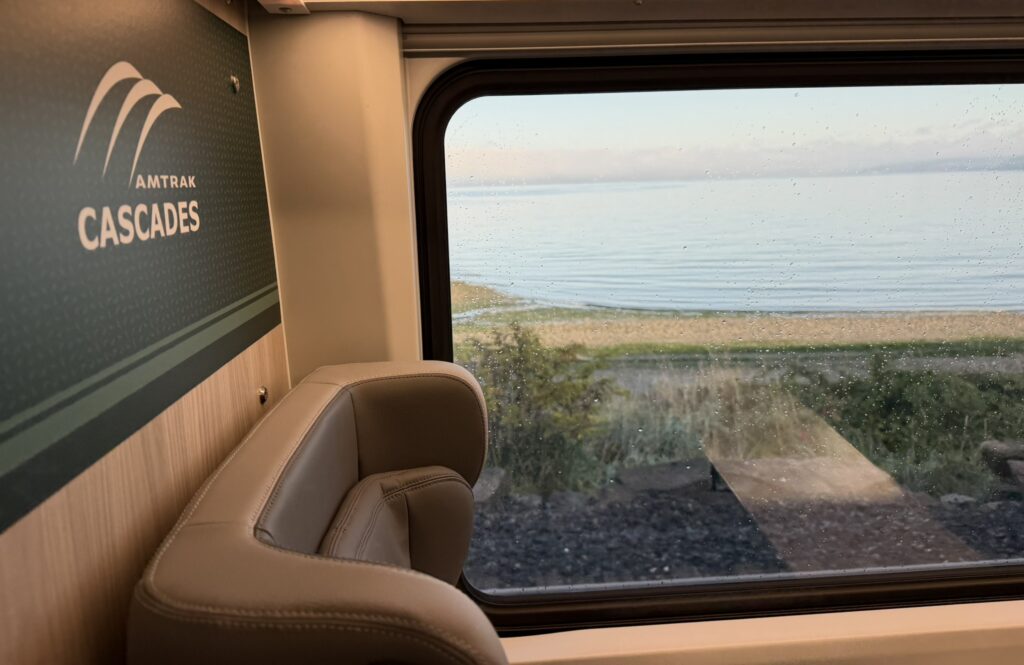
Giant windows, as compared to the legacy fleet, do the scenic Pacific Northwest Cascades route justice — just as long as Amtrak keeps them clean.
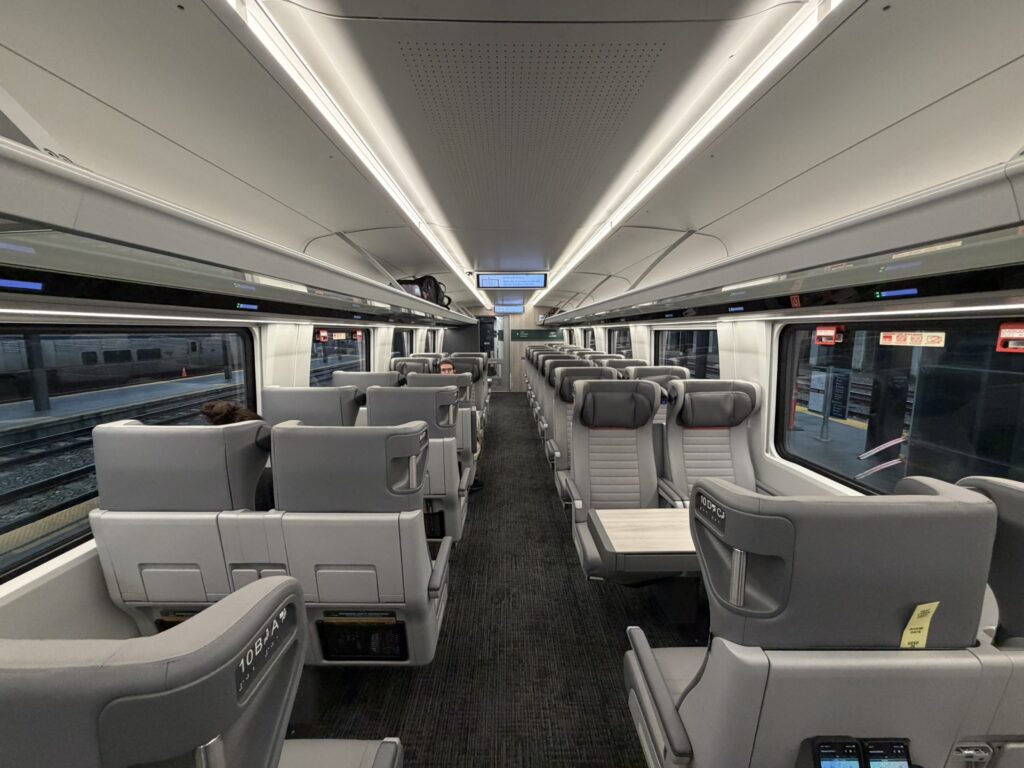
Seats in both the Business Class and Coach Class cars have been completely redesigned, building on what Amtrak learned from prior missteps on the Siemens Venture and NextGen Acela fleets.
Coach Class seats are configured in a 2-2 layout. Dark grey headrests are accented by thin red piping. Most seats are standard pairs, though there are a number of quad seats with shared tables.
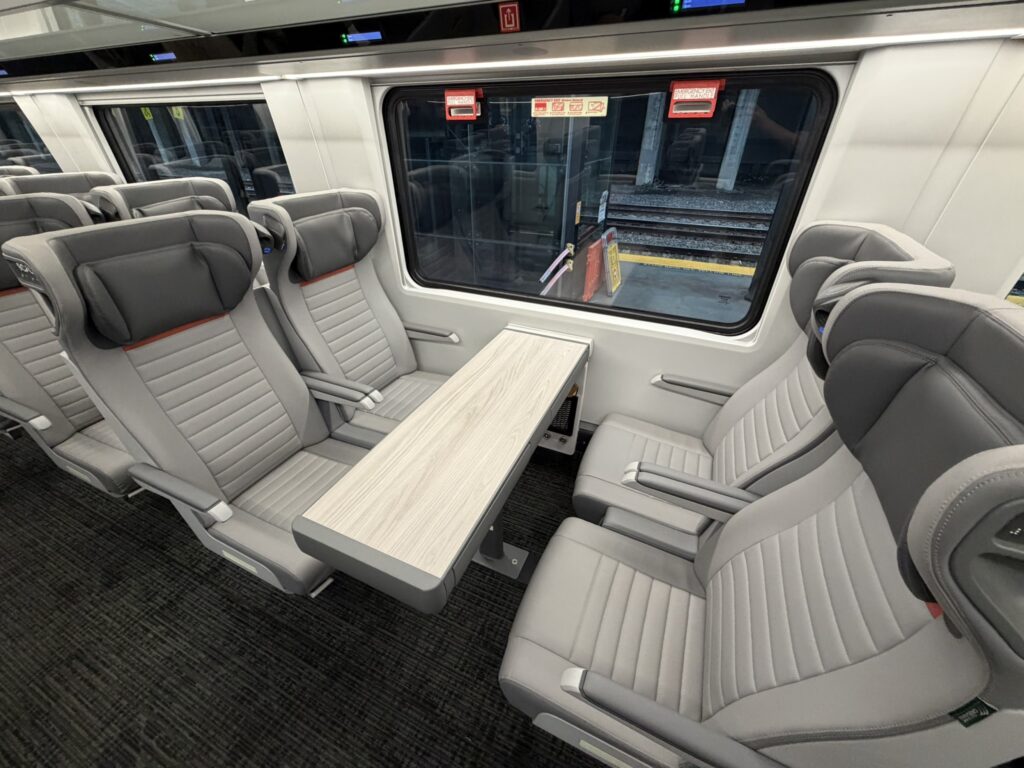
Each seat pair features large tray tables, deployable cup holders, and personal device holders like you might find on an airline seat.
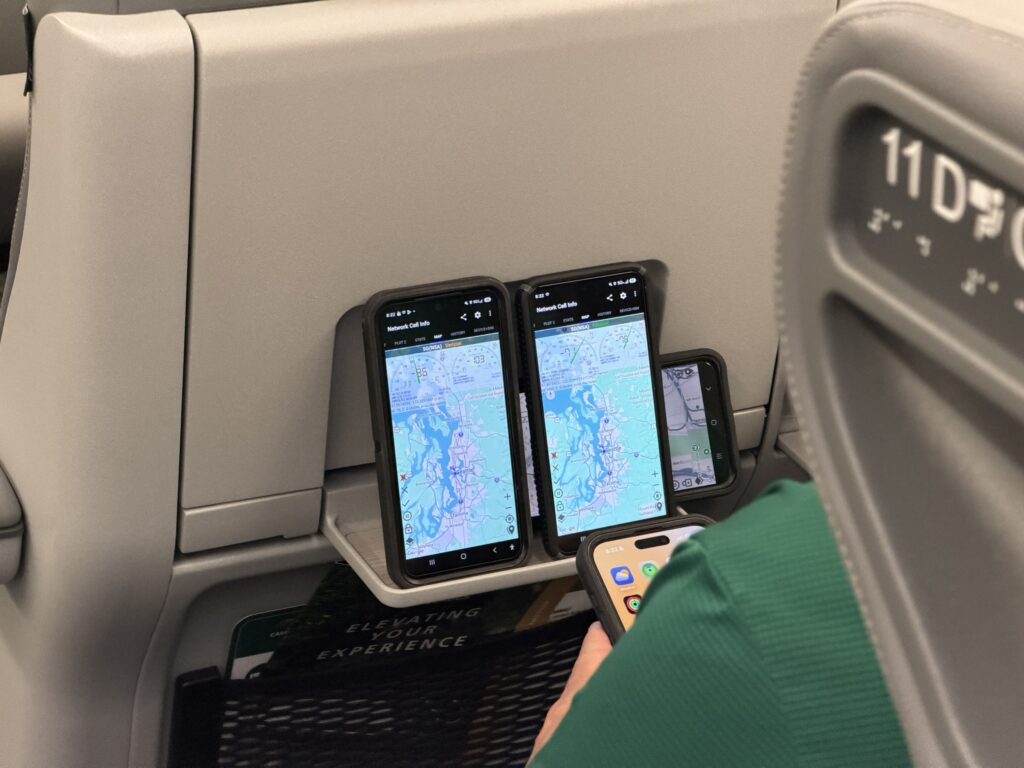
Comfort-wise, Airo’s seats are a massive step in the right direction. Each Coach Class seat includes privacy wings, an adjustable headrest, integrated reading light, AC power and USB-C ports.
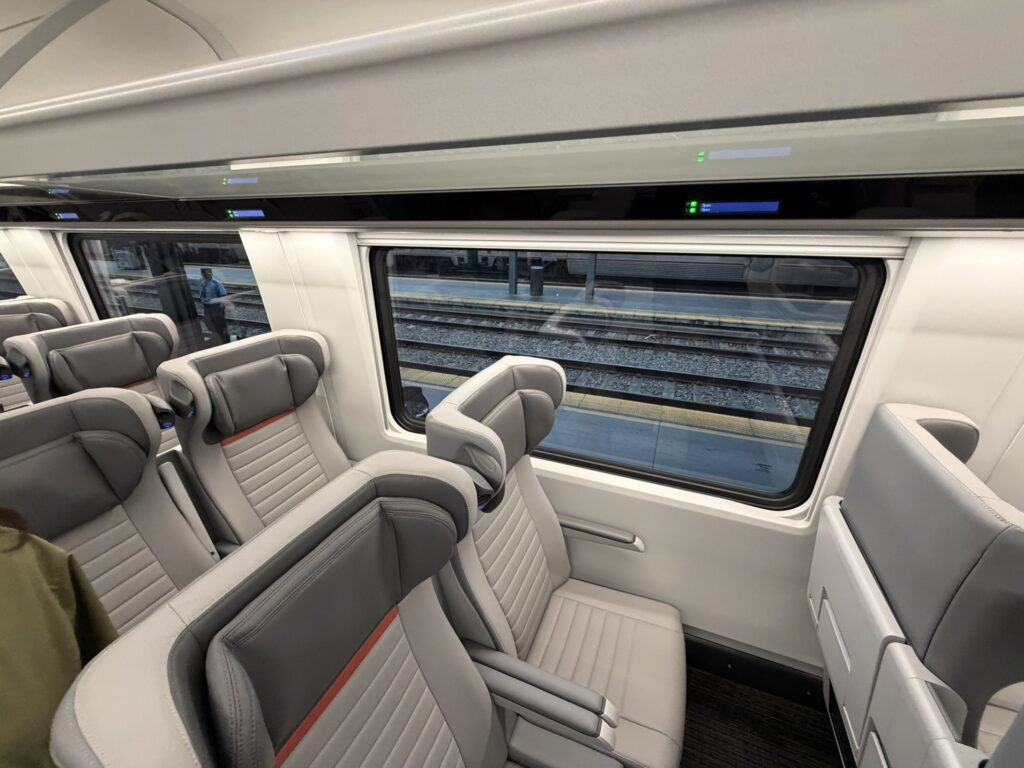
The recline mechanism is not the same as found on the legendarily comfortable Amfleet coaches. But as far as your author is concerned, it represents a big improvement.
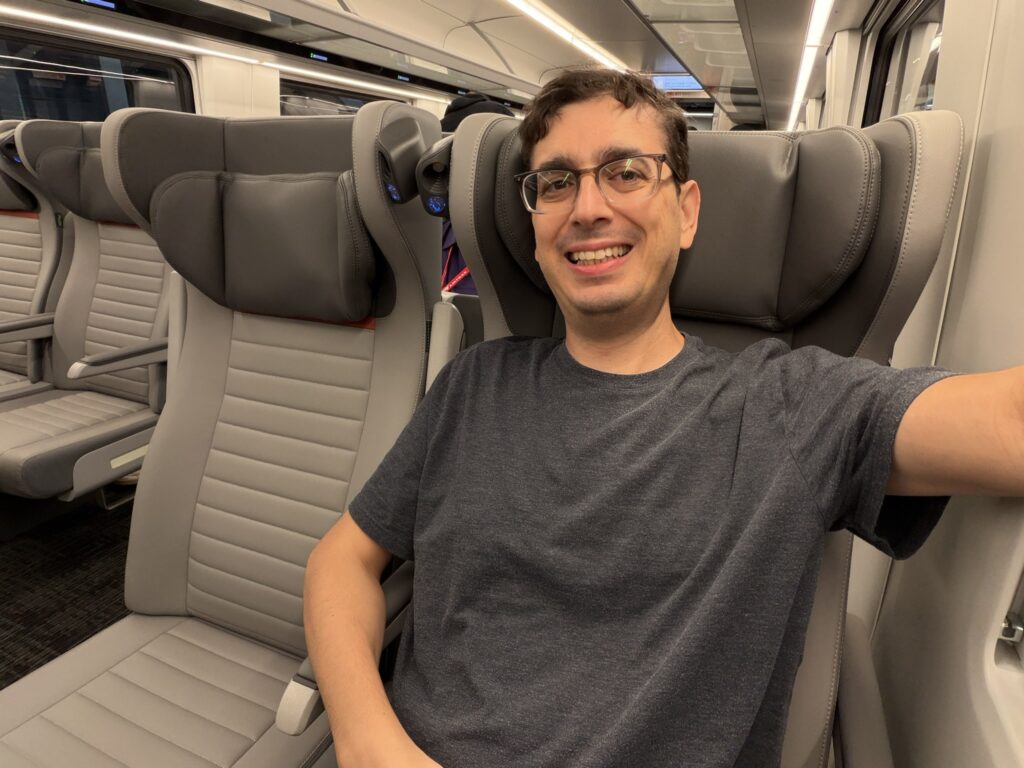
Reclining these seats doesn’t feel like an afterthought or that a box was checked simply to check it. The articulated recline actually improved seat comfort for me, which is great as rides on the Cascades route can stretch to five or more hours.
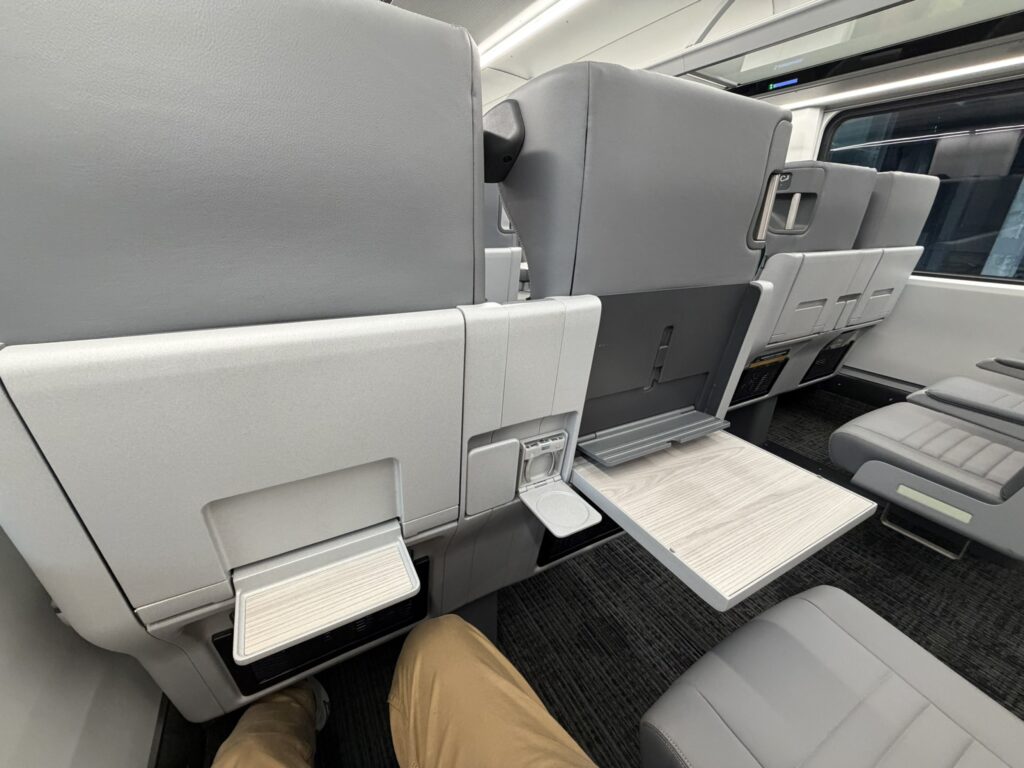
Unlike on NextGen Acela, seats in the higher class of service are actually differentiated beyond a simple shift to a 2-1 layout. Seat pairs are also separated by a sizable console that houses multiple power outlets and doubles the armrest space allotment.
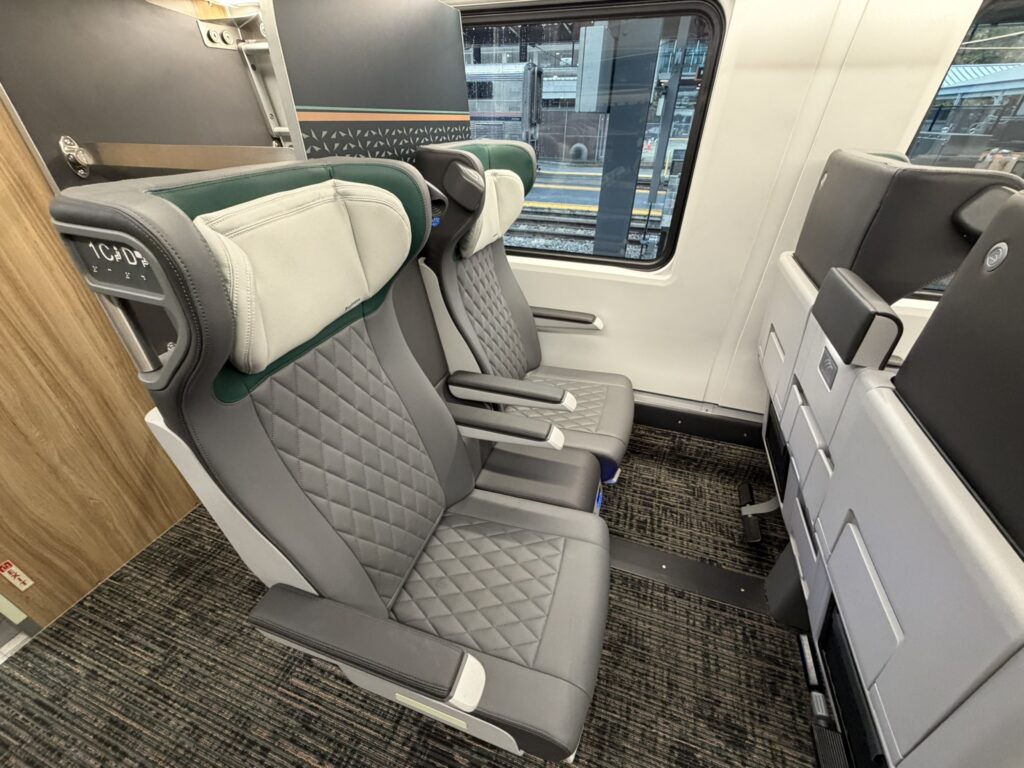
Light-colored headrests, accented by dark green, and a lit ‘Amtrak Cascades’ decorative crest create a more premium experience in Business Class.
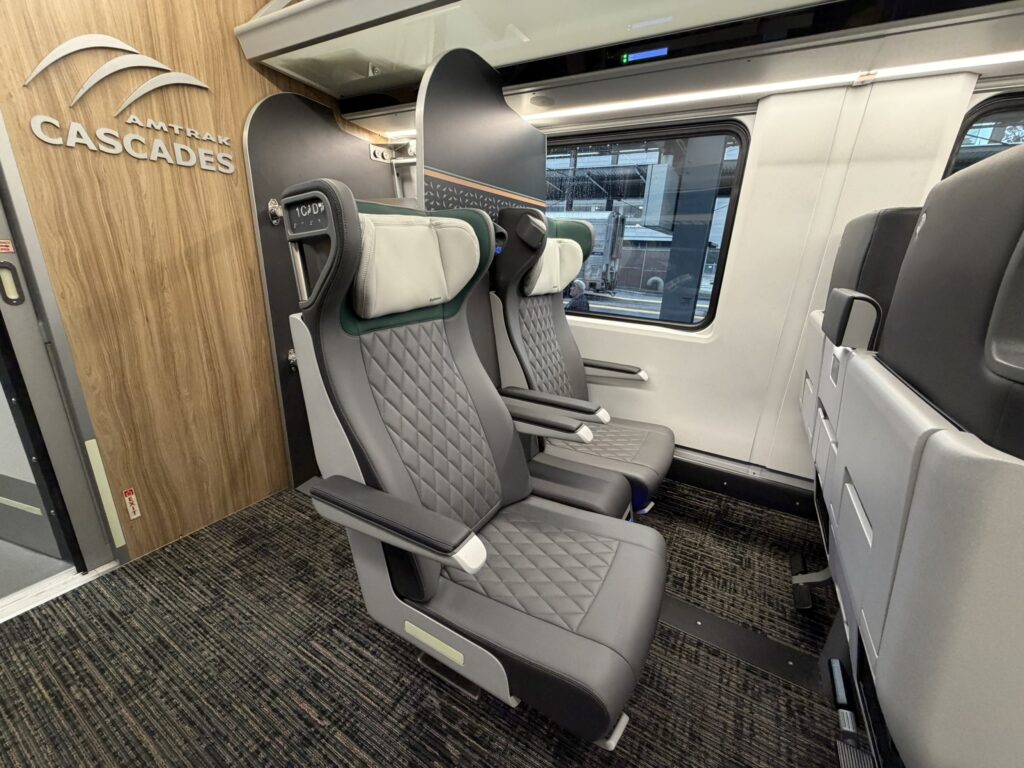
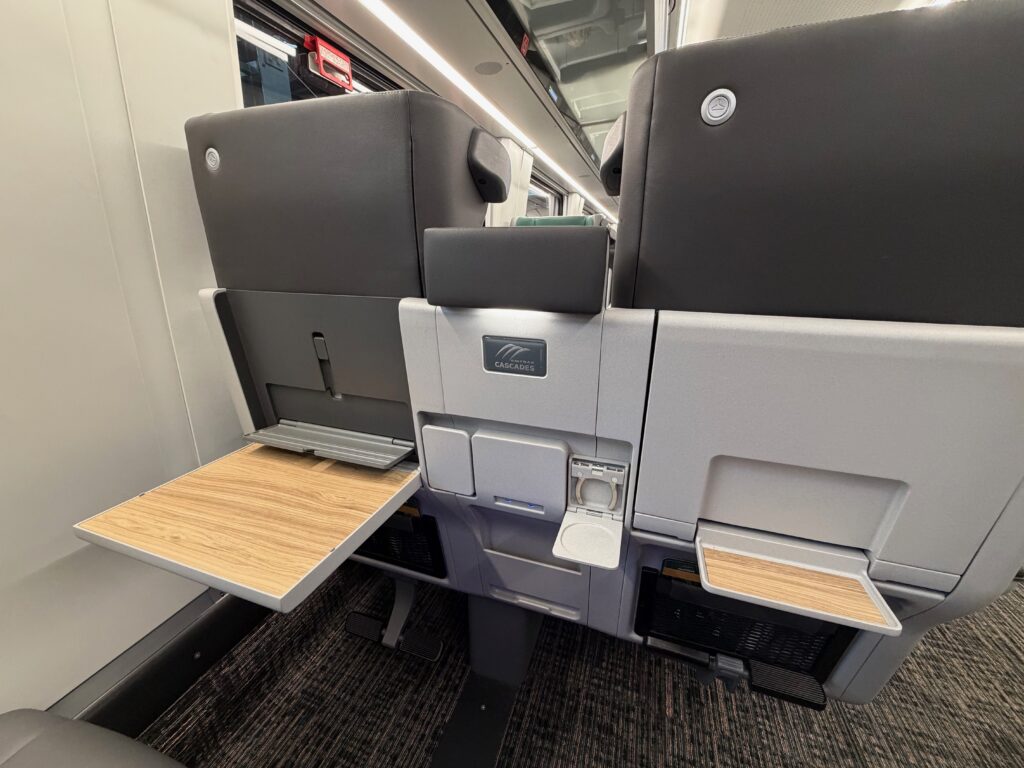
The seats also feature passenger-facing USB-C power ports that are potentially a bit easier to reach.
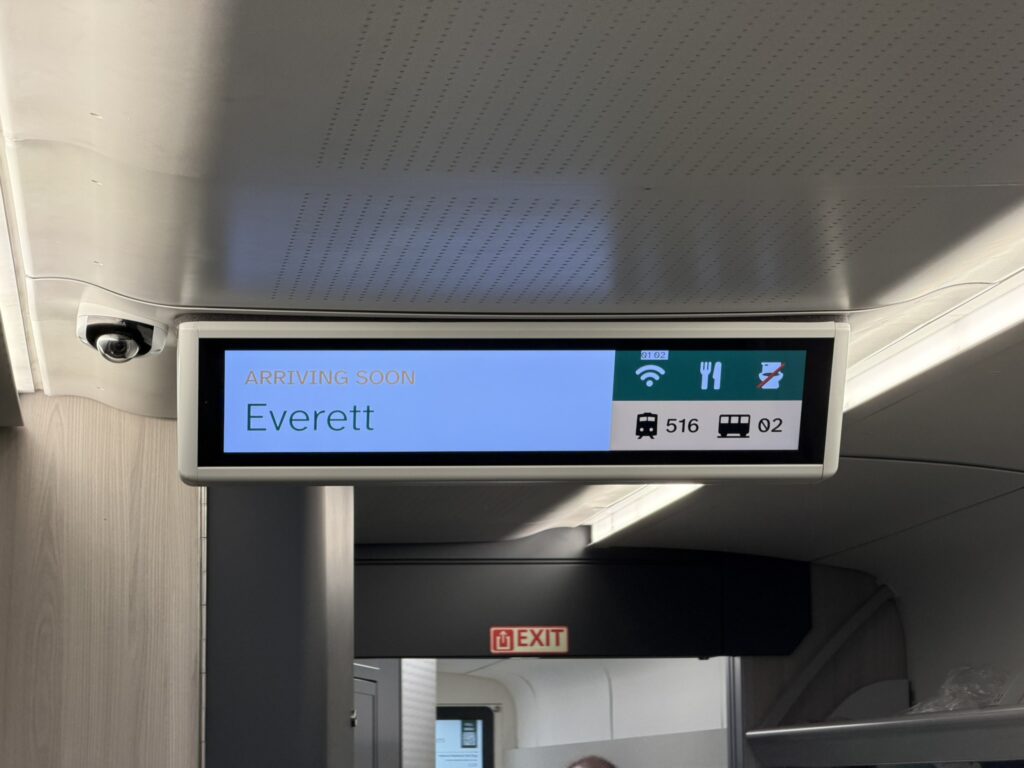
Throughout the trainset, digital signage provides route and train information alongside automated announcements.
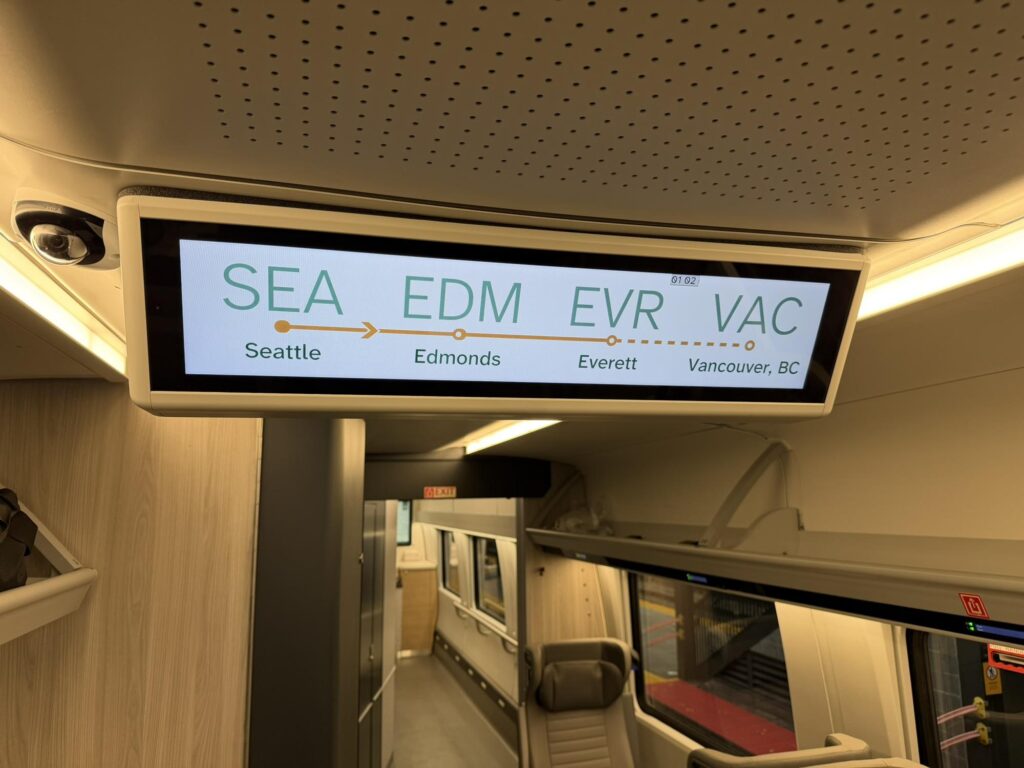
This approach is something that Amtrak still hasn’t figured out on NextGen Acela, so it’s great to see it working on these trains from day one. The automated audio is a bit clunky, but it’s a giant step forward.
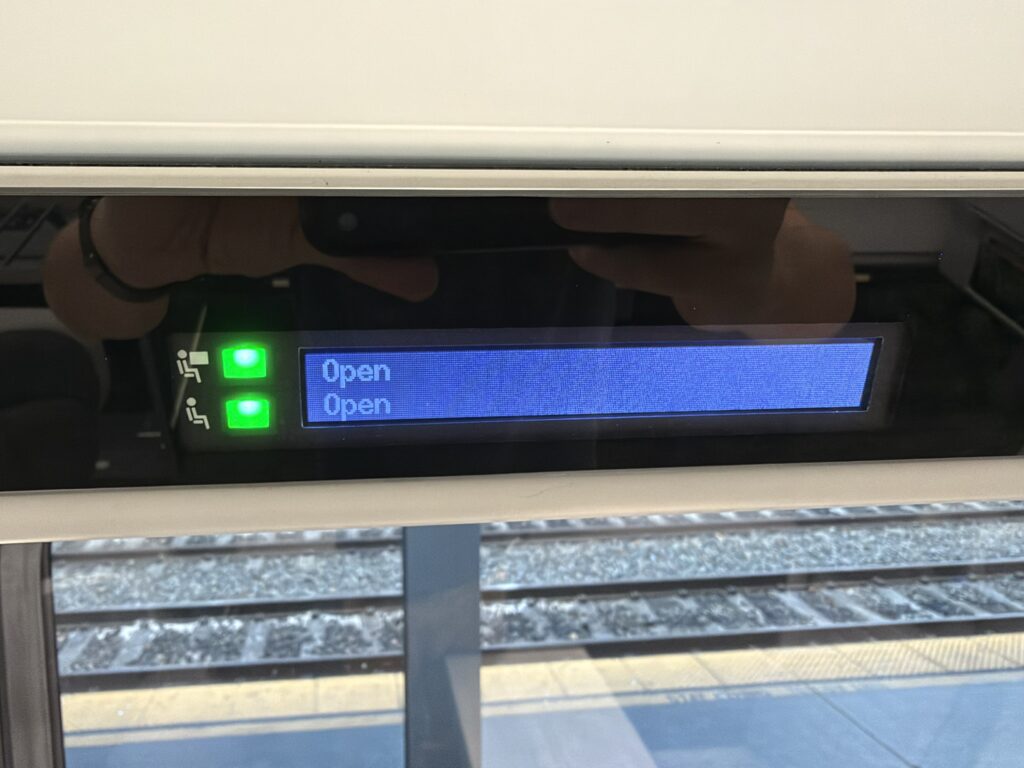
Digital seat assignment indicators are above each seat, but currently only used in Business Class. Amtrak says, however, that it will finally bring assigned seating (potentially as a paid ancillary) to Coach Class as found on many European and Asian rail operators.
These indicators were not working until just after I exited the train on my day of travel.
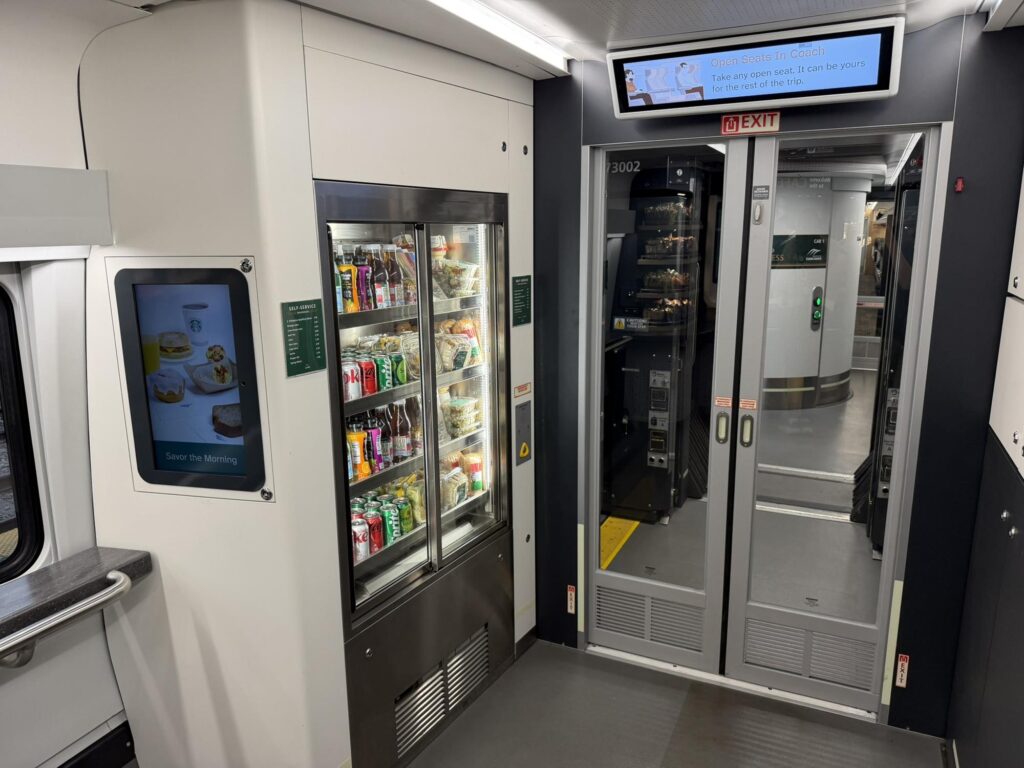
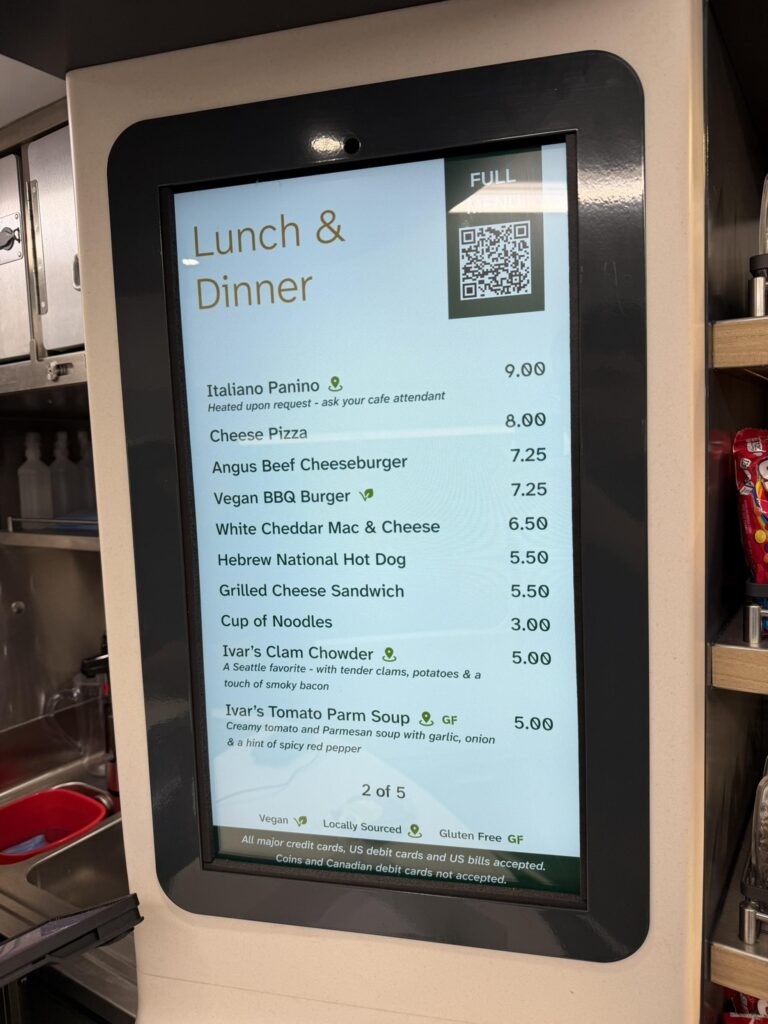
The Cafe Car has also received a major facelift, adding a self-service fridge, a rapid-cook oven typical of Starbucks stores, and a traditional microwave for heating products.
There was no self-checkout kiosk like the system that was planned but never deployed on NextGen Acela.
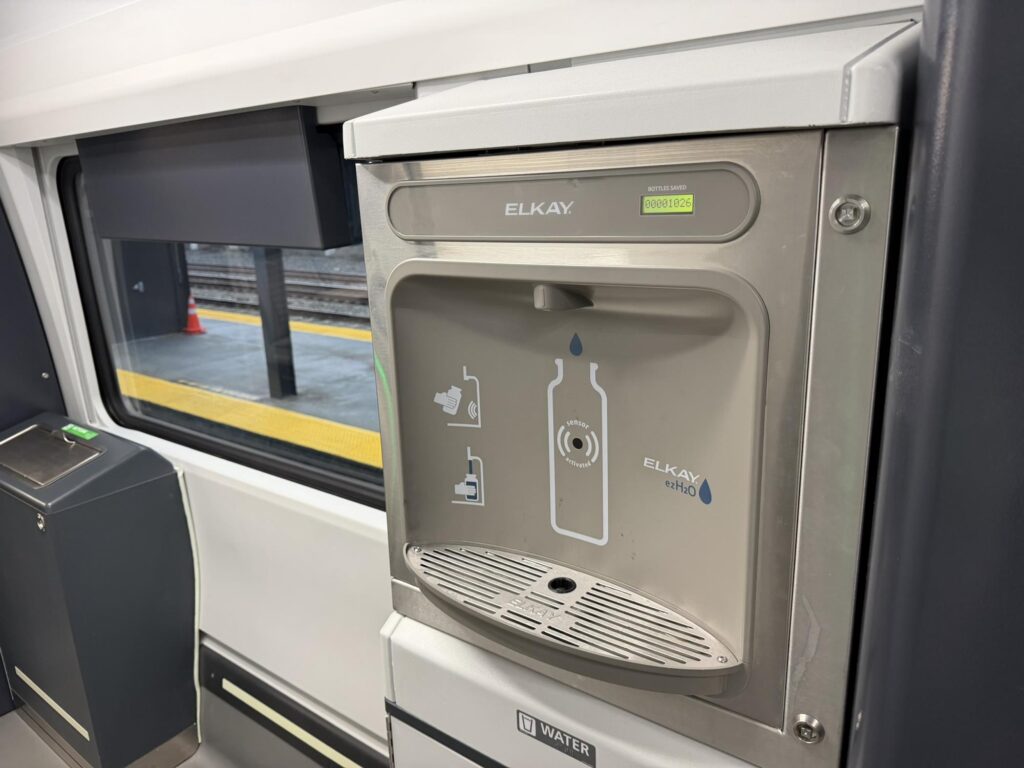
Handily, and more sustainably, there is also a water bottle filling station.
The Cafe Car attendants were particularly excited about the addition of the oven, saying items fare much better when heated.
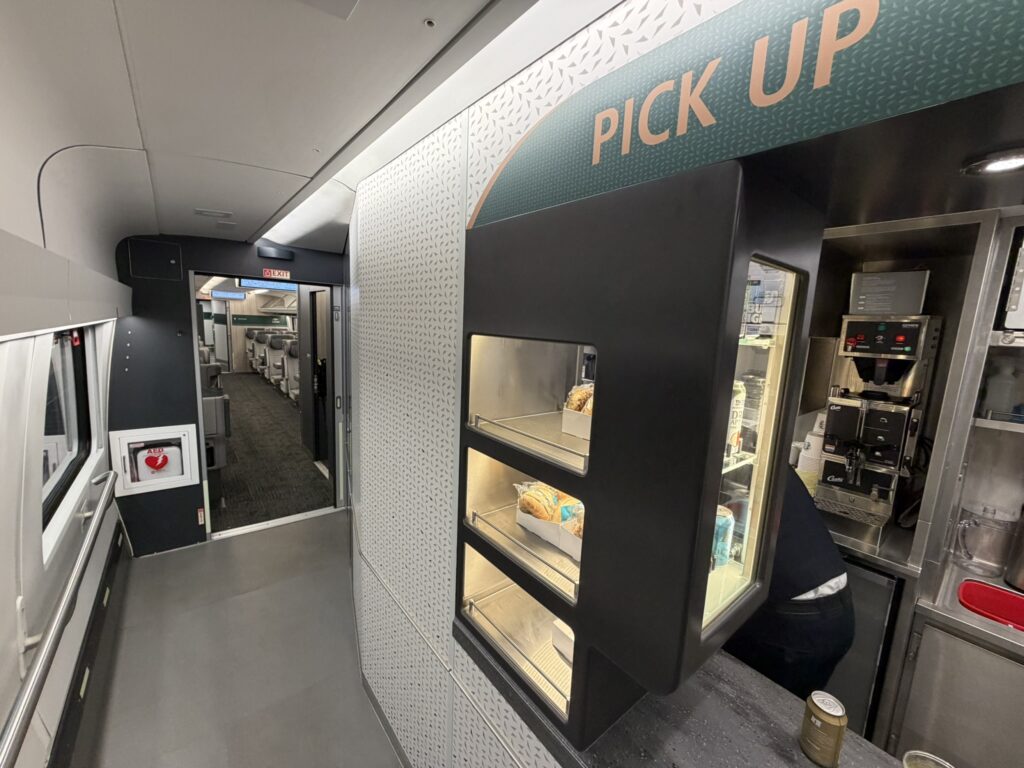
A mobile order pickup station is also integrated into the service area, which Amtrak says will be enabled by mobile ordering through the Amtrak app in the future.
Amtrak also worked in a new office space for the conductor, featuring a desk and train function displays similar to the Acela fleet.
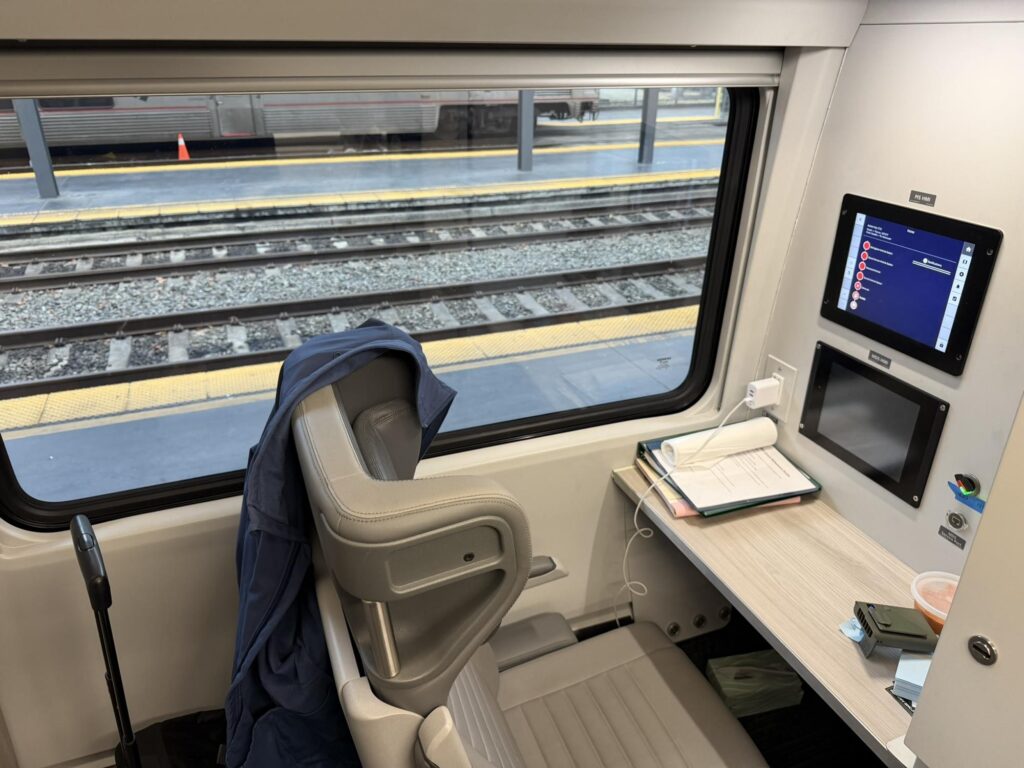
That didn’t stop our train’s conductor from sprawling out over a table meant for four passengers and painting her nails using potent smelling nail polish. Some things might never change, regardless of how the train is designed.
Although 5G-powered Wi-Fi on NextGen Acela is dramatically improved over older Amtrak trainsets, the Cascades route ventures into quite rural areas and even across the border into Canada where cellular connections are weak to non-existent. To address this, Amtrak is finally looking to satellite connectivity.
An unannounced feature that is undergoing testing on the new Cascades Airo sets is the addition of Starlink connectivity to the Wi-Fi backhaul mix, as confirmed by an Amtrak employee on board my train who was testing the connection.
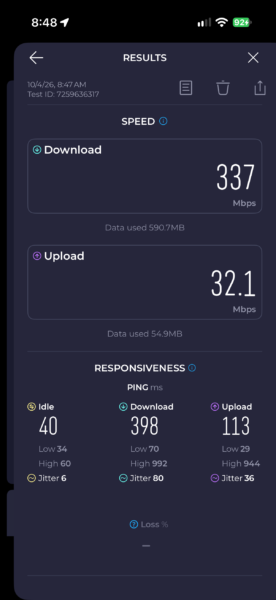
The satellite connection will augment and replace cellular connectivity when weak or unavailable in the U.S., and operate as the sole connection when the train is in Canada.
Amtrak’s current provider charges by the gigabyte for connectivity in Canada, so the Wi-Fi connection is typically turned off to avoid potential costly usage. The results of the Starlink trial on Cascades will potentially allow Amtrak to offer Wi-Fi on many of its long-distance routes for the first time.
Amtrak has been “evaluating” satellite connectivity for its fleet for at least a decade, but modern phased array antennas have dramatically shrunk in size making it more practical for rail deployment. The Starlink dish can be seen atop the cab car on the Cascades trainset.
It’s clear we’re dealing with a new Amtrak, or at least an Amtrak that’s more capable of delivering a premium experience to all passengers.
Putting some serious thought into the interiors for Airo and it upcoming Superliner replacement fleet, Amtrak has largely nailed the #PaxEx.
Related Articles:
- Amtrak doubles down on premium travel with Superliner RFP
- NextGen Acela trip report: improvements outweigh missed opportunities
- Amtrak issues RFP for single-level long distance coaches
- Why Amtrak Acela First Class feels like poor value
- Amtrak seeks to differentiate Acela with new enhanced menu
All images credited to the author, Jason Rabinowitz