

Less than a year after issuing a request for proposals (RFP) outlining its vision for an East Coast long-distance coach fleet replacement, Amtrak has revealed much grander plans in a tender notice that calls for a nationwide replacement of its Superliners.
Amtrak’s plan for the Superliner fleet, which operates long-distance routes west of Chicago, is quite simply transformative.
Building on the design work done for the East Coast single-level long distance coaches, it doubles down on capturing premium travelers’ business by adding an entirely new Premium Coach class while completely revamping and expanding private room options.
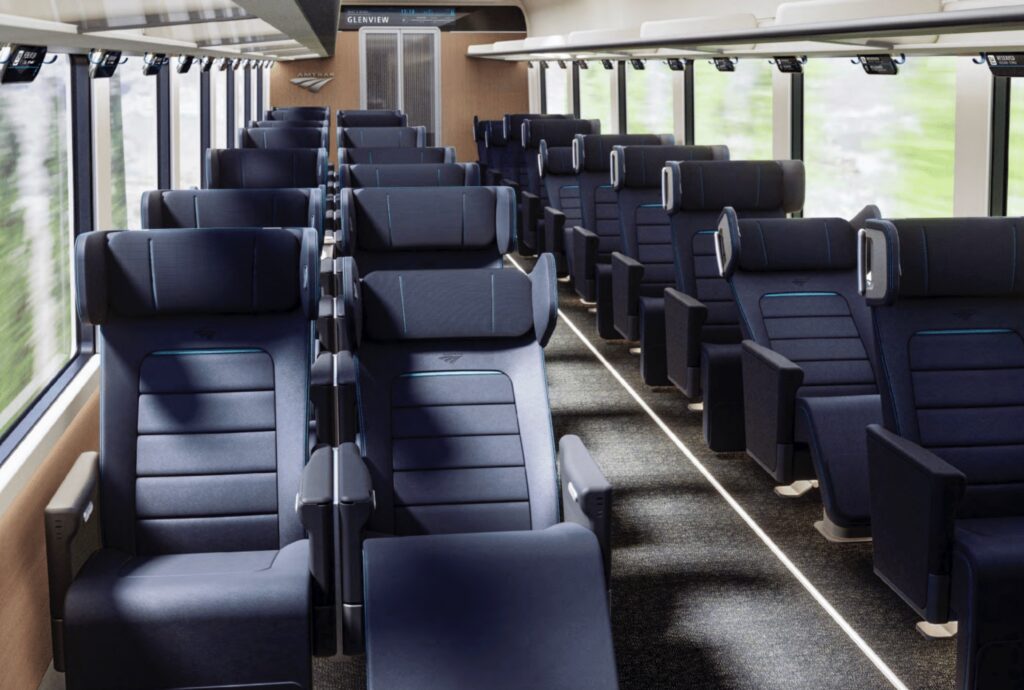
The biggest change from the legacy Superliner fleet is a transition from a bi-level to a single-level trainset. While Amtrak had originally envisioned sticking with a bi-level fleet, this raised considerable accessibility issues that apparently no railcar manufacturer was willing to overcome.
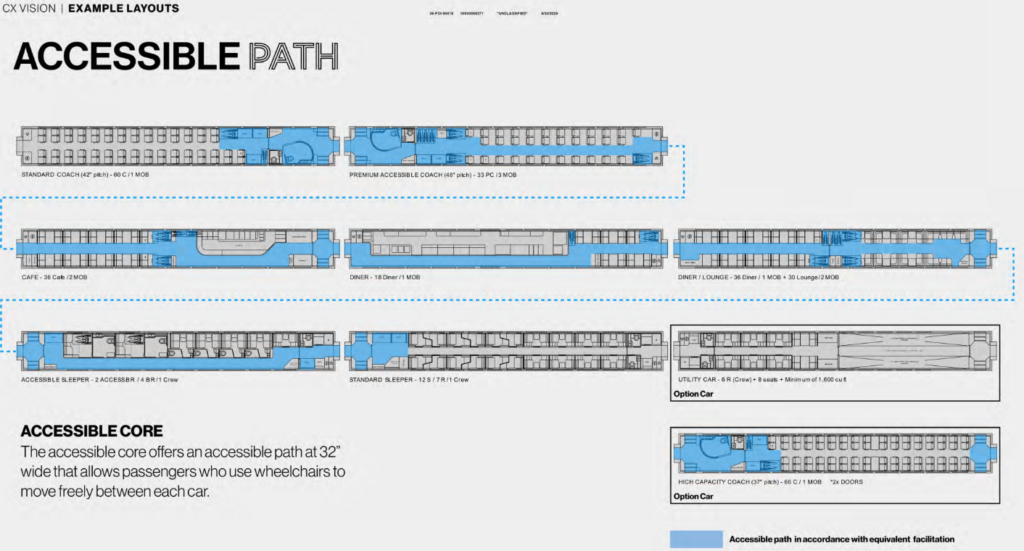
With this new single-level design, Amtrak has defined an “accessible core” that provides users of mobility devices access to a 32” wide path. The path enables access to each car type without the need for elevators.
Importantly, this scheme does not limit wheelchair users to only specific cars or sections of the train.
Coach class
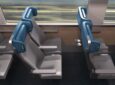
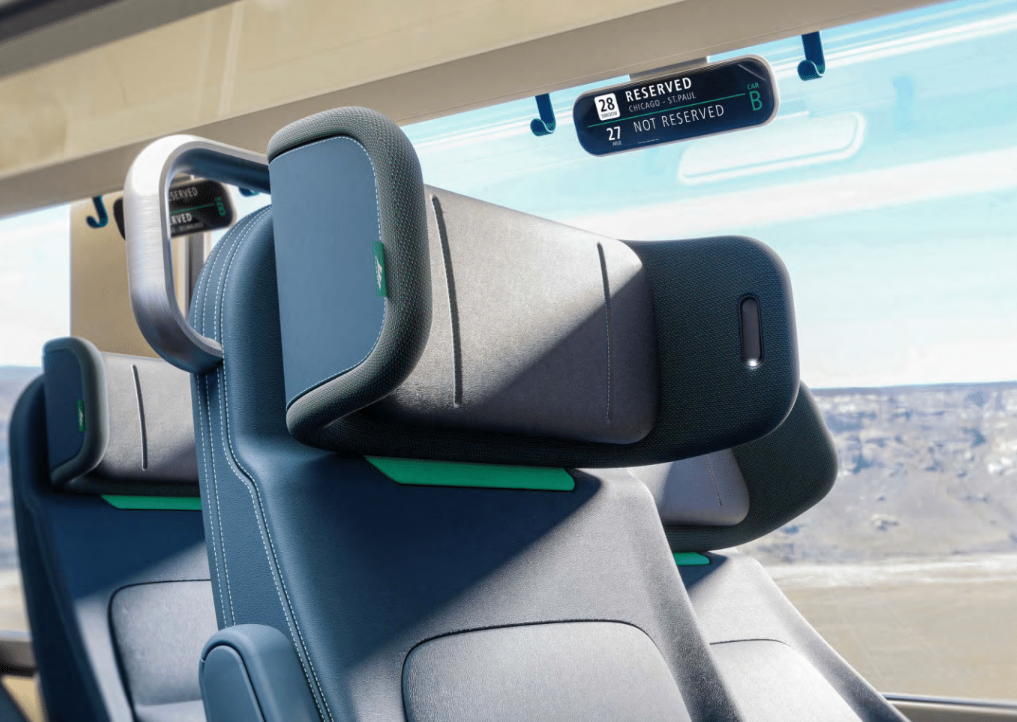
The standard coach experience is relatively unchanged from Amtrak’s East Coast plan. Standard coaches retain their current 2-2 configuration. Each seat is pitched at 42”, and boasts a width of 19.5” and a recline of 20 degrees.

Coach seats also feature a calf rest, headrest pillow, privacy wing, hand grab, reading light, device holder and multiple power outlet options.
Premium Coach
Notably, however, in between the standard coach option and the smallest private compartment, Amtrak will introduce a new Premium Coach option.
Amtrak’s RFP specifically describes this development as a response to demand for an elevated comfort experience, a trend airlines have mirrored in the COVID recovery years.

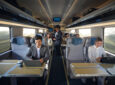
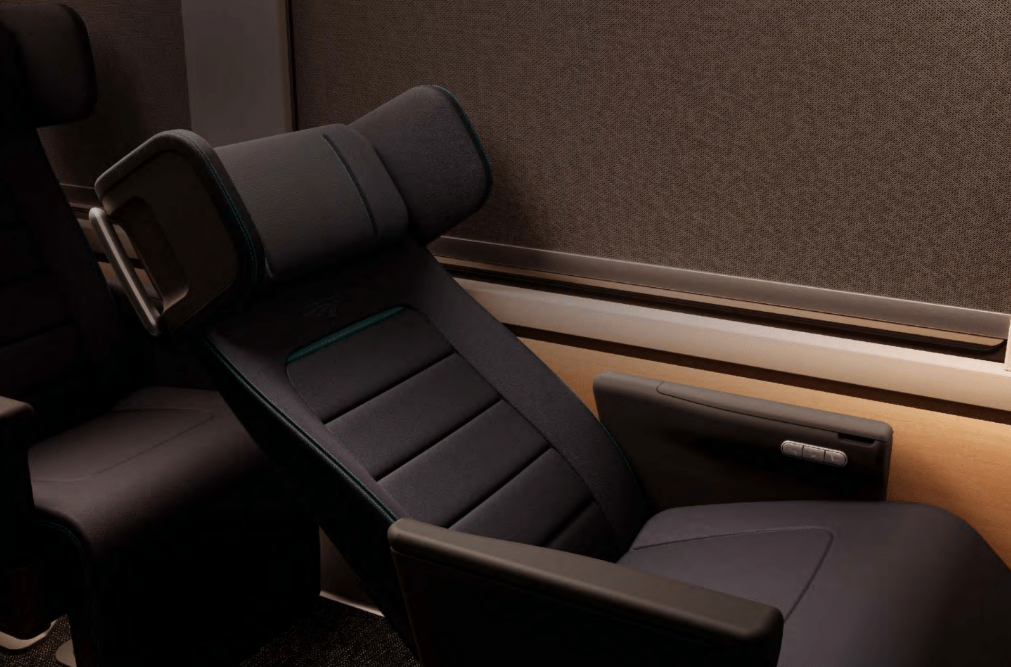
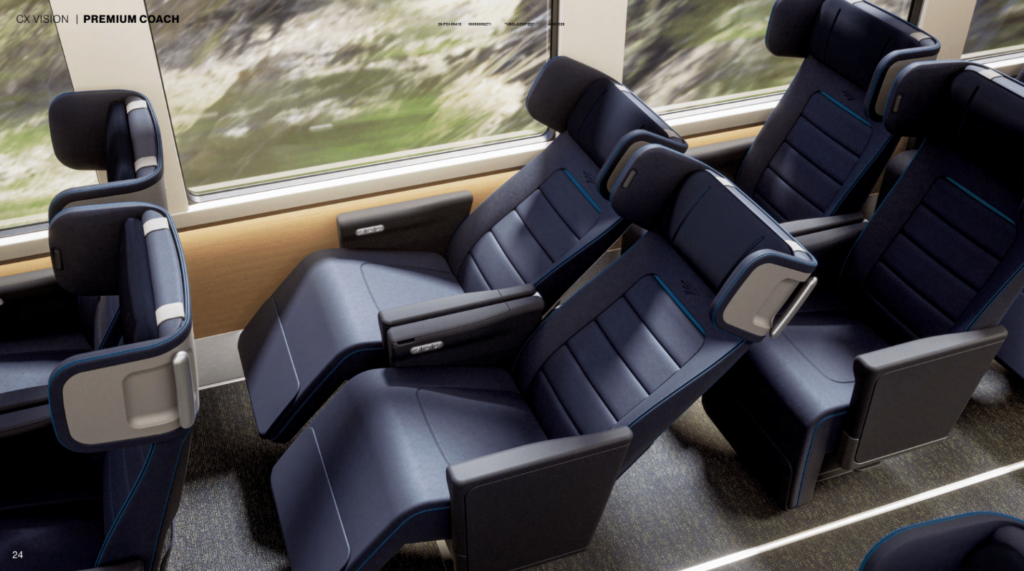
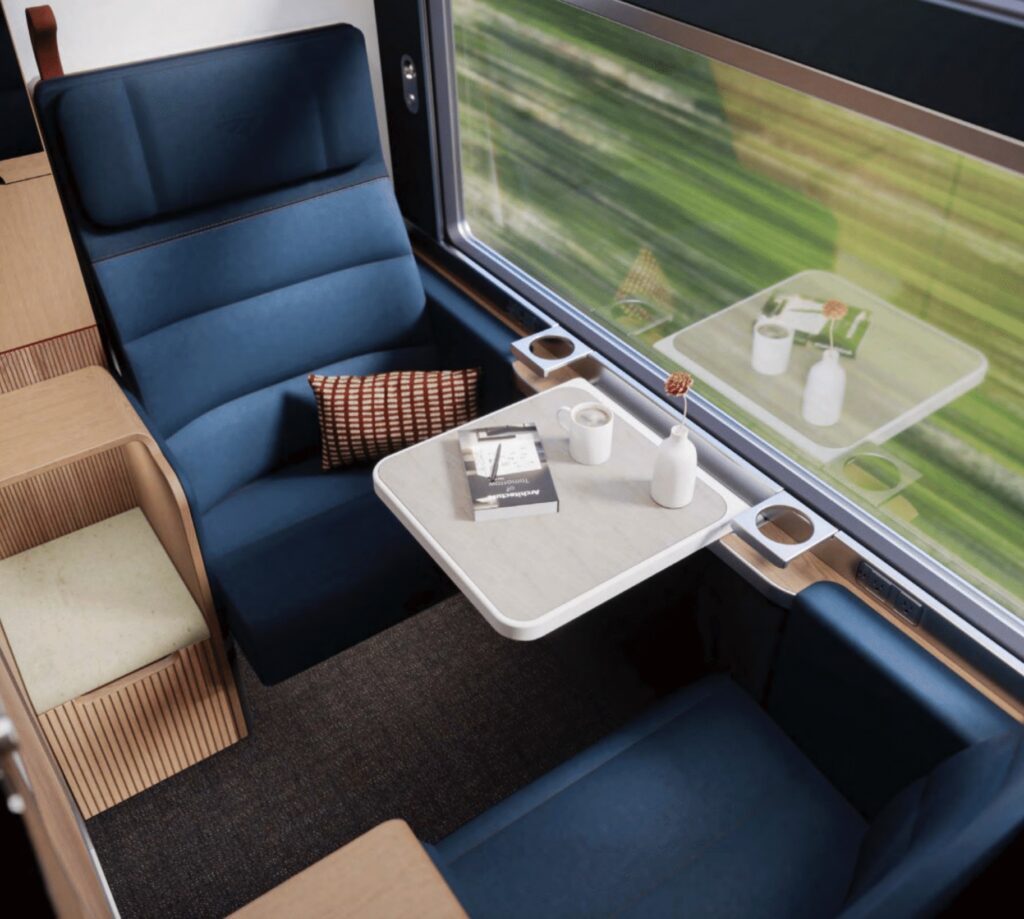
Premium Coach most closely resembles Amtrak’s current Business Class offering on select East Coast trains or indeed Acela First Class, featuring a 1-2 seat configuration.
Rather than simply offering additional space, Amtrak has opted for an entirely different seat model with additional sleep-focused design features.
Pitched at 48” with a width of 22”, the seats recline into what Amtrak calls a “Lazy Z” deep recline position.
These coaches are designed to support multi-day journeys with the majority of that time spent seated.
“In this position, the seat reclines to support the upper body while raising the knees, reducing pressure on the lower back and undersides of the legs,” reads Amtrak’s lengthy document. “The result is a more ergonomic and comfortable posture for extended travel.”

Moving into the sleeper cars, Amtrak has completely overhauled the experience to more closely mirror the sort of high-end sleeper trains commonly seen in Europe.
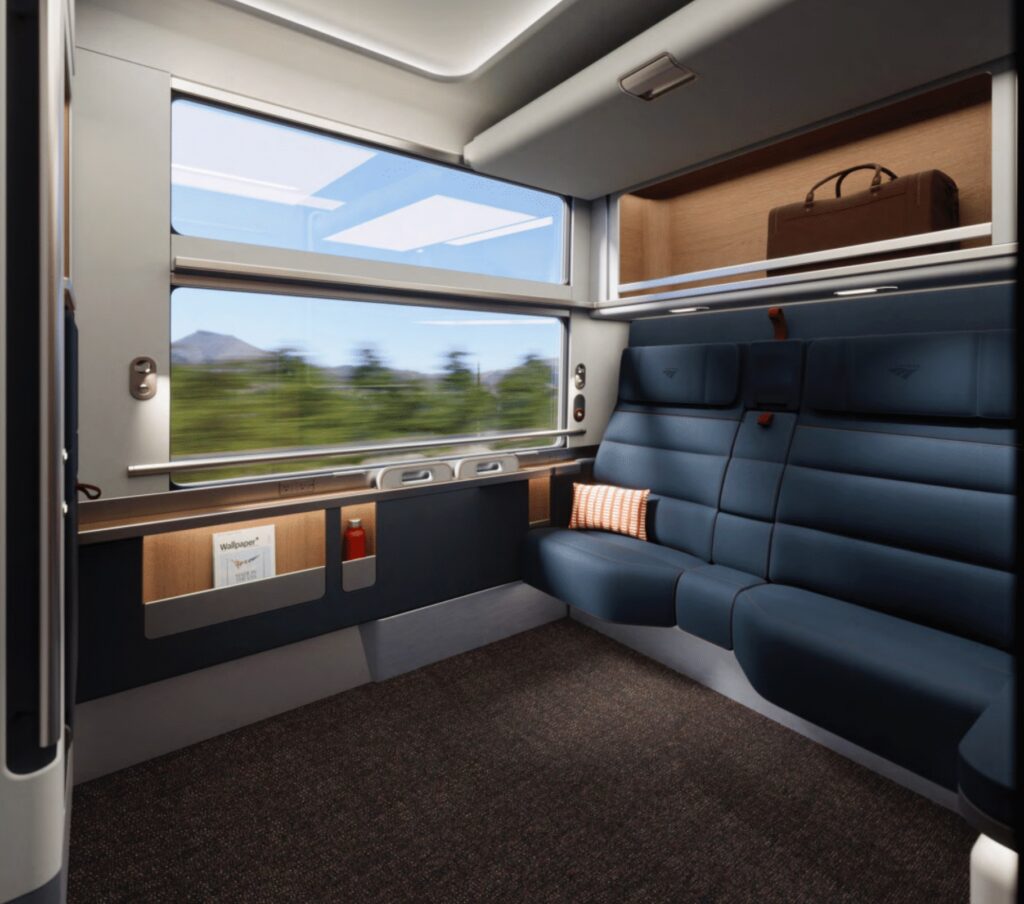
It has done away with the usual plastics and stainless steel finishings across the board, opting for “a carefully curated palette of inviting, high-quality materials such as wood, metal, and leather creates a warm and approachable tactility.”
SoloSuite
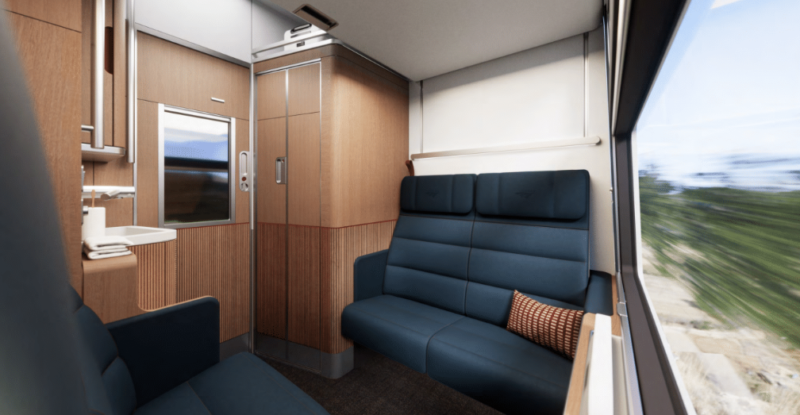
At the lowest end of the private room spectrum is a new SoloSuite option, which is designed to give solo travelers their own private space without having to book an entire two-person Roomette, but can be transformed into a premium twin room “ideal for sharing,” Amtrak says in its RFP.
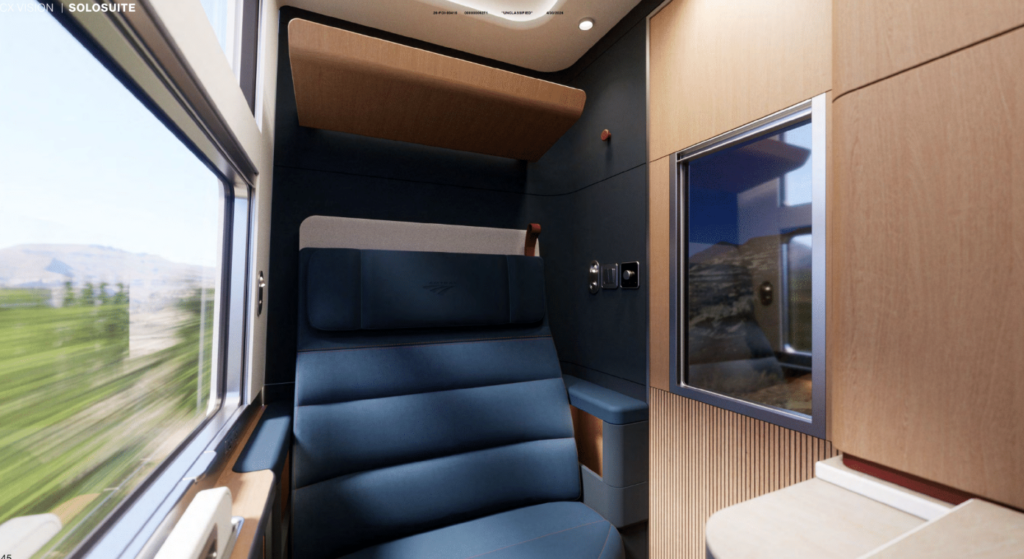
Whereas the traditional Roomette utilizes the seat backs of two opposing seats to create a bed-like space (in addition to a drop down bed for a second passenger), the SoloSuite deploys a solution that’s familiar in commercial aviation, whereby two suites utilize each other’s space for a footwell.
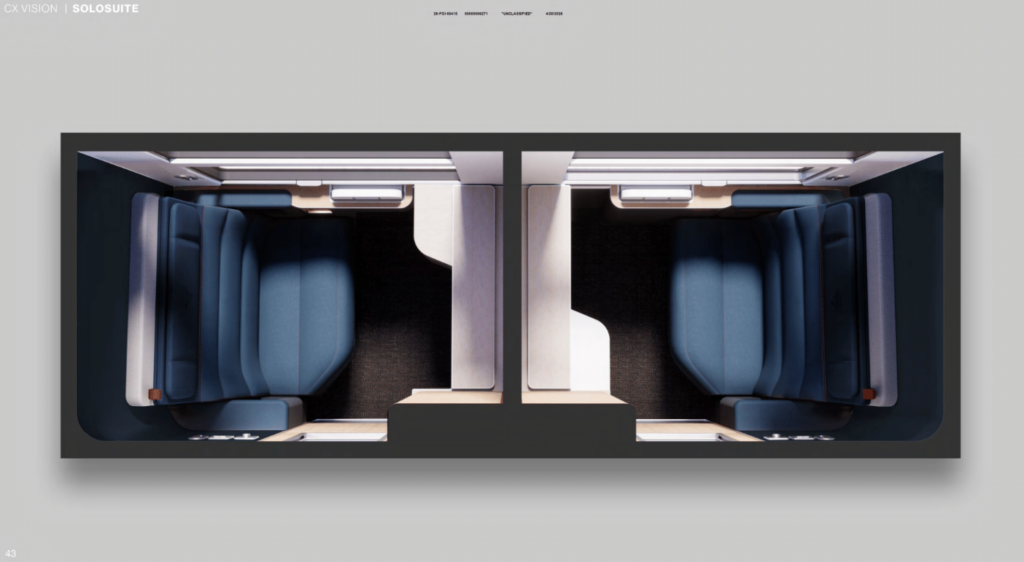
This configuration would provide a minimum 77” diagonal bed length.
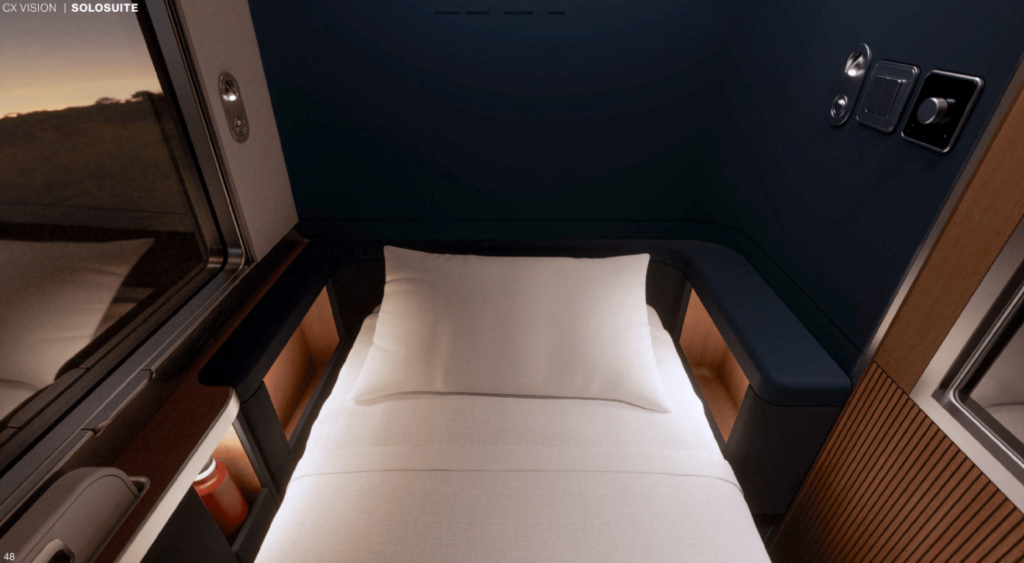
The SoloSuite also comes with a party trick. A roll-up divider between two rooms can be raised, allowing two passengers to share one large table space for shared meals and activities while maintaining two distinctly separate physical spaces.
Amtrak’s RFP states that the roll-up divider must provide sound insulation no less than a normal wall, an important detail for such close quarters.
Roomette
Meanwhile, the venerable Roomette, Amtrak’s two-person private cabin, is largely unchanged in format but features a completely modernized feature set and finishings.
Amtrak’s shift from using the lower berth seat surface and cushions to utilizing a flat surface on the back of the backrest should allow for a more flat-bed space, as outlined in its RFP.
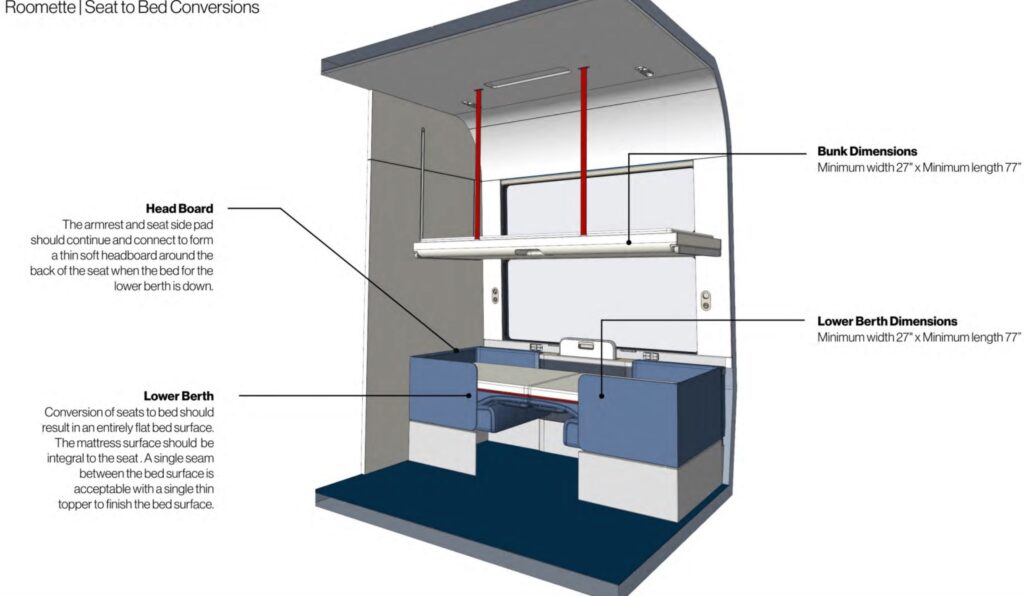
However, this layout will require rather thick bedding as the platform will no longer use the cushion for added comfort.

Club Bedroom
On the larger side of the private rooms, Amtrak will consolidate the Bedroom, Bedroom Suite (two combined adjoining Bedrooms), and Family Room options currently found on the Superliner fleet into one Club Bedroom offering.
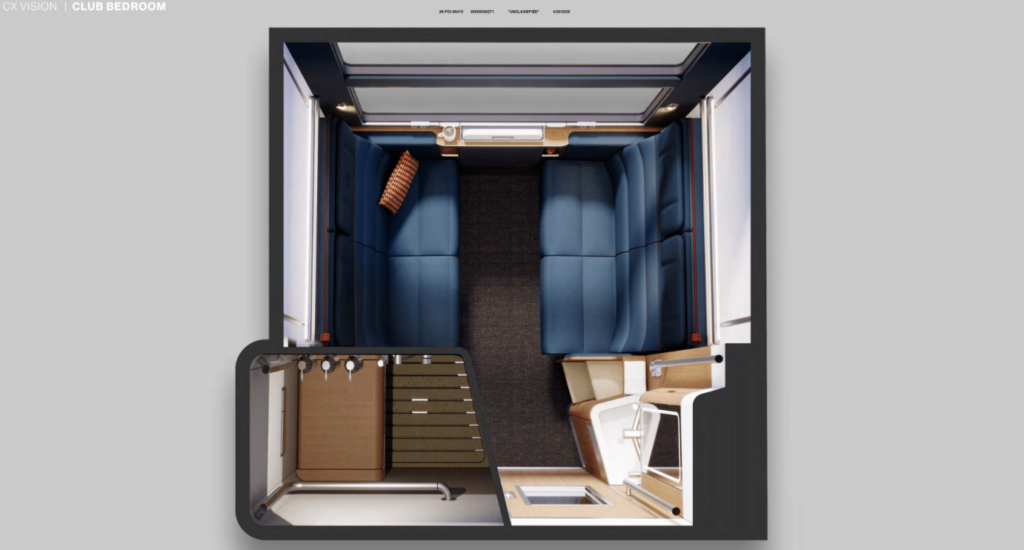
Amtrak’s RFP states that the Club Bedroom is designed to be a larger space for two passengers, but can accommodate up to four people. The Club Bedroom is the lowest level of sleeper service to include an ensuite toilet and shower.
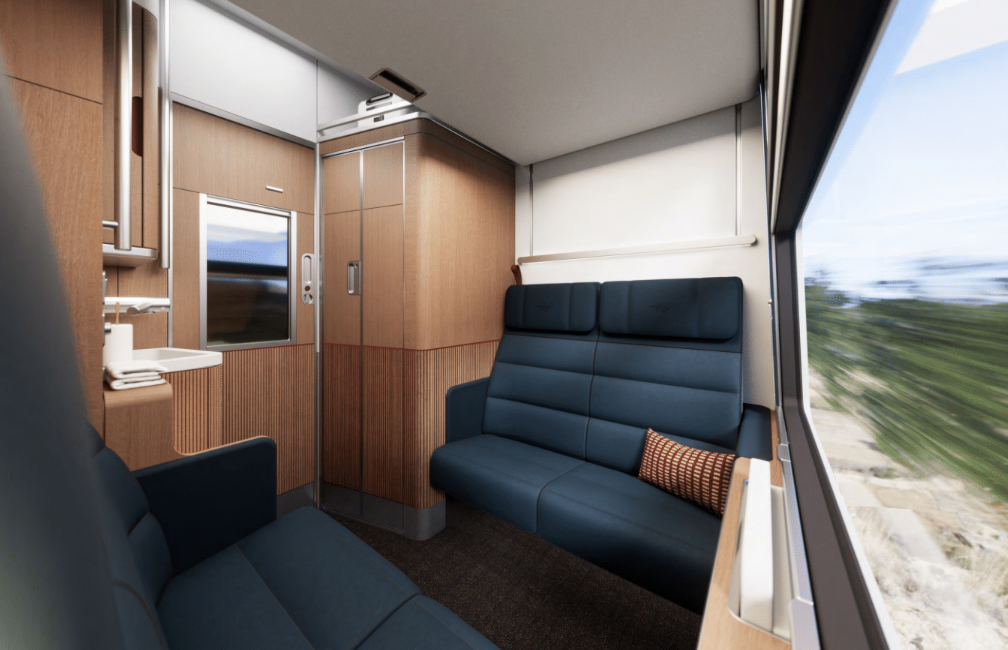
While the Superliner’s current legacy Bedroom Suite makes the full width of the car available to passengers and includes four distinct beds, the new Club Bedroom must make room for the 32” wide accessible aisle and sees bed count drop to two larger beds.
While this configuration can technically support two adults and two children, the loss of distinctly separate additional beds for children may be a disappointment to traveling families.

Accessible Bedroom
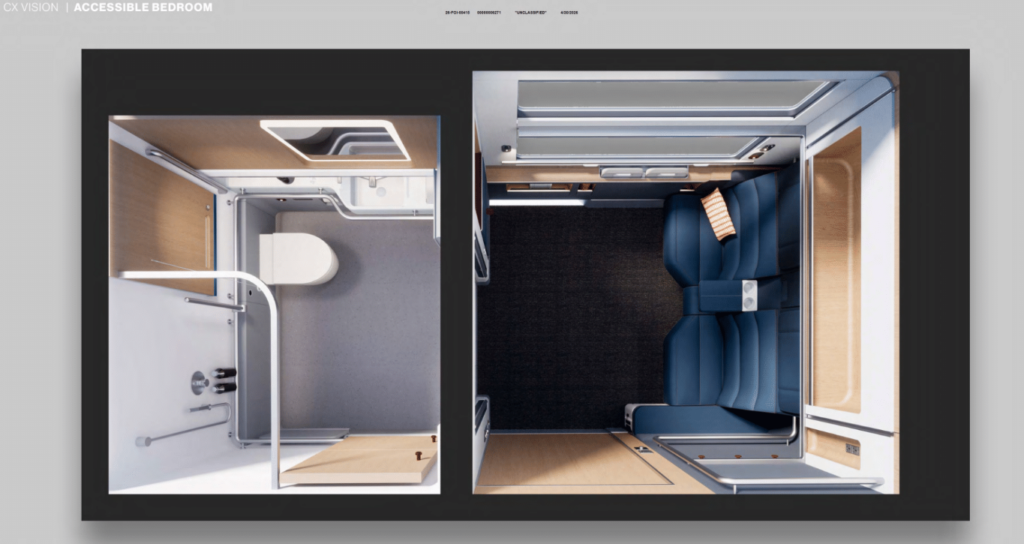
The last room type is the Accessible Bedroom and represents a major boost for passengers using wheelchairs and other mobility devices.
Each Accessible Bedroom has space for three passengers and allows users of larger mobility devices to fully turn around in the room with a 60-degree turning circle. The Accessible Bedroom also gains a fully accessible ensuite bathroom with shower, whereas the Superliner does not currently offer a shower in its accessible bedrooms.
Dining and Lounge experience
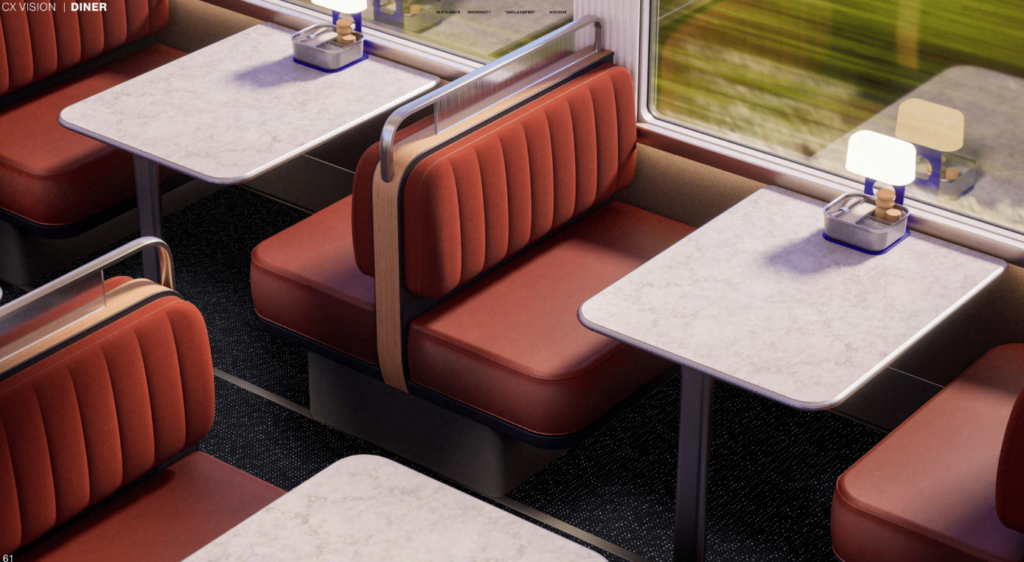
Rounding out the accommodations, Amtrak has completely overhauled its dining and lounge car experience.
Amtrak’s new dining and lounge car design modernizes the booth format from the Superliner fleet, using bold red seat cushions and much larger windows than seen in today’s fleet.
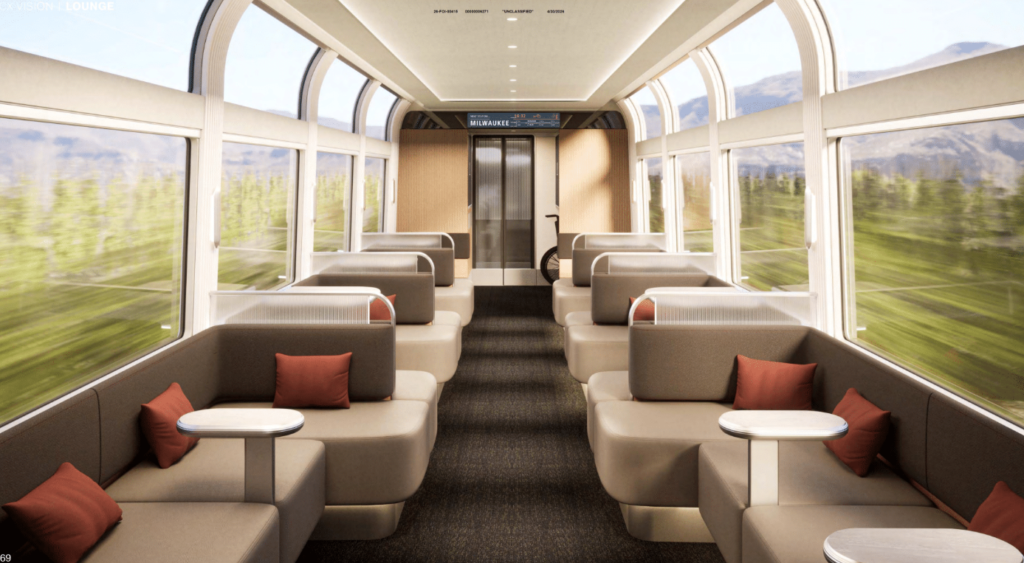
The lounge space similarly removes the droopy blue seat coverings for more premium colors and finishings, but it also ditches the solo outward facing seats in favor of larger seats and sofas with integrated coffee tables.
This space is particularly important for coach class passengers who want to be able to escape from their seat during a multi-day journey.
The big takeaway is that Amtrak views the revamp as an opportunity to completely throw away its playbook and start from scratch on a brand new experience for the majority of its long distance routes. Amtrak missed that opportunity in recent years on the East Coast, taking delivery of Viewliner II cars that were largely similar to the original model developed decades prior.
If Amtrak can deliver on the majority of what it seeks in this RFP, it would be a massive #PaxEx reset, propelling Amtrak from offering a dated yet functional product to something that might truly be world class.

Related Articles:
- NextGen Acela trip report: improvements outweigh missed opportunities
- Amtrak issues RFP for single-level long distance coaches
- Amtrak to launch NextGen Acela service on August 28
- Why Amtrak Acela First Class feels like poor value
- Brightline gives Amtrak a run for its money on Orlando-Miami
- Amtrak’s fleet modernization plan includes historic firsts
All images credited to Amtrak