
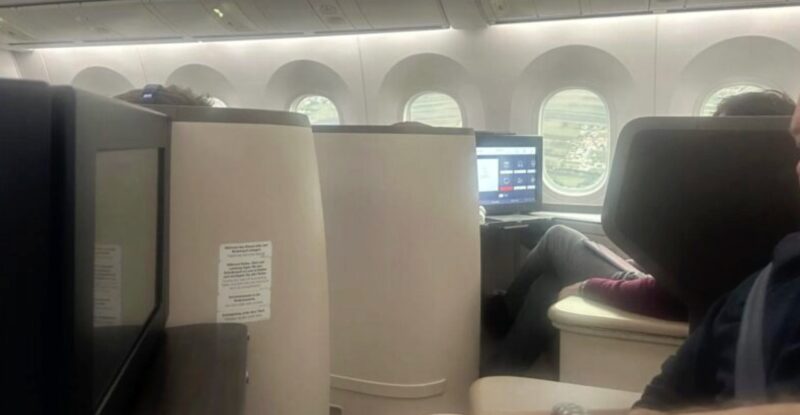

As they ramp up aircraft production, Airbus and Boeing have, respectively, flagged separate concerns about the aircraft seating market, namely, the meager number of seatmakers following a period of industry consolidation, and the continued certification challenges for premium seats.
In terms of seat manufacturers, “there is a small number of players,” which is creating a “tense business” in aircraft modifications, given that industry is seeing “very high demand,” Airbus head of services marketing Arnaud Demeusois said during a media briefing to discuss the OEM’s annual Global Services Forecast (GSF).
“Yes, we’re ramping up in production, but we also see a very high demand for cabin upgrades because the passengers want to fly with differentiated experiences because airlines are competing against each other, also on the comfort, and it’s a quite tense market,” he continued.
“I have to say right now, with good performance overall in terms of commercial [services business], but I have to say in terms of delivery, yes, it is a challenge. And it remains a challenge in terms of seat supply.”
Boeing, meanwhile, continues to see the impact of seat certification challenges on the delivery cadence of the 787.
Its Dreamliner production rate is stable at eight aircraft per month. “While we have stability in our factory, delivery cadence has been uneven month to month due to the seat certification challenges we’ve discussed previously,” Boeing president and CEO Kelly Ortberg said during the U.S. airframer’s Q3 earnings conference call.
Even so, Boeing is seeing increased stability in its supply chain, and expects to start the transition to a production rate of ten 787s per month before the end of year, “and we’re making good progress on our Charleston expansion to support even higher production rates,” Ortberg said. Boeing is closely watching engine delivery performance “as it remains the pacing item for Rate 10.”
Tronos Aviation Consulting, Inc., which consults on aircraft interiors, believes the industry is underestimating how long certification capacity will constrain both aircraft retrofits and new delivery seat programs.
“Seat concepts get the headlines but usually the first question buyers will ask is, ‘is this product certified yet?’ Early planning, sourcing and program launches, giving ample program flow times, is critical in today’s market,” Tronos managing officer Gary Weissel said today in a statement published on LinkedIn.
“MROs with installation capacity and especially integrators with engineering capacity will continue to hold significant leverage in this market condition.”

The one-two punch of a seat supply crunch and integrated seat/IFE certification challenges, the latter compounded by regulators’ heightened scrutiny around neck injury criterion (Nij), comes as aircraft are staying in service longer, and thus requiring extensive cabin and system upgrades.
“So this year for the fleet, 12% of the active fleet overall in the world is above 21 years,” noted Airbus’ Demeusois during the GSF media briefing. “Ten years ago, it used to be 8%.”
Industry is especially seeing “big demand now to adapt to premiumization, to more first class, business class, premium economy,” he noted, and the growth of premium seating is “twice as much” as the growth of economy seats in the past 20 years.
Related Articles:
- Boeing lowers 737 delivery target, maintains disciplined ramp
- JetBlue wants BlueFirst seats as fast as Collins can deliver them
- Safran to divest Safran Cabin following notable growth
- Certification of KLM A350 WBC set to start but seats presently blocked
- Diehl Aviation strengthens supply chain resilience
- Digital & Connectivity underpin Airbus Global Services Forecast
- Aircraft seat certification delays spur testing tweak request
- Stelia Aerospace to double premium seat capacity
- Diehl on why its nose-to-tail content doesn’t include seats
- Middle East conflict is wild card for aerospace supply chain: report