

During the last full week of March, United Airlines showed off a slew of its newest, most premium products at its Los Angeles hangar. The centerpiece of this showcase — quite literally in the center of the huge facility — was the carrier’s first Boeing 787-9, featuring its new Elevated interiors including the much-anticipated Polaris and Polaris Studio doored mini-suites.
In Los Angeles, United’s nose-to-tail revamp of the long-haul passenger experience was positioned as giving guests more choice than ever before. And given the new seating options and upgraded amenities, it’s easy to see why.
But just one week after the unveiling, United revealed that there will be a price tag on that choice. That’s because the airline plans to expand basic fares from economy class, where the fare tier has existed for nearly a decade, to its premium cabin customers.

Launching in select markets this month, United Polaris business class and Premium Plus premium economy passengers traveling on long-haul international, transcontinental U.S. and some Hawaii flights can choose from basic, standard and flexible fares.
In Polaris, the non-refundable, non-changeable basic fare offers seat selection for a fee, just one checked bag (as opposed to two), and access to United Club instead of the United Polaris lounge.
In candor, the announcement is being seen by some industry observers as having removed some of the shine from the original unveiling of United’s Elevated interiors on the 787-9.
But let’s take a look at the hard product first.
New Elevated interior
United’s new 787-9 is a physical manifestation of the airline’s intent to not just be deemed one of the most premium airlines in the United States, but rather, the premium airline. Period.
During the Los Angeles event, it was apparent that United aims to top American Airlines’ premium-heavy 787-9s, and to snatch the premium baton from Delta Air Lines’ grip.
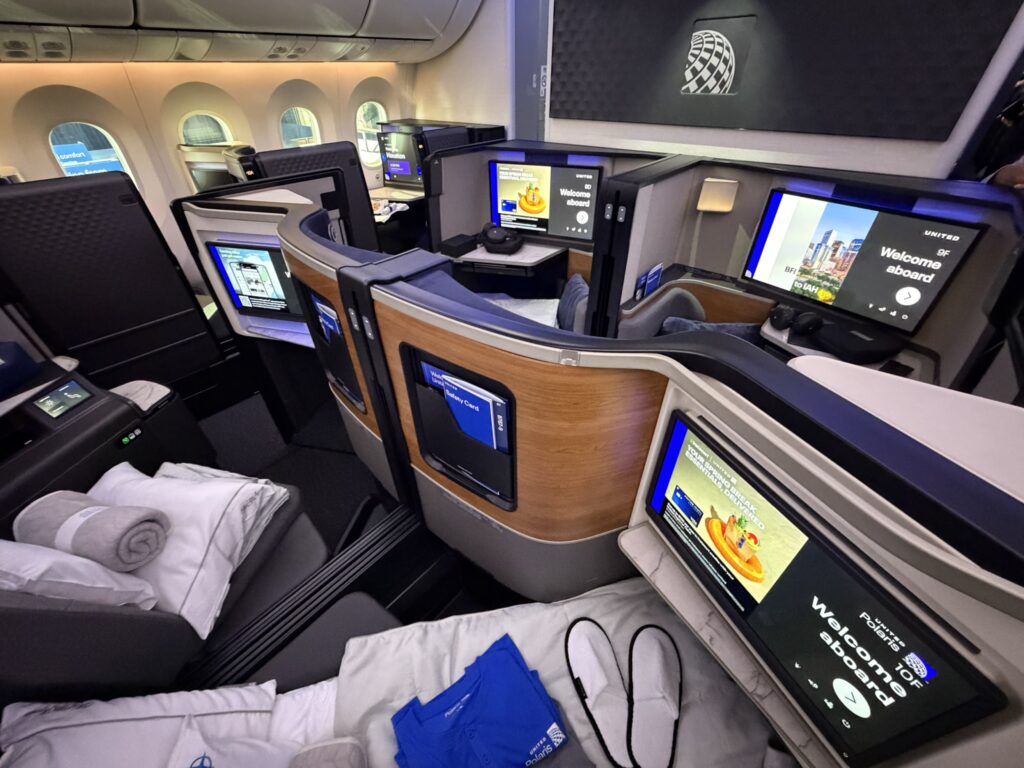
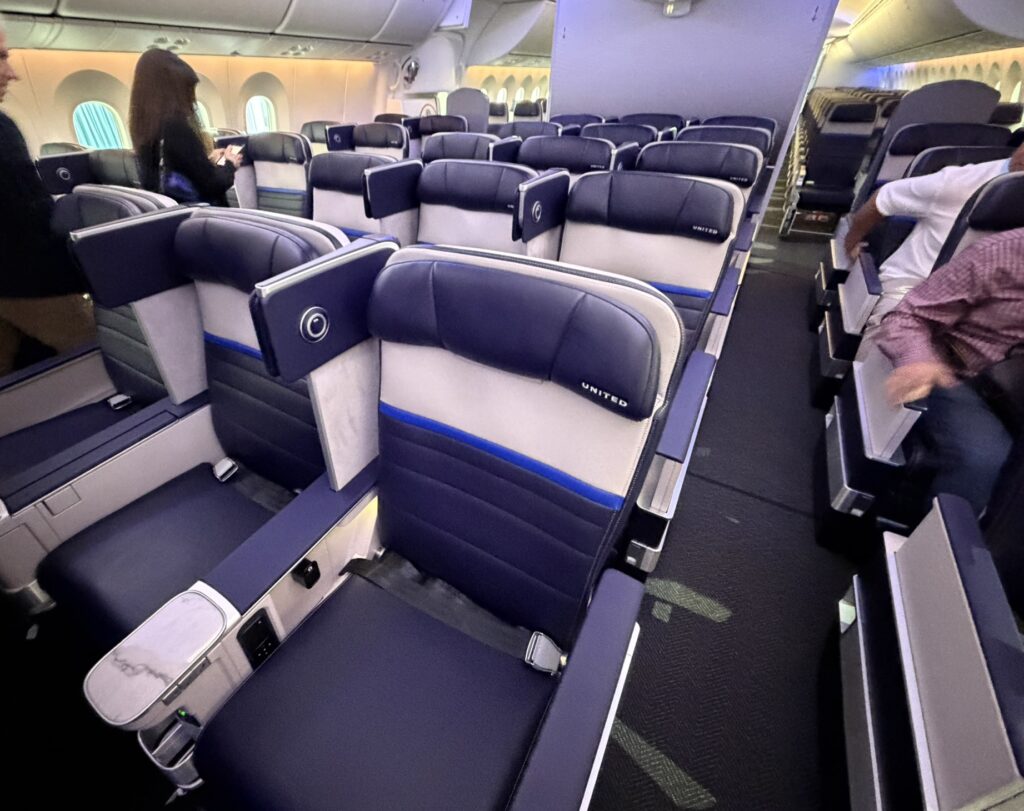
Each of United’s new 787-9s sport 64 Polaris seats, of which eight are designated as extra-spacious Polaris Studio seats.
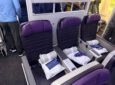
There’s also 35 Premium Plus seats, 39 extra-legroom Economy Plus seats, and just 84 regular economy seats.

A full 62% of this aircraft is a premium seat of some variety, up from 42% on the prior version of United’s 787-9.
One of the most interesting twists of the new Elevated Polaris cabin is how the center section seats are laid out and the surprising hard product differences that emerge as a result. Sixteen seats in the center section of the forward cabin are configured in a reverse herringbone layout.
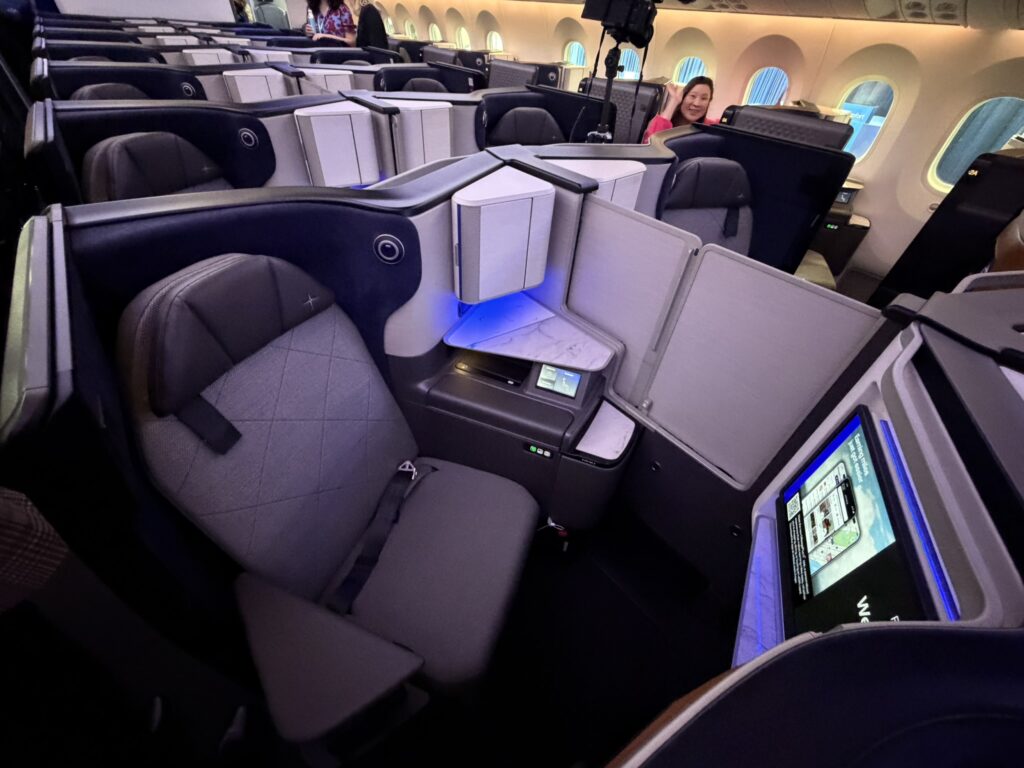
Meanwhile, 16 seats in the rear cabin are configured in a herringbone layout.
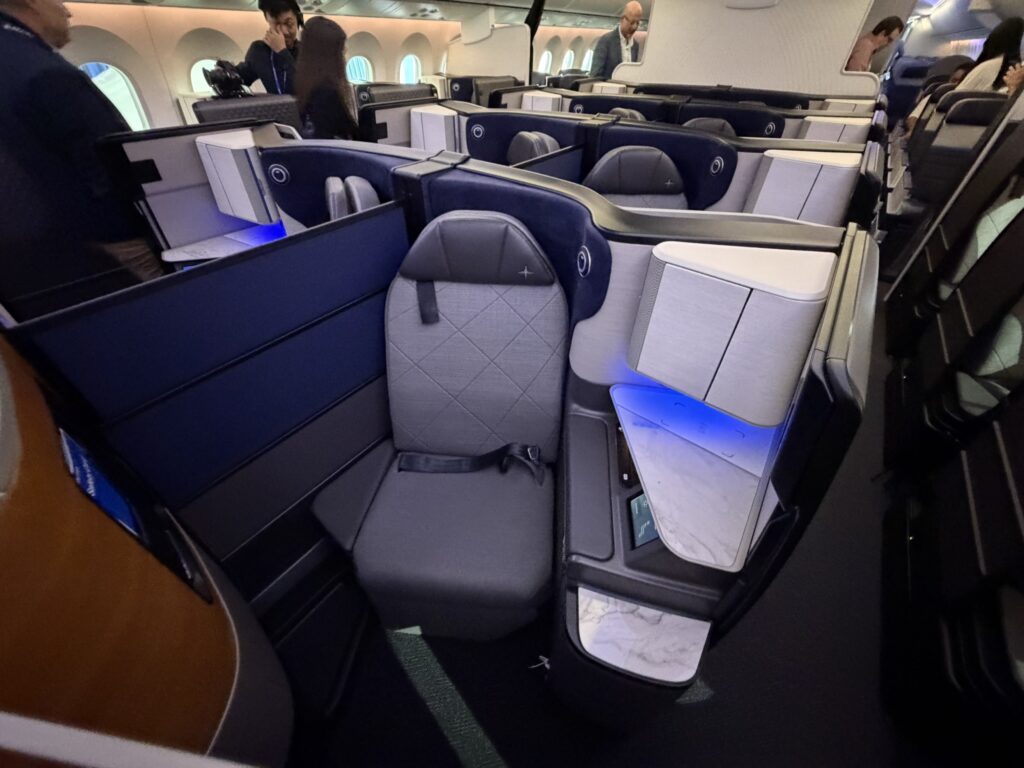
Frequent premium flyers have strong opinions about the pros and cons of the various herringbone layouts — those traveling in pairs might prefer to face their fellow passenger, reverse herringbone style, while solo passengers might prefer to face the aisle.
But while the two versions of the physical seat are largely similar, the center divider between the seat pair is entirely different.
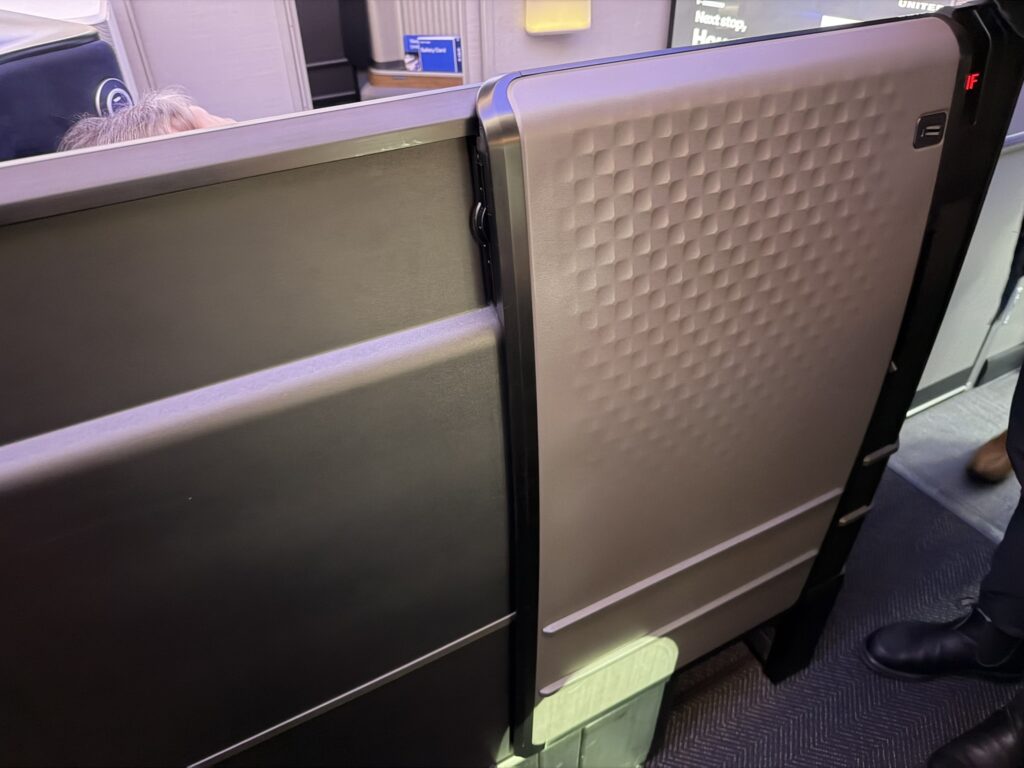
The forward reverse herringbone seats feature a manually horizontal sliding divider, one that either passenger can operate individually.
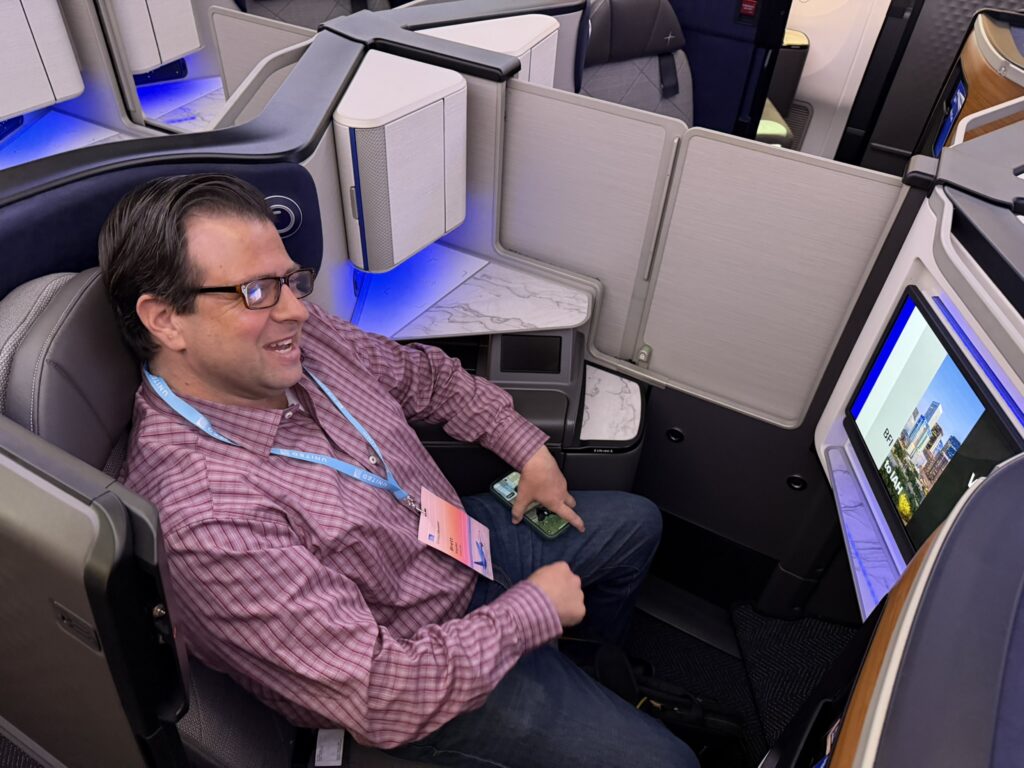
In contrast, the rear herringbone seats utilize an entirely different setup, swapping the manual mechanism for an electronically controlled vertical privacy divider. The divider can only be lowered if both passengers simultaneously operate their button, ensuring that there are no unwanted surprises for solo passengers (this is a signature feature of the Adient Ascent platform on which these seats are based.)
Oddly, though, neither divider is quite high enough to block a taller passenger’s line of sight to their neighbor’s space.
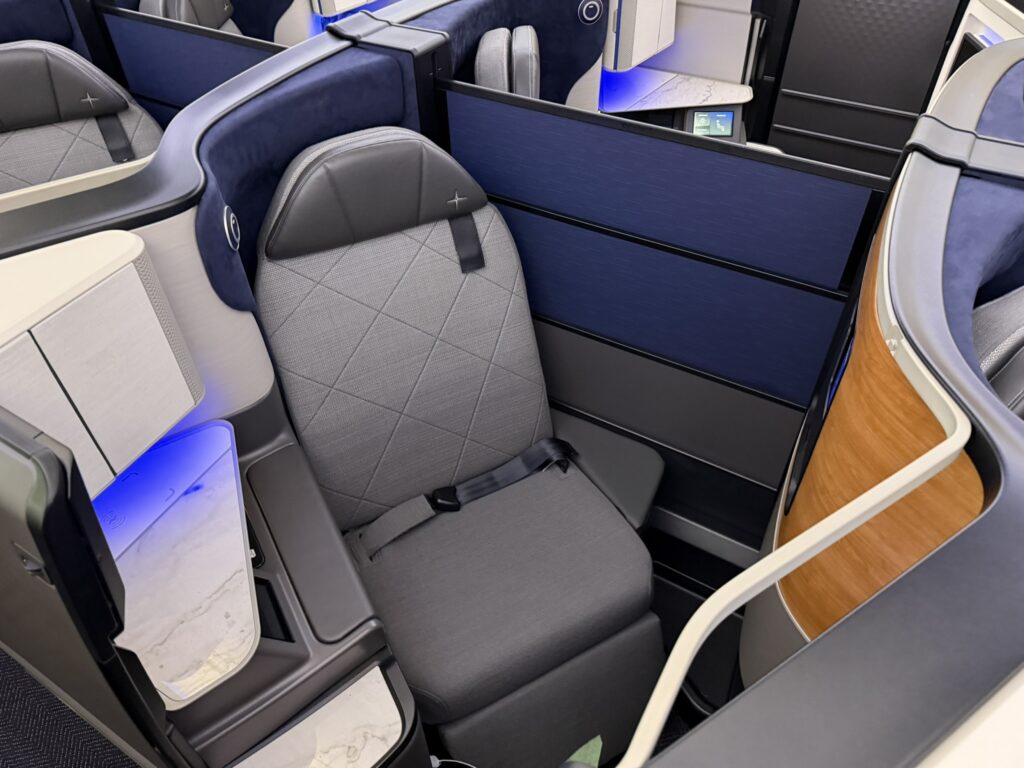
The sliding door, however, offers decent privacy.
 Nitty gritty on Polaris Studio
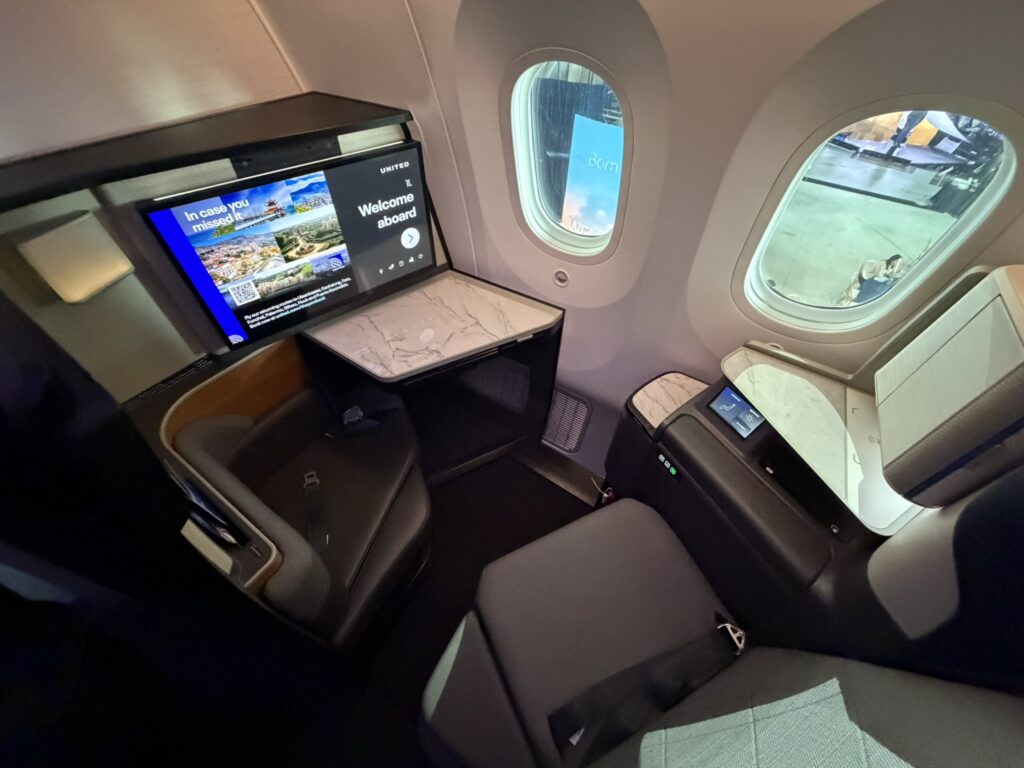
The Polaris Studio, a biz-plus product positioned in the first row of each Polaris cabin, is a bit larger than the rest of the seats but it isn’t the roomiest of front-row seats out there.
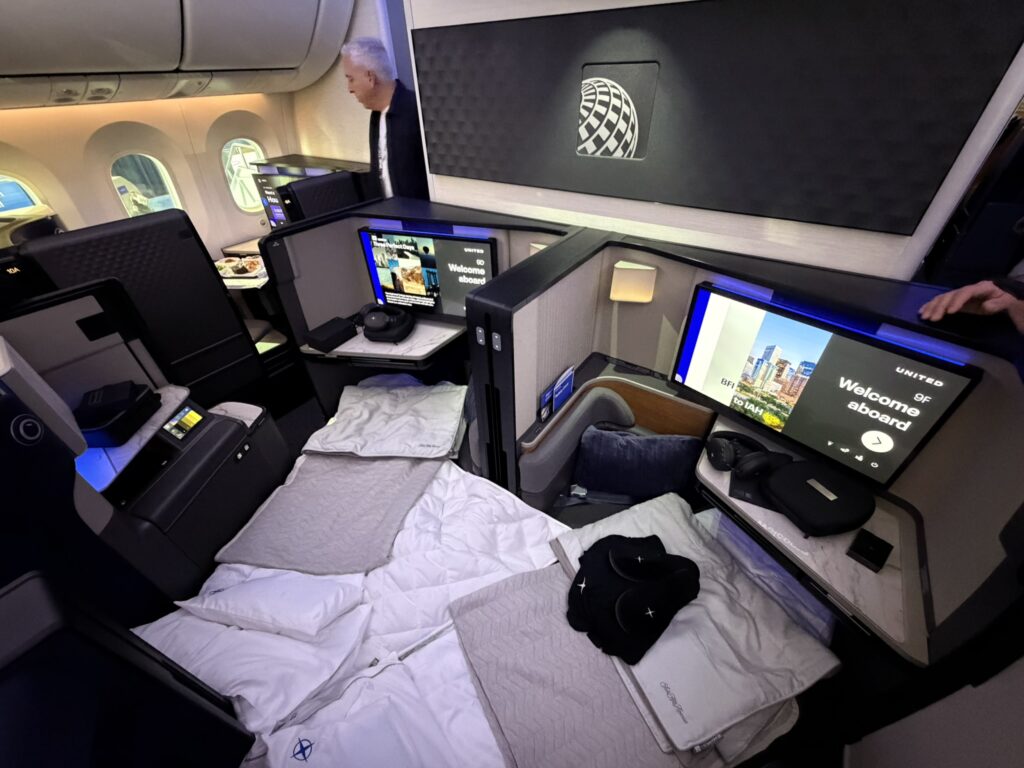
Four of the eight Polaris Studio seats feature a “buddy seat” for shared dining, but the space is cramped, and the second passenger’s back rests on the IFE screen.
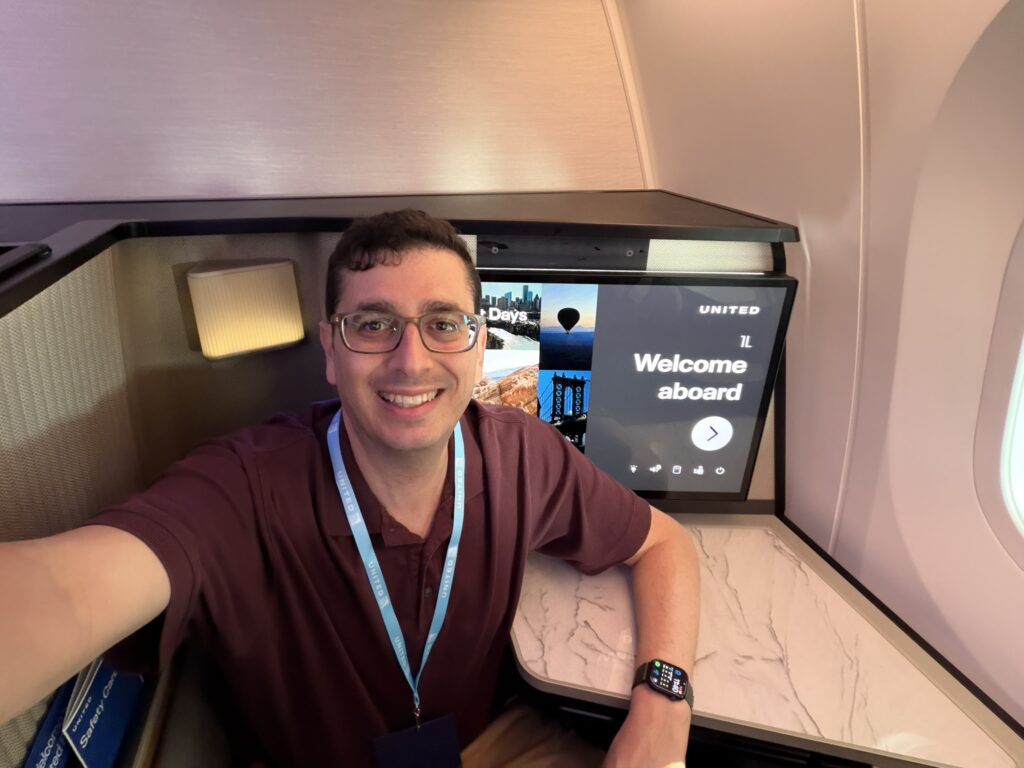
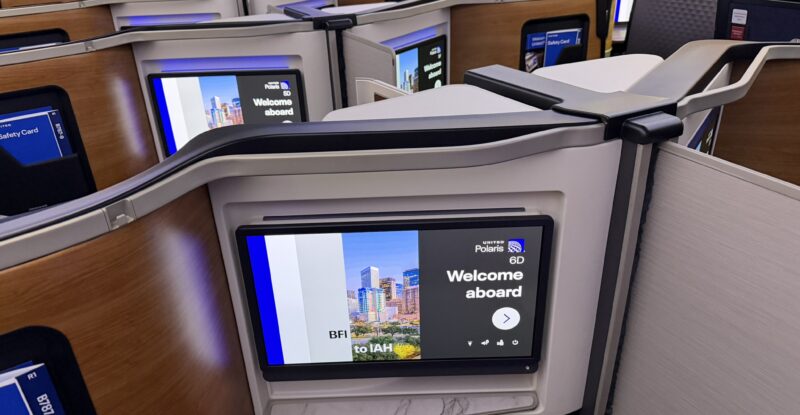
Sized 27 inches and based on Panasonic Avionics’ next-gen Astrova OLED hardware, the massive IFE screen presents a stark contrast to the 17.5″ screen offered in American’s Flagship Suite Preferred.
The basic business class fare surprise
What United did not discuss during its day-long event on 24 March in Los Angeles was the imminent announcement of basic fare tiers for both Polaris business class and Premium Plus premium economy, and with them, a bit of near-term uncertainty about just how much it will cost to select a seat (if one opts to pay for the choice in either cabin class.)
Passengers with a particular affinity for or an aversion to the different herringbone configurations on the new 787-9s will have to pay up potentially hundreds of dollars to secure their choice, or roll the dice and hope to get lucky at check-in.

Basic fare passengers will also not be able to “upgrade” to a Polaris Studio seat at all. Nor indeed will non-refundable Premium Plus basic fare passengers be able to upgrade in their cabin class (with miles or money.)
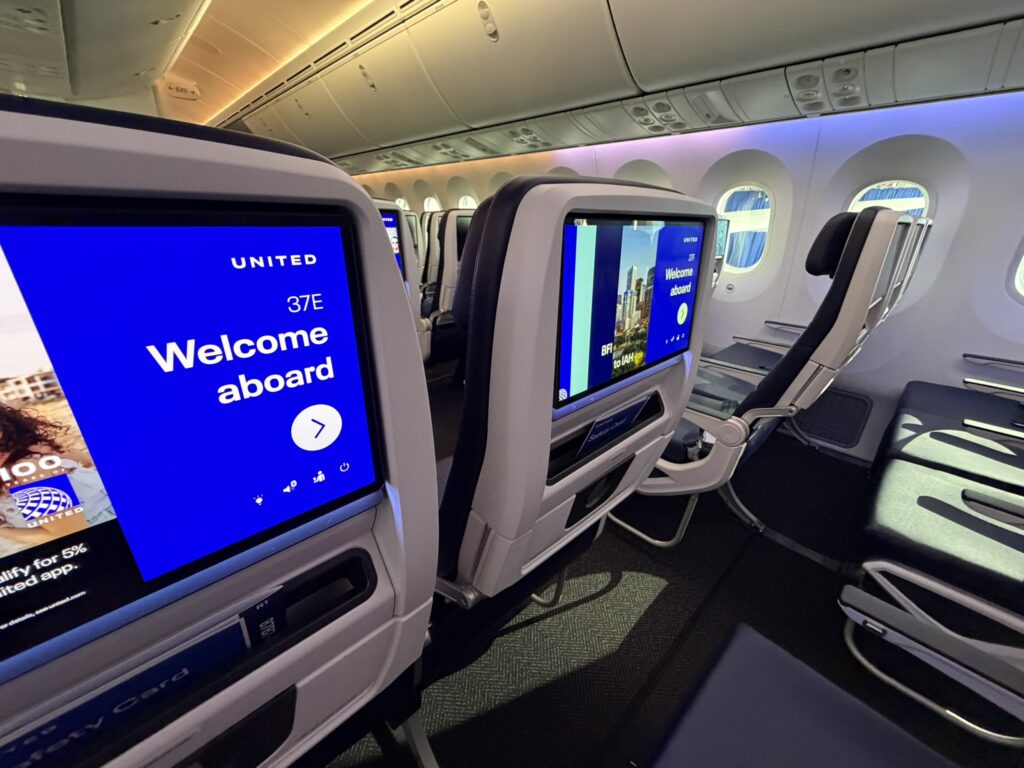
If the 2017 introduction of basic economy fares is any indication of how these new basic premium tiers will be priced, United likely won’t be creating a new lower price point, though we’d certainly be thrilled if it saw fit to do so.

It seems far more likely that the premium cabins, which boast more physical and soft product differentiation than ever, will command a premium.
Will United’s passengers have to pay more to fully unlock the premium experience?
Only time will tell just how receptive passengers are to this new fare structure, and indeed how many passengers are willing to spend extra cash to unlock United’s best, brightest and most premium products.

Related Articles:
- United Airlines transforms devil’s chariot into premium CRJ-450
- How United is leveraging Starlink and the cloud to enhance IFE
- Panasonic enjoys rapid IFE growth as connected seatback takes wing
- Flagship Suite Preferred impresses on American 787-9P inaugural
- American’s 787-9P ups the ante for Premium Economy
- United, Delta tout NPS and wellbeing benefits of seatback IFE
All images credited to the author, Jason Rabinowitz