

Global aerospace, defense and electronics technology corporation Astronics expects to cross the billion-dollar sales threshold in 2026 for the first time, after reporting record revenue, operating income, bookings and backlog in the second quarter ended July 4. It predicts another quarterly sales record in Q3.
Raising its guidance for the year, the East Aurora, New York-based firm said it anticipates 2026 sales will be $1.02 billion to $1.04 billion.
“Given our record backlog” of $780.6 million at the end of Q2 “and the continued strength in our order book, we believe we are well situated to deliver growth for the foreseeable future,” company chairman, president and CEO Peter Gundermman said during Astronics’ Q2 earnings conference call.
During the second quarter, sales increased 27% year-over-year to a record $260 million, of which the aerospace segment contributed $237.3 million, representing a 22.6% improvement over the year-earlier quarter.
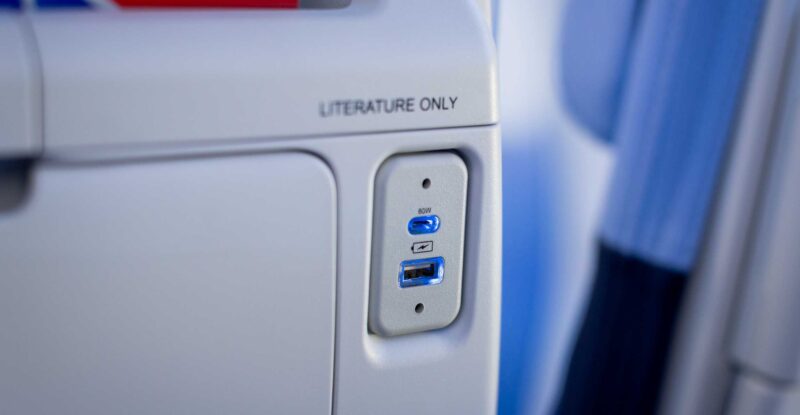
Astronics’ portfolio spans inflight entertainment and connectivity (IFEC) system hardware; aircraft power, including the popular EmPower line of in-seat power solutions; lighting; interiors; and structures — as well as test solutions.
In Q2, the company continued to benefit from the increased demand in commercial aviation for its IFEC products and premium aircraft seat motion systems. This demand correlates to a number of factors, including the ongoing production ramp up of major aircraft programs, and airline passengers’ desire to be “entertained and connected at all times,” Gundermann explained.
A premium arms race is also underway, especially in the United States, where the big three US majors are now waging serious battle, as evidenced by American Airlines’ announcement that it will offer seatback IFE across its narrowbody fleet.
As non-geostationary and multi-orbit satellite-powered onboard Wi-Fi sees rapid adoption in the world fleet, there has been a softening in geostationary (GEO) satcom in civil aviation, a piece of Astronics’ business that represents roughly $60 million on an annualized basis.
But Gundermann reckons that there are fresh opportunities for Astronics to support Low Earth Orbit (LEO) satellite-based IFC that “more than offsets the short-term pain that the GEO market is experiencing.”
While he did not share any official new LEO IFC-focused hardware wins during the call, Gundermann assured: “We are working it hard and we’re optimistic about the prospects.”

Having worked heavily on its margin profile, Astronics’ overall adjusted EBITDA margin reached an impressive multi-year high of 19.8% in Q2.
“It was a very good quarter from every angle and we feel good about it,” Gundermann said. “It also puts us in a great position as we enter the second half of the year.”
Also notable, Astronics’ test business during Q2 received the first production order for the U.S. Army’s TS-4549/T Radio Test program. “Its contribution to our second quarter results was marginal, but the program’s impact will be significant as it ramps up in the coming quarters. This first production order is expected to be followed by similar annual orders in each of the coming four years,” Gundermann said.
Related Articles:
- American talks RFP as it readies to bring screens to narrowbody fleet
- How Airbus is working to facilitate Delta Air Lines’ IFC vision
- Rise in sovereign satcom presents GEO-capable hardware opportunity
- Air Canada delivers virtually flawless Wi-Fi experience on E175
- Aerospace drives robust 4Q sales and 2026 outlook at Astronics
Featured image credited to Astronics in-seat power customer, Southwest Airlines