
 When Star Alliance member Air Canada in May 2025 started offering free, Bell-sponsored inflight Wi-Fi to Aeroplan loyalty members, including across its CRJ900 fleet, the brand new service performed incredibly well in real-world testing.
Putting the Wi-Fi through its paces on a CRJ900, the service stunned with its streaming-quality speeds and robustness. And we weren’t alone in our glowing assessment.
“Customers are loving it; crew more importantly are also loving it,” Air Canada’s André Patrick, who now serves as director, integrated operations planning, told RGN last fall, just before the carrier secured certification to start fitting the same inflight connectivity system — SES’s electronically steerable antenna (ESA)-based multi-orbit satcom solution — to its Embraer E175s.
As Patrick explained at the time: “The feedback from crew is that no customers are complaining; that they like the experience, and they can do what they want to do on the aircraft compared to what we previously had, which was our legacy ATG [air-to-ground] service.”
Now that all 25 of the carrier’s Jazz Aviation-operated E175s are equipped with SES’s ESA-based IFC solution, which uses Gilat Satellite Networks’ Sidewinder antenna hardware and exploits both Eutelsat OneWeb’s Ku-band Low Earth Orbit (LEO) and SES’s geostationary (GEO) satellite services, how is the Wi-Fi performing?
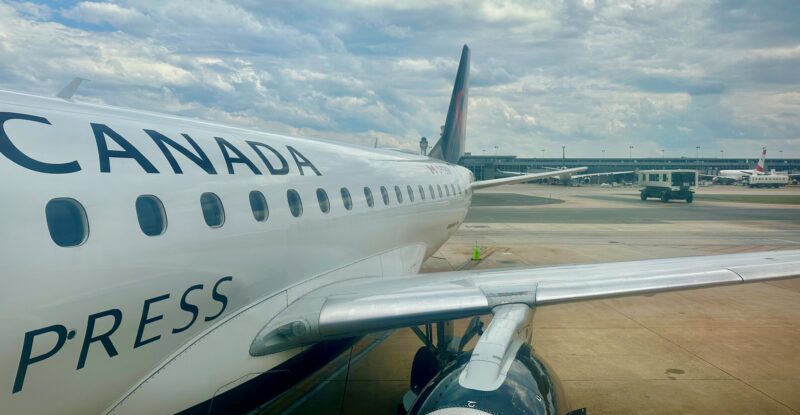
This question was top-of-mind when your author recently flew from Washington Dulles to Montréal round-trip aboard the Air Canada E175 to attend Airbus’ A220 media briefing in Mirabel, as a guest of the airframer.
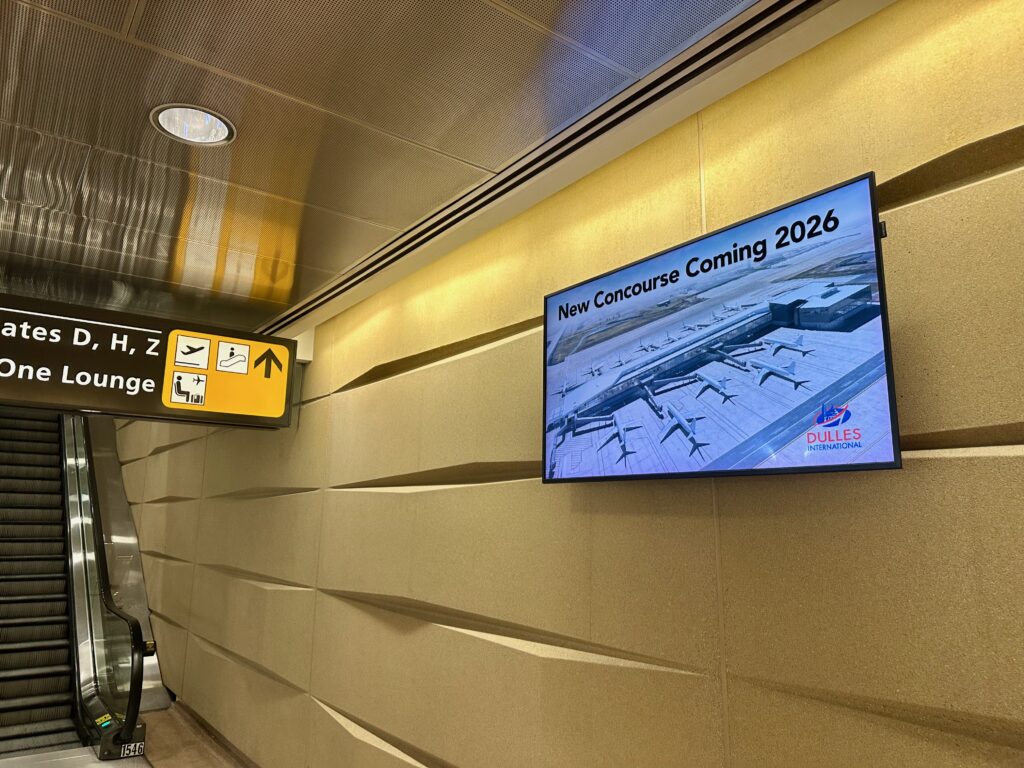
Arriving at Dulles for my flight to Montréal, there was excitement in the air. Not only is the airport and its anchor tenant, Star Alliance member United Airlines, celebrating America’s 250th Anniversary, but they are also prepping for a landmark transformation that will reshape many aspects of the Dulles travel experience.
The first phase of that plan, the new Concourse E, is expected to arrive roughly in the fall of this year. But the massive modernization scheme will also ultimately see the replacement of the current C/D Concourse with facilities to support more and larger aircraft, as well as the adoption of a new train service to replace Dulles’ iconic People Movers.
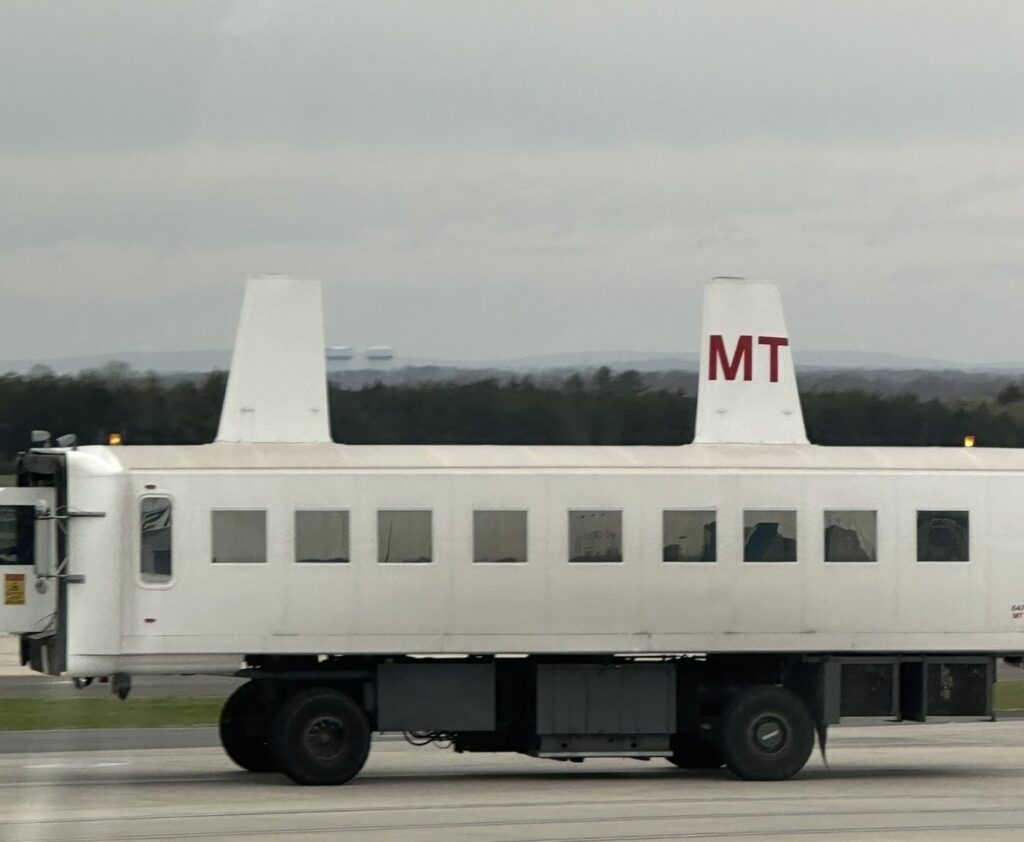
I have a bit of a ‘love them, loathe them’ relationship with the People Movers. There is certainly nothing pleasant about being loaded like cattle into yet another vehicle after deplaning a long-haul flight at Dulles.
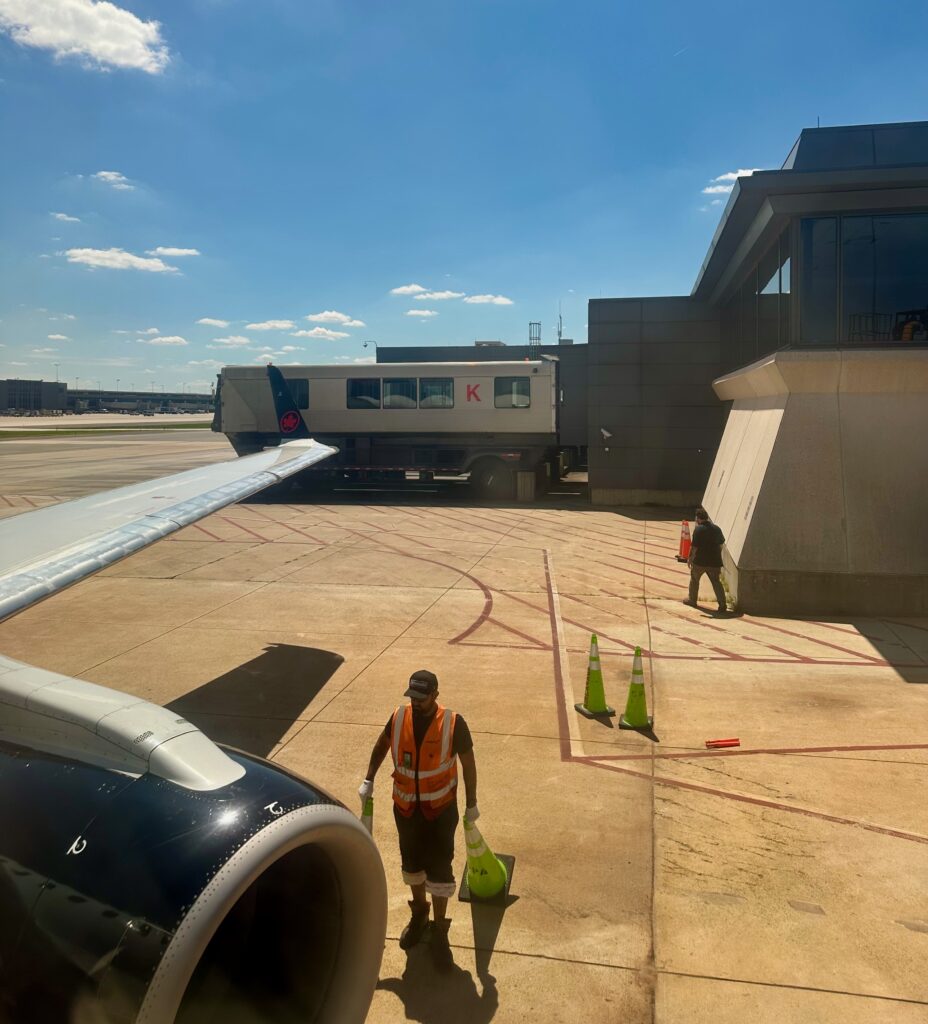
But when flying short-haul, with time to spare either before departure or on arrival, I cherish the experience of plane-spotting while zipping around the apron on these mobile lounges, which debuted in the 1960s.
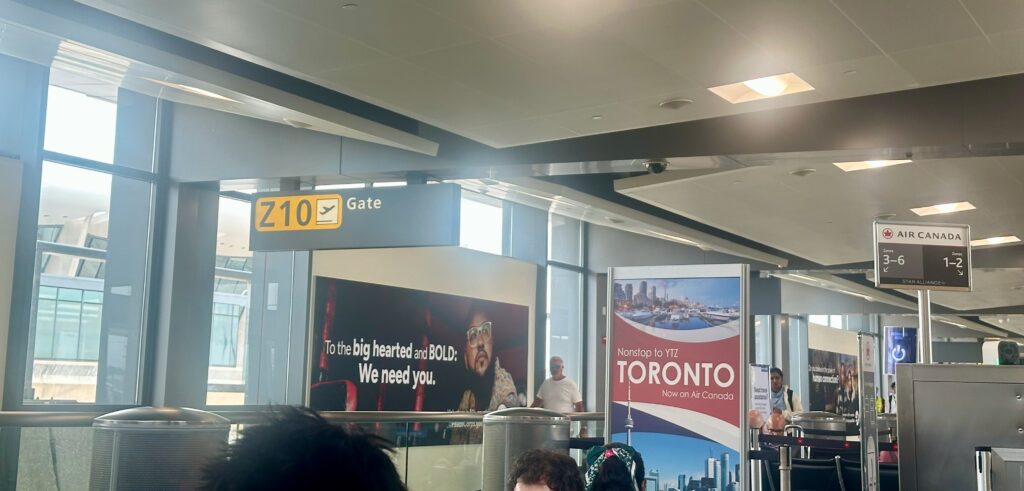
So, I was actually a little disappointed when I learned that my Air Canada flight would depart from Gate Z10 in Concourse Z, which is part of the main terminal building and a very short walk from the security checkpoint.
With only a few meager concessions nearby, and nary a power outlet to be found at the gate, Concourse Z is spartan to say the very least, though many common passenger complaints will be addressed as part of Dulles’ broader modernization plan.
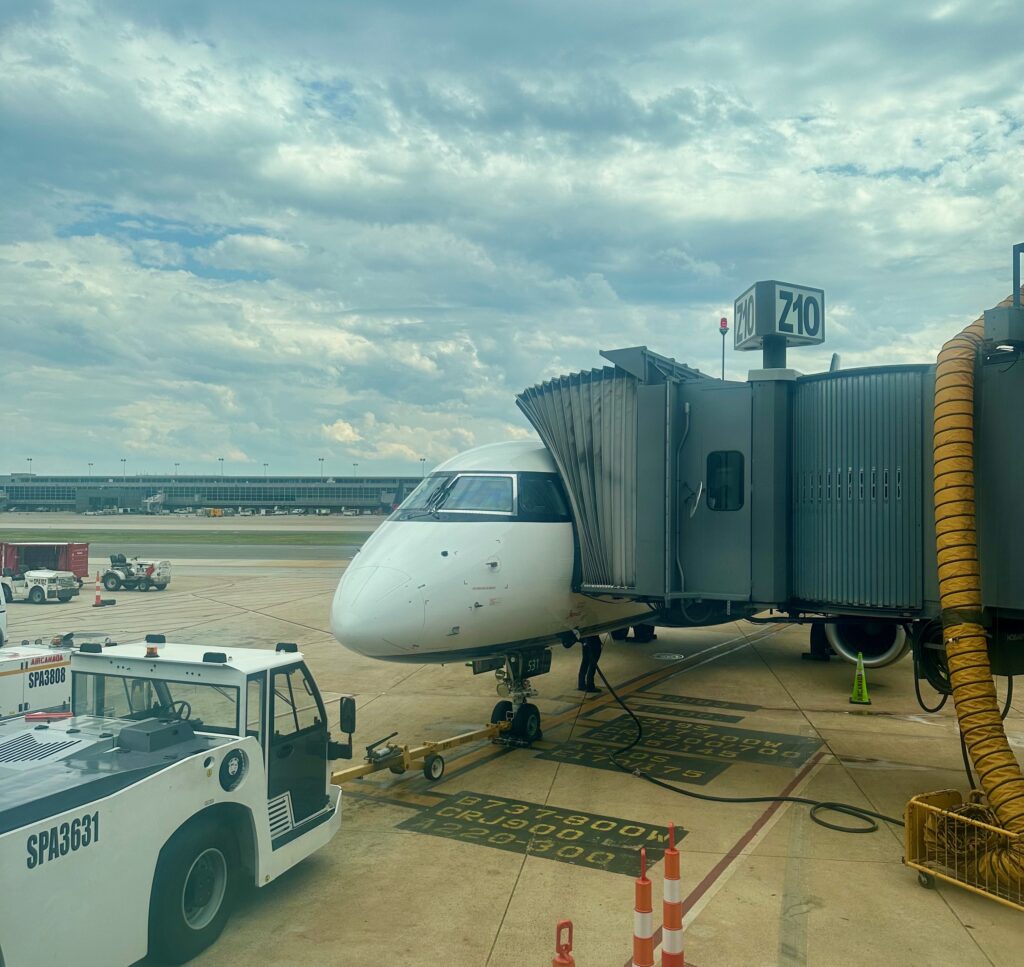
Boarding began on time and progressed quickly on the 76-seat E175.
As soon as I was comfortably seated in economy, I pulled out my phone with the intent to connect to Air Canada’s Wi-Fi portal.
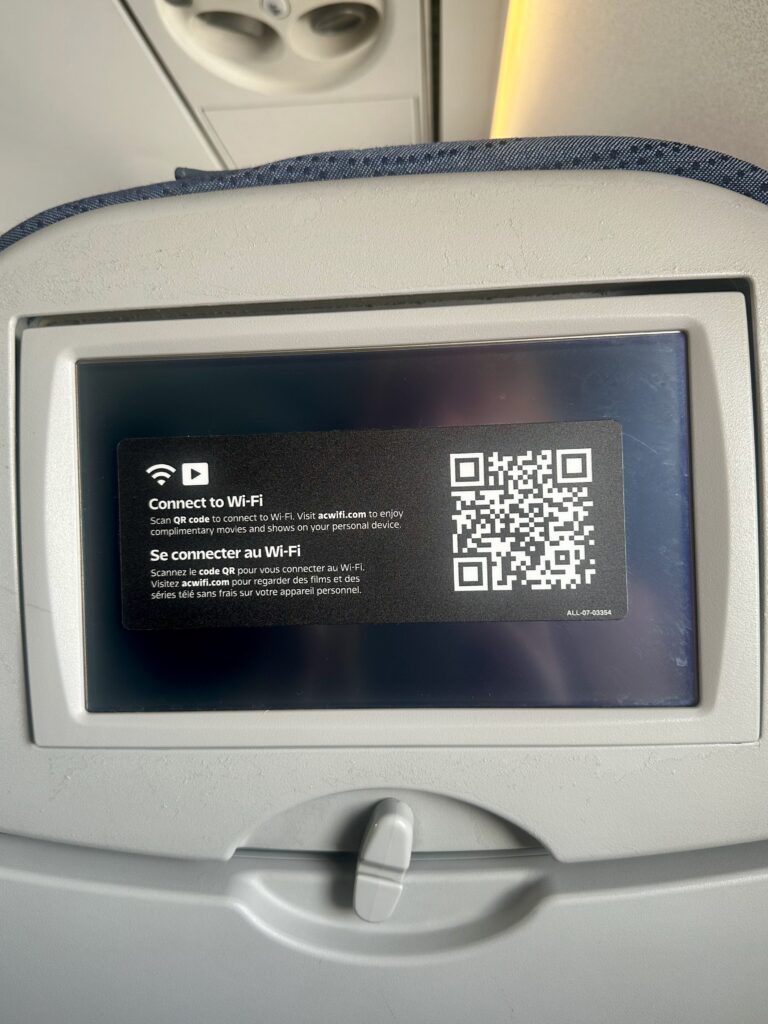
The ‘AC Wi-Fi’ network was immediately available. Conveniently, Air Canada also displays a ‘connect to Wi-Fi’ QR code on the seatback IFE screens that were taken out of commission when connectivity was installed.
In time, it would be nice to see a device holder in place of this screen on the E175s, but I appreciated the front-and-center prompt.
One of my pet peeves about many inflight Wi-Fi implementations in the world fleet is that the portal’s payment system proves to be a clog point. Cumulatively, I’ve lost many hours (yes hours) trying to connect to and pay for onboard Wi-Fi across a variety of airlines in the past. I find myself begging the system to “please, please take my money.”
And so, while Air Canada’s inflight Wi-Fi is free for its Aeroplan loyalty members, United MileagePlus members and business class passengers — requiring only your last name and seat number (be sure to add your loyalty number to your booking before takeoff) — I decided to test the payment system.
I ponied up my credit card details to pay C$8 for Wi-Fi. I’m not a fan of plugging in CC numbers around strangers and would have preferred an Apple Pay or Google Pay option, but given that the vast number of passengers will go the ‘free Wi-Fi’ route (no doubt a boon for Air Canada’s loyalty program), the airline is hardly under the gun to offer alternatives beyond PayPal.
In any case, I was online in mere seconds.
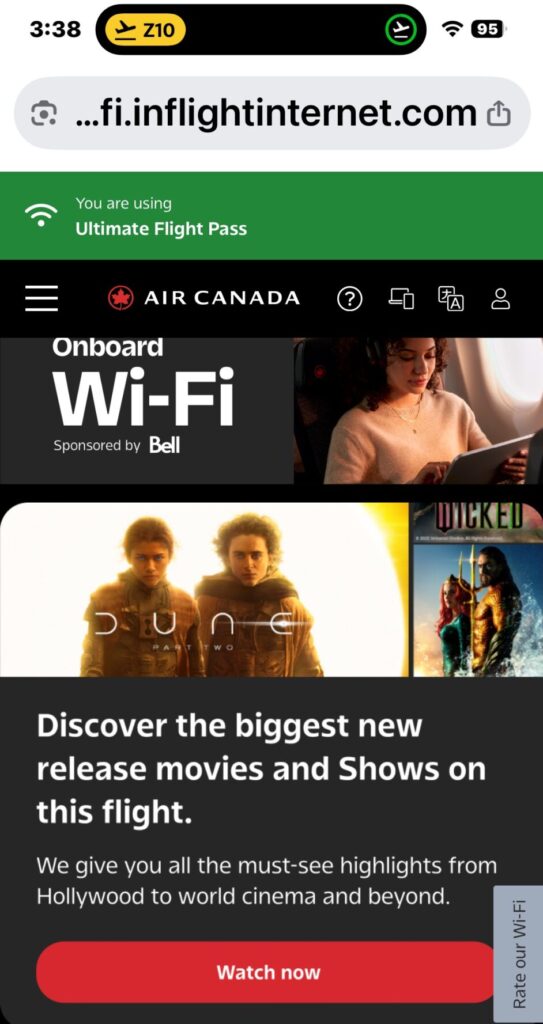
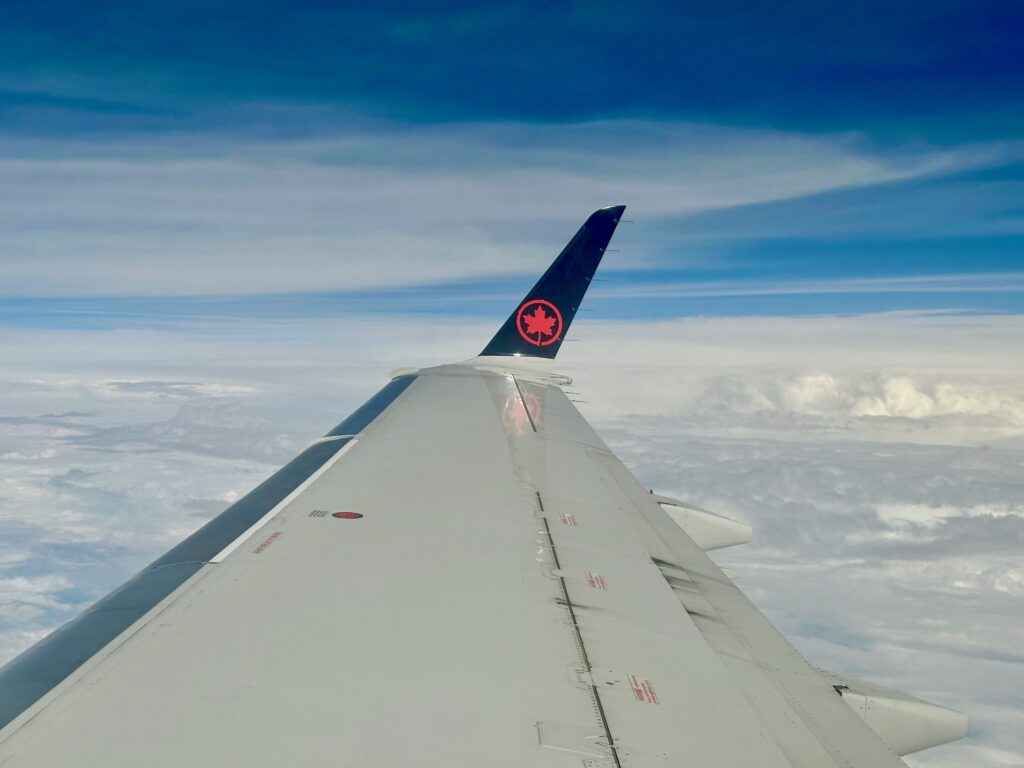
From that moment on, I proceeded to use the Wi-Fi just as I would at home — for work, streaming, and social media, whilst also enjoying glances at the view outside.
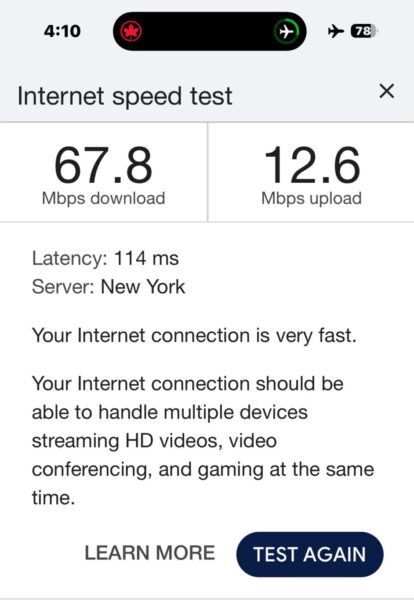
Appreciating that speed tests do not always reflect one’s real-world browsing session, the tests on board this Air Canada flight were in fact reflective of my experience.
The Internet was fast and snappy, and I remained connected for the duration of the flight.
 Having covered the inflight Wi-Fi sector for many years as a journalist, it is extremely satisfying to observe that next-gen systems are delivering on their promises, including multi-orbit solutions that effectively exploit the low latency and fast data speeds of LEO plus GEO’s ability to handle high-density tasks including around busy hubs like Dulles. Quvia, the first AI-powered Quality of Experience (QoE) platform for commercial aviation, and a partner to SES, also assists Air Canada by providing real-time visibility into the performance of its IFC-equipped fleet.
Interestingly, Airbus is equally chuffed with how inflight connectivity is advancing, telling your author at the A220 media briefing in Mirabel that it is actively working to bring new IFC options to the A220 in the 2028 timeframe, as part of its linefit, supplier-furnished HBCplus ecosystem, which counts SES as a managed service provider in both the Ka- and Ku-band.

After a terrific A220 briefing, it was time to fly home. I sprung for a last-minute upgrade to business class to see if Air Canada’s system would automatically recognize my free Wi-Fi privilege on the basis of cabin class, and indeed it did.
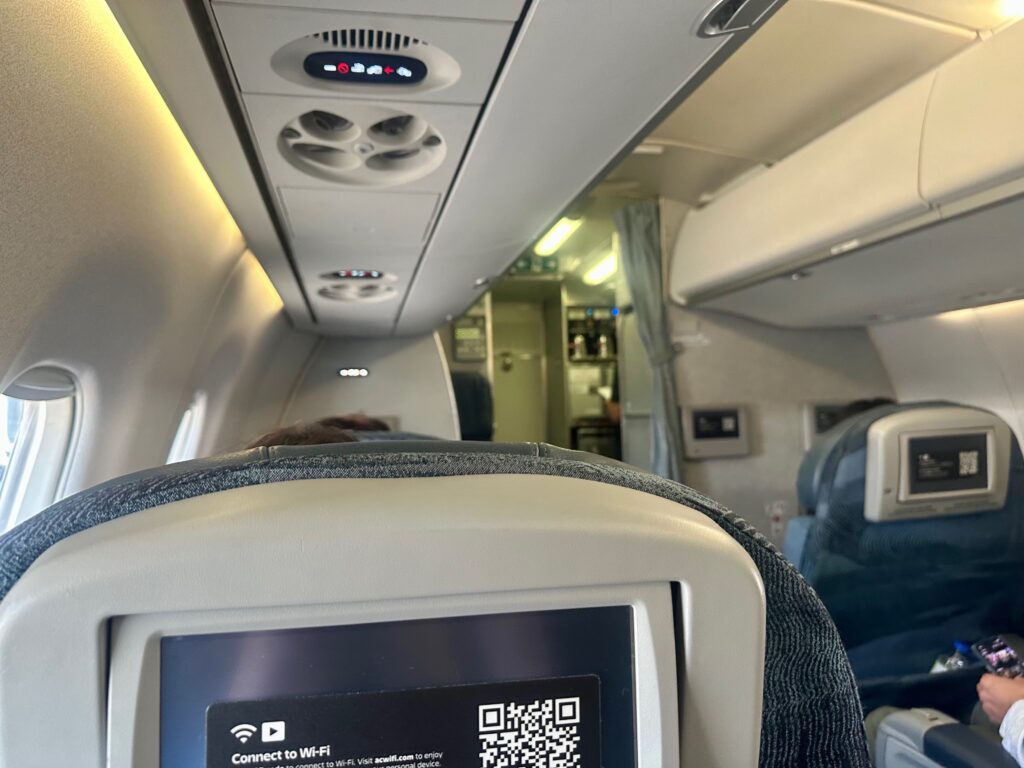
The two-hour flight time between Montréal and Washington Dulles is hardly a labor, but when you have a good Wi-Fi connection, it feels like time moves even faster.

Arriving at Dulles, I felt immense gratitude for the gloriously sunny day (which would make the 2.5hr drive home infinitely easier), the opportunity to test Air Canada’s stellar Wi-Fi on the E175, and even the retro-futuristic People Mover optics at Dulles.
We’re told that the 1950s and 1960s were the Golden Age of Travel. But as the world fleet becomes connected with next-gen inflight connectivity, I wonder if it might be time to consider whether we’re having a sort of renaissance in the digital age right now.
 All images credited to the author, Mary Kirby