


 Some people fly to the Caribbean for the warm temperatures, sandy beaches, poolside drinks, and a generally laid back time away from their normal life. But what if you could have all of those things, with a sprinkling of nonstop #AvGeek action on top? That’s what the island of Sint Maarten (or is it Saint Martin?) promises and delivered on my recent birthday trip to the part-Dutch, part-French island.
Aviation excitement is nothing new to Sint Maarten. Heck, the Concorde even graced the island with its presence. Twice, actually. The second time it ferried the President of the French Republic to the island. That’s some serious aviation credentials.
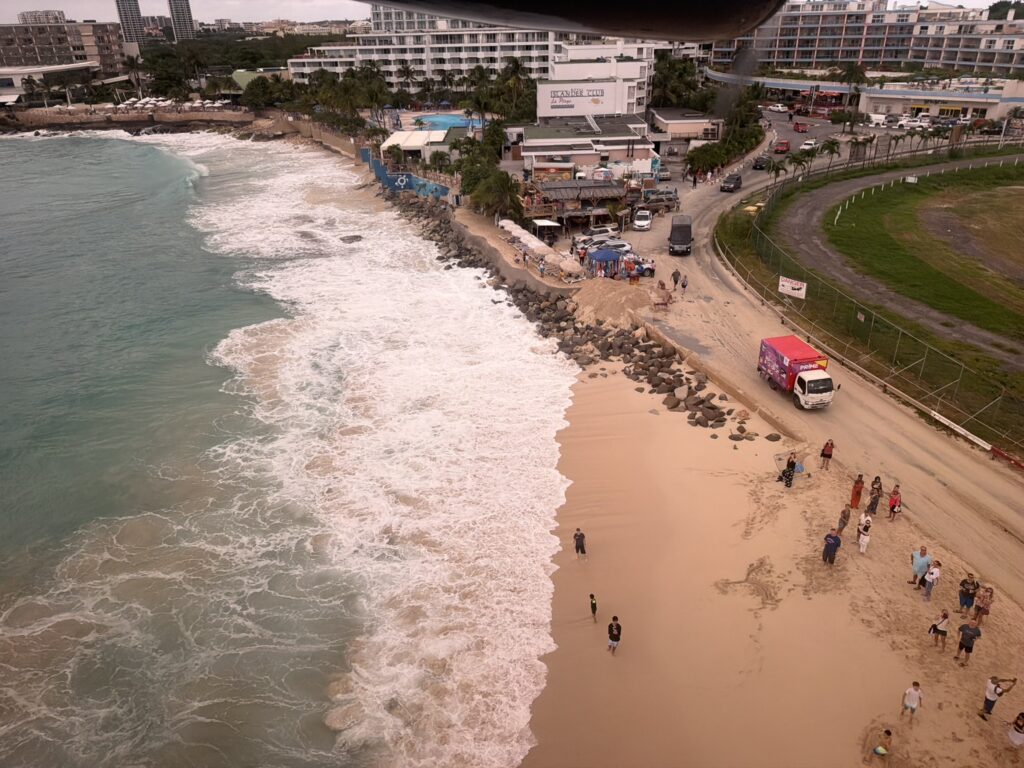
At a relatively quick four-and-a-half hour flight from New York, I have been lucky enough to vacation on Sint Maarten a number of times. Each time, I have opted to stay as close to the world famous Maho Beach as possible. You see, Sint Maarten isn’t just an island with an airport (SXM) that serves major operators. It’s an island with an airport that has a public beach mere feet from the end of the runway.
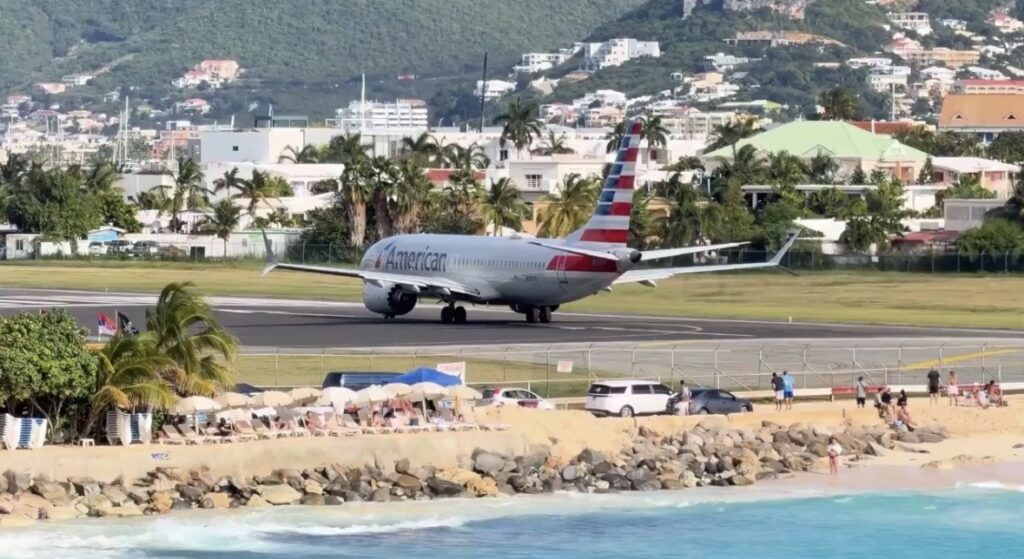
Maho Beach is the perfect place to camp out for a day and take in the constant flow of aircraft passing right over the beach just seconds before touching down.
Or, if you’re lucky and the wind shifts a bit, departures will barrel down the runway directly at the beach. It’s a surreal experience to see a fully loaded heavy jet at takeoff thrust pointed directly at you.
Over the beach you’ll find a constant flow of Winair De Havilland Twin Otters, St Barth Commuter Cessna Grand Caravans, and Anguilla Air Services Britten-Norman BN-2 Islanders.
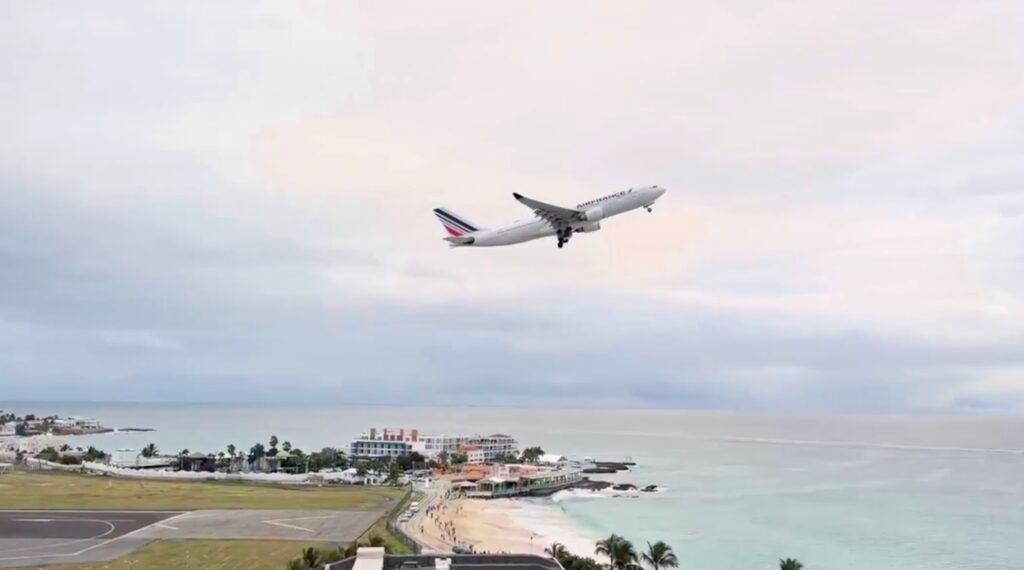
You might even spot the Trislander if you’re lucky. This is on top of the usual suspects of 737 and A320 family aircraft from the US and Canadian airlines, and the mainstay international heavy A330s from Air France and KLM, and occasionally Air Caraïbes.
But what about the experience of actually getting on board some of these small aircraft and flying around the Caribbean?
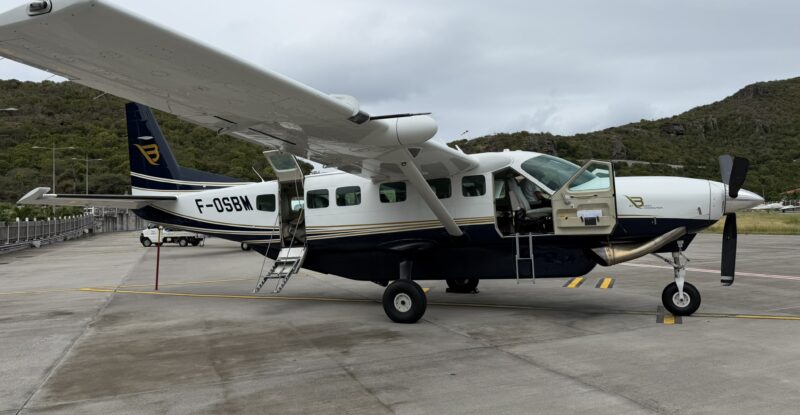
To get a sense of the aviation scene in the Caribbean, a hop from Sint Maarten to St Barths (or St Barts) and back was planned. We would depart from the island’s secondary airport on the French side of the island, Grand Case. First up was a St Barth Commuter Cessna Grand Caravan.
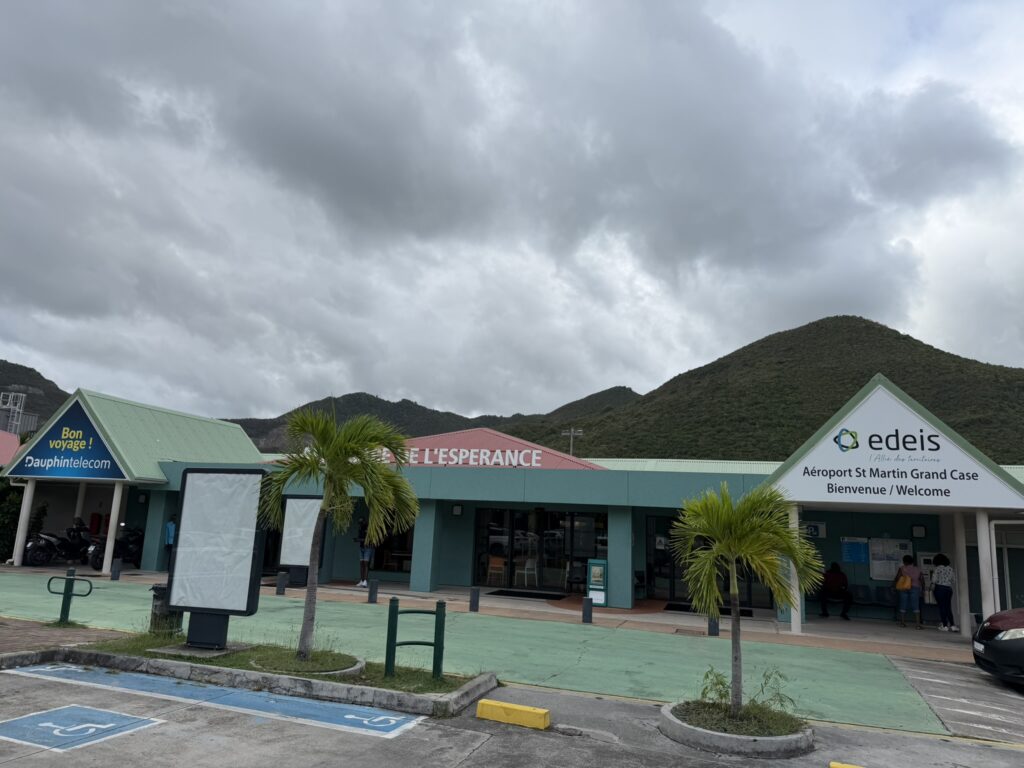
Sint Maarten’s Grand Case is a small but well appointed airport. There’s a tiny security screening area, a tiny passport control area, a tiny duty free shopping area, and a thankfully not-so-tiny hold room.

The Grand Caravan is a super comfy ride with its 1-1 seating layout, though I highly recommend asking the ground staff for the coveted right seat up front.
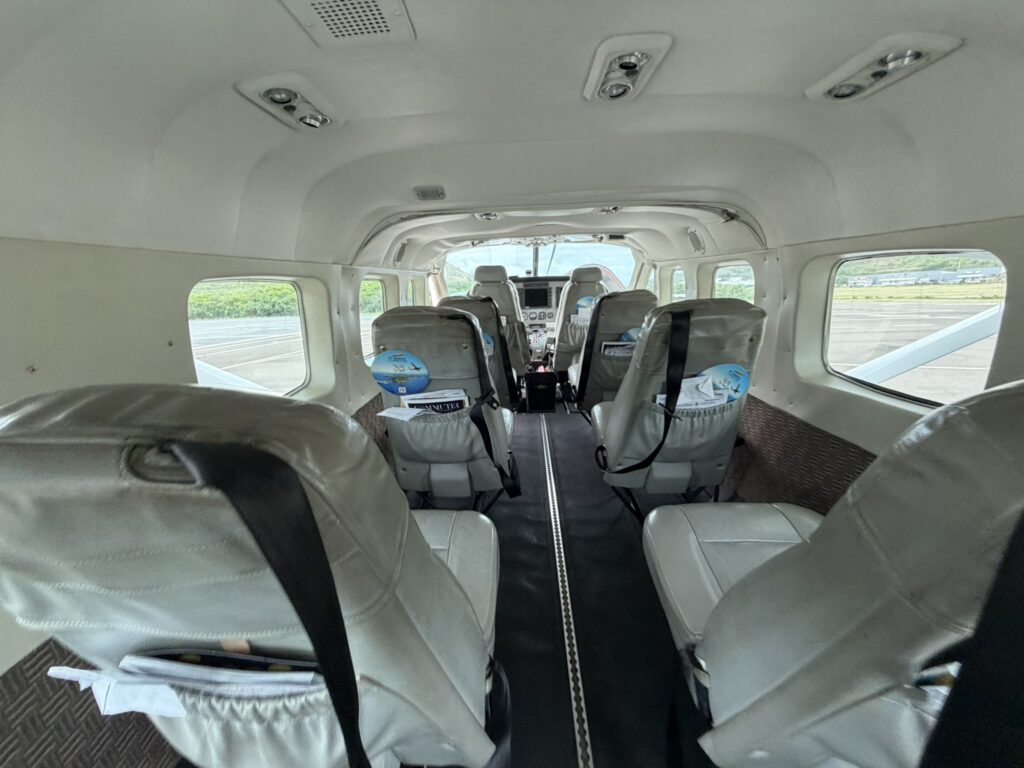
This airline operates with a single pilot, and passengers are free to ask for the right seat.
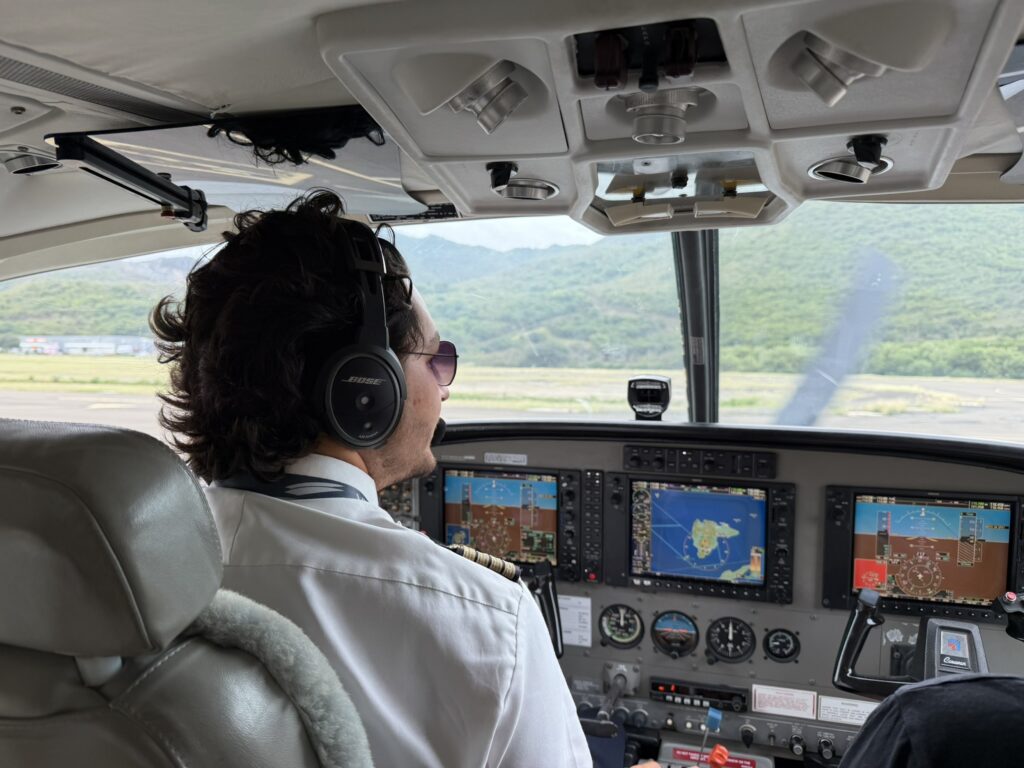
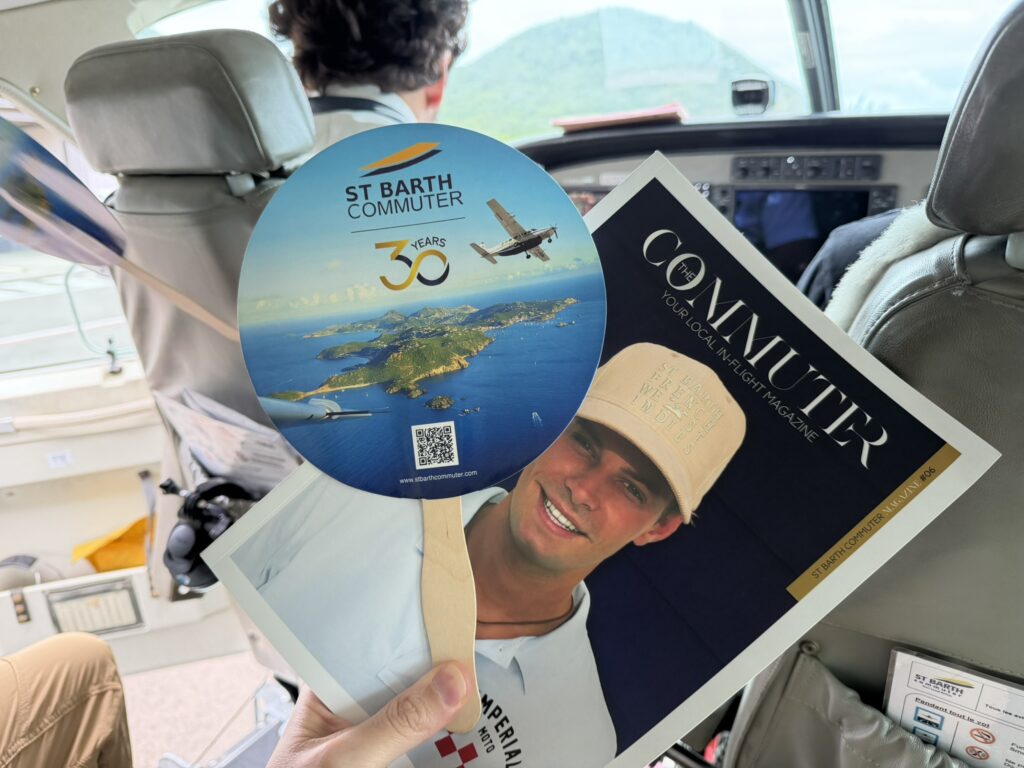
I sat in the first row of passenger seats to get a good view of the pilot. I was also surprised to see an actual print magazine waiting for passengers in the seatback pocket, along with a custom hand fan.
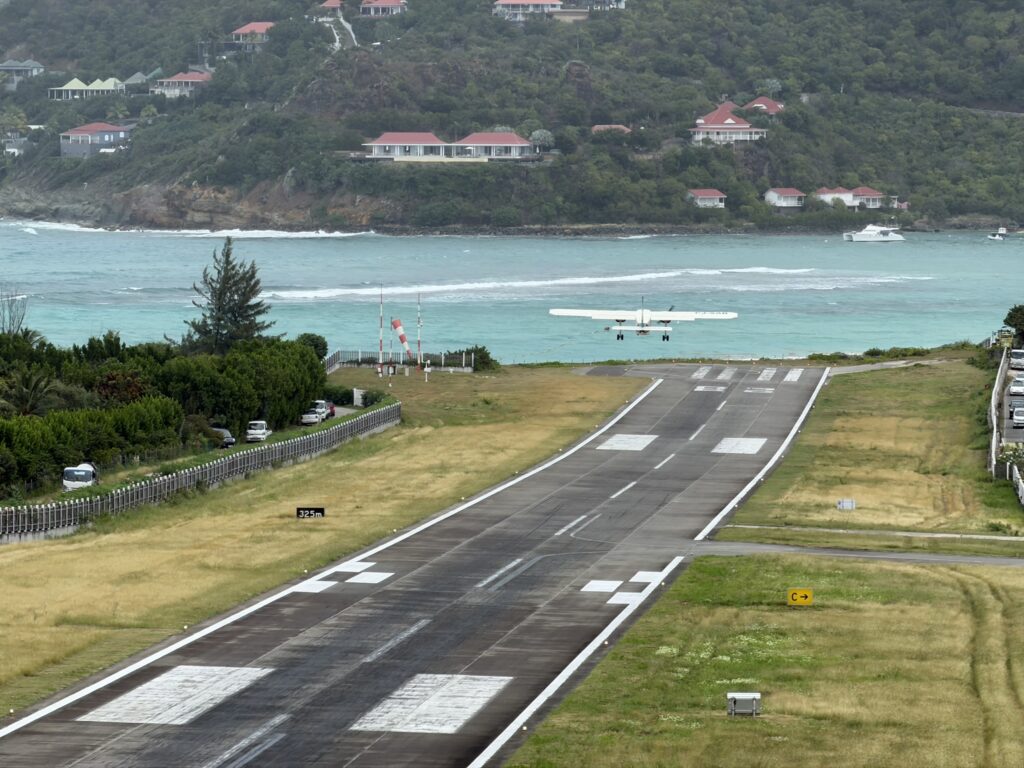
St Barths is another famous Caribbean airport. Sandwiched between a beach on one side and “the hill” directly in front of the runway, approaches into this airport can be wild. Pilots must be specially trained and approved to operate into this airport, a point driven home to us on this windy, rainy day. There is no room for error.
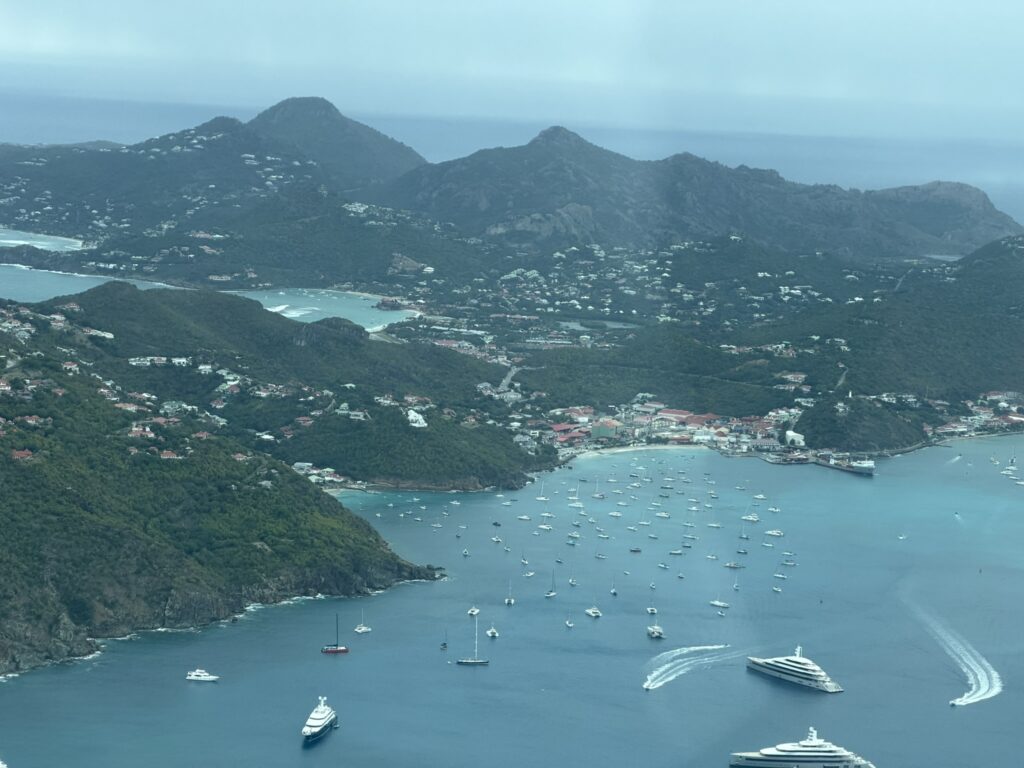
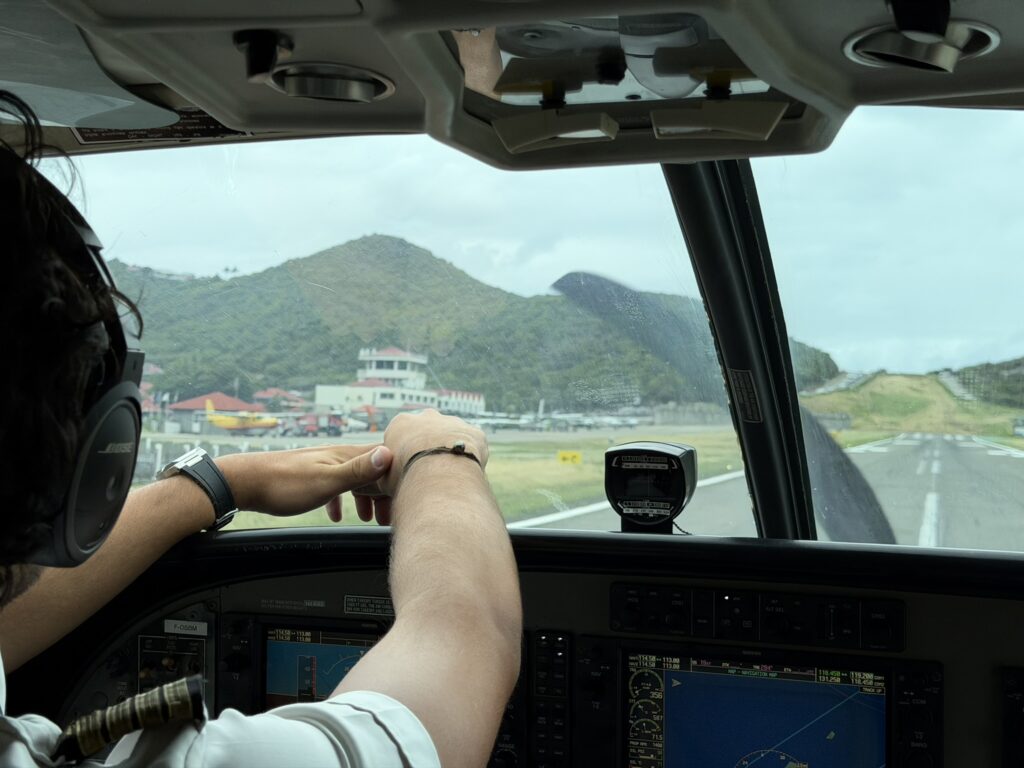
Our pilot was utterly locked in for this approach and landing, acting as one with the machine he controlled. He lined the aircraft up for approach by, well, not lining us up with the runway at all. We were incredibly offset, but that was what the wind speed and direction demanded as we floated in at or just barely above stall speed.
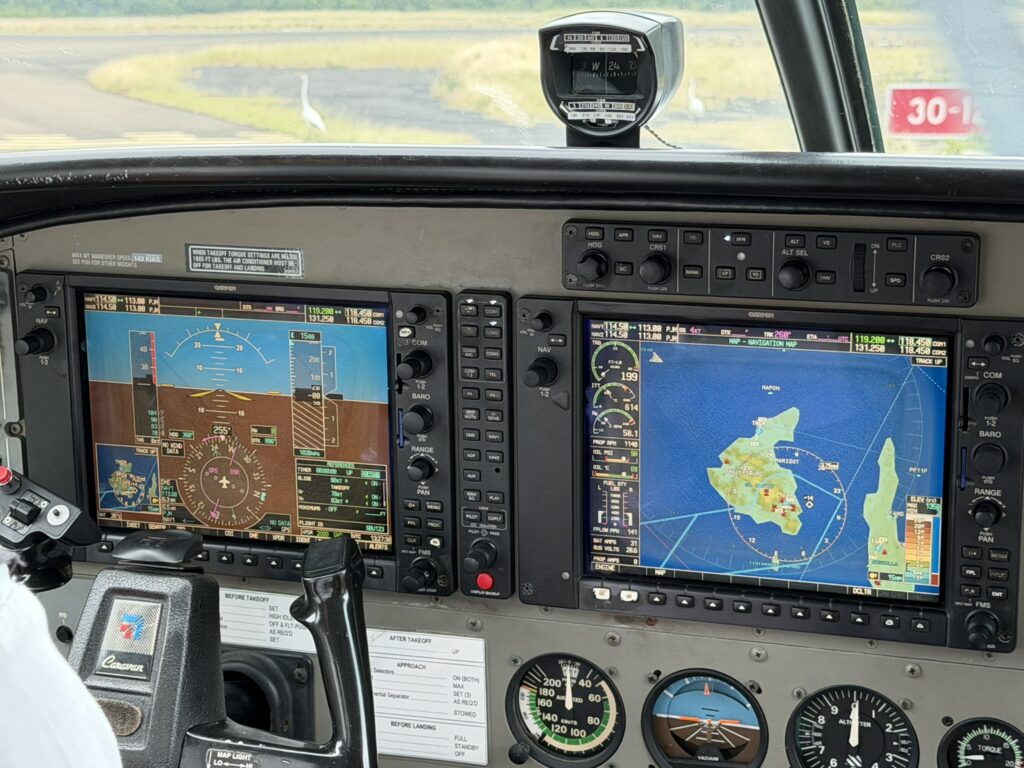
The wind shifted completely just as we crested the top of the hill, and watching the pilot react by reversing the direction of the yoke was wild. We barreled down the steep hill, greased the landing and was at the parking position seconds later.
He would later describe the approach with an understated and heavily French accented “interesting.” What was merely interesting for him was one of my most adrenaline fueled and memorable moments in an airplane. Not for the faint of heart.
With the scary part of the trip behind us, the return trip on Winair proved to be much less exciting and more like a traditional airline flight. While the schedule may show dozens of flights available between St Barths and Sint Maarten’s main airport of SXM every day, the airline seems to play roulette for which flights actually operate. Winair sent a flurry of emails the day before departure, shifting our departure time half a dozen times. This proved unnecessary, as we ended up right back where we started before the changes.
St Barths is another cute but well appointed airport. The open air check-in desks certainly give island vibes, and the second floor lounge space features a full cafe and restaurant.
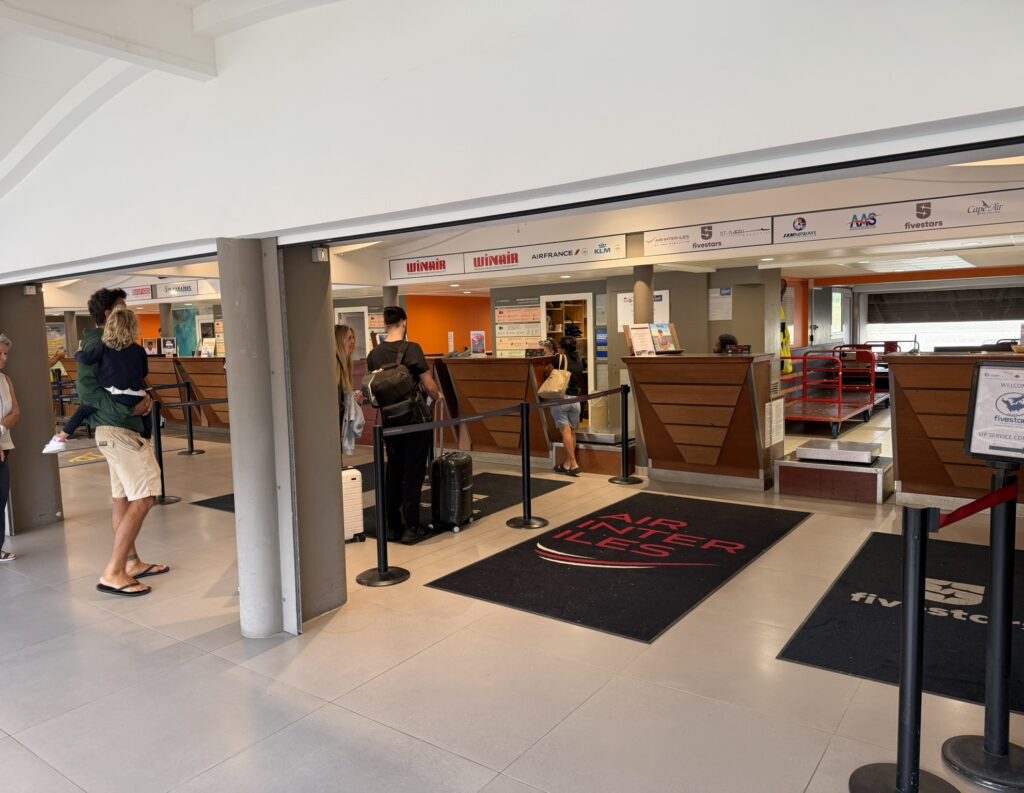
There are far worse airports to wait out a delay. Winnair claimed that boarding began 30 minutes prior to departure, but I’m pretty sure our inbound aircraft was still on another island until about 10 minutes before our departure.
With no security screening and just a quick glance as passenger’s passports, I would arrive at the gate area no more than 15 minutes early next time. At least Winair seems flexible about passengers taking an earlier than booked flight, if desired.
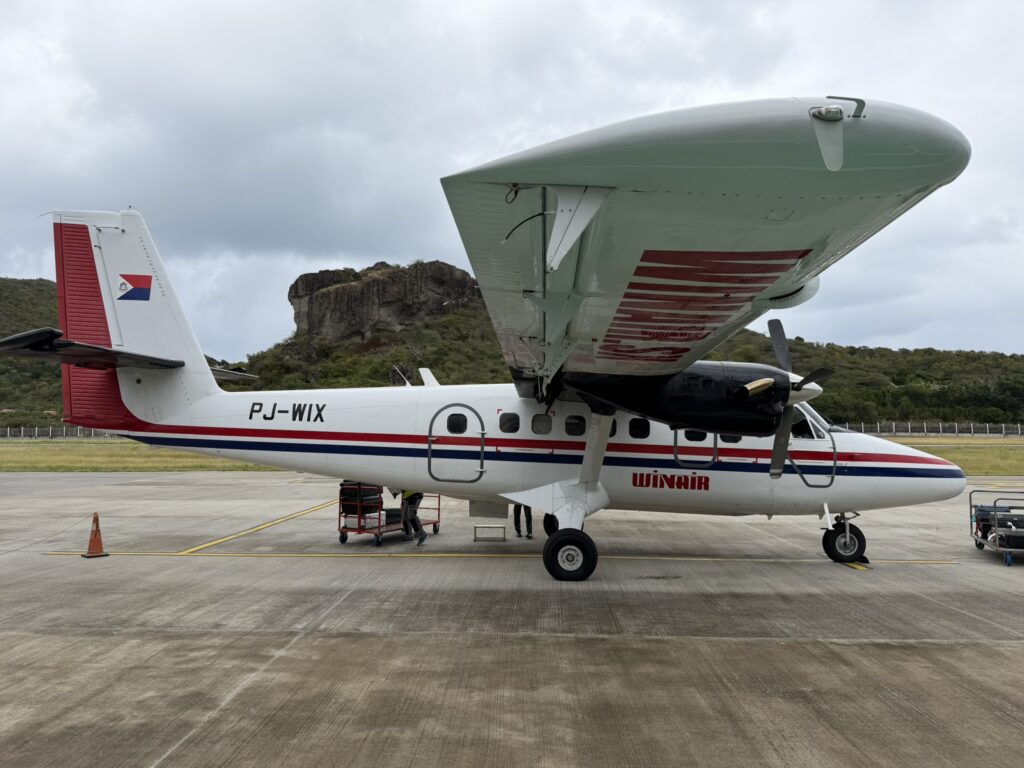
For whatever reason Winair seems to bank its flights quite heavily. An hour can pass without a departure but then suddenly three will all go out at once. We departed right on time. The pilots pointed the nose of the airplane towards the other island, and we cruised for a whole six minutes.
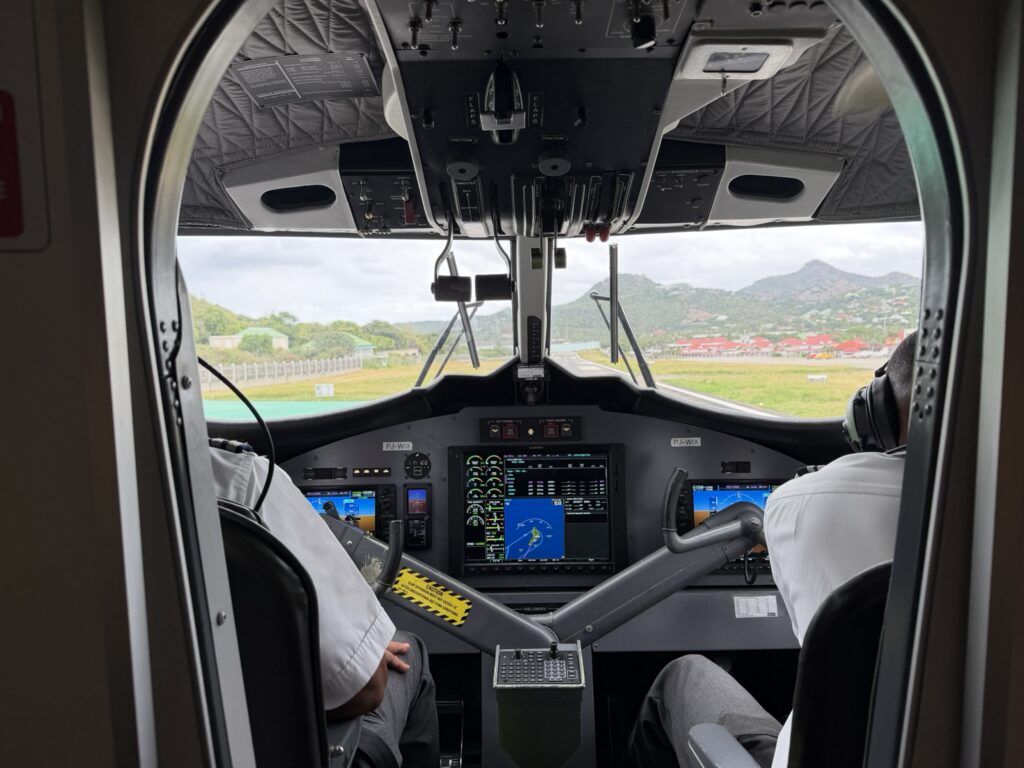
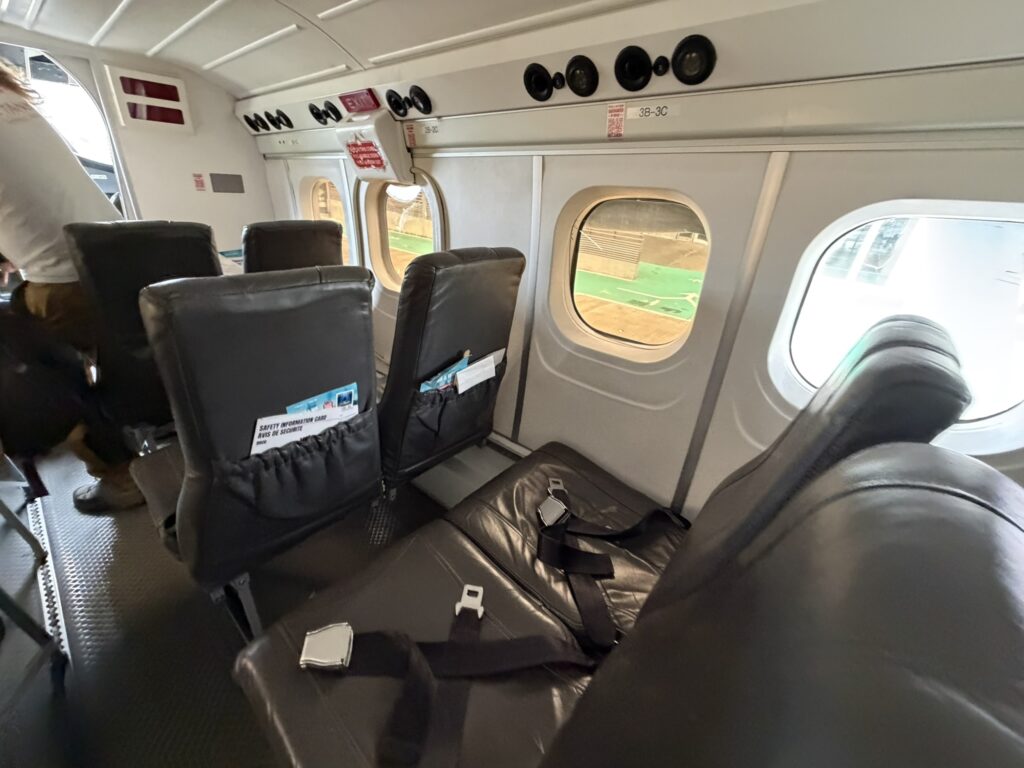
At the age of 56, Winair’s Twin Otter felt decidedly older and less premium than SBC’s Grand Caravan, but with such short flight times I’m not sure it matters. The 1-2 seating layout does make the aircraft feel roomier.
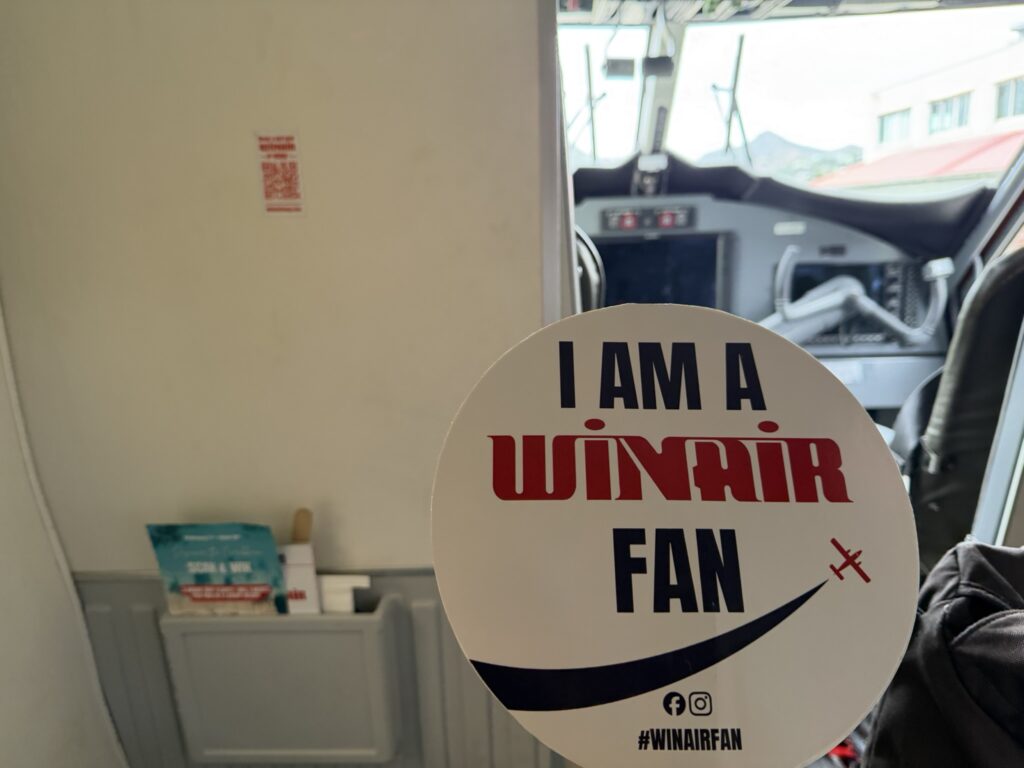
Winair also provided a hand fan in the seatback pockets, so I guess I have a little collection going now.
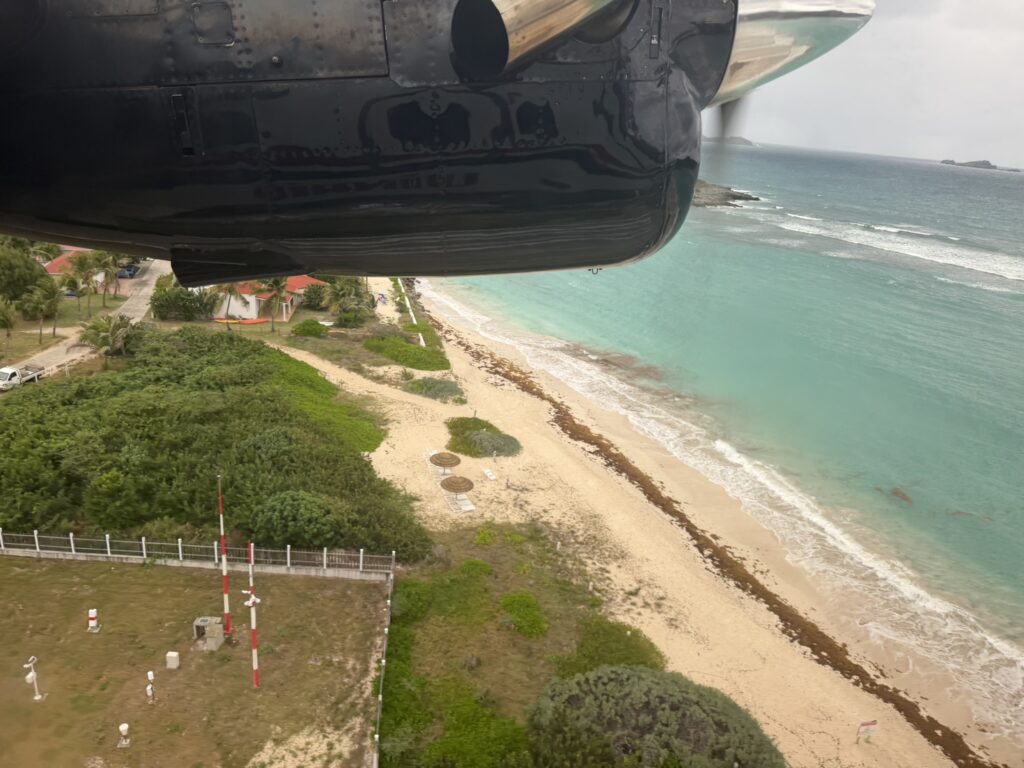
We buzzed Maho Beach and touched down at SXM five minutes early, but some other flights seemed to arrive before they were even scheduled to depart. That’s island flying for you. A short bus ride to the terminal and we were back on our way to the hotel.
I’ve taken a lot of flights to a lot of places on a lot of airlines. Flying in the Caribbean, though, is something different. It’s fast, frequent and fun, but expensive.
Priced out by the minute, these were some of the most expensive flights I have ever purchased: 100 EUR for the eleven-minute journey to St Barths (worth every penny just to do it) and $182.52 for the 10-minute hop back to SXM.
Would I do it again, though? Like a kid getting off a roller coaster at an amusement park, “again!”
Related Articles:
- Vieques Air Link delivers short, sweet island hop from Isla Grande
- Exclusive: Beond looks beyond Maldives to Caribbean under roadmap
- Inside Caribbean Airlines’ 737 don’t-call-it-a-MAX 8
All images credited to the author, Jason Rabinowitz