

 Seattle in the winter isn’t the most alluring location, what with the never-ending rain and gloom. So I always look forward to an annual job in the Phoenix area to catch some sun and a little warmth. I also look forward to coming up with ever more creative ways to get home. This year’s adventure checked off an ‘airline’ that has long been of interest to me: JSX.
I know, they’re technically not an airline, they’re an on-demand ‘hop-on’ public charter operating under Part 135. But let’s be honest here. As far as the average passenger is concerned it looks like a duck, swims like a duck and quacks like a duck. So at least to me, it’s an airline. Err…duck.
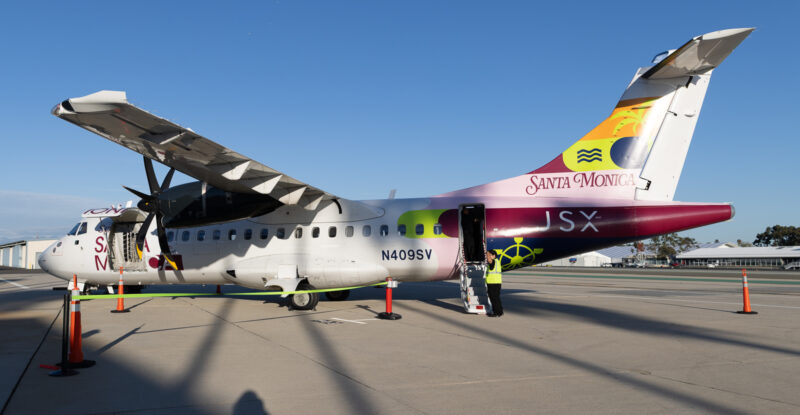
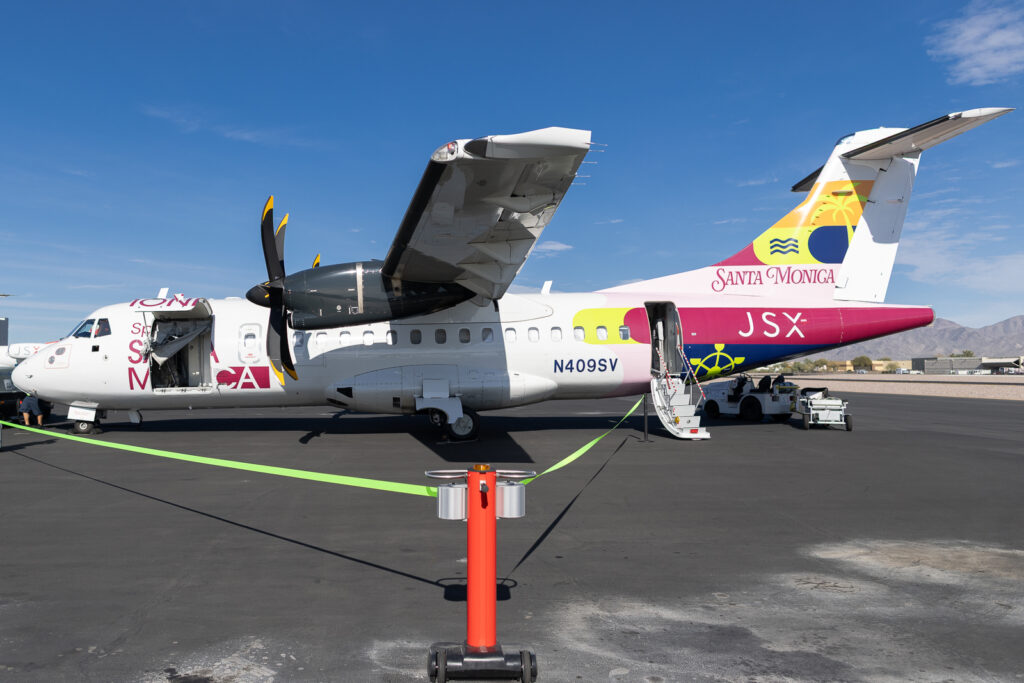
While JSX has always been on my radar, their latest fleet acquisition had me especially interested: the ATR 42 turboprop. While the aircraft is quite popular outside the United States, it’s been nearly unheard of here for decades (apart from Silver Airways). Passengers considered them noisy, slow, and cramped, never mind perceiving them to be less safe compared to jets.
But with JSX, ATR is back and hoping to claw away market share from the very planes that arguably killed whatever foothold turboprops once had here in the states: the 50-seater regional jet. RGN recently reported on the details that emerged from a JSX/ATR press event in January 2026, so I won’t rehash them further here. But suffice it to say, the introduction of the turboprop is a bit of gamble for a nation that has become accustomed to the jet.
Which brings me back to Arizona. JSX quietly launched the ATR to Scottsdale earlier this year, connecting the ritzy Arizona city to the equally ritzy beach town of Santa Monica, California. I figured I’d fly this new route to give it a whirl, then hop ten miles south to LAX and catch a ride home to Seattle.
While JSX certainly operates a lot like an airline, they also don’t. The first sign was evident as I pulled up to a nondescript building at the Scottsdale airport. If there hadn’t been a sign for valet parking (+$45), I wouldn’t have easily known where we were. Entering the building there were no signs, and I had to ask someone at the first office where exactly I was supposed to go.
Sure enough a departure lounge and check-in lobby appeared at the end of a hallway. Several manned check-in desks were staffed and ready to go, squaring me away immediately. The lounge offered complimentary beverages like tea and coffee alongside ample seating and free Wi-Fi. At the time I was one of the only people there, mostly a sign that I’d arrived way too early. PHX this most certainly was not, and in a good way.
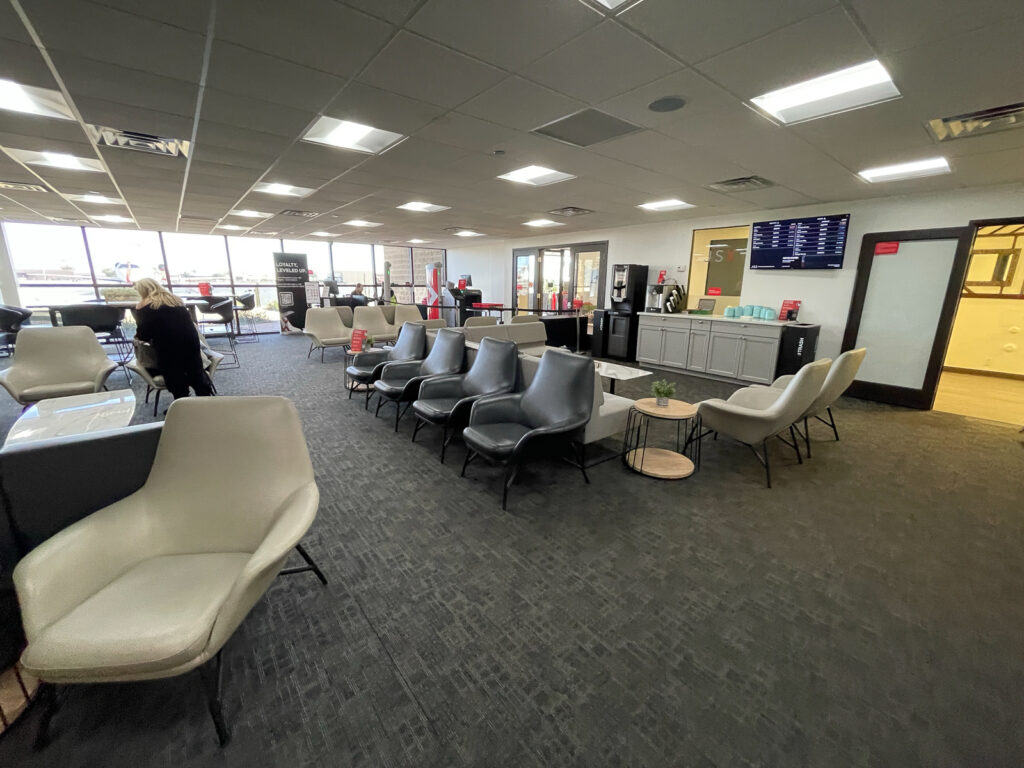
The open and airy lounge rapidly began to fill forty minutes ahead of departure, as both my flight and a few others were due to leave around the same time. By the time boarding began it was standing room only. JSX operates a single security lane in the corner of the lounge, scanning any small bags and using what looked like a modified metal detector.
Boarding the ATR I was immediately struck by the roomy 1-2 cabin configuration. Part of ATR’s new ‘HighLine‘ series of interiors, it seats 30 passengers in total. This is more than a 25% reduction versus the usual 2-2, 42-passenger strong layout you’d typically find.
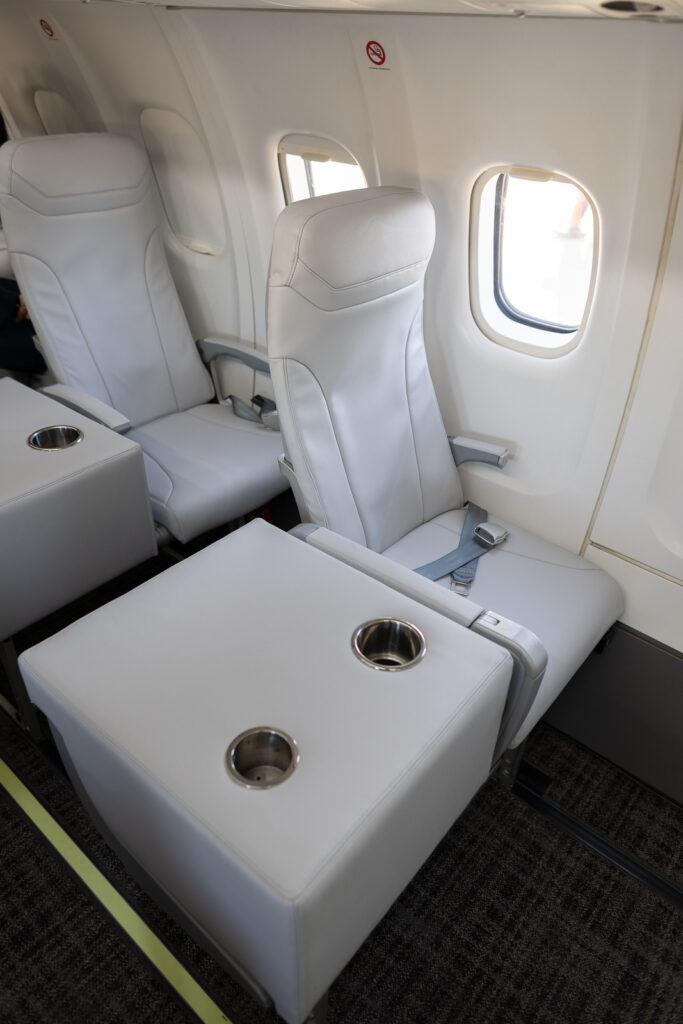
Right side seats on this JSX bird are arranged in pairs, while the left side is a single seat paired with a table. Small overhead bins can handle a backpack, while everything else must be checked (first two bags are included in the fare).
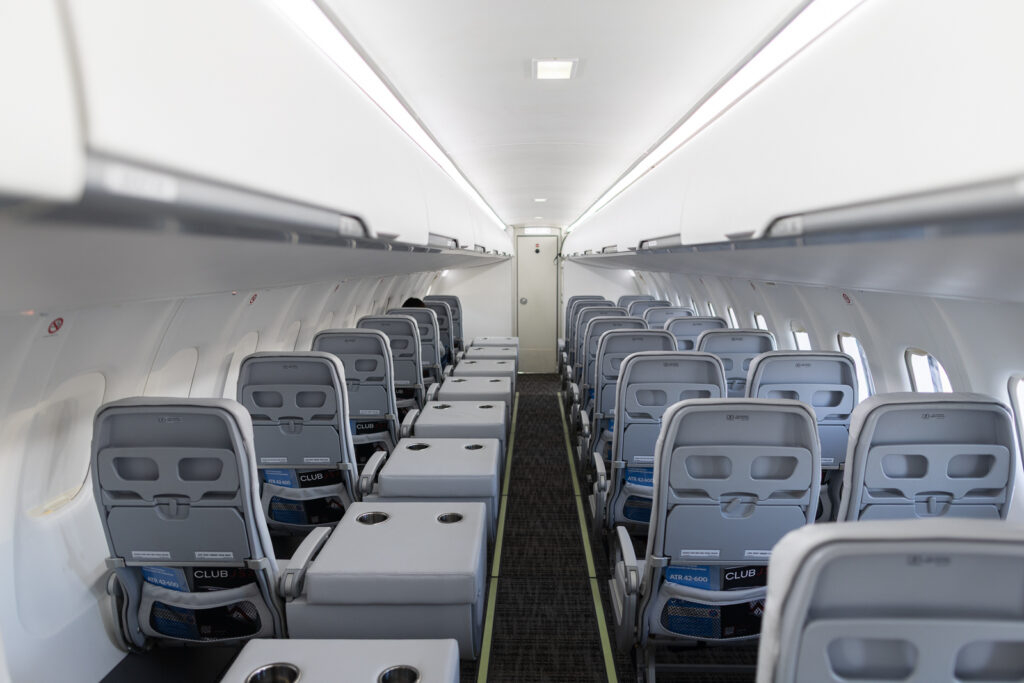
The seats themselves are clad in a slightly off-white pleather. They’re more comfortable than they could be, but the recline is limited and the padding still pretty thin for a premium product.
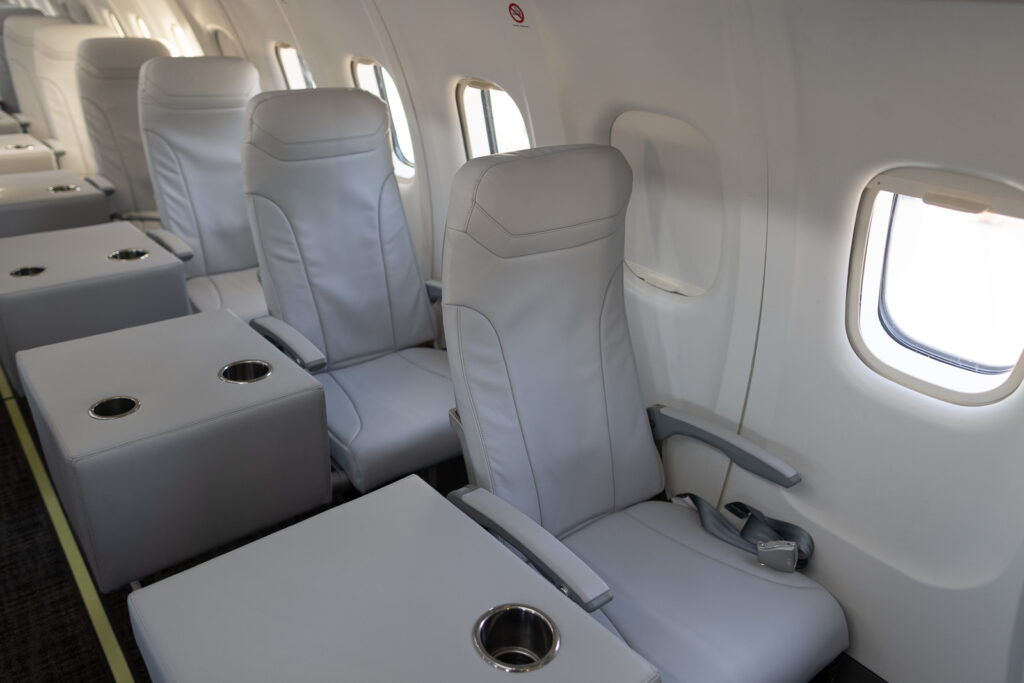
The left side table-plus seats feel incredibly spacious, with plenty of elbow room.
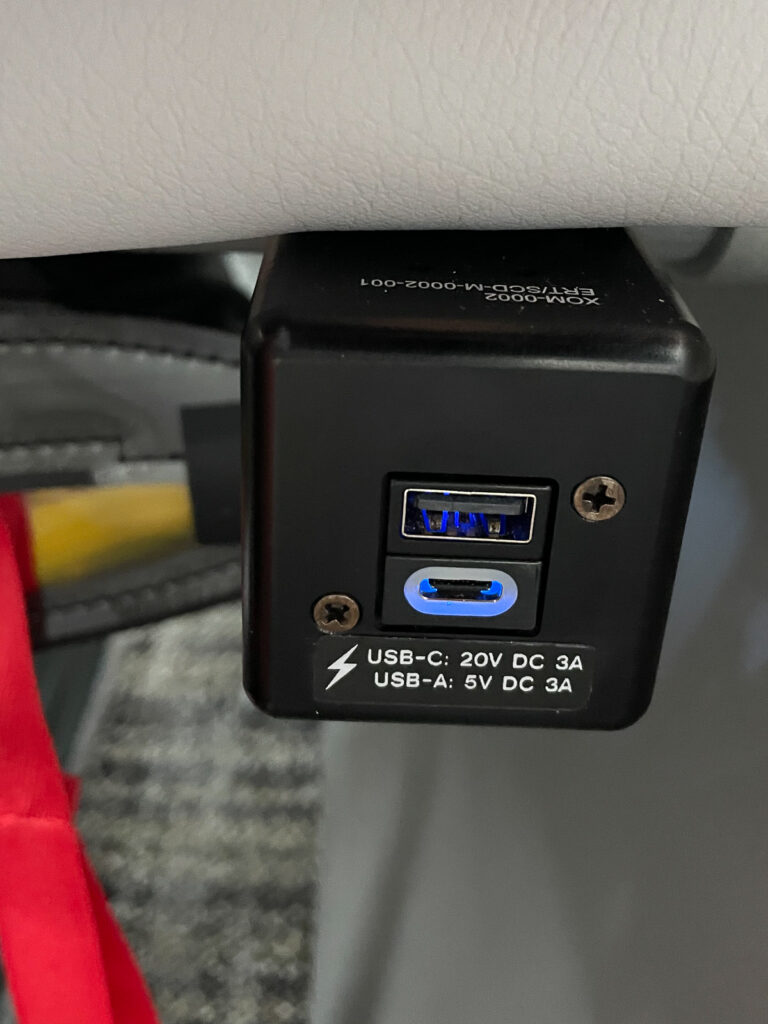
Each seat comes with USB-A and USB-C power outlets, both of which worked great. It does not come with a standard outlet.
I settled into 2A, right next to the left-side propeller. This should be one of the loudest seats on the airplane, but I can’t say I found it to be all that noisy.
Takeoff was predictably the loudest, and my Apple Watch’s noise app pinged a decibel warning at 100db (below a Boeing 737-200 behind the wing but a lot more than a 737 MAX). The pilots quickly throttled back after lifting off, and noise levels settled in closer to 90db for the rest of the flight.
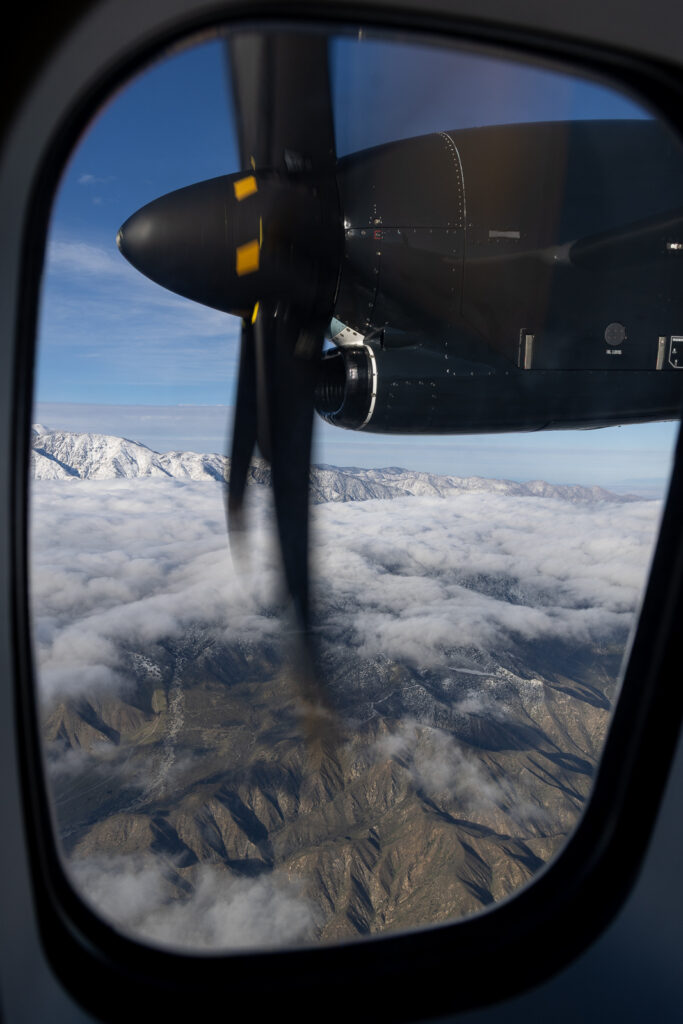
The soft product on board is the same on the ATRs as it is on JSX’s jets. Which is to say, it’s pretty nice. With a max load of 30 (this flight was closer to 20), the service on board feels friendly and personalized.
A very pleasant flight attendant introduced herself and took drink orders on the ground. They began arriving by hand not long after we leveled off at 18,000 feet.
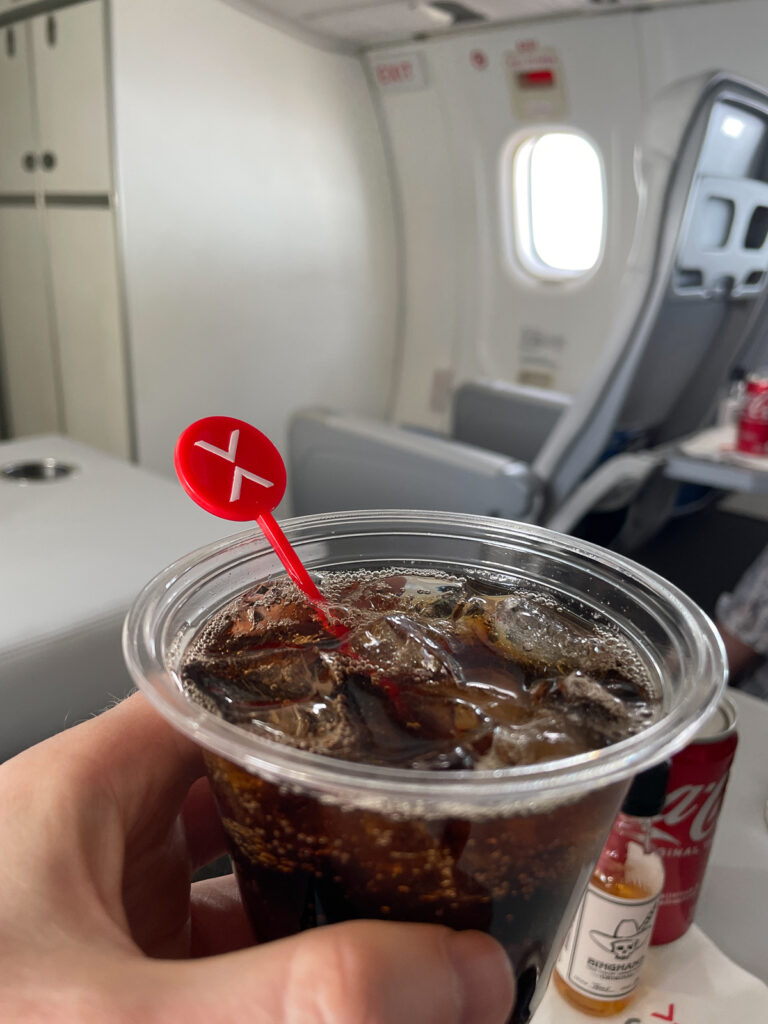
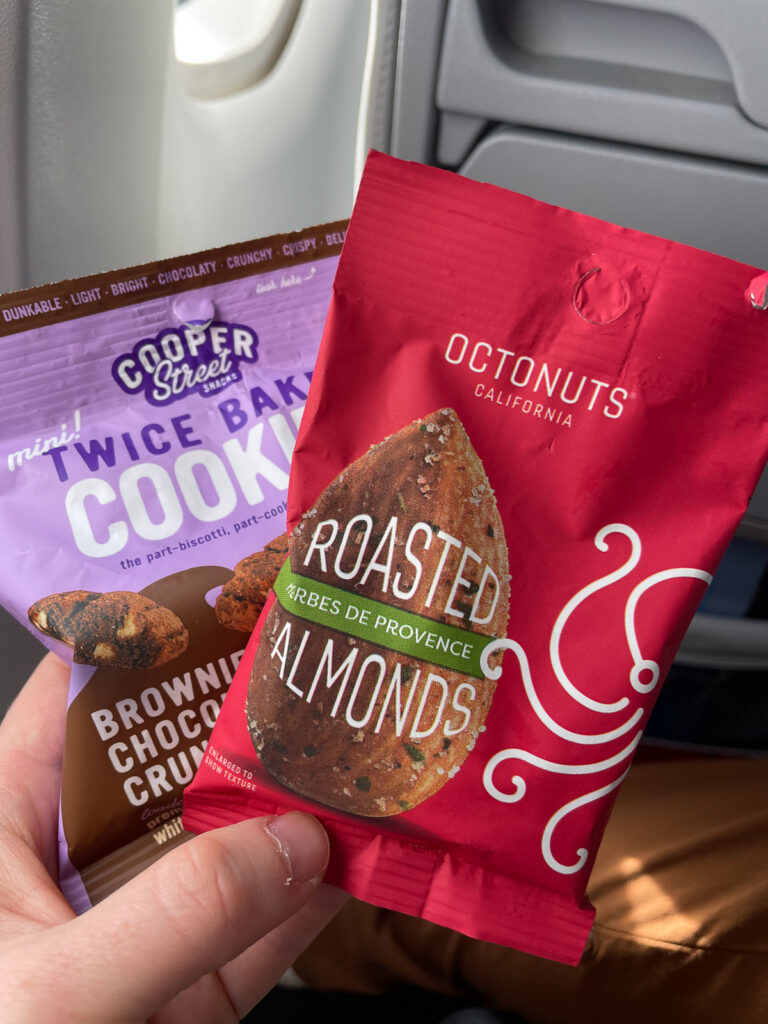
A bourbon and coke set a good vibe as I dove into an e-book, interrupted a bit later by the well-appointed snack box.
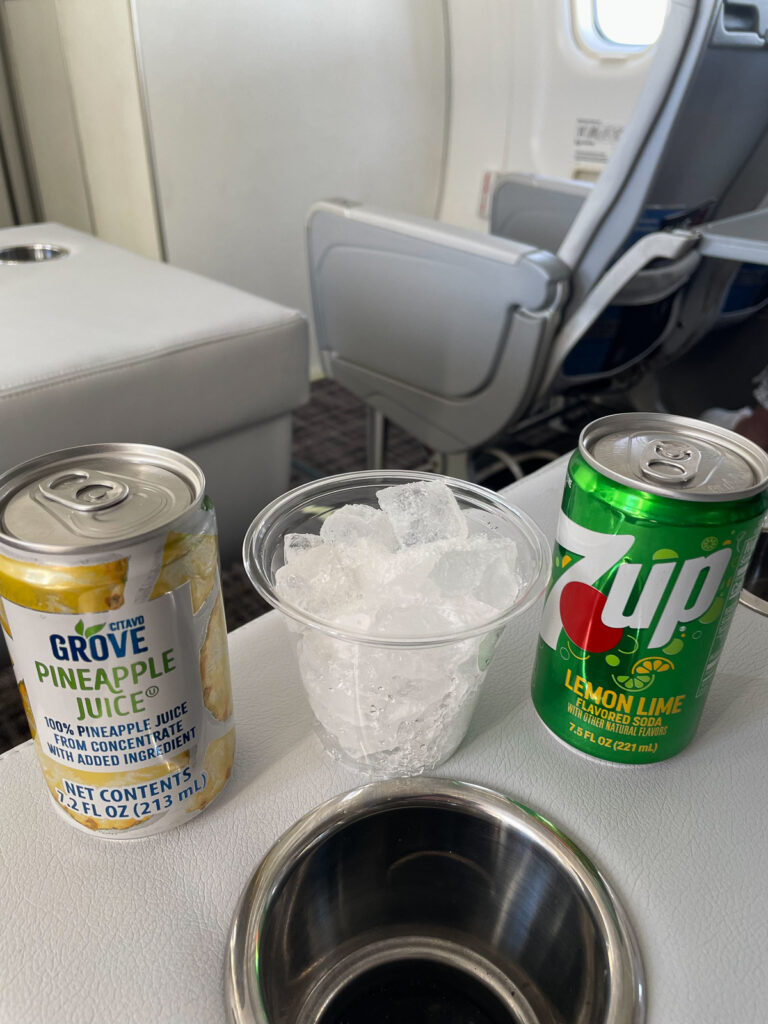
While that was the only formal service of the flight, requests were encouraged. The flight attendant noted that she had her own custom off-menu mocktails, and I tried the Pine-Up (pineapple juice and 7-Up). It hit the spot, and more importantly was a fantastic ‘surprise and delight’ service moment.
There is currently no JSX-provided entertainment on board. The ATR fleet is due to have Starlink installed, but the FAA has yet to approve the hardware for use on this ATR 42-600 variant.
The aircraft landed in Santa Monica on time. Weirdly they do not let passengers deboard until the luggage has been offloaded, which added several minutes of hurry up and wait once parked. Once free, I was off the airplane bag in hand and into an Uber in three minutes. That’s literally not possible at either PHX or LAX or, let’s be real, virtually any major US airport, which leaves me with two points to consider.
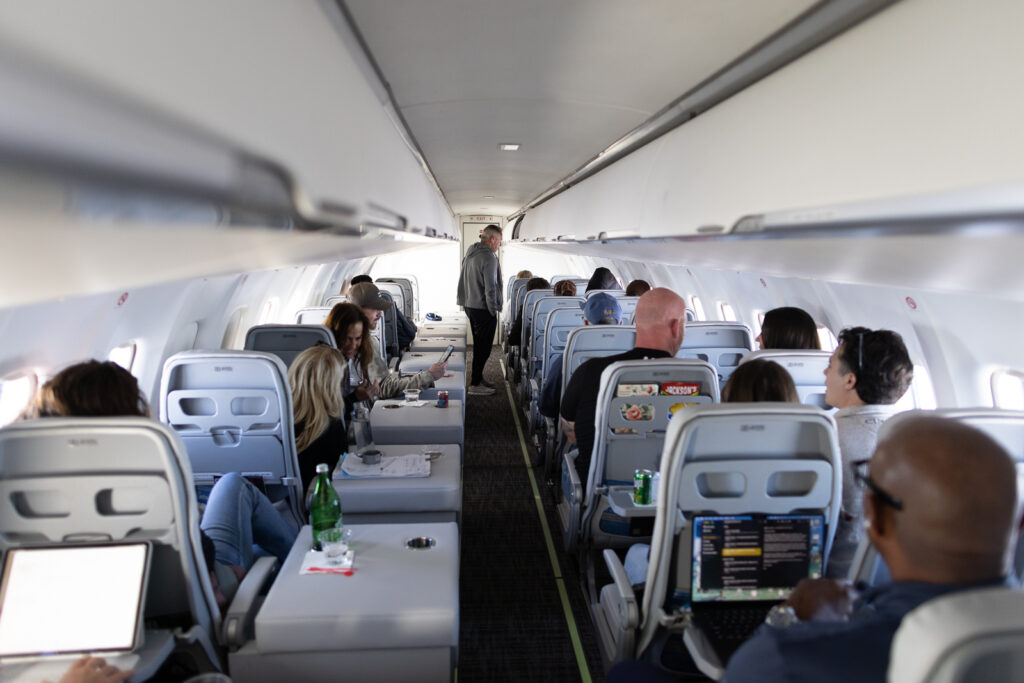
First, will the ATR gamble pay off? I think it very well could. The hard product is not as nice as many E175 first class cabins, but for flights that average an hour and change I’m not sure that’s a deal breaker.
Plus the ATR experience should only improve over time. Starlink should be approved in the near future. The overhead bins will disappear for an even airier feel, lining up the cabin experience more closely to the Embraer E145 fleet. And new aircraft entering the fleet — JSX signed a letter of intent with ATR in June 2025 — may end up in a HighLine all-business class 1:1 recliner configuration. At least for me the noise is a non-issue, and based on a few passengers I chatted up who’ve frequented the route it isn’t much of an issue for them either.
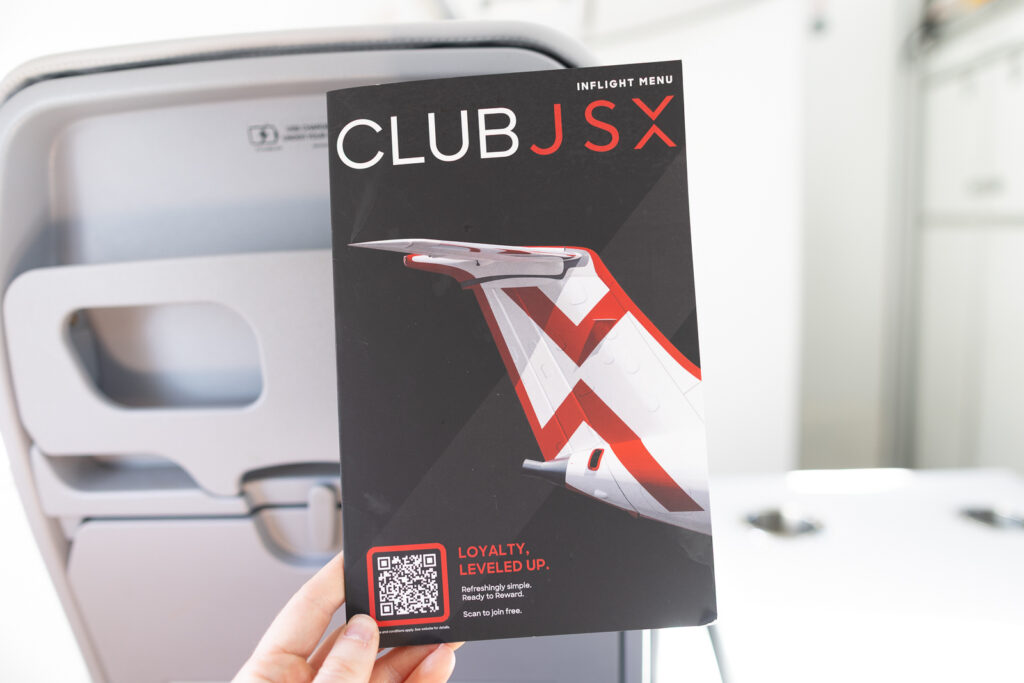
The second consideration is whether the JSX experience is worth the premium price point. I paid $279 one-way for their cheapest ‘hop on’ fare, well above the cost to fly first class PHX-LAX on either American or United. And that’s before you add the $30 Uber from downtown Phoenix out to Scottsdale. The soft product isn’t all that different, though I’d note that the crew with JSX was spectacular (and the same regulars that had no notes about the noise raved about the JSX crews). The hard product is probably a step down.

JSX’s biggest advantage is time savings and overall vibe. I could’ve shown up in Scottsdale 20 minutes before departure and been fine. Even including the cab ride the total time from hotel to seat 2A would’ve been under an hour. And the whole vibe is laid back and easy. Sure they still have security, but it takes thirty seconds while someone who seems genuinely interested asks you how your day has been.
On board feels more like flying private. Good luck getting that kind of experience and treatment at a major US airport.
So is it worth it? If you’ve got the money, I vote yes.
Related Articles:
- Few quibbles on Iberia ATR 72 flight from Malaga to Melilla
- ATR sees strong U.S. market potential as JSX showcases ATR 42-600
- ATR seeks to take on jet competitors with premium turboprop cabins
- JSX fits entire fleet with Starlink inflight connectivity
- Soul powers JSX as it climbs to new heights in diversity and inclusion
All images credited to the author, Jeremy Dwyer-Lindgren