

 If you need to travel between the Pacific Northwest hubs of Seattle and Portland, a number of options can get the job done. There’s driving, Amtrak, and of course flying via Alaska or Delta from SeaTac.
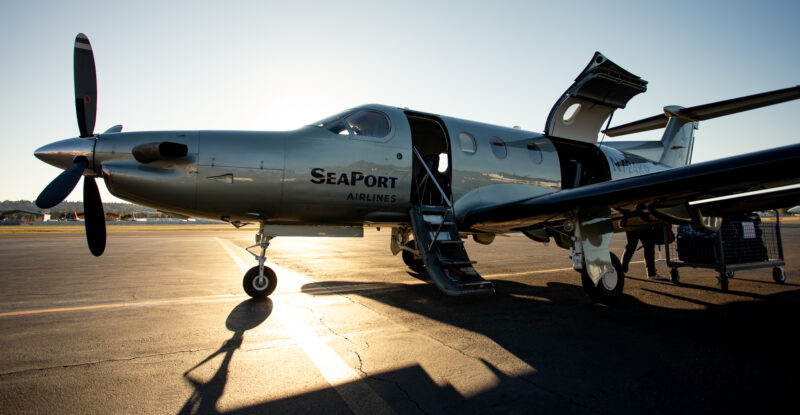
But there’s also little known SeaPort Airlines, a small, Part 135 commuter airline that operates flights from Portland International Airport (PDX) and Seattle’s close-in Boeing Field (BFI). They also recently started service to Spokane, Washington.
I’ve known about SeaPort for some time, but hadn’t seriously considered flying them until a last minute day trip down to Oregon popped up.
The carrier offers a handful of fare buckets, which differ primarily on change, cancellation and refund fees. Every fare comes with 50 pounds of baggage included. I bought a last-minute ticket at $329, priced exactly equal to a basic economy fare on PDX-SEA for the same day.
I walked up to the PDX “terminal” a half hour before departure on the day of the flight. In Portland, at least, the airline operates out of its own space, which is separate from the main terminal by about a half mile.
The space is small but serviceable, with some lounge-style seating and a small table with self-serve coffee, tea and water. It isn’t anything to brag about, but then its not a space you’re supposed to hang out at for any length of time. With no security to deal with and a maximum of nine other passengers on any given flight, the airline says you can show up as little as 20 minutes before departure.
Check-in was quick and easy; I only had to provide my name. My small backpack was weighed, as all bags are, before the agent added a BFI tag to it. Larger bags were placed in a bag cart right away, while smaller bags like mine could be held onto until boarding.
With all the passengers already checked in, a friendly pilot figured we might as well get to it and walked us out to the plane a little ahead of schedule. Seating on the aircraft, a Swiss-made Pilatus PC-12, is open. There are nine-seats in a 1-1 configuration, plus space in the rear of the cabin for bags.
Being a small, single-engine airplane, the cabin ceiling is low and the space is a bit cozy. Still, it’s noticeably more roomy than, say, a Cessna Grand Caravan.
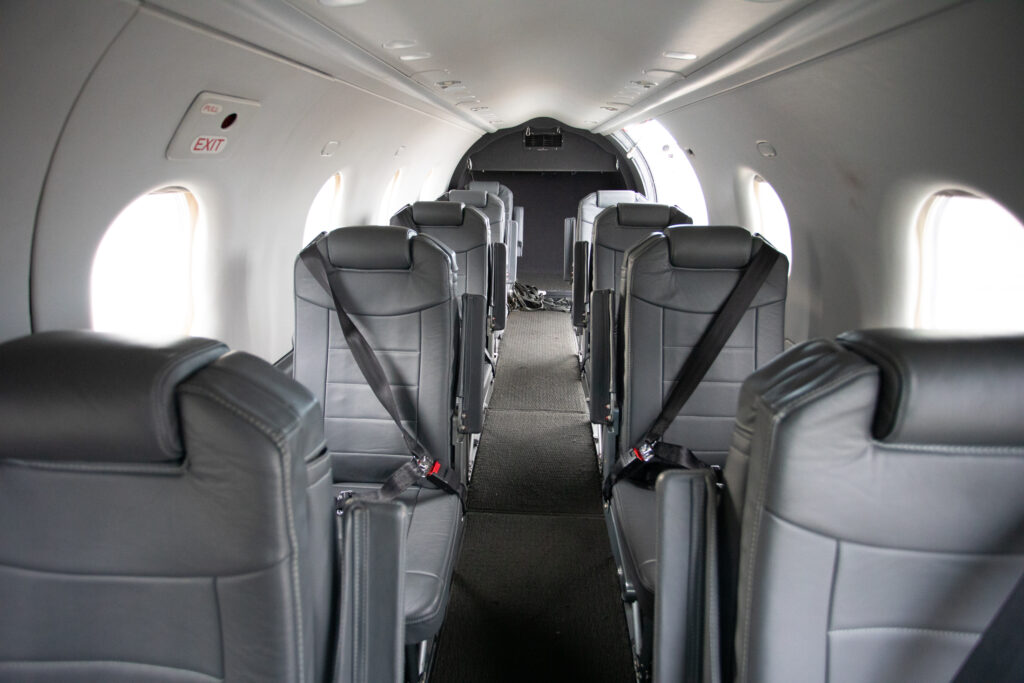
A few minutes later we were taking the runway and throttling up for takeoff. Once aloft, the passenger experience was spartan. The cabin itself is basic, with just the nine seats. There’s no in-seat power, Wi-Fi, or anything really.
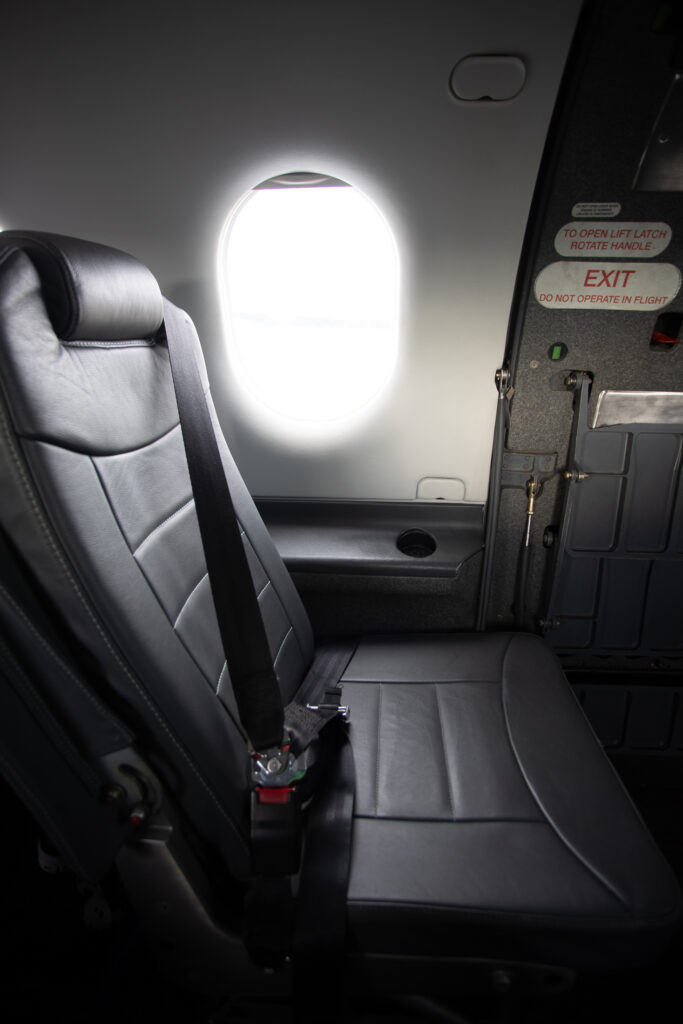
The first row comes with the perk of being able to see right into the cockpit, providing a rare opportunity to catch the action up close. For everyone else, all you’ve get is a cabin window and whatever content you’ve brought on board to keep yourself occupied.
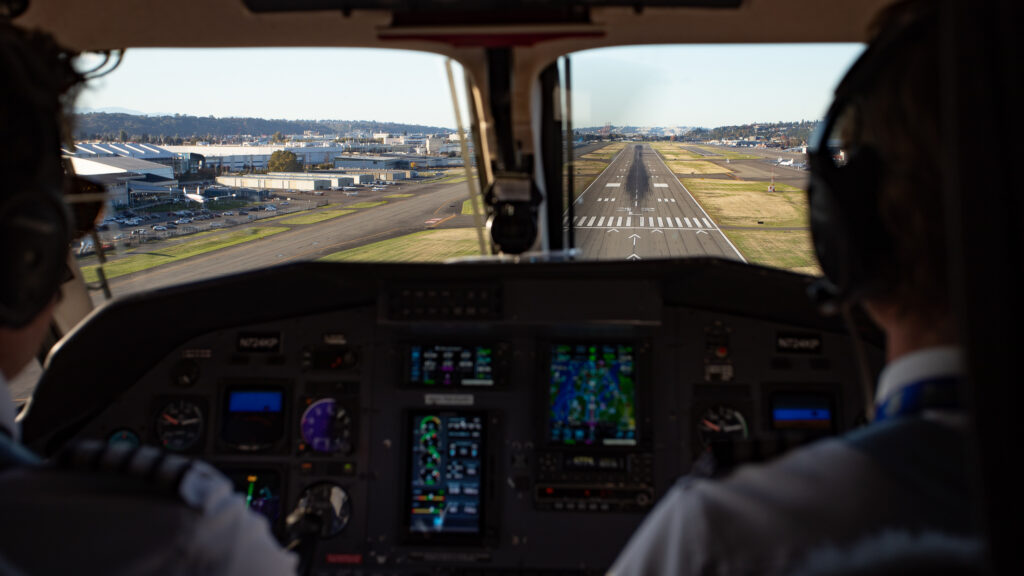
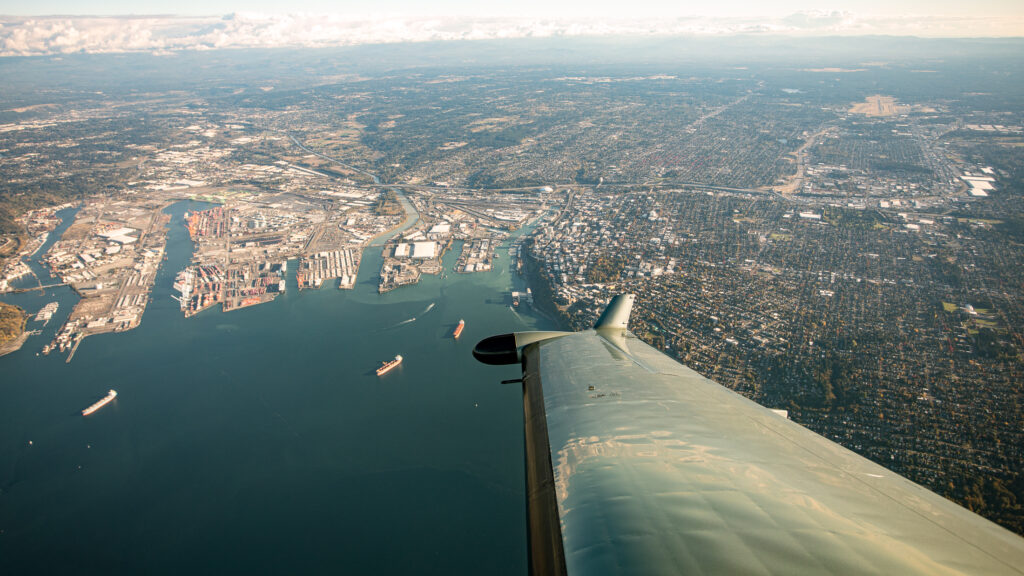
The crew settled us into a cruising altitude of 16,000 feet for just a few minutes before slowly beginning our descent into the sunny Seattle region. We greased the runway at Boeing Field 42 minutes after we left, pulling up to the terminal a minute or two later.
Bags appeared not long after everyone made the short walk to the terminal. If I’d had a vehicle parked in the lot (free, by the way), the total time from plane to car would have been maybe five minutes. And that’s after a restroom stop.
I didn’t have a car though, instead opting to take transit over a very expensive Uber ride. That required a nearly mile long walk to the north end of the field to access the nearest bus stop. At least it was a nice day. To be fair, I don’t get the impression that your average SeaPort flyer is using public transit. I wouldn’t be surprised if I were the first. But also, it’s wild that Boeing Field’s passenger terminal, which hosts two airlines and multiple flights per day, has no transit service at all.
Overall, I enjoyed the experience. It felt much closer to flying a private charter than an airline. Much as I love PDX’s gorgeous new headhouse and enjoy SeaTac, this was far less stressful. But don’t be mistaken: SeaPort is not JSX, the premium hop-on carrier. This is much less a business class travel experience and much more ‘we rented out a King Air for a charter flight.’

Not long after SeaPort’s resurrection last year, I went on record and blasted their pricing. Sure, you save some time, but let’s be real: $558 roundtrip was only competitive with walk-up first class fares on Alaska. In most cases, flying out of SeaTac was literally hundreds of dollars cheaper. But times have changed!
I priced out a dozen or so roundtrips between Alaska, Delta and SeaPort through the end of 2026. Exactly who came out as the cheapest depended a lot on the day, but I was surprised to see SeaPort often emerging as the cheapest option. In November, for example, SeaPort’s prices frequently matched or beat basic economy fares from SeaTac. In December, however, SeaPort was usually quite a bit more expensive.
What doesn’t get enough attention, perhaps, is SeaPort’s considerable advantage on time savings. The average gate-to-gate time on SEA-PDX hovers around an hour. During peak hours, it regularly exceeds 90 minutes given Seattle’s interminable taxi times. Add in the fact that you need to arrive 90 minutes early for security and boarding and you’re already up well over two hours, and often over three.
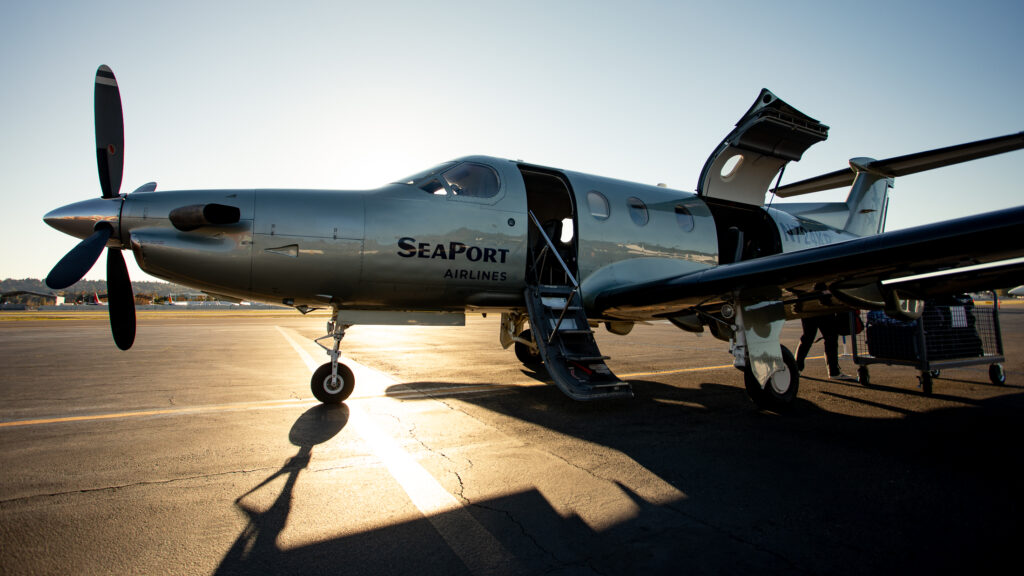 On SeaPort, you can go curb to curb in under an hour. Heck, on a light traffic day you can add in the drive from north Seattle to Boeing Field and still comfortably come out ahead on time.
There are certainly reasons to stick with SeaTac on this route. It might be closer for many folks; it’s accessible via transit; you might be part of a loyalty program; it is frequently cheaper; and you might just like the larger jets versus the smaller planes, not to mention the amenities they provide. But for everyone else, anytime the pricing is competitive, SeaPort is the clear winner.
 Related Articles:
- Inside Amtrak Airo as trainset enters service on Cascades route
- Alaska Airlines announces service expansion from Paine Field
- Bungled check-in mars Frontier Airlines experience
- Why the JSX ATR 42 turboprop gamble could pay off
All images credited to the author, Jeremy Dwyer-Lindgren