
 After a surprisingly pleasant and on-time transatlantic flight from New York to Belgrade in business class with Air Serbia, it was time for one of my most dreaded travel rituals, the jetlagged morning European connection.
Many of us have been through the struggles of a Frankfurt or Paris connection, but how would Belgrade and my Air Serbia onward connection to Zurich fare in comparison?
Belgrade is a dead simple airport to connect through. With just one terminal building, it makes for some impressively short minimum connect times, down to just 45 minutes.
I breezed through the security checkpoint — complete with a priority lane for business class passengers when things get busy — and found myself with roughly 90 minutes to spare.

Air Serbia had planned on building an entirely new lounge with an opening date in 2024, but a peek behind the construction wall revealed that work has not yet started, so the old lounge is working overtime and will continue to do so for some time to come.

The existing lounge is unremarkable; it’s a windowless space with some tables and chairs and a fairly large buffet with decent food that kept me going through the jet lag. This is a far cry from the super premium lounges many airlines around the world are now offering. But at the same time, look at that spread.

Nothing reinvigorates me more than a coffee and a shower, and thankfully Air Serbia’s Premium Lounge comes equipped for such an occasion. Mostly, at least. The staff informed me that there was no hot water available at the time, nor were any amenities provided when I pressed on with a cold shower. It was better than nothing, but far from ideal.
At least the lounge sports a real espresso machine with properly trained staff, so I had my caffeine fix.

Boarding the Zurich-bound Airbus A320 was uneventful and orderly.
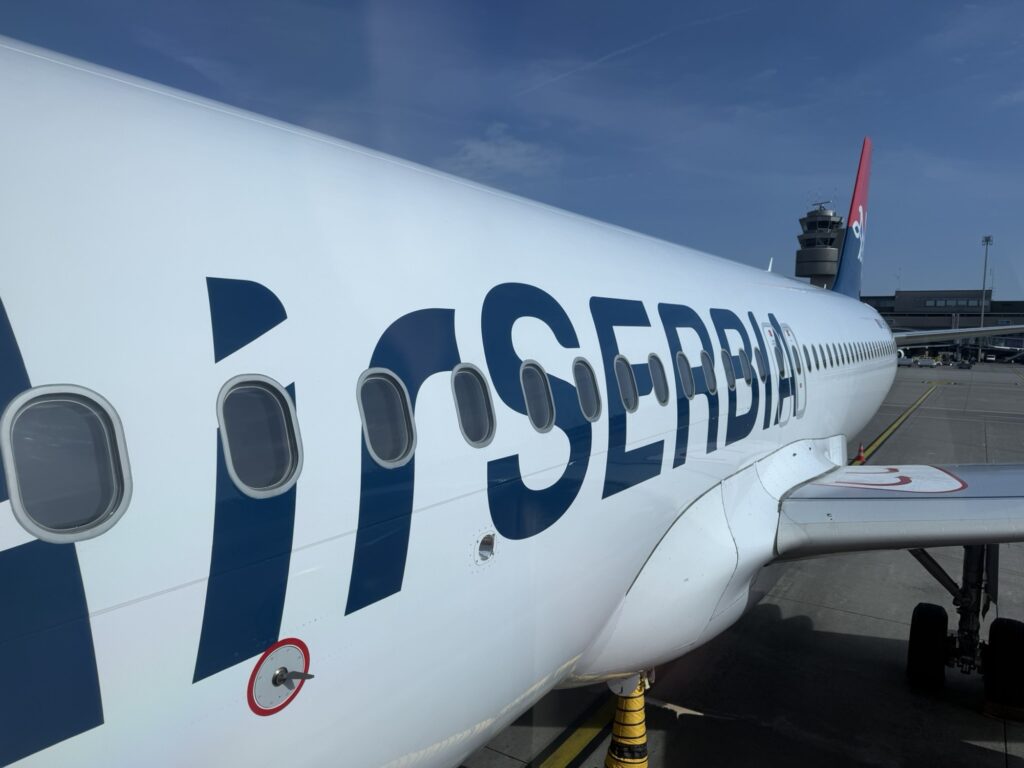
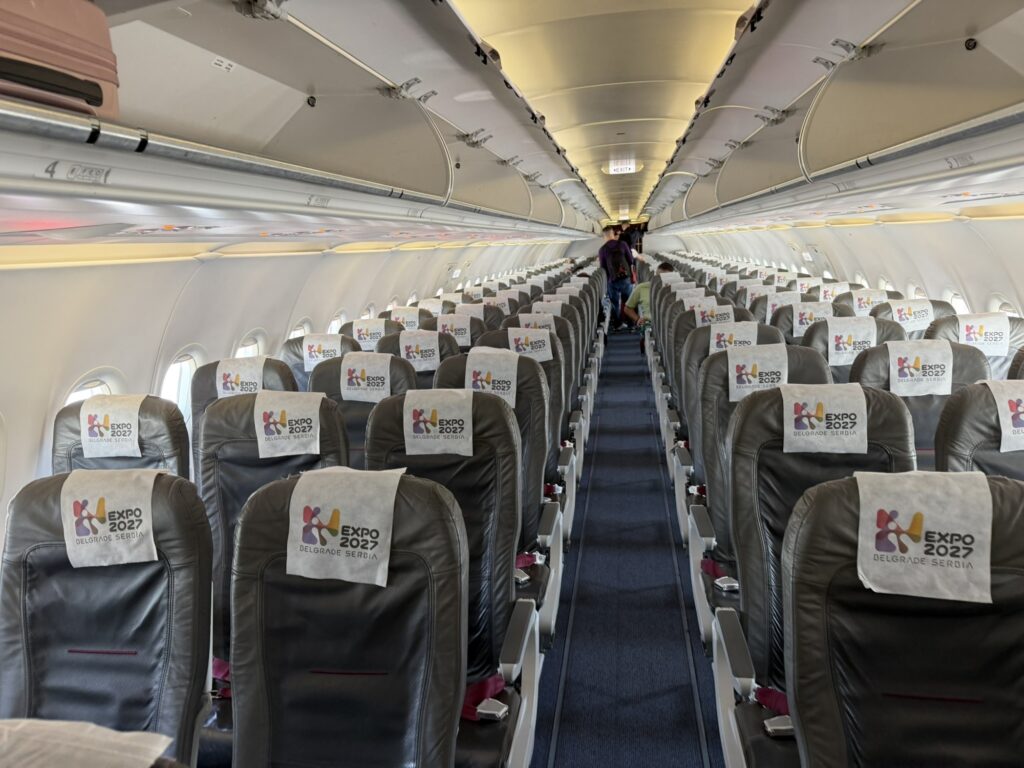
On board in Row 2 it became clear that Air Serbia offers quite a standard European shorthaul hard product that is largely indistinguishable from many other airlines.

This particular A320 sports 180 Recaro BL3520 basic slimlines, better known as Lufthansa’s NEK seat. It’s a seating platform that this leaner traveler personally dreads.
Seat pitch was unremarkable, and the seat cushion was virtually nonexistent, though at least Air Serbia keeps the middle seat unoccupied as is typical for European business class.

Air Serbia no longer offers inflight connectivity or streaming entertainment on its narrowbody aircraft, nor are the seats equipped with any form of power or USB port. Instead, the airline delivers a retro disconnected experience, with only the view out the window to keep passengers entertained.

I was able to dangle my iPad from the literature pocket in the absence of a true device holder.

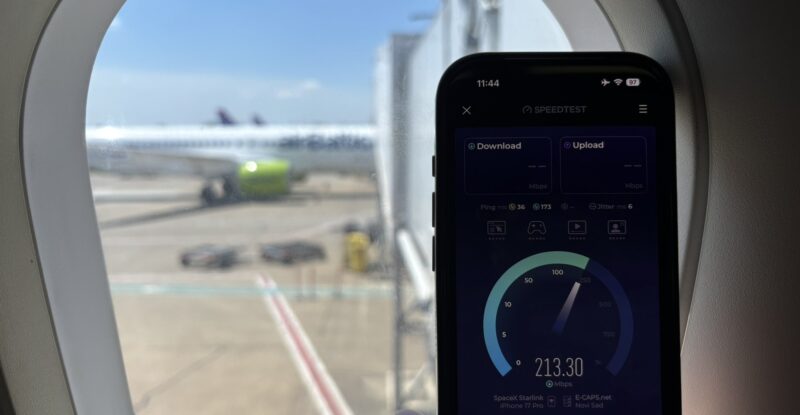
Riga-based airBaltic operates a handful of Air Serbia’s flights with its Airbus A220 fleet and I was able to successfully connect to the Starlink network on an A220 parked one gate over while we waited to depart.
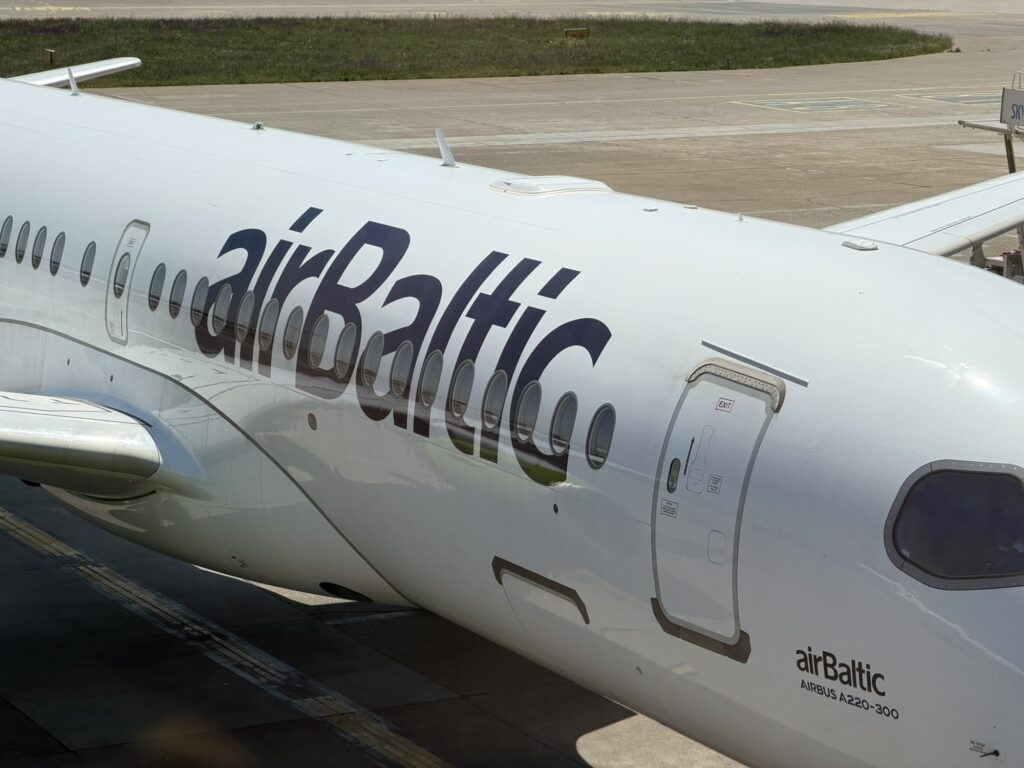
It’s quite ironic that a wet-leased aircraft offers an elevated experience over Air Serbia’s own narrowbodies.

Air Serbia’s cabin crew distributed a printed menu in business class, with two choices of main dishes, and different options for flights out of Belgrade and those returning from outstations.

While the meals out of Belgrade were sizable, the quality could be improved. They weren’t bad by any means, but they lacked refinement. The food out of Zurich was a bit better, though still not amazing.
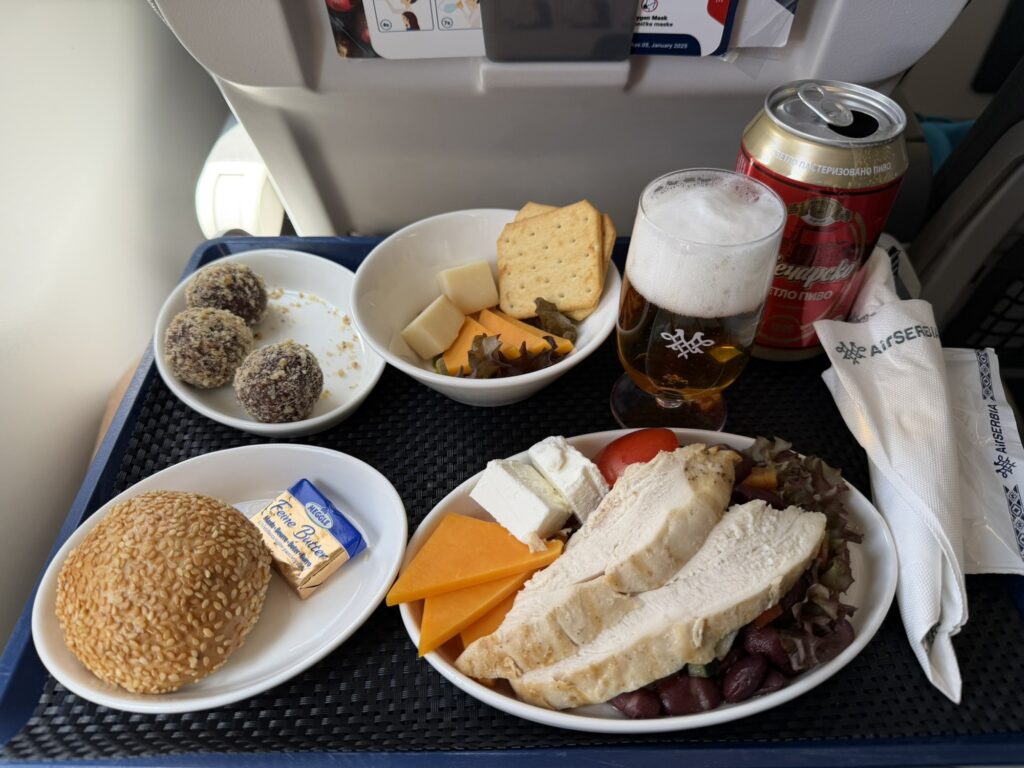
I don’t think the meal was much worse than other European airlines, but when no Wi-Fi or entertainment is available, the meal becomes the primary form of interaction with the airline and there is room for improvement.

The entire Air Serbia narrowbody experience is interesting. The airline’s website offers next to no details about its cabins, the onboard experience, or so much as a single photo of what to expect. The only way to find out what it’s like is to try it (or indeed read a trip report or review.)
What I did appreciate, perhaps the most, was the simplicity of the business class fare. Little things like not having to worry about additional fees for things like seat assignment are becoming more and more rare.
Being able to secure 200-plus Mbps speeds to my device on the ground from the nearby airBaltic A220 was a surprise and delight moment, if perhaps unintended.
Air Serbia wouldn’t be my first choice to connect through Europe, but it’s far from the last.
Related Articles:
- Wouldn’t hesitate to book Air Serbia A330 business class again
- Finnair A330 fixed-recline business seat not for everyone
- Brussels Airlines BRU-JFK: distinctly Belgian and rather decadent
All images credited to the author, Jason Rabinowitz