
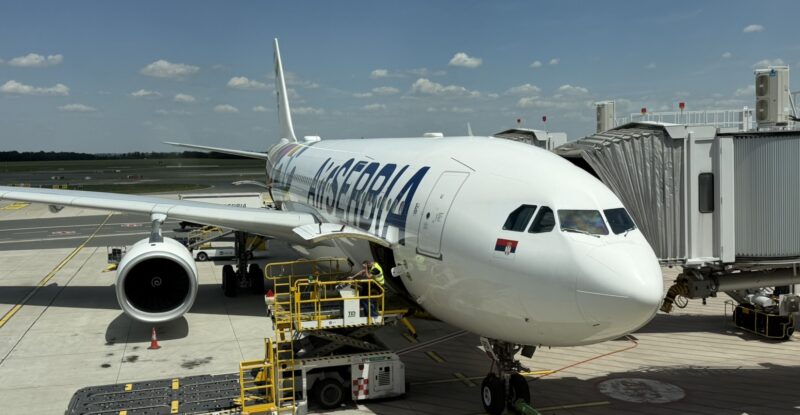
 There are plenty of airlines to choose from when booking a transatlantic journey, but few raise as many eyebrows as Air Serbia. Whether it was my #AvGeek friends or the immigration officer at Zurich Airport, the questions were plentiful whenever I revealed I was flying from New York JFK to Switzerland…via Belgrade.
Air Serbia, a 98-year-old airline, has an interesting history as it nears the centennial mark. The Air Serbia brand dates back only to 2013 when a joint venture with Etihad Airways rebuilt the airline from the ground up. While the Etihad relationship has since been dissolved, Air Serbia has continued to evolve and expand its longhaul route network, often at desirable fares.
Booking directly on Air Serbia’s website was a straightforward affair, as was checkin using its surprisingly robust iOS app. It’s clear that the airline put some real thought and attention into its app, something airlines of this size may skip.
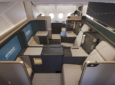
Air Serbia currently operates a fleet of four Airbus A330-200s for longhaul flights in a variety of configurations. Two of the four A330s are hand-me-downs from Etihad and retain the Middle Eastern carrier’s cabins.
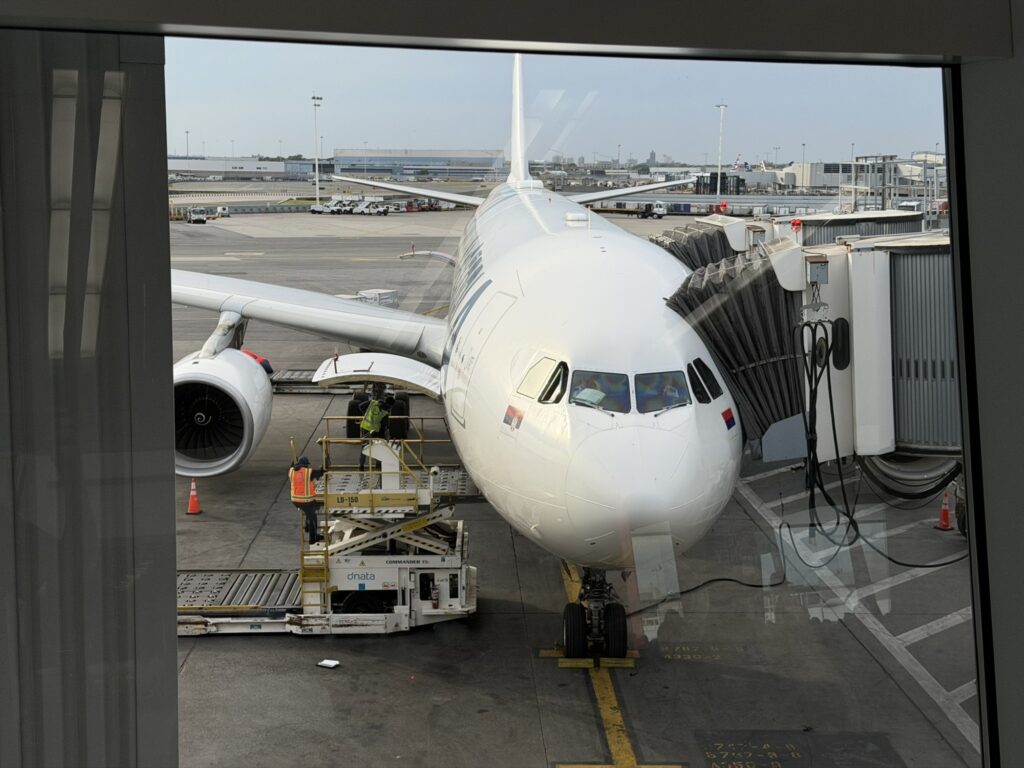
My flights from JFK and back were on the same aircraft equipped with the ex-Etihad interior.
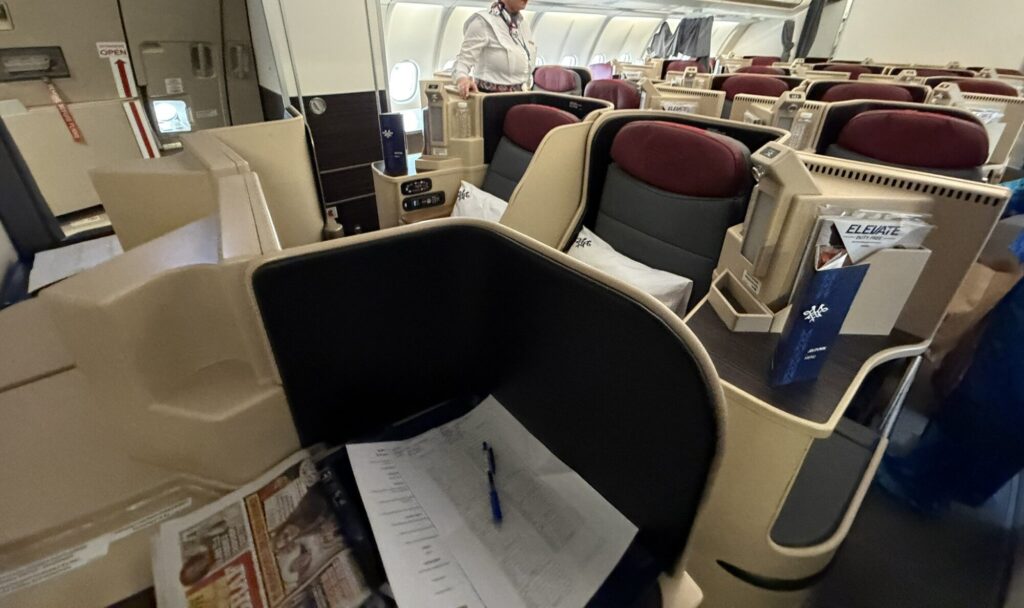
Outside of a few minor details like reupholstered seats and replaced monuments, the aircraft is virtually unchanged from its Etihad days. The staggered 1-2-1 layout isn’t the most private in comparison to modern seats.
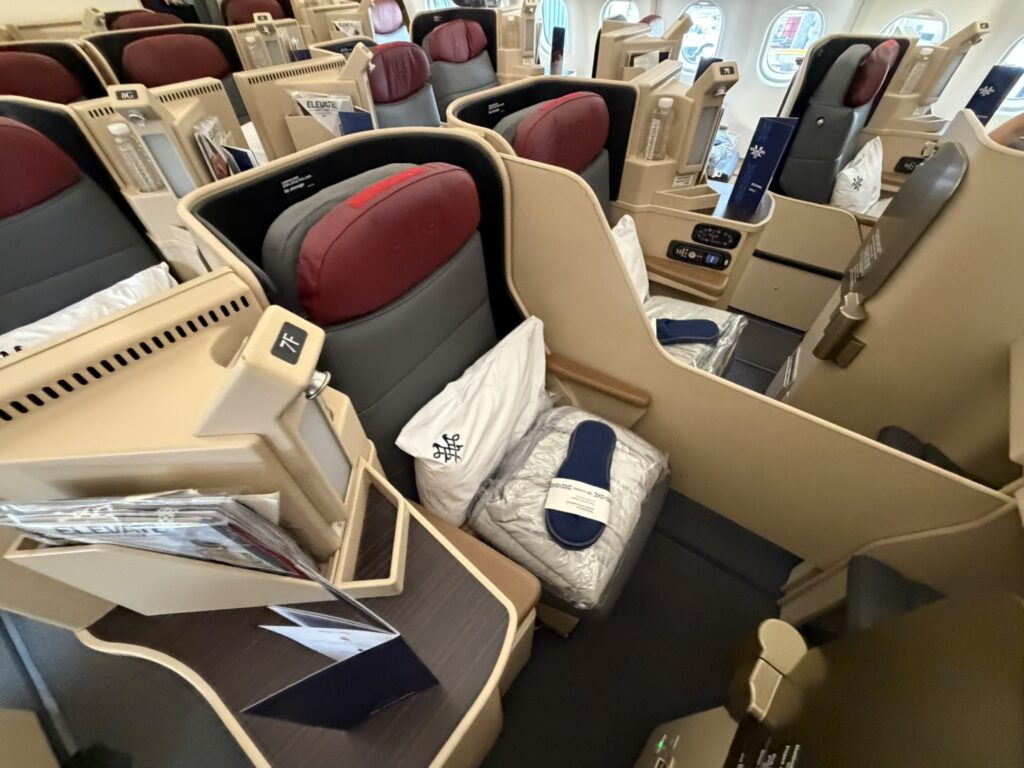
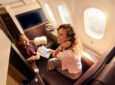
But the center-pair “honeymoon” seats, where my travel companion and I found ourselves on the outbound and return flights, facilitated easy conversation when the privacy divider was lowered. The space also felt expansive.
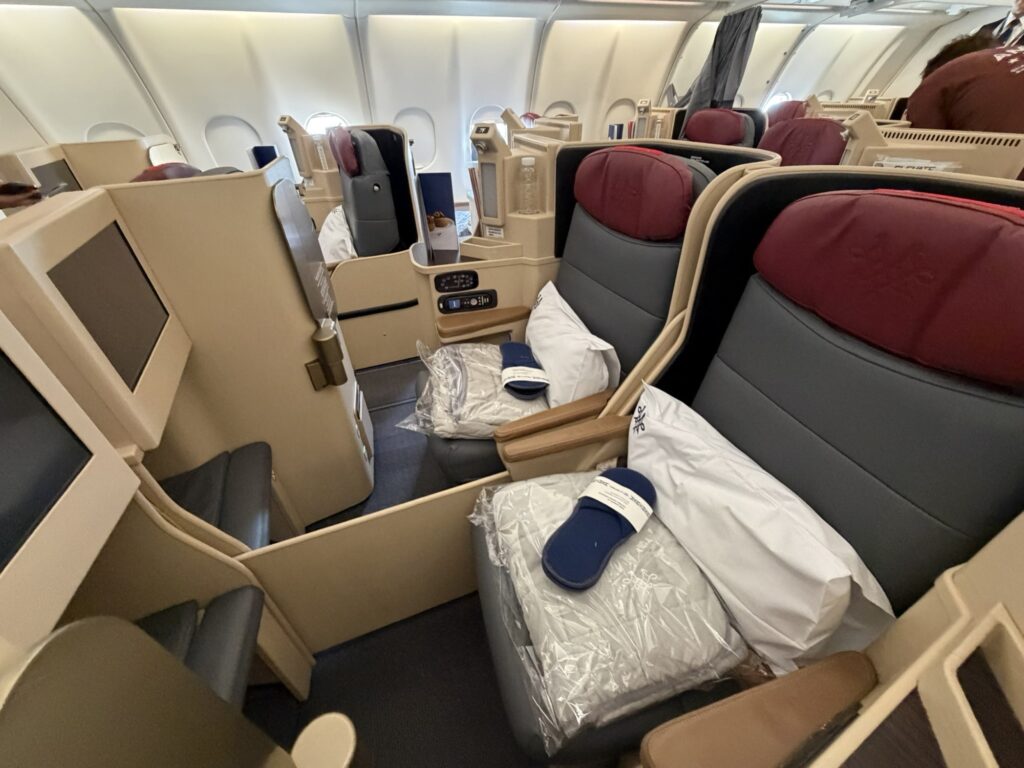
Admittedly, I had somewhat low expectations for the condition of the 12-year-old cabin, but I was pleasantly surprised to find everything in working order.
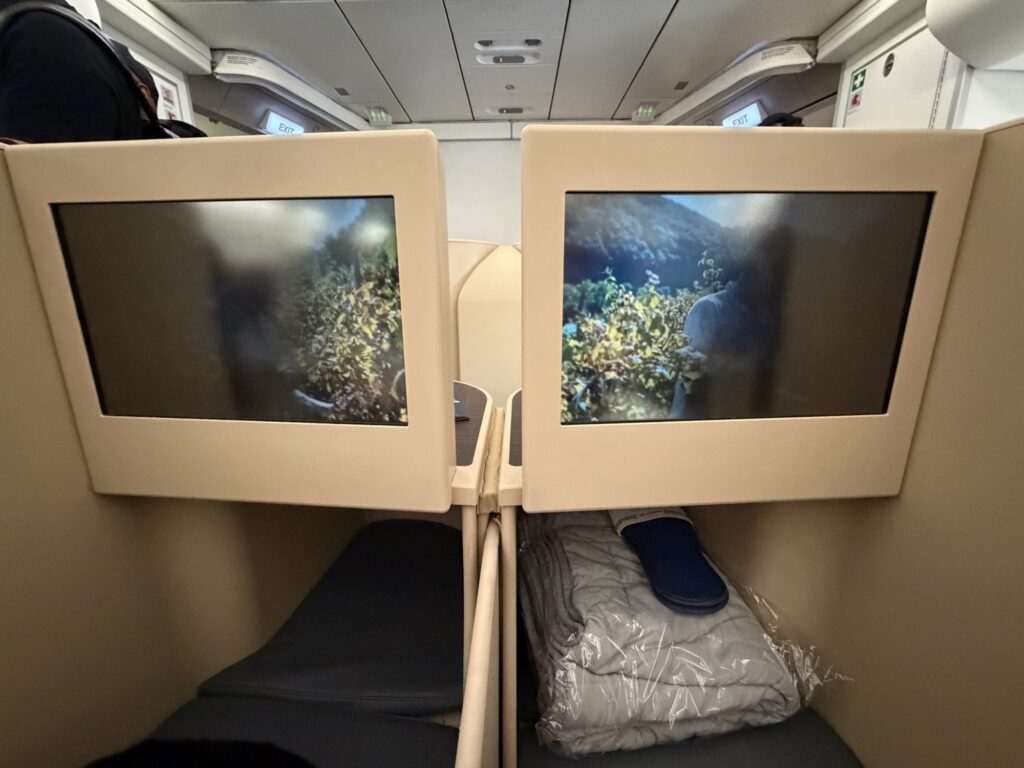
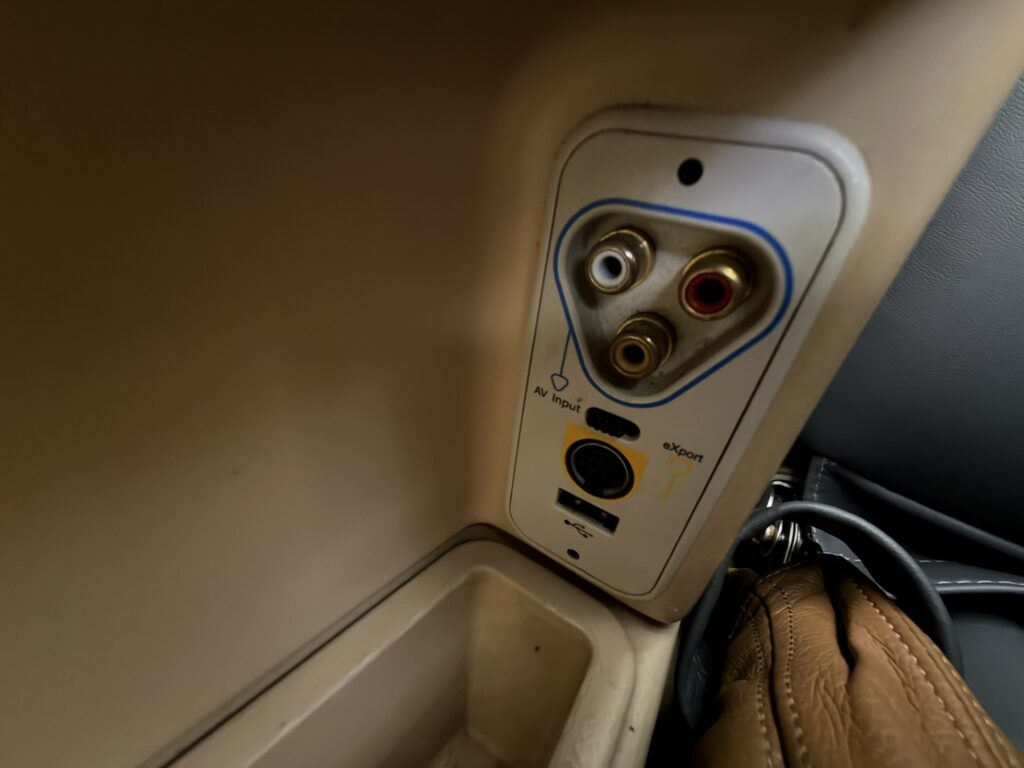
The seat recline mechanism functioned well, and the incredibly powerful massage feature was fully operable. Even the AC power outlets functioned effectively. I was tickled to see the retro AV input and legacy eXport jacks (the latter used to support iPod connectivity back in the day).
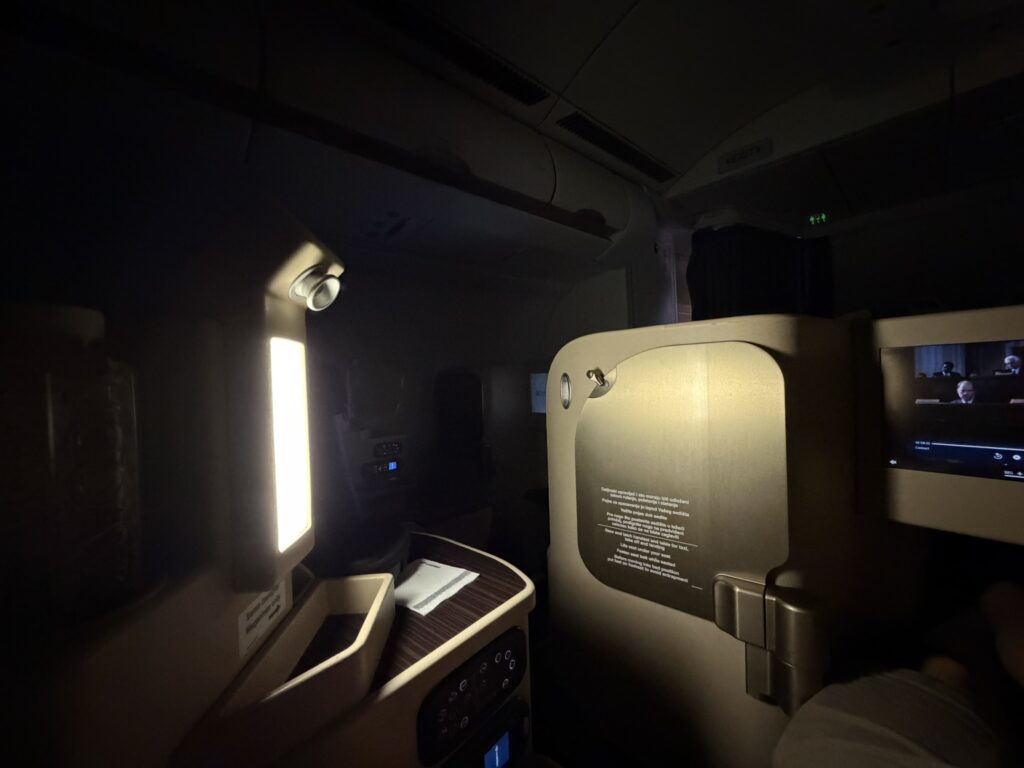
There may have been a few scuffs and chipped pieces of paint, but overall the aircraft seemed to be in surprisingly great condition. The one oddity was the light feature built into the seam column; it was bright enough to light up the cabin.
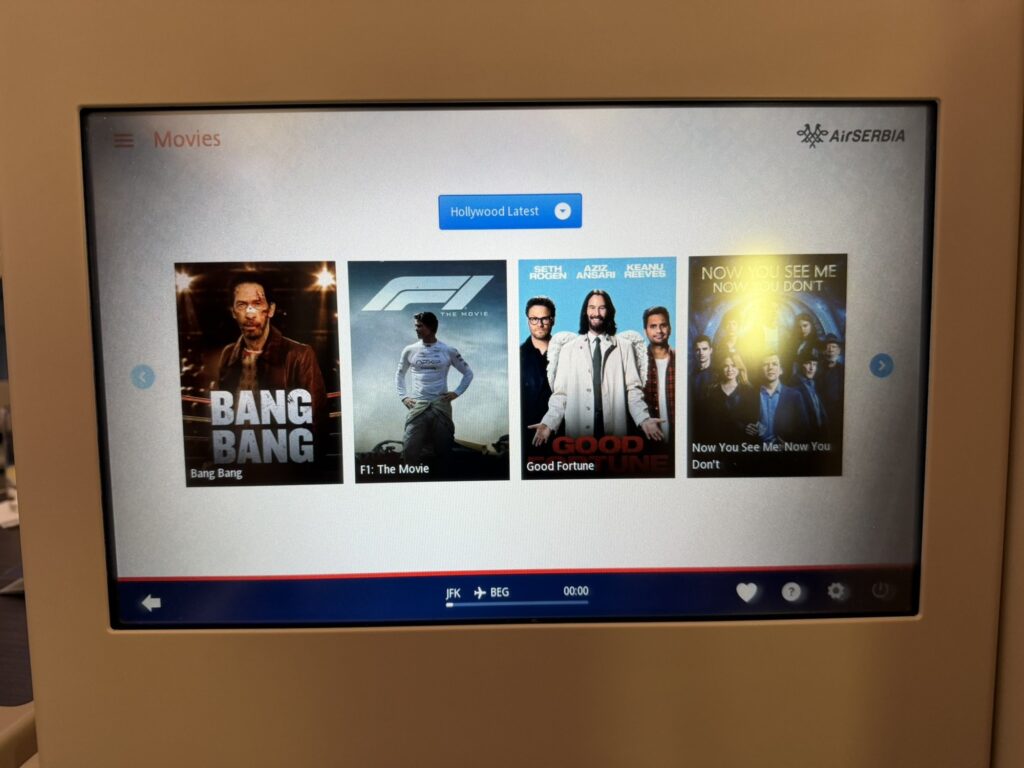
While the mid-2000s era Panasonic Avionics inflight entertainment system was far from cutting edge, I was pretty happy with the amount of content offered. It was just about enough to keep me entertained for both flights.
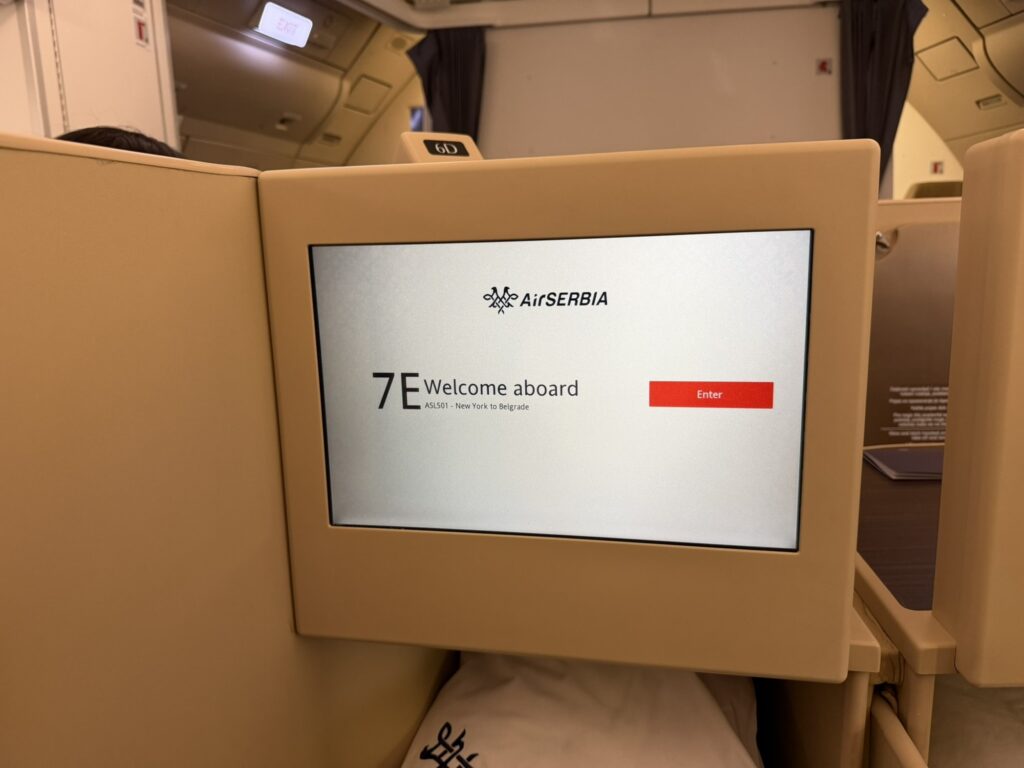
The interface is extremely basic, lacking any sort of moving map and offering only a simple countdown to arrival. And, unfortunately, movies are heavily edited and censored for content, making it feel like I was watching basic cable in the late 1990s.
Much of the content was also presented in 4×3 rather than 16×9, while also having Serbian language subtitles burned into the video that could not be turned off.
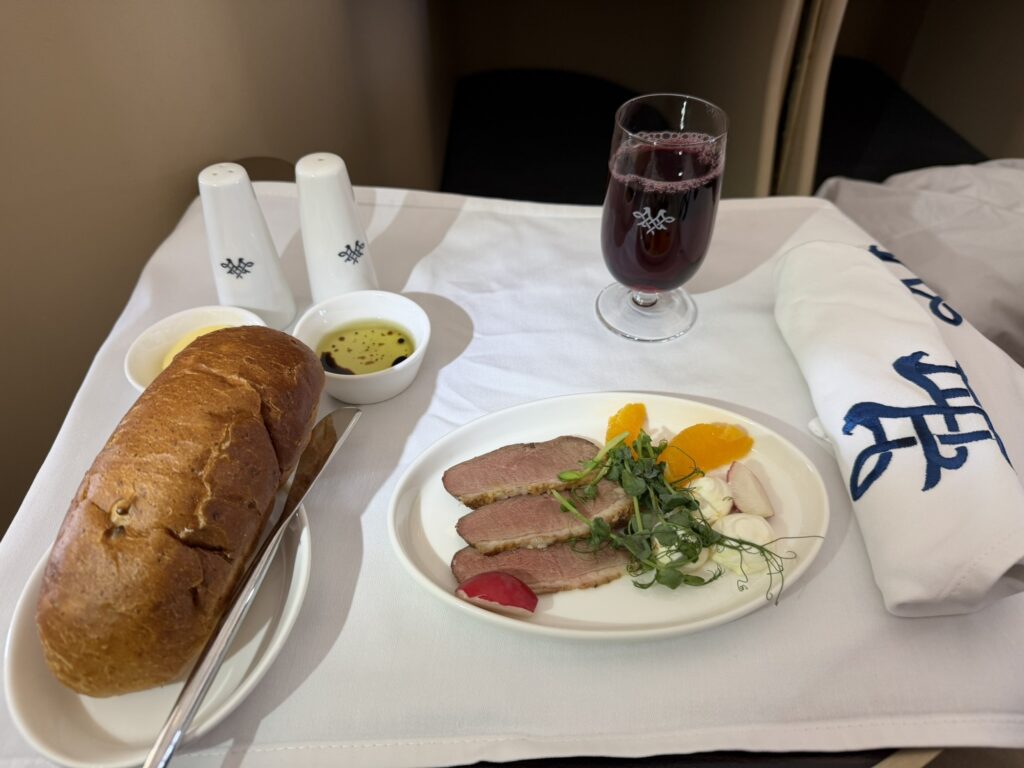
In a reversal of expectations, meals catered out of JFK were vastly superior to what was provisioned by the airline’s own catering subsidiary in Belgrade. On the outbound, I opted for the “beef with creamy polenta” and after downing what felt like a bucket worth of warm nuts, a hearty and well cooked steak was placed on my tray table.

Meals are served piece by piece by the flight attendants rather than on one tray, which is quite an elegant touch.
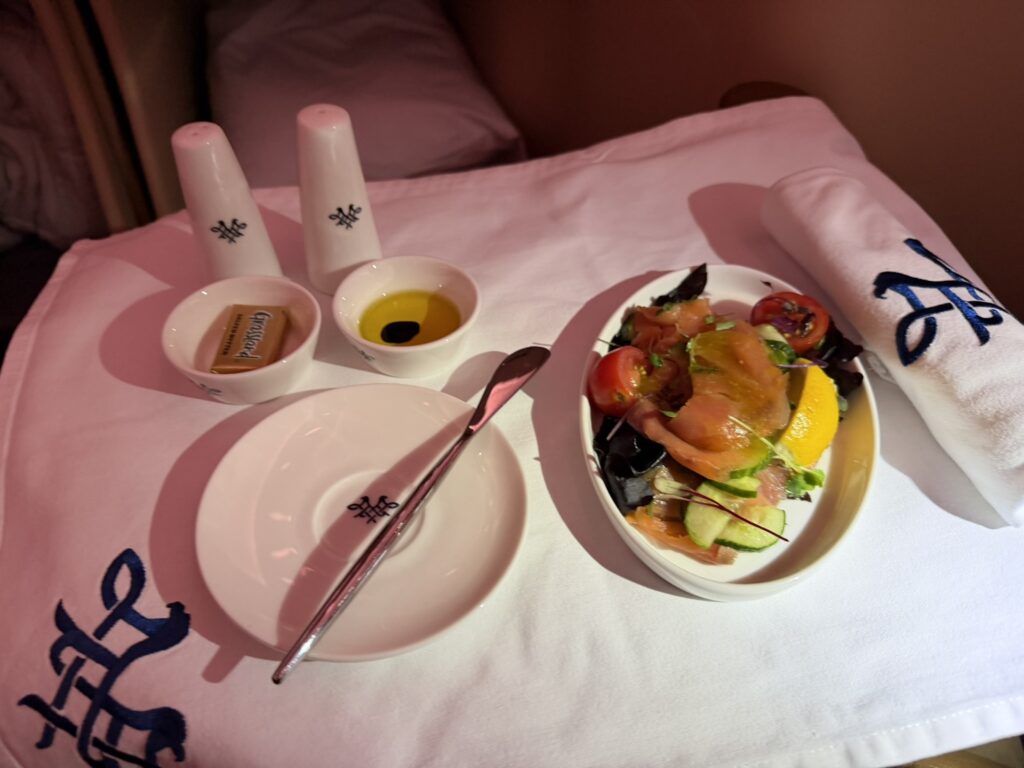
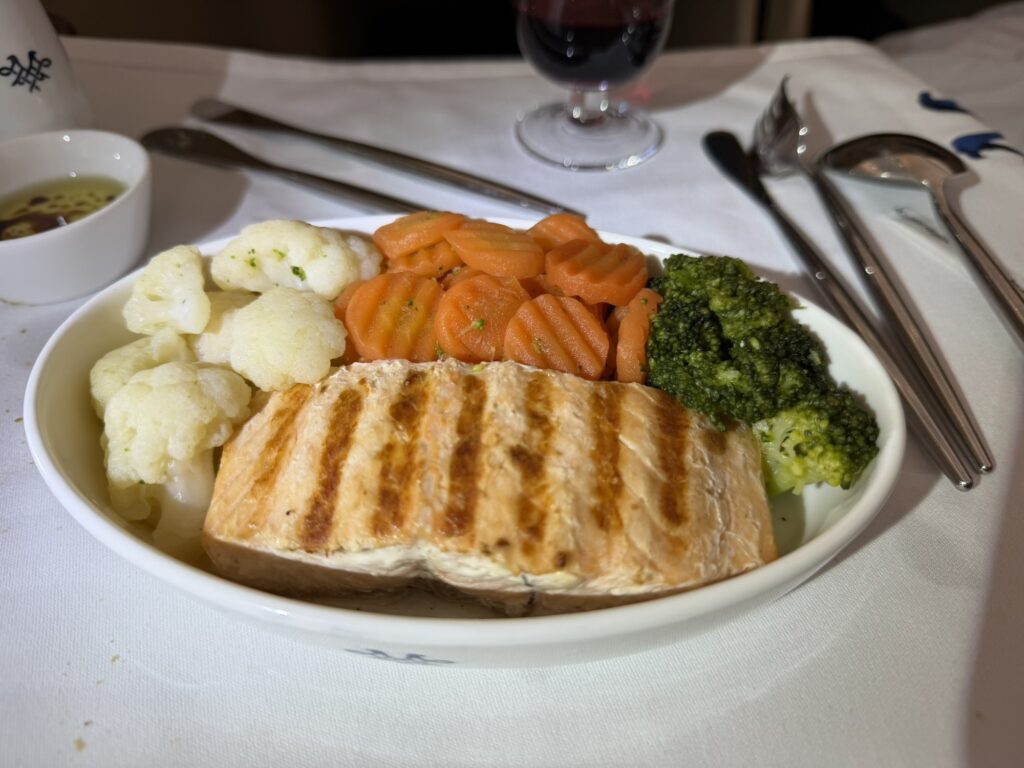
On the return flight, the flight attendant asked me what I would like for lunch. After opting for the steak, I was informed that only the salmon dish was available. Given that I was seated in the middle of the cabin — and not all seats were occupied — I was surprised at the rapid depletion in choice, and confused as to why I was asked for my meal preference when only one choice was available.
As expected and feared, the salmon was quite dry. But, when I took a glance at the steak served to other passengers, it didn’t seem like I missed anything.
For such a long flight, I also expected the galley to be stocked with small snacks but found nothing. Air Serbia has a lot of room for improvement at its home base.
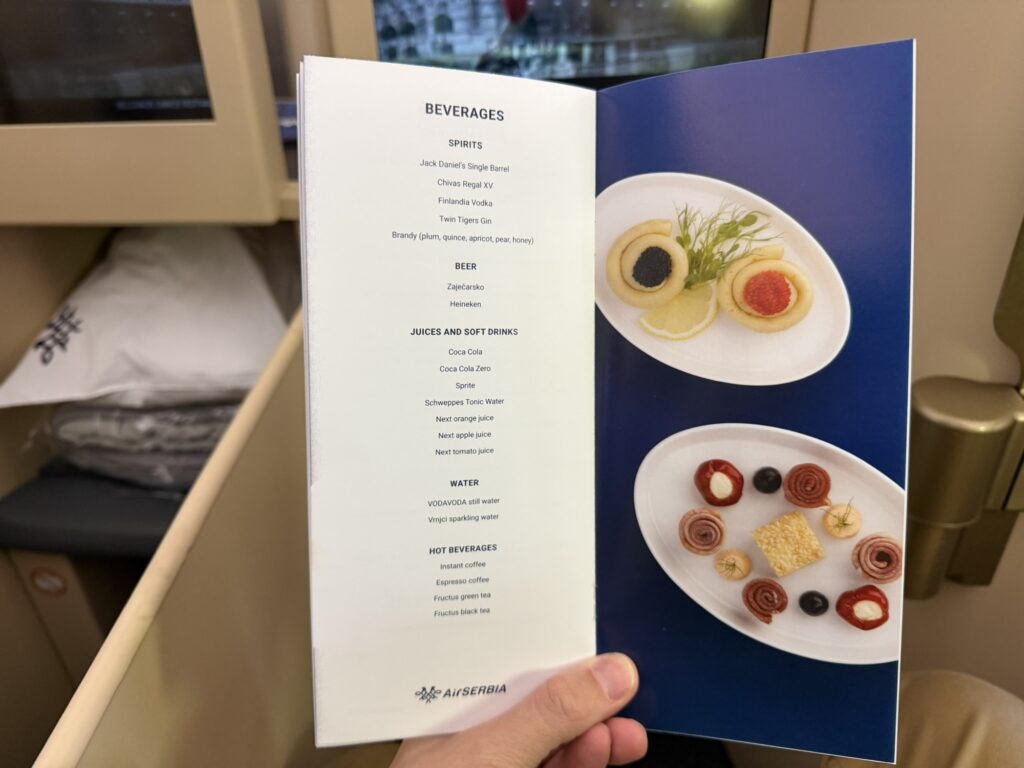
Overall, service on board was well intentioned but a little awkward. On multiple occasions items I asked for were either not delivered or prepared incorrectly, such as ice and lemon in a glass of sparkling water when I asked for neither.
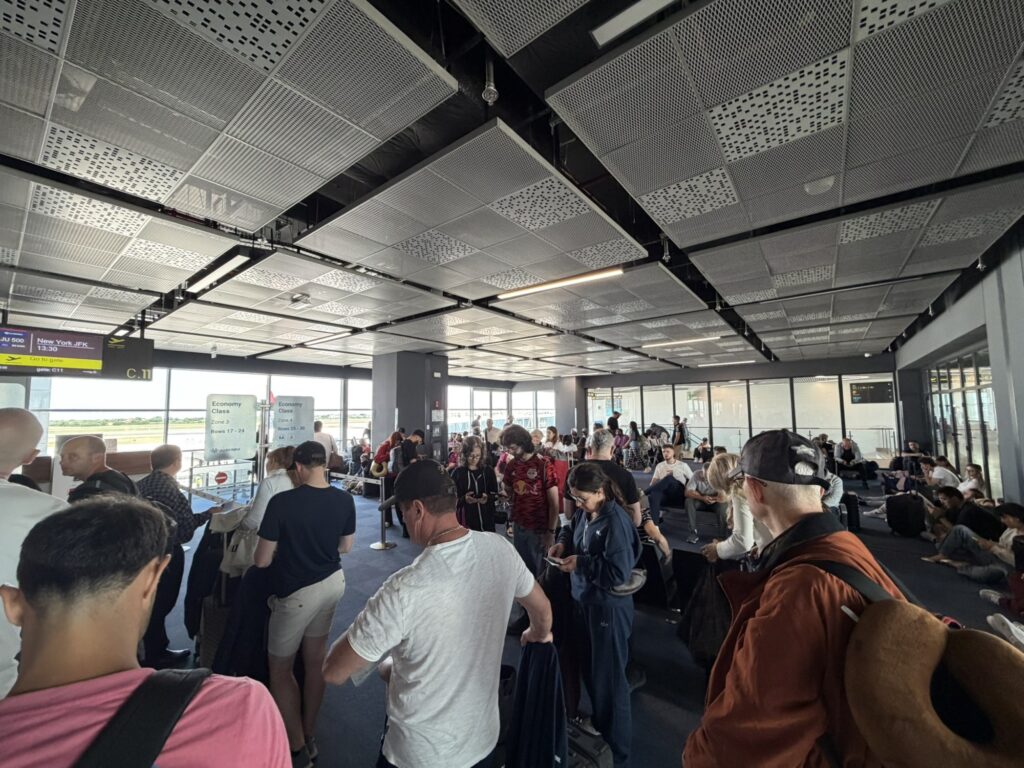
Belgrade isn’t the nicest airport in the world (boarding the flight to JFK was a particular weak point), but its small footprint makes connecting a piece of cake.
For the fare I paid — in the neighborhood of $2,500 for business class on JFK-BEG-ZRH — I wouldn’t hesitate to book Air Serbia again. It’s great to have an option that isn’t the usual suspects.
 Related Articles:
- Finnair A330 fixed-recline business seat not for everyone
- Brussels Airlines BRU-JFK: distinctly Belgian and rather decadent
- Service oddities mar otherwise solid American Airlines JFK-HND flight
All images credited to the author, Jason Rabinowitz