

Aerospace manufacturer and launch service provider Rocket Lab has inked a definitive agreement to acquire Iridium Communications for roughly $8 billion. With this historic deal, Rocket Lab becomes an end-to-end space powerhouse that can build, launch and operate its own spacecraft, joining a rarefied group that includes vertically integrated SpaceX.
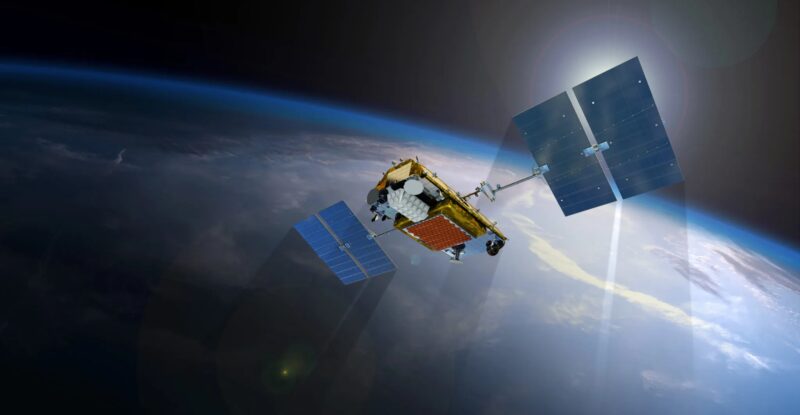
Expected to close in mid-2027, the stock and cash transaction includes Iridium’s valuable, globally-coordinated L-band spectrum; its global-including-the-poles NEXT constellation of Low Earth Orbit (LEO) satellites; its positioning, navigation and timing (PNT) services, which help to keep GPS-dependent systems working in contested environments; and a long legacy of providing safety-critical voice and data in the aviation and maritime industries.
Iridium’s IoT division, which connects industries and assets operating in remote and demanding environments, is included in the deal, as is the McLean, Virginia-based firm’s direct-to-device ecosystem, dubbed NTN Direct, which is set to go live by the end of this year; and Aireon, the only space-based Automatic Dependent Surveillance-Broadcast (ADS-B) air traffic surveillance system in the world.
Last month, Iridium announced plans to acquire the remaining 61% of equity interests of Aireon that it does not own. “Iridium’s acquisition of Aireon is on track for closing in July 2026,” Rocket Lab founder and CEO Sir Peter Beck confirms to Runway Girl Network, “and the deal with Rocket Lab is inclusive of that acquisition.”
Importantly, Rocket Lab “absolutely” shares Iridium’s strong commitment to the aero market, Beck says, telling RGN:
I’m a pilot and personally rely on Iridium technology, so a continued commitment to the aero market is deeply important to me.
That’s good news for the value-added manufacturers and resellers that have plowed meaningful investment into developing Iridium-based satcom products, including to bring next-gen Iridium Certus solutions to civil aircraft. A pilot himself, Iridium CEO Matt Desch has long honored and respected what the firm’s B2B partners bring to the table. Certus is now in line to power safety services on aircraft, once flight trials are completed, and the U.S. FAA gives its blessing
Notably, the combination of Rocket Lab and Iridium will support the development and deployment of Iridium’s next-gen constellation, including possible new independent payloads for PNT and a planned space-based VHF offering that would enable pilots to use existing VHF radios to communicate with ATC over Iridium’s L-band links.
That’s because Long Beach, California-based Rocket Lab not only manufactures satellites across a global footprint, but boasts an existing and highly reliable rocket, called Electron, which can ably handle small-sat launches to support such endeavors. If larger payload capacity is required, Rocket Lab’s future Neutron rocket will be utilized.
Explains Beck:
This is at the heart of this combination — the ability to build, launch, and operate our own spacecraft quickly and cost-effectively. Neutron is the ideal vehicle for replenishment, plus deployment of new constellations, while Electron is perfectly suited to launching smaller technology demonstrators to enable rapid iteration.
By combining their specialized strengths, they’ll also be able to deliver highly resilient, next-generation capabilities to government and defense.
The acquisition is described by both firms as “one of the most transformative deals in the space industry, joining together two innovative American companies to play a leading role in the U.S. space economy.” And given the juggernaut that newly public SpaceX has become, it’s easy to see why the markets are responding extremely favorably to the news. Rocket Lab’s ability to eliminate third-party launch costs for constellation deployment and replenishment is particularly compelling.
Under the terms of the transaction, Iridium stockholders will receive $27.00 in cash and a number of shares of Rocket Lab common stock calculated pursuant to an exchange ratio (subject to a collar) for each share of Iridium common stock outstanding at the closing.

The deal, which is subject to customary closing conditions, has been unanimously approved by the boards of directors of both companies. Rocket Lab’s acquisition of Iridium is an “incredible opportunity for our customers, partners, employees, and stockholders,” Iridium’s Desch enthuses in a statement.
“This is a defining moment for the space industry and the start of a new era of strategic, accelerated growth for Rocket Lab and Iridium,” adds Beck. “Iridium has built the gold standard in secure, safety critical global satellite connectivity. It is relied upon by maritime fleets, the aviation industry, governments, and heavy industrial organizations who operate in the most remote off-the-grid locations. By marrying Iridium’s deep heritage, trusted infrastructure, and highly sought-after spectrum with Rocket Lab’s extensive and proven launch and manufacturing capabilities, we have the capability to unlock entirely new markets.
“We will go far beyond maintaining a legacy; we are going to build upon it to pioneer next-generation space applications and deliver sought-after capabilities to existing and new customers.”
Related Articles:
- Tiny Iridium PNT ASIC could arrive in aero as carry-on equipment
- Iridium to acquire Aireon, mulls independent payloads for VHS, PNT
- Iridium prepares to unleash Certus 100 Safety for civil aviation
- Flightradar24, Aireon partnership sees ADS-B data streams combined
- Press Release: Amazon, Iridium, Telesat, Globalstar form SpaceConnect