


SEATTLE — Like the ancient Roman goddess Aurora who rides her chariot across the sky every morning to announce the coming of the sun, a new day is dawning at Alaska Air Group. And during an Investor & Media event at the new Alaska Global Training Center in Renton, management shed light on what that transformation will look like.
“Today is about what’s next: new experiences, new ways to travel, and a much bigger world for both Alaska and Hawaiian. Not just new for the sake of being new and different, but new for the sake of being better,” Alaska Air Group president and CEO Ben Minicucci declared on September 29 before unveiling Aurora and Leihōkū, the new flagship experiences for Alaska Airlines and Hawaiian Airlines.
Reflecting each respective brand’s unique identity, Aurora and Leihōkū will shape the premium passenger experience going forward both on the ground and in the air.

The word Aurora will be familiar to Alaska passengers, as it’s already used to describe the northern lights-inspired exterior of its current Boeing 787-9s, a livery that will also adorn the carrier’s forthcoming Boeing 737 MAX 10s.
But now, Aurora has even deeper significance; it represents the “highest expression” of the Alaska brand and an end-to-end premium experience, Minicucci said.
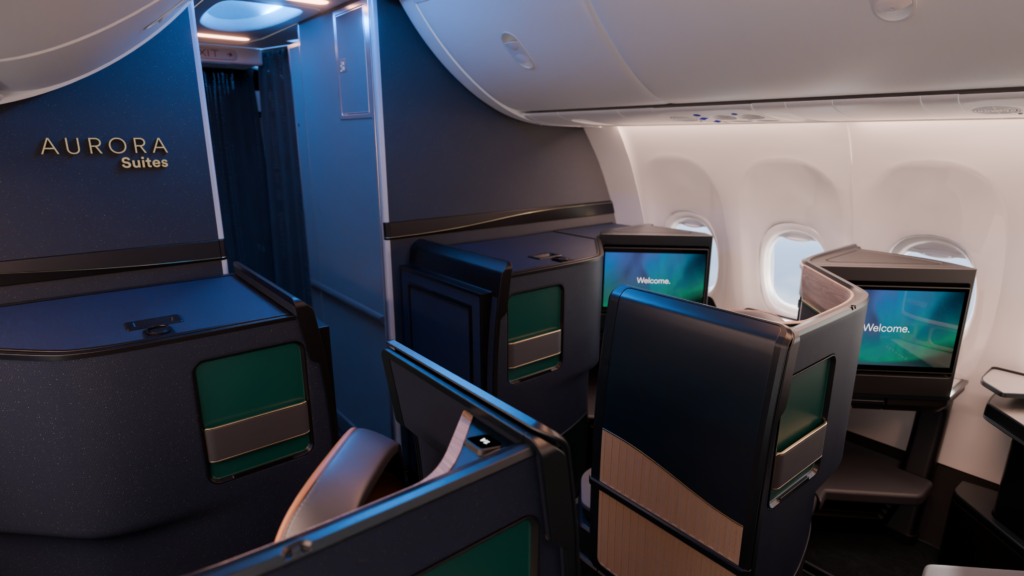
Aurora spans everything from dedicated check-in and new lounges to restaurant-quality dining with menus inspired by the destinations served by Alaska. Notably, it also extends to lie-flat Aurora Suites, including for a cluster of premium-focused Boeing 737 MAX 10s, as well as an exclusive Aurora Lounge that will open in 2027 on the upper level of a 41,000 sq ft space in Seattle-Tacoma’s newly expanded Concourse C.
“We’re bringing Aurora Suites to our 787s and, for the first time, a true Suite-style experience to transcontinental flying on at least 25 new 737-10s,” enthused Minicucci, while a spectacular aurora borealis and starry night-inspired display lit up behind him.

The word Leihōkū, meanwhile, will resonate with Hawaiian passengers, as it was the initial moniker used for the 34 Elevate Aircraft Seating (formerly Adient)-made Ascent-based lie-flats aboard the 787-9 twinjets that have since shifted to the Alaska brand. These suites regularly receive rave reviews from passengers and journalists alike, including here at RGN.
Inspired by early Polynesian navigation and wayfinding, and meaning “lei of stars,” Leihōkū now represents “the most elevated expression of the Hawaiian Airlines brand,” Minicucci explained.
“Guests will have dedicated check-in and access to a new lounge in Honolulu, redesigned cabins on our entire A330 fleet including new lie-flat Leihōkū Suites, plus dining and amenities.”
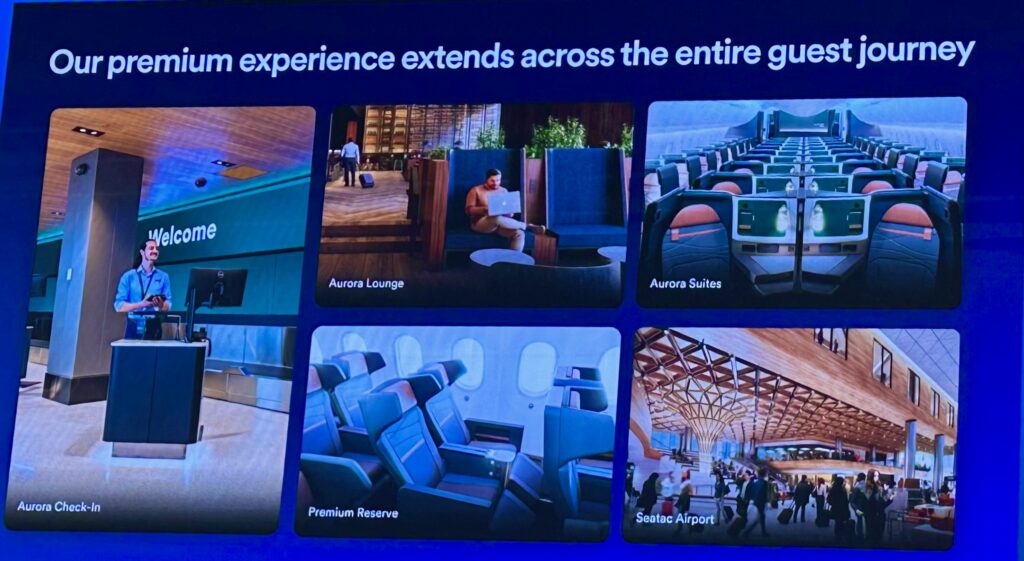
Yes, dear reader, two years after Alaska Air Group completed its acquisition of Hawaiian and less than a year after receiving a single operating certificate while retaining their distinct brands, the now truly global operator has seen fit to clarify, hone — and crucially — bolster its premium proposition in what will be its most significant investment in premium travel to date.
The timing is right. A oneworld alliance member that now serves Tokyo, Seoul, Rome, London, and Reykjavik (with Paris and Athens planned for next year), Alaska has also sought approval to participate in American Airlines’ antitrust-immune Atlantic and Pacific joint venture, which will place the brand on the world stage like never before.
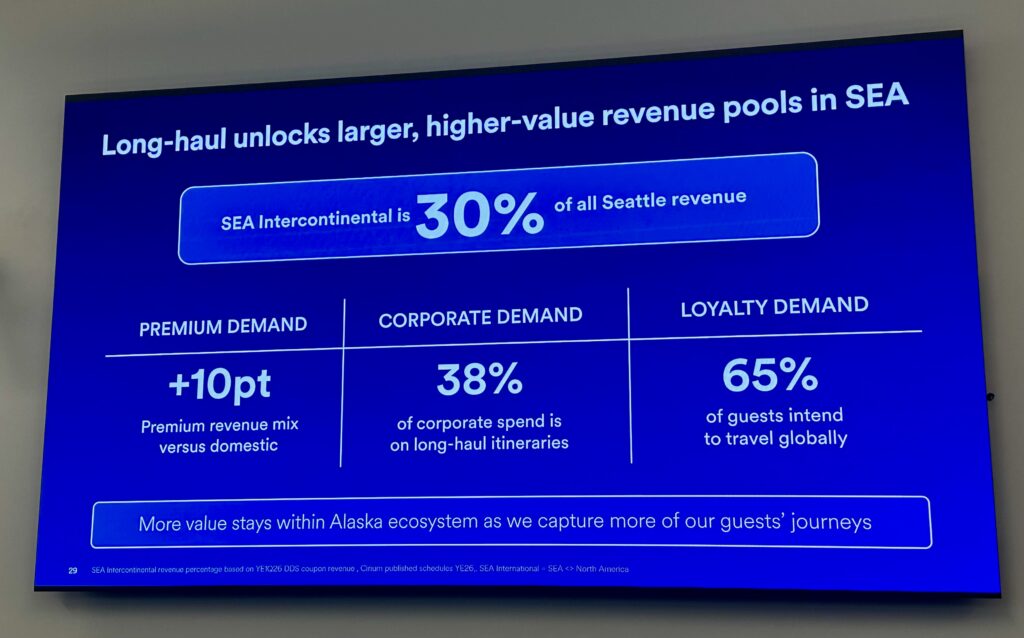
“We built this airline by connecting communities, taking care of people, and earning trust one flight at a time. That part of who we are hasn’t changed at all, and it never will,” Minicucci stressed during the Investor & Media Day event, while pointing to the company’s five core values emblazoned on the training center’s wall: own safety, do the right thing, be kind-hearted, deliver performance and be remarkable.
“What has changed is the world our guests can reach with us,” he continued. “We’re serving more destinations. We’re welcoming more global travelers, and we’re creating more opportunities for guests to connect with the people and places that matter most to them. That growth gives us an opportunity to rethink what a premium experience should look like.”
25 MAX 10 twinjets with premium-heavy layout
To that end, Alaska Airlines is gearing up to give its rivals a run for their money on select transcontinental routes.
Beginning in 2028, at least 25 of its 105-strong order for the Boeing 737 MAX 10 will be kitted out with 159 seats, spread across what it describes as a four-cabin layout, including 12 Aurora Suites up front in domestic first class. (The rest of the MAX 10s will feature a standard layout.)
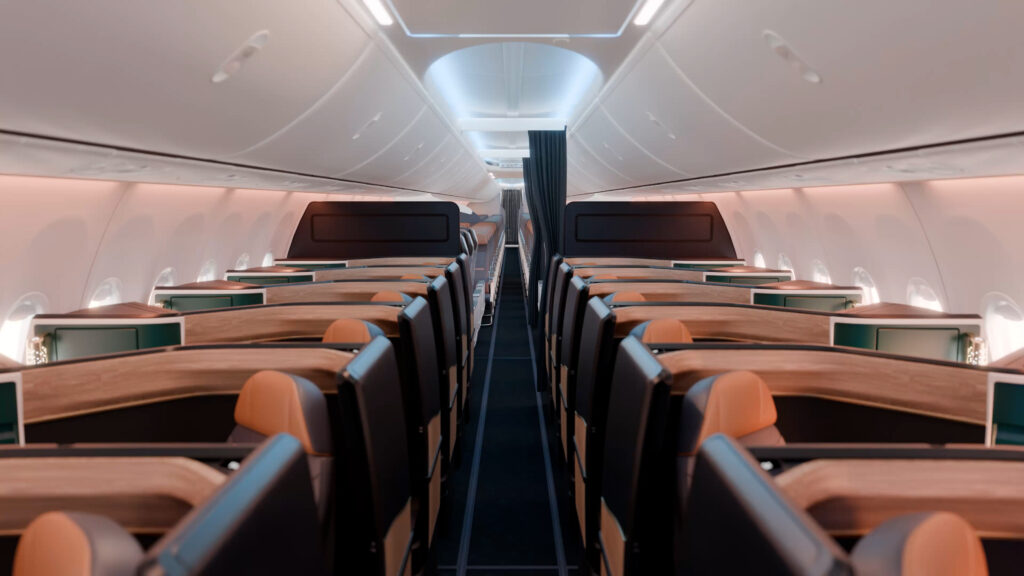
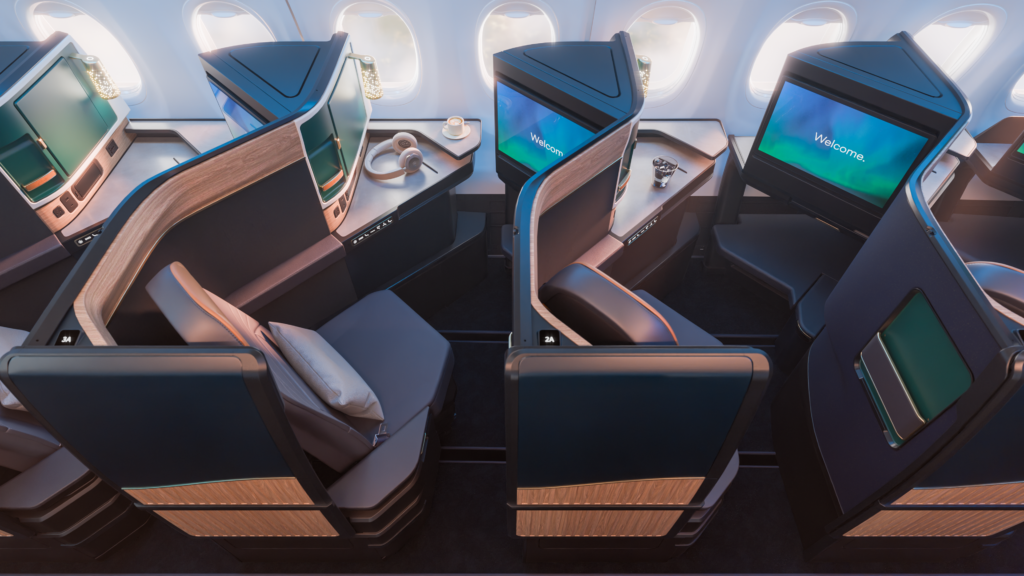
Based on Elevate Aircraft Seating’s Ascent narrowbody platform, the 1-1-configured lie-flats feature a passenger-pleasing outward-facing design, meaning that occupants will face the window as opposed to the aisle.
This experience syncs nicely with the reverse-herringbone arrangement found on the 787s.
“Our guests have told us that premium matters. They want the same elevated experience whether they’re crossing the Pacific, the Atlantic, or crossing the country. And honestly, we agree,” Minicucci said.
“A great experience shouldn’t depend on which airplane you’re on, and if the journey calls for Aurora, we want that experience to carry through from start to finish.”
Alaska operates some of the longest domestic transcontinental stage lengths in the country, and its guests are showing a willingness to pay for comfort. That’s why the premium-focused MAX 10s will operate from Seattle and key California cities to New York, and ply other high-value transcon routes.
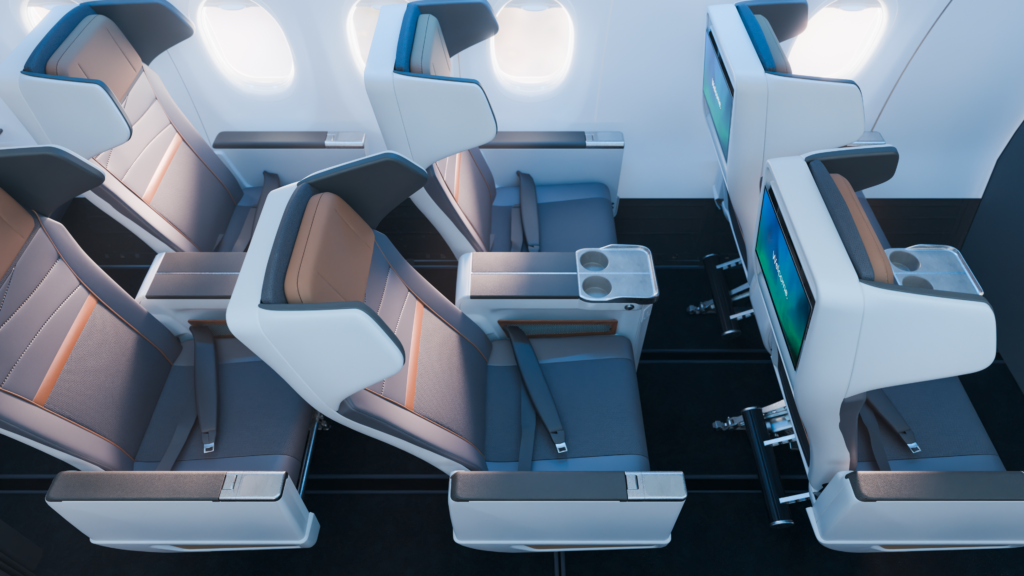
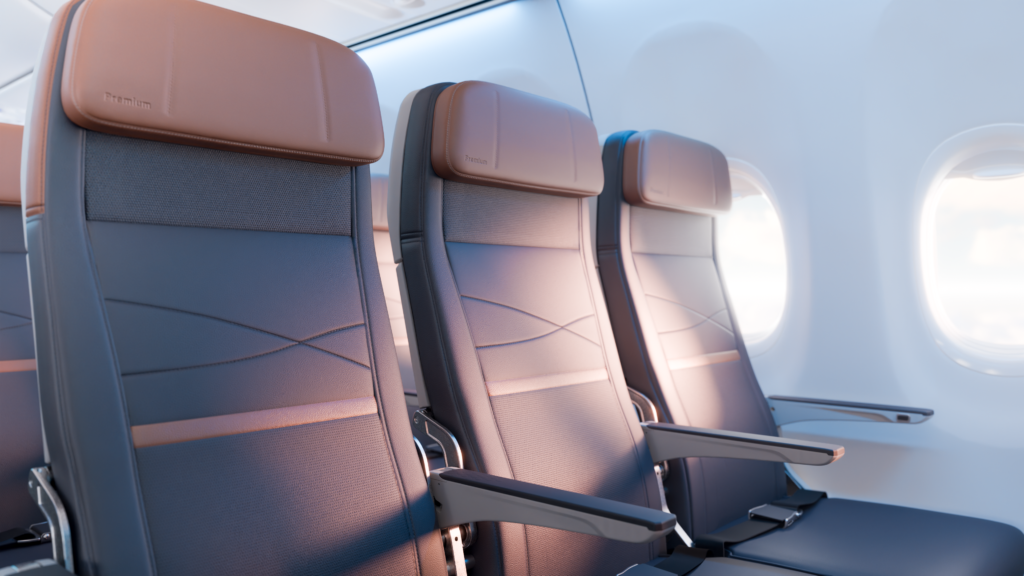
As part of Alaska’s premium push, the MAX 10s will feature 12 RECARO PL3530-based premium economy seats in a new cabin dubbed Premium Reserve. These are proper recliners, pitched at 38″ and feature privacy wings.
Premium Reserve will also land on the existing 787-9s as part of a refit in 2028, as well as the forthcoming new 314-seat Boeing 787-10s, and Hawaiian’s A330s, albeit via Collins Aerospace’s MiQ platform on the A330s.
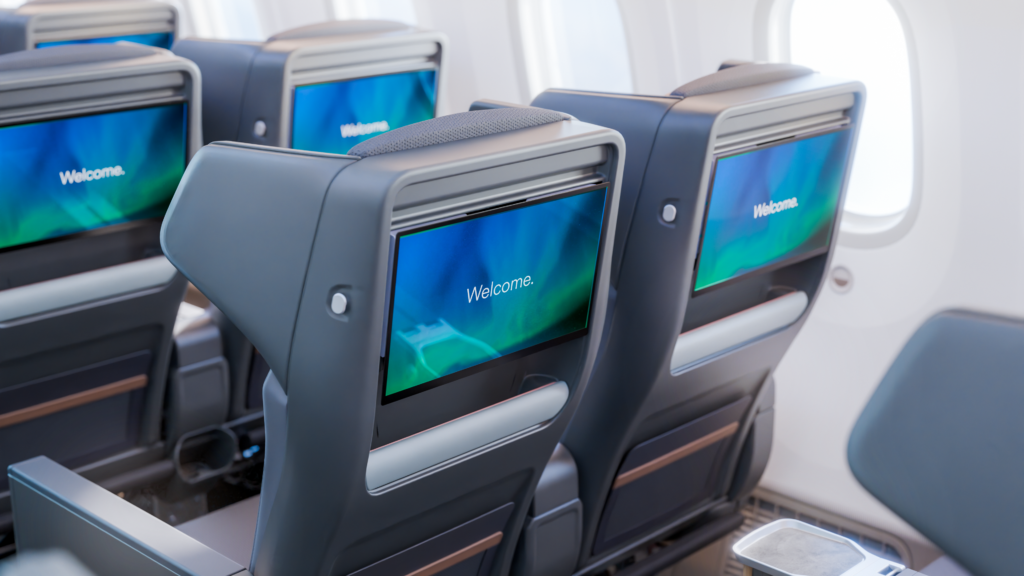
Alaska Airlines has selected Panasonic Avionics’ 4K OLED-based Astrova seatback IFE with Bluetooth connectivity for the Aurora Suites and for Premium Reserve, sized 19” and 16”, respectively, aboard the 25 MAX 10s.
However, it has not extended the seatback screen experience to the extra-legroom Premium Class and regular Main Cabin, as management confirmed to PaxEx.aero editor Seth Miller during the event, citing “time to market.”
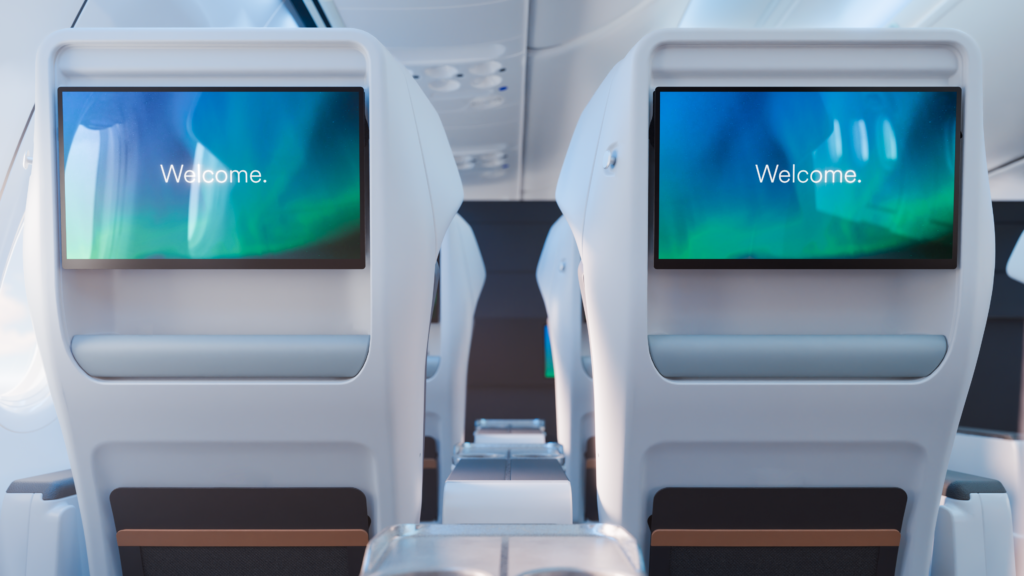
Against a backdrop that sees a stringent regulatory environment for integrated IFE/seat certification, including complexities around meeting head impact and neck injury criterion, the process of achieving certification for the front row of seats, we’re told, was seen as especially cumbersome, and the prospect of delays to the already-delayed MAX 10 proved a bridge too far.
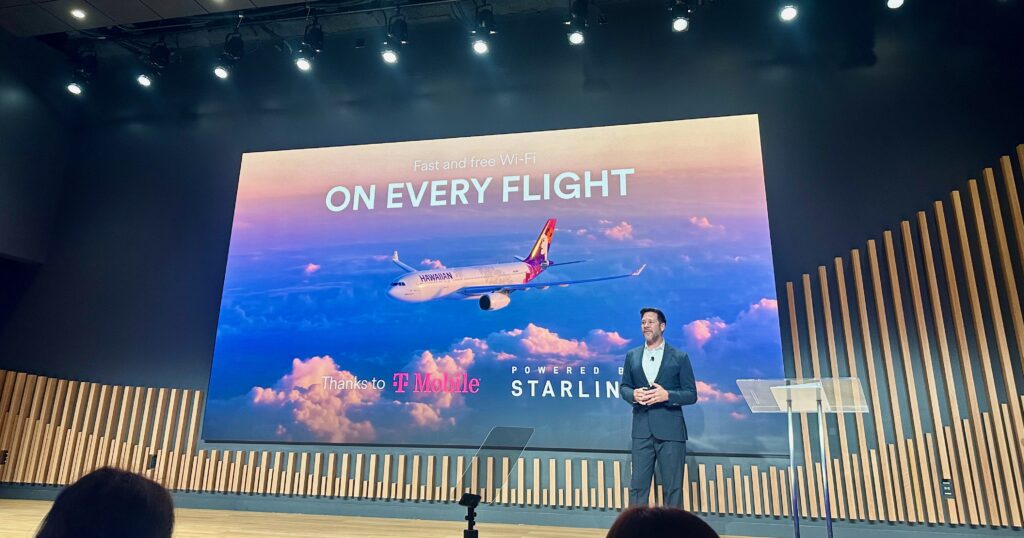
Longer-term, however, management is staying open to the possibility of revisiting the embedded IFE proposition on its premium MAX 10s, and indeed to exploring possible new use cases as SpaceX’s Starlink Low Earth Orbit (LEO) satellite-based inflight connectivity is brought to the type, and across the entire fleet including the 787s (over 40% of the fleet is already equipped, with the 787-9s expected to be fitted “soon” pending certification.)
More widely, however, Runway Girl Network was curious if American Airlines’ recent decision to adopt seatback IFE across its narrowbody fleet has prompted any reconsiderations around screens, and so we put the question to Alaska management during a Q&A session.
Noting that the MAX 10s will, like the rest of the fleet, feature Starlink-powered free Wi-Fi for loyalty members, which allows guests to access their own content and is driving higher Net Promoter Scores in the Group, president and CFO Shane Tackett said:
We aren’t immediately thinking about following what American had announced… It kind of makes sense for them in a different way than I think it does for us.
But look, the world has changed. We are doing things today we didn’t think we might do 10 years ago. I think we got to get through this sort of investment cycle. We’ve got to get these products in market.
There is no shortage of opinions about Alaska’s decision to offer a hybrid model on the 737 MAX 10s, with screens in Aurora Suites and Premium Reserve, and a BYOD (bring your own device) approach for Premium Class and Main Cabin. And Alaska is certainly not the only operator going in this direction, with embedded IFE serving as a differentiator up front.
However, some observers suggest it will put Alaska at a disadvantage, given that the ‘big three’ of Delta, United and American are all-in on screens.

If we’re in a K-shaped economy, the egalitarian nature of nose-to-tail IFE equipage and the knock-on benefit to how passengers perceive a brand should perhaps not be discounted. And embedded IFE goes a long way towards keeping children happy in flight.
Others believe Starlink and device holders will more than satisfy passengers down back.
While not ruling out IFE for narrowbodies in the future, Tackett reckons that the current planned set-up for economy on the MAX 10s, with Starlink as a focus, will “work a long time for us without seatback screens.”
Time will tell.
Naturally, seatback IFE is already offered on Alaska Air Group’s widebody fleet, including Alaska Airlines’ current 787-9s and Hawaiian’s A330s, and management is well aware that screens are a virtual ‘must have’ for twin-aisle aircraft flying internationally.
Boeing 787 passenger experience
Panasonic’s Astrova IFE will be fitted from nose to tail on the forthcoming 787-10s, with deliveries slated to start in 2028, ensuring consistency with the 787-9s that Alaska inherited from Hawaiian.
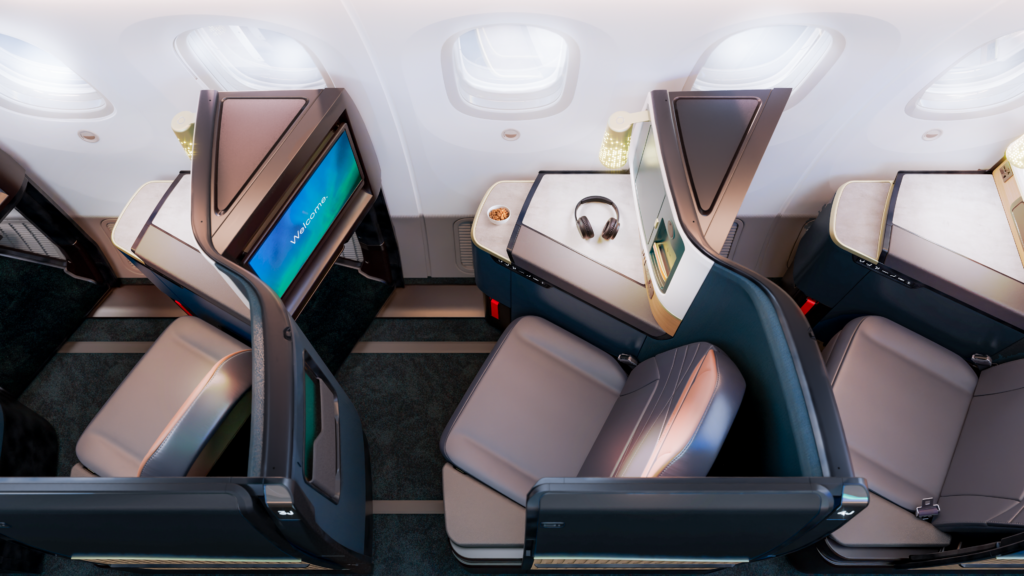
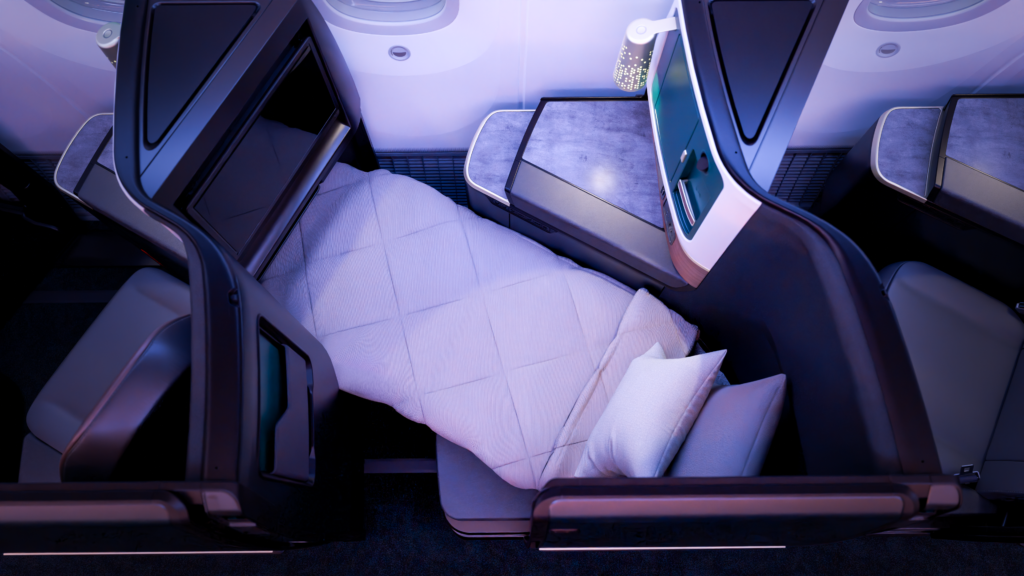
Here again, Elevate Aircraft Seating has been called in as a seat supplier, with 40 of the seatmaker’s Ascent widebody-tailored lie-flats earmarked for the 787-10 as Aurora Suites, configured 1-2-1.
This popular off-the-shelf platform, each with a sliding door on the 787s, is a safe and very solid choice for Alaska, especially given the certification and seat supply constraints faced in industry right now.
IFE screens will be sized 19″, and each suite features USB-C and wireless charging.
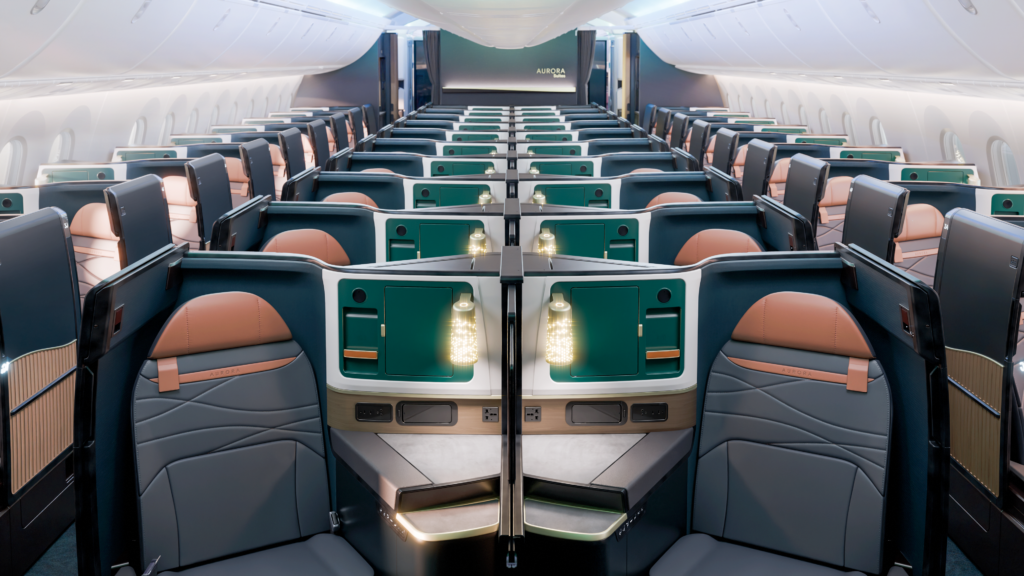
The 34 Ascent-based lie-flats on Alaska’s existing -9s, meanwhile, will receive a CMF (color, materials and finish) refresh — Aurora style. The underlying hardware will remain in play on the -9s, however, management confirms.
“On our 787 fleet, the Aurora Suites become our flagship business class experience,” explained Eric Edge, who serves as vice president of brand & marketing for Alaska and Hawaiian.
“There’s private sliding doors. There’s direct aisle access from every seat. There’s lie-flat beds, wireless charging, Bluetooth entertainment, and really thoughtful storage all throughout. As you think about it, every detail was designed to give long-haul guests more privacy, more comfort, and more control, all while showcasing the new visual expression of our brand that is Aurora.”
For the new 35-seat Premium Reserve cabins that will be fitted to the 787-9s, and slated to roll off the line on the new 787-10s in 2028, Alaska has selected RECARO’s PL3530 recliner, configured 2-3-2, each with a 16″ IFE screen.
As presently configured, the -9s feature 300 seats in total, but a reduction of 21 economy class seats for a total seat count of 279 on the refitted -9s will accommodate the addition of the Premium Reserve cabin.
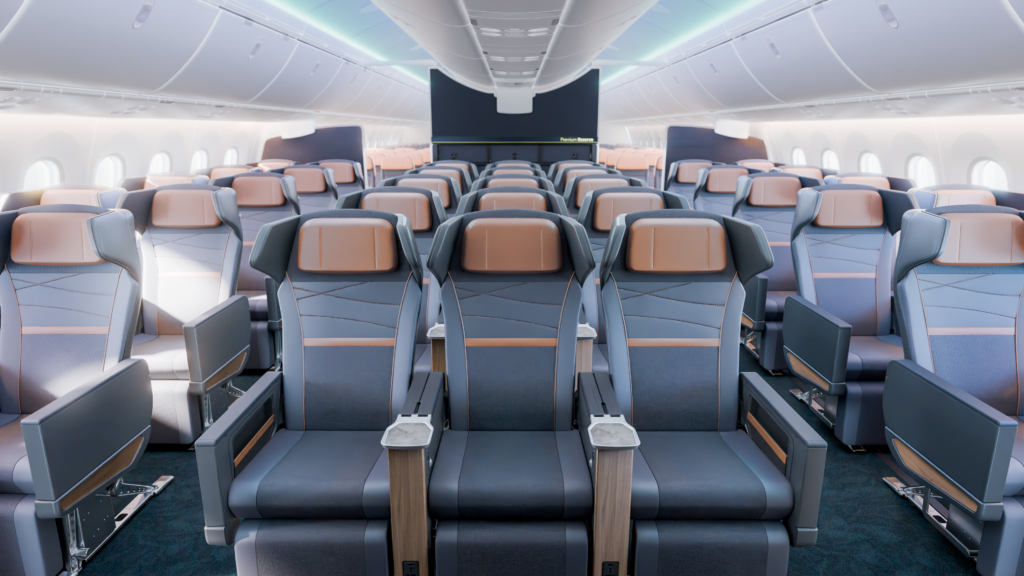
“If you think about it, there’s a big group of travelers who want a meaningful step up on a long flight, but they don’t necessarily need a business class suite, and Premium Reserve is for them,” Edge said.
“There’s more room, deeper recline, better personal space, elevated meals and amenities. This is truly a more premium inflight experience, and Premium Reserve will sit between our [extra-legroom] Premium Class and our Suites cabins, and it will be on our full 787 and A330 widebody fleets.”
Tickets will be available for purchase across these types, plus the 737 MAX 10s, next summer, he said.
Collins Aerospace has secured other work packages as part of Alaska Air Group’s overall transformation. It is providing its Aspire economy class seating platform for the MAX 10s and 787s, the latter of which will be configured in the twinjet’s standard 3-3-3 layout in both extra-legroom Premium Class and Main Cabin.
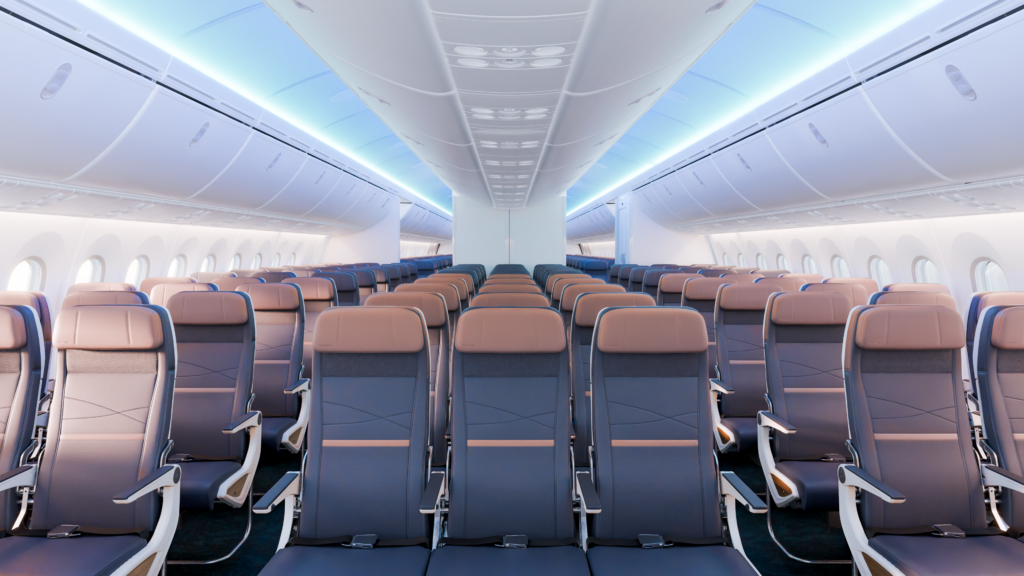
Premium isn’t simply a cabin; it’s now a standard for Alaska Air Group, Edge noted, and this standard will extend to Hawaiian Airlines’ 24 Airbus A330s, which from 2028 will be refurbished with all-new interiors including Collins Aerospace seats from nose to tail.
Hawaiian A330 passenger experience
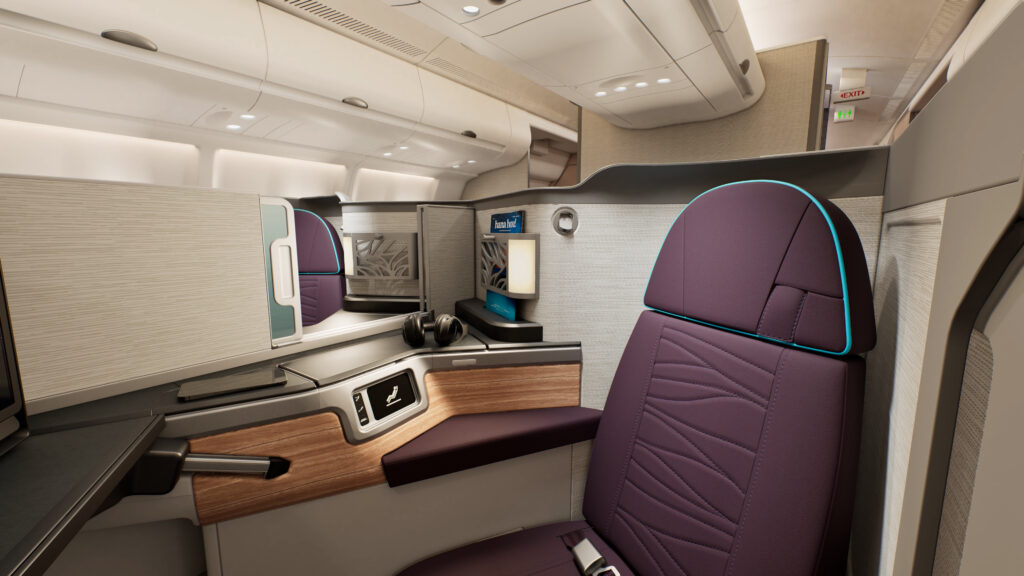
Up front, passengers can expect 22 enhanced, doored Leihōkū Suites based on Collins’ latest-generation Elevation platform.
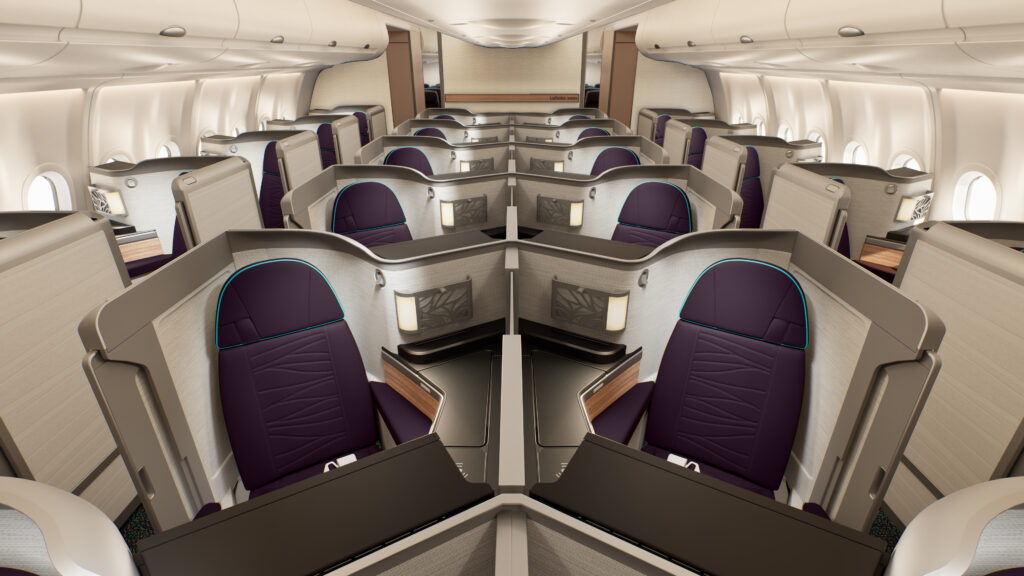
A 19″ Panasonic Astrova IFE screen, Bluetooth connectivity, wireless and USB-C charging, AC power and new bedding are also in the offing for the new Leihōkū Suites, which will roll out in 2028.
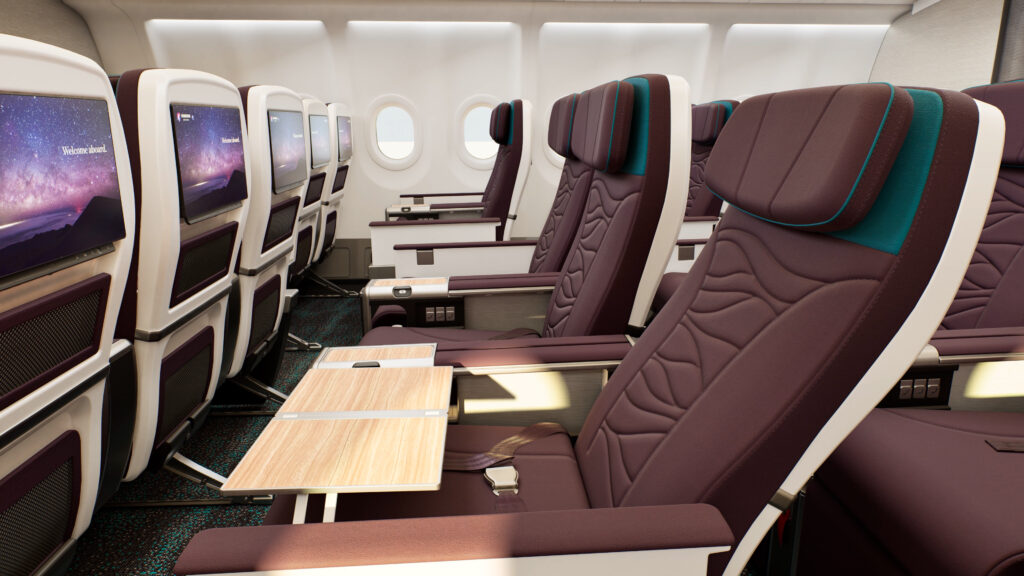
The 28 Premium Reserve recliners aboard the A330s will, as mentioned, be based on Collins MiQ, and feature 38″ of pitch and 16″ Panasonic IFE, whilst Collins’ Aspire economy class platform will feature in Premium Class and Main Cabin.
Noting that Hawaiian Airlines previously invested in the Leihōkū experience aboard the 787s (before they transitioned to Alaska), Hawaiian CEO Diana Birkett Rakow said she is excited to “expand it and elevate it across the entire journey, bringing it to life in new ways.”
Lounges
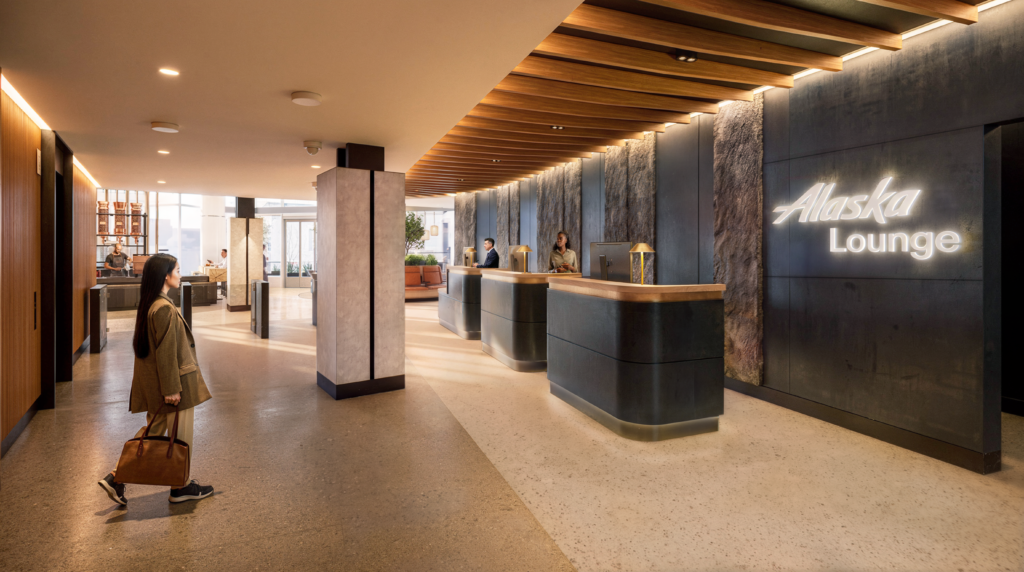
Alaska Air Group “felt pretty strongly” that its lounge experience needed to match the group’s global ambition, Edge said. So a new Alaska Lounge and connected Aurora Lounge in Seattle will serve domestic and international travelers, respectively.
It remains to be seen if the doors to the Aurora Lounge will be opened to passengers flying Aurora Suites on the MAX 10s.
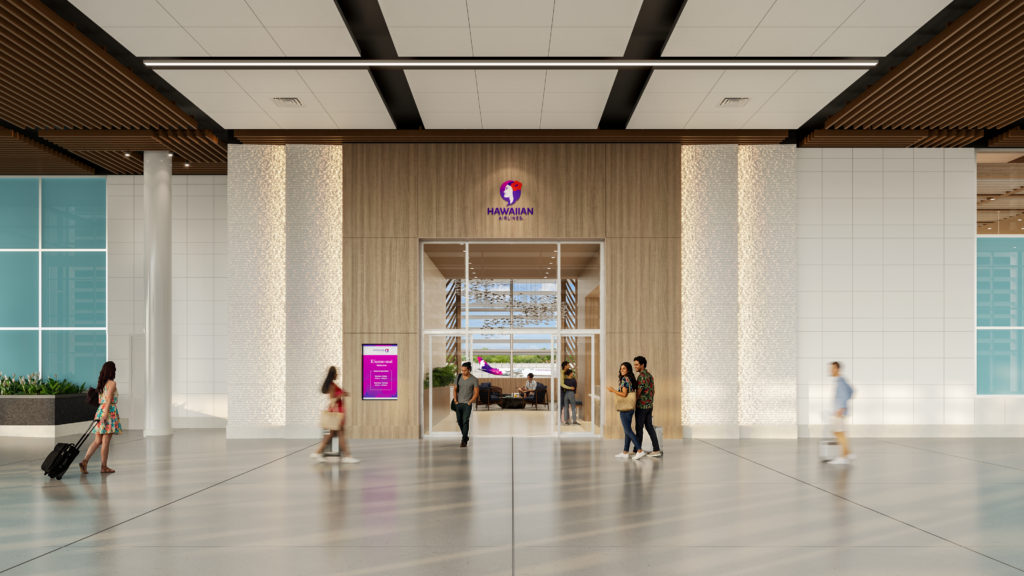
Hawaiian, meanwhile, will open a nearly 13,000 sq ft lounge at the entrance of the Mauka Concourse in Terminal 1 in Honolulu in early 2028.
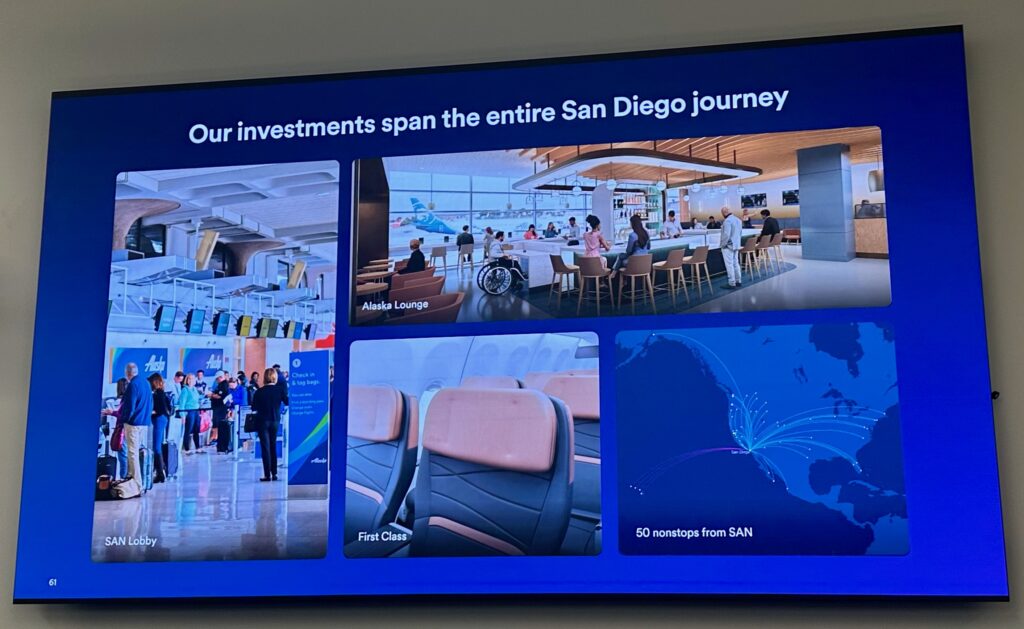
Alaska Air Group is quite consciously differentiating its lounge spaces, with management saying not to expect the new lounges in Honolulu and previously-announced San Diego to look the exact same as in Seattle.
Many of the lounge renderings shown during the event were marked as “for concept only.”
Aurora, the Roman goddess of the dawn did not serve as the muse for Alaska Airlines’ new Aurora flagship experience. Rather, that honor can be traced to the carrier’s roots across the Pacific Northwest and Alaska, which is one of the best places on earth to see aurora borealis.
But it’s nonetheless fitting that the word Aurora is polysemous and also connotes new beginnings. Because this premium push, including at Hawaiian, feels very much like that — a new beginning for Alaska Air Group.
RGN attended Alaska Air Group’s Investor & Media Day as a guest of the airline. As ever, all opinions are our own.
Related Articles:
- Alaska Airlines announces service expansion from Paine Field
- Aircraft seat certification delays spur testing tweak
- A321XLR set to shine as United, American reveal summer 2027 routes
- American Airlines’ 787-9P ups the ante for Premium Economy
- Alaska Airlines plans San Diego lounge as hub footprint grows
- Alaska Airlines to bring Starlink inflight Wi-Fi to entire fleet
- Hipa Hipa to Hawaiian Airlines’ excellent 787-9 up front product
Featured image credited to the author, Mary Kirby. All renderings credited to Alaska Air Group