

In a proud moment for Saudia, the national flag carrier of the Kingdom of Saudi Arabia recently took delivery of the first of 15 Airbus A321XLR twinjets, and quickly pressed it into revenue service.
Delivered on 24 May, the 144-seat aircraft (HZ-ASBA) has linked Saudia’s Jeddah hub with Vienna, Paris and Riyadh, and plied Riyadh-Rome since its 3 June debut, according to FlightRadar24.
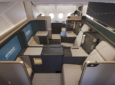
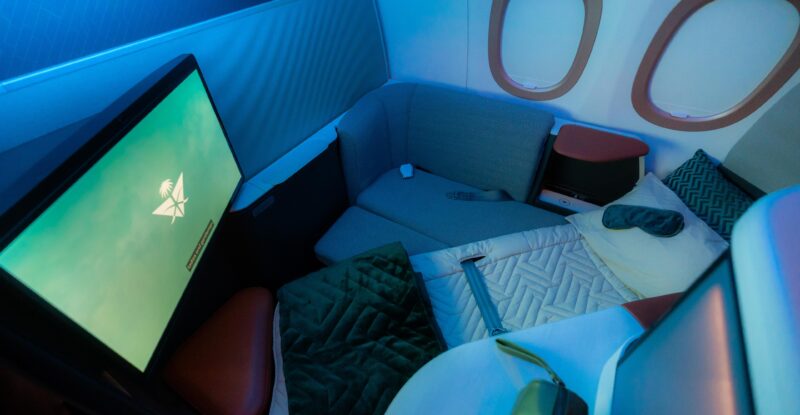
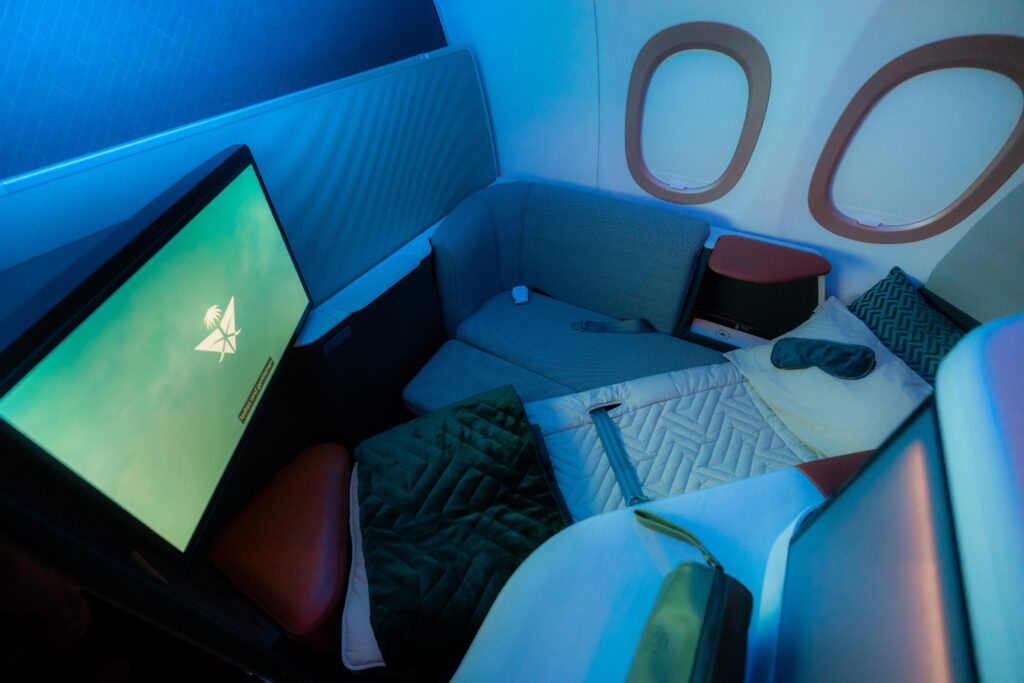
Featuring a highly premium, low-density interior, the longhaul narrowbody boasts a 1-1-configured business class cabin with 24 doored suites based on Thompson Aero Seating’s VantageSOLO inward-facing herringbone, and a 3-3-configured economy class cabin with 120 Safran Z400 seats.
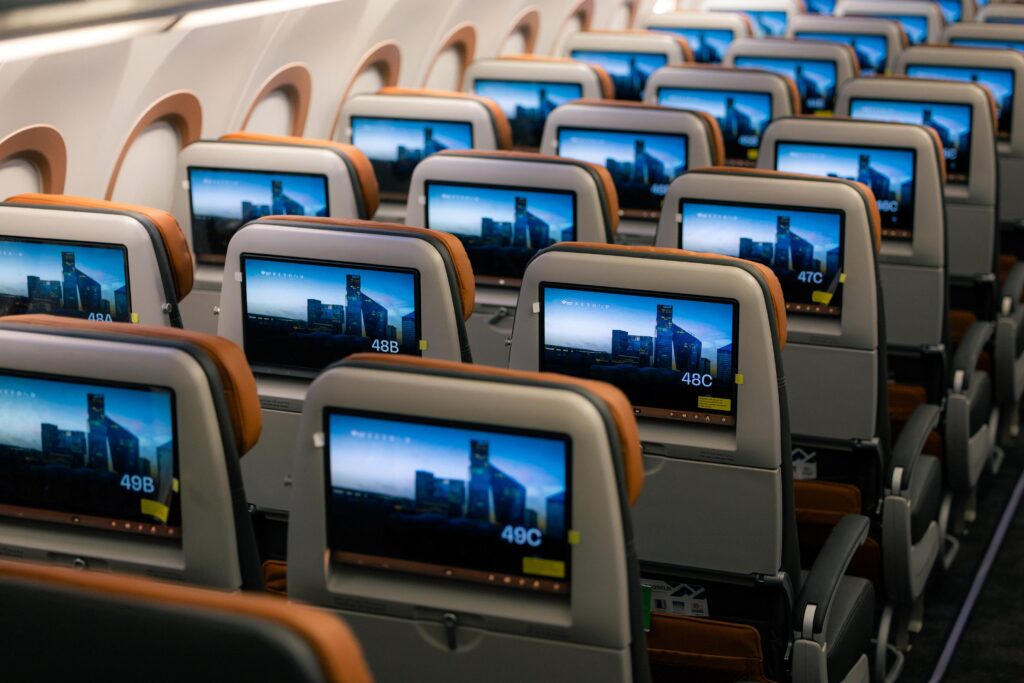
Panasonic Avionics’ next-gen 4K OLED-based Astrova IFE is fitted from nose to tail.
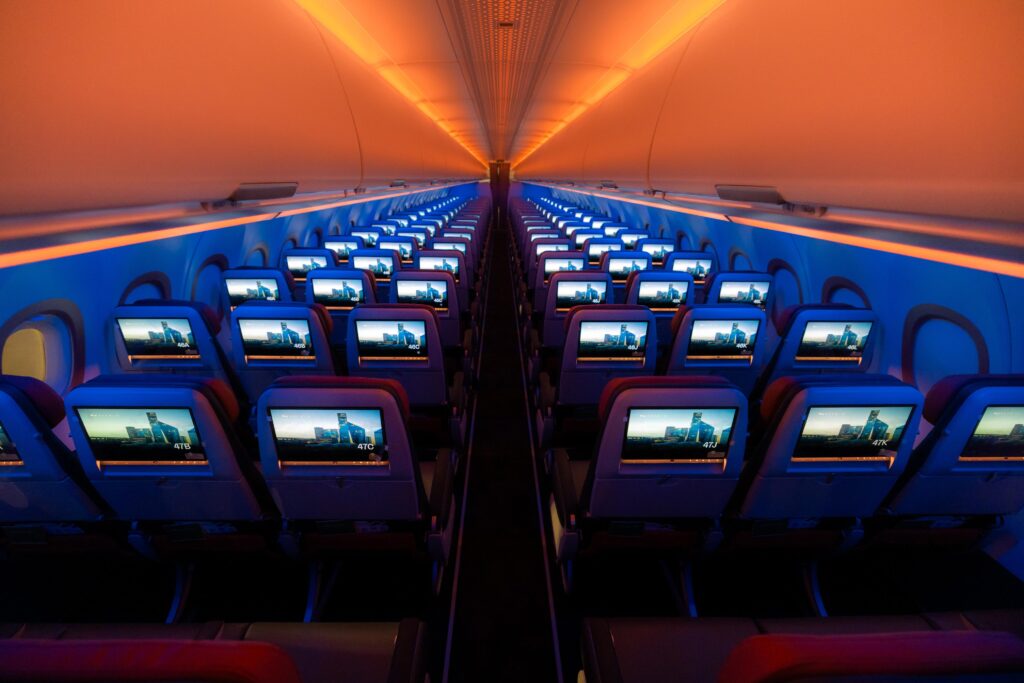
Astrova on the Saudia A321XLR features Panasonic’s latest Bluetooth technology. Image: Panasonic Avionics
“This milestone is more than the introduction of a new aircraft. It represents our commitment to redefining the guest experience through innovative cabin design, enhanced comfort, advanced technology, and the warm Saudi hospitality that defines our brand,” Saudia chief guest experience officer Rossen Dimitrov said, whilst sharing a teaser video with images of the A321XLR’s business class cabin.
Designed specifically for single-aisle aircraft, and offering a high level of privacy, VantageSOLO offers a fully horizontal flat-bed with direct aisle access for every seat.
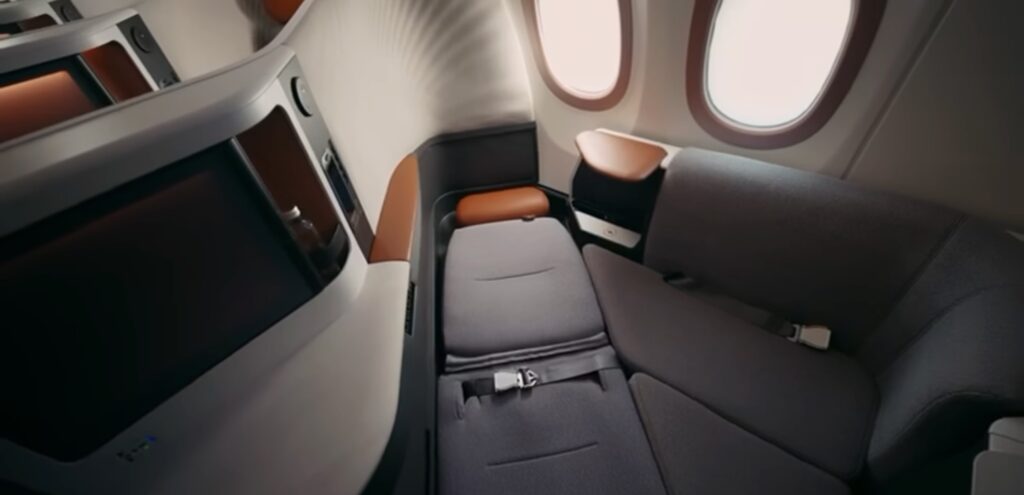
Saudia first announced its selection of Thompson VantageSOLO for the A321XLR at the Arabian Travel Market in 2023. Image: Saudia
The airline has chosen a tasteful palette for the seat’s color, materials and finish (CMF). The pop of earthy rust color on the headrest, side table, armrest and window trim brings depth to the mix of grey and beige tones selected for the seat cover and thermoplastic surrounds.
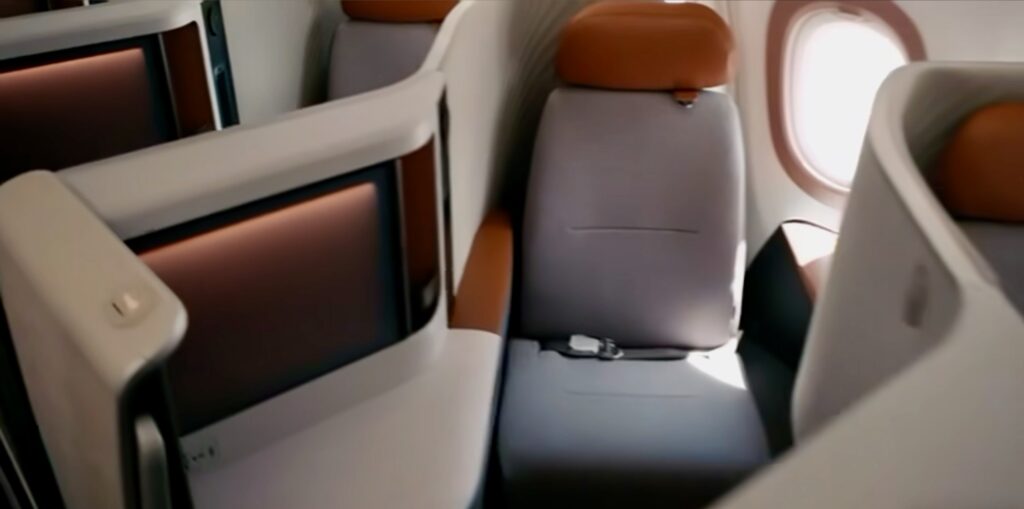
In business class, each IFE screen is sized 18 inches. Front-row, bulkhead seats offer a biz-plus type configuration with more space and furniture to spread out.
Down back, each spacious economy class seat offers a generous recline, a 13” IFE display and up to 67W of USB-C direct current power, “enabling fast charging for mobile phones, tablets, compatible laptops, and other personal electronic devices throughout all phases of flight,” Panasonic says.
Also on board is Panasonic’s Modular Interactive platform, which features a cloud-based content publishing platform that enables Saudia to make rapid updates to the IFE. Saudia has also adopted Panasonic’s Arc 3D interactive moving map on the A321XLR.
Arc combines stunning visuals, dynamic real-time data, and immersive storytelling to transform the moving map into a fully interactive onboard engagement experience for passengers. Image: Panasonic Avionics
The twinjet is the first aircraft delivery to feature core elements of what Saudia calls “The New Saudia Experience,” which is focused on offering “comfort, connectivity, entertainment, dining, and service consistency across the guest journey.” On the connectivity front, the airline recently selected Neo Space Group’s Skywaves-branded multi-orbit inflight connectivity solution for a “significant” portion of its fleet as it rolls out free Wi-Fi to passengers.
Based on ThinKom Solutions’ popular Ka2517 VICTS antenna — as supplied and integrated by Eclipse Global Connectivity — Skywaves leverages SES’s Open Orbits hybrid Ka-band MEO/GEO satellite ecosystem. The IFC solution is also designed to be scalable and adaptable to future developments. For instance, it is capable of talking to Telesat’s Lightspeed Low Earth Orbit (LEO) service when the constellation comes on line.

Saudia assures that when IFC is fitted to the A321XLR, it will support “browsing, live streaming, virtual meetings, and access to major entertainment platforms.”
His Excellency Engr. Ibrahim Al-Omar, Director General of Saudia Group, says in a statement that The New Saudia Experience brings together “enhanced onboard products, service quality, and operational efficiency to deliver a more distinctive journey for our guests.”
Saudia is slated to add a total of 15 Airbus A321XLRs to its fleet by 2027. The aircraft will be used to expand international connectivity while aligning aircraft capacity to market demand.
These deliveries are part of Saudia’s wider fleet growth program which in 2024 saw the carrier confirm an order with Airbus for 105 A320neo family aircraft.
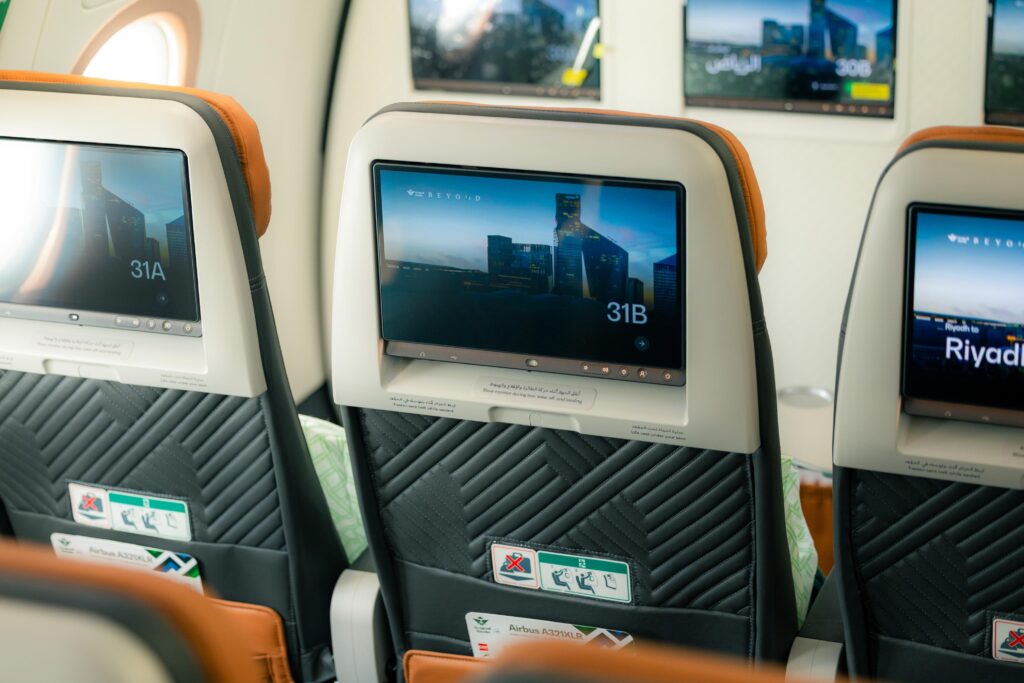
Image: Panasonic Avionics
Featured image credited to Panasonic Avionics