

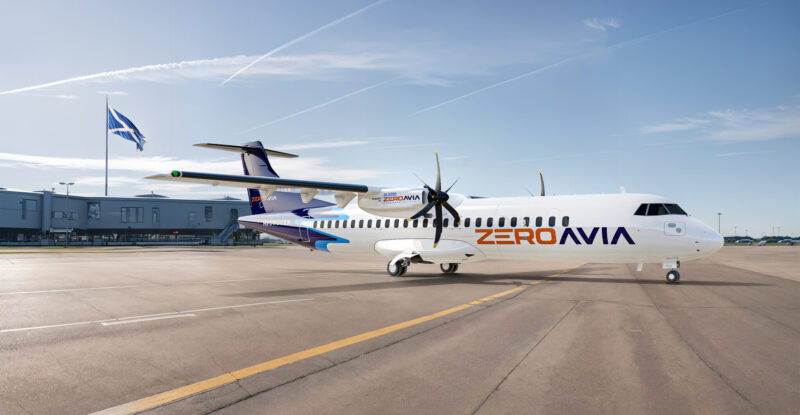

 Changes in the net-zero policy landscape over the last 12 months have created “headwinds” for hydrogen-electric propulsion developer ZeroAvia, leading it to slash its workforce and push back its targeted certification dates.
However, the UK- and US-based company says it is making “steady progress” toward certification, having identified some “interesting” opportunities to develop its technology for smaller applications as it works toward eventually powering larger commercial aircraft.
ZeroAvia has confirmed to RGN comments made recently by its founder and chief executive Val Miftakhov in an article first published by FlightGlobal, in which he says the company has been forced by funding constraints to halve its workforce and alter its certification timeline. ZeroAvia now aims to certify just its fuel cell system in 2027, with certification of the entire ZA600 hydrogen-electric powertrain not expected until up to two years after that.
As reported by RGN in 2024, ZeroAvia had previously targeted initial certification of its powertrain by the end of 2025. The ZA600 is designed to power regional turboprops with up to 20 seats. ZeroAvia is also developing a larger hydrogen-electric engine, the ZA2000, for regional aircraft with up to 80 seats.
During ZeroAvia’s recent virtual Hydrogen Aviation Summit, the company shed some light on the reasons behind these delays.
“The market environment has gone through some changes over the last 12 months, ranging from the policy landscape — shifts in different nations taking different stances on the net-zero agenda at large — to very specific changes in strategy and pace from within the industry,” ZeroAvia chief strategy officer James McMicking said during the event. “From ZeroAvia’s perspective, some of these things create headwinds to progress but they also open up opportunities.”
Over the last year, adds McMicking, the company has found “some interesting applications for the technology…in smaller categories of air vehicles and in different market segments that create opportunities to mature the technology and start to build up the industrial base you need to eventually scale to more commercial applications”.
“Fundamentally, the trajectory of zero-emission aviation is unchanged,” he notes. “It might be on a slightly different timescale to what we were all thinking 24 months ago, but we’re going to see these other applications help to gain technological progress.”
He adds: “We’re now very focused on the heart of the engine — the fuel cell power generation system. The business is hunkered down going through industrialization and certifiable design of that heart of the engine over the next two years. Then onwards to that first full engine after that timeframe.”

McMicking describes government support for hydrogen propulsion in the UK, where ZeroAvia has a base in Gloucestershire and plans to build a facility in Glasgow, as “great and encouraging.” He also praises policy support for hydrogen in the European Union, Japan, South Korea and the Middle East, but notes that “other markets have changed their policy directions.”
In the USA, where ZeroAvia has facilities in Washington State, the Trump administration has announced its intention to again withdraw from the Paris climate agreement along with several other global climate initiatives.
Airbus, which agreed in 2023 to invest in and collaborate with ZeroAvia, has also throttled back its hydrogen-powered aircraft ambitions. The European airframer had said it aimed to put its own hydrogen-powered commercial aircraft into service by 2035 through its ZEROe research program. Airbus has since pushed back its timeframe, although it says it is still committed to hydrogen-powered flight.
Speaking at a recent sustainability event hosted by Wizz Air and Gen Phoenix in Peterborough, Solange Baena, UK lead for Airbus Aviation Environmental Roadmap, said the airframer has the “ambition to have something powered by hydrogen” by 2050.
For a successful future transition to hydrogen-powered flight, whenever that might be, the groundwork on preparing the infrastructure and working out how the different aircraft refueling processes will work in the airport environment needs to happen now, according to Graham Bolton, global practice leader at Mott MacDonald.
“It might look like the big change to hydrogen aviation is 15-20 years out, but it’s massively important we get these first steps banked,” says Bolton. “If we don’t plan now for a future with hydrogen, we will find ourselves in 10, 15 years’ time saying we made some really big mistakes.”
Related Articles:
- Wizz Air outlines goals and limitations of its decarbonization plan
- EVIO details plan to disrupt regional market with hybrid-electric aircraft
- #PaxEx Podcast: Will hydrogen fly high? John Thomas reveals strategy
- Airbus hones hydrogen plan, showcases next-gen narrowbody tech
- ZeroAvia CEO Val Miftakhov reveals plan for possible IPO in 2026
- #PaxEx Podcast: Deep dive with ZeroAvia CEO Val Miftakhov
Featured image credited to ZeroAvia