
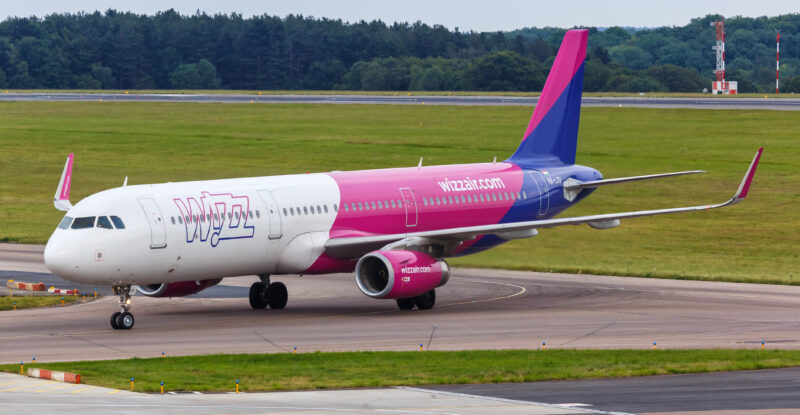

 European budget carrier Wizz Air’s “aspirational and ambitious” target of meeting 10% of its fuel requirements with sustainable aviation fuel by the end of this decade is only achievable if policymakers “recognize what they need to do to help us get there,” the airline has acknowledged.
Addressing reporters during a recent media event at Gen Phoenix’s factory in Peterborough, UK — where the supplier makes seat covers from recycled leather waste for more than 250 airlines, including Wizz Air — representatives from the airline provided an update on its decarbonization plan, which relies heavily on a massive ramp-up in SAF volumes that has yet to happen.
The net-zero roadmap, unveiled by Wizz Air last year, envisions a 53% reduction in emissions through the use of SAF by 2050, with a further 30% reduction coming from new aircraft technology and fleet renewal. The carrier is “already uplifting 2% SAF”, in line with the European Union’s ReFuelEU requirement, says Wizz Air sustainability team manager Zsuzsanna Dimeny, and has an “aspirational and ambitious target” of 10% SAF by the end of this decade.
Dimeny notes that at 52.2 grams of CO2 per passenger kilometer, Wizz Air’s emissions intensity was one of the lowest in Europe in fiscal year 2025. “Our target is to reduce this by 25% by the end of the decade,” she says.
Dimeny attributes the low emissions intensity to Wizz Air’s average fleet age of 4.7 years and high load factors; its Airbus A321neos are configured with 40 rows and 239 seats. A recent study, co-led by the University of Oxford, suggested that packing more passengers into the most fuel-efficient aircraft and eliminating premium seating could reduce global aviation emissions by as much as three-quarters.
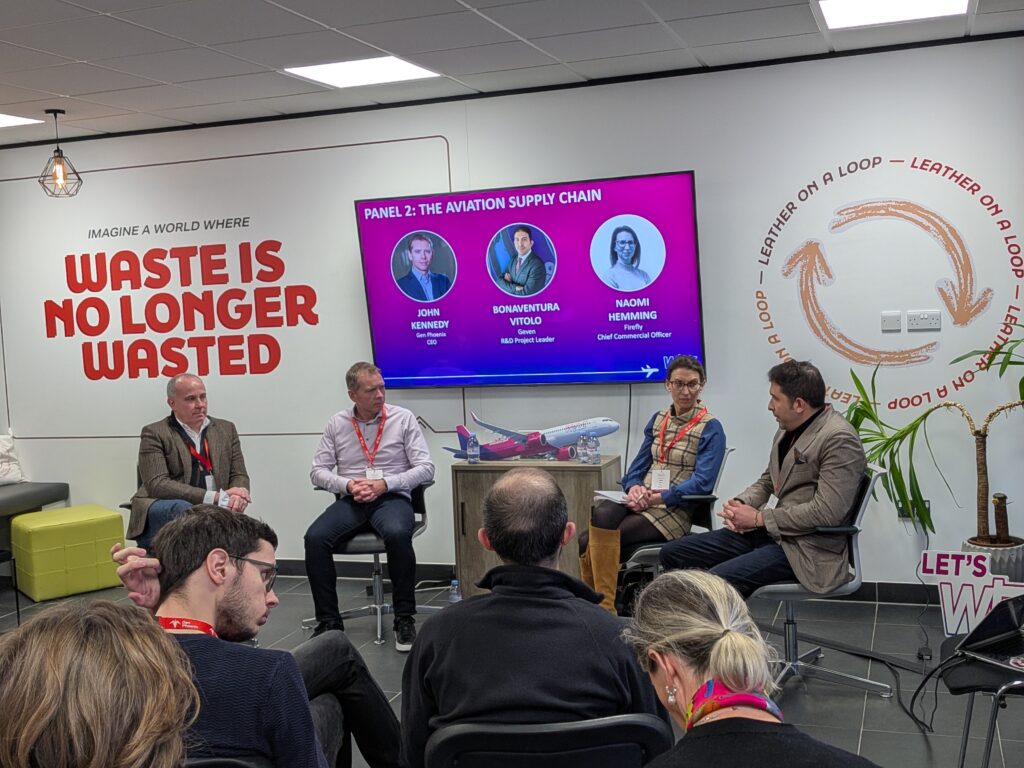
Wizz Air has acknowledged that its longer-term emissions-reduction ambitions are dependent on a significant scaling up of the nascent SAF market. For its part, the airline touts its 2024 investment and 15-year offtake agreement with UK-based start-up Firefly, which is working toward opening a facility in the UK by 2029 that will produce SAF using treated sewage as a feedstock, as evidence of its commitment to using alternative fuels.
But the carrier’s chief corporate officer, Owain Jones, says that for its targets to be met, “we need policymakers to recognize what they need to do to help us get there.” Firefly chief commercial officer Naomi Heming, who also spoke at the Peterborough event, agrees that “we need governments to support the acceleration of SAF technologies so we can get to scale faster.”

Firefly aims to build three plants in three years, says Heming. In addition to the UK facility, it is considering sites in the EU and North America. She envisions cost parity with kerosene within five to 10 years, noting that 60-70% of SAF costs are related to feedstocks, but Firefly’s feedstock — human sewage — is unlimited and takes a “problematic waste stream that needs to be got rid of.” As Heming puts it: “Wherever there are people there’s going to be poo.”
Another way in which Wizz Air and other carriers could further boost their green credentials, says Gen Phoenix chief executive John Kennedy, is to return their used seat covers to be recycled again, instead of sending them to landfill. Gen Phoenix unveiled a fully circular aircraft seat cover at AIX in Hamburg in 2024, and the company tells RGN that its goal is for “all airlines to return” their seat covers for recycling.
Kennedy says the company is “on the cusp of a circular revolution” and is “working with industry leaders on how we manage the logistics.” The product’s durability, however, means it could be a while before airlines are ready to return their used covers.
“The issue is they [Gen Phoenix] do too good a job of making durable covers,” says Jones, adding that “once [recycling seat covers] becomes an issue, it’s certainly something we would discuss.”
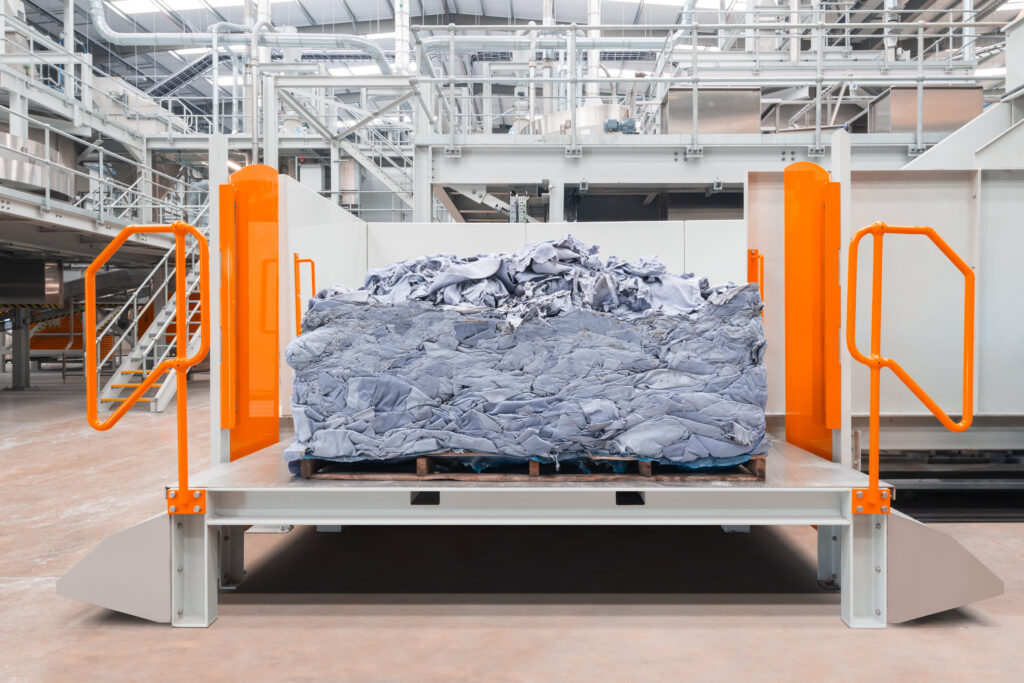
Gen Phoenix already ingests leather waste on a grand scale and transforms it into new products. Image: Gen Phoenix
Related Articles:
- Removal of lie-flat seats would slash airline emissions: study
- Factory visit reveals Gen Phoenix ELeather production process
- Turning human waste into jet fuel Firefly boasts Wizz Air as partner
- ELeather manufacturer Gen Phoenix to introduce circular dress covers
Featured image credited to istock/Boarding1Now. First embedded image credited Kerry Reals. Second embedded image credited to Gen Phoenix.