


In 2023, Air India vowed to offer a “new, world-class onboard product” after the Tata Sons-owned airline inked letters of intent with Airbus and Boeing to take a record 470 twinjets, including 20 new Boeing 787-9s.
Fast forward to this week and Air India has revealed its first custom-built 787-9, featuring a bold and sophisticated new design developed by its partner JPA Design in collaboration with TrendWorks.
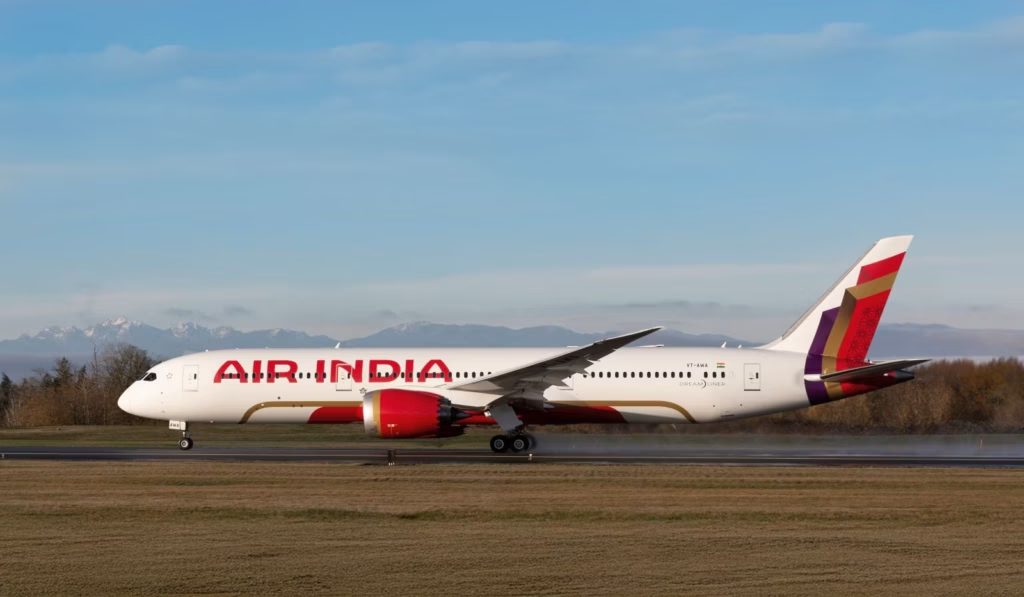
Registered VT-AWA, the three-class, 296-seat 787-9 boasts carefully considered interiors, including Elevate’s popular doored Ascent mini-suites in business class, Recaro Aircraft Seating’s high-comfort PL3530 platform in Premium Economy and Recaro’s best-selling CL3710 seats in economy class.
The twinjet is fitted from nose to tail with Thales’ state-of-the-art AVANT Up inflight entertainment system with 4K QLED high dynamic range (HDR) touchscreens.
Air India has for some time come under fire on social media for flying with broken embedded IFE systems and grubby interiors on its vintage Boeing widebodies. But the carrier is working hard to change that perception, and the benchmark that is being set by this new 787-9 is very much part of that effort.
“The new cabin interiors on this aircraft will soon become the standard across our entire Boeing 787 fleet as, in addition to 19 more production [787-9] aircraft, all 26 of Air India’s existing Boeing 787-8 aircraft are being retrofitted with the same new cabin interiors and entertainment systems,” assures Air India CEO and managing director Campbell Wilson.
“The retrofit programme is well underway, with the first upgraded aircraft due to return to service in the coming weeks and the remainder of the fleet by mid-2027.”
During this week’s APEX TECH conference in Los Angeles, Air India vice president of customer experience strategy and intelligence Anjali Birla also shed light on the carrier’s internal work to ensure that systems and services “are working the way they should” and if challenges are observed, “how do we fix that.”
She said Air India looks very closely at its Net Promoter Score (NPS), which measures customer loyalty and satisfaction, and it solicits passenger feedback. The Star Alliance member also receives internal feedback from cabin crew and engineers, and over time has baked in an “internal governance system” where all parties are answerable and accountable for customer outcomes.
Right at the beginning of this transformation, we made the customer experience the central focal point. So whether it is inflight amenities, food and beverage, inflight entertainment, or connectivity, it was strategically housed under customer experience to lead the strategy for that.
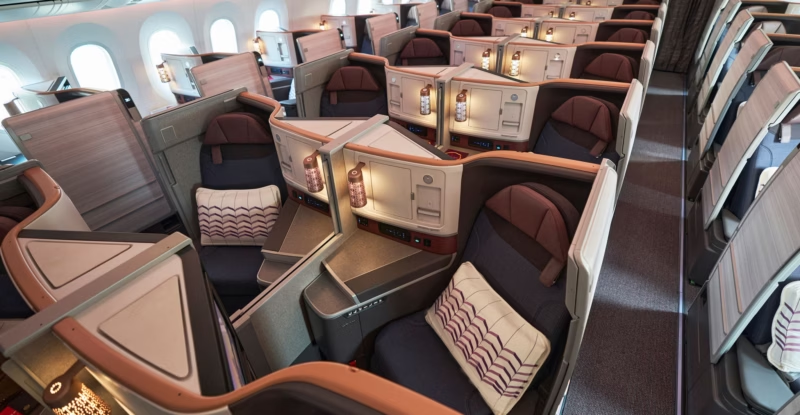
Air India’s new branding palette, first revealed in 2023, has been woven into the new 787-9’s interiors, with rich colors such as aubergine present in business class and maroon and deep red found in Premium Economy and economy. Frequent flyers will recognize the color scheme, as Air India has been flying a tweaked version on new Airbus A350 twinjets (which were originally destined for Aeroflot but received a soft upgrade.)
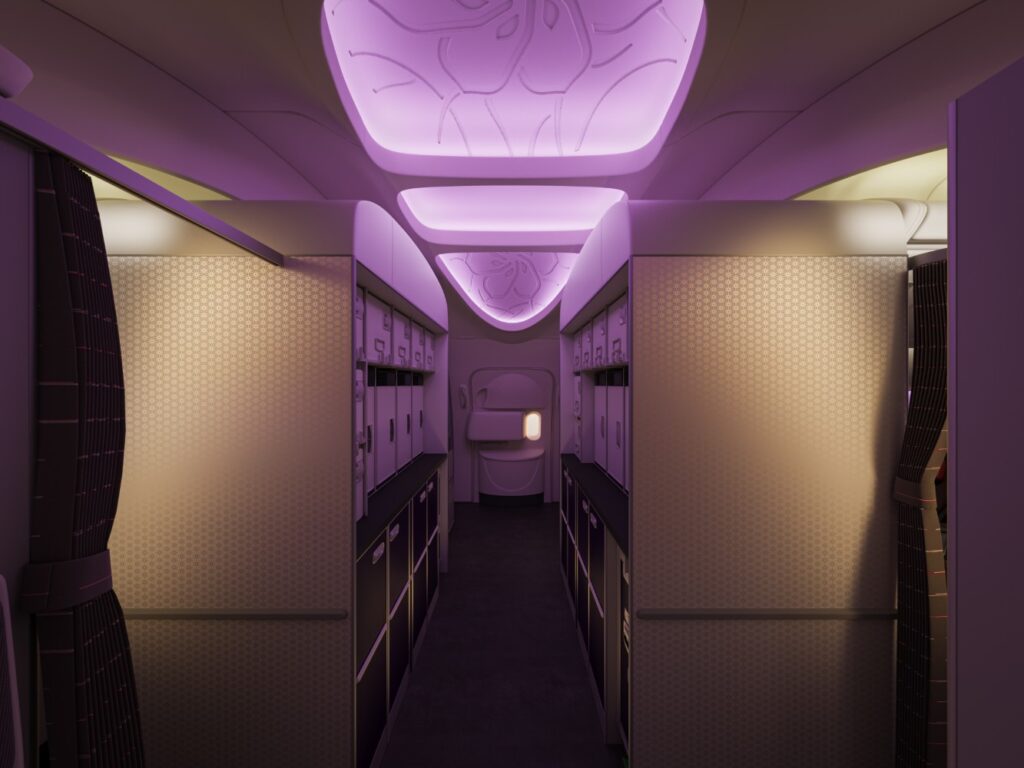
There are, however, some subtle changes to the CMF (color, materials and finish) that lend a more premium feel to business class on the 787-9, including soft creams, pink and warm golds. The mood lighting is inspired by India’s wellness tradition, says the carrier.
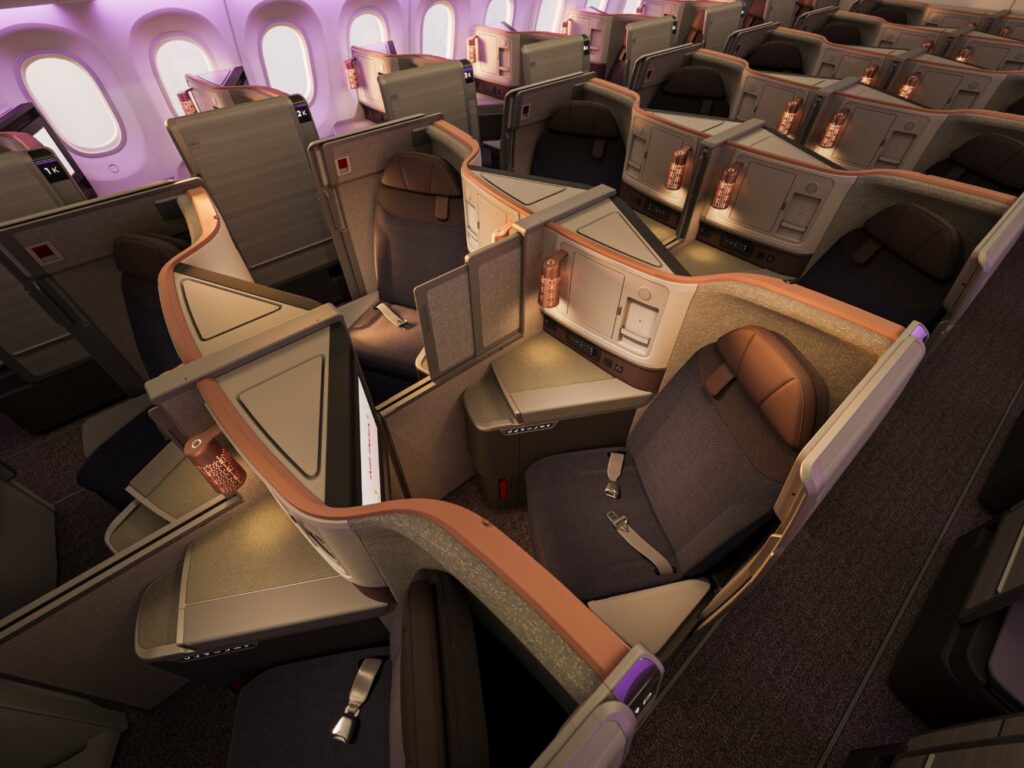
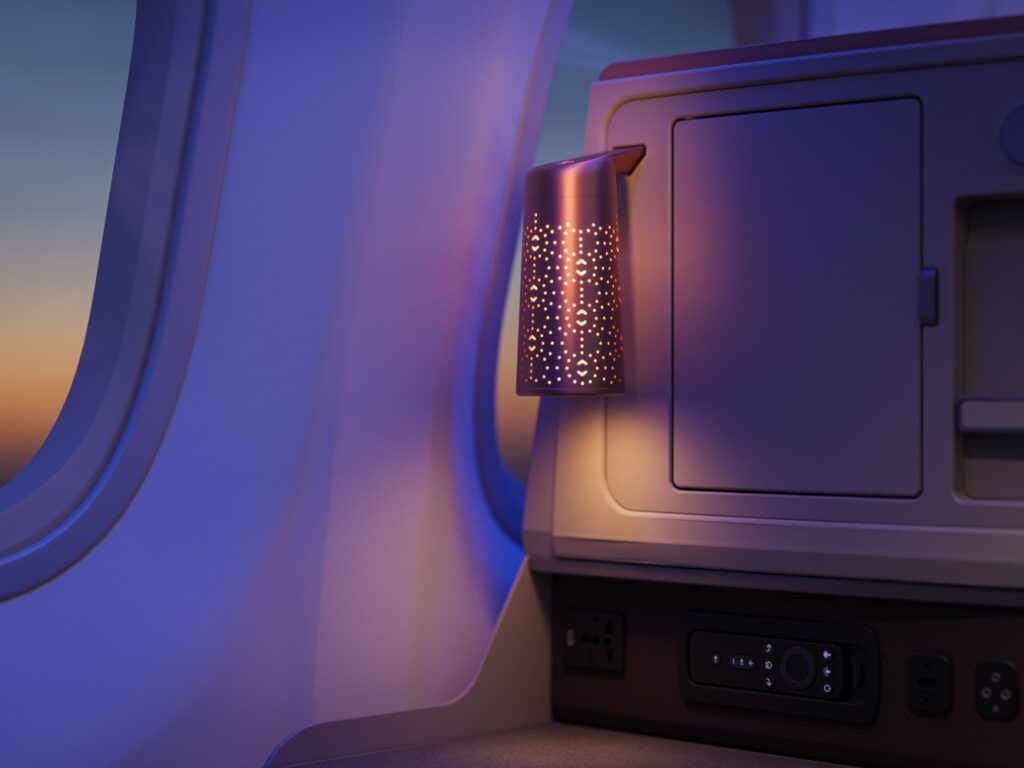
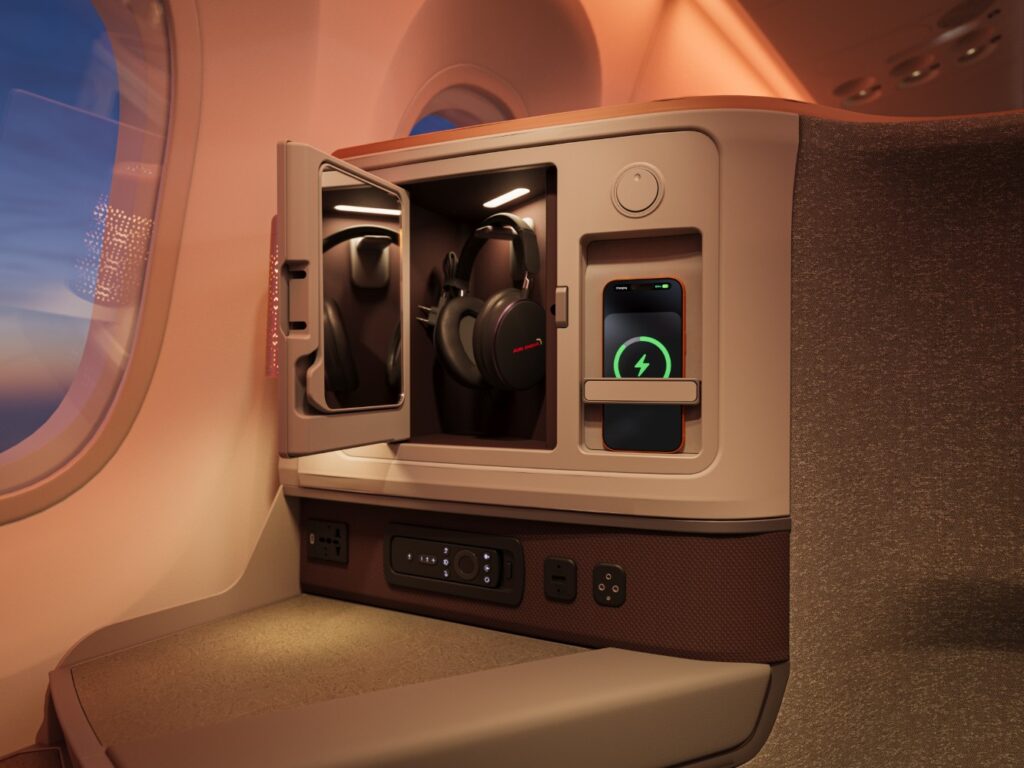
Up front, a total 30 Elevate doored mini-suites with all aisle access are configured 1-2-1 and feature a lamp designed with Air India’s jaali pattern, as inspired by India’s cultural heritage.
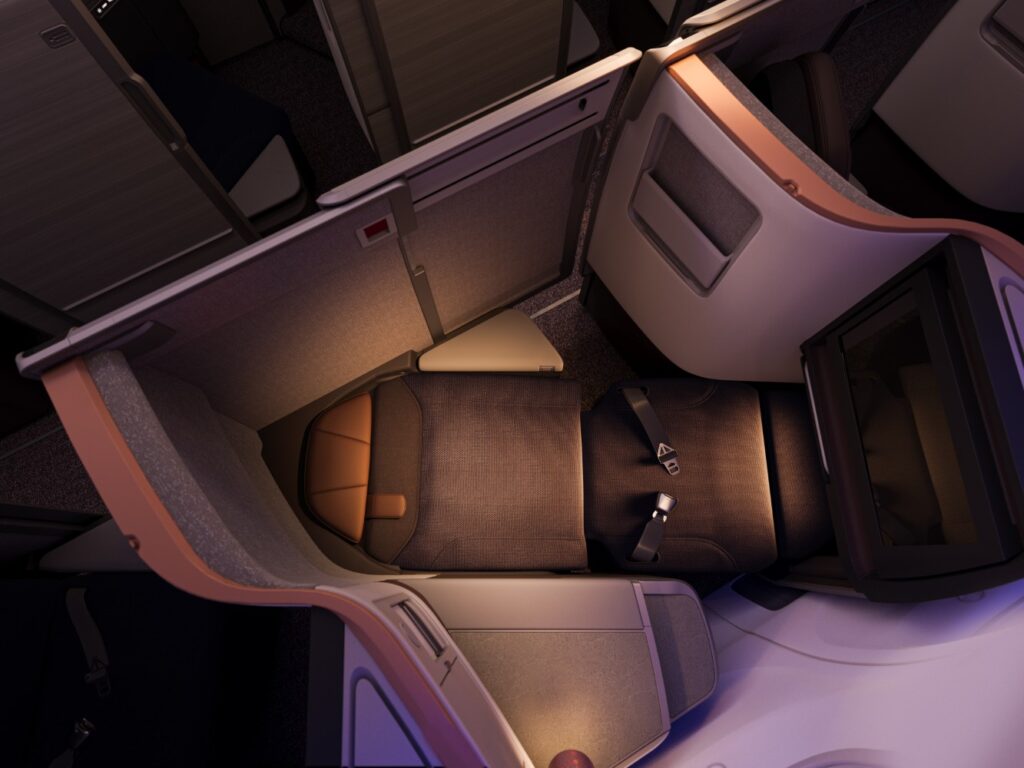
Each suite boasts a sliding privacy door, though the doors await certification and cannot presently be used. That will change once regulatory approval is secured.
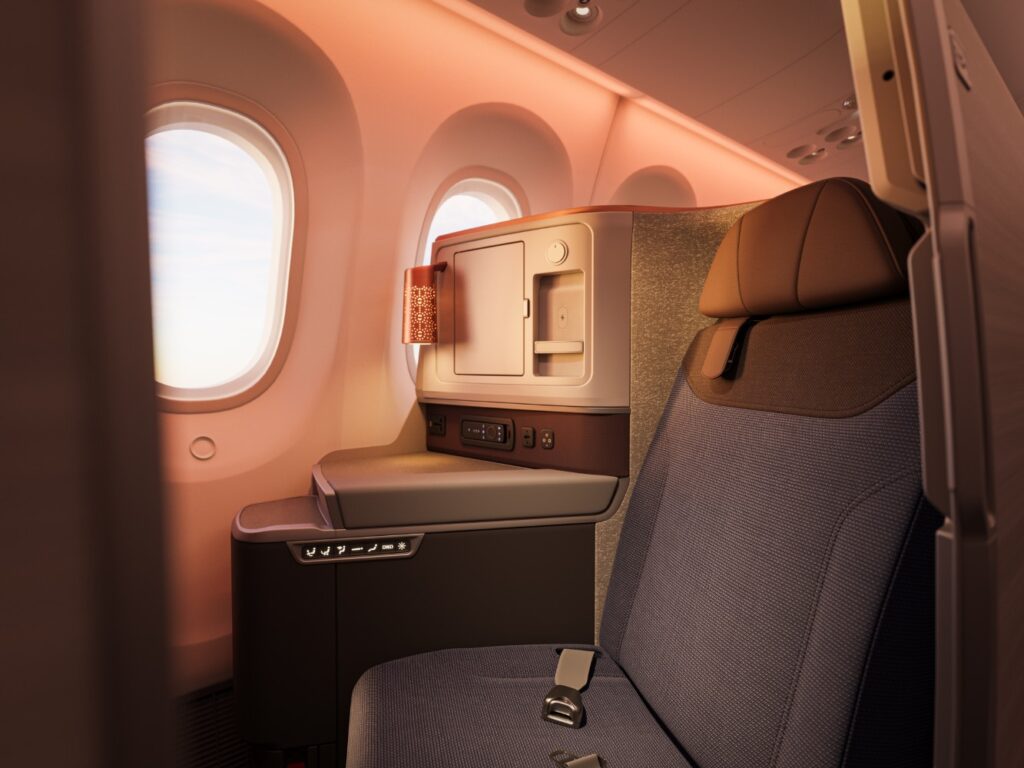
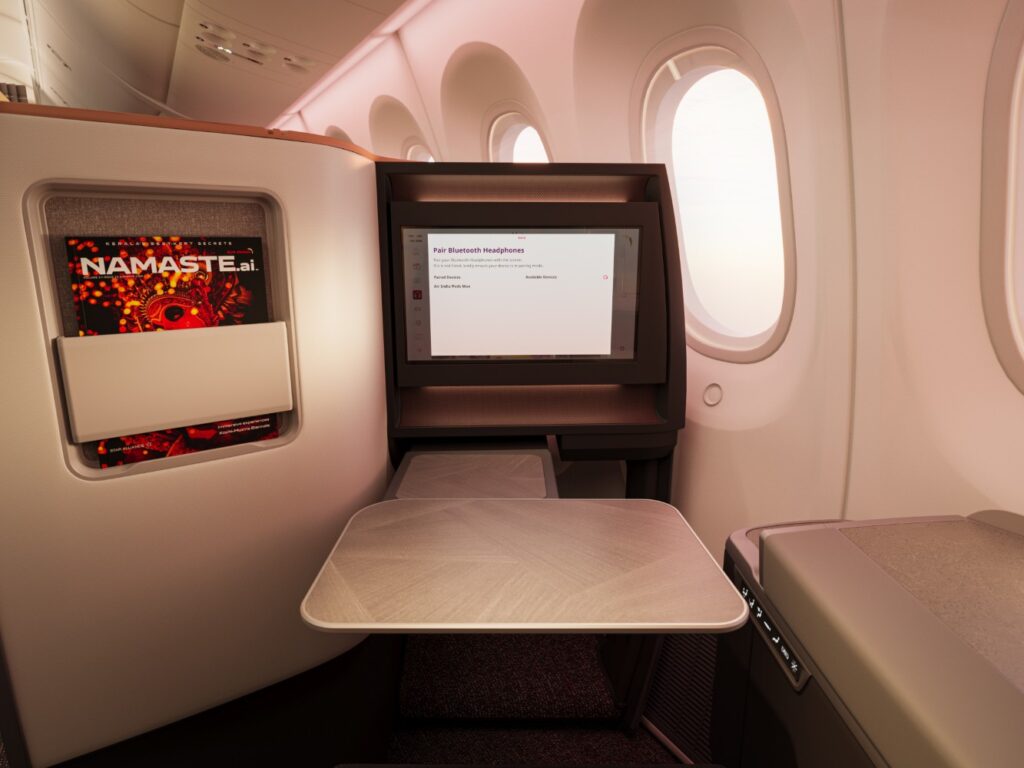
With a fully flat bed of 79 inches, 42” of pitch, a 17″ 4K QLED HDR touchscreen and IFE handset, this mini-suite is a competitive product.
Bluetooth headphone pairing, wireless charging, Type A and Type C fast charging ports, a height-adjustable armrest and plenty of storage round out the offering.
In Premium Economy, passengers can expect 28 seats, configured 2-3-2. Pitched at 38 inches, each seat offers a 7-inch recline, a 6-way adjustable headrest, a bottle holder, an individually adjustable calf rest and a leg rest.
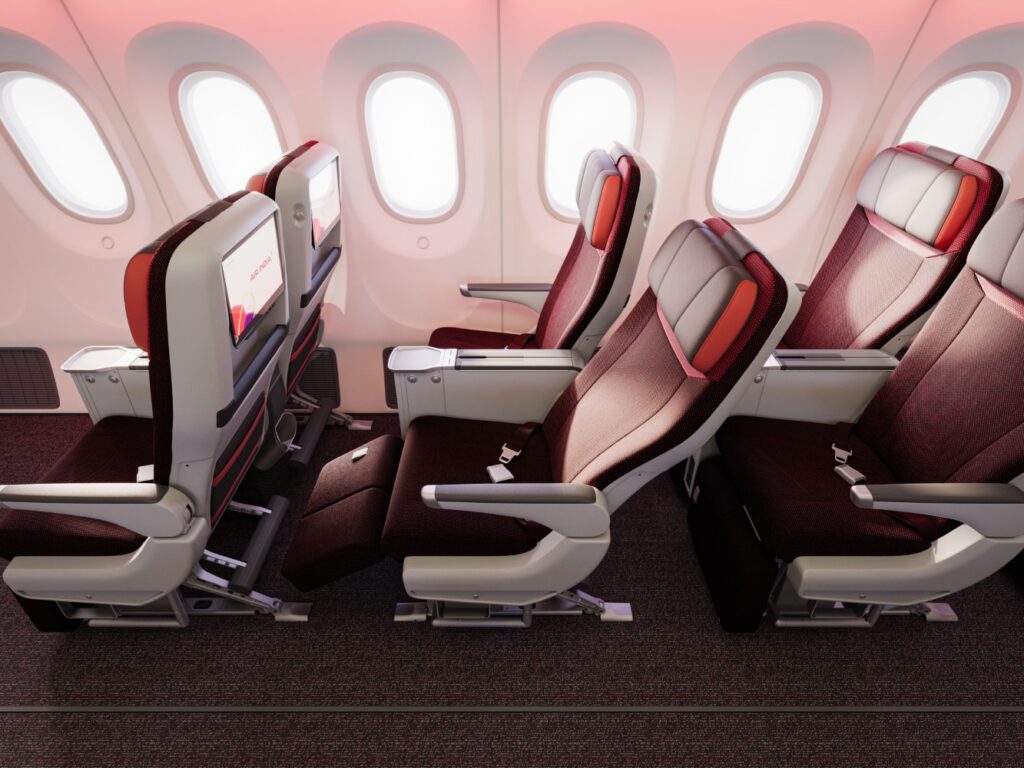
The 4K seatback IFE touchscreens in Premium Economy are sized 13.3″ and Type A and Type C fast charging ports are on offer.
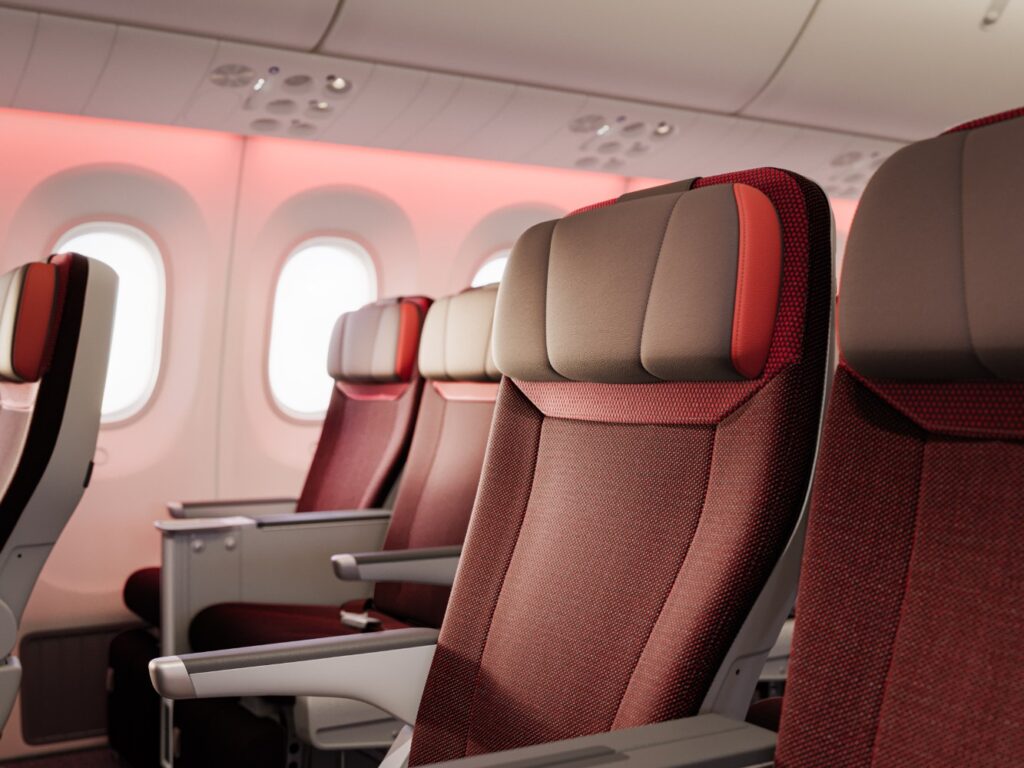
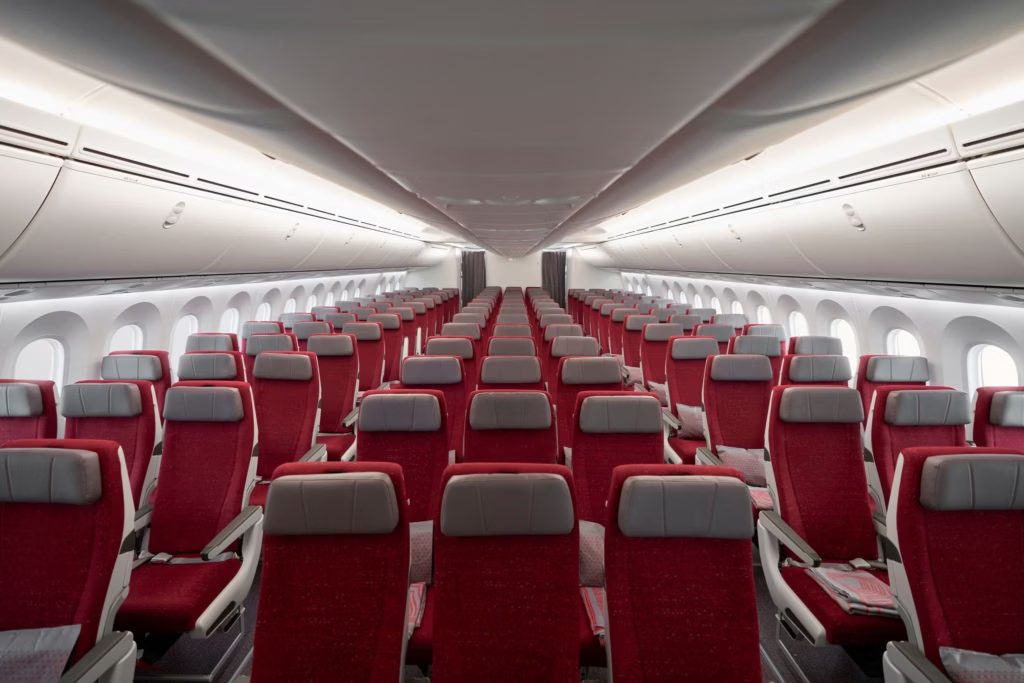
Down back, economy class features 238 seats in a 3-3-3 layout. Each seat offers a standard 32-32″ pitch, a 5” recline, and an 11.6″ 4K QLED HDR touchscreen. Type A and C charging ports will keep economy passengers’ devices charged up.
Of the 238 seats in economy, Air India says it has made 220 seats available in its booking inventory for flights operated with this new aircraft.
“The JPA Design and TrendWork’s cabin concept brings together the airline’s revitalised brand personality, characterised by boldness, warmth, vibrancy and progressive thinking, into an interior that feels elevated, confident and unmistakably Air India,” says JPA Design.
“The result is a completely reimagined 787 environment that spans business, Premium Economy and economy cabins, each connected through a holistic design ethos that balances refined detailing with a warm, human-centred sensibility.”

This 787-9 delivery, and the carrier’s new interior reveal, is a bright spot for Air India, which endured an extremely difficult 2025 following the tragic and deadly June 12 crash of a 787-8 shortly after takeoff from Ahmedabad Airport. The carrier is bracing for significant losses for the year.
Indeed, the redesigned 787 “serves as the first expression of a new design standard that will shape future Air India widebody aircraft, creating a consistent and recognisable experience across the airline’s international network,” notes JPA.
The aircraft will be pressed into service on February 1, 2026 on the Mumbai-Frankfurt route.
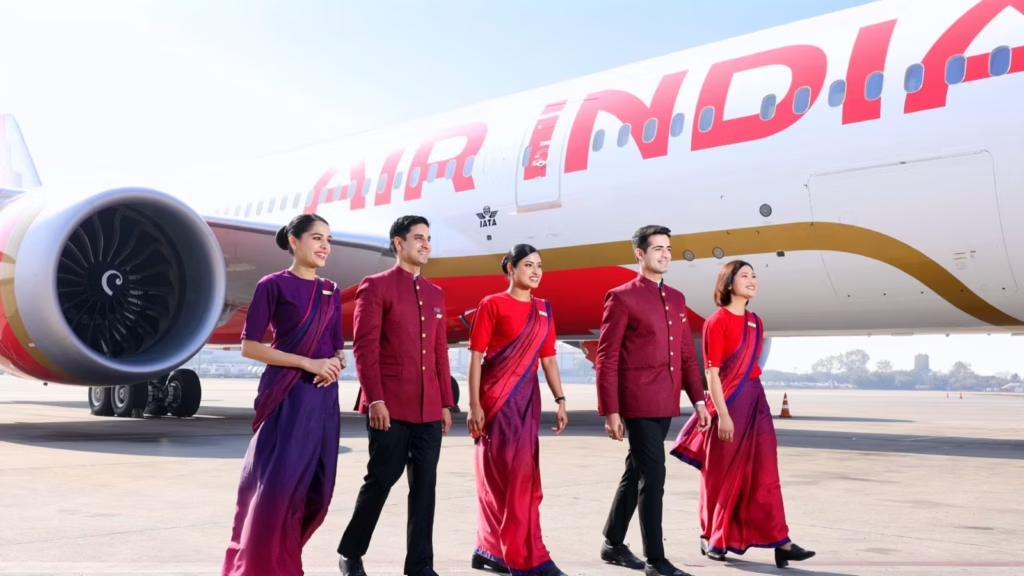
Featured image plus 11th and 12th embedded image credited to Air India. All other images credited to JPA Design.