



With airlines dumping billions of dollars into their aircraft cabins, it’s easy to forget just how far the passenger experience has come in the span of two decades. After a series of aircraft swaps had me flying one of Korean Air’s remaining Boeing 737-900s from Busan to Tokyo Narita, I found myself savoring the nostalgia.
No, I did not leave off the -ER on the 737-900. This was indeed the non-ER variant of the twinjet. Korean once operated 16 of the 52 produced in the early 2000s, before Boeing tweaked the type to transform it into the wildly successful -ER model. Korean is slowly withdrawing the type from service, with nine remaining at the time of flight.
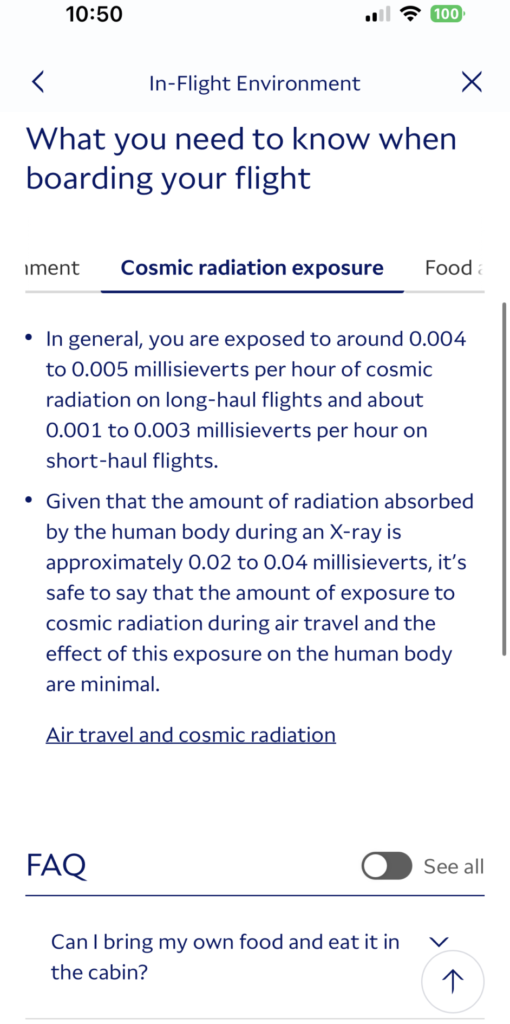
The night before my flight, I successfully checked in using Korean’s surprisingly robust iOS app, even though I had booked through SkyTeam alliance partner Delta using SkyMiles and expected that decision to be somewhat of a problem. Korean’s app provided oodles of information, from useful bits like coat check availability at Busan and a timeline of inflight service and meal images, to downright odd information like cosmic radiation exposure levels. Overall I was impressed with the app’s content and flow.
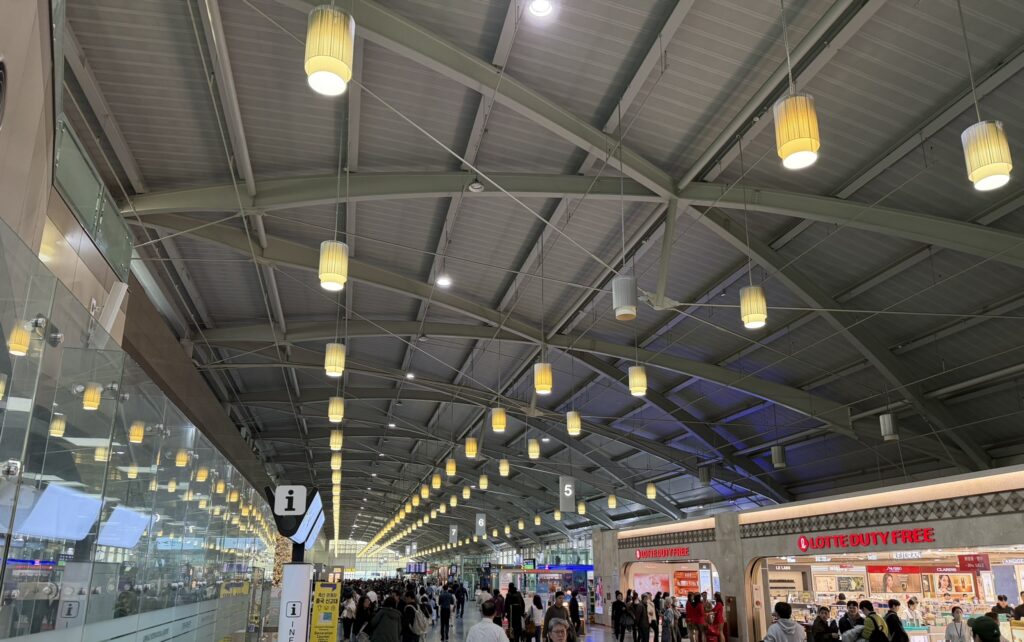
A brief issue involving the name on my ticket was swiftly resolved by Korean Air’s Busan duty manager at the airport, and after an expeditious security screening, I found Busan’s international terminal to be absolutely packed.
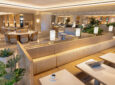
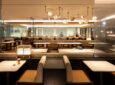
I tried to access multiple lounges with my Priority Pass membership but was turned away due to crowding, settling instead for Korean’s own lounge.
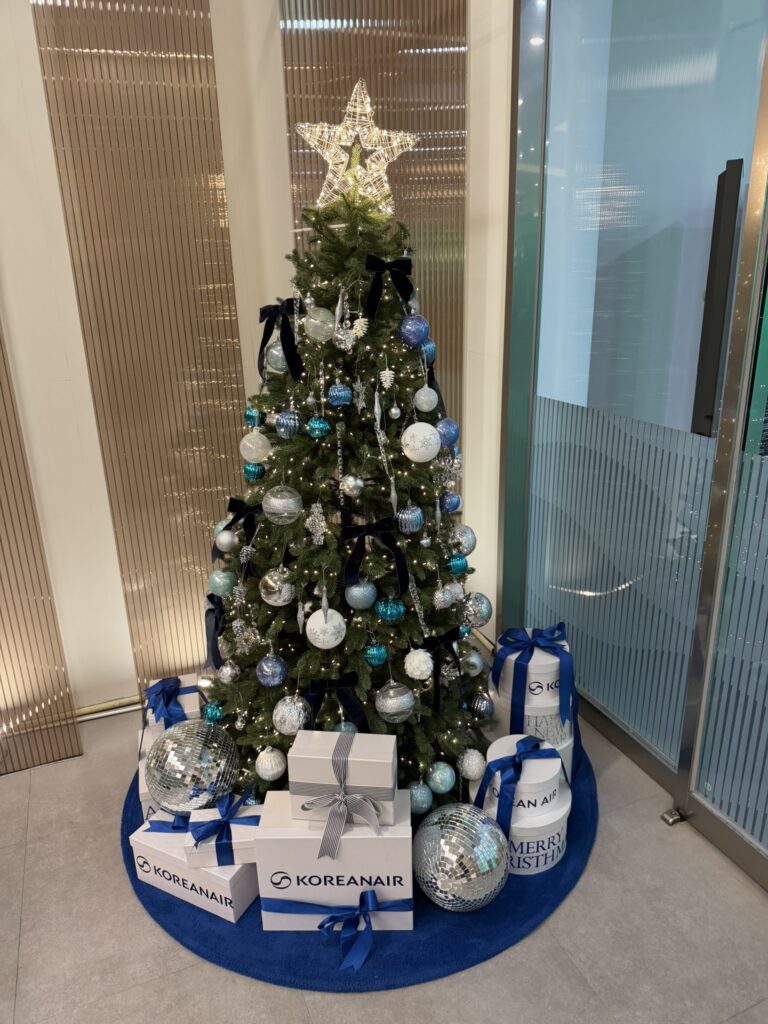
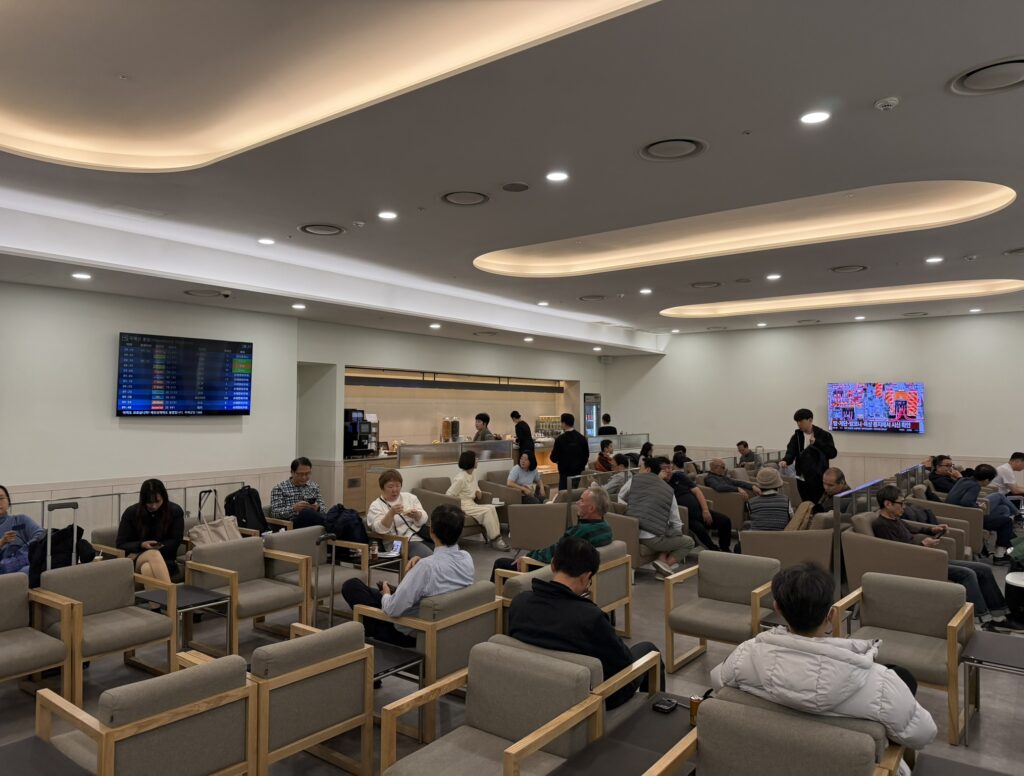
If Korean was going for a design aesthetic of “doctor office waiting room,” they nailed it. The windowless space was nothing more than a bunch of chairs in a room with a coffee machine and thankfully some Onigiri to snack on. I downed my snack and went back to the terminal.
Boarding began on time and surprisingly required a bus ride to a remote stand.
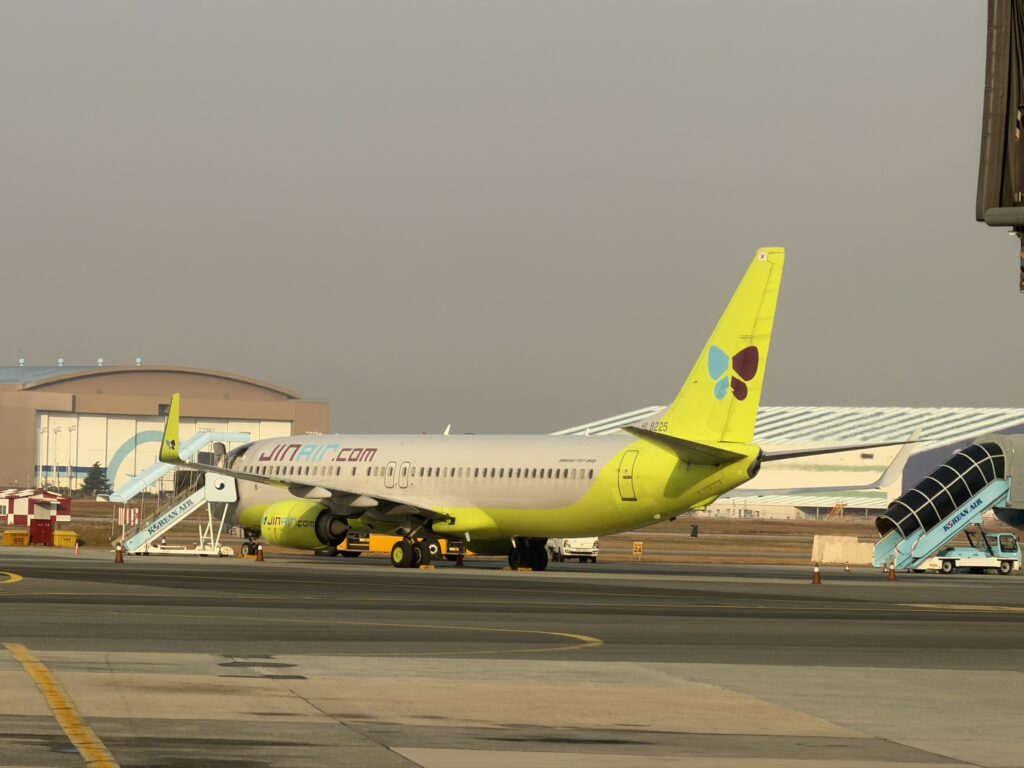
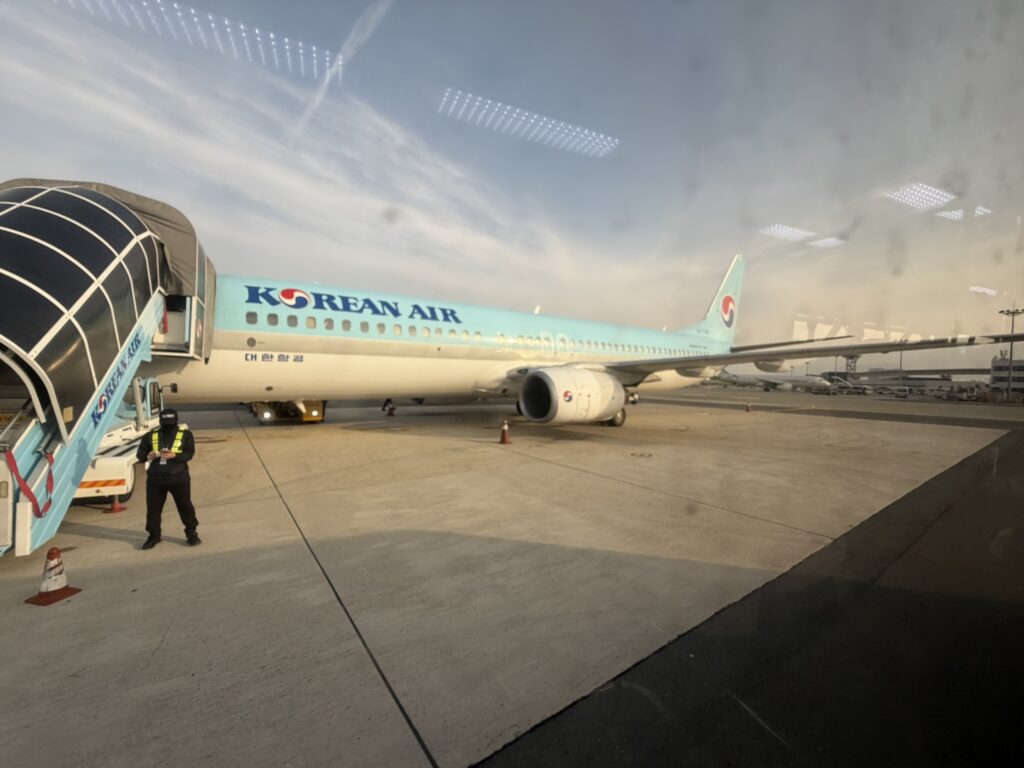 I figured Korean’s mainline flights would have priority for contact gates over low-cost carriers like Jin Air and Air Busan, but I didn’t mind seeing the aircraft up close for a few moments as we wizzed by.
Stepping on board the 737-900 was like being transported back in time — long before the #PaxEx and #AvGeek hashtags were created for social media.
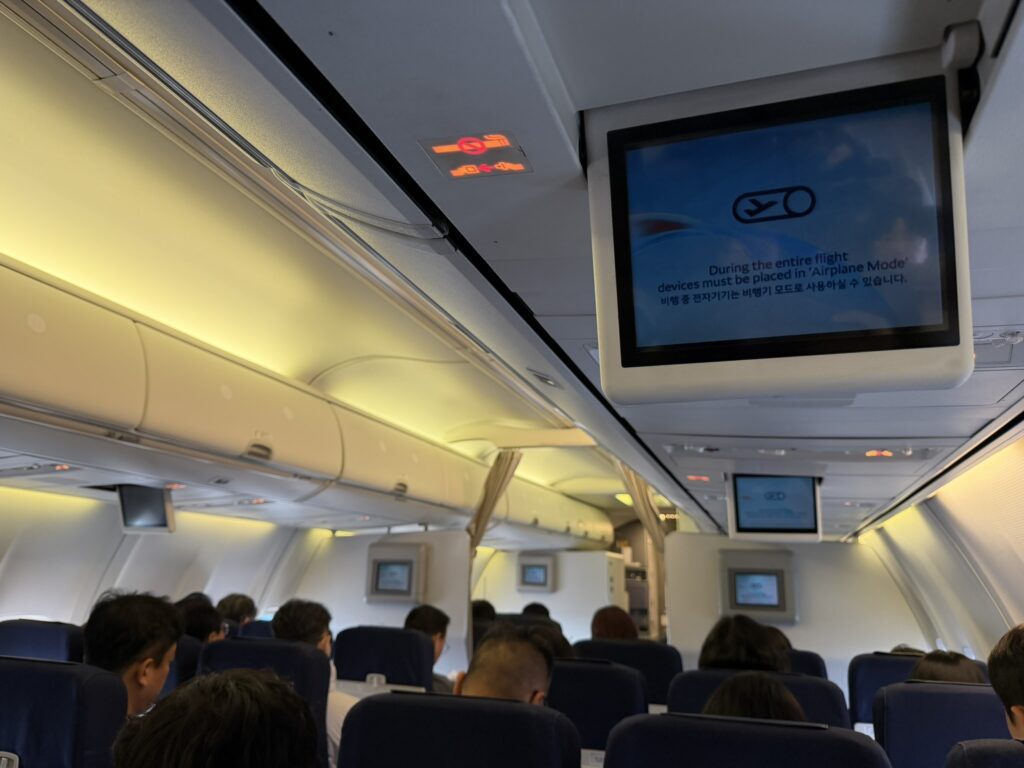
This 737 doesn’t have the Boeing Sky Interior, Space Bins, seatback screens, tablet holders, power outlets, USB ports, Wi-Fi, streaming entertainment, or any other modern niceties.
 Looking out the window and seeing a 737 wing without winglets was seriously weird. What passengers do get, however, is delightfully retro.
 Much like my A380 flight a week earlier, the chunky old seats were in good condition and were recently reupholstered to sport Korean’s new brand colors.
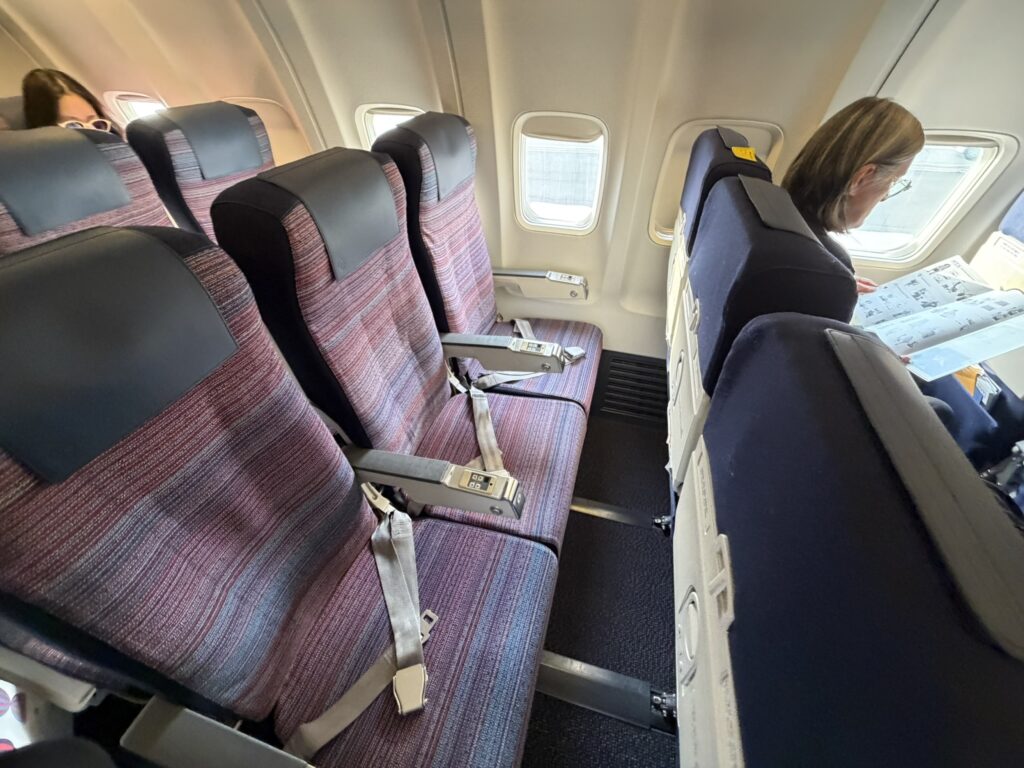
With a pitch of about 30 or 31 inches this felt like just barely enough room to be comfortable and not really think about it.
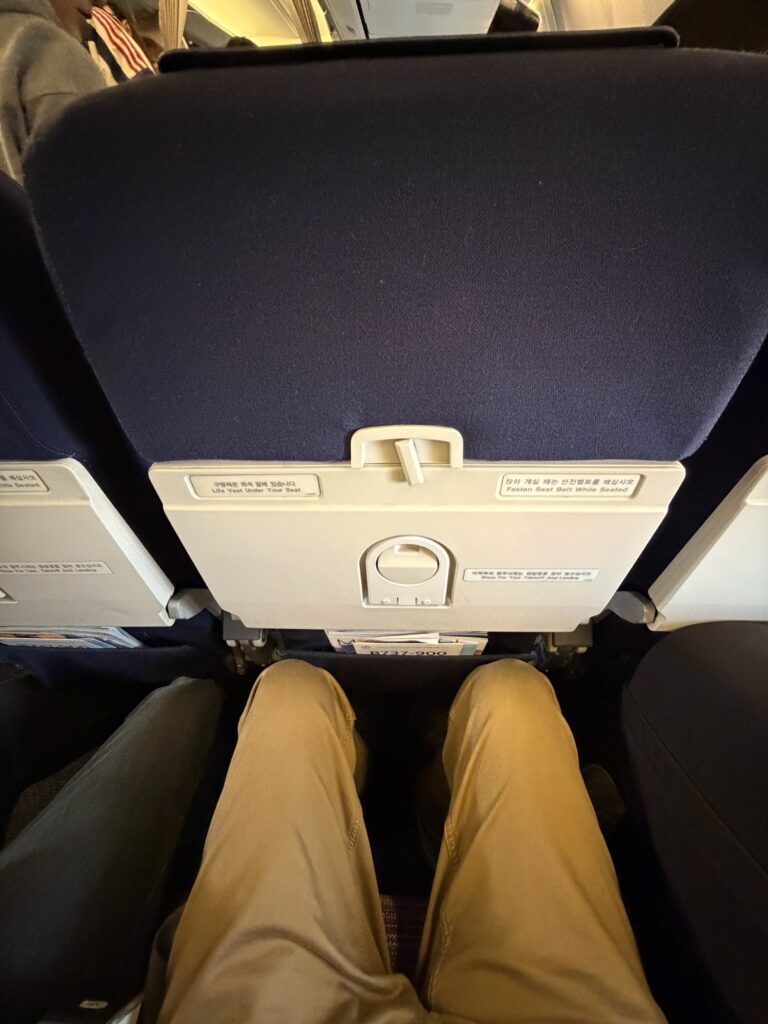
Each seat has a tray table with a separate tiny cup holder, recline button, and audio channel selector that I’m sure has been long retired by now. That’s it.
 The cabin crew activated the safety video just after pushing back and the nostalgic sound of overhead video monitors dropping down from the overhead panels provided a moment of #AvGeek happiness. I haven’t experienced that thrill in ages, as US airlines have eliminated overhead screens outside of some oddities.
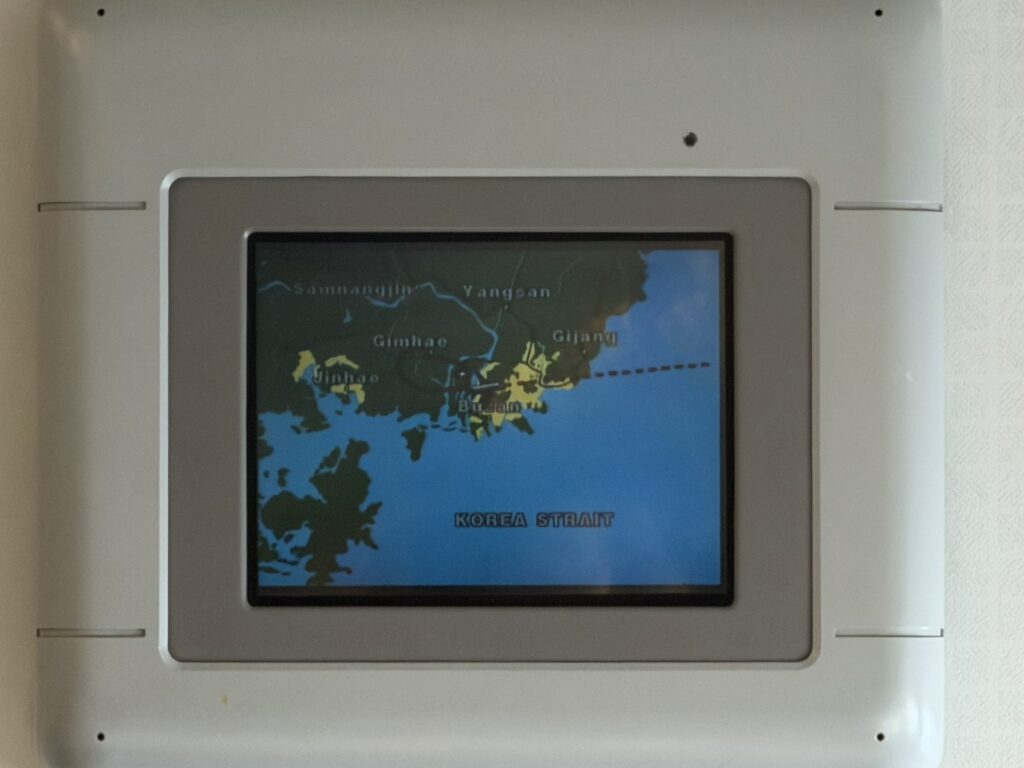
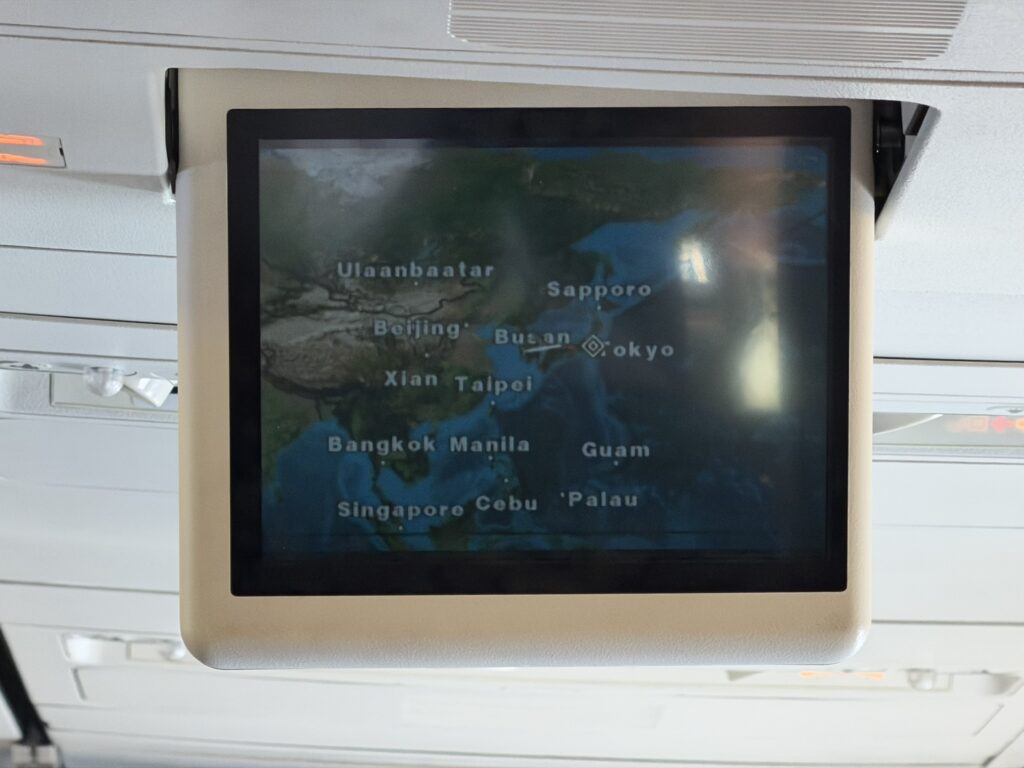 The screens remained deployed for the remainder of the flight, displaying a very retro moving map.
Despite the flight being just 90 minutes in the air, Korean offered a full beverage service and a complimentary meal.
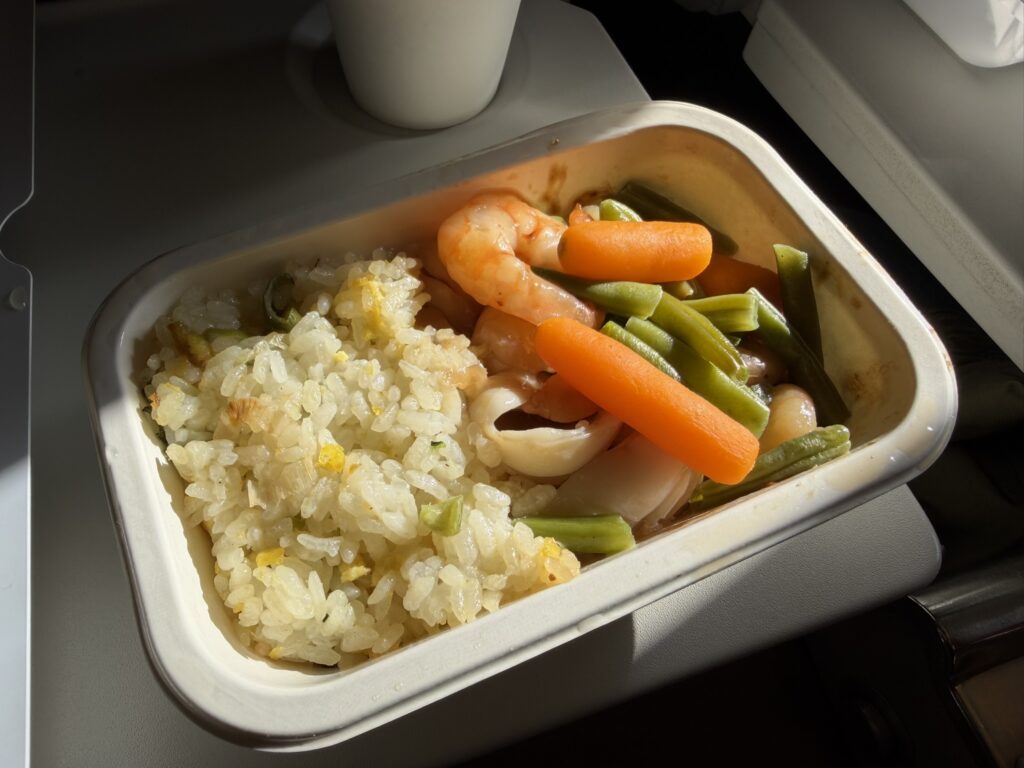
Did I really want stir fried seafood with oyster sauce at 10am? No, but I was happy to have a real meal on such a short flight and liked knowing before flying exactly what I would be getting thanks to the app.
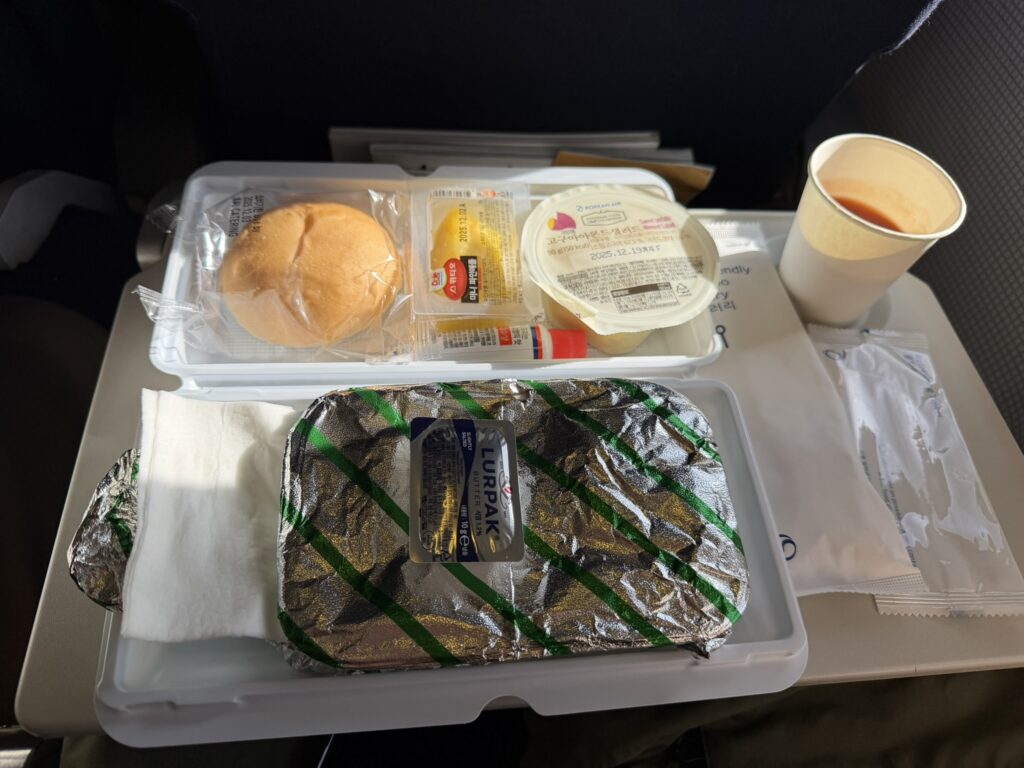
Unwrapping the meal and the sides helps to pass the time on a flight with nothing else to do, and I’d trade in-flight Wi-Fi for this on many of my flights back home.

The rest of the flight was spent gazing out of the rather scratched windows at Mount Fuji, a timeless activity for flights in and out of Tokyo.
Without the distractions of a seatback screen or Wi-Fi, I was able to truly enjoy and experience the magic of flight.
That being said, I sure am glad long-haul flying doesn’t resemble this experience whatsoever anymore and I welcome all the bells and whistles with open arms.
 Related Articles:
- Passenger comfort still a priority on venerable Korean Air A380
- Korean Air 787 enters commercial service with Viasat GX
- Korean Air’s A321neo cabins: fine, but where is the brand equity?
All images credited to the author, Jason Rabinowitz