
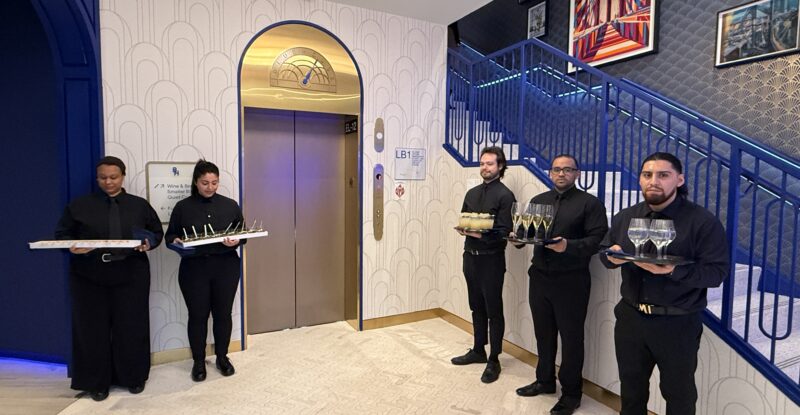

NEW YORK — Airport lounges have turned into the airport equivalent of an escalating neighborhood renovation: one carrier adds nicer lighting, the next installs a showpiece bar, and before you know it everyone’s ripping out walls and pretending they always meant to have a living-moss feature. Post-Covid, the whole thing intensified into an arms race. JetBlue, though, has been a holdout. It has never offered its own dedicated lounge, that is, until now. The waiting and watching phase is over. BlueHouse at New York JFK is finally here.
This media preview — a week before opening — is our first chance to see JetBlue’s long-awaited take on the lounge concept it announced in September 2024. There’s been genuine curiosity about what JetBlue would do once it finally entered the chat. The airline that reinvented Business Class as Mint has a habit of taking something the industry treats very seriously and giving it a bit more… personality. You can almost feel the designers being told: please don’t make this look like we ordered it from the Lounge Template Catalog.
JetBlue president Marty St. George sets the tone quickly, describing BlueHouse as “a truly unique New York space.” It’s a concise way of saying the space isn’t going to look like the inside of an anonymous credit-card lounge. He adds that it’s “a very, very deliberately designed space,” crafted to feel like “a truly JetBlue type experience.”
St. George calls it “fundamentally New York and also fundamentally JetBlue,” which helps explain why the airline ducked the word lounge entirely.
They “really wanted to make sure that the space did not look like everyone else’s lounges,” hence the name BlueHouse — something warmer, a little cheeky, and intentionally domestic. The goal, he says, is to create a spot that feels “welcoming, playful, not pretentious, kind of like your house.”
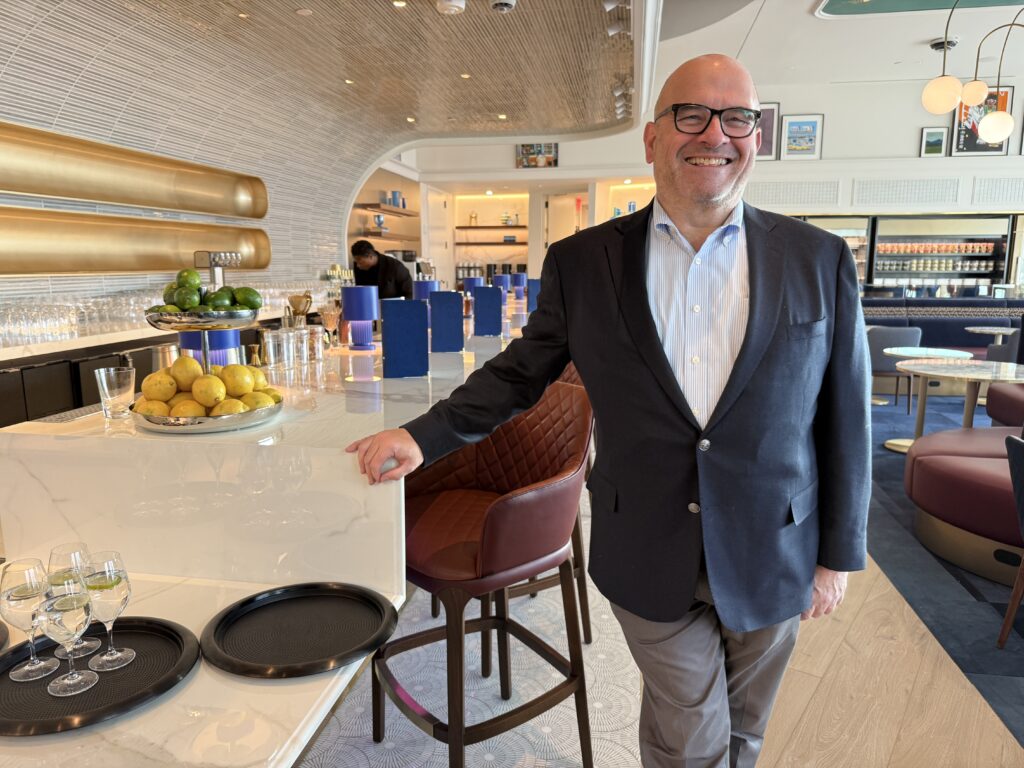
SVP of marketing and brand Stephanie Evans Green backs that up with a simple line: the airline wants you to feel at home, “like you can chill, you can do some work.”
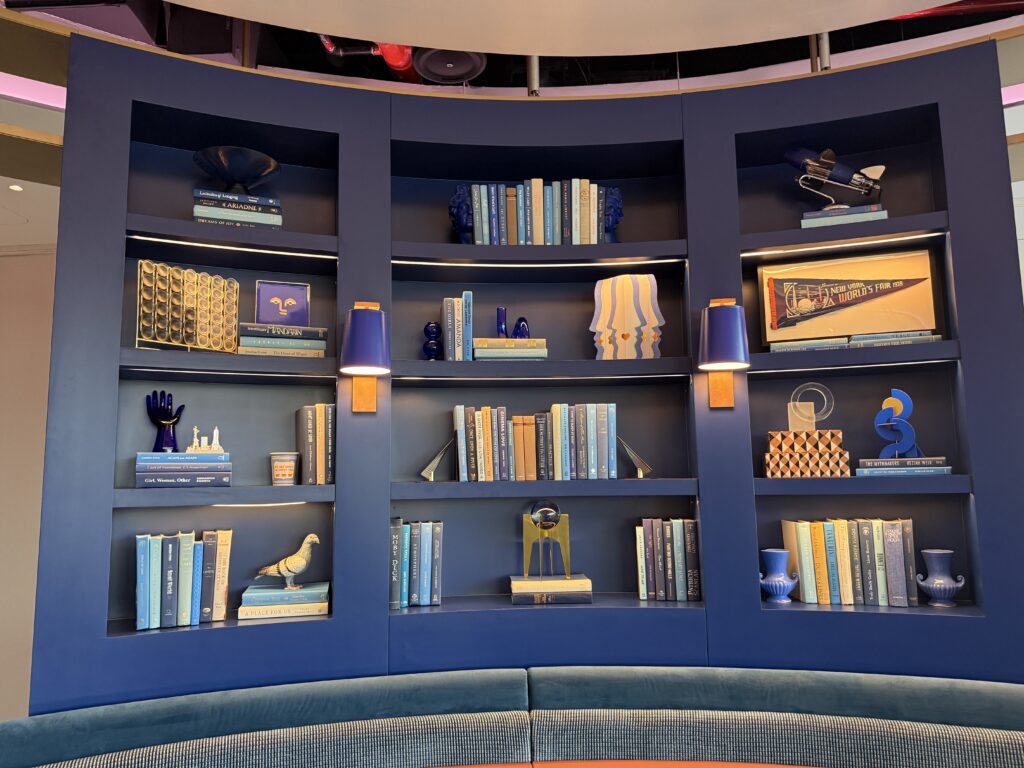
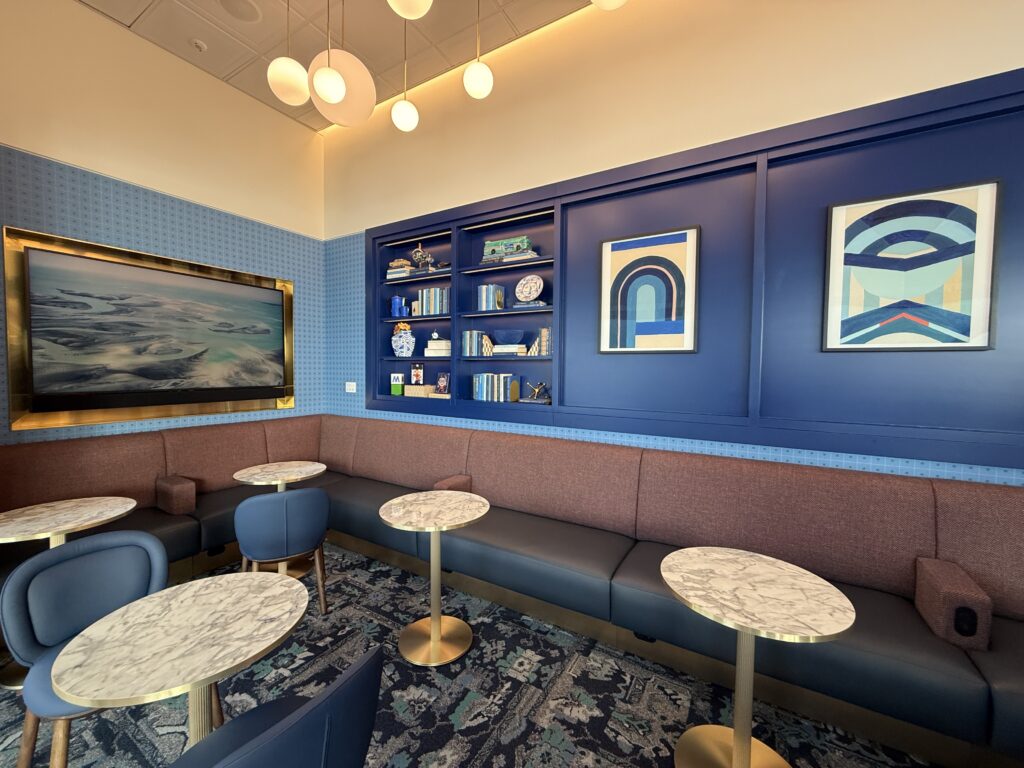
So yes, JetBlue’s first lounge isn’t exactly a lounge. It’s more like a friendly, well-designed apartment that just happens to be inside an airport. It even echoes a private New York Club like SoHo House with shades of a Speak Easy.
 A Walking, Eating, and Drinking Tour
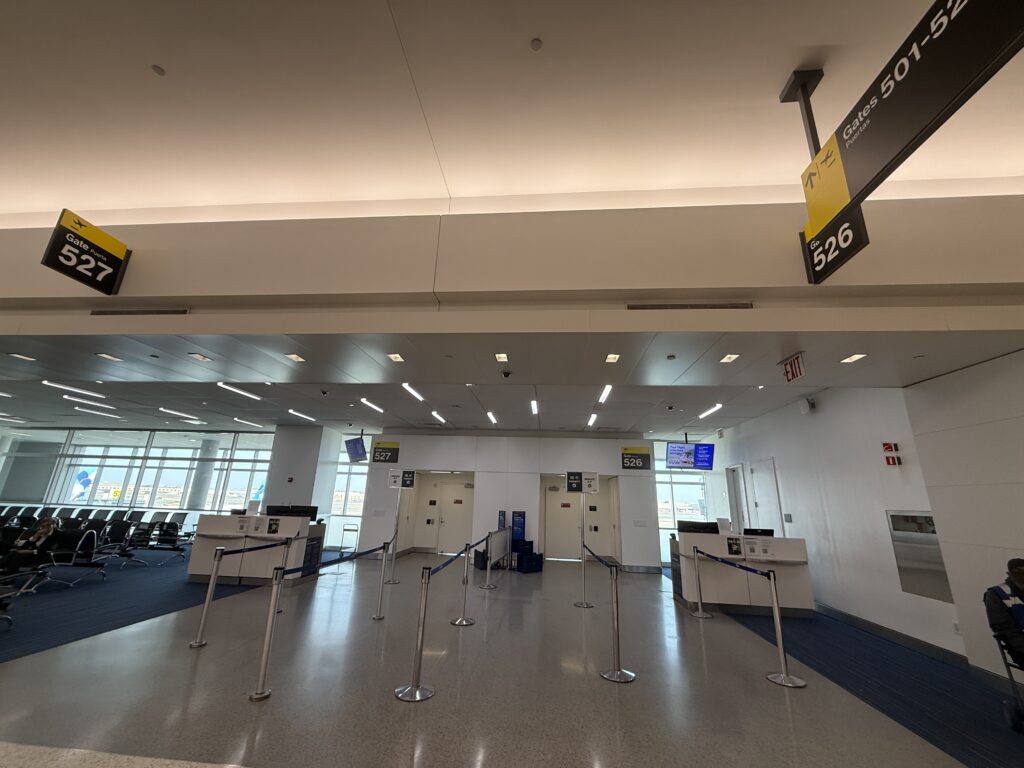
BlueHouse spans two levels and more than 9,000 square feet, replacing the old Airspace-operated Aer Lingus Premiere Pass lounge in JFK Terminal 5 across from Gate 526. Stephanie Evans Green notes that “it’s 9,000 square feet” but still “feels warm and intimate,” which is a fair description of how JetBlue carved out a space this size without it feeling like an echo chamber.
Marty St. George says the whole thing “is designed to have different environments for the way different people prepare for the flights,” whether that means relaxing, getting work done, or grabbing “a cup of coffee or a cocktail or two.”
This flexibility is the backbone of the design. BlueHouse is built as a sequence of choices rather than a single mood, and the two-level layout gives JetBlue enough room to create clear zones without making the space feel segmented for the sake of segmentation.
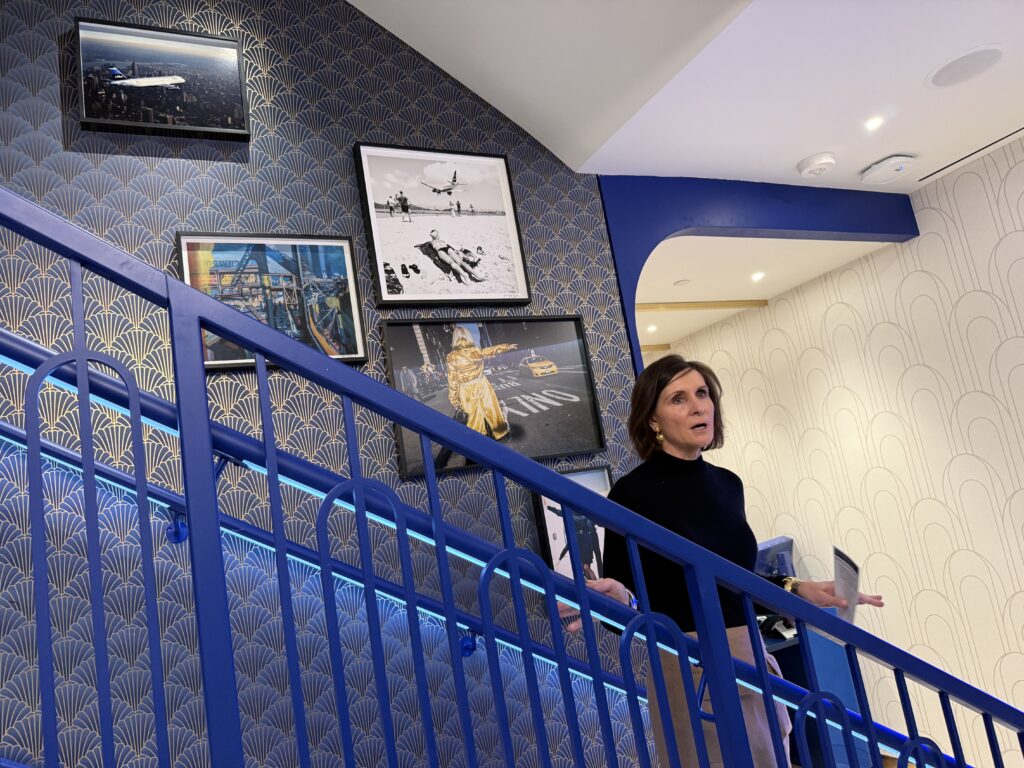 The tour begins in an entry lobby that aims for a low-key New York club vibe — something with a hint of downtown exclusivity but not so exclusive you wonder if you’re underdressed. It brings to mind a smaller, less buttoned-up take on Virgin’s Clubhouse, with a touch of SoHo House’s more relaxed corners.
 Stephanie Evans Green points out that “a special aspect of the lobby area is where our ‘just ask’ desk is,” framed by New York–inspired apartment-style post office boxes.
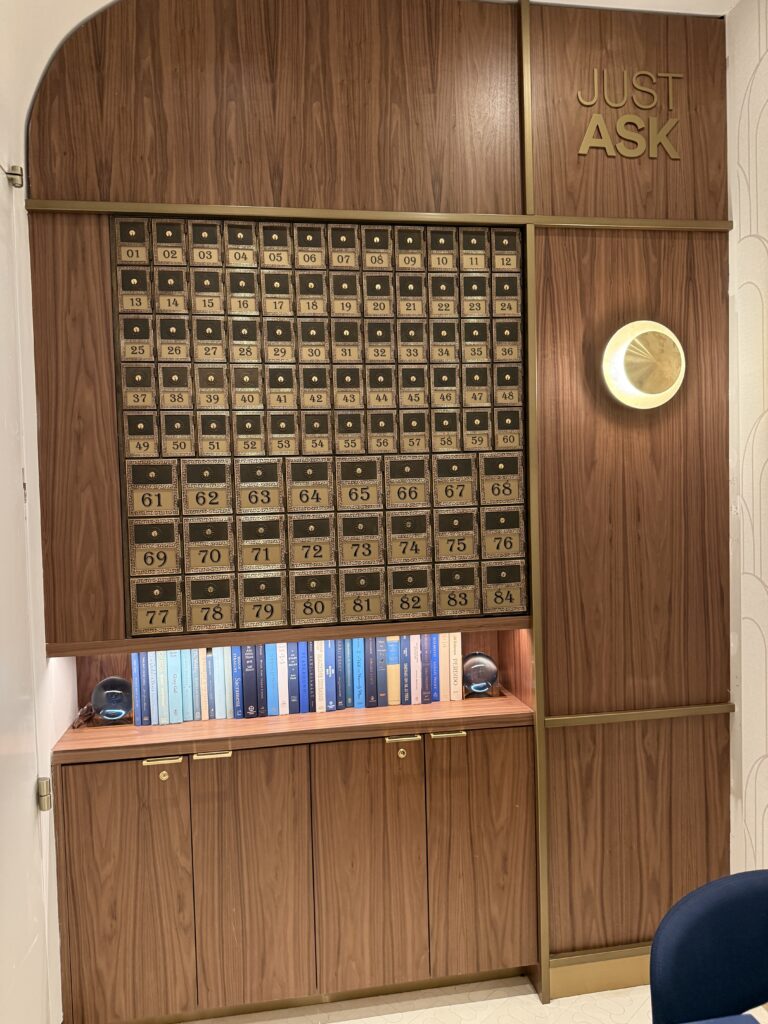
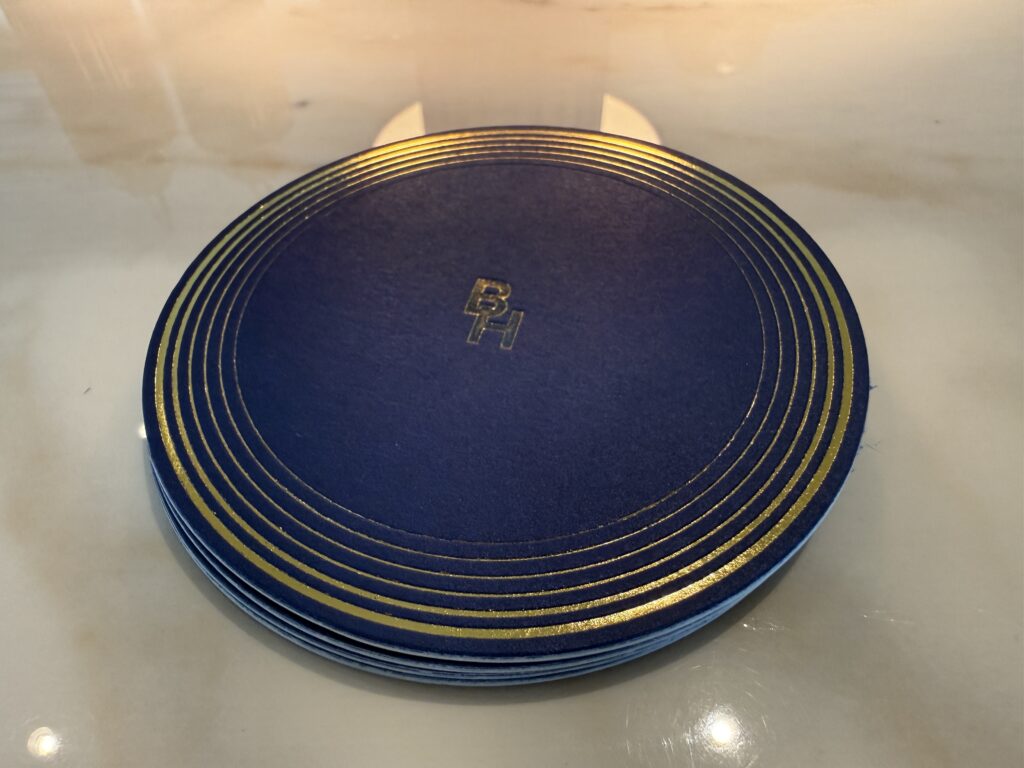
Guests who recognize the reference can request a key, which unlocks one of the small surprises JetBlue has tucked into the space. “We have JetBlue branded cards. There’s like little coasters, there’s luggage tags,” she says, all intended as small, playful discoveries rather than merch on display.
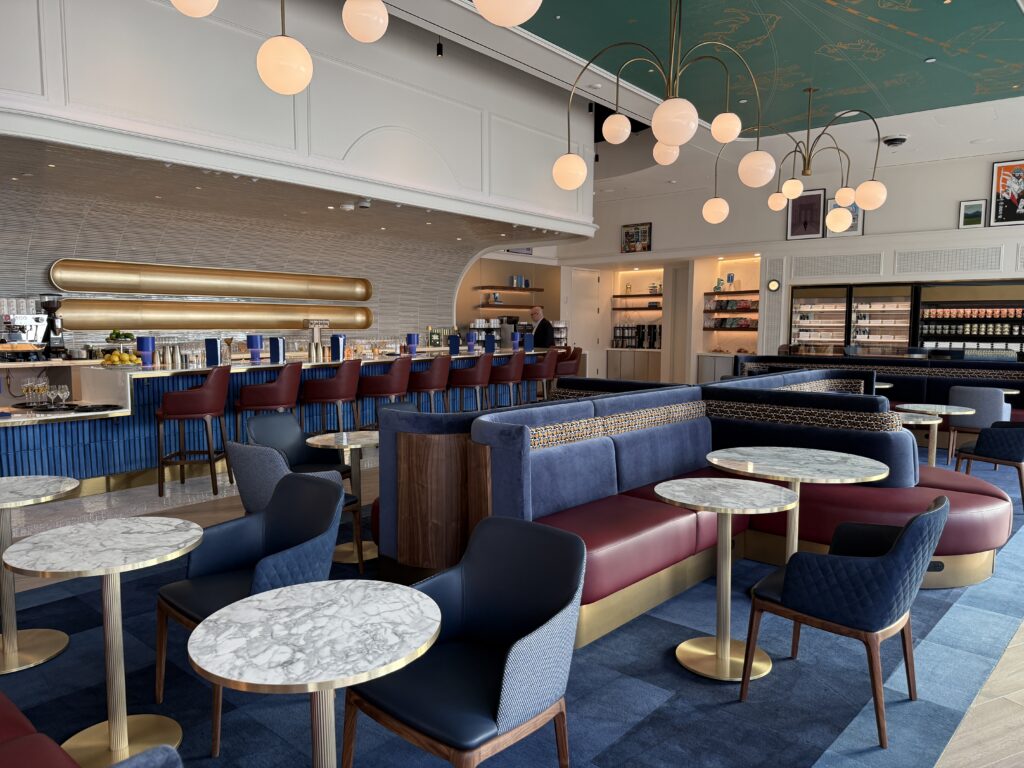
 Downstairs is the social center of BlueHouse — the area Evans Green calls “the main hub… a bit more social,” where travelers can grab food, settle in with a drink, or just watch the terminal move around them.
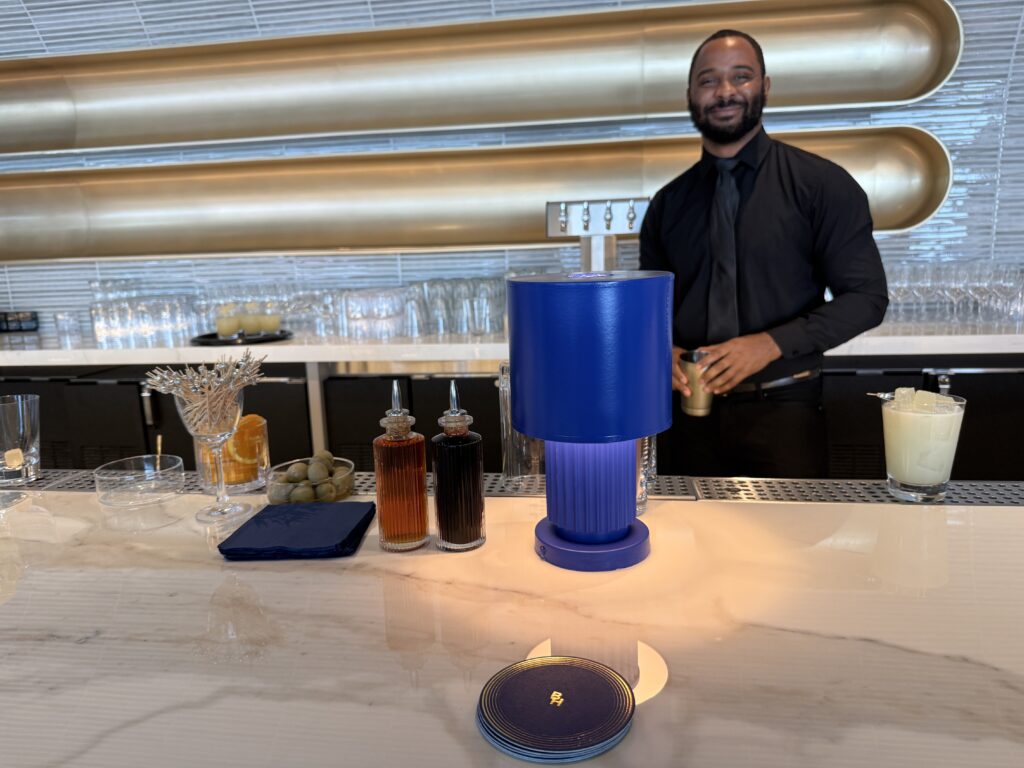
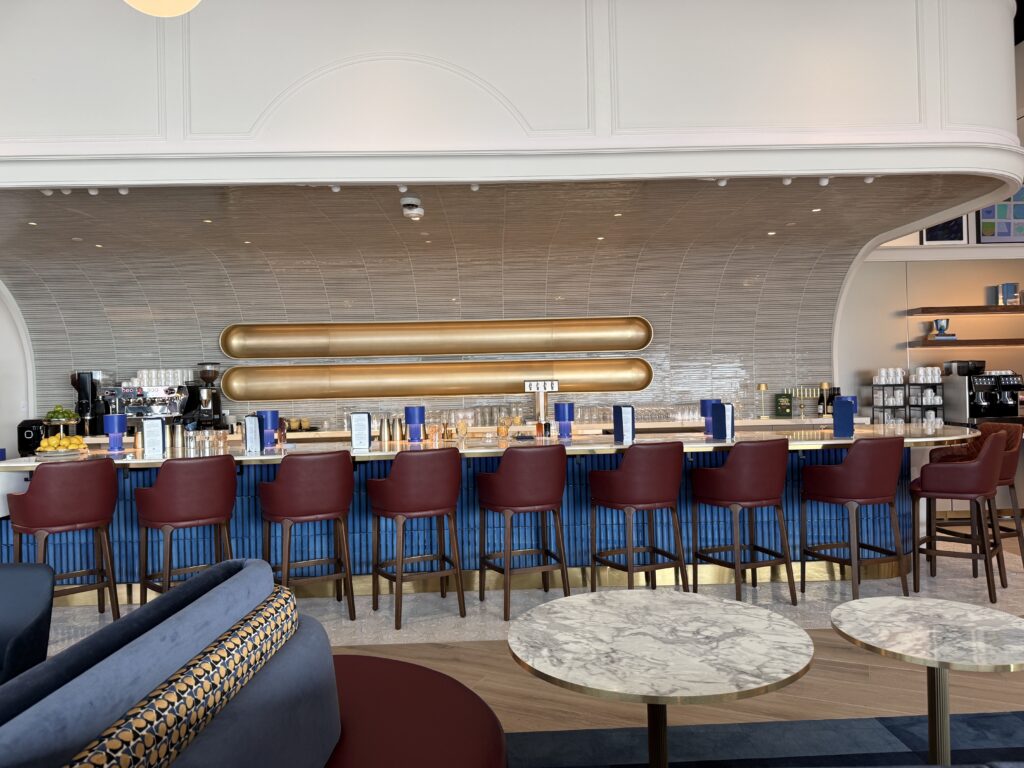
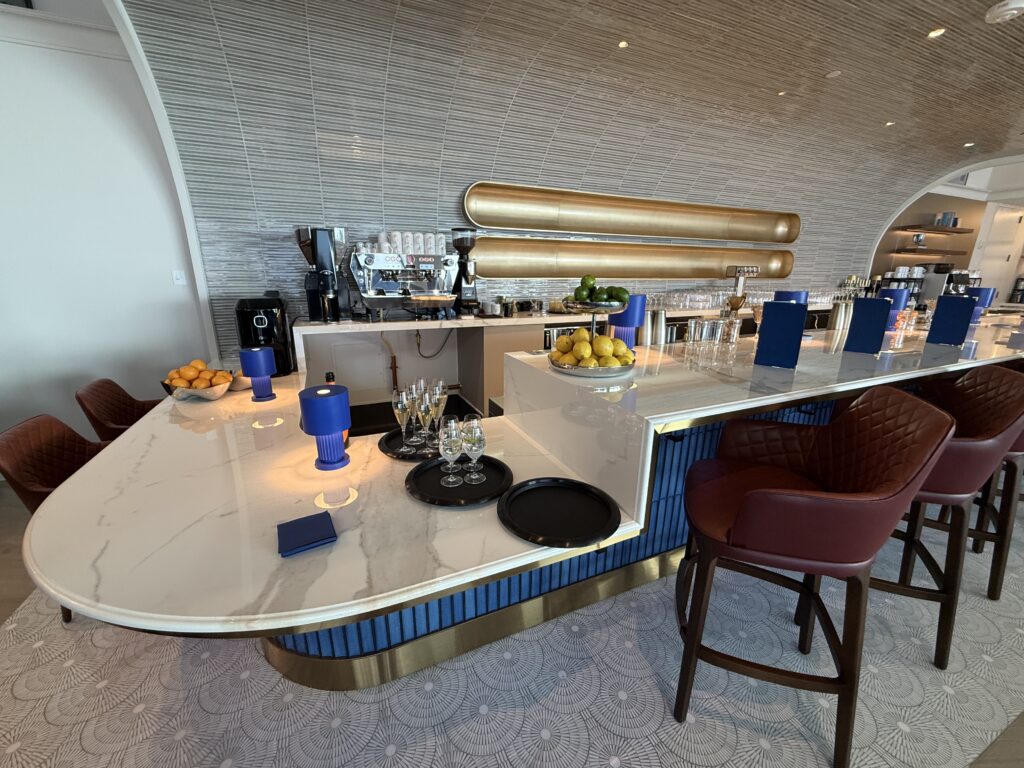 The first thing you see is the bar, which is massive, anchors the room, and looks like it was designed to hold its own at any hour of the day. With its scale and presence, it could blend right into the Grand Concourse level at Grand Central Station.
 That’s not accidental. As Evans Green explains, “the hero piece in this particular room is our ode to Grand Central Station,” complete with a constellation ceiling that references JetBlue’s focus cities and key destinations.
Symbols include the coquí frog for Puerto Rico, the Eiffel Tower for Paris, and the Paul Revere statue for Boston. And, in a very New York detail, she points out an oblong shape on the ceiling — a tile intentionally left unpainted to mimic the same untouched spot in Grand Central itself. As she puts it, “there is not a detail that did not go not thought of,” reinforcing the team’s commitment to making BlueHouse “uniquely, especially New York.”
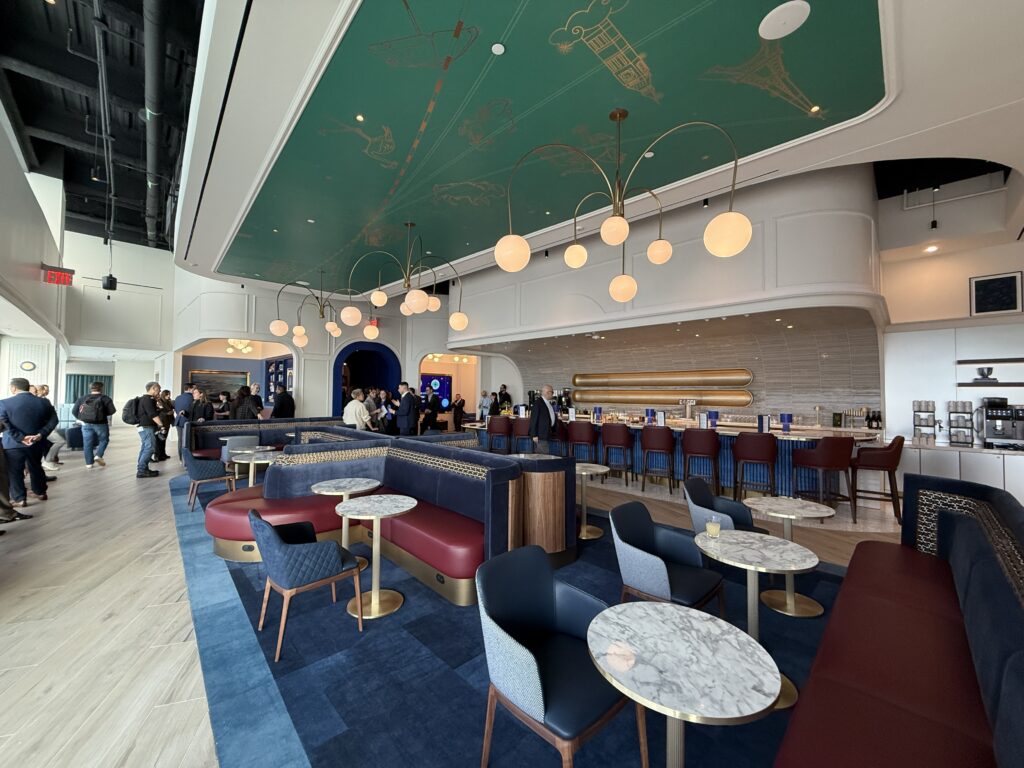
Evans Green calls the whole space “a love letter to New York because that’s our hometown airline,” and just as importantly, “a love letter to our customers.”
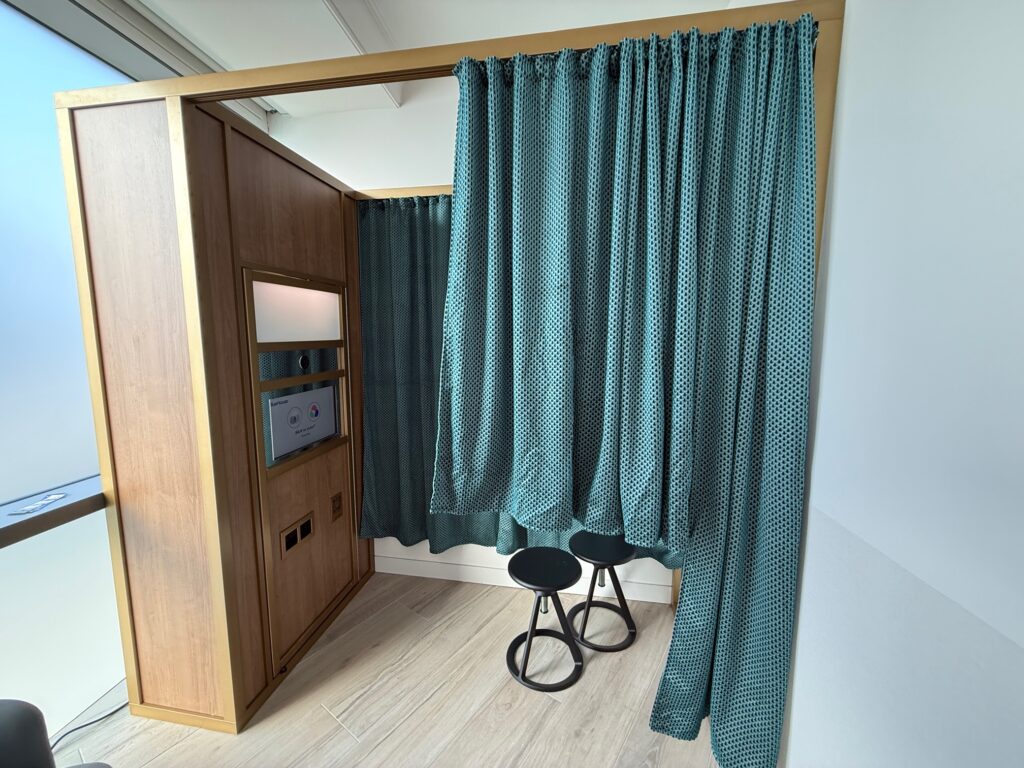
Off the main level, JetBlue has nested in a game room stocked with JetBlue-branded cards and board games. By opening day, an Airbus seat will be installed near the working photo booth — a small touch that feels very on-brand for an airline that leans into its aviation identity rather than glossing over it.
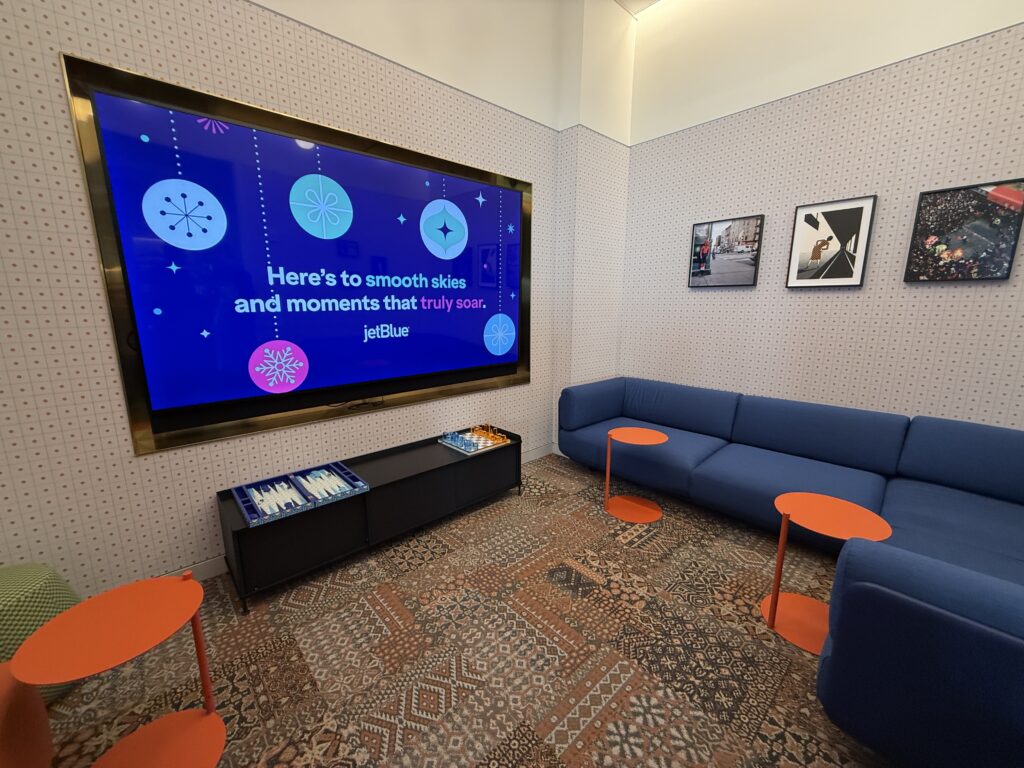
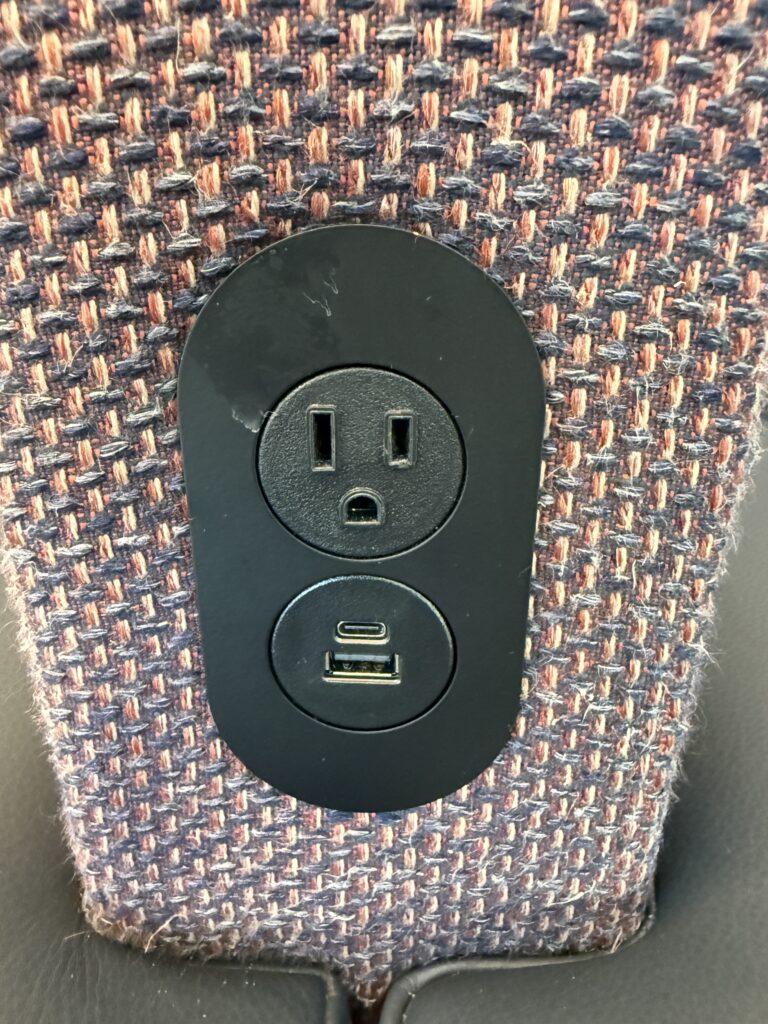
The broader amenity set rounds out the lounge’s purpose: high-speed Wi-Fi, ample power outlets, plentiful seating, and quieter pockets where travelers can tune out the terminal and get things done.
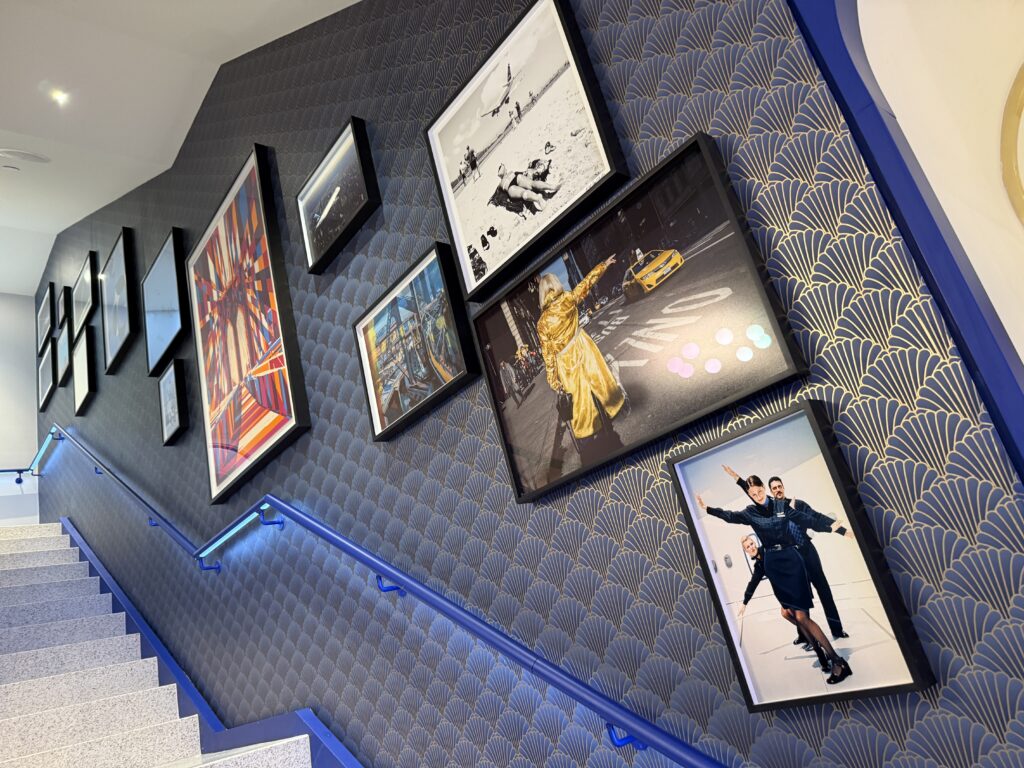
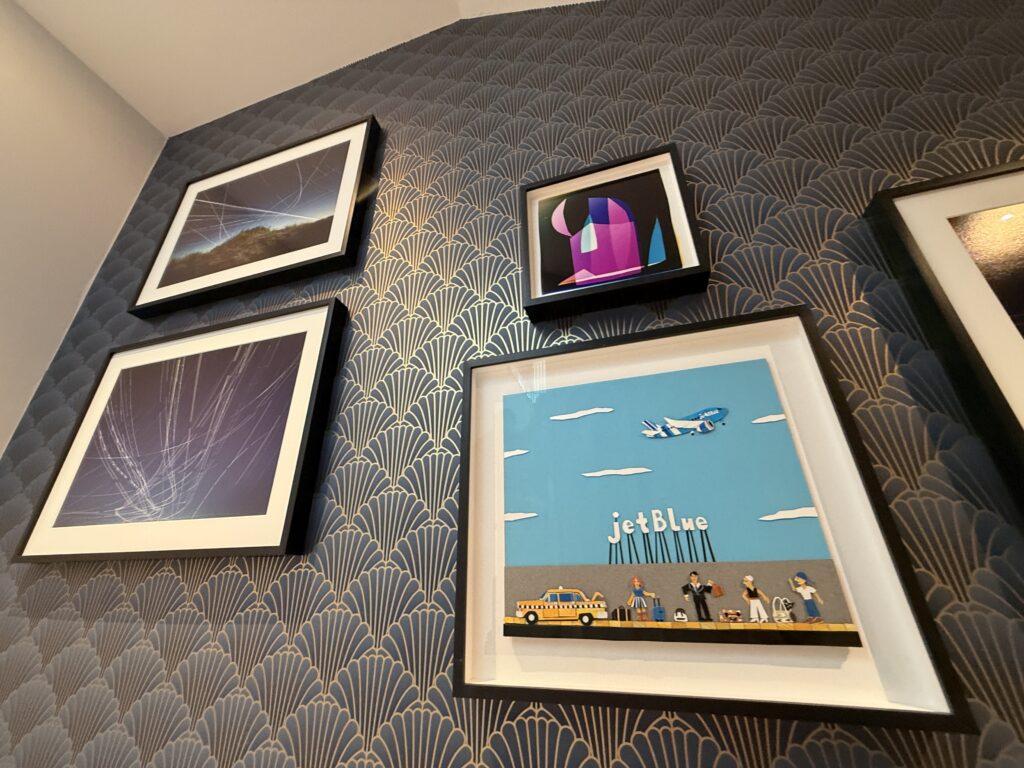
The stairway to the second level doubles as a mini gallery, showcasing curated New York–inspired art, including pieces by JetBlue crew members.
Stephanie Evans Green points out that the lounge features “some archival pieces from our own JetBlue collection,” alongside new works commissioned specifically for BlueHouse. One standout is a piece created by a New Yorker cartoonist made entirely from old MetroCards — a detail that lands squarely in the city’s visual language without feeling forced.
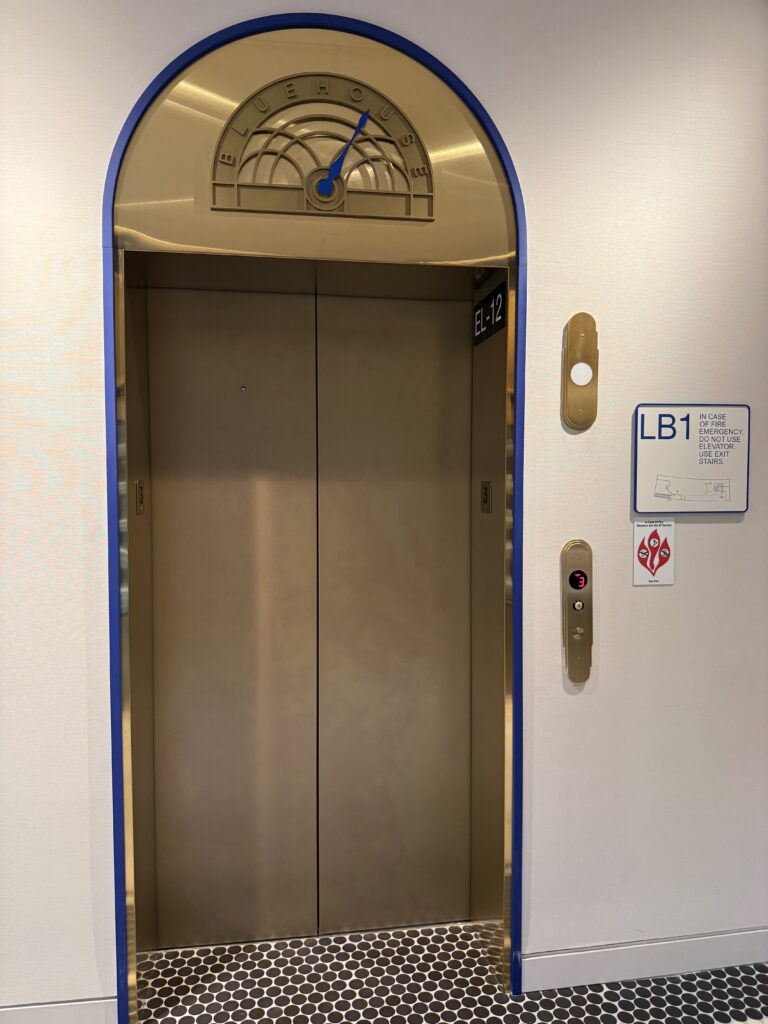
There’s an elevator as well, styled in an Art Deco look that nods to classic New York architecture, though BlueHouse swaps out the traditional manual floor indicators for a cleaner take.
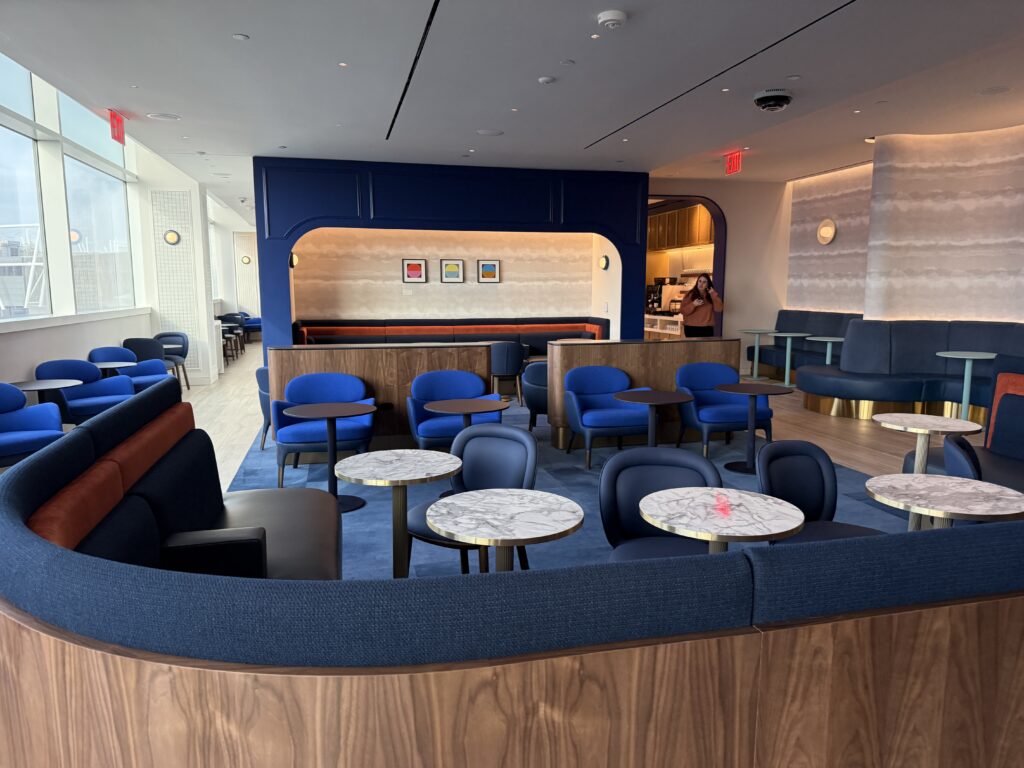
Upstairs has a calmer feel, with views of the JFK ramps and terminals — and the construction that seems to be a permanent feature of the airport landscape. Evans Green describes this level as “a bit of a quiet space” with additional grab-and-go food, more work areas, and a noticeably softer energy than the social hub downstairs.
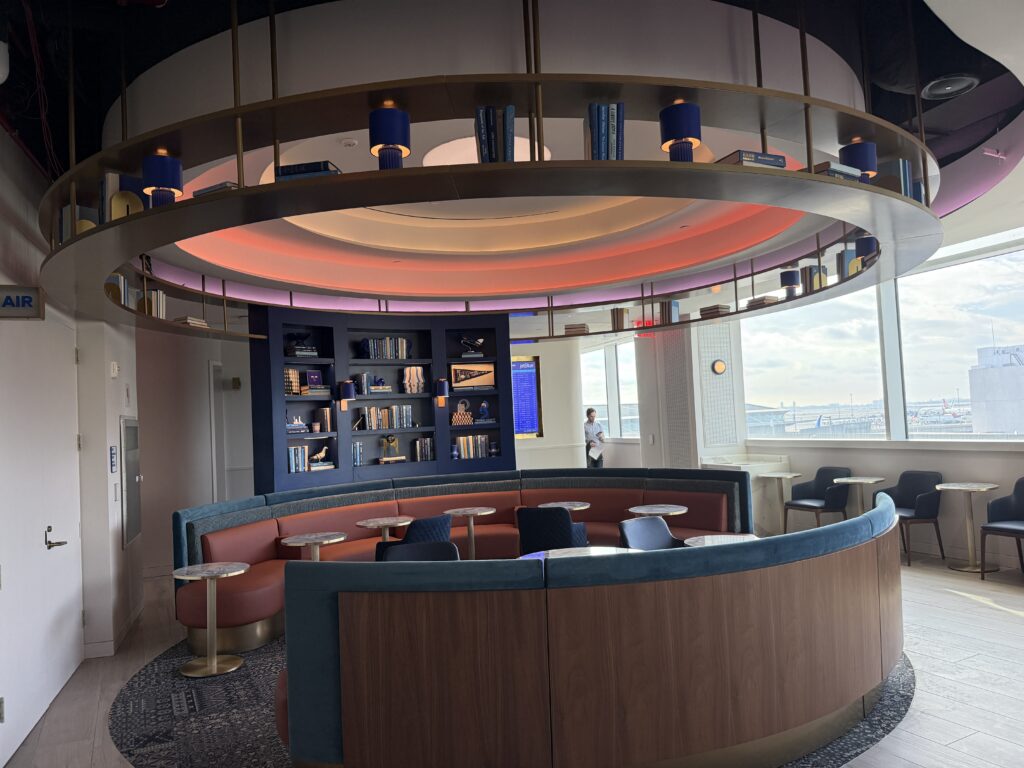
The circular lounge toward the center is the signature space. Evans Green calls it “the hero space upstairs,” noting that it’s “very chill, relaxed,” with lighting that shifts throughout the day in a way that “mimics what you would see inside one of our aircraft when you’re flying.” During the day it brightens, and at night it moves into blue and purple tones.
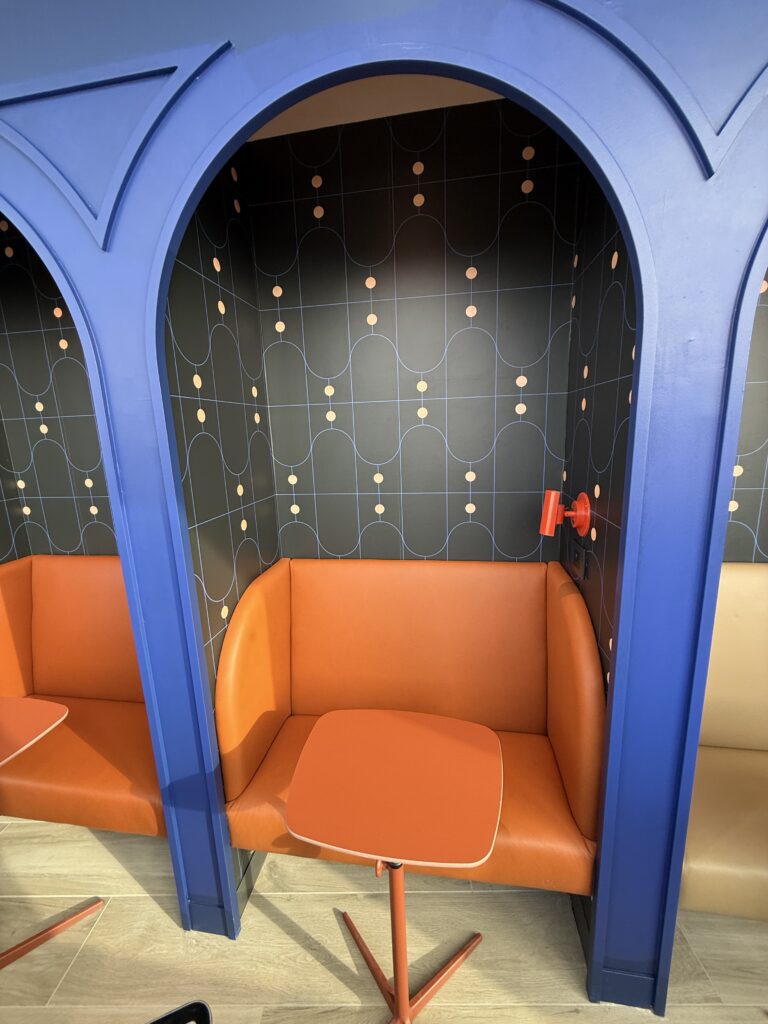
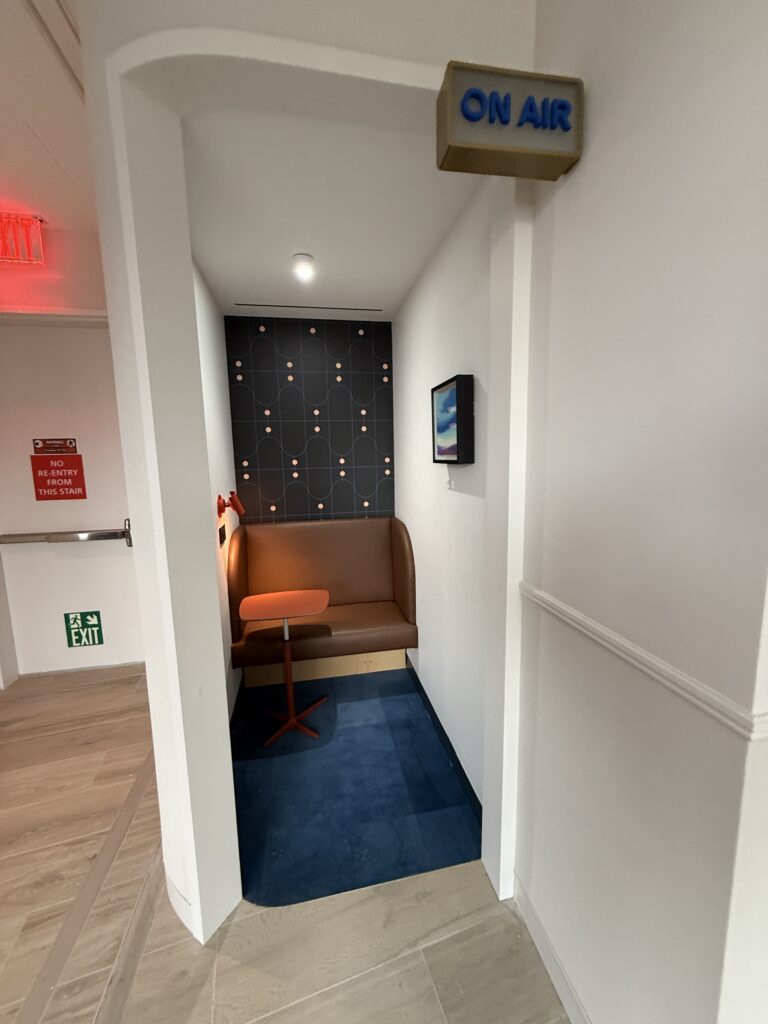
Along the perimeter are small alcoves designed for working or taking calls.
 There’s also a tucked-away phone area for anyone who prefers a little privacy.
 The upstairs bar focuses on wine and beer, offering a quieter counterpart to the large downstairs bar. Evans Green highlights a feature slated for launch: mirrored panels behind the bar that will display digital animations of JetBlue destinations, adding motion and energy without overwhelming the space.
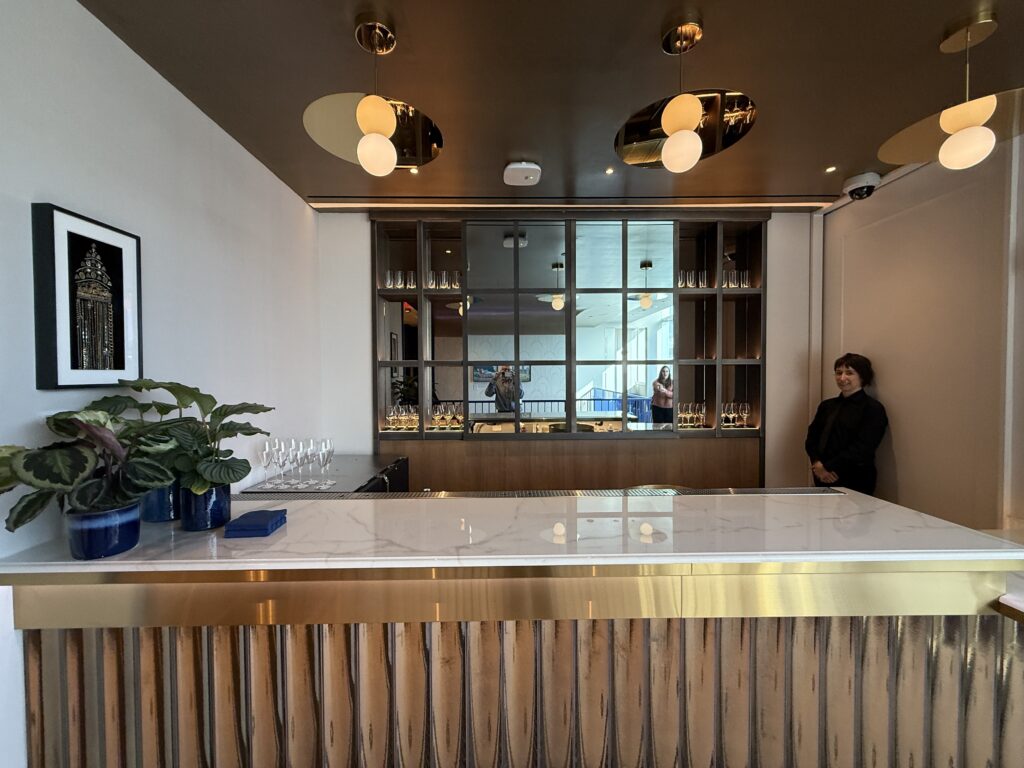
Art remains a theme upstairs too. One of Evans Green’s favorite pieces is a work made from recycled jewelry that depicts the Chrysler Building. It’s another crew member creation, part of a contest JetBlue held that was originally supposed to select a single piece.
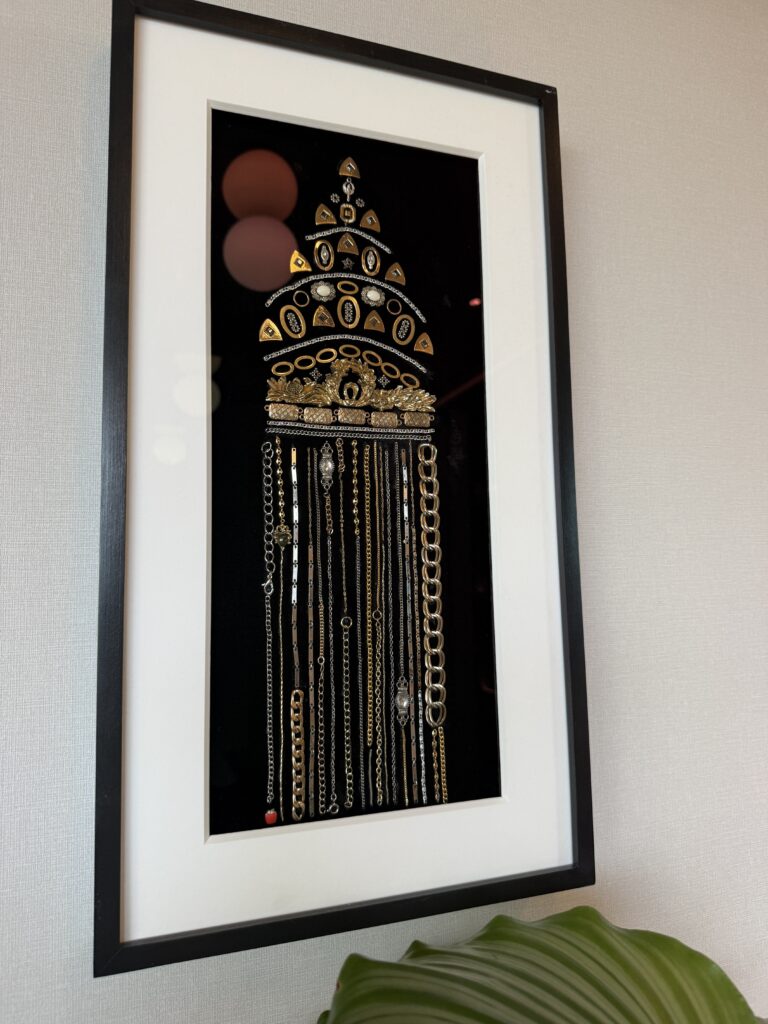
“We just couldn’t” pick a single piece, she says. “We picked three.” It’s a nice reflection of how much internal talent the airline chose to spotlight in BlueHouse.
Lavs on Land
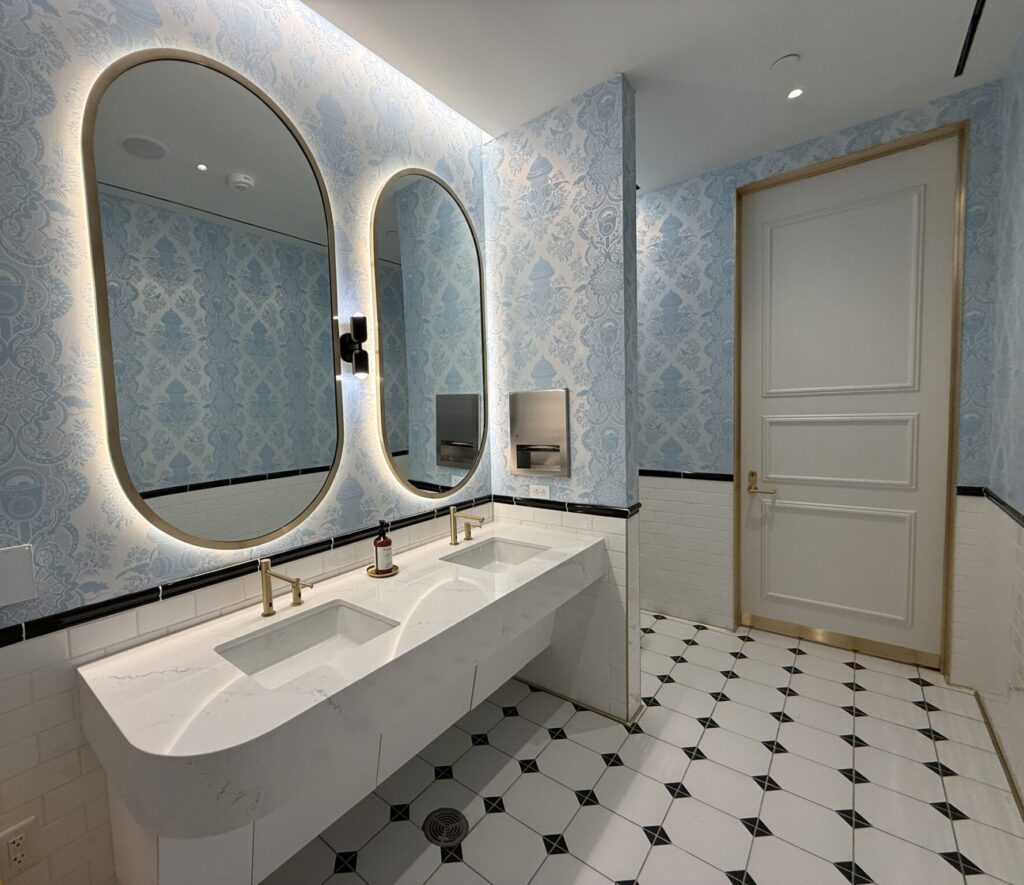
The upper level also adds more bathrooms. Evans Green says “all the textures, everything was very, very thoughtfully considered in terms of… that architect style feel,” aiming for a space that’s comfortable and consistent with the design language carried throughout BlueHouse.
There are no showers here — a notable difference from the higher-end international lounges that offer full spa-style amenities — but JetBlue seems more focused on keeping the experience cohesive rather than trying to compete point-for-point with long-haul carriers.
Culinary and Cocktails
JetBlue leans heavily into New York flavors for BlueHouse, with a food program that’s meant to feel familiar, easy, and rooted in the city. Marty St. George sums it up by saying guests can grab “a baked ham, egg and cheese in the morning… a cup of coffee or pastrami sandwich, whatever, we’ve got you covered all throughout the day.”
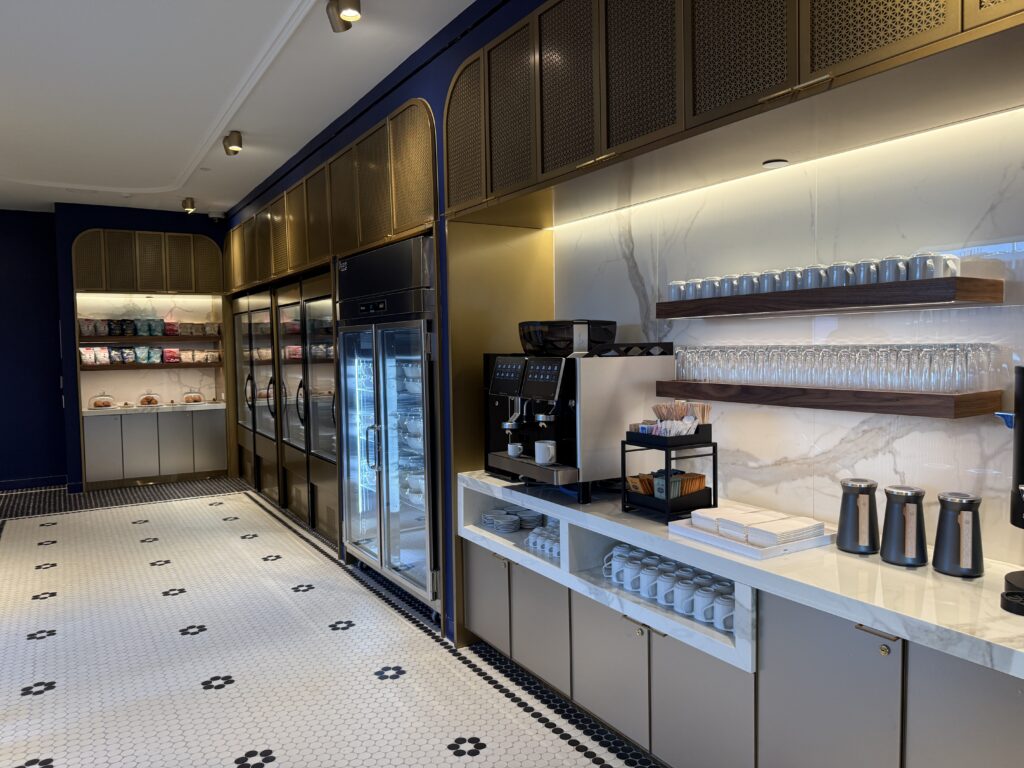
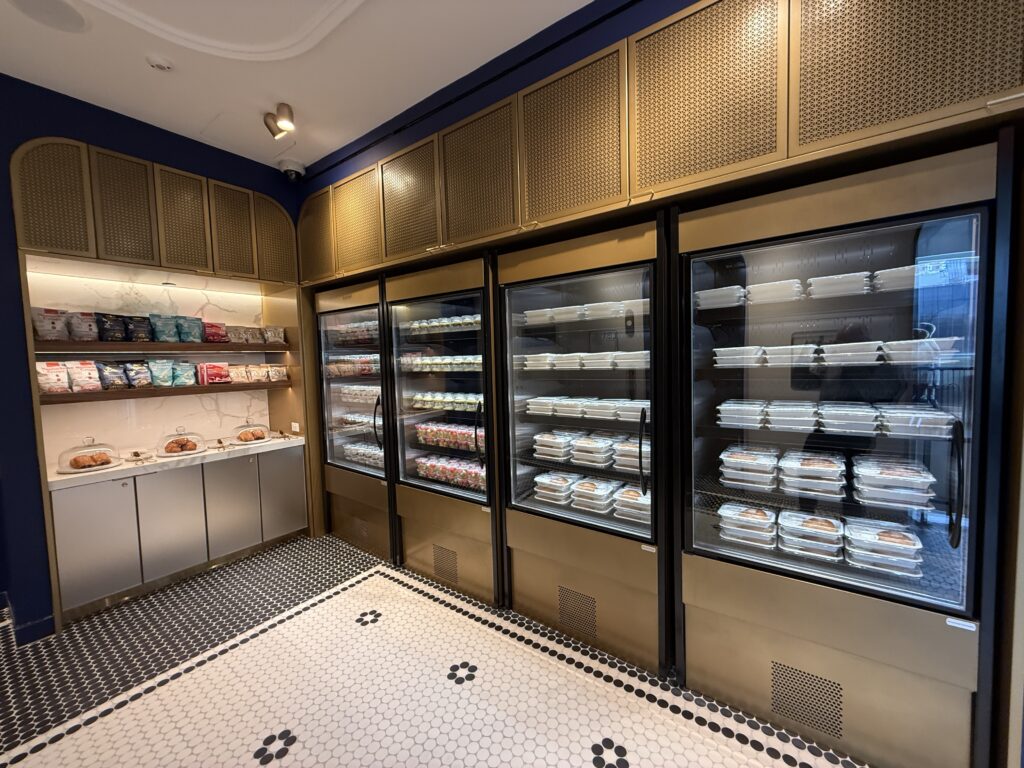
Union Square Events handles the daily prep, stocking large refrigerated stations upstairs and downstairs with wraps, bowls, parfaits, salads, fruit, and other quick picks. The warm selections live on the lower level for now, with a handful offered at breakfast and again in the afternoon and evening.
As Stephanie Evans Green explains, “there’s probably four to five options” in each window. A fuller hot kitchen is coming next year, which should round out the lineup and shift BlueHouse closer to what frequent lounge-goers might expect from a flagship space.
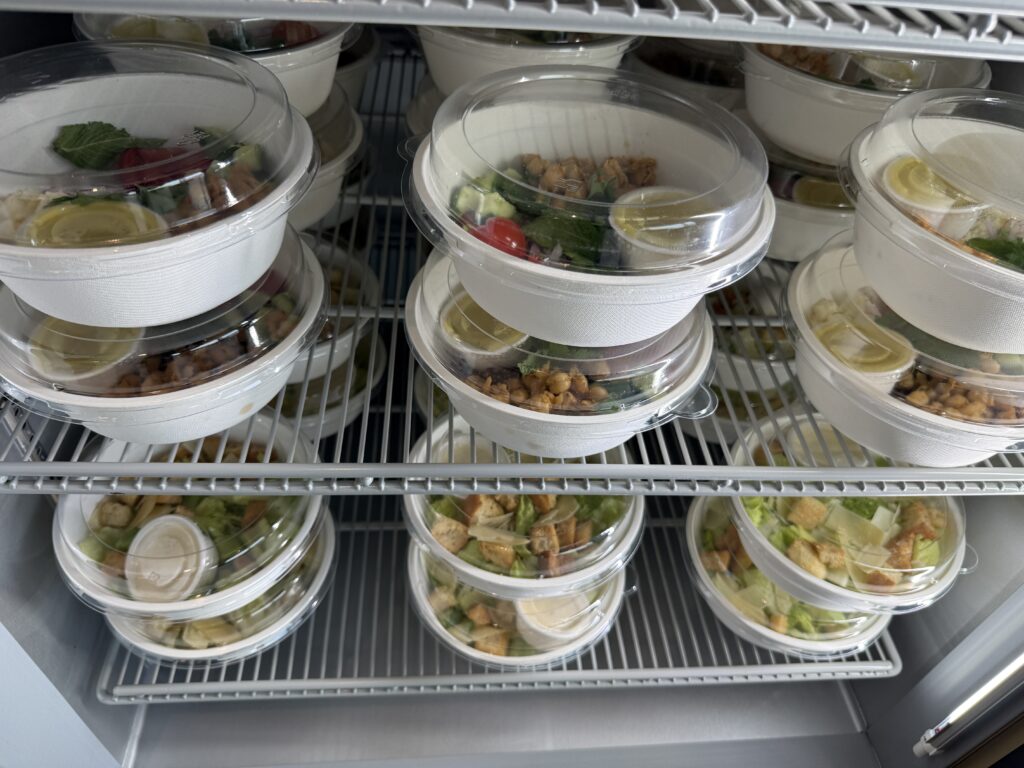
The setup is fast and efficient, even if the grab-and-go design is incongruous to the rest of the lounge’s aesthetic. It does, however, allow for quick in-and-out visits — a perk for anyone who doesn’t want to settle in for a long stay just to get something decent to eat.
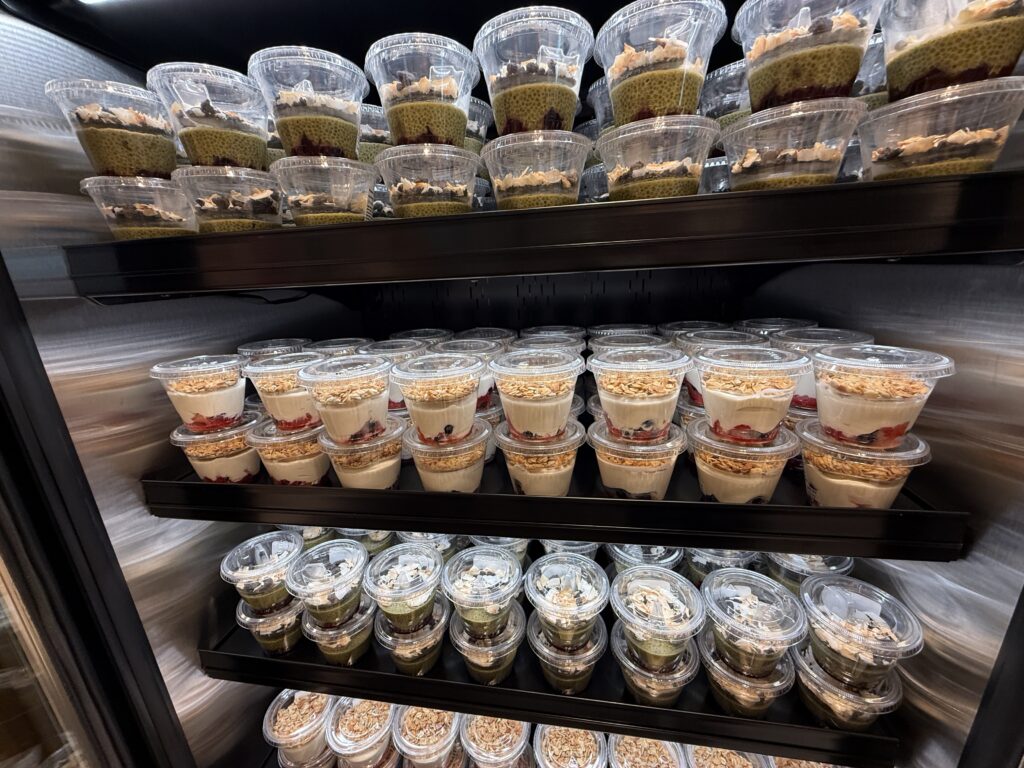
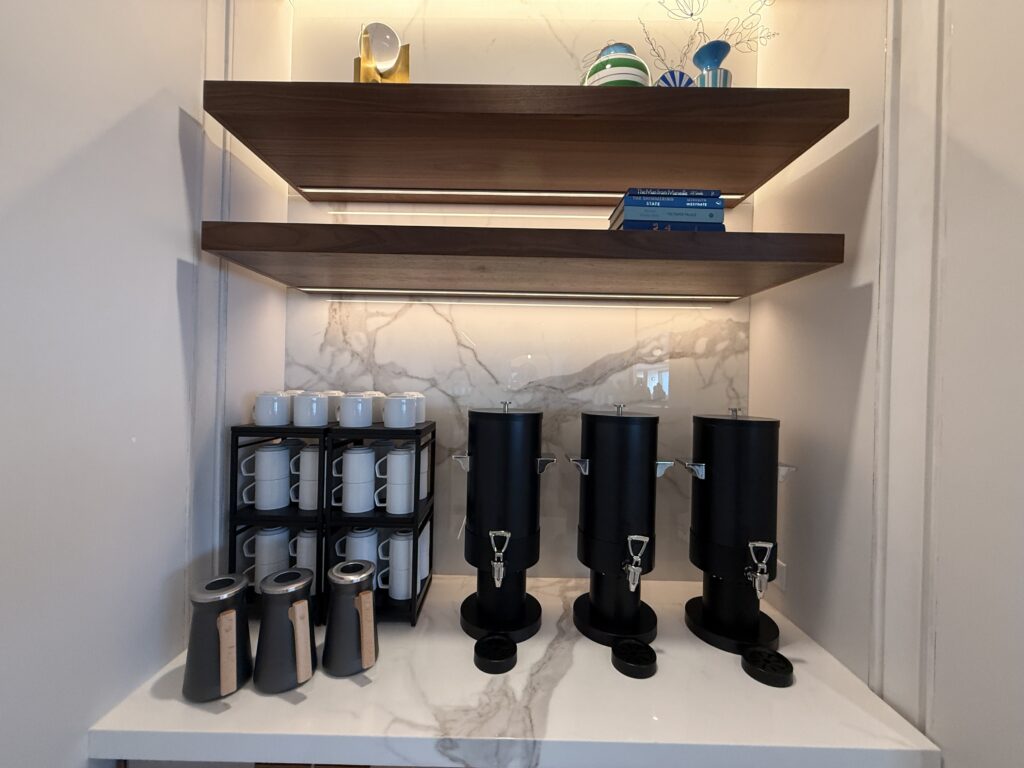
The beverage program taps into New York’s craft and coffee culture. Joe Coffee handles the espresso drinks. (A small shock for anyone who remembers that JetBlue “runs on Dunkin’,” but maybe that’s a Boston thing they’re leaving at the gate.) Brooklyn’s Dona covers chai and matcha, and teas come from Steven Smith Teamaker.
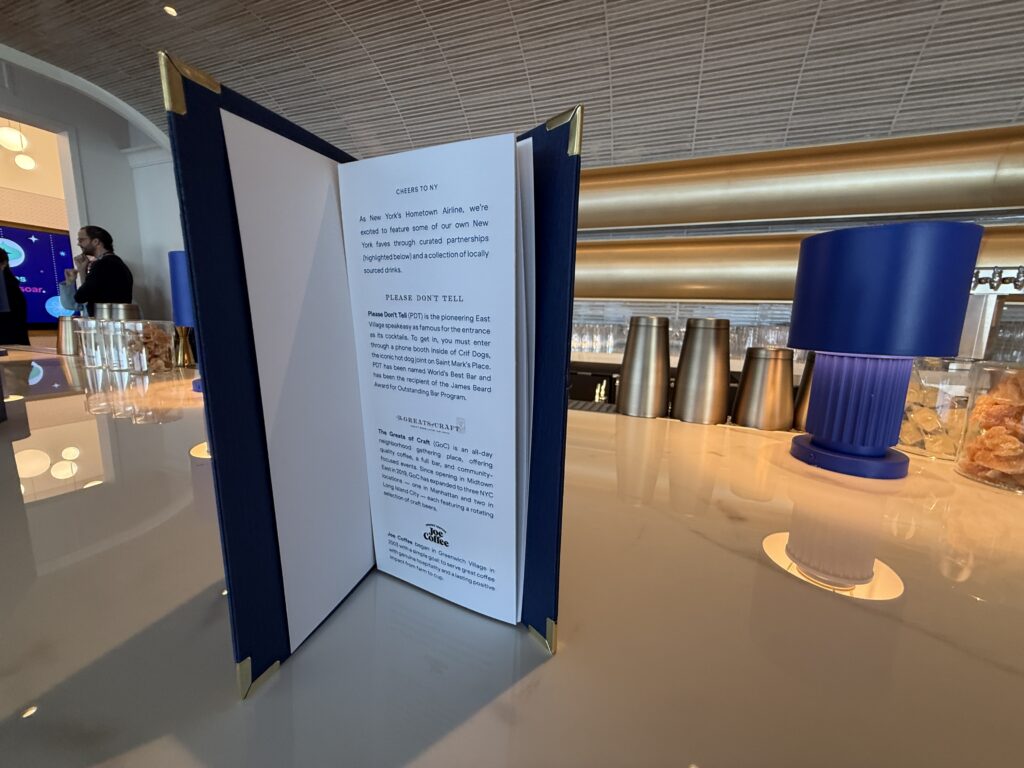
The bar lineup pulls from local spots The Greats of Craft and Please Don’t Tell, with help from some of the city’s top sommeliers, covering everything from craft beers, a solid wine selection, and bespoke cocktails…BlueHouse Special, anyone?
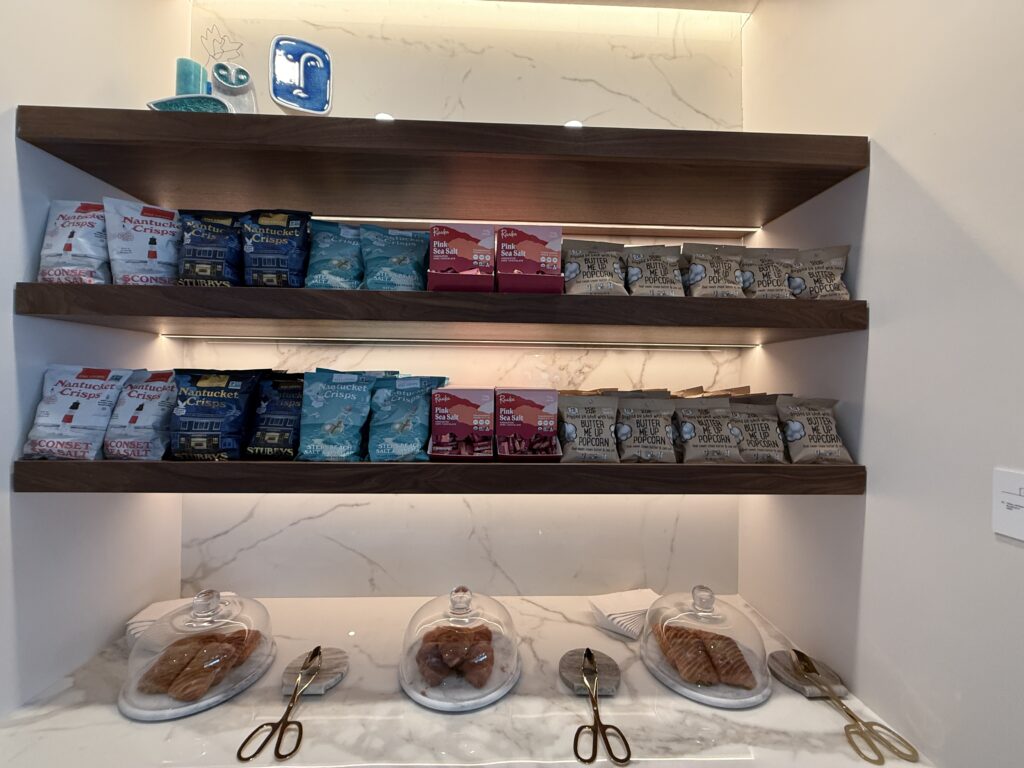
Snacks include Nantucket Crisps, PopZup popcorn, and Raaka sea salt chocolate, while the bar adds Forever Cheese’s Piri Piri Cocktail Mitica mix for anyone looking for something to crunch on with a drink.
Who Gets In?
The industry has spent the past few years learning that too much lounge access can become its own problem. Demand spikes, lines form, and the whole premium promise starts to unravel before anyone even gets through the door. JetBlue is clearly aiming to avoid that trap from day one.
St. George says the airline is determined to keep BlueHouse from becoming “a crowded space,” noting that customer research showed people like lounges but “hate the experience of having to stand outside in a queue.” He emphasizes that JetBlue doesn’t want “45 minute lines to get in,” and that the airline has “carefully curated the list of people who are gonna be allowed in the lounge” so they can actually deliver the experience advertised.
 One notable choice: unlike some competitors that include lounge access with their domestic lie-flat transcon tickets, JetBlue is not extending BlueHouse access to its transcon Mint customers at launch. That places the policy closer to United’s Polaris model, which reserves complimentary access for long-haul international flyers rather than premium domestic routes. Edward Pouthier, VP loyalty and personalization, says the exclusion is deliberate: “we promised ourselves when we came up with the idea that we would never have lines,” and limiting initial access helps avoid crowding. He says the team may revisit this “at a point in time in the future,” but for launch they’re holding the line.
Capacity is set at 140 people.
 Pouthier confirms there will not be reciprocal access with JetBlue’s new partner United “at this time.” And for now, “there will be no day passes offered.” JetBlue is clearly prioritizing experience over volume to keep BlueHouse from turning into yet another lounge strained by its own popularity.
Complimentary access begins December 18, 2025, at 5 a.m. ET for:
- Mosaic 4 members – Complimentary, plus one guest; $39 for additional
- JetBlue Premier Cardmembers – Complimentary, plus one guest; $39 for additional
- Transatlantic Mint customers – Complimentary; $39 per guest
Starting February 2026, limited access passes will be available for:
- Mosaic 1–3 members
- JetBlue Plus and Business Cardmembers
- Non-transatlantic Mint customers
- Annual BlueHouse Members
Hours and Opening Date
JetBlue plans to open BlueHouse “in time for the peak holiday season,” St. George says. Pouthier confirms operating hours of 5:00 a.m. to 10:00 p.m. daily, with doors officially opening December 18th.
 The Next New BlueHouses
BlueHouse isn’t a one-off. JetBlue is already building the next location at Boston Logan, though timing is still fluid. Marty St. George says, “I don’t have an exact date yet because we’re just at the beginning of construction… but that’ll be opening sometime in the middle of 2026.”
He stresses that the Boston lounge will share some of New York’s amenities but will not be a copy. “It will also be a BlueHouse for Boston, which is very different than a BlueHouse for New York,” he says, adding that the team is “excited about the ability that we can really curate this as opposed to doing a cookie cutter like a lot of competitors do.”

Fort Lauderdale is also under evaluation, Pouthier says, though the rules there could look different. Without transatlantic or long-haul flying out of FLL, the access model shifts, and space constraints would make the lounge smaller.
JetBlue is joining a trend already embraced by Delta: lounges that reflect their cities rather than repeating a single house style. No two BlueHouse lounges will look alike.
Constructing BlueHouse wasn’t simple. “This has been a real challenge for us in construction,” St. George admits.
 Airports rarely offer the room airlines dream of, and Pouthier puts it plainly: “space on airport concourses is like gold.” He says access decisions are tied directly to the footprint: “I would love for the facility to be bigger,” but given the limits, JetBlue is shaping the experience around the space it has.
 JetBlue has identified space for another BlueHouse in its new JFK Terminal 6 under construction, but has not committed to it.
 Hot Take
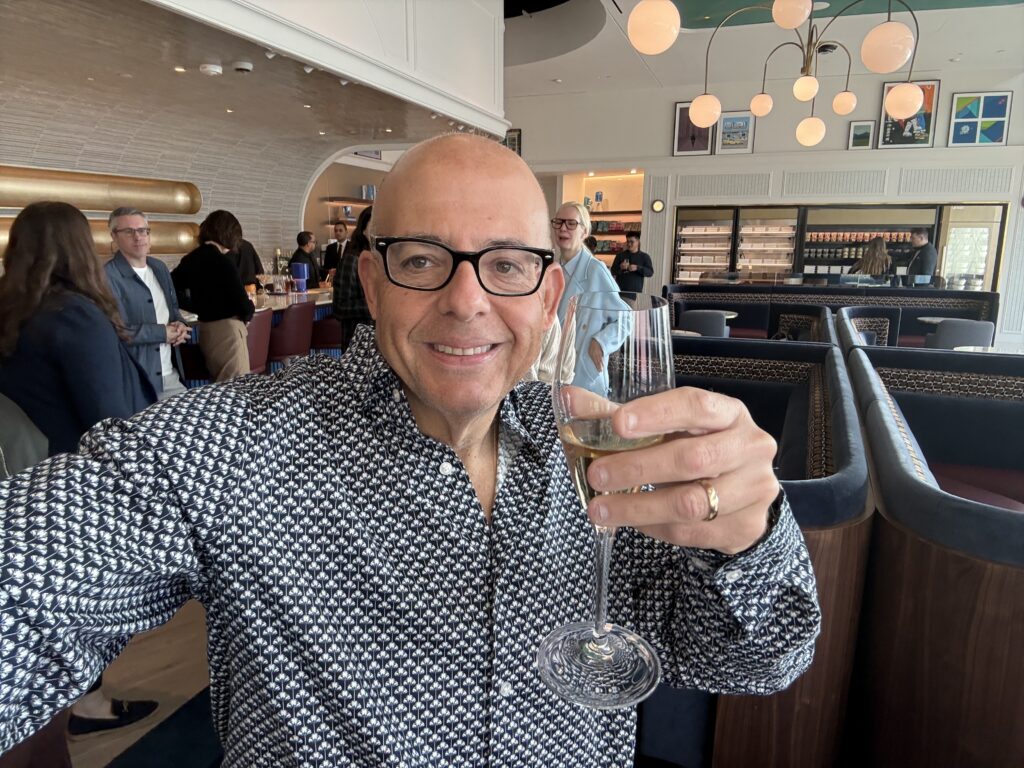
BlueHouse won’t be mistaken for the international long-haul lounges a la United Polaris, Delta One, or American Airlines Flagship. But it also isn’t trying to be. Like JetBlue’s Mint and Core cabins, it aims for its own alternate, elevated route: a meaningful step above an Admirals Club–style offering, with the kind of design personality and local texture that puts it closer to Delta’s newer bespoke Sky Clubs or Alaska’s Pacific Northwest inspired clubs. It’s distinct, it’s clearly JetBlue, and it sets a tone for where the airline wants to go next. I am blue with envy for its first guests and look forward to raising a glass of The BlueHouse Special.
Related Articles:
- Space at a premium: pondering the value of JetBlue Mint Studio
- JetBlue observes fundamental change in passenger behavior
- JetBlue entrenches into premium market with its first-ever lounges
All images credited to the author, Chris Sloan