

For more than six decades, Thai Airways International has stood as a symbol of national pride and global connectivity.
Since its first commercial flights in 1960, the airline has grown from a regional operator into a global carrier with a reputation for warmth, excellence, and technical capability. Today, the airline carries more than 16 million passengers annually and serves as a critical connector for Thailand to the rest of the world.
But as air travel returned in force after the pandemic, baggage handling became a critical pressure point that threatened to erode this reputation. Delays in processing bags were no longer just an operational hiccup — they risked damaging customer trust, slowing down a busy hub like Bangkok, and putting additional strain on staff. For an airline built on excellence and service, this challenge mattered far beyond the back office.
Where bags became bottlenecks
At Bangkok’s Suvarnabhumi Airport, the shortcomings of legacy processes became increasingly evident. Arrivals and onward connections were handled manually, while staff had to scan, validate, print, and attach paper rush tags for every mishandled bag.
At several other domestic stations, baggage reconciliation was still managed with paper “bingo sheets.” This manual approach made it difficult to meet IATA Resolution 753 requirements for full baggage tracking. As passenger volumes returned to pre-pandemic levels, the cracks widened. The manual effort required to reflight high numbers of bags left staff stretched thin, while Lost and Found counters became overwhelmed.
These inefficiencies rippled through the hub’s operations. Passengers transferring through Bangkok grew frustrated with delays, and the airline faced mounting claims and compensation costs. What was once a routine back-end process had become a visible and costly challenge. The need for change was no longer optional — it was urgent.
From manual strain to digital flow
To modernize its baggage handling, Thai Airways turned to SITA, first piloting Bag Manager with SITA WorldTracer® Auto Reflight at Phuket International Airport before rolling it out to five other major stations across Thailand, including Bangkok, Chiang Mai, Chiang Rai, Hat Yai, and Krabi.
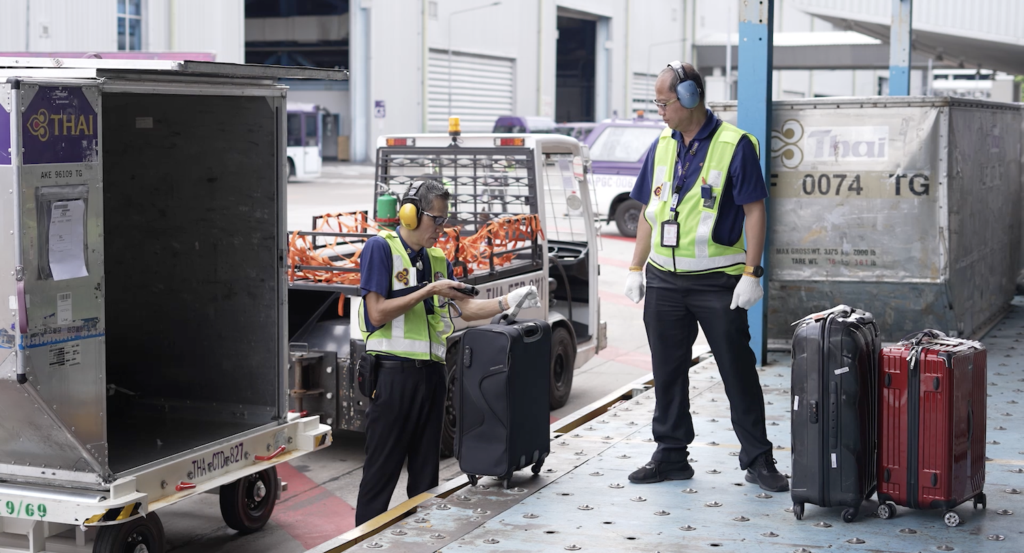
Airside bag tracking forms the backbone of end-to-end baggage visibility for both ground teams and passengers. Image: SITA
The shift was transformative. Bag reconciliation moved from paper checklists to a fully automated system, while Auto Reflight cut a three-minute manual task down to just one second. The system automatically validated passenger and flight data, reassigned bags efficiently across onward flights, and eliminated the need for separate paper rush tags.
“Bag Manager and Auto Reflight were intuitive and easy to adopt, and they immediately reduced our manual workload,” said Mr. Phuttaporn Thamtam, Thai Airways’ Team Lead for Baggage Services. “The real-time dashboards gave us greater accuracy and made coordination between teams much smoother. And because of that, our passengers felt the difference almost immediately.”
What once weighed down staff and passengers alike has become a source of progress. Teams no longer spend hours on repetitive fixes but can focus on tasks that add real value Passengers, in turn, move through their journeys with fewer disruptions, quicker reunions with their bags, and greater peace of mind. And for the airline, the shift signals a step forward in both operational discipline and service excellence.
From minutes to seconds
The benefits extended well beyond speed. By automating what had once been slow, manual steps, Thai Airways not only reduced errors but also kept flights moving more reliably. Auto Reflight eliminated the need for disposable rush tags, adding a sustainability gain that had never been possible before. Most importantly, baggage handling—which was long seen as a fragile link in the journey—began to give passengers greater confidence instead of concern.
The new system also delivered transparency. By automatically identifying the Reason for Loss when a bag was delayed, Auto Reflight gave Thai Airways unprecedented visibility into mishandling events and recovery processes. This data strengthened both operational accountability and financial efficiency in repatriation.
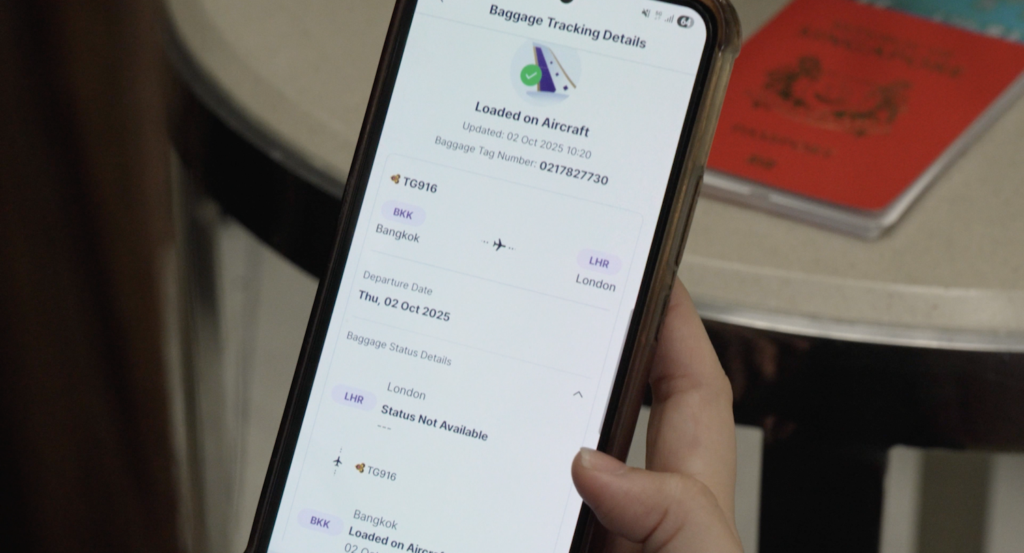
Thai Airways’ mobile app provides passengers with real-time visibility of their baggage status throughout the journey. Image: SITA
Even with strong early results, the airline acknowledged that the journey is ongoing. Certain functions still need to be tailored for the Thai airport environment, and further enhancements will ensure the system adapts to diverse operational scenarios. Yet the direction is clear: efficiency has improved, passengers are more satisfied, and confidence in the service is rising.
Beyond today’s fix
Encouraged by the success of Bag Manager and Auto Reflight, Thai Airways is preparing to extend its use of SITA’s baggage solutions. Plans are underway to adopt Bag Journey and Netscan, enhancing visibility beyond the airportenvironment, and to roll out automation to overseas stations. The airline is also exploring how these solutions can its ground handling services for other carriers operating in Bangkok and across its network.

“Working with SITA has been highly professional and collaborative,” added Thamtam. “Their expertise and responsiveness stood out, and they’ve been proactive in adapting the solutions for our needs in Thailand. This is only the beginning, and we believe these systems will bring even greater benefits across our network and to the passengers we serve.”
For Thai Airways, modern baggage handling is more than a fix. It is a future-focused step toward building resilience, raising passenger confidence, and ensuring that the national carrier continues to set the standard for service and reliability. By partnering with SITA, the airline has taken a decisive step toward ensuring that passengers’ journeys are seamless from check-in to final arrival — with their bags right there with them.
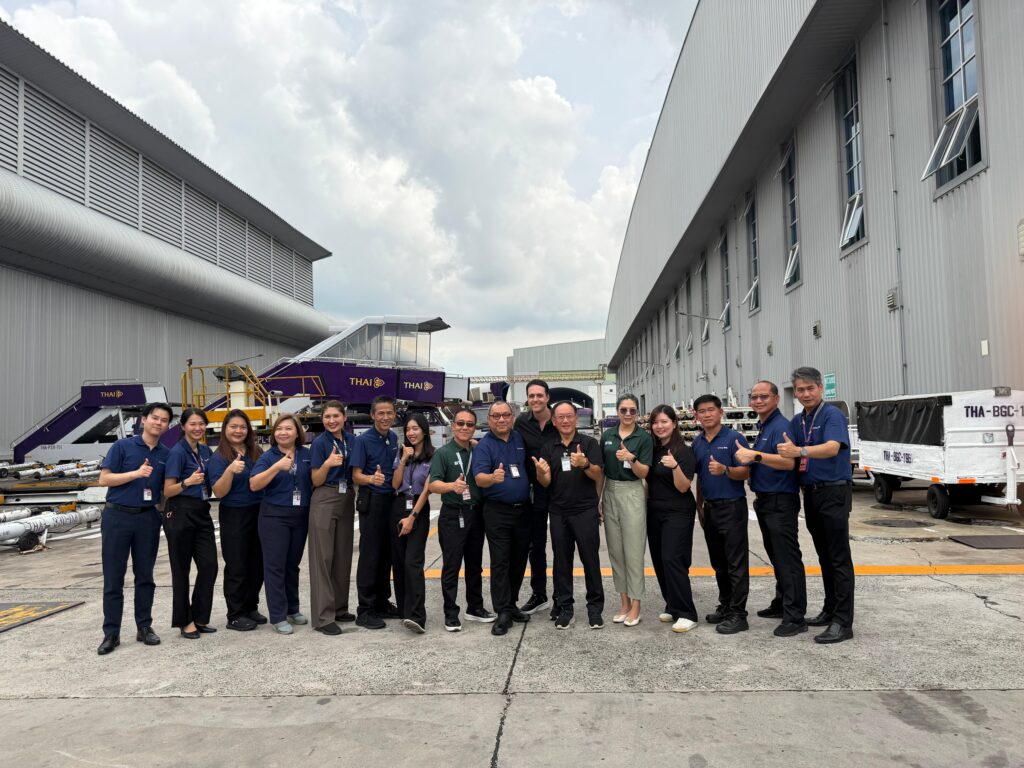
The SITA and Thai Airways teams involved in the rollout of SITA’s baggage management technology. Image: SITA
About SITA
SITA is the air transport industry’s IT provider, delivering solutions for airlines, airports, aircraft and governments. Its technology powers more seamless, safe, secure and sustainable air travel. With around 2,500 customers, SITA’s solutions drive operational efficiencies at more than 1,000 airports while delivering the promise of the connected aircraft to customers of over 18,000 aircraft globally. SITA also provides technology solutions that help more than 70 governments strike the balance of secure borders and seamless travel. Its communications network connects every corner of the globe, and SITA bridges 45% of the air transport community’s data exchange.
In 2023, the Science Based Targets initiative (SBTi) approved SITA’s near-term and long-term emission reduction targets. These science-based targets are pivotal in guiding the company’s climate actions to curtail greenhouse gas emissions effectively. SITA is also developing solutions to help the aviation industry meet its carbon reduction objectives, including reduced fuel burn and greater operational efficiencies.
In 2024, SITA acquired Materna IPS, leader in passenger handling, to create the world’s most powerful passenger portfolio for airports and digital travel. SITA then acquired ASISTIM, to offer a fully-fledged airline flight Operations Control Center managed service. The company also launched SmartSea to give the maritime industry access to the same advanced technology that is transforming air travel. The launch comes as part of SITA’s growth into cruise and rail, as well Urban Air Mobility, such as Vertiports.
SITA is 100% owned by the industry and driven by its needs. It is one of the most internationally diverse companies, providing services in over 200 countries and territories.
About Thai Airways
Founded in 1960, Thai Airways International is the national carrier of Thailand. Operating from its hub at Bangkok’s Suvarnabhumi Airport, the airline serves millions of passengers annually and connects Thailand to key destinations worldwide. Known for its service excellence and technical expertise, Thai Airways plays a vital role in national connectivity, economic development, and global tourism.