

Airlines have moved with remarkable speed to adopt a software fix for the Elevator Aileron Computer (ELAC) on A320 Family aircraft after Airbus and the European Union Aviation Safety Agency (EASA) sounded the warning on Friday about a flight control vulnerability affecting more than half of the A320s in the world fleet.
In a testament to the strong safety culture in aviation, many A320 Family aircraft operators met the requirements of EASA’s Emergency Airworthiness Directive (AD) ahead of the deadline at 23:59 UTC on November 29.
American Airlines, which boasts a major in-house maintenance, repair and overhaul (MRO) operation, confirmed to Runway Girl Network that all 209 affected A320 Family aircraft in its fleet have returned to service after receiving the fix.
Lufthansa Group, too, moved swiftly to update the software. “Lufthansa has made software adjustments to all affected aircraft in its A320 fleet and successfully completed this measure on Saturday, November 29. Flight operations were not affected. Safety is always Lufthansa’s top priority,” said Tal Muscal, director of group communications, The Americas, Deutsche Lufthansa AG.
US low-cost carrier Frontier Airlines, an all-A320 Family operator, confirmed to RGN today that “all work was completed yesterday and there were not any flight disruptions resulting from the required software update.”
European budget operator Wizz Air said on Saturday that all impacted A320 Family aircraft in its fleet have received the software update after airline colleagues “worked tirelessly through the night to carry out the updates swiftly and efficiently.”
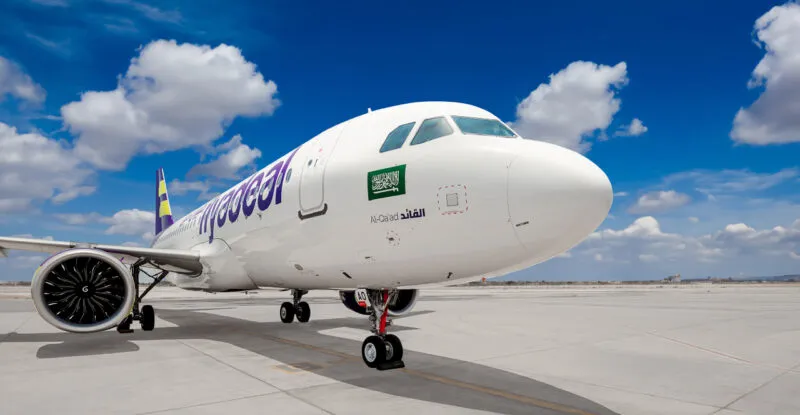
Steven Greenway, the CEO of flyadeal, took to LinkedIn to share an update, saying that more than 25% of the Saudi Arabian low-cost carrier’s fleet required the fix, but that: “Teams from across the company leapt into action, immediately grounding the affected aircraft, undertaking the software update, and working to minimise disruption to our Saturday schedule.
“A total of 28 flights were cancelled, but we attempted to reaccommodate the majority of impacted customers onto 14 widebody wet-lease aircraft replacement flights that were stood up in a very short time.”
Fellow Saudi Arabian LCC flynas, which saw 20 of its 68 aircraft impacted by the AD, said it completed the fix in “record time” without affecting operations.
Despite airlines’ quick action, the required fix has caused logistical challenges and in some instances, significant delays, as FlightAware data show.
Acknowledging the disruptions over the weekend, Airbus CEO Guillaume Faury said: “Our teams are working around the clock to support our operators and ensure these updates are deployed as swiftly as possible to get planes back in the sky and resume normal operations, with the safety assurance you expect from Airbus.”
Airbus has since confirmed that “out of a total number of around 6,000 aircraft potentially impacted, the vast majority have now received the necessary modifications. We are working with our airline customers to support the modification of less than 100 remaining aircraft to ensure they can be returned to service.”
Among the carriers still facing flight disruptions, JetBlue Airways said in a statement that it’s working closely with the FAA, Airbus and its business partners to quickly address the issue. The airline said it anticipates completing the process today.

A JetBlue flight control event, which saw some passengers taken to hospital on October 30 after a sudden altitude drop, prompted the EASA AD after Airbus’ analysis found that “intense solar radiation may corrupt data critical to the functioning of flight controls” and the airframer determined that a possible contributing factor was a malfunction of the ELAC on certain A320 Family aircraft.
The fix, as outlined in the AD and Airbus’ Alert Operators Transmission (AOT) entails replacing the affected ELAC B L104 with a serviceable ELAC, the so-called ELAC B L103+.
Shortly after EASA’s AD was published, the FAA issued its own AD, saying that the malfunction of the affected ELAC is an “unsafe condition” and that it “could lead to an uncommanded elevator movement that may result in exceeding the aircraft’s structural capability and consequent loss of continued safe flight and landing.”
Related Articles: