
 A recent business trip from the U.S. West Coast to the South Pacific led me to scour the Internet for a creative routing solution. Of course the easy answer is to go via Australia, New Zealand or Fiji. But that would have been too easy.
Instead, I decided to start the trip off by flying not southwest, but north, to Seoul — namely because I’ve always wanted to try the Korean long-haul hybrid carrier known as Air Premia.
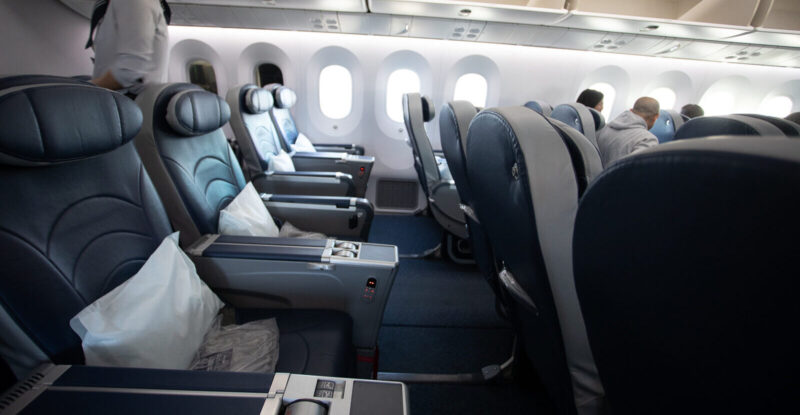
The airline has been around since 2021, and their budget-friendly fares and Wide Premium-branded premium economy product got my attention. Wide Premium seemed like a cost-effective way to ensure a bit of comfort on the 12-hour Boeing 787-9 flight.
I’ve had good luck and good experiences with this strategy before, having flown the ‘premium’ products on Norwegian, Norse (which is, alas, now ailing) and French Bee.
Would Air Premia keep the streak going?
A one-way ticket from San Francisco International, purchased on the carrier’s website, set me back $848 in U.S. dollars. Another $120 would bump the fare up to a fully flexible and refundable ticket (which is honestly not terrible). Seat choice was mostly free, except for the first row, which would have added another $23 to the cost. I declined both.
Several months later it was time to fly. Having checked in a few days earlier on the carrier’s app, I noticed on the day of travel that my TSA Pre number had not made it onto my boarding pass.
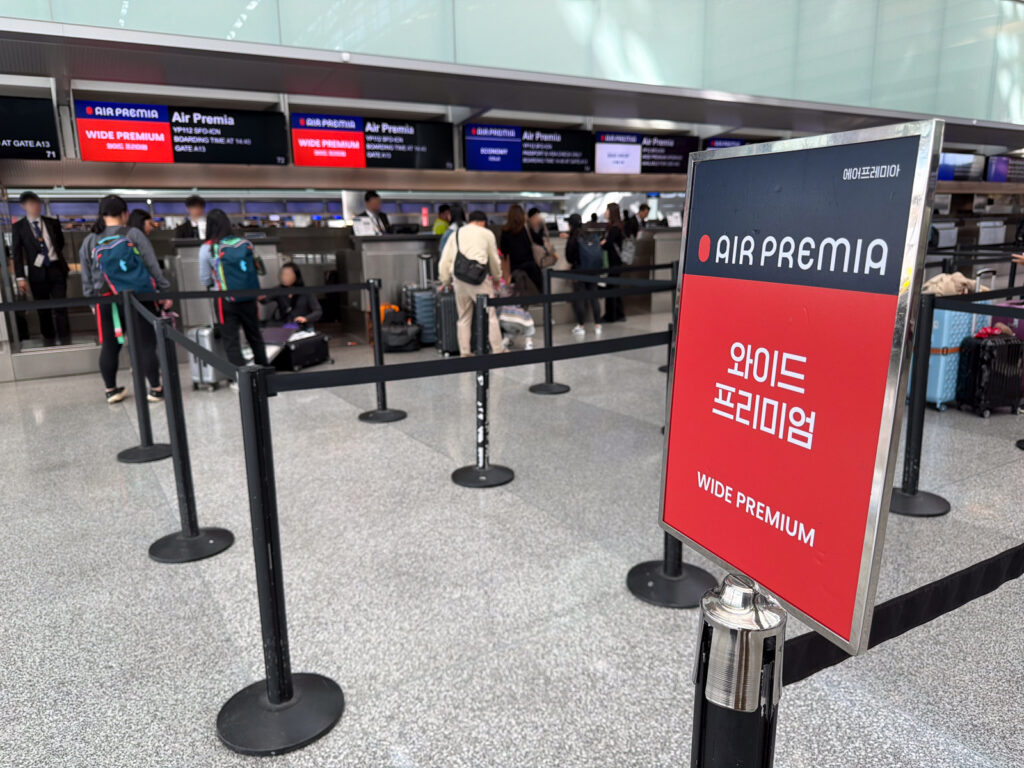
Passengers in Wide Premium have their own dedicated check-in counter at SFO, and an agent fixed the issue and quickly had me on my way. Turns out, there was no real line at security.
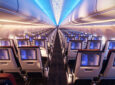
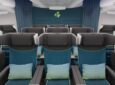
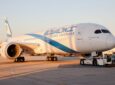
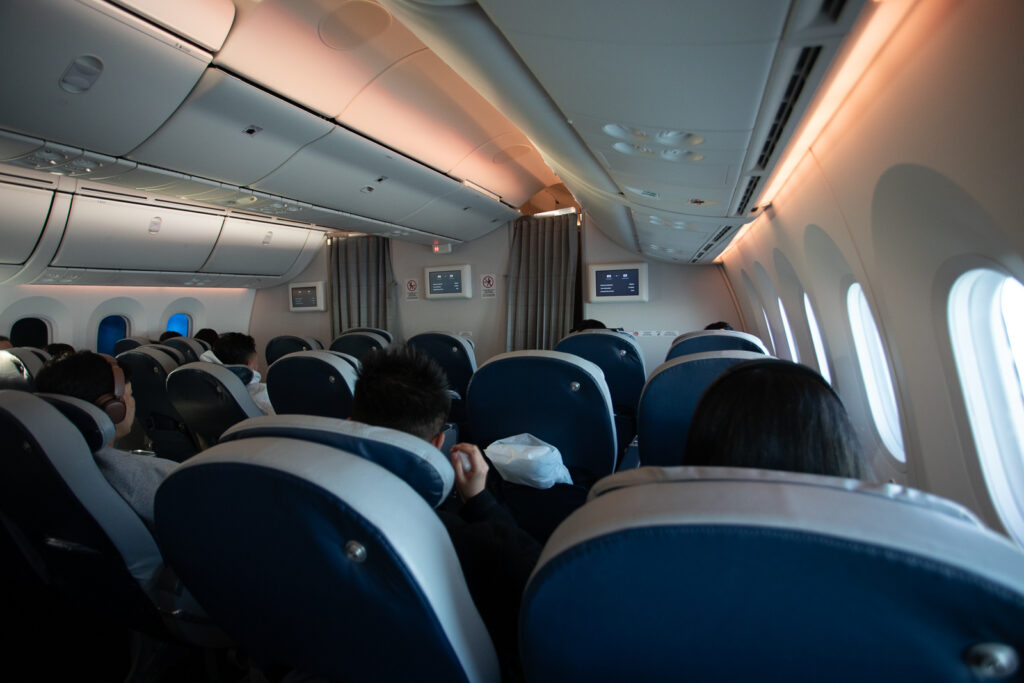
Boarding began exactly on time, and I trundled up the gate to today’s aircraft: an eight-year old Boeing 787-9. Turning left into the 56-seat-strong premium economy cabin, I settled into 4J, a window seat on the right side. The cabin is arranged in a 2-3-2 layout.
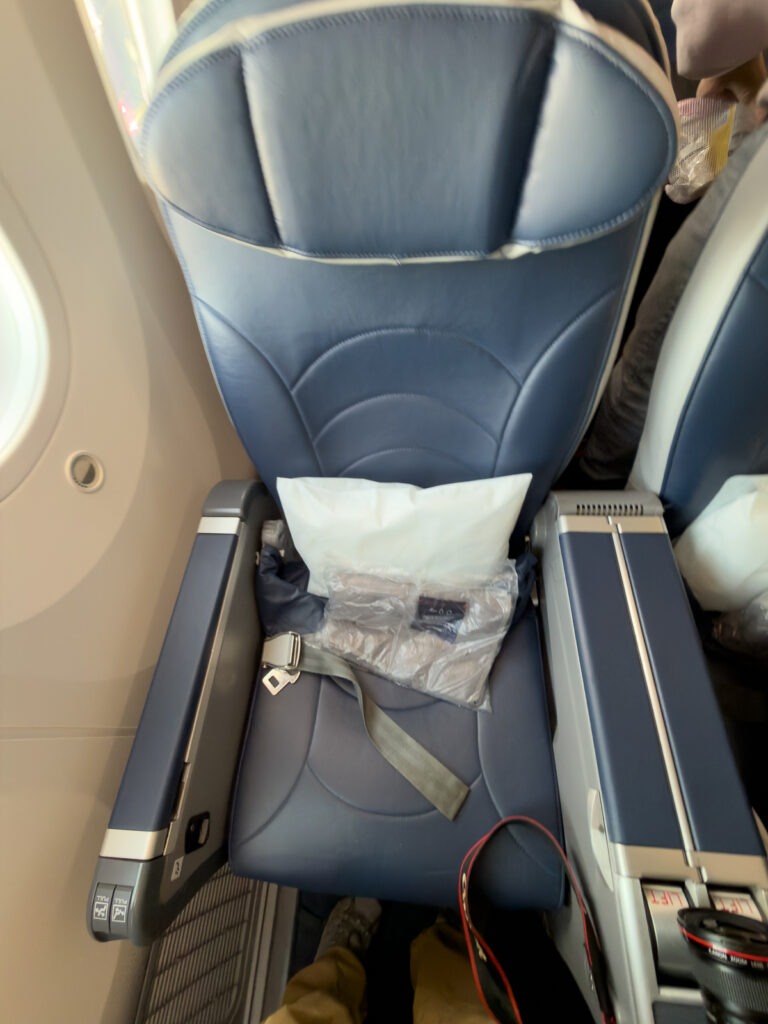
Despite the high passenger density of the cabin, there was plenty of space for my two bags in the overhead bin. A plastic-wrapped blanket and small pillow lay waiting on the Wide Premium seat, an unexpected nice touch.
Looking around, the vibe felt familiar right out of the gate (literally). This jet started its life with low-cost carrier Norwegian Air Shuttle, before finding its way to Air Premia about four years ago.
As far as I can tell, Air Premia didn’t change much on board, aside from the signage and some light branding touches.
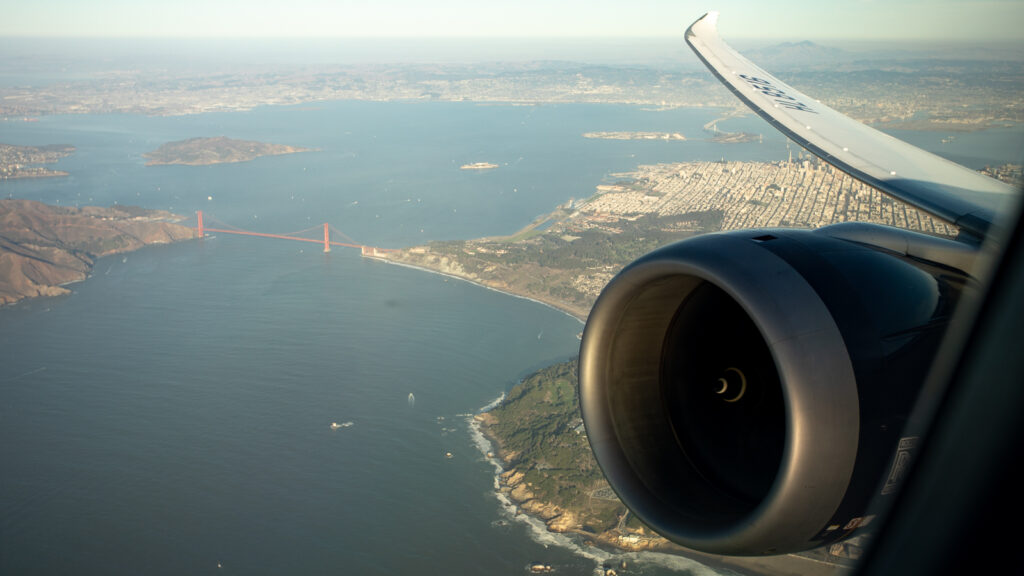
The flight took off on time and began a long, surprisingly slow climb to cruise.
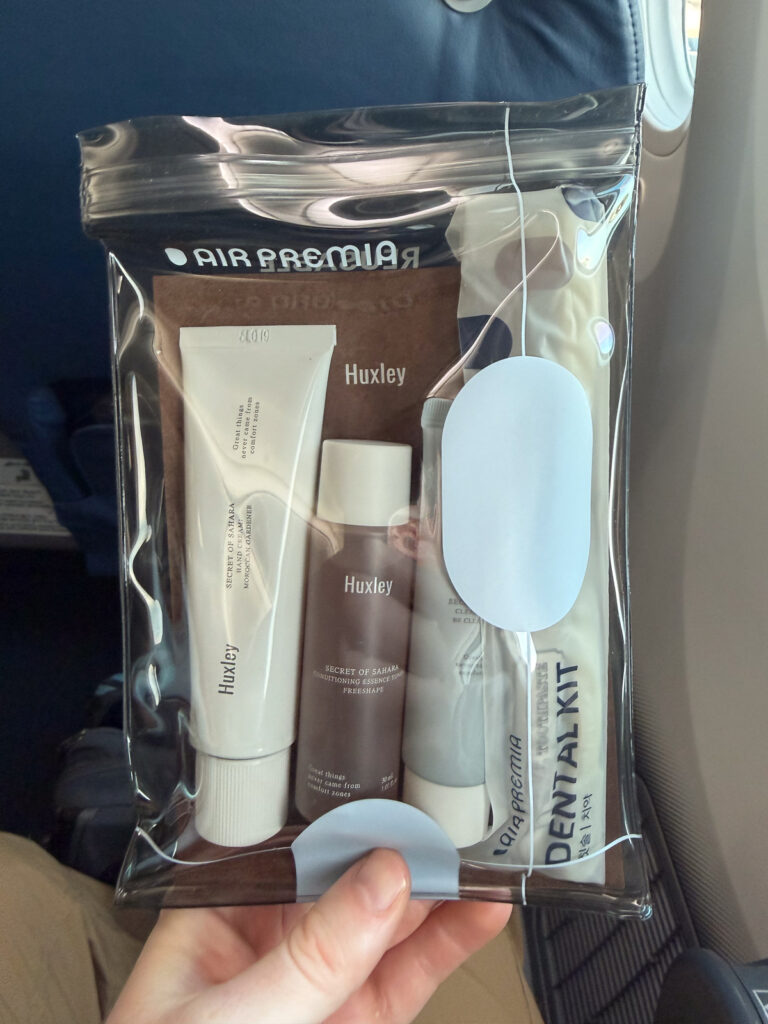
Flight attendants passed out an amenity kit, which was large, well stocked, and frankly nicer than a good many business class kits I’ve seen over the years.
The first of two meal services began not long after departure.
While my chosen dinner, beef bibimap, didn’t look very appealing — and I’m pretty sure it’s the same meal in the same presentation that economy class passengers received — I’ll be darned if it didn’t taste pretty good. The side dishes were also tasty!
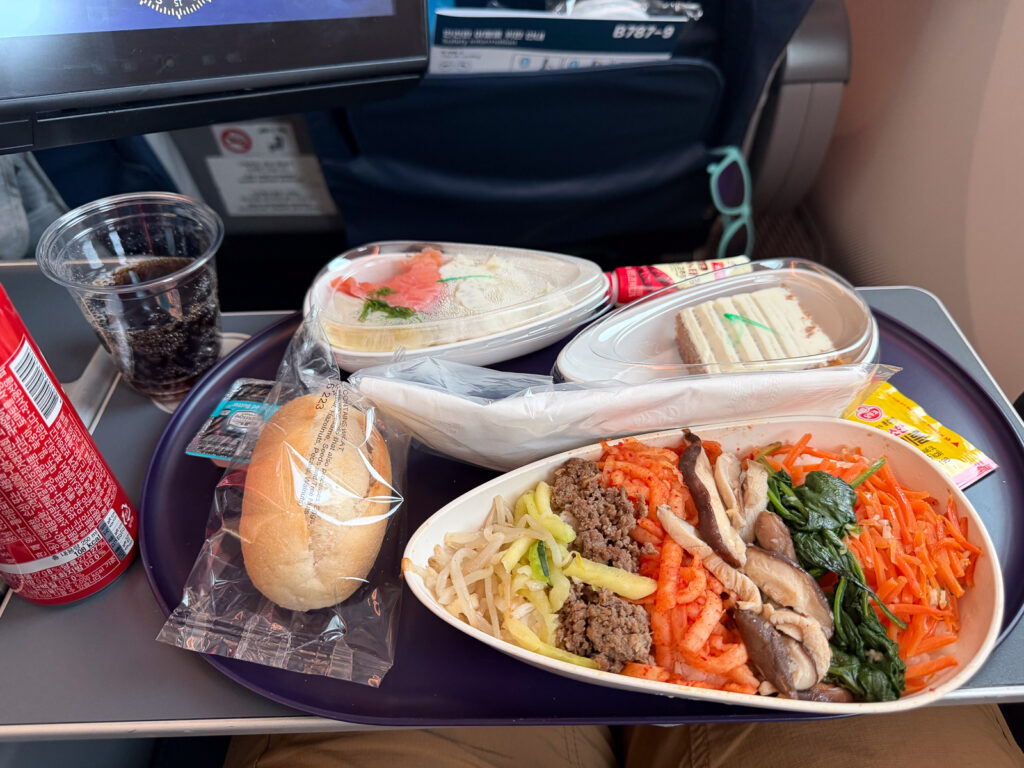
A second meal service was presented a few hours before landing. But alas, neither of the meals looked appetizing to me. I don’t like fish and both options featured fish.
I passed, but the crew cajoled me into at least taking a few side dishes of fresh fruit.
Beverages were free during the meal services. But aside from water and a small selection of juices, beverages appeared to transition to a buy-on-board model for the rest of the flight.
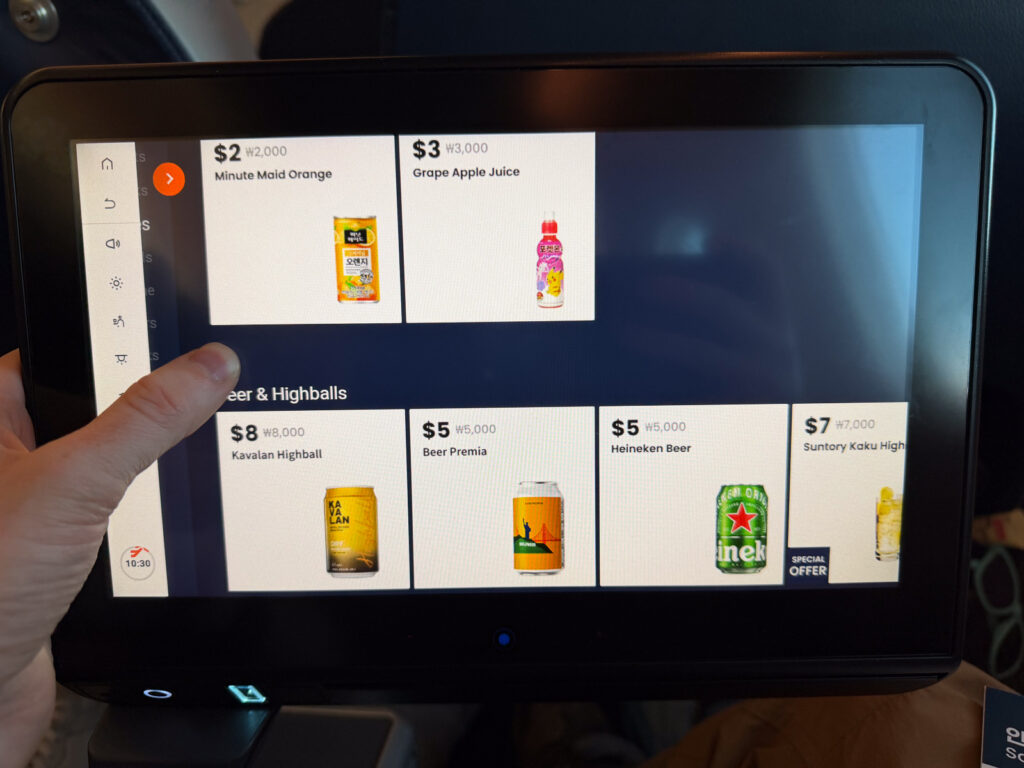
A wide variety of snacks were also available for purchase throughout the flight.
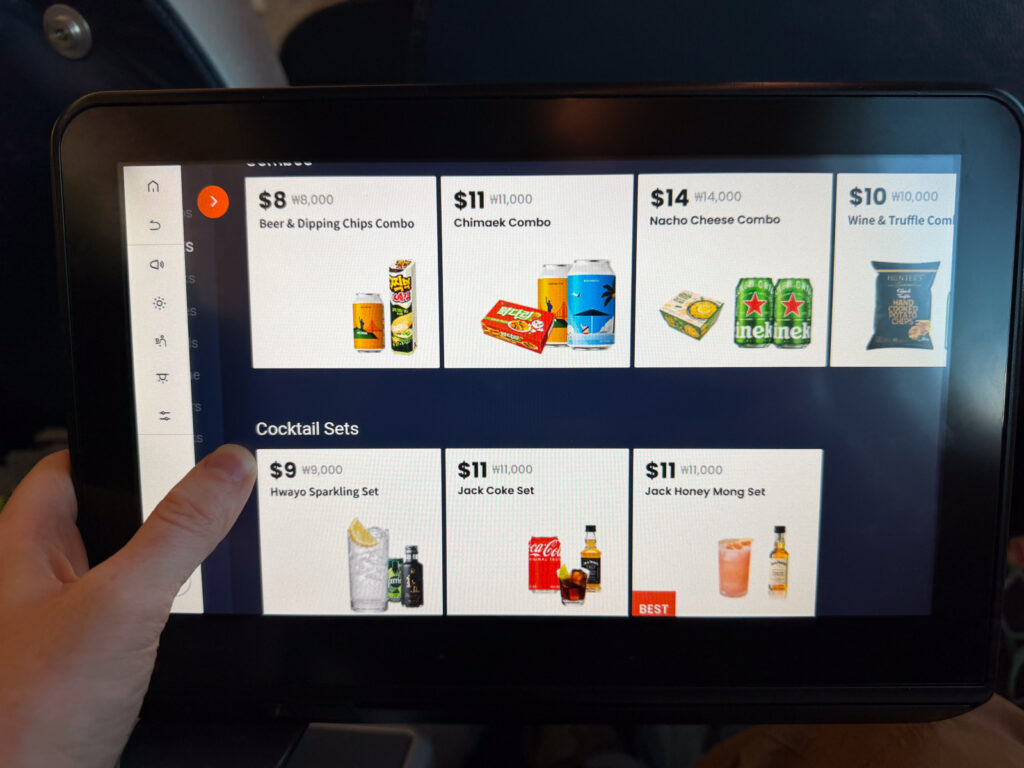
Being that this was mostly a daytime flight meant that I had to keep myself occupied for the bulk of the time aloft. The carrier’s app worked throughout the flight and offered a small selection of surprisingly addicting games. The app also showcased the buy-on-board menus and duty free items, which were fun to thumb through.
The aircraft is supposed to offer inflight Wi-Fi, and passengers receive an hour’s worth of time for free on every flight, before data packages, starting at $5, kick in. But thirty minutes in, the crew curtly announced that Wi-Fi would not be available for the duration of the flight, followed by an audible groan in the cabin.
That put a lot of pressure on the carrier’s selection of inflight entertainment content, which, regrettably, crumbled under the weight.
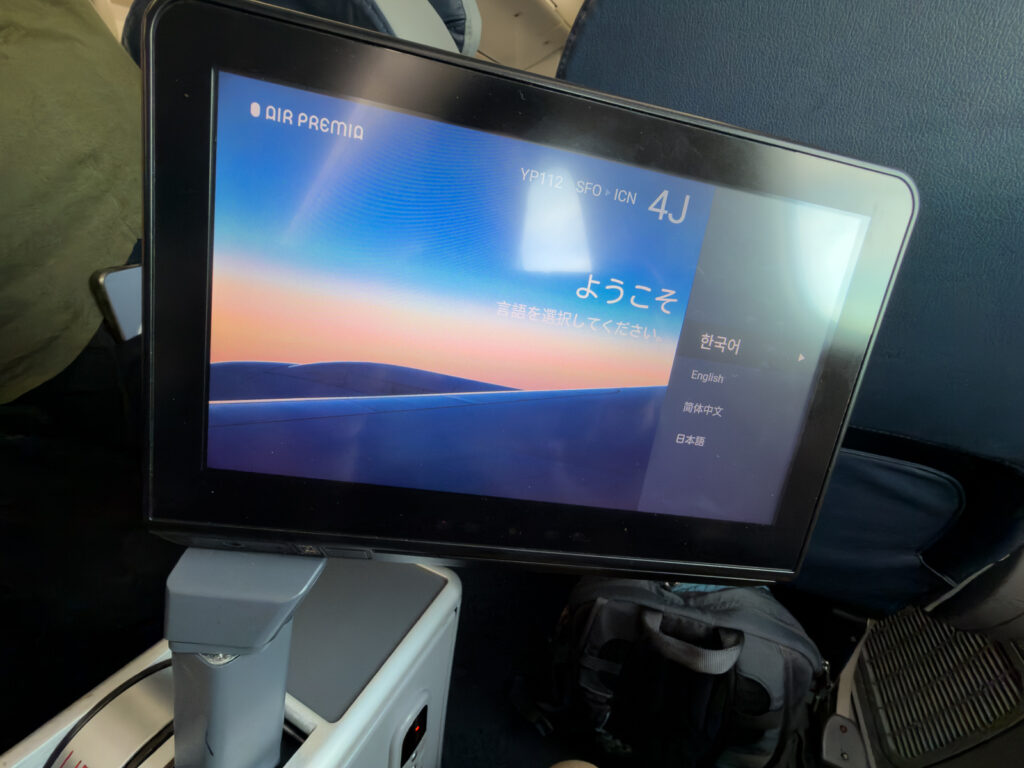
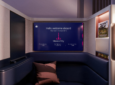
The 11” screen, backed by a Panasonic Avionics IFE system, was sufficiently sharp and very responsive. But that’s not a hard bar to clear when the sum total of content on board reaches the heady number of 42 items.
No, that’s not a typo. The entire system was stocked with only eight movies and 34 TV shows, and that was it.
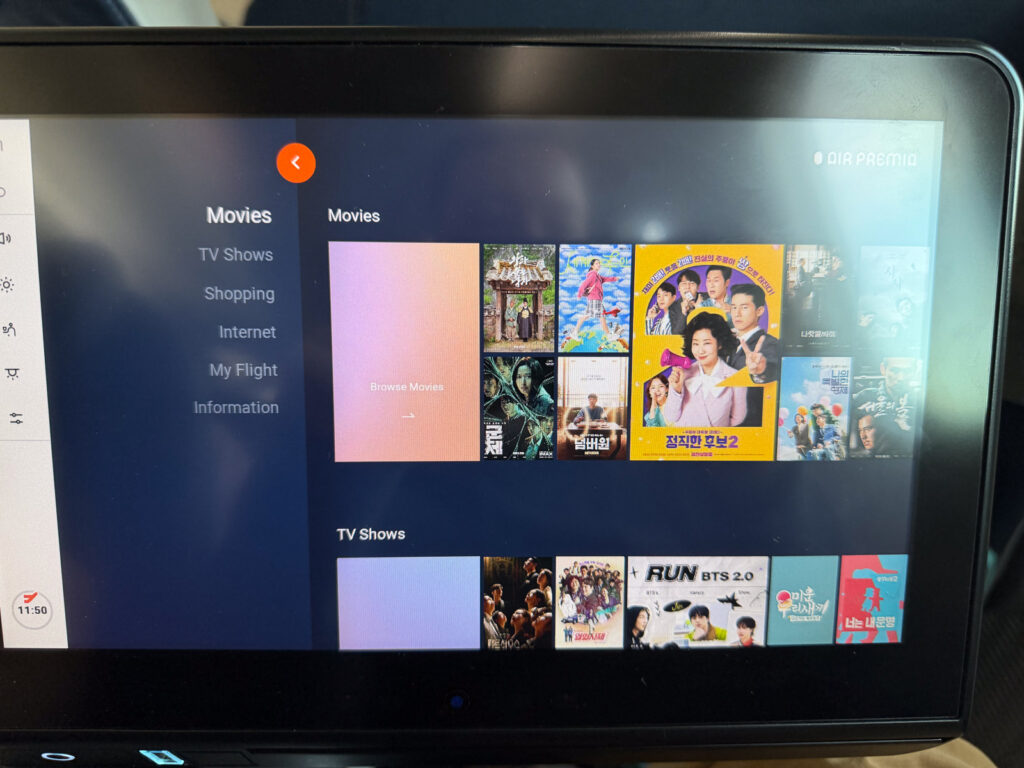
Perhaps unsurprisingly, the movies and programs are all in Korean. Mercifully, the films came with English subtitles, and I’ll gladly share that the few action flicks on offer were quite enjoyable. But still…eight? Total?? I know this is a hybrid carrier with budget operator roots, but come on.
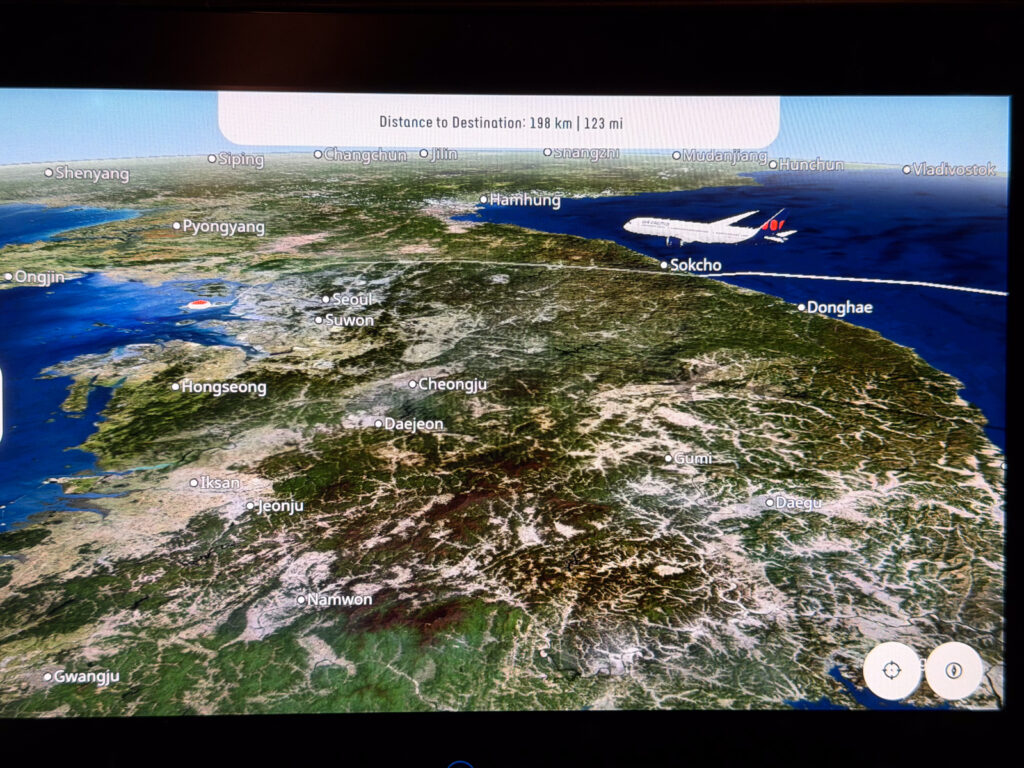
The system also had a moving map, which I love, plus the entirety of the buy-on-board menu. Orders still needed to be placed directly with a crew member, as opposed to the seatback screen.
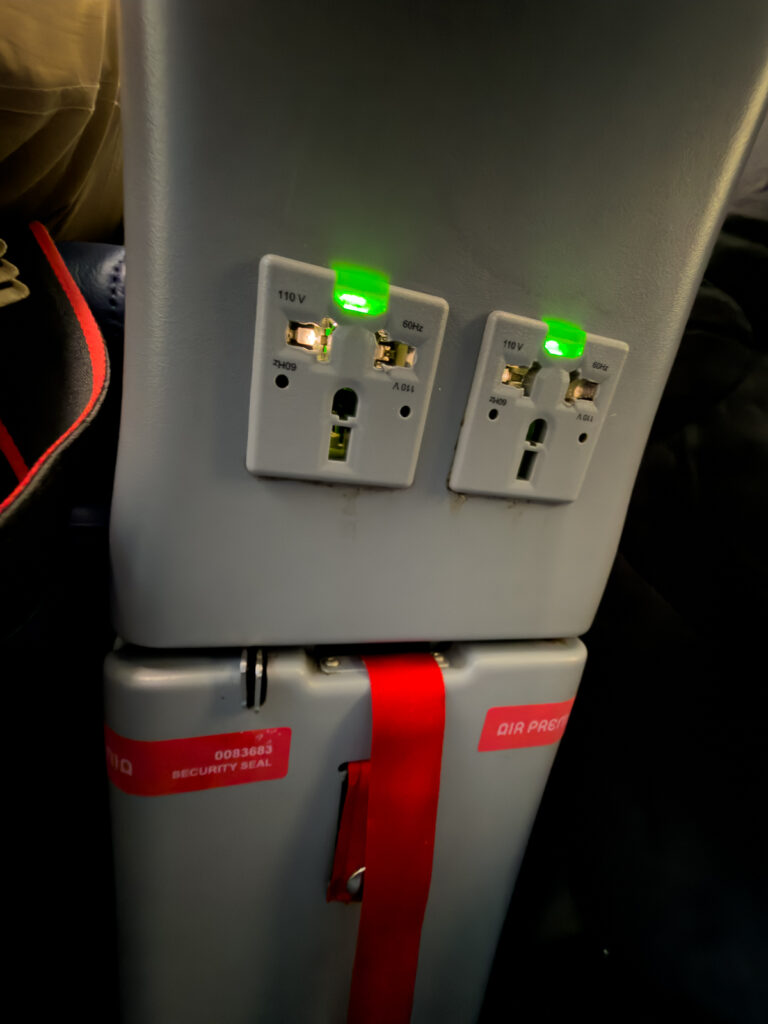
Luckily a USB-A port in the screen bezel and an international power port in the seat itself made it easy to keep devices charged.
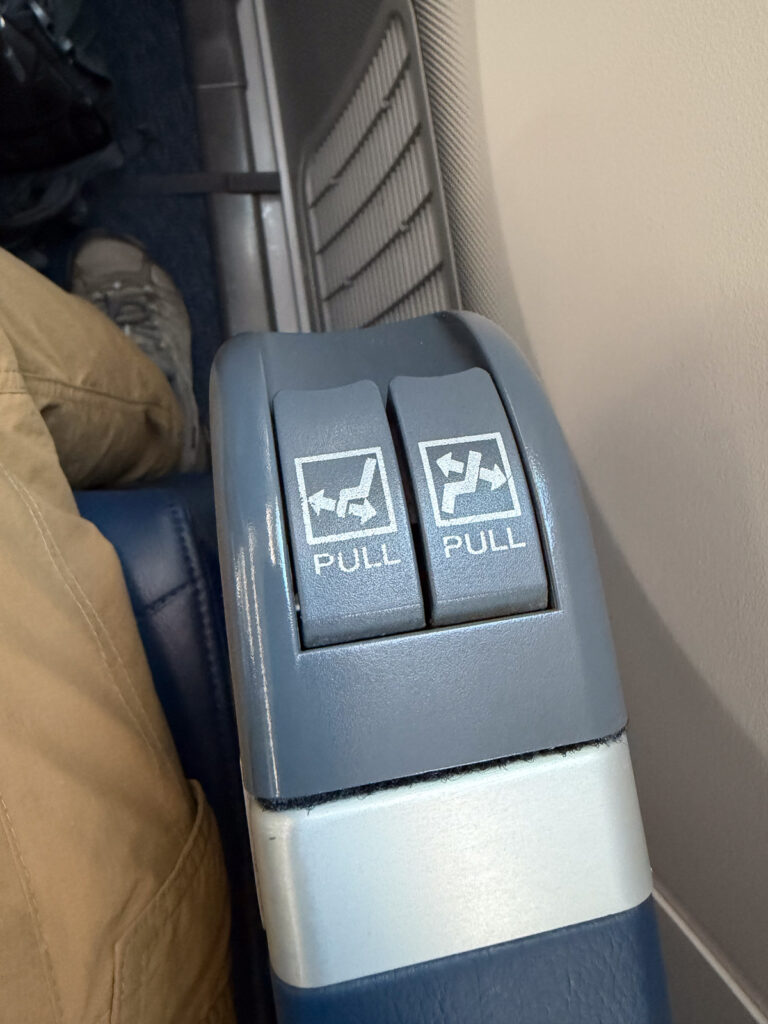
The big winner, however, was the HAECO-made recliner seat in Wide Premium. It doesn’t look like much, but it easily ranks among the most comfortable premium economy products in the sky today.
It has thick, comfortable padding, adjustable headrest wings and an extendable footrest, just in case the 42” pitch is too much legroom.
I didn’t sleep much on the flight by choice, but what little sleep I did get was deep and sound — largely thanks to the exceptionally generous 12” recline.
Is it the newest seat with the sharpest, biggest screen or latest charging methods? No it is not. Is it more comfortable than the newer seats you’ll find on many of the full service carriers? I’d wager that it is.
By the end of the flight, though, I was ready to slide into a real bed at the airport hotel.

I would absolutely fly Air Premia again, and in fact I have already booked my next flight for early 2027!
But this time, I’ll be better prepared. I’ll load a few movies and a good book onto my phone; I’ll expect the Wi-Fi not to work (while being pleasantly surprised if it does); and I’ll pack more of my own snacks.
It’s also worth talking about the price point. In my low-cost, long-haul adventures, plumping for premium economy was semi-competitive with full-service economy, and usually priced at just 25-50% more. Not so this time. Air Premia’s Wide Premium sold for well over 100% more than the $350 seats in the back of the bus. That dynamic appears to bear out on the regular, according to my searches on Google Flights.
The value is apparent when you compare Wide Premium with other airlines’ premium economy products. United, the only other nonstop on the route, typically prices out at over $1,700. Options with layovers are typically over $1,000, and often quite a bit more.
You’re not likely to find a more comfortable premium economy seat at a better price across the Pacific. And for that and possibly that alone, Air Premia is definitely worth it.
 Related Articles:
- French bee delivers just enough honey in Premium to be worth it
- Why Norse Atlantic might have the most comfortable PE seat in the sky
- United Premium Plus aboard the 787: the pluses and minuses
- The return of the LHLCC: same model, new entrants?
All images credited to the author, Jeremy Dwyer-Lindgren