

Geopolitical tensions, disputed territories, and legal requirements: these are just some of the reasons why maps differ worldwide, and why appeasement cartography is prevalent. It’s also why leading aviation map provider FlightPath3D has procedures in place to quickly address any required changes.
The Lake Forest, California-based firm, which provides 3D moving maps on several thousand aircraft across more than 90 airlines, has made “geopolitical changes for almost every airline in the world consistently for over a decade,” company president Duncan Jackson explained to Runway Girl Network in an in-depth interview.
“We recognize what needs to be done. We stay ahead of it. As soon as there is an issue out there that gets flagged and alerted — we have systems and controls and procedures in place to track all these ongoing conflicts, of which there are lots — we update airlines, let them know what this means. As soon as we see something coming down the headlines, we let them know and give them the options.”
For example, when U.S. President Donald Trump issued an Executive Order (EO) changing the name of Gulf of Mexico to Gulf of America, it made sense for U.S. airlines to review the EO and update the maps on their wireless and seatback inflight entertainment systems. Likewise, when Turkey changed its name to Türkiye, or when Chinese authorities required international airlines operating in China to label Taiwan as part of China, map updates were required
“When all these changes occur, we can roll it out as a media update across all systems — web, seatback,” Jackson said. When the Taiwan issue emerged, he said, FlightPath3D was able to facilitate a map update for its airline partners with amazing speed, getting it “deployed on the aircraft faster than other technology and map providers could even give a quote of what it would take. We had it installed and running on aircraft in 48 hours.”
This agility extends to FlightPath3D’s other applications. Recognizing the importance of having commonality across a mixed fleet of IFE systems, the firm supports an “omni-channel” approach that also sees it bring its map, destination content and any required updates to companion apps and the cloud.
The company is also methodical during the onboarding process, with Jackson explaining: “We have a very detailed ‘requirements’ documentation that we go through and counsel them before they roll it out, and we make recommendations and give them guidance on what other people are doing in the region.
“We are there at their side as a partner, and we are very, very proactive and very acutely aware of this. And airlines know we get them out of hot water and keep them in the good stead.”

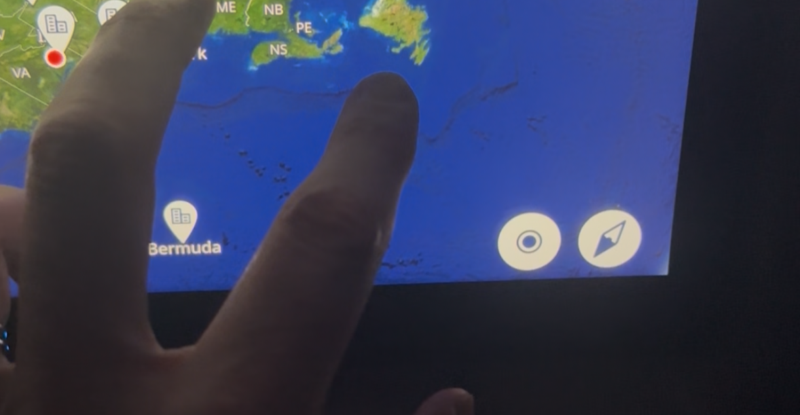
Industry was reminded of the importance of this sort of work last year when Air Canada temporarily disabled the moving map functionality on its Boeing 737 MAX twinjets after passengers observed that Israel had been replaced with the words “Palestinian Territories” on the IFE system. The interactive map was provided by a third party installed on the IFE system — it was not a FlightPath3D map.
But the incident underscored the need for vigilance.
“There are several borders right now that might be redrawn over a certain time period, and certain names that may occur, and those temperatures need to be checked and managed. And so, we have procedures in place to be abreast of that,” Jackson said, adding that he himself scans the horizon with an eye on understanding shifts that will transpire in the future.
Related Articles: