
 Air New Zealand is calling for more women to consider a future in aviation this International Women’s Day. While women are making a strong impact throughout New Zealand’s aviation system, they remain underrepresented in key operational and leadership positions.
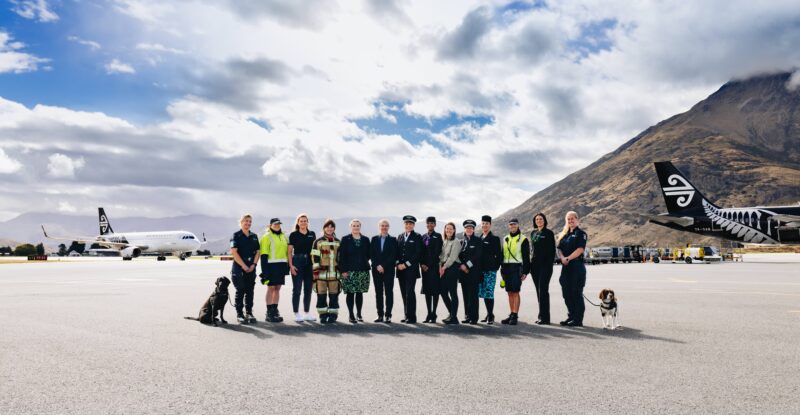
In partnership with Queenstown Airport and other aviation organisations – and in a New Zealand first – flights and all ground operations today will be led by women. The day aims to showcase the depth of talent already in the sector and reinforce the need to see many more women take to the skies and step into aviation careers.
Flight NZ611 from Auckland will arrive in Queenstown at 8.35am today, operated by all-female pilots and cabin crew. Dozens more women will operate the wider airport operation, which crucially includes 14 key operational positions**. It is a demonstration of the wide range of diverse roles that keep New Zealand flying – from flight planning and load control, air traffic control, ground handling to engineering, security, and airport operations.
Data shows women remain underrepresented in many aviation roles. Despite 41%* of aviation jobs in New Zealand being held by women, roles that require long-term progression and specialised technical training such as pilots, engineers and air traffic controllers, continue to have low numbers of women – for example, just 2% of aircraft maintenance engineers.
At Air New Zealand, women make up 8.97% of the pilot workforce overall. Representation is lower on jet fleets where 6.61% of pilots across all ranks are women.
Air New Zealand’s General Manager Airports Kate Boyer says increasing the number of women in aviation starts with making roles visible and backing it with real pathways into the industry.
“Every day women are already working across every part of the aviation system, and when those roles are visible the next generation sees it and thinks ‘that could be me.’ This initiative celebrates the incredible women who have paved the way to get us here and showcases the vital role women play in our industry’s future. If we want a resilient aviation workforce for the decades ahead, we need to broaden who sees a place for themselves in this industry, and build clear pathways to support women in making aviation a viable long-term career.”
Minister for Women, Nicola Grigg, says: “This fantastic initiative recognises the growing representation of women in aviation, particularly in roles where they’ve historically been underrepresented. When women are visible in leadership and technical positions, it unlocks career pathways and shapes how young people view their future and their place in it. I would have loved to have been on this flight celebrating this event and wish everyone a safe and happy journey – go girls!”

Career pathways and support
New Zealand Association of Women in Aviation (NZAWA) President Simone Boult says moments like this broaden people’s understanding of aviation.
“Aviation is often seen through the lens of the flight deck, but in reality, pilots are the end-users of an enormous feat of organisation that involves engineers, planners, air traffic controllers, safety specialists, dispatchers and many others. While more women are entering aviation, staying supported across long, complex career pathways remains a real challenge.”
NZAWA supports women across all fields of aviation through scholarships, mentoring, early-engagement programmes and industry partnerships.
At Air New Zealand, a number of initiatives are in place to support and grow female representation in aviation. The WINGs Network, Women Inspiring the Next Generation, brings together Air New Zealand pilots committed to building a more inclusive and supportive culture. The network has a large mentoring programme for young aspiring pilots across New Zealand and works to inspire more women to pursue aviation careers.
The Mangōpare Pilot Cadetship offers an accelerated pathway to becoming a pilot and is designed to open the door to people from all backgrounds, helping improve the diversity of the airline’s pilot workforce.
Air New Zealand’s WISE Network, Women in Supply Chain and Engineering, supports strengthening relationships across Supply Chain, Engineering, and Maintenance, helping women build confidence, expand their professional networks, and remain included in conversations and decision making.
Boult says that ultimately, the goal is to sustain progress: “If aviation is going to solve its skills challenges and build a resilient future, it needs to reflect the world it serves. That starts by showing what’s possible.”
*As per Ringa Hora’s ‘Addressing the Needs of the Aviation Workforce’
**The fourteen operational positions led by women for flight NZ611 or at Queenstown Airport include:
- Captain
- First Officer
- Cabin crew – inflight service manager
- Load controller
- Flight planner
- Engineering
- Air Traffic Control
- Queenstown Airport Duty Operations Manager
- Queenstown Airport Emergency Service Crew Chief
- Airline Operations Coordinator
- Gate & Tarmac Coordinator
- Aircraft Turn Coordinator
- Departure Headset Operator
- Baggage Chargehand
- Aviation Security – operations manager
- EDD Officer
This initiative has been delivered in partnership with Queenstown Airport and key aviation agencies including Airways, the Civil Aviation Authority, and New Zealand Police, reflecting a collective commitment to strengthening diversity across New Zealand’s aviation system.
Featured image credited to Air New Zealand