

 Brussels Airlines, part of the Lufthansa Group, is an odd duck. Despite operating in a unique market, Africa, and being the main airline serving the de facto political capital of Europe, its long-haul fleet comprises ageing Airbus A330s with a variety of business class cabins.
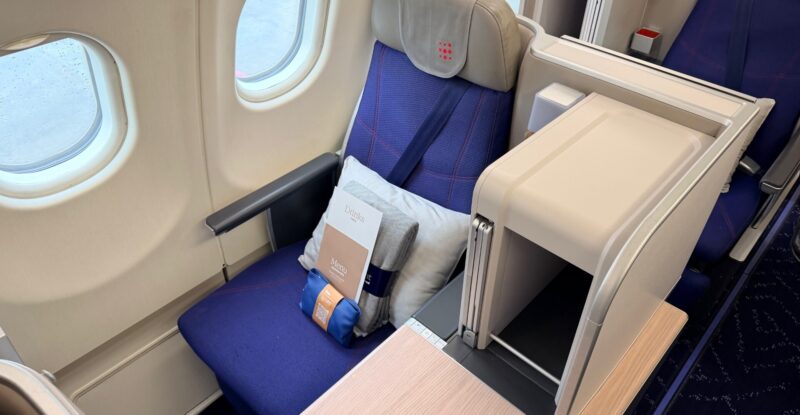
While some of the twinjets are stuck with the old Lufthansa interiors (pre-Allegris), a few have Brussels Airlines’ own distinctive business class featuring Thompson Aero Seating’s popular Vantage seats.
On a morning flight from Brussels to New York JFK, I put this cabin to the test to see if the carrier can be considered a strong contender in the competitive transatlantic market.
Check-in at Brussels Airport was fine. Brussels Airlines checks people in by region, which was novel for me, but this meant they could conduct an additional security questionnaire while I was in the queue.
Despite the old-style scanners, security was quick in the fast lane, and I was airside in a few minutes.
As the Brussels Airlines lounge is currently closed, I headed straight to The View lounge in the non-Schengen area to freshen up and grab a light breakfast. I left ten minutes before the scheduled boarding time.
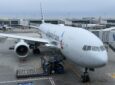
Boarding was orderly, with Senator and Business class allotted their own gate. After a brief wait in the jetbridge, passengers were welcomed onto the A330-300 for the eight-hour trip across the Atlantic.
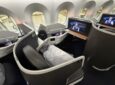
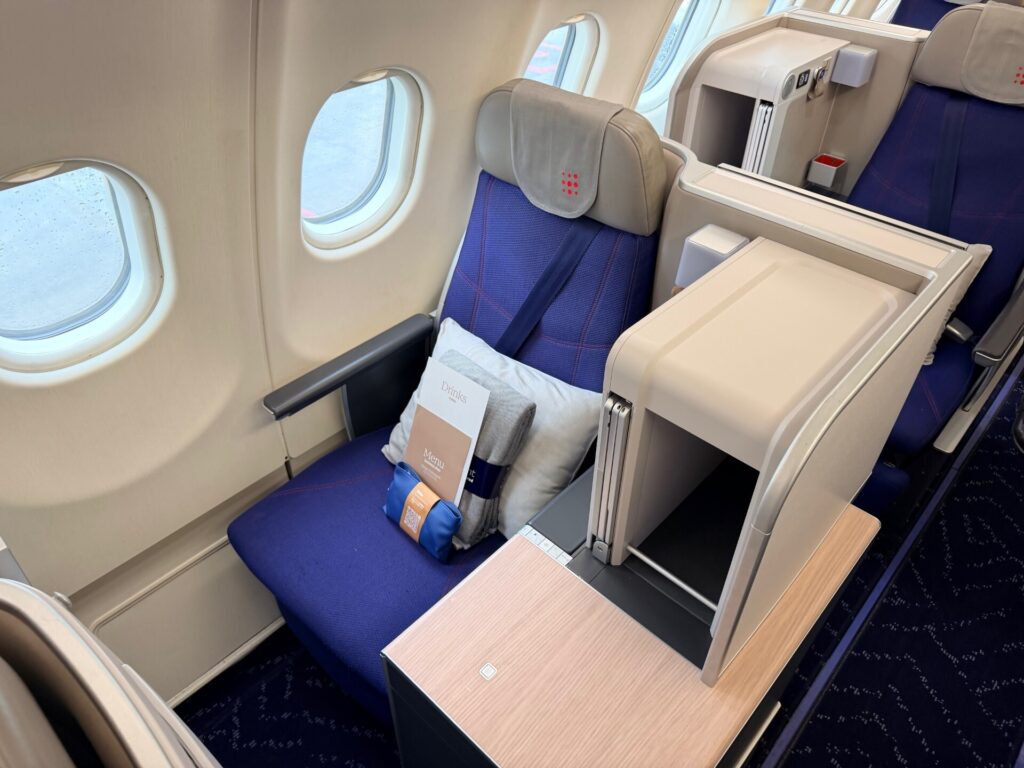
Entering the cabin, I was met by an understated but well-appointed interior. The seats are arranged in an alternating 1-2-1 and 2-2-1 layout and feature a muted palette of greys and creams, offset with bright blue seat covers.
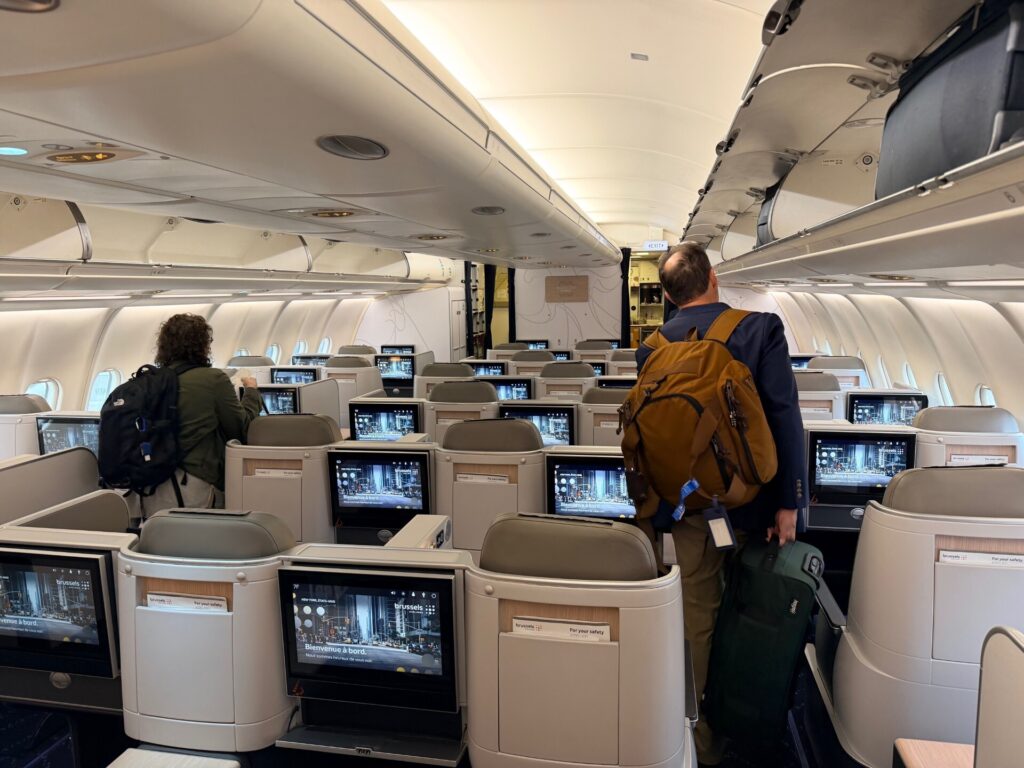
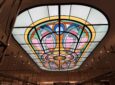
The cabin also features swooping Art Nouveau wall art, which is certainly distinctive. Belgium lays claim to being the home of this art style, but it was interesting to see such organic lines within an airline cabin. It felt very Belgian: offbeat, but intentional, and rather serene.
After taking in the cabin, I made my way to my seat, 2K, which is one of the solo seats closest to the windows. My first impression was that it was not very private, as I could see the passengers around me. But then again, I am 6ft 4in, so the shroud did not meet my eyeline.
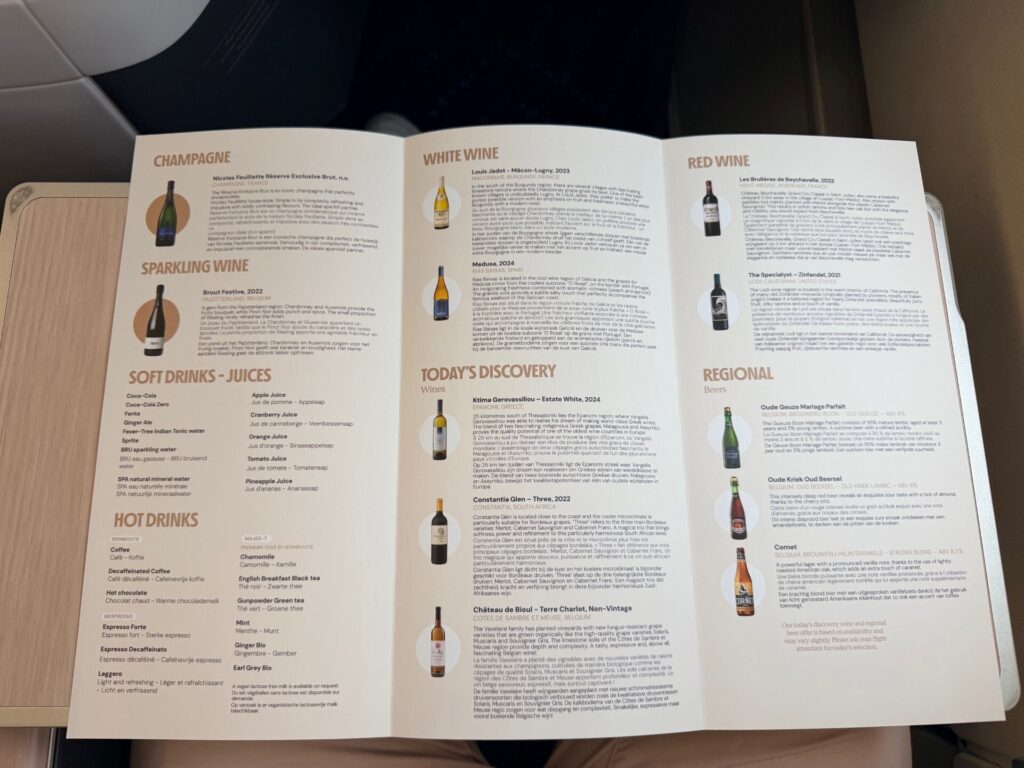
I was offered a welcome drink of champagne before takeoff, the ever-reliable Nicolas Feuillatte.
As we prepared for departure, I inspected my seat. In truth, it was fairly worn, with some marks and scratches. However, it was comfortable with good legroom.
It also has physical buttons for seat controls, a very welcome touch, though some of these were hidden in a recess that I only discovered halfway through the flight.
Billing itself as a “boutique hotel in the sky,” Brussels Airlines collaborates with leading Belgian culinary experts to devise its menu and drinks offering. Two-Michelin-starred chef Glenn Verhasselt curated our menu.
The wine list was more extensive than you would find in many restaurants, and there was, of course, an extensive selection of Belgian beers available.
During taxi, the safety video played, striking a good balance between fun and clarity.
As avid readers of Runway Gull Network know, I am highly skeptical of using safety videos as a platform to showcase tongue-in-cheek dance routines, celebrity cameos, and travel-focused segments.
But this safety video, featuring Belgian band Hooverphonic, managed to strike the right balance. The key safety demonstrations, including exits and life vests, were clearly shown and easy to understand, while the moody, bluesy rhythm of the band meant that the lyrics were very clear.
The references to Belgian surrealist painter René François Ghislain Magritte throughout were a very nice touch.
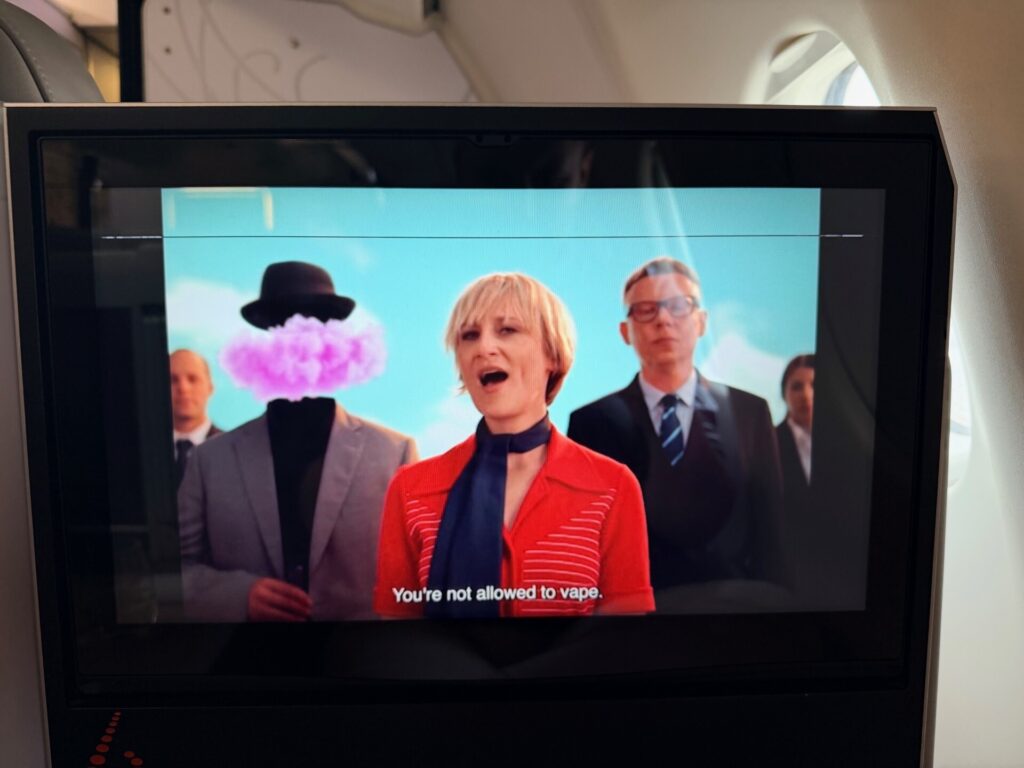
I also inspected the IFE, which was not amazing. Brussels Airlines’ core market is Africa, so it naturally features a lot of African cinema. But the system lacked a broad variety of other material.
A tie-in with Apple TV only offered two episodes of the series I’m watching, Severance. And there was no inflight Wi-Fi. I was glad I downloaded content pre-flight; otherwise, I would have struggled.
After a smooth takeoff, I opened the amenity kit, which features Belgian brands. The leather pouch from Ghent-based leather goods supplier Aesaert was on point, though the eye mask was tiny. I enjoyed the refreshing Vitamin C wipe.
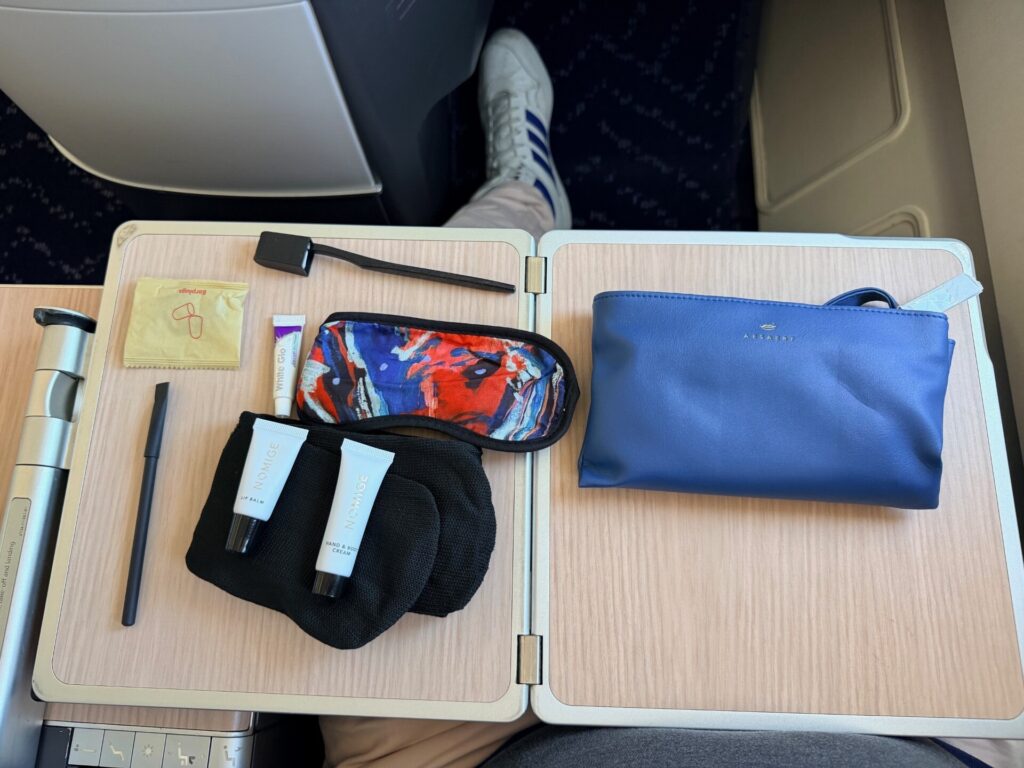
Before the meal service began, I made a dash to the business class lav to change into my personal loungewear. Though we had just taken off, the lav wasn’t particularly clean. It offered some speciality toiletries (the same as in the amenity kit). A custom lit “B” in the shape of the old Brussels Airlines logo lent some nostalgia.
I returned to my seat in time for the aperitif service, and a crew member took my meal order.
After having champagne on the ground, I switched to the Belgian alternative, Bruut. Belgium, like the UK, has a unique sparkling wine tradition similar to champagne but with regional differences. This offering was sour but very crisp and elegant. I appreciated the option to try Belgian wine while still having the classics available.
After an hour of sipping my wine and watching Chernobyl, the meal service began in earnest. The eel starter was genuinely amazing. I would not expect to be served eel on an airline outside of Japan, so this was really unique and bold.
Alas, the main meal, monkfish, was overcooked, and drenched in an incredibly salty cream sauce. The required delicacy of its preparation had definitely been lost in the translation to cabin service.
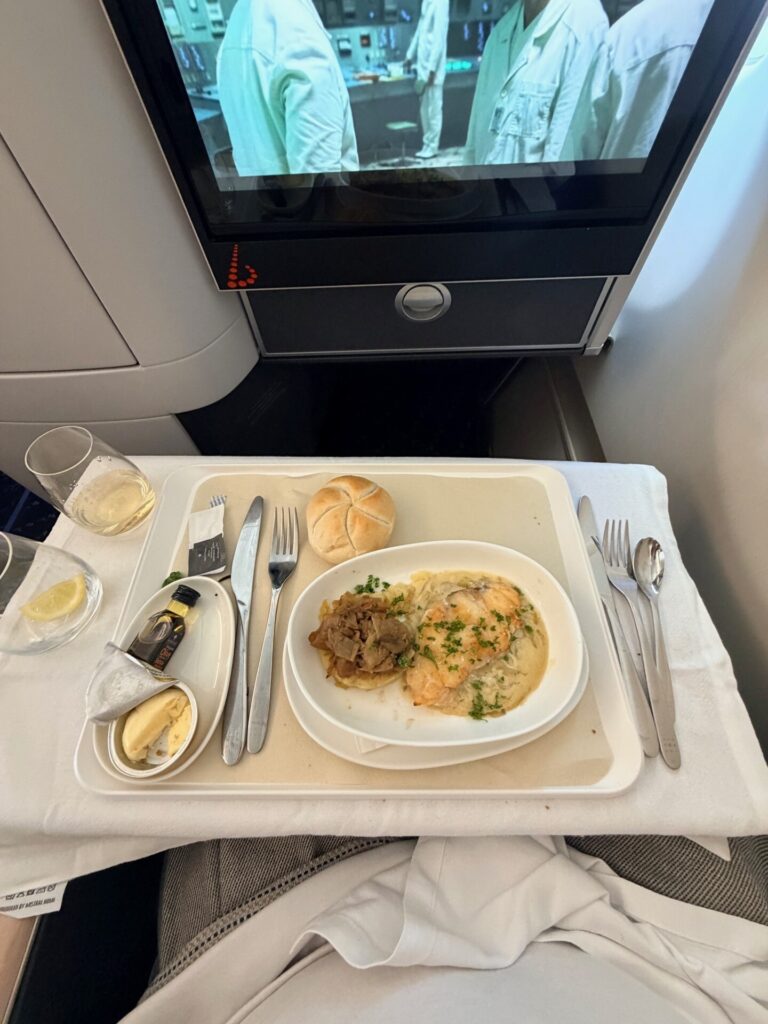
However, dessert was back on the right side of quality, with a lovely cheese service including Belgian varieties and a chocolate dessert that would not be out of place in an upscale French restaurant.
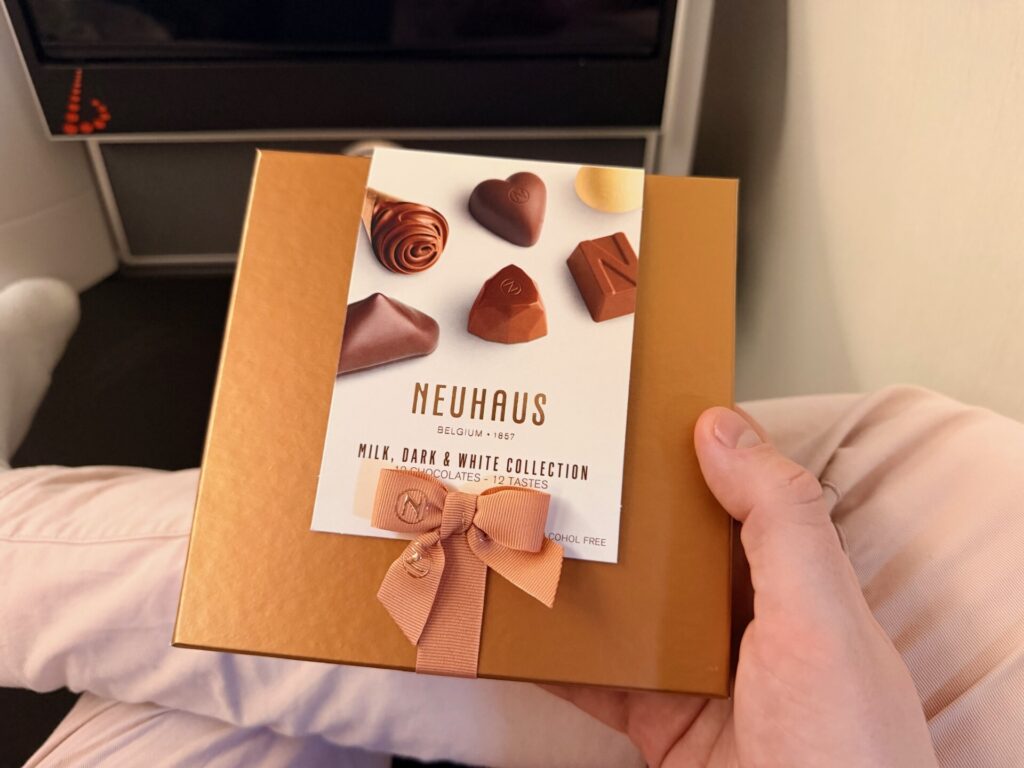
The wine pairings throughout were of high quality, and I enjoyed a vintage Port to finish. The coffee service at the end, of course, featured Belgian chocolate from longstanding Brussels Airlines partner Neuhaus.
Overall, the meal was ambitious but it didn’t land everything.
Notably, it was genuinely different from any meal I’ve had on a European carrier in business class in a long time. While other airlines are moving towards lighter, fresher meals, this represented a truly vintage proposition of haute cuisine served in the classic way.

Following a rather boozy lunch, I did have to take a nap. The bedding was perfectly suitable, with a light blanket that felt soft and a nice quality pillow. The seat was a bit tight at the top. I have a 50″ chest so I think I would have struggled with an overnight flight.
Following a quick nap, I made my way to the back of the cabin to check out the snack bar, which included chilled fresh fruit — a terrific addition compared to the prepackaged snacks you often get in these galleys, and I made the most of it.
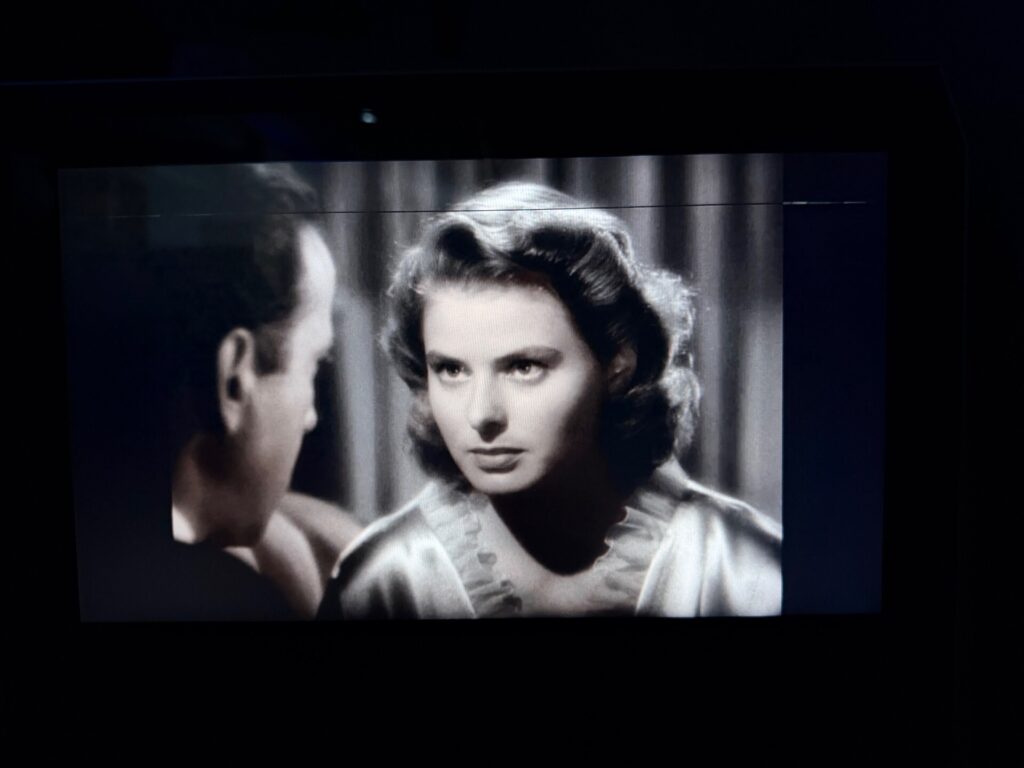
Thereafter, I used the IFE to while away the hours, including watching Casablanca. The black-and-white film matched the quality of the IFE screen, which had dead pixels and was really rather out of date.
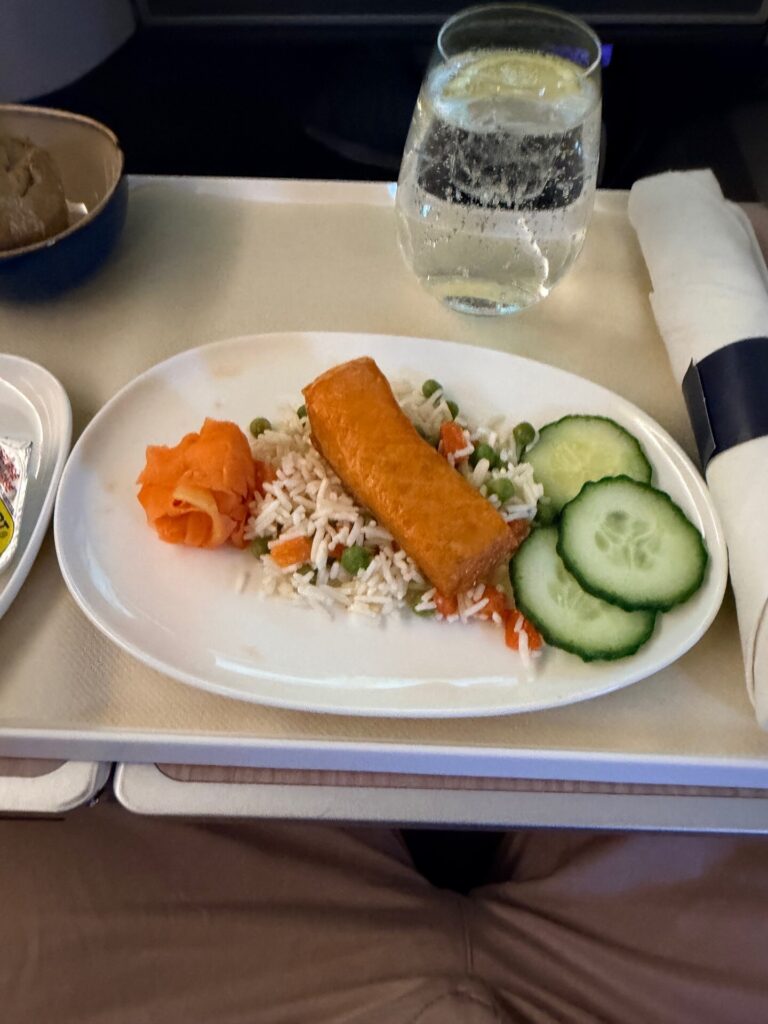
Ninety minutes before landing, the final meal service, comprising cold salmon and rice, was served While the salmon was flavourful, the rice was dry and basically inedible. An ice cream dessert was soft and satisfying.
The crew then passed out boxes of Neuhaus chocolates as a leaving gift.
As we began our descent into New York JFK, I marshaled my thoughts about my experience flying on the Brussels Airlines widebody.
In many ways, it felt like a bygone era of business class travel: old-school French food served with copious amounts of wine. It was quite decadent.
The cabin wall art is very unique. The crew were professional and courteous, if slightly aloof. The seats were comfortable, but the IFE was staggeringly out of date.
The lack of in-flight Wi-Fi is genuinely problematic for a flight between two of the world’s diplomatic capitals, but Lufthansa Group will remedy the issue with Starlink in time.
Importantly, the flight felt distinctly Belgian. It will be interesting to see if its charming uniqueness will be retained.
Related Articles:
- Small yet mighty: Brussels Airport’s The View impresses
- Thompson is big winner in latest Lufthansa Group seat choices
- Lufthansa Group hands massive fleet-wide IFC contract to Starlink
Featured image credited to Fintan Horan-Stear