

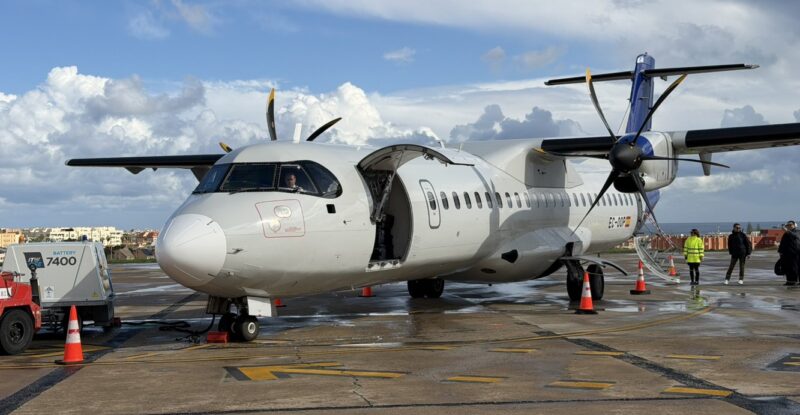
 Sometimes a flight crosses so many “firsts” off the list that booking it becomes mandatory. That was certainly the case for me on a recent out-and-back trip with Iberia from Malaga, Spain to the Spanish city of Melilla on the North African coast.
This same-day roundtrip ticked multiple boxes: it was my first Avios points booking, my first time flying on an ATR 72 turboprop, my first time flying to an autonomous city, and my first time booking “club seats” in economy class.
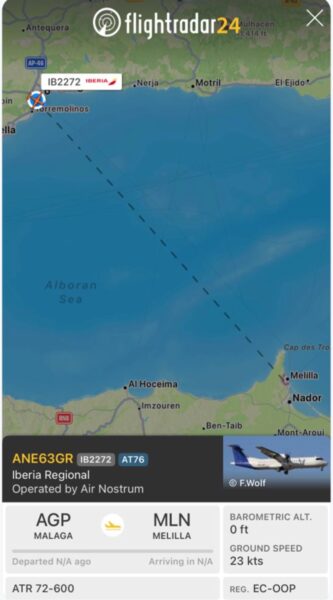
Flight time for AGP-MLN: forty-five minutes. Image: Flightradar24
Booking the Iberia flight with Avios points through the British Airways website proved, unsurprisingly, to be the most troublesome part of the entire journey. I’m used to dealing with BA’s tech failures, but I have never before encountered an airline booking flow that returns flights for the wrong day outright.
While BA was able to process a search request for a same-day roundtrip, it did so for the day prior to the date I requested. This glitch seems to impact services involving Iberia and it’s repeatable as another member of my group didn’t notice the problem until just days before the Malaga-Melilla flight. He completed his purchase without catching the site’s error.
How many passengers have fallen victim to this glitch?
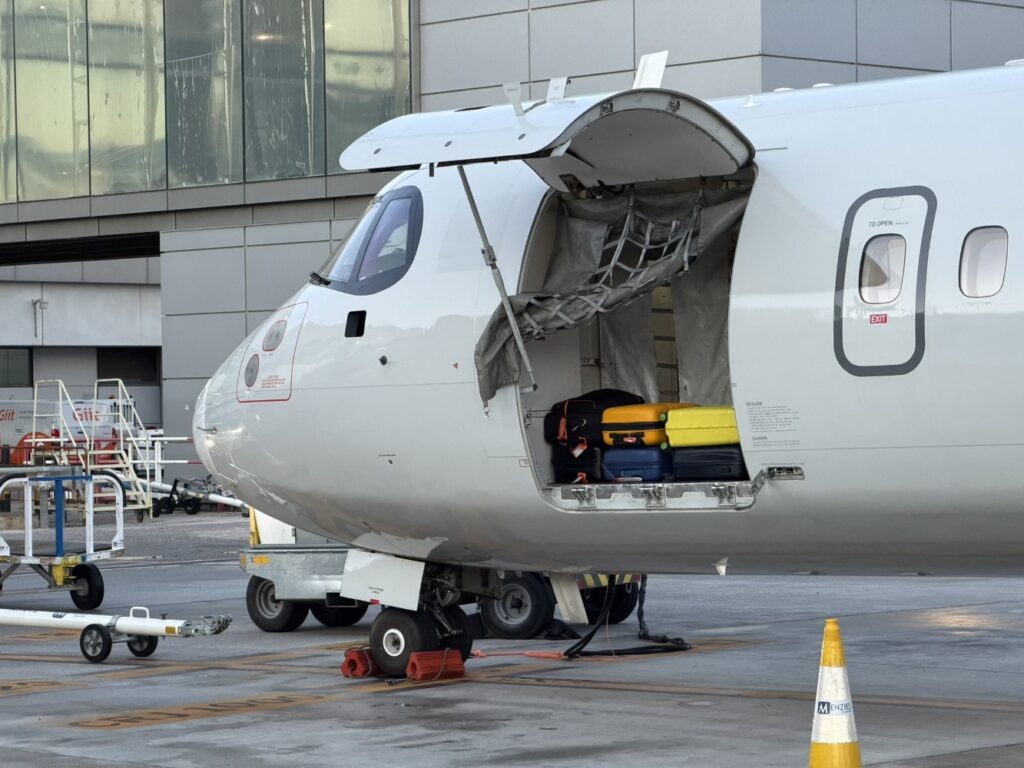
I also realized during the booking process that Iberia’s ATR 72 turboprops (really Air Nostrum’s aircraft, operating as Iberia Regional) feature something special and rare in modern aviation. Beyond the oddity that the type boards only from the rear, with Row 1 starting at the back of the cabin, Iberia’s ATR 72 features so-called “club seats” in the last (first?) row of economy. Since we had a group of five people I made sure to book one of the two flights in a reverse-facing seat. I wouldn’t ordinarily bother paying about $7 for seat assignments on such short flights, but this was something special.
With almost comedic timing the night before flying, a flurry of emails hit the group while at dinner with a raft of seat assignment changes. Luck of the draw was not on our side, as Air Nostrum had assigned its only ATR 72 not in its standard configuration. This meant that the club seats we booked were not available and everyone needed to be shuffled around a bit. Unfortunately, this aircraft operated both flights of the trip. Iberia later refunded my seat assignment payments, but only after I proactively requested it. Such refunds should be automatic.
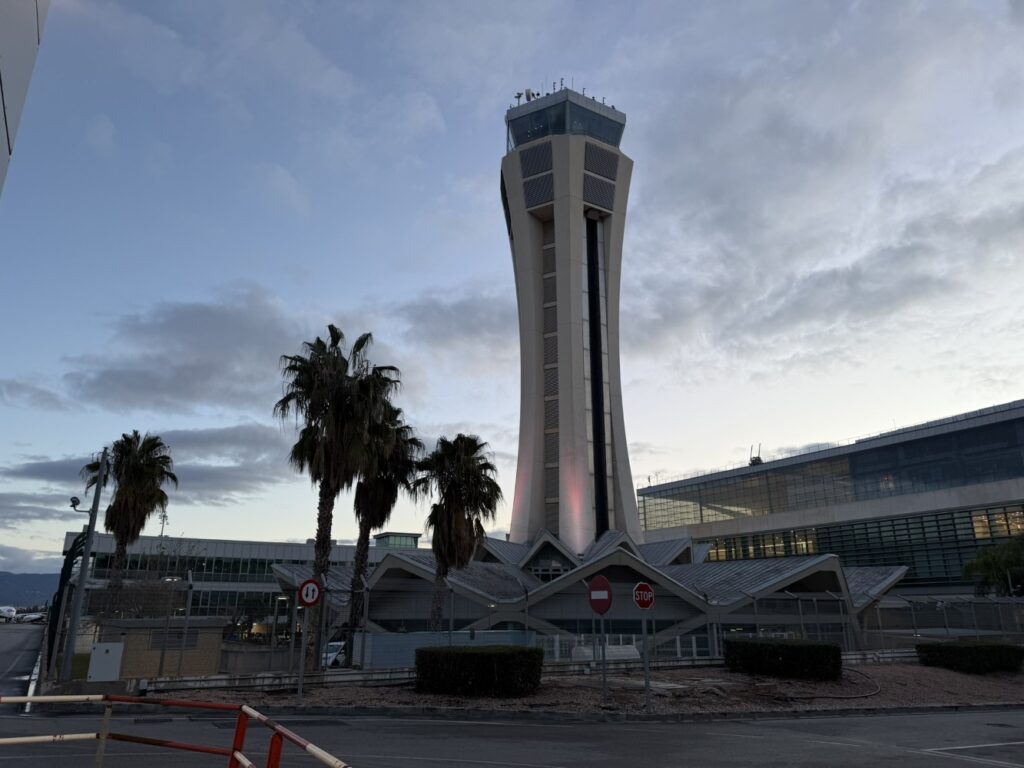
Despite the British Airways points booking I was able to check-in using Iberia’s quite usable iOS app.
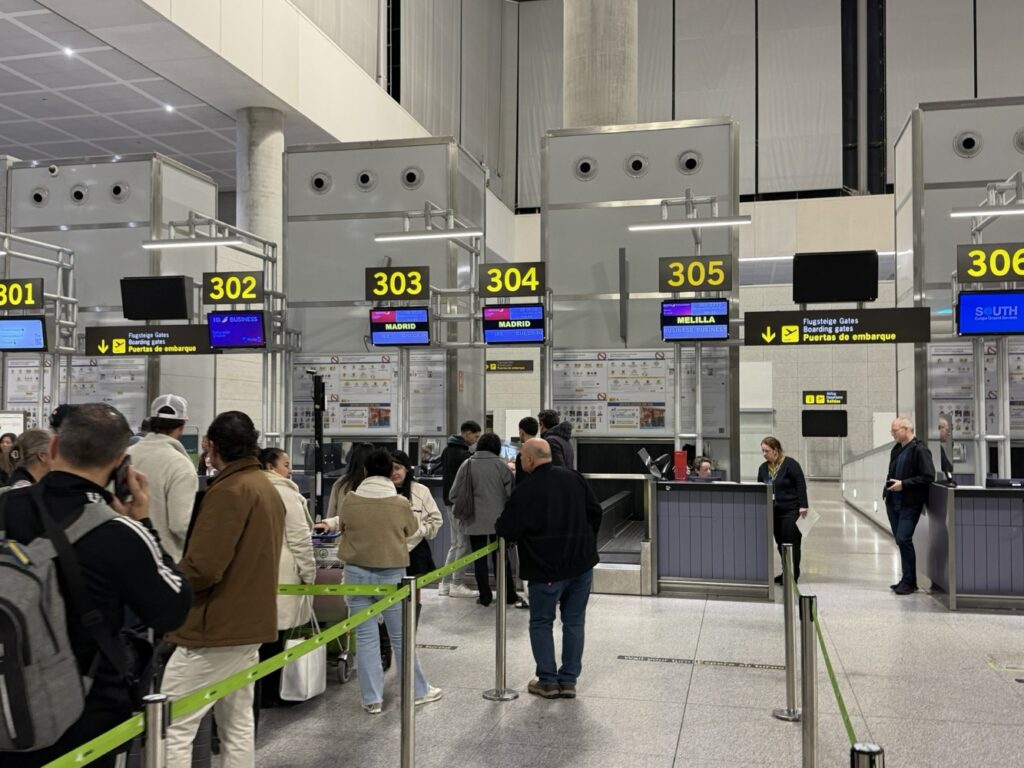
I breezed through Malaga’s security checkpoint, which was candidly oversized for the winter season.
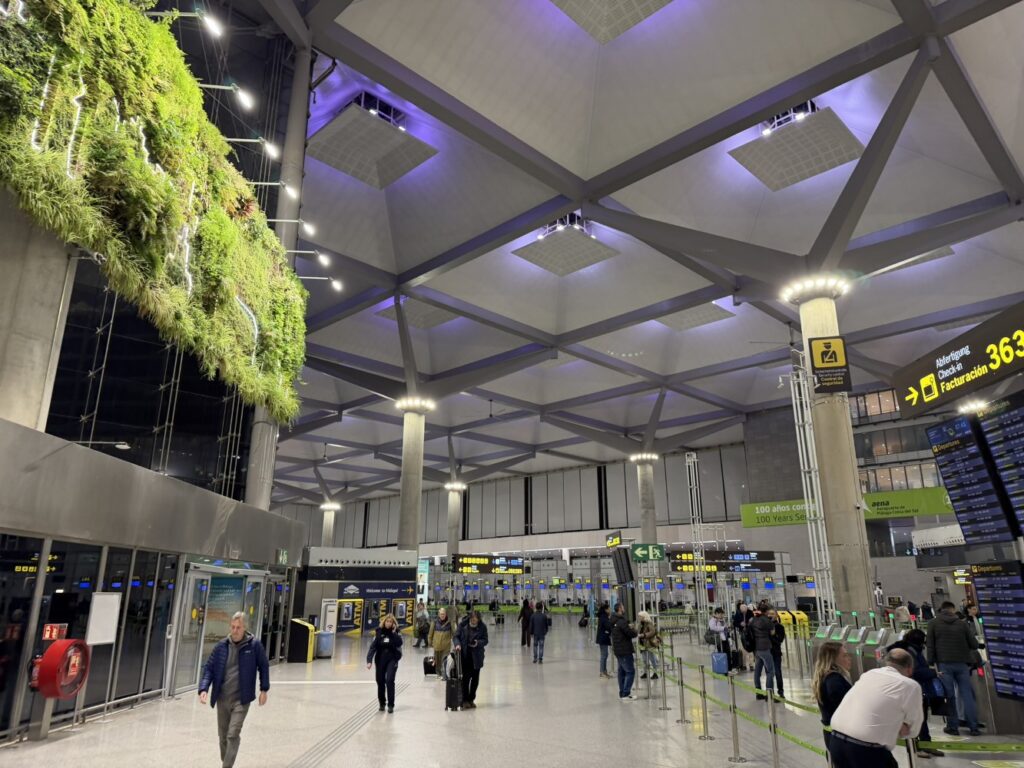
Boarding at a gate that thankfully didn’t require a bus ride began right on time, though it seemed that every passenger needed to be issued a new boarding pass as they scanned their now out-of-date pass.
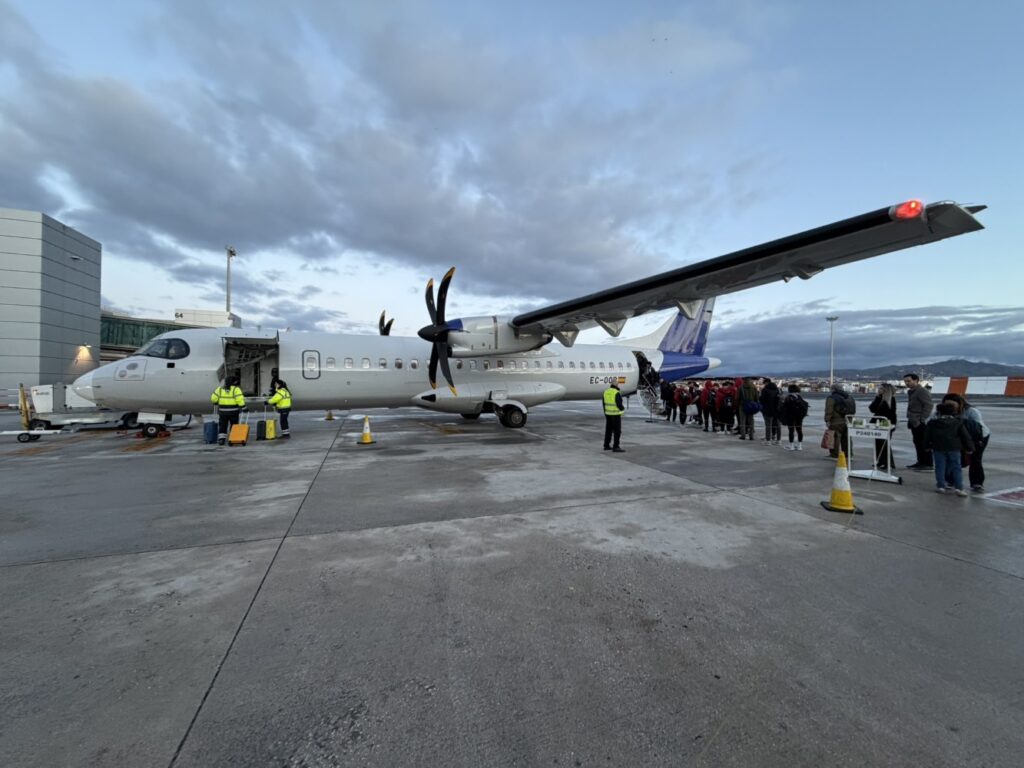
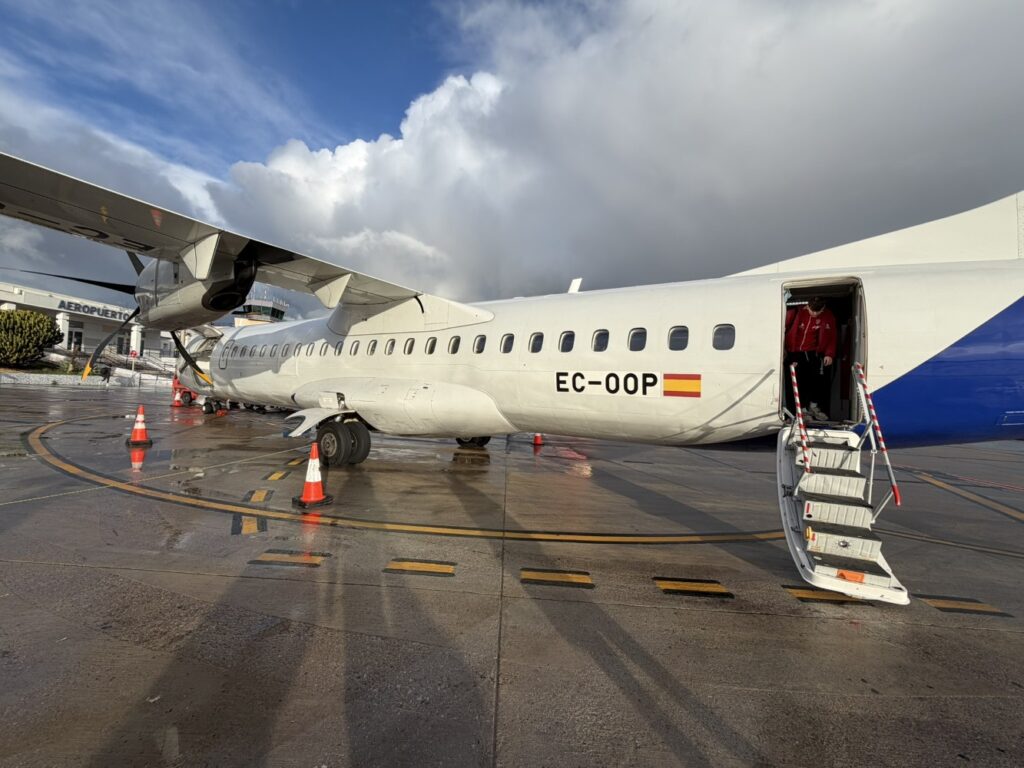
This particular ATR was previously operated by Xfly for SAS, but you would be hard pressed to guess that outside of the exterior livery which very much shouted SAS in all but name.
The only other signs that something was different about this aircraft was the lack of club seating and a rather scarred front bulkhead where the logo of the aircraft’s past life once stood.
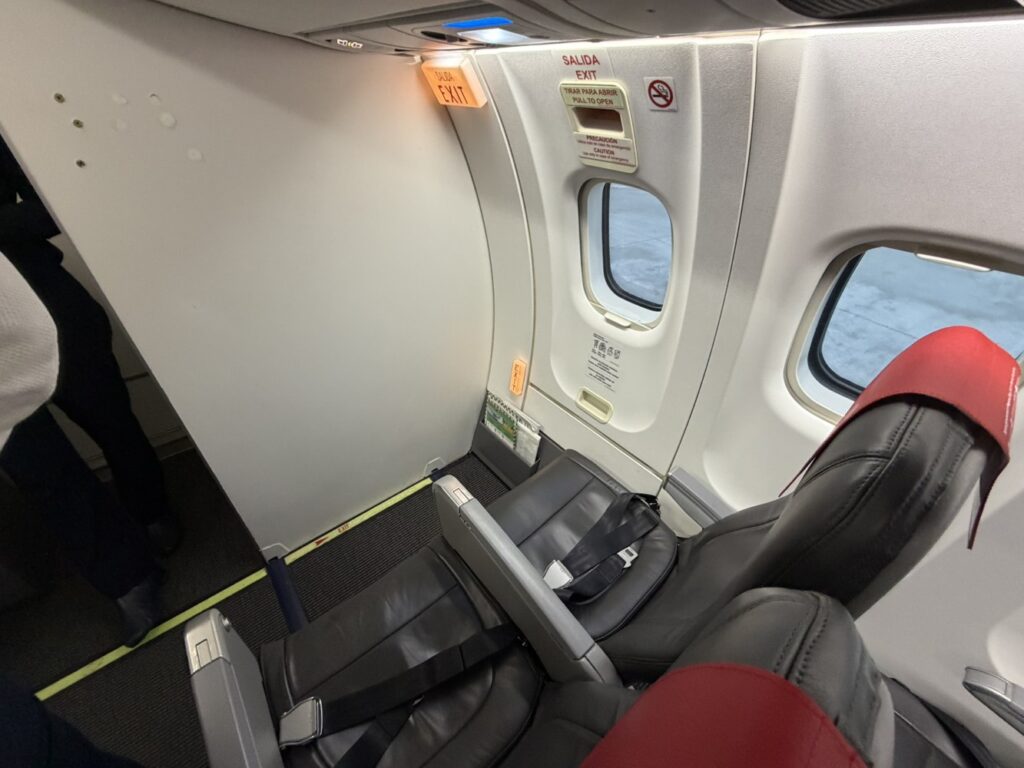
Otherwise, the interior seemed quite standard for Iberia.
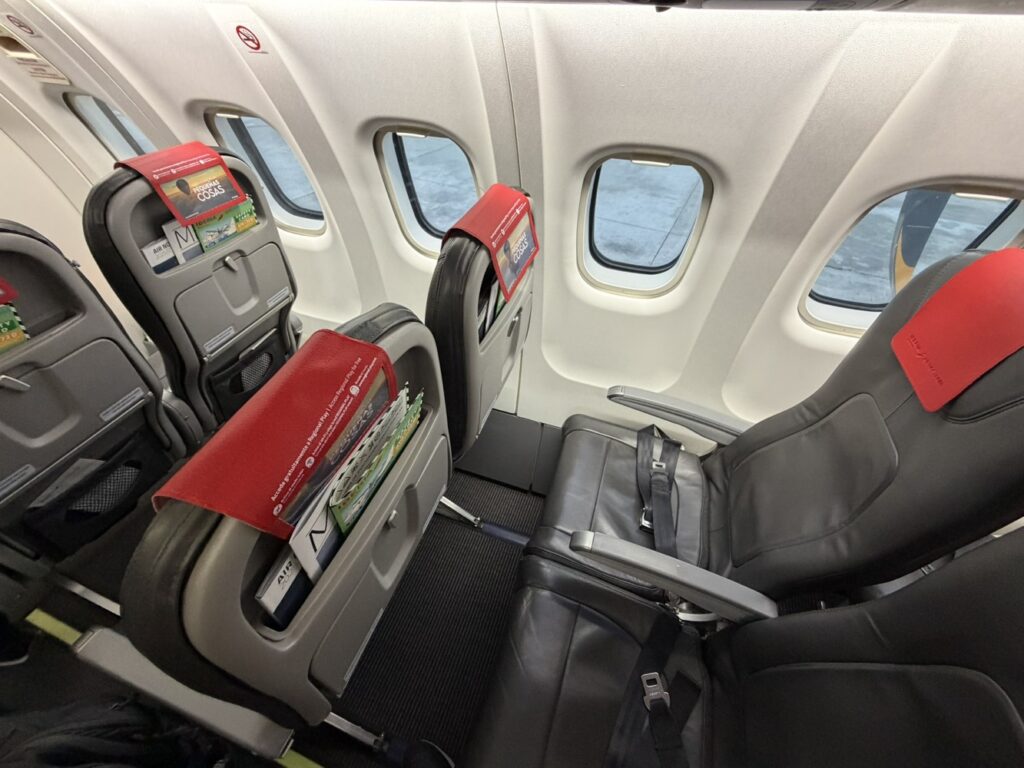
Legroom was sufficient. And I was actually able to stand up in the lavatory.
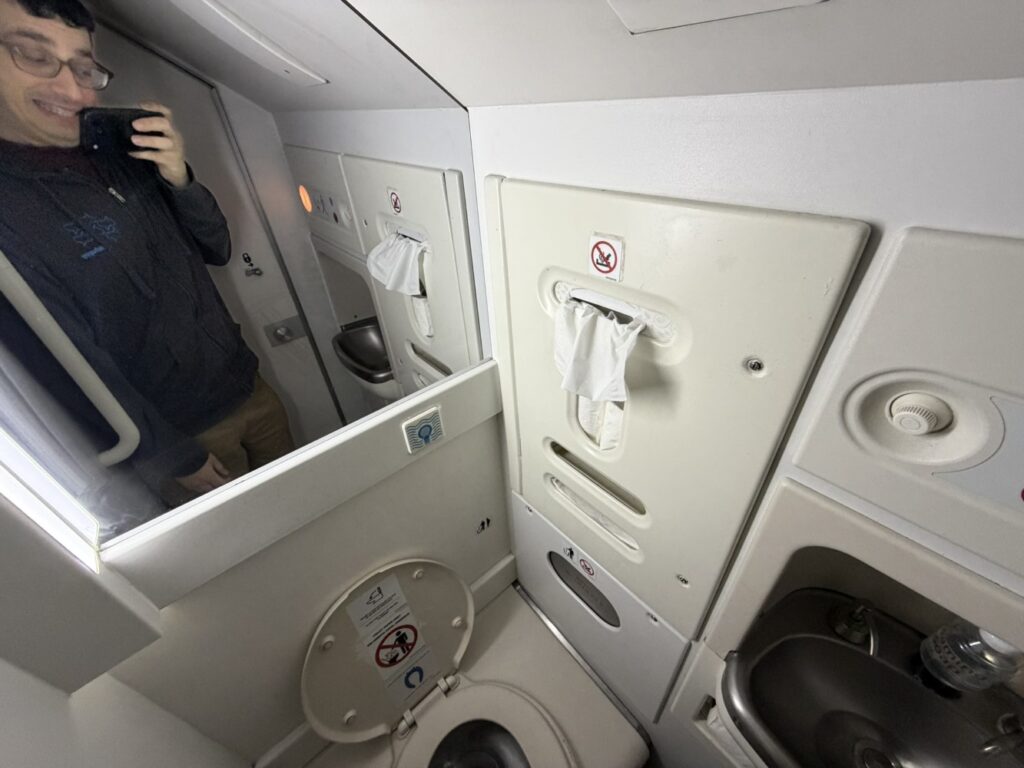
For such a short flight of roughly 45 minutes, though technically an intercontinental flight between Europe and Africa, I was impressed at how “normal” this flight felt.
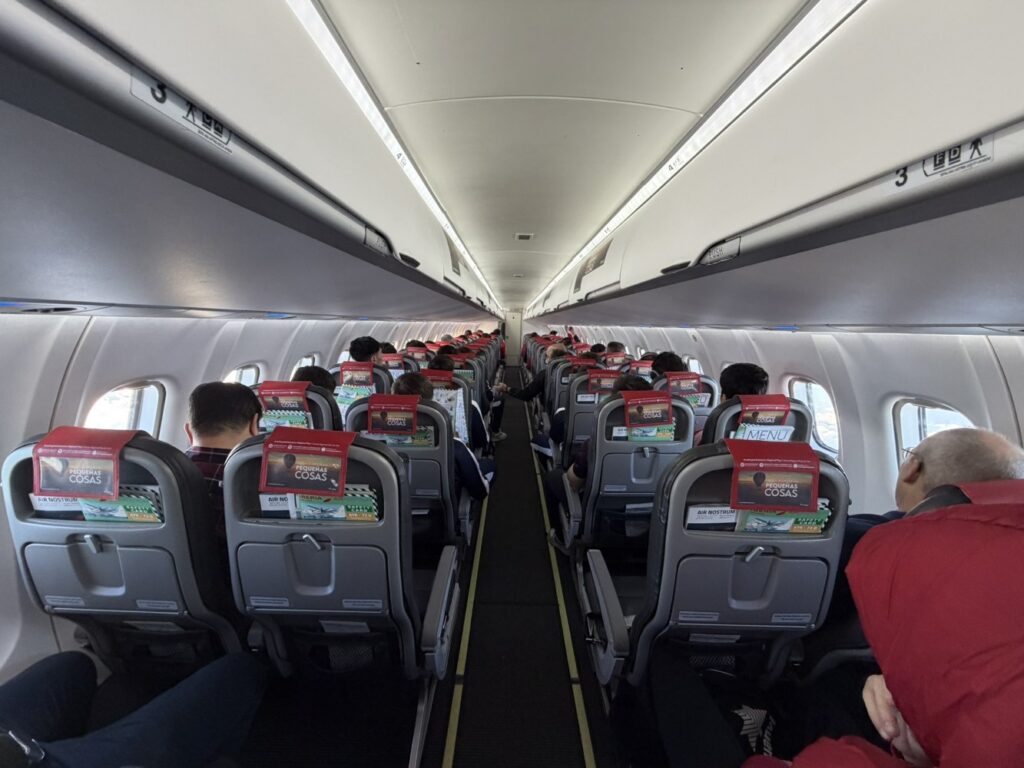
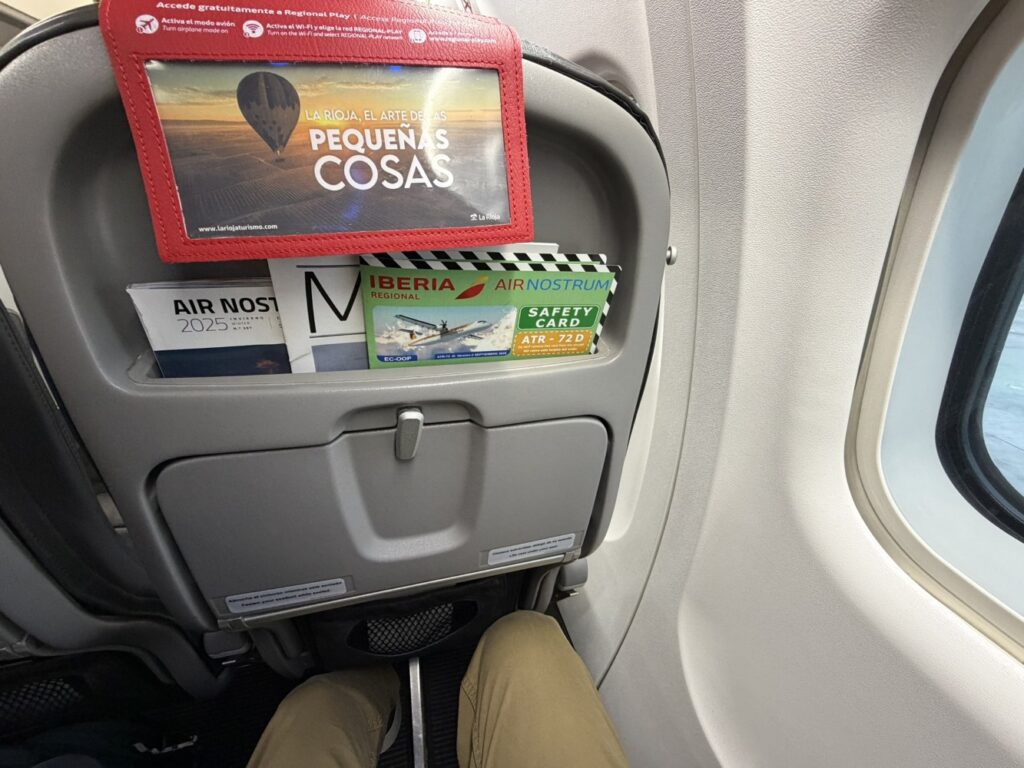
Each seatback contained an inflight magazine.
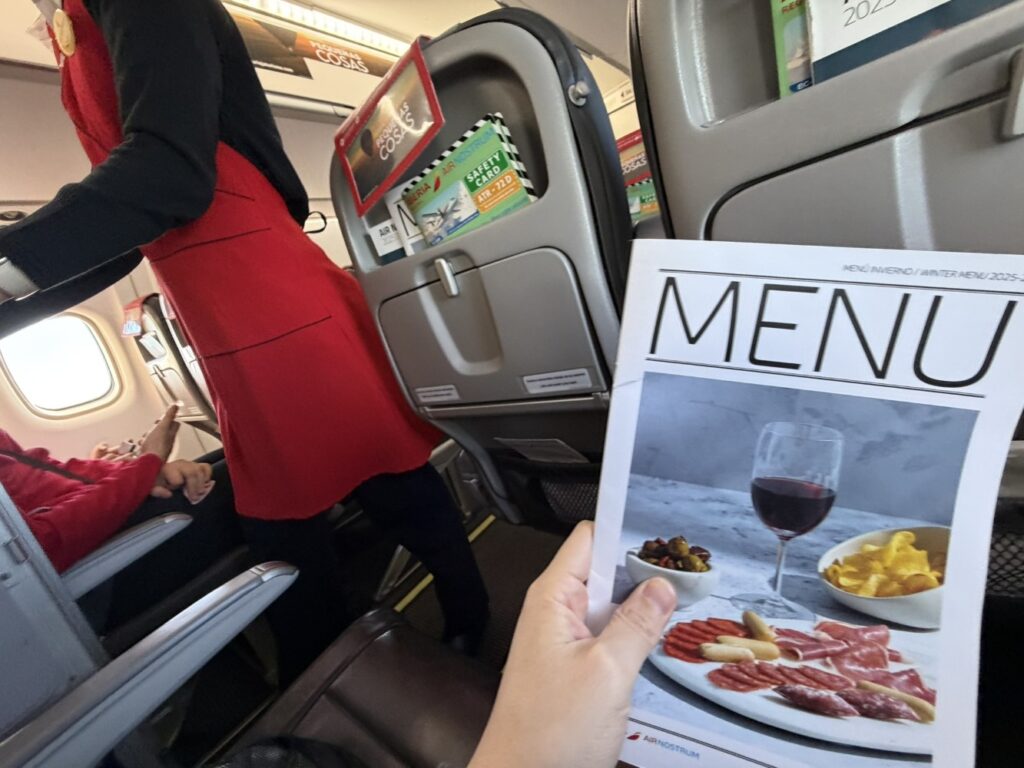
There was also a buy-on-board menu, and a food and beverage service was actually provided!
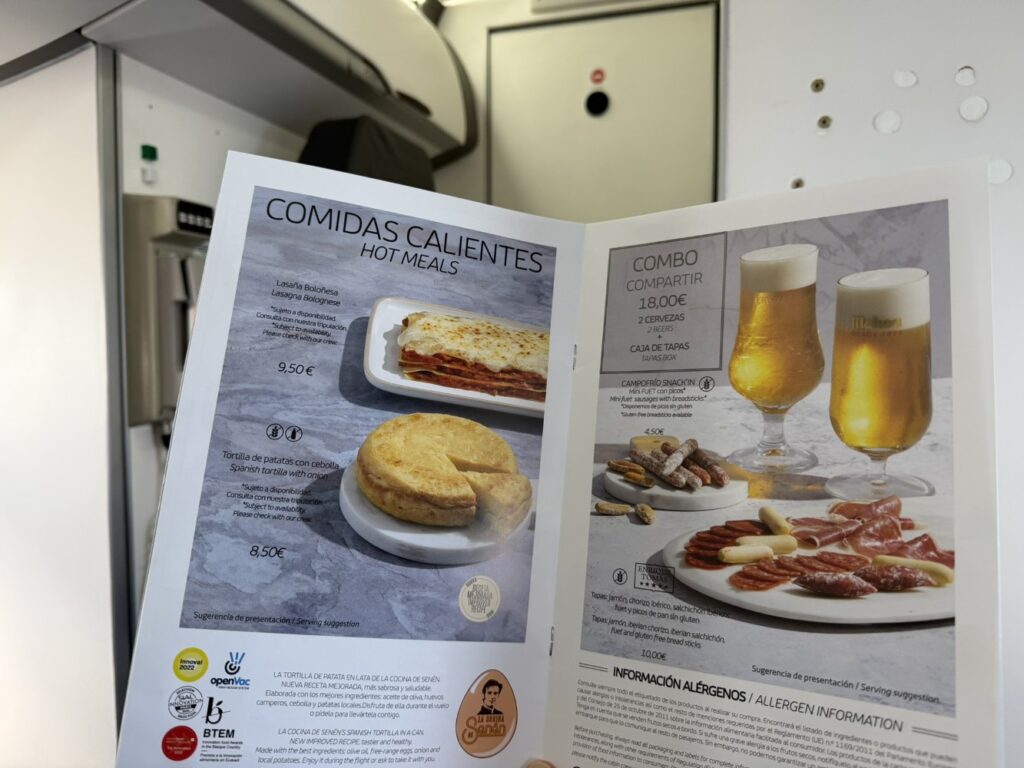
Passengers in business class even received a full plated meal while economy passengers had the chance to purchase from a surprisingly robust menu. Lasagna Bolognese on a 45-minute flight? I should have gone for it! Comparable flights of this length in the United States might not even receive a basic water service.

Turboprop aircraft have a stigma around them for being loud and cramped, especially here in North America where the type is nearly nonexistent (bar JSX’s recent launch of ATR service.) I actually found the aircraft to be relatively quiet.
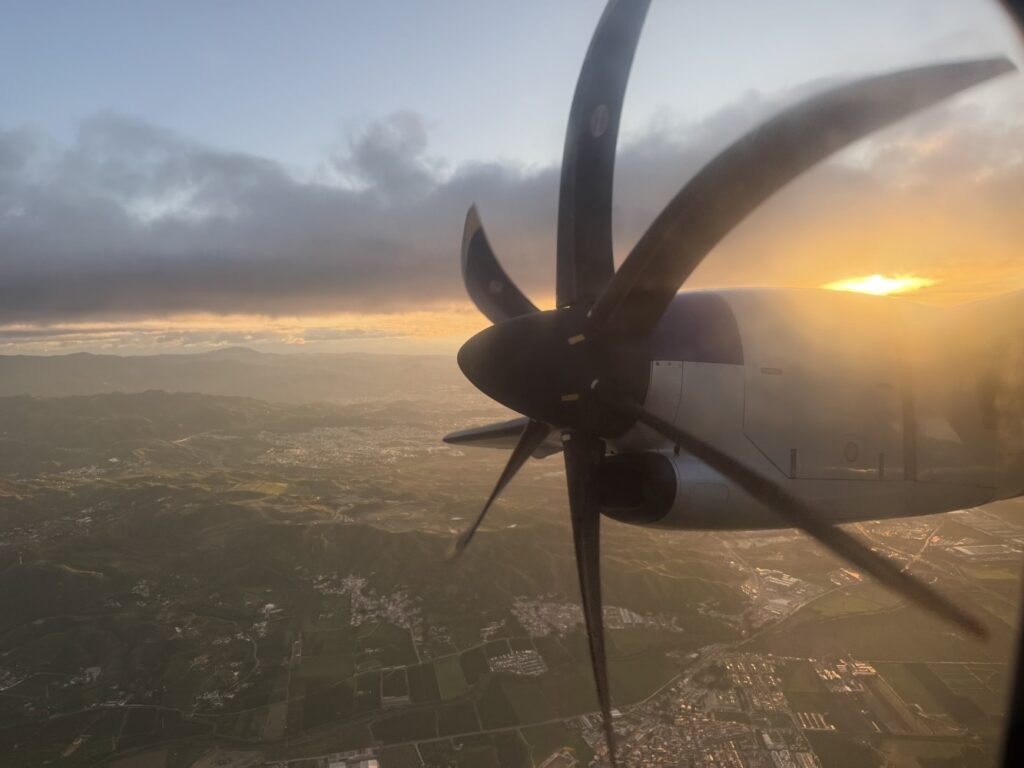
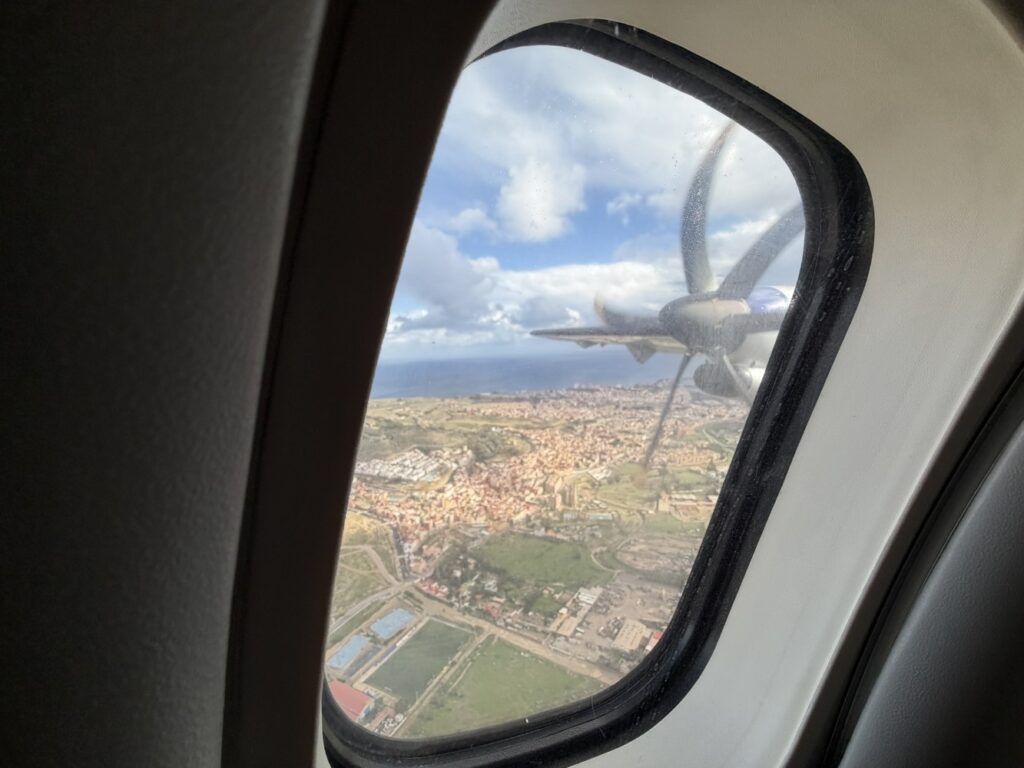
The experience was pleasant, even though I was seated very close to the props.
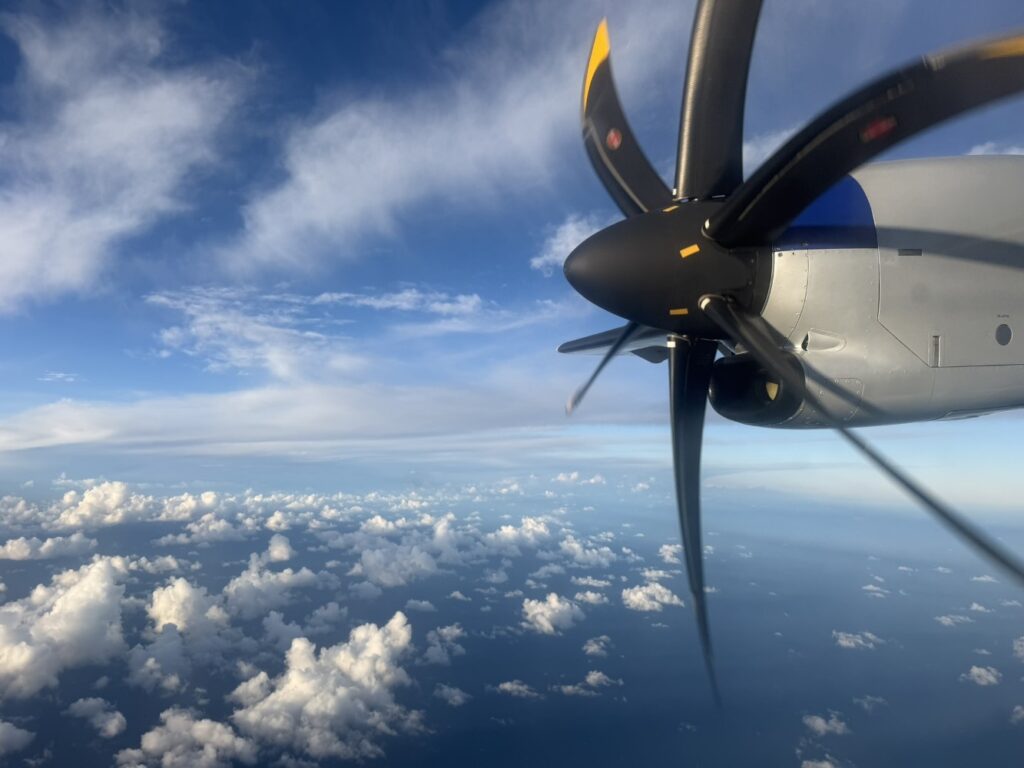
What’s not to love about those views?
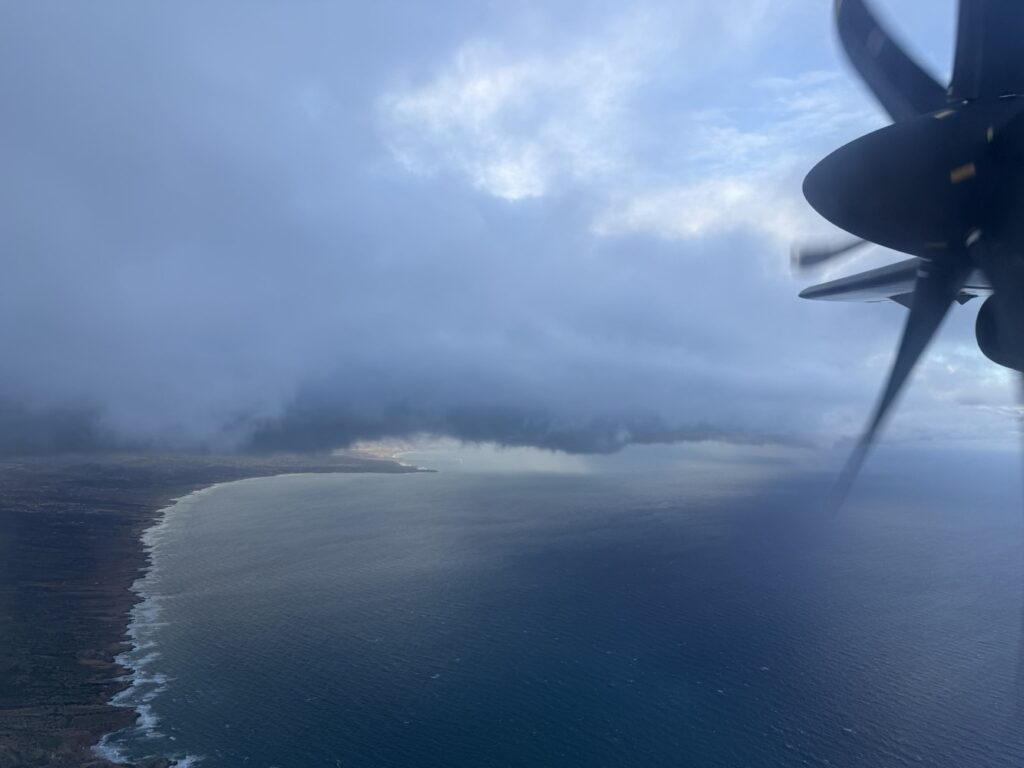
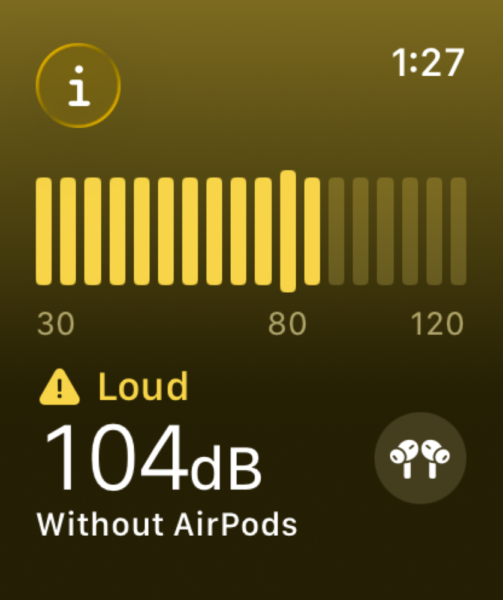
Curious about dB levels, I checked the sound throughout the flight.
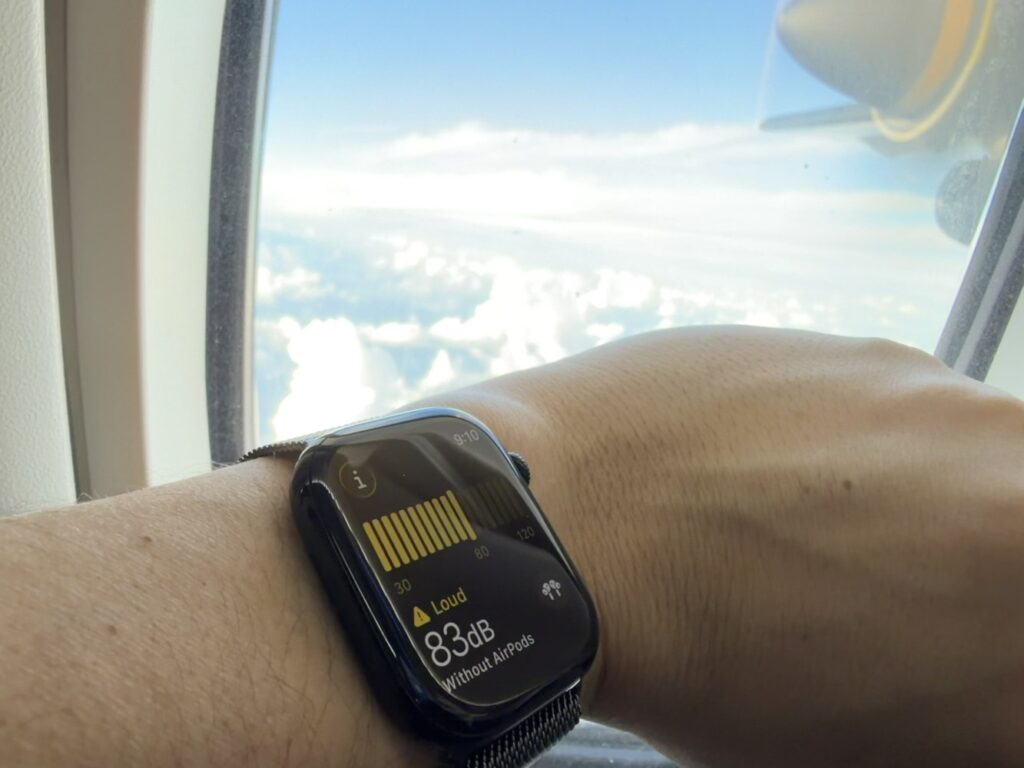
The loudest element of the flight was the public address system, which must have had its volume set to 11 out of 10.
Outside of the missing club seats, the only other letdown was that the streaming entertainment platform from Immfly was unavailable or inoperable on this specific aircraft. Not that it necessarily matters on such a short flight, but these ATRs do operate longer segments and the feature is advertised right on the back of every seat.
Before we knew it, we were on the ground at Melilla Airport.
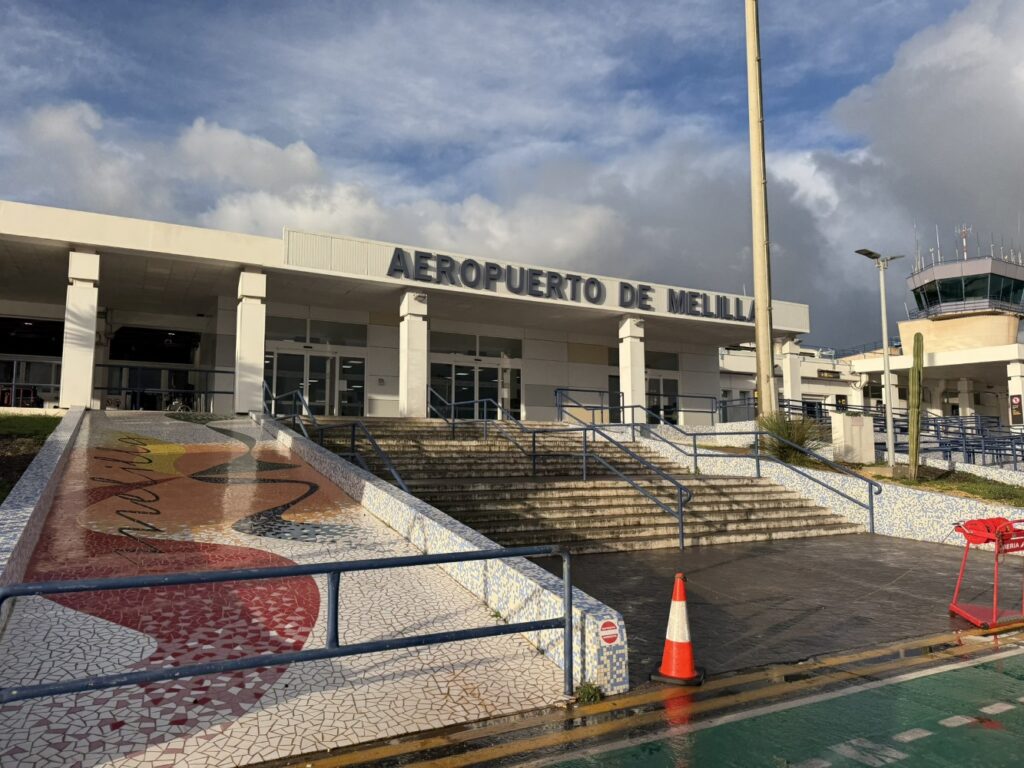
Air Nostrum is the only operator at the little airport, but the four-gate facility handles roughly half a million passengers per year and is surprisingly well equipped.
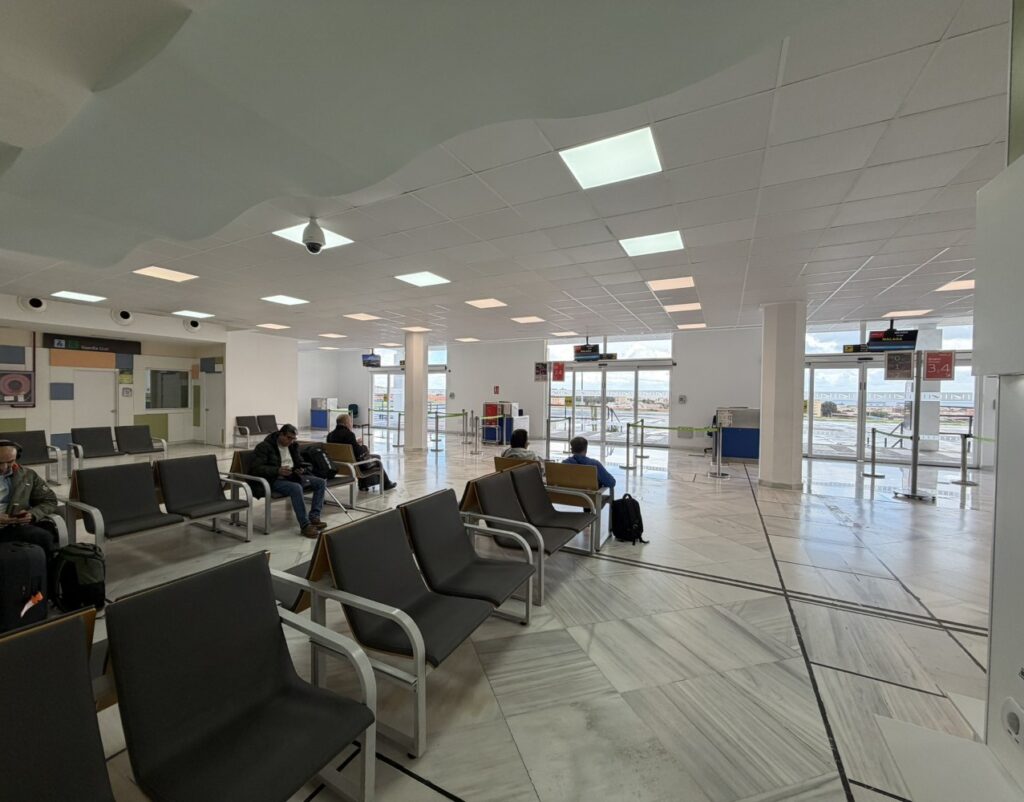
There’s a small gift shop, tourist information booth, and a restaurant pre-security.
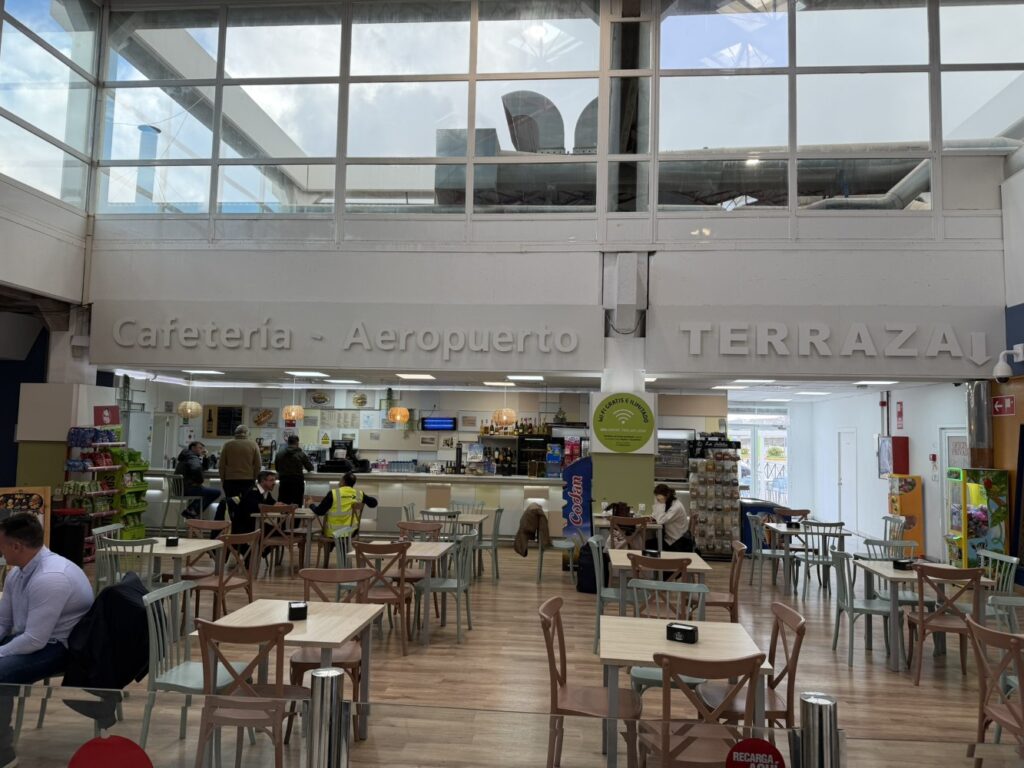
A small snack shop pops open airside just before flights board. It sure was weird going through passport control to board a domestic flight, though!
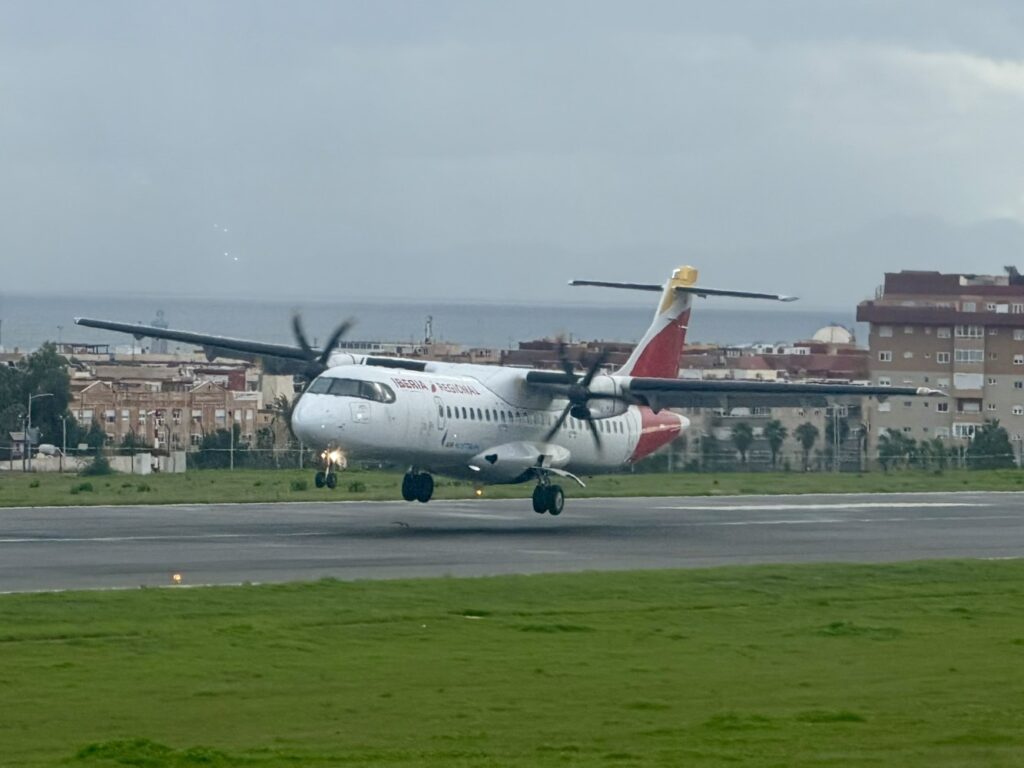
At the end of the journey I asked myself if I would ever choose to fly on the ATR over a comparably sized regional jet such as an Embraer E175.
While I enjoyed this ATR experience, I don’t think the answer is ‘yes’ due to little things like not being able to utilize a jet bridge at larger airports.
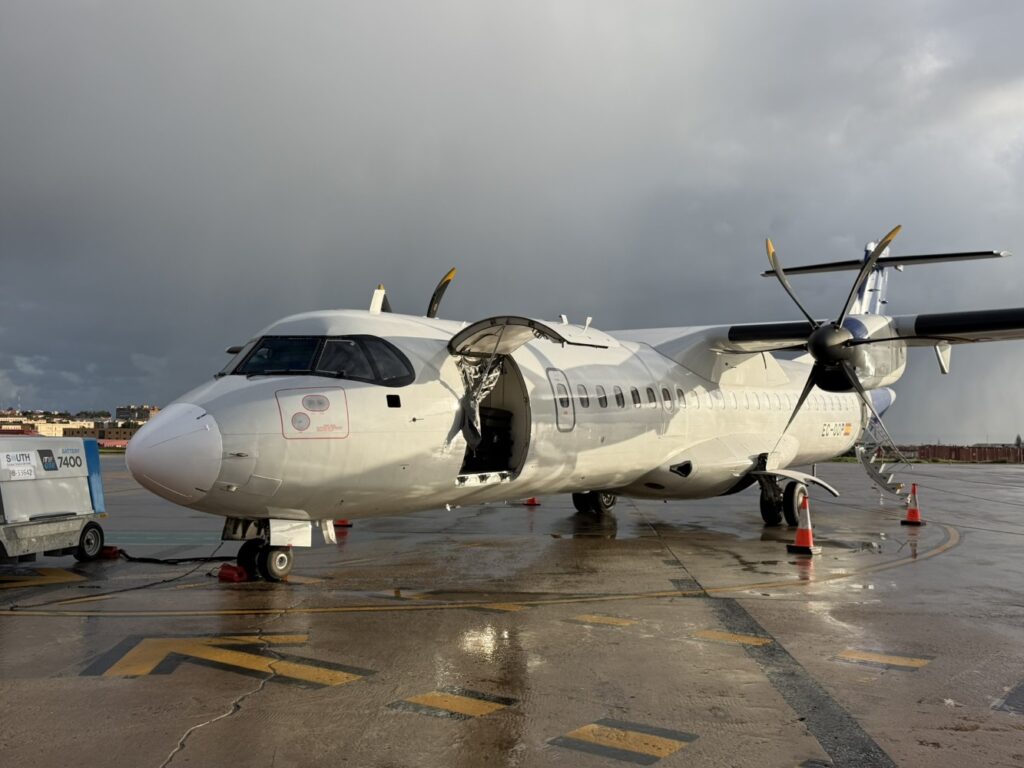
Would I avoid the type in the future, though? Absolutely not!
 Related Articles:
- What to expect in Iberia economy on world’s first A321XLR
- Iberia Express: how not to do a sub-brand
- Viva España: Iberia Express is effective if uninspired in economy
- Press Release: Immfly in-seat order solution launches on Iberia Express
All images credited to the author, Jason Rabinowitz, unless otherwise stated.