

The power of innovation in the aircraft cabin industry is on full display as the Crystal Cabin Award announces 24 finalists across eight categories for 2026.
These finalists have presented solutions that advance comfort, accessibility, and sustainability, while also driving digitalization, efficiency, and safety on board.
The selection spans everything from new cabin layouts and premium suites to digital services and robotics; from circular materials to optimized crew processes.
Winners will take to the stage to receive the coveted trophies on April 14, 2026, as part of the Aircraft Interiors Expo (AIX), the world’s leading trade show for aircraft cabins in Hamburg, Germany.
The CCA’s international jury of 27 experts selected the finalists in eight categories, after reviewing 85 submissions from airlines, manufacturers, suppliers, design studios, and startups from around the world.
Accessibility
The Accessibility category is focussed firmly on barrier-free and inclusive travel. The finalists showcase solutions that improve mobility, independence, and comfort on board, ranging from innovative transfer solutions and flexible seating concepts to digital assistance systems that guide passengers safely, independently, and comfortably through all areas of the cabin.
Airbus, in cooperation with Ipeco Holdings and AMF-Bruns, is represented with a universal cabin concept. The Airspace U Suite – A UNIVERSAL Space for Everybody enables wheelchair users to travel in their own wheelchair without manual transfers. A secure restraint system and flexible seating configurations allow semi-private seating, face-to-face arrangements, and premium areas for all passenger groups.
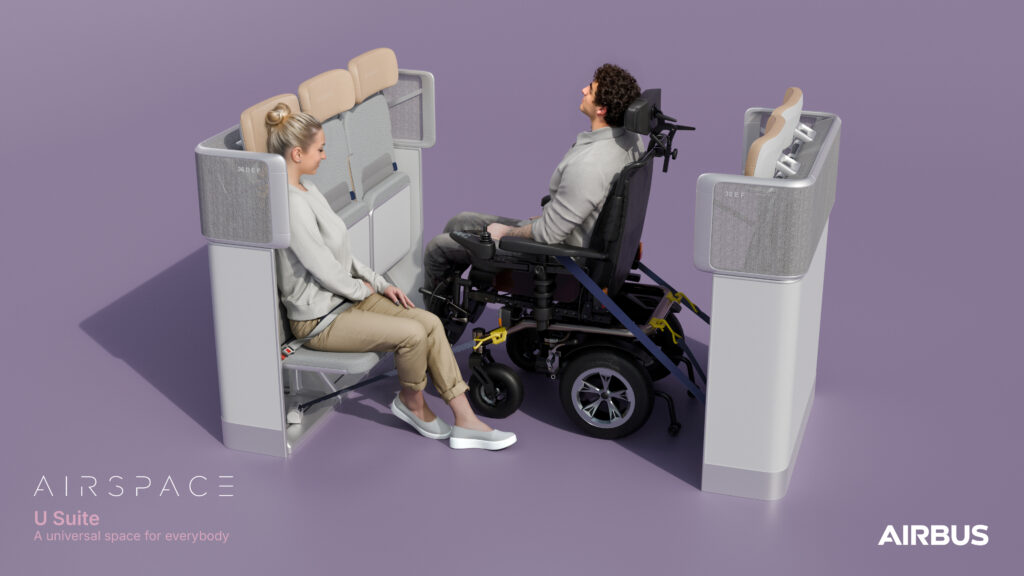
Image: Airbus
Diehl Aviation presents AURS, The Adaptive User Routing System, an inclusive cabin concept that makes aircraft lavatories navigable for blind and deaf passengers.
The solution combines an accessible layout with a digital interface that adapts to individual needs, provides visual safety announcements, and offers tactile orientation aids.
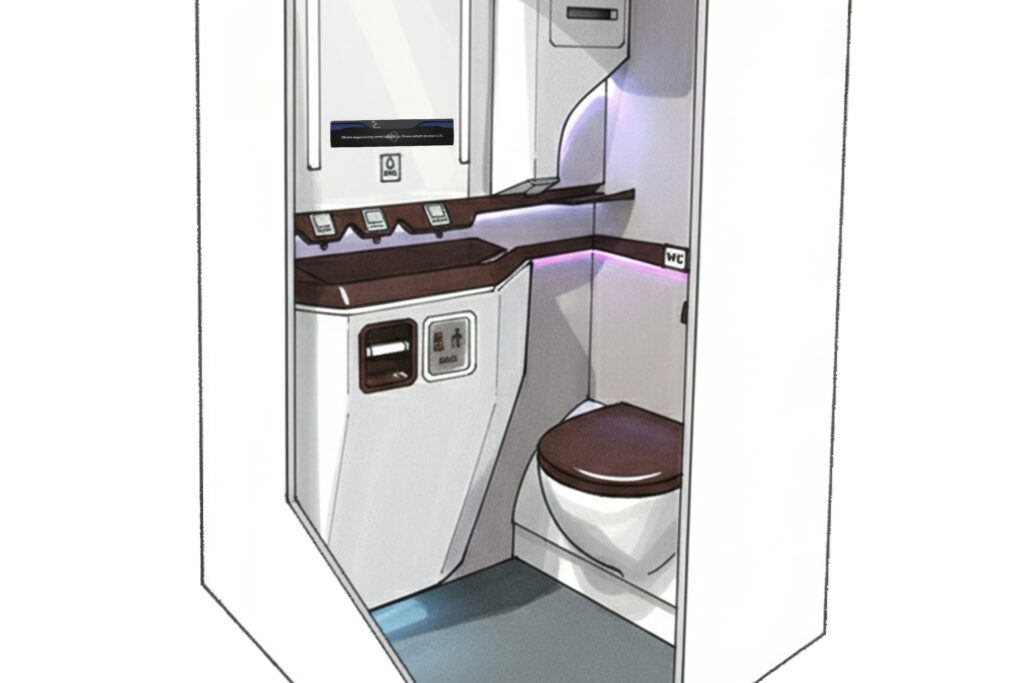
Image: Diehl Aviation
RAVE Aerospace (formerly SPI) presents Live Transcription and Translations, an industry first: cabin announcements are displayed in real time as text on the seatback IFE. Passengers can select their language, so announcements are not only transcribed but also translated.
The feature is available in RAVE Standard and RAVE Accessible Mode and is part of the standard RAVE offering.

Image: RAVE Aerospace
Cabin Concepts
The Cabin Concepts category stands for visionary, end-to-end solutions for the cabin of tomorrow. The finalists present holistic concepts that redefine space, design, technology, and the passenger experience from suites and shared spaces to entirely new layouts.
All Nippon Airways, in cooperation with Acumen Design Associates, is a finalist with THE Room FX.
The concept combines two seats into a single compact structure, saving weight and space — a key foundation for both increased comfort and higher seating capacity. This is enabled by an innovative mechanism: the backrest remains fixed while only the legrest moves to create a continuous lie-flat surface.
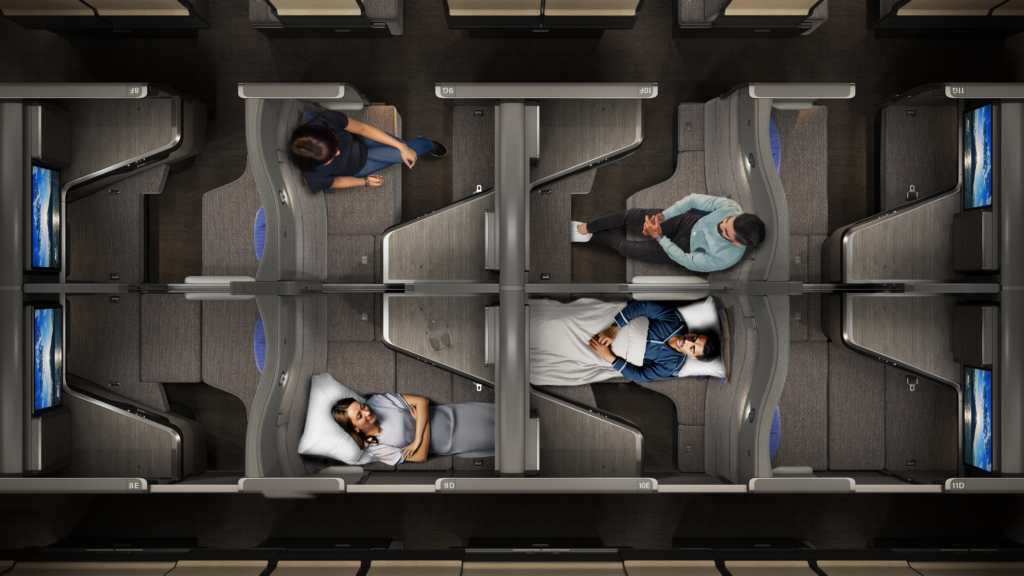
Image: ANA
Design Investment, in cooperation with Air France and Stelia Aerospace, presents the Air France First Class Suite. The concept offers separate areas for sitting and sleeping within a private suite.
The seat and bed each feature a 32-inch screen, and the bed includes a split mattress for flexible sleeping positions. A “ribbon” design connects the zones and integrates curtains for privacy. All functions can be controlled via tablet, complemented by storage spaces. The layout enables a four-abreast arrangement in the Boeing 777.
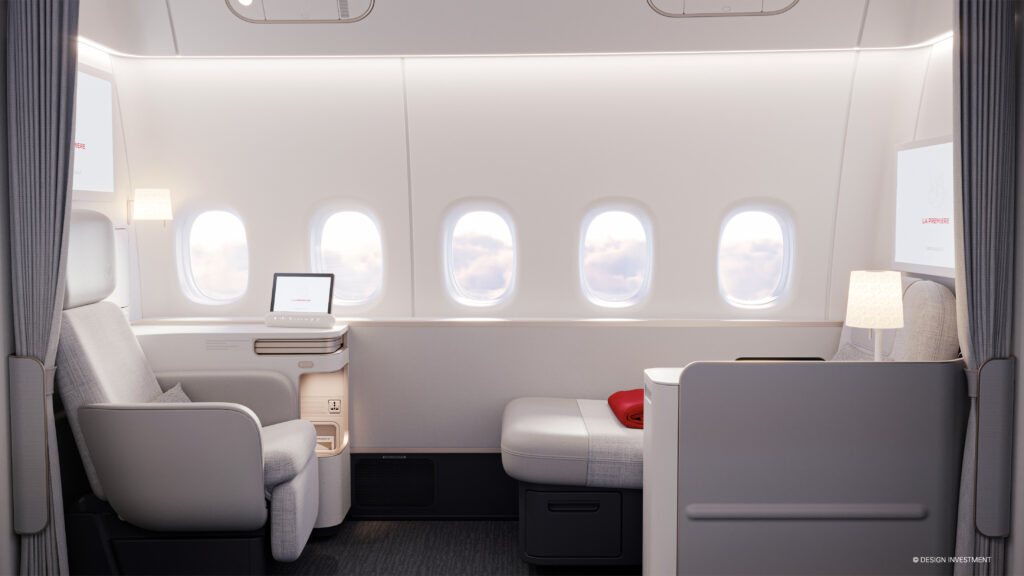
Image: Design Investment
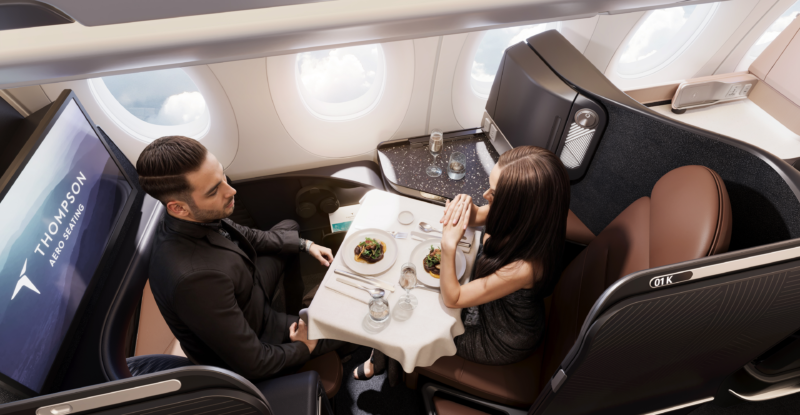
Thompson Aero Seating is nominated with VantageNOVA First, a flexible seating solution that can transform from a single seat into a double or four-seat configuration for shared dining and social interaction.
The “Star” arrangement enables four travelers to sit directly facing each other. The concept creates a premium, first-class-style experience without reducing seat density in the forward business class cabin.
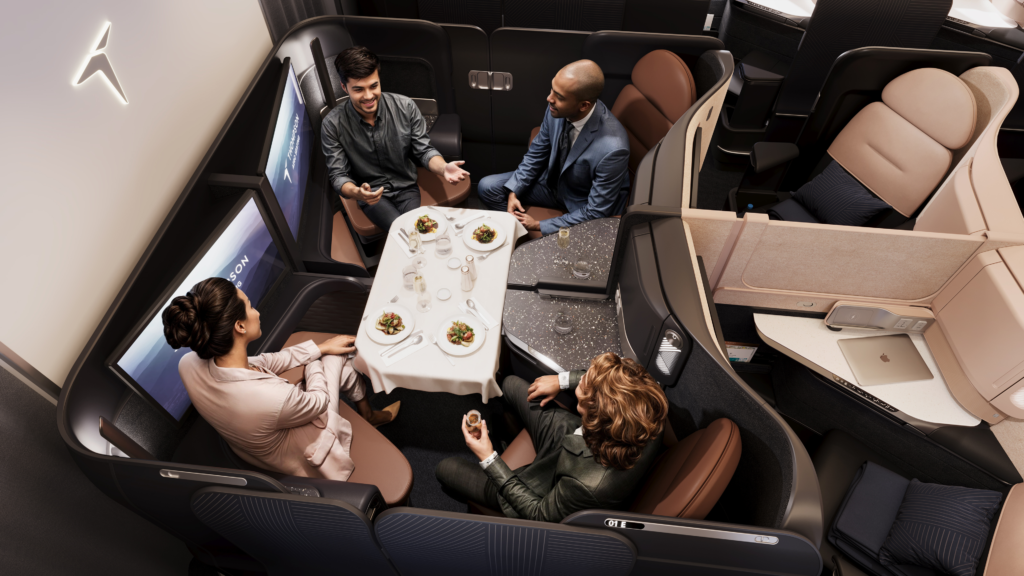
Image: Thompson Aero Seating
Passenger Comfort
Increasingly differentiated passenger expectations are driving the development of new comfort solutions in the aircraft cabin. The finalists in this category demonstrate how ergonomics, space utilization, flexibility, and connectivity are being advanced across different cabin classes.
Airbus is represented with the Airspace A350 First Class cabin concept, an evolution of the A350-1000 cabin for an exclusive first-class experience. The new center module features a master suite with a double bed, a private lavatory area, and a bar, delivering maximum privacy. Virtual panoramic windows further enhance the sense of spaciousness.
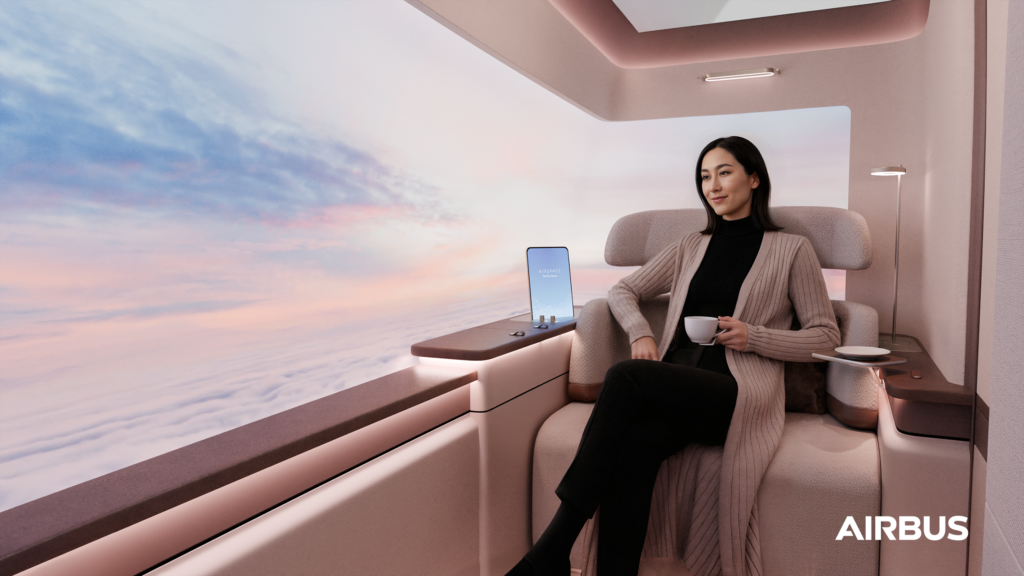
Image: Airbus
SPACEFRAME, developed by BMW Designworks, presents a modular economy-class seat system that combines lightweight design, ergonomic support, and sustainable materials.
The concept enables a space-efficient, flexible seating layout with an ergonomic mesh backrest, modular equipment, and integrated infrastructure for power, lighting, and wireless charging — while remaining fully recyclable.
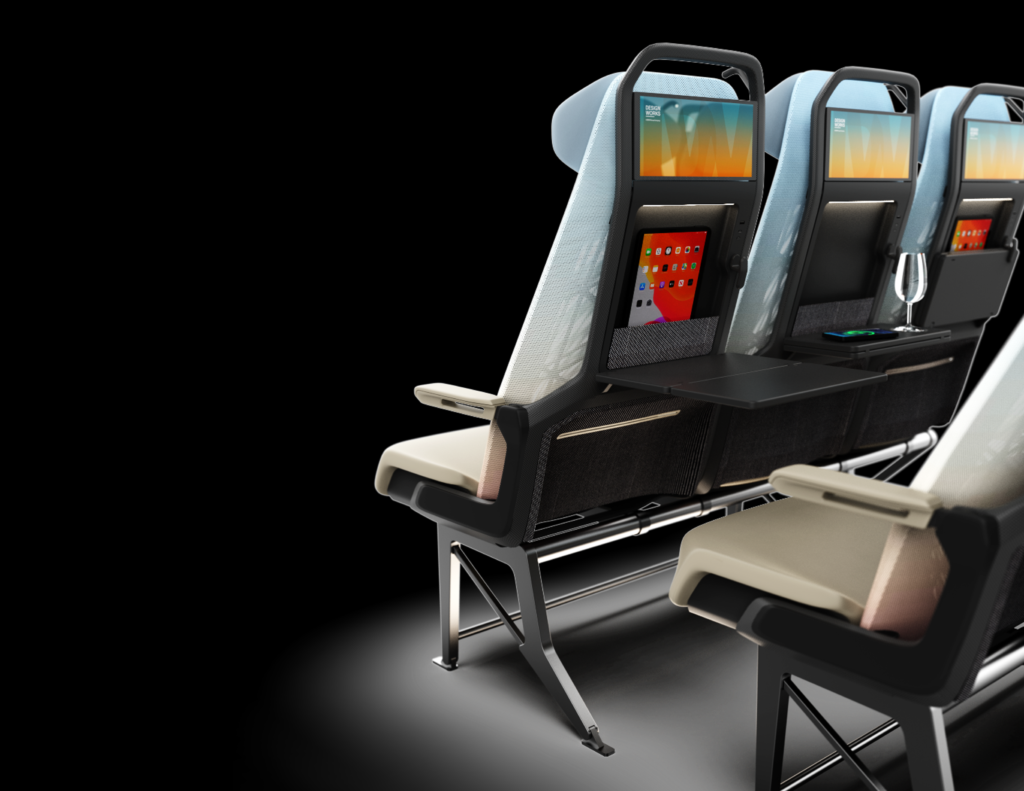
Image: Designworks
Collins Aerospace presents SkyNook, a semi-private zone in the aft cabin of widebody aircraft.
The solution uses previously unused space between the sidewall and reduced economy rows to create flexible retreat areas that offer privacy, safety, and calm for families, passengers with special needs, or travelers with pets, service dogs, or bulky carry-on items.
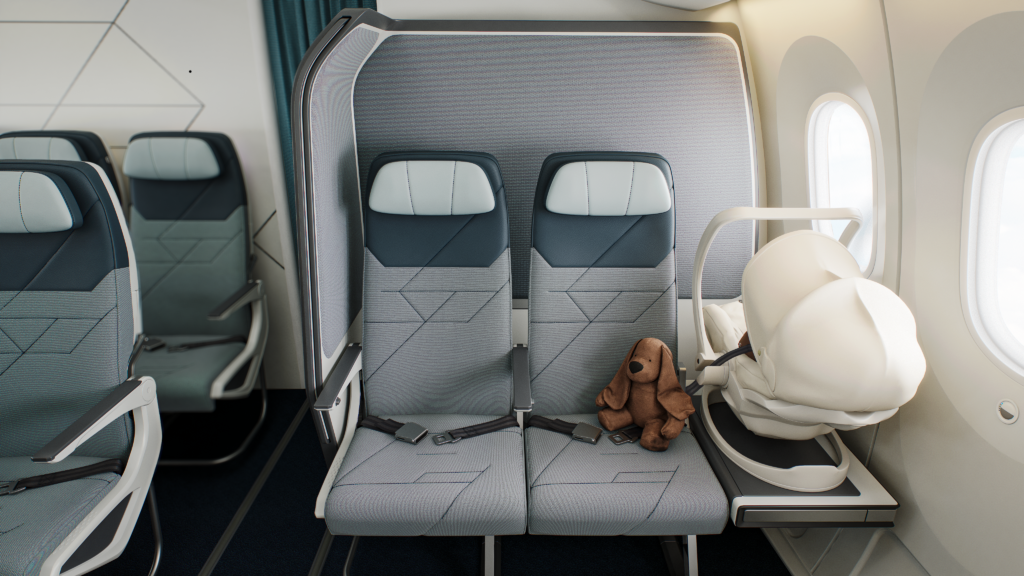
Image: Collins Aerospace
Cabin Technologies
This category focuses on technological and conceptual innovations for systems, components, and processes. The finalists show how AI, sensors, robotics, and user-centered design can increase operational efficiency, enhance safety, and improve both crew workflows and the passenger journey.
AviusULD, in cooperation with Eloc8, is a finalist with the AviusULD SmartULD – Fire Tag.
The tracking device for cargo containers and baggage bins detects early overheating of lithium-ion batteries up to two hours before a fire occurs. It can be installed both in cabin overhead bins and on containers in the cargo hold, improving safety in passenger and cargo aircraft.

Image: AviusULD
Jamco & JAXA present the Cabin Crew Centered “C”-Galley, a galley concept for the aft cabin designed to support workflows for cabin crew.
Separate work zones for food, beverages, and sales reduce walking distances and cross-traffic. A central work surface with storage on both sides increases efficiency and serves as a snack area outside service times without changing the overall footprint and stowage volume.
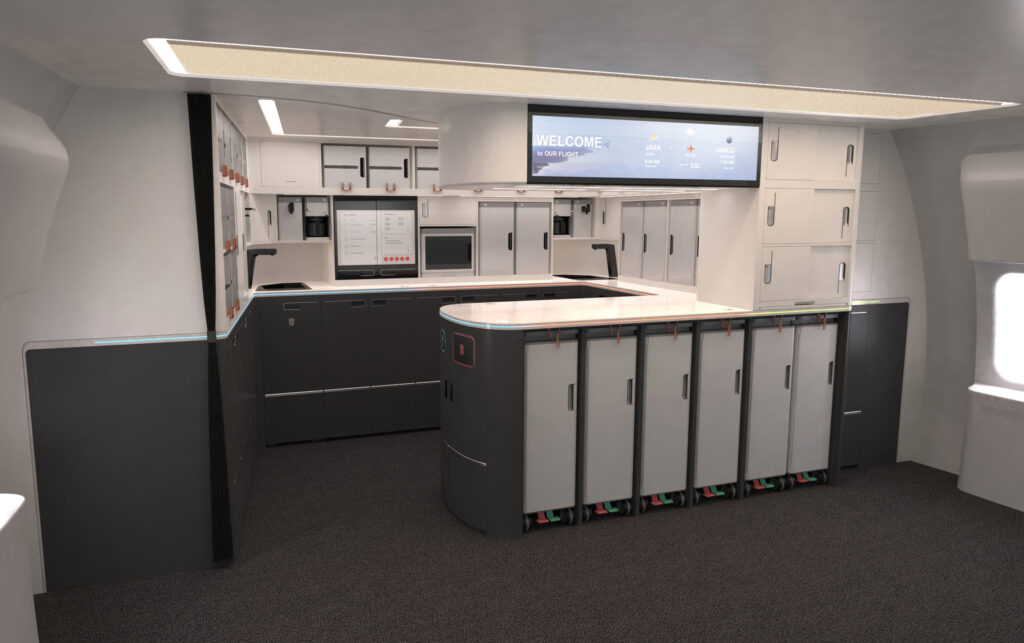
Image: Jamco & JAXA
ZAL Center of Applied Aeronautical Research, in cooperation with 3D.aero and Hamburg University of Technology, is a finalist with Automated Quality Inspection.
The robotics- and AI-based system automates cabin inspections, detects visual deviations quickly and objectively, and generates a detailed 3D model. It can be flexibly deployed for OEMs, airlines, and maintenance operations. As a proof of concept, 100% of deviations were detected in just 30 minutes.
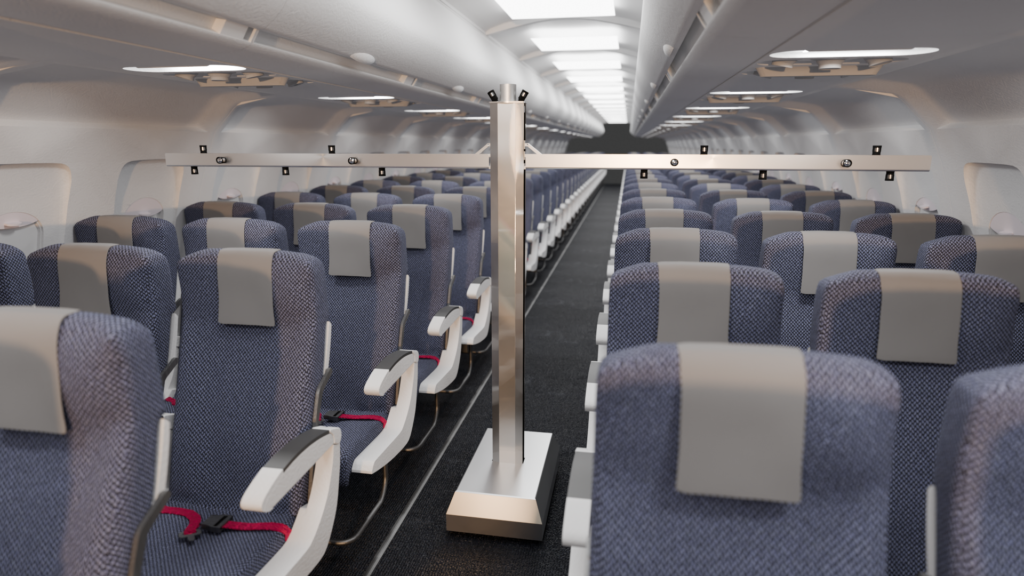
Image: ZAL GmbH
IFEC & Digital Services
Digital services are becoming increasingly important to the in-flight experience. The finalists in the IFEC & Digital Services category present solutions for connectivity, inflight entertainment, personalized services, and cloud-based platforms that advance both operational processes and the passenger experience on board.
Delta Air Lines is a finalist with Delta’s Connected Onboard Platform, a digital onboard architecture that consolidates operational, connectivity, and passenger data. The platform-agnostic solution provides the technological foundation for reliable, personalized service and a connected onboard experience across the entire fleet.
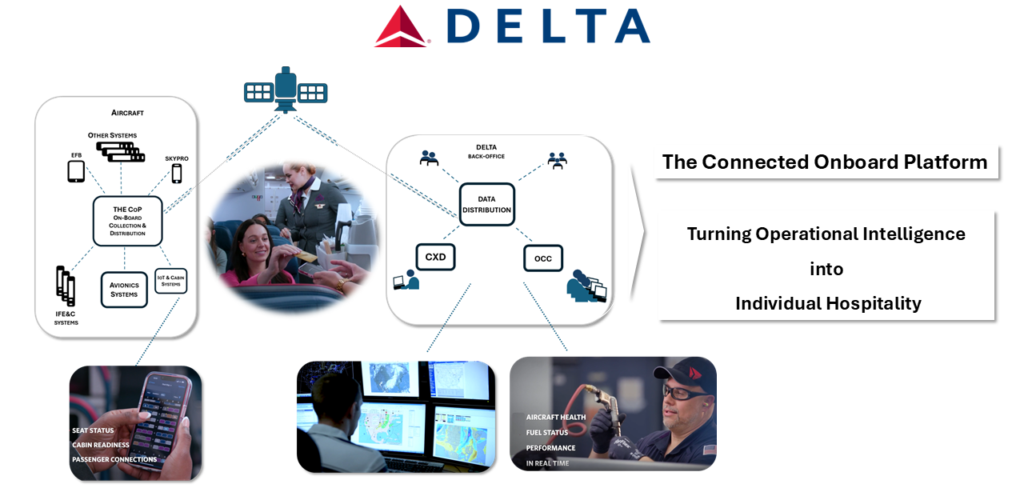
Image: Delta Air Lines
Veyond Metaverse presents the FlyMD 5D XR In-Flight Medical Assistance Platform, a solution for medical emergencies on board that enables real-time spatial participation of physicians on the ground directly into the cabin.
The system transmits a three-dimensional live view of the cabin, supporting more precise situation assessment and improved crew guidance via existing onboard connectivity.
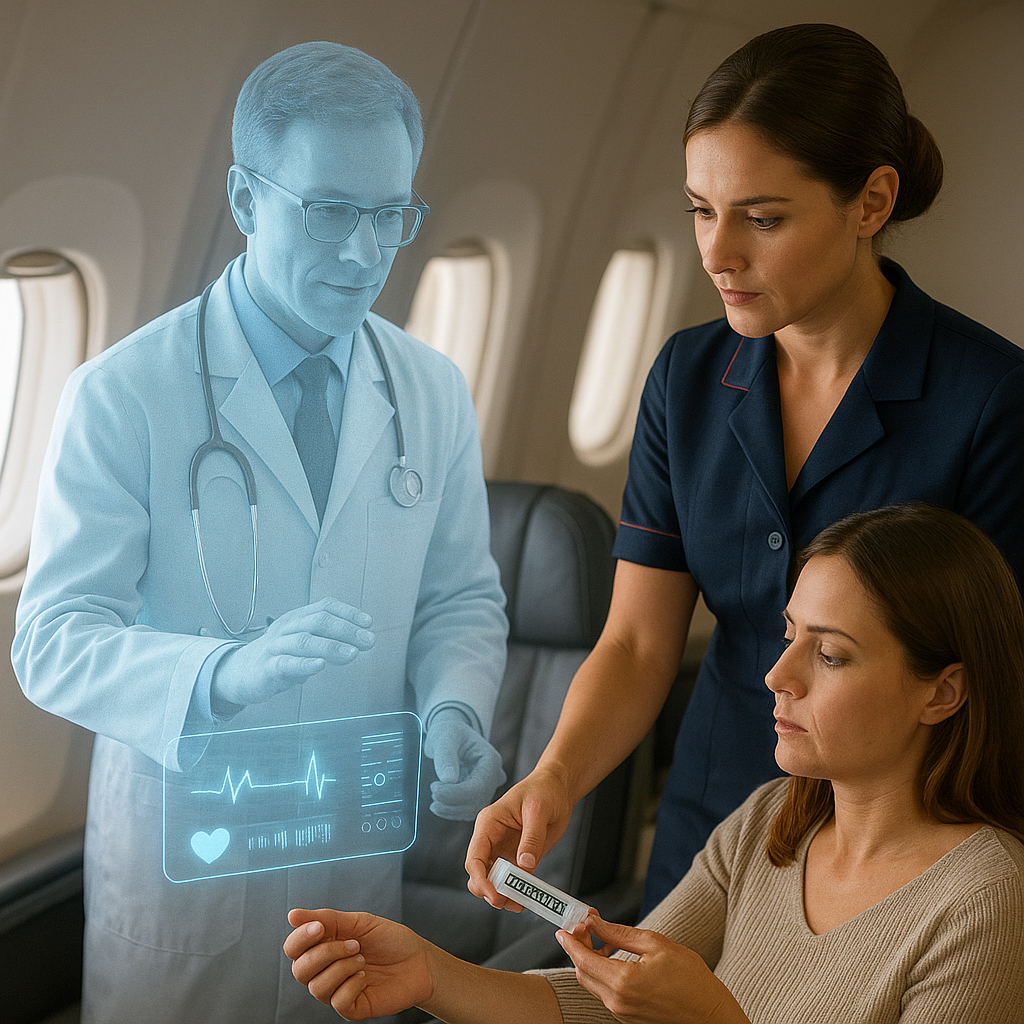
Image: Veyond Metaverse
United Airlines’ entry, Delivering the First Connected, Omni-Channel Passenger Experience, is a cloud-based onboard architecture designed to deliver a consistent, connected passenger experience across the fleet.
In collaboration with Starlink, Axinom, and Spotify, the solution integrates connectivity, inflight entertainment, and personal devices, providing the technological foundation for a scalable, low-maintenance, and customizable passenger experience.

Image: United Airlines
Sustainable Cabin
Sustainability is a key innovation field in aviation. The finalists in this category demonstrate how lightweight design, recycled and bio-based materials, and circular design approaches can reduce weight, emissions, and environmental impact while meeting functional and aesthetic requirements.
RECARO Aircraft Seating presents The R Sphere – Sustainability Concept Seat. This is a modular aircraft seat that saves around 1.5 kg per passenger and reduces approximately 55 tons of CO₂ per year per single-aisle aircraft.
The seat is made from recyclable materials, maintenance-friendly modular components, and optimized surfaces for cleaning and upkeep, supporting a sustainable and flexible cabin design.
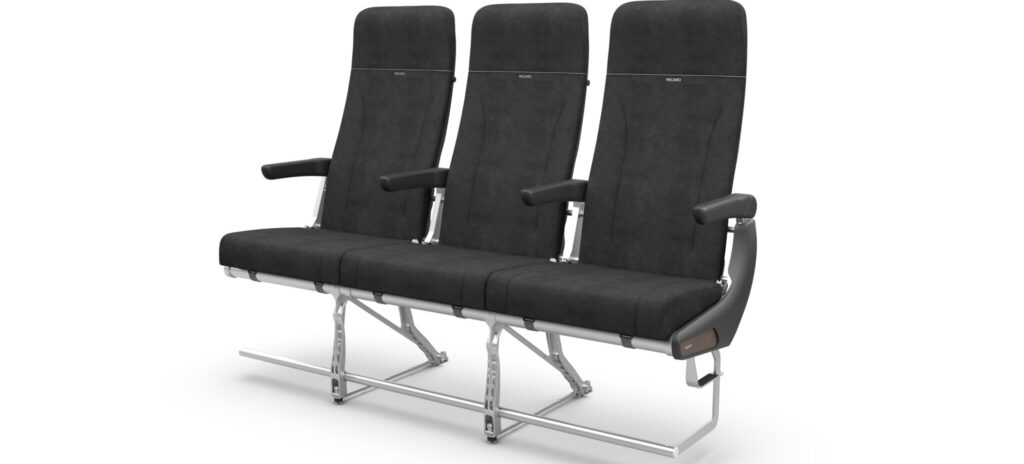
Image: Recaro
Testori 1904 is nominated with the Plant-based Fibre Textile System, a new plant-based fiber system developed for seat covers, curtains, and vertical surfaces in aircraft cabins.
The materials meet the same technical, aesthetic, and flame-retardant standards as synthetic or animal-based fibers and contribute to product circularity while reducing the environmental footprint.
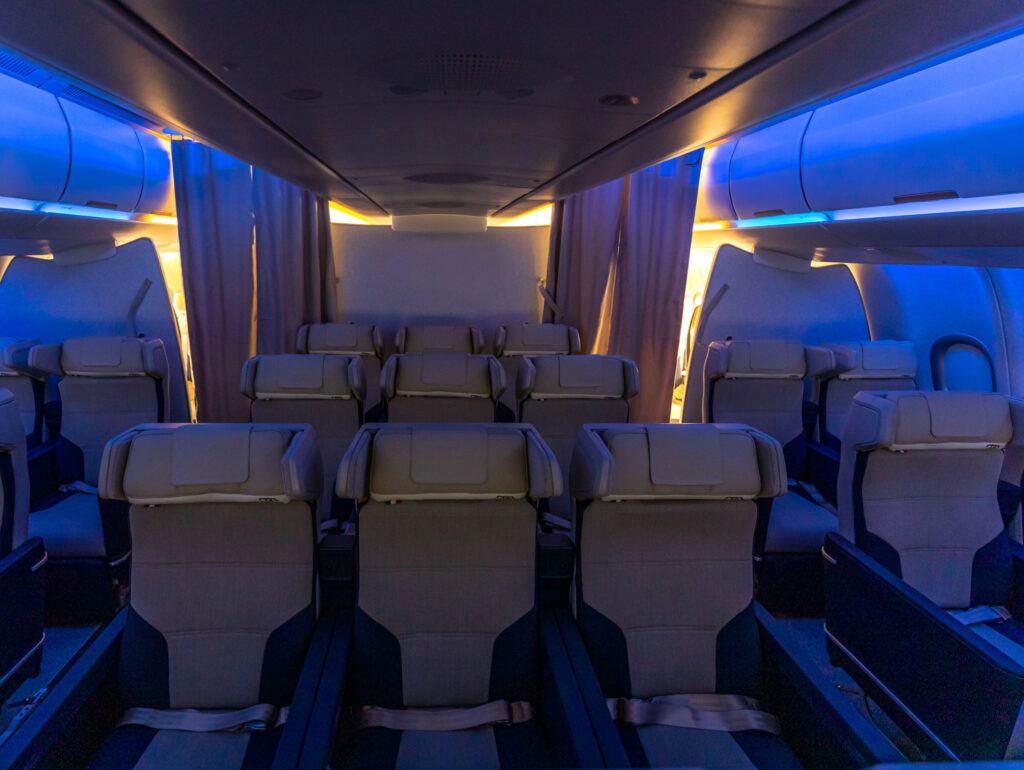
Image: Testori 1904/ITA Airways
ZIM Aircraft Seating introduces The Frame, a new generation of seats featuring modular, repairable wood components designed for durability and low maintenance. Laminated wood elements reduce synthetic materials, lower weight and fuel consumption, and enable recycling at end-of-life.
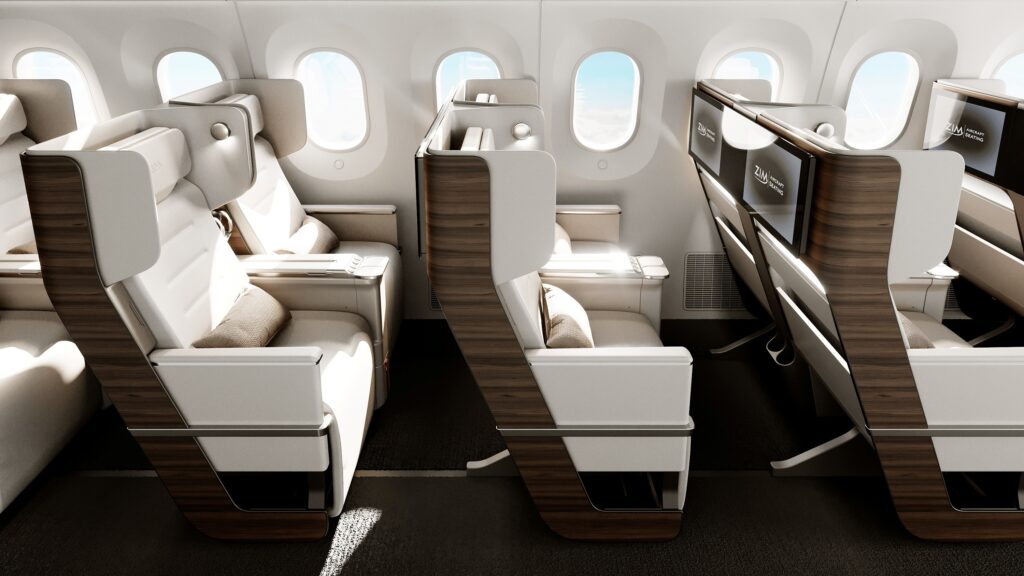
Image: ZIM Aircraft Seating
Breakthrough Start-ups
The new Breakthrough Start-ups category focuses on fresh perspectives and disruptive ideas. The finalists present novel cabin concepts and digital solutions that challenge established structures and have the potential to reshape the industry sustainably.
GMI has reached the finals with Green Mobility Interior, which is building a more sustainable future for the interior industry and developing sustainable material solutions for aircraft cabins.
Founded in 2021, the company reduces plastic waste through a closed material loop for aviation-certified plastics. Production waste is recycled and reintegrated into the supply chain with full traceability. With the Zero-Waste Countertop for the A320 family, GMI demonstrates that circular economy approaches in the cabin are already industrially feasible today.
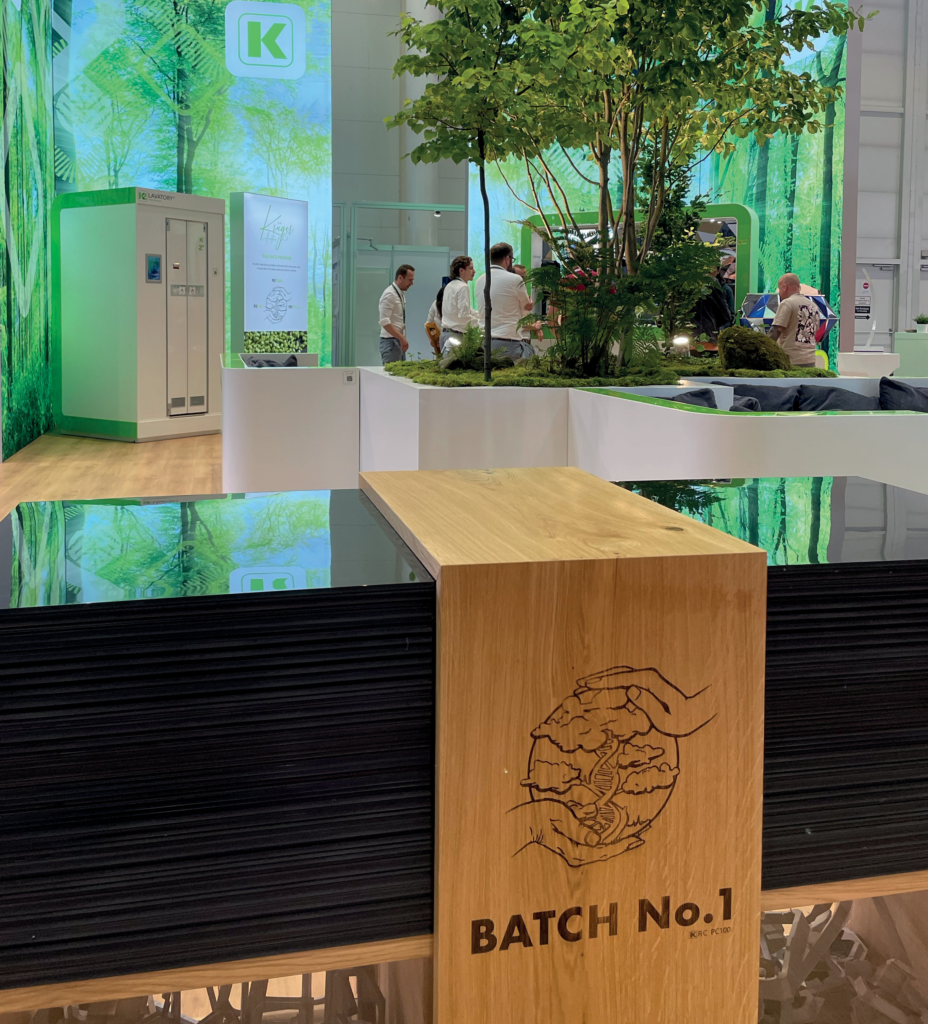
Image: GMI
Quvia is developing Quvia: Building the Backbone of In-Flight Digital Experiences, an AI-powered platform for analyzing the digital onboard experience.
The solution provides real-time transparency into connectivity, inflight entertainment, and system performance. Through optimized analytics, fault diagnosis, and traffic control, Quvia helps airlines resolve issues faster, prevent outages, and improve the reliability of digital cabin systems across the fleet.
Image: Quvia
smair, in cooperation with EK Engineering, is nominated as a finalist with smairGO, a digital system for aircraft cabin appearance and lifecycle management.
The solution standardizes and documents the repair of cosmetic damage and replaces costly replacement measures. Through validated procedures, digital workflows, and full traceability, smairGO makes cabin repairs predictable, repeatable, and sustainable across the entire lifecycle.
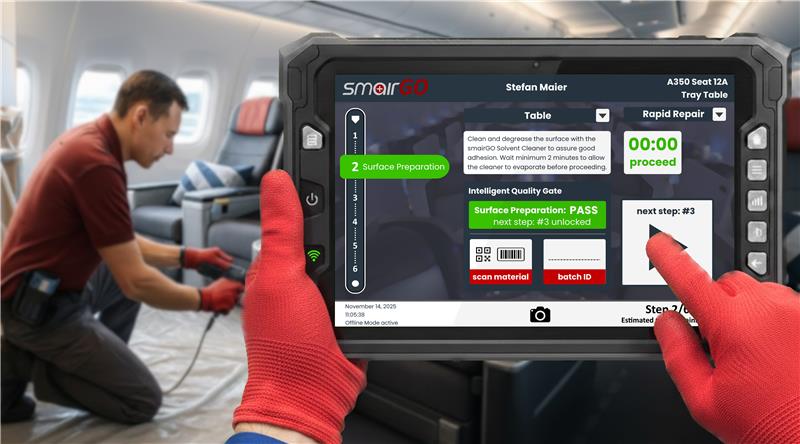
Image: smair
University
Visionary ideas from academia and research once again round out the competition in 2026. Students and research institutions from around the world demonstrate how creative approaches, new technologies, and interdisciplinary collaboration can shape the aircraft cabin of tomorrow.
The Georgia Institute of Technology, in cooperation with Airbus and Delta Air Lines, was selected as a finalist with the Closed-Loop Cabin Catering Data System Redesign, a redesigned cabin catering data system with a closed data loop.
It connects passenger preferences, inflight consumption, and feedback with catering planning to improve forecasting, personalize meals, and reduce food waste. This creates a data-driven foundation for more efficient and sustainable inflight catering.
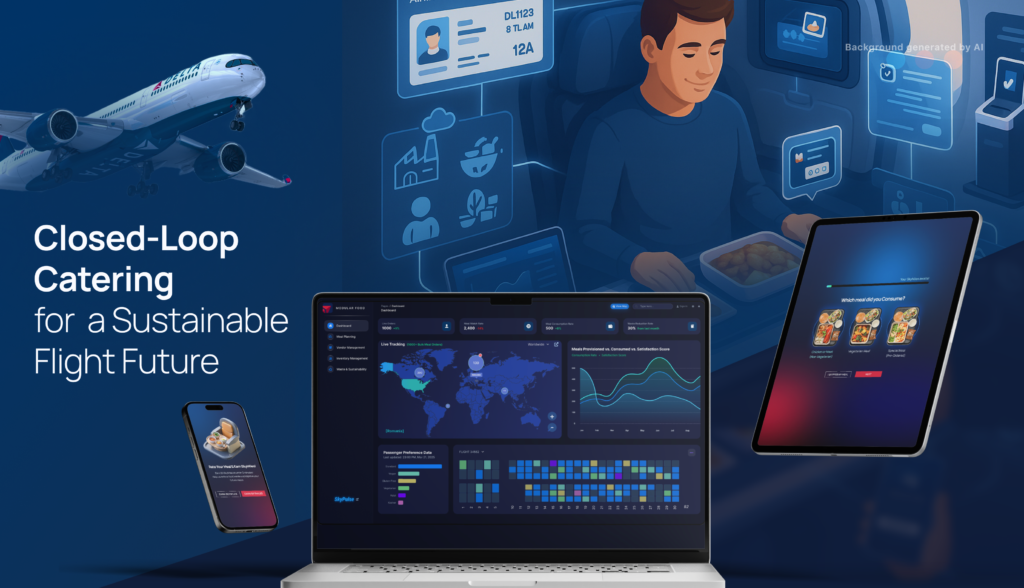
Image: Georgia Institute of Technology
The Georgia Institute of Technology also presents, in cooperation with Airbus, Delta Air Lines, and TU Delft, the SMARTrack | Optimized Cabin Cleaning Dispatching System.
It optimizes Delta’s cabin cleaning dispatching system to reduce delays between landing and readiness for departure and to support the Net Zero 2050 target.
Centralized information, filters, color coding, and real-time communication better connect crews, cleaning teams, and dispatchers. Fewer delays mean less fuel burn, lower CO₂ emissions, and higher aircraft utilization.
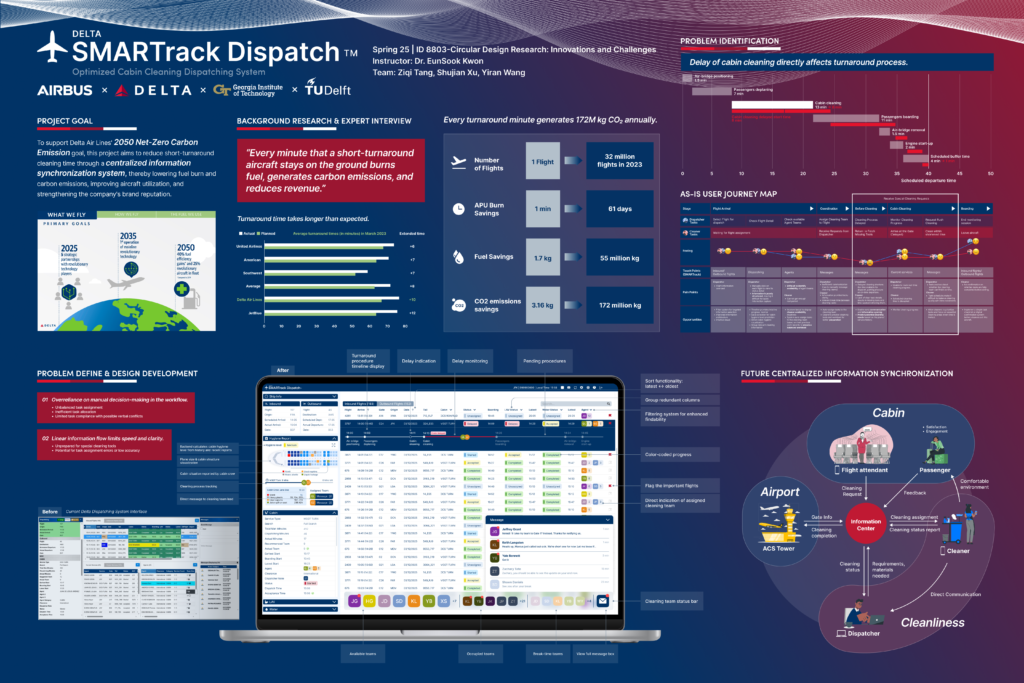
Image: Georgia Institute of Technology
Guangdong University of Technology is represented with the AeroMorph Seat, a seat concept that adapts to changing cabin pressure conditions without electronics.
Pressure-dependent air cushions in the neck, back, and pelvic area automatically change shape during flight to provide support and comfort. When cabin pressure decreases, the cushions expand to stabilize the neck and torso; when pressure increases, they contract.
The low-energy, low-maintenance system is designed to reduce muscle fatigue and circulatory issues on long-haul flights and relies on a simple, lightweight construction.
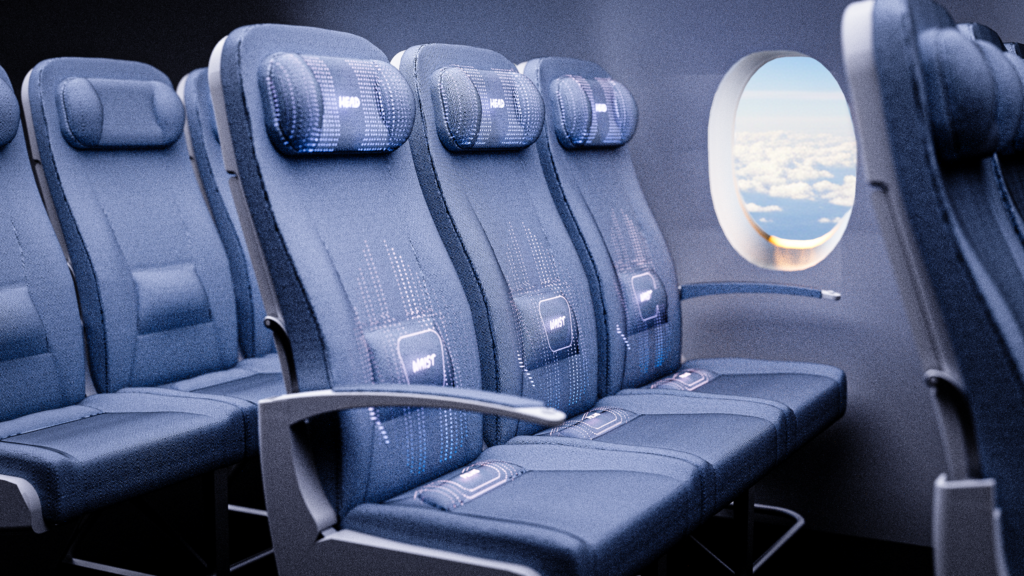
Image: Guangdong University of Technology
AIX Showcase and Awards Ceremony
Some of the finalists will be exhibiting during the Aircraft Interiors Expo (April 14–16, 2026) in Hamburg, Germany.
The winners of the Crystal Cabin Award 2026 will be honored on the evening of April 14, 2026, during a formal awards ceremony at the Hamburg Chamber of Commerce.
 Support for the Crystal Cabin Award
The Crystal Cabin Award is supported by the following sponsors:
- Platinum Sponsor: Panasonic Avionics Corporation
- Gold Sponsors: Collins Aerospace, Diehl Aviation, Lufthansa Technik, RAVE Aerospace (formerly SPI), Safran, Thales Avionics, Thompson Aero Seating, ZIM Aircraft Seating.
- New Trophy Sponsor: Jetlite
- Silver Sponsor: Airbus
- Online Sponsors: Jetliner Cabins, Mankiewicz Aviation Coatings, Sekisui Kydex
- We are proud to work with our media and show partners Aircraft Interiors Expo, Aircraft Interiors International, APEX, Flight Chic, Flightglobal, Future Travel Experience, Inflight Magazine, PaxEx Aero, PAX International & PAX Tech, Runway Girl Network, and The Up Front.
About the Crystal Cabin Award
The Crystal Cabin Award is the most prestigious international prize dedicated exclusively to innovations in aircraft cabins. Under the motto “Let your ideas take off,” it annually honors outstanding products and concepts that enhance the flying experience – from smart single seats to connected galleys. Entries are evaluated by an independent jury representing academia, engineering, airlines, aircraft manufacturers, and trade media. The award was initiated by the Hamburg Aviation cluster and is organized by the Crystal Cabin Award Association. Since 2007, it has been presented during the Aircraft Interiors Expo in Hamburg. Today, it is recognized worldwide as a seal of quality – and as a springboard for many products that later enter service in commercial aircraft.
Featured image credited to Thompson Aero Seating