

 Despite American Airlines’ hub status in New York, I rarely find myself flying the carrier’s mainline network. But the US major’s addition of a nonstop linking Tokyo Haneda with JFK, plus an appealing miles redemption rate, was all I needed to come back to AA.
After initially booking a premium economy seat on Haneda-JFK for just 10,000 points above regular economy, I kept an eye on American’s “Instant Upgrade” pricing in the months leading up to the flight. I was content to be booked in PE, but if the buy-up to business class dipped low enough I figured I would snag it. Though the offers bounced all over the place, I finally pulled the trigger exactly one month before departure.
Having flown a wide range of airlines between New York and Tokyo in recent years I knew the #PaxEx bar was very high. Japan Airlines and ANA, both world class airlines with excellent service, operate their most premium aircraft on the route. Even my experience on United in 2023 was top notch. American currently operates the route with the Boeing 787-9, but not its newly inducted, premium-heavy -9P version.
Security at Haneda was a breeze and I quickly found myself inside the serene Cathay Pacific lounge.
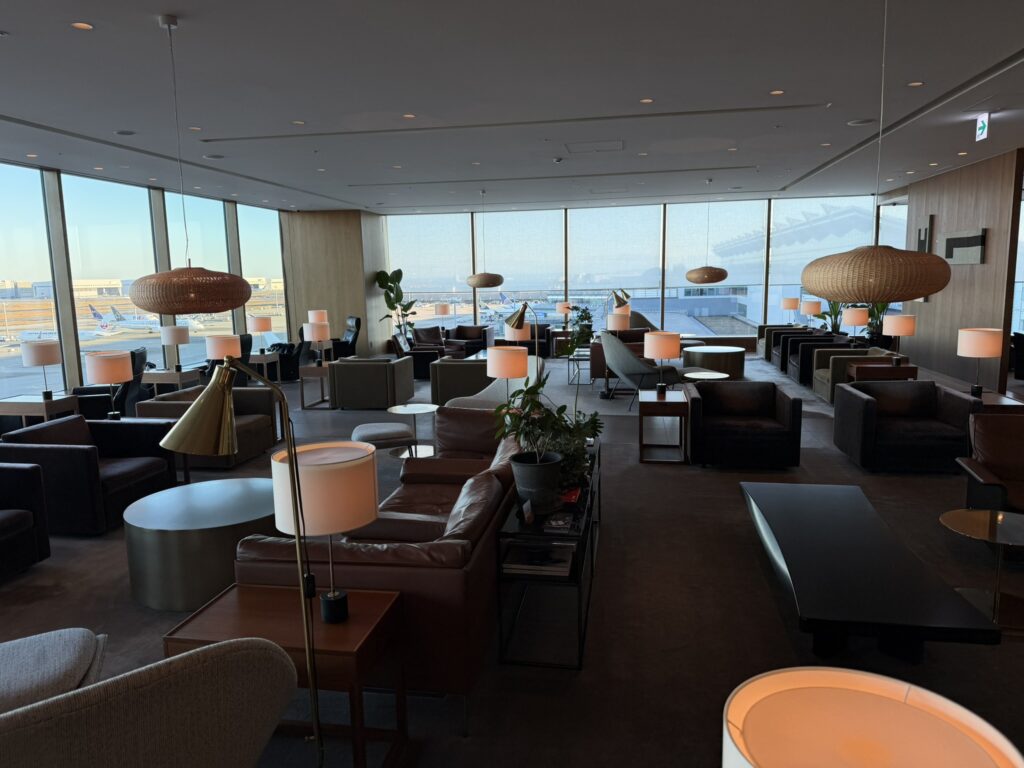
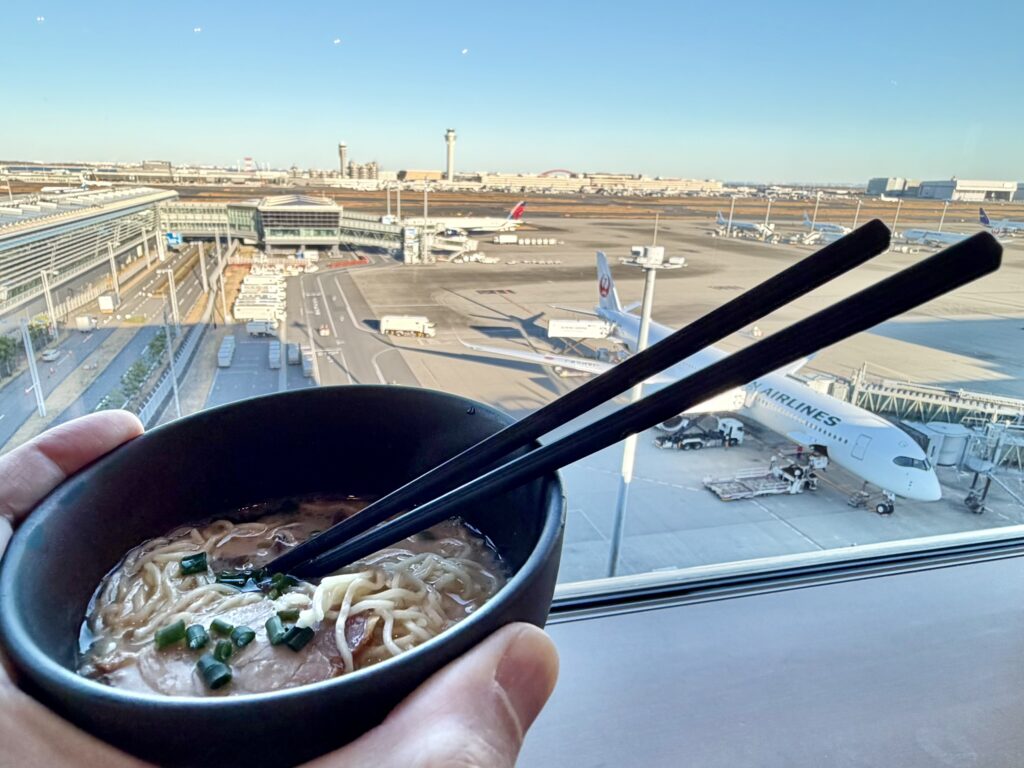
With floor to ceiling windows, I was able to enjoy the stellar view while noshing on some delicious noodles and an afternoon beer.
Boarding, as facilitated by the fantastic ground handling of oneworld alliance partner Japan Airlines, began right on time.
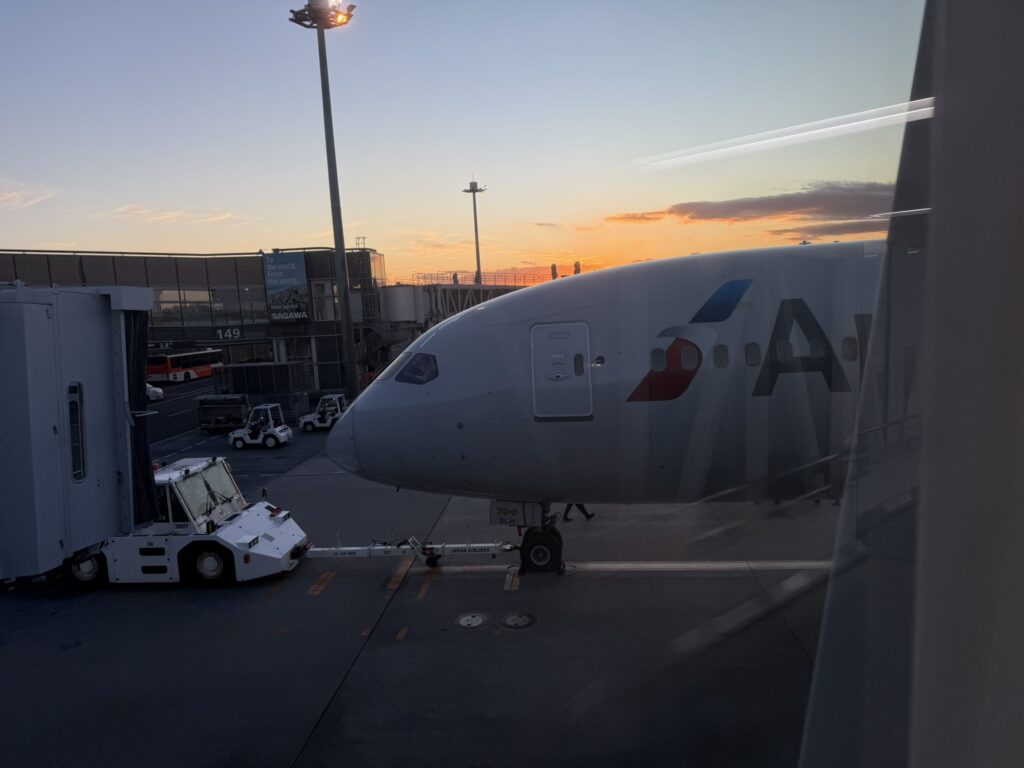
After a lovely greeting at the boarding door by the premium economy flight attendant — who would later make a few much-appreciated appearances up front — stepping on board American’s 787 was a shock to the system. It was an immediate “we’re not in Tokyo anymore, Toto” moment.
Having spent two weeks enjoying Korean and Japanese hospitality it was clear that American was going to fall short of expectations, and I may as well have been back in New York already.
To say I was greeted in business class with complete indifference would be putting it mildly. But I wasn’t alone. Those of us on the left side of the aircraft were simply ignored for the bulk of the boarding process. I’m sure whatever the flight attendant was doing on their tablet in row one was important to our departure, but I would have at least expected a “welcome aboard” or an acknowledging glance in our direction.
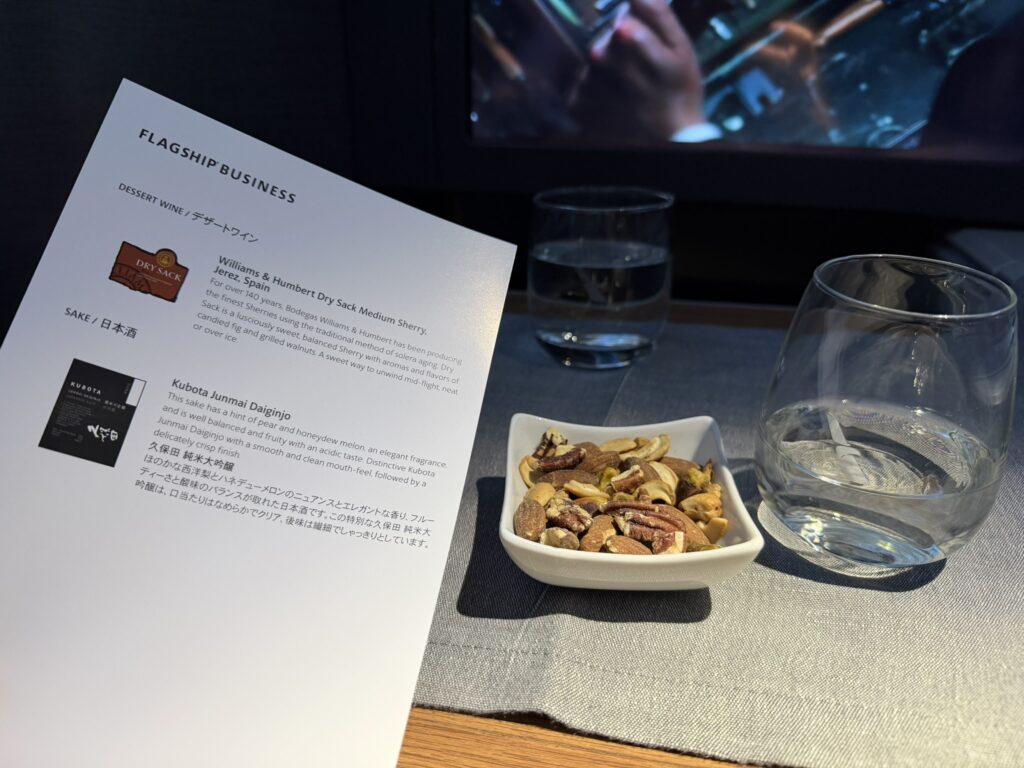
Service oddities and inconsistencies between this flight attendant and their counterpart on the right side of the aircraft started to pile up and impact an otherwise pleasant experience throughout the flight. I wasn’t greeted by name, a minor touch that makes the entire experience more personal, nor did they introduce themselves. Napkins weren’t distributed with the pre-departure beverage, and the beverage choices were not explained.
When a fellow passenger asked a question about the meal options, the attendant actually referred the passenger to me because he nonchalantly “didn’t pay attention” to the menu.
It got to the point where passengers on the right side of the aircraft took notice, and it felt like they we were flying on a different airline altogether.
My interactions with this crew member were awkward and transactional, but never in a hostile way. It was all just super weird and so incredibly short of the level of service I have experienced on American’s competitors on the route, even on other US-based airlines.
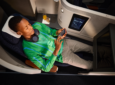
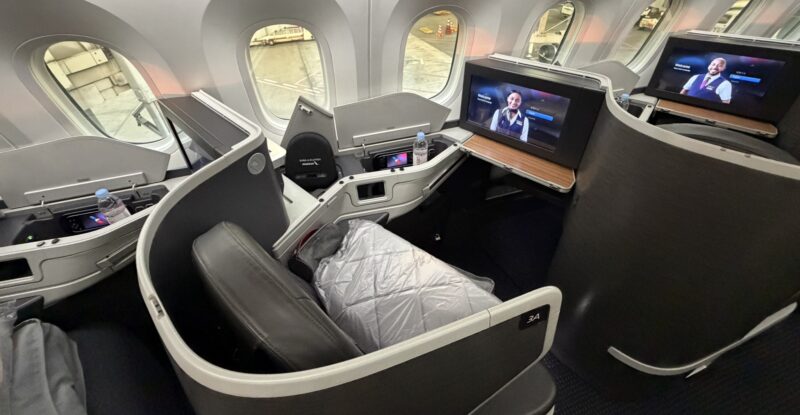
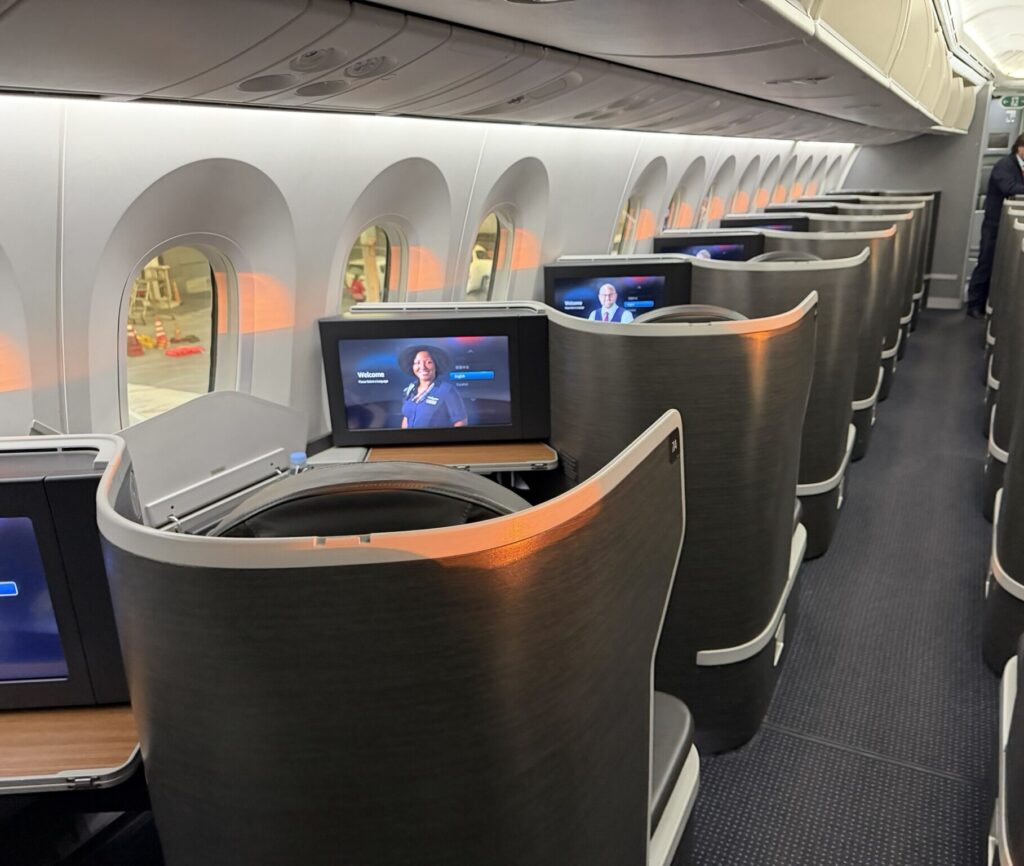
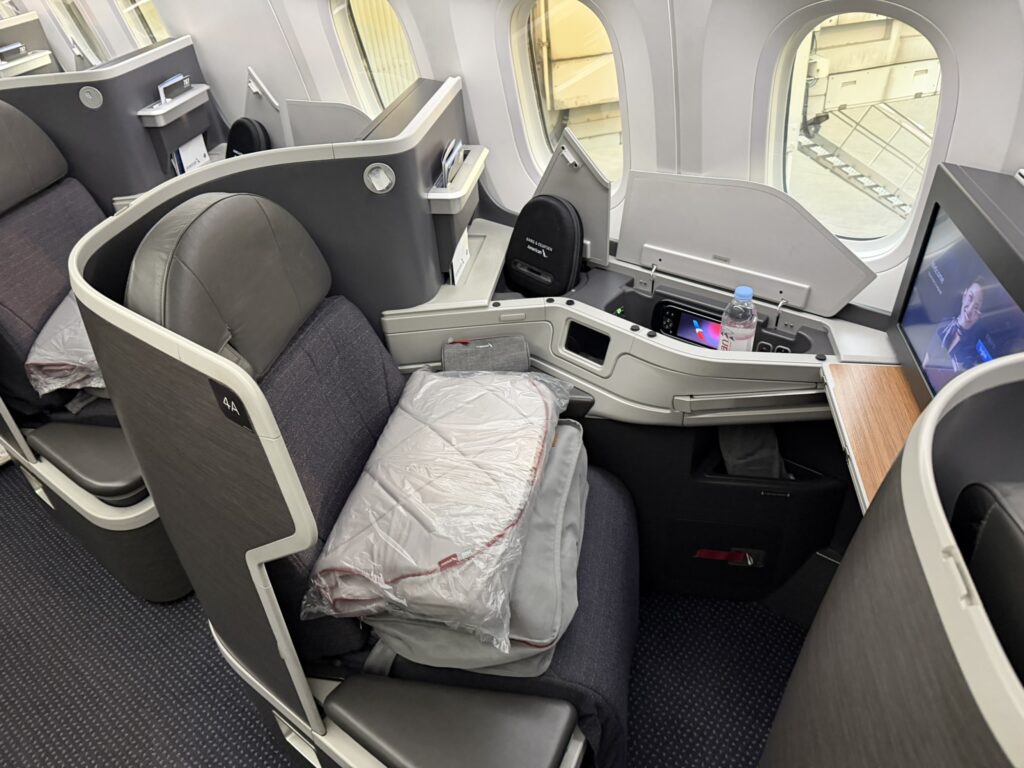
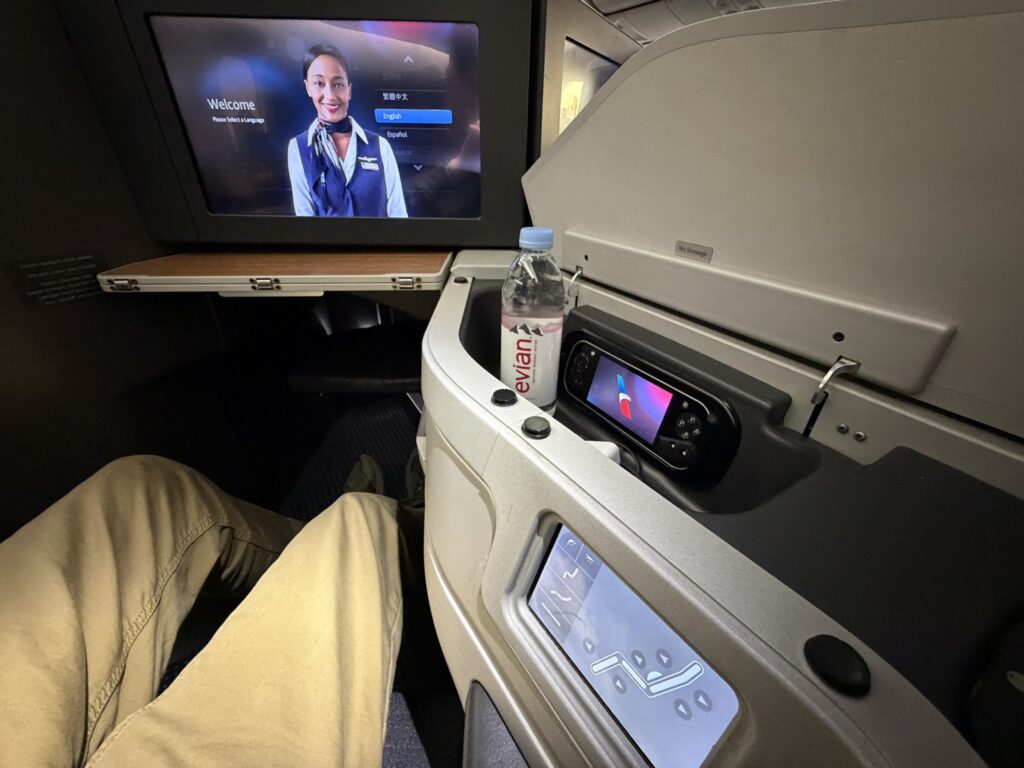
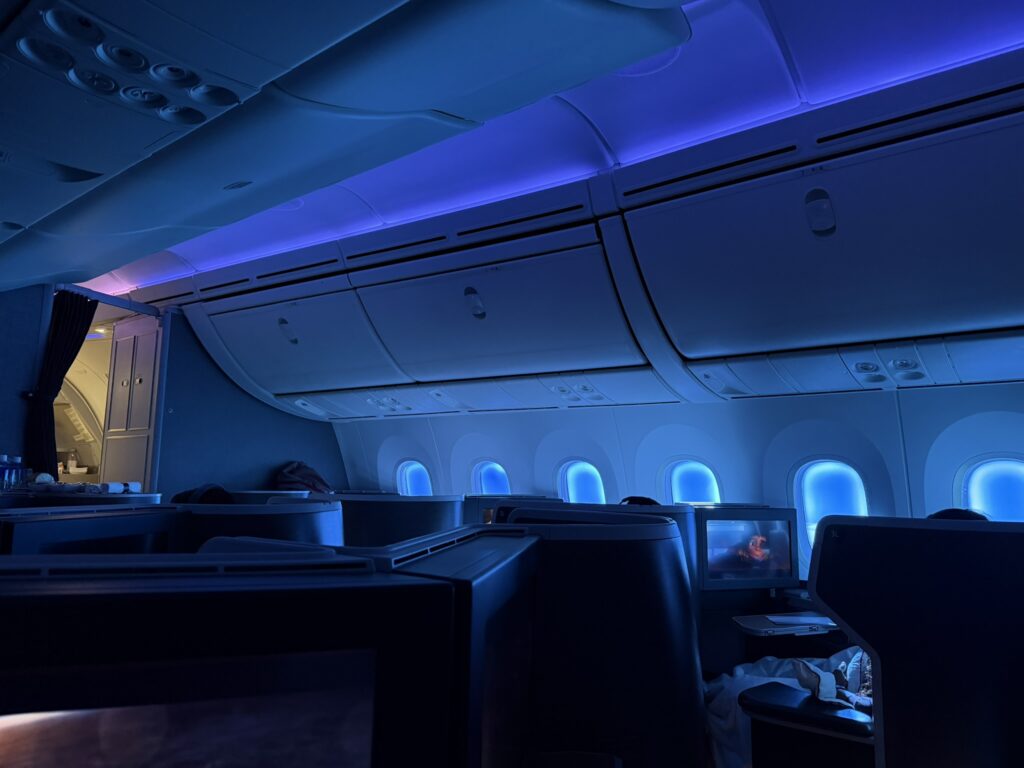
Beyond the service, American offers a compelling hard and soft product between Haneda and JFK, though not its most premium. The Collins Aerospace Super Diamond seat continues to be an excellent experience, even if the carrier’s implementation doesn’t include suite doors.
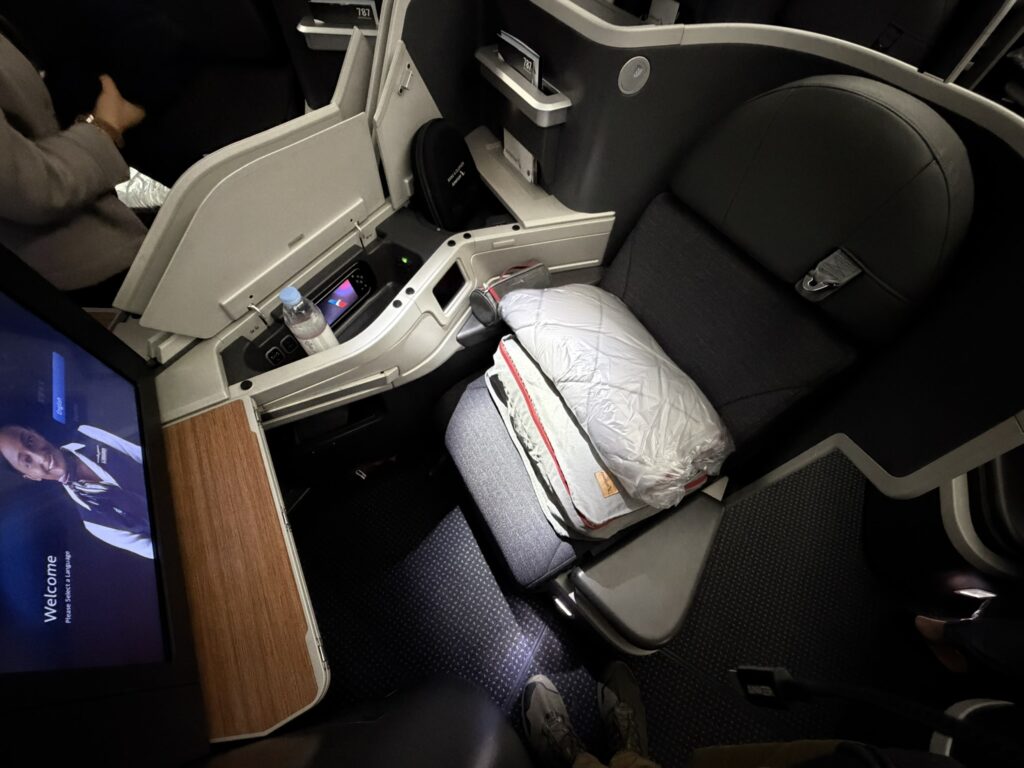
The lack of a raisable divider between the middle pair of seats might be noticeable to those not flying as a couple, however.

I was pleased to see American offer pajamas on this route, which definitely helped me get a bit more comfortable for the 13-hour flight.
I suspect American effectively serves the same meal as Japan Airlines when the Japanese option is selected — something I made sure to pre-order in advance.
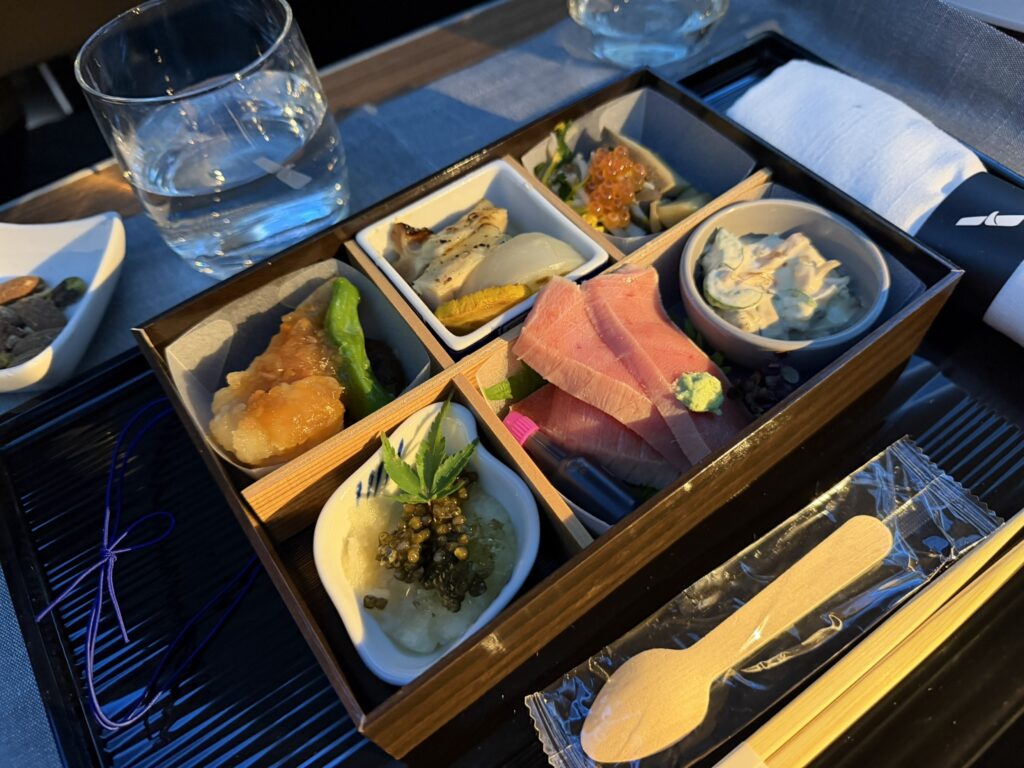
I enjoyed the boxed presentation and small touches like American using its own branded paper wrap on the chop sticks.
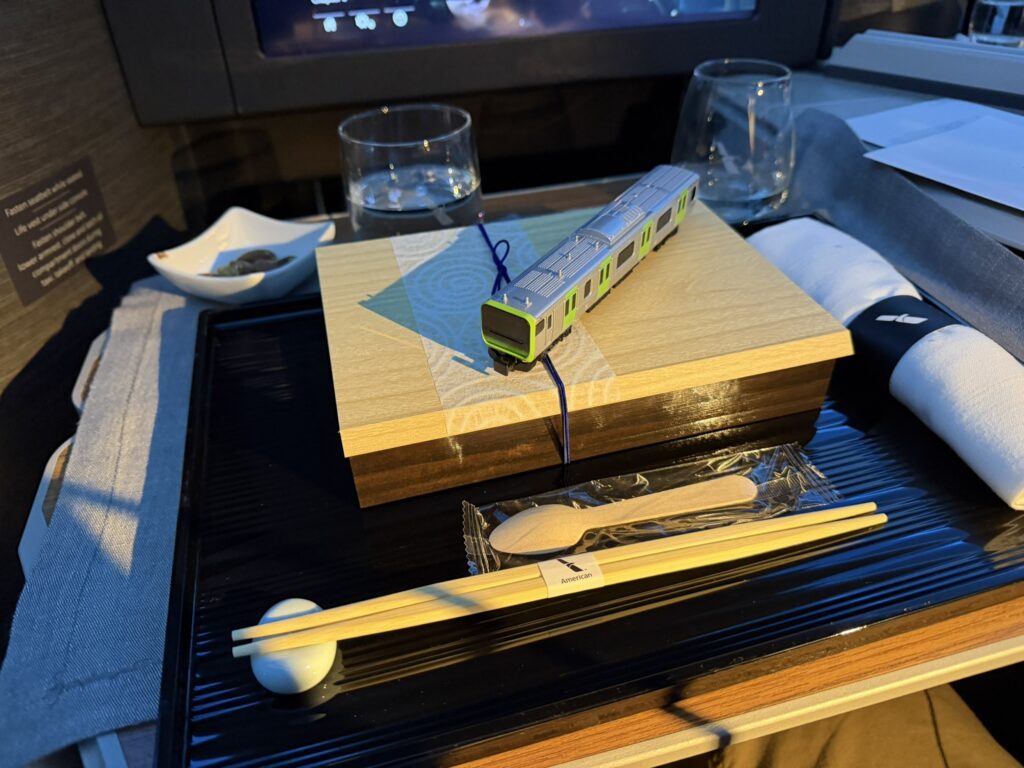
The multi-course meal was delicious, as was the pre-arrival noodle dish served many hours later.

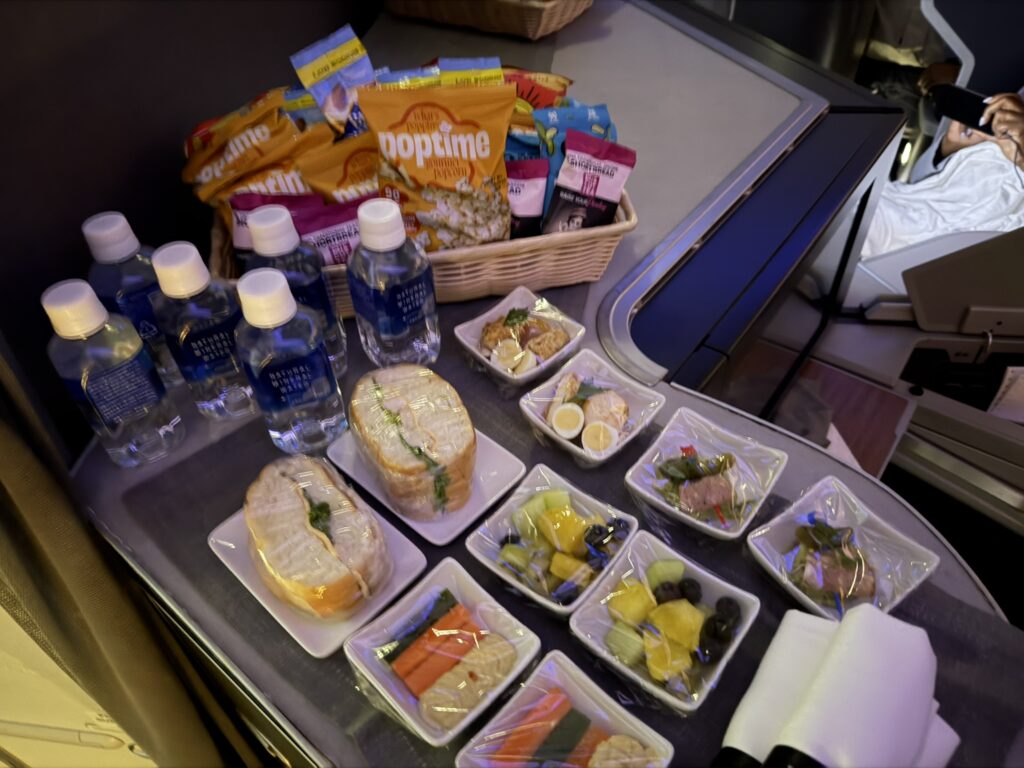
The first meal was so filling that I didn’t help myself to the mid-flight snacks, I did, however, take a glance at what was on offer. The fare certainly wasn’t as impressive as what Korean Air offered in economy on my JFK outbound (to Seoul).
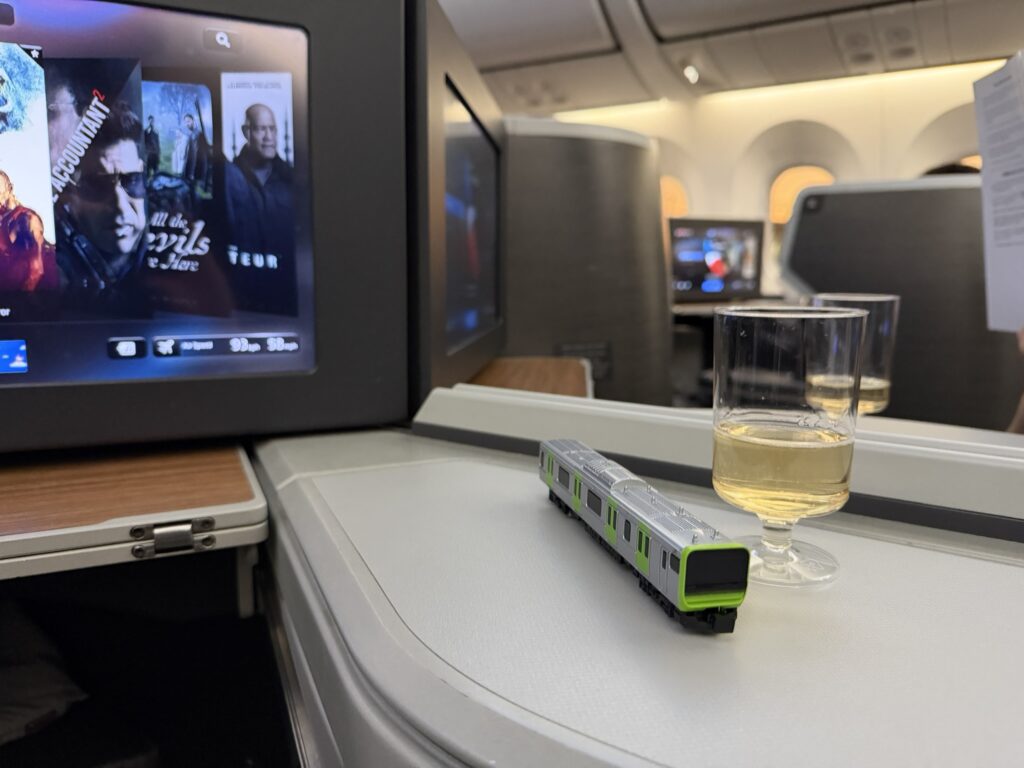
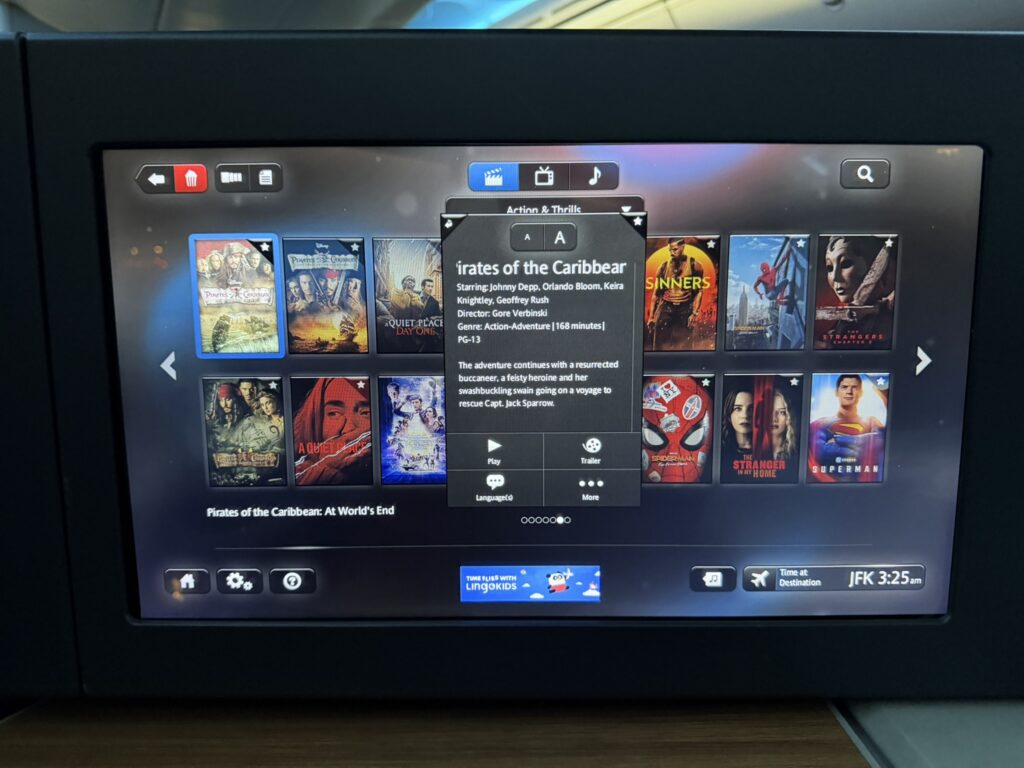
American packed more than enough content into its Panasonic Avionics entertainment system to keep me entertained from Tokyo to New York.
However, I was surprised to see that the airline hasn’t meaningfully updated the system’s interface since it was first introduced over a decade prior.
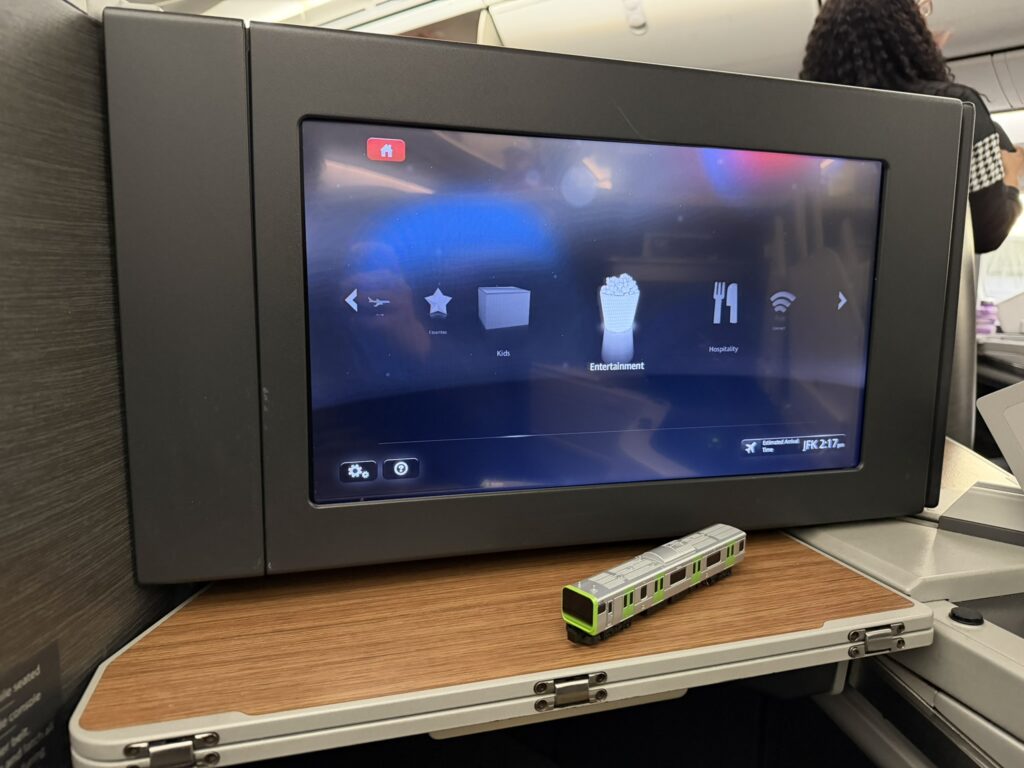
Part of me appreciates the simple interface but at the same time it was weird to see how basic it is when compared to Delta and United.
The Bang & Olufsen noise canceling headphones were high quality and thankfully, American did not collect them an hour before landing as it has in the past.
I passed on the inflight connectivity, priced at a whopping $35 for the full flight. American has since begun rolling out free Wi-Fi across its fleet, but that does not include older 787s with the legacy Panasonic system.
Maybe it’s unfair to hold American to the same service standards as its foreign alliance partners and competitors, but if I had been a JAL flight shopper and unknowingly ended up on a codeshare American flight it would have been quite a jarring experience.
In the end the price was right, and the base experience was more than acceptable if not a bit rough around the edges.
 Related Articles:
- Passenger comfort still a priority on venerable Korean Air A380
- Flagship Suite Preferred impresses on American 787-9P inaugural
- American Airlines’ Premium Economy on A321XLR is a delight
- Welcome to American’s A321XLR inaugural in a Flagship Suite
- American’s 787-9P ups the ante for Premium Economy
- Travel back in time aboard Korean Air’s 737-900
- Positive JAL A350-1000 experience tarnished by IFE snafu
All images credited to the author, Jason Rabinowitz