
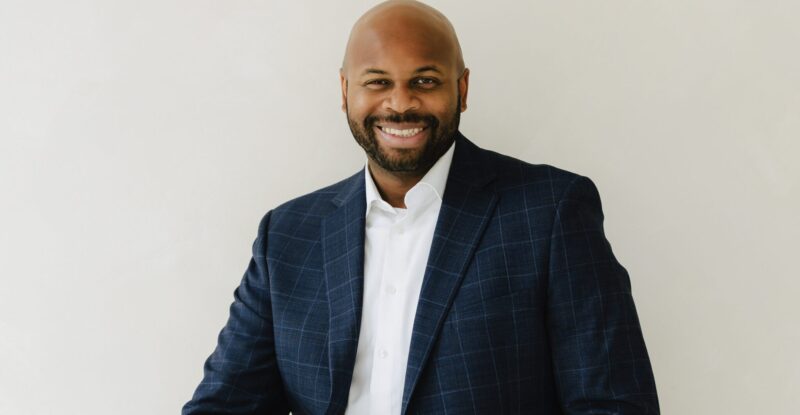

Please enjoy this Op-Ed contribution from Bradley Akubuiro, partner at Bully Pulpit International.
No industry does incident response better than aviation. In the rare event that something goes wrong at 35,000 feet, airlines activate protocols that have been rehearsed, refined, and pressure-tested for decades. The rapid response system is a well-oiled machine.
But when I talk to airline leaders, the thing that keeps them up at night isn’t the emergency they’ve trained for. It’s the deepfake of an executive. The deportation flight controversy. DEI programs blamed for safety failures. Threats that can define an airline overnight — and have nothing to do with operational performance.
I’ve lived this. Plane crashes. Disinformation campaigns. A sitting president attacking my company by name. The operational crises were brutal, but the reputational threats were harder — they came from directions we never anticipated.
Lies Travel at Supersonic Speed—And Anyone Can Be a Target
We’re operating in an era where half-truths travel faster than facts and your corporate statement competes directly with conspiracy theories, talking heads, and online personalities for audience attention. The same communication gets interpreted through completely different information ecosystems, often with vastly different framing. For carriers operating across multiple jurisdictions, this complexity multiplies — what reads as principled in one market may create risk in another.
Two recent examples illustrate just how quickly reputational crises can materialize — and how different the sources of risk have become.
In early 2024, explicit AI-generated images of Taylor Swift spread virally across social media, accumulating tens of millions of views before they could be contained. The images were entirely fabricated — yet the speed of their spread outpaced every platform’s ability to respond. If it can happen to Taylor Swift, it can happen to your airline. Imagine a fabricated letter to employees circulating online — a false update about a safety issue discovered on a certain aircraft type. Investors, passengers, regulators, and suppliers could all be sent into a frenzy before you’ve had a chance to respond.
The Middle Ground Is the Most Dangerous Place to Stand
Then there’s Target. In 2023, the retailer faced fierce backlash over Pride merchandise, including in-store confrontations and threats. Target pulled merchandise from some stores — and immediately faced backlash for caving to pressure.
When Target rolled back its DEI programs in early 2025, it faced criticism from conservatives who wanted more changes and progressives who wanted less. Black churches launched sustained boycotts. Rev. Jamal Bryant called for a 40-day “economic fast” backed by the National Baptist Convention, the AME Church, and other major denominations. Foot traffic declined. Target ended up with no allies in any camp — criticized for having the programs, then criticized for abandoning them.
The lesson isn’t about Pride merchandise or DEI policies. It’s about what happens when you try to navigate the middle ground without a clear sense of what you actually stand for.
Know Where Your Reputation Can Crack
Preparing for this landscape requires regular honest self-assessment as trends change. Identify where your reputation is most exposed — not the measured risks you discuss in management meetings, but the serious vulnerabilities that could define your company overnight. Which stakeholder relationships would buckle under pressure? Which issues could pull you into someone else’s controversy?
There’s a significant gap between stakeholders who like your company and those who will actually defend it when things go bad. What separates them? The depth of the relationship. Stakeholders become defenders when they believe leadership cares about more than profit — when they see a company genuinely led by values.

What the Best Leaders Get Right
Talk like a person, not a press release. When the pandemic grounded fleets worldwide, Delta CEO Ed Bastian didn’t retreat behind prepared statements. He spoke to tens of thousands of employees several times a week through video, showing what he later called “a lot of vulnerability.” It worked because it was real. When your stakeholders can tell what you stand for, they know what to expect — and they’re more likely to trust you when things go wrong.
Underwrite your culture before you need to cash it in. When Southwest Flight 1380 suffered an uncontained engine failure in 2018 — the first fatality in the airline’s history — Captain Tammie Jo Shults safely landed the aircraft, then walked the aisle and spoke to every single passenger. CEO Gary Kelly’s public response was heartfelt and human. That wasn’t manufactured in the moment. It was the natural expression of values the company had lived for decades.
Draw your lines before the pressure hits. When American Airlines Flight 5342 fatally collided with a military helicopter in January 2025, the airline’s response stood out for its discipline. As speculation swirled and political figures weighed in, American held the line — focused on families, the investigation, and their own grieving employees. They spoke when they had something meaningful to say and resisted the temptation to fill silence with noise.
Prepare for lies that fit the narrative. The Taylor Swift deepfakes spread because people were primed to believe them. What’s the fabricated story about your company that would spread fastest? Shore up your credibility there now.
If you take a position, hold it. Target’s muddled response — retreating without committing, then retreating again — left them with no allies on any side. Standing somewhere means accepting that not everyone will stand with you. The alternative is worse: standing nowhere means no one will defend you when it counts.
Aviation can’t just stop flying to a market or drop a supplier over politics. But that constraint makes clarity and consistency more important, not less — because when you can’t walk away, you need stakeholders who will stand with you where you are.
With misinformation proliferating and polarization intensifying, it would be easy to think the best course of action is to lie low and avoid taking positions altogether. I’m here to advocate for going in the opposite direction — while acknowledging that clarity comes with costs.
You have to figure out where you stand and then actually stand there.
 About the author
Bradley Akubuiro is a Partner at Bully Pulpit International. Bradley spent years in aerospace, including senior communications roles at Pratt & Whitney and United Technologies (now RTX), before leading global media relations for Boeing during the 737 MAX crisis, COVID-19, and the national conversation around race.
He teaches crisis communications at Northwestern University’s Medill School and is the author of Faster. Messier. Tougher. Crisis Communication Strategies in an Era of Populism, AI, and Distrust (Entrepreneur Books, April 2026).
All images credited to Bradley Akubuiro, Partner at Bully Pulpit International.