
Please enjoy this Op-Ed contribution from IdeaNova Technologies co-founder and CEO Juraj Siska, who explains how smart software innovation is enabling carriers to turn old IFE systems into new digital platforms.
In the inflight entertainment (IFE) world, headlines tend to focus on artificial intelligence, Starlink enabled connected aircraft, or zero-day content delivery. Yet one of the most persistent challenges facing airlines is more practical: how to extend the life of existing infrastructure while meeting passengers’ modern expectations.
Just as squeezing another few years out of your car saves thousands in new payments, airlines face similar pressures with installed IFE hardware. Much of it still works but lacks features passengers expect today — such as connectivity, interactivity, and smooth digital integration.
Legacy systems remain one of aviation’s biggest obstacles. Built in a pre-connected era, they operate as closed ecosystems. But today’s aviation environment demands real-time data exchange, synchronization with airline apps, and seamless passenger experiences. The gap between these worlds is where innovation — not replacement — must step in.
Remove or modernize?
Airlines have split along two philosophical lines.
- Removal strategy (American Airlines): Phasing out seatback screens on A319s. Shifting to personal-device streaming and free Wi-Fi (from 2026). Goal: save weight, cut maintenance, and lower costs.
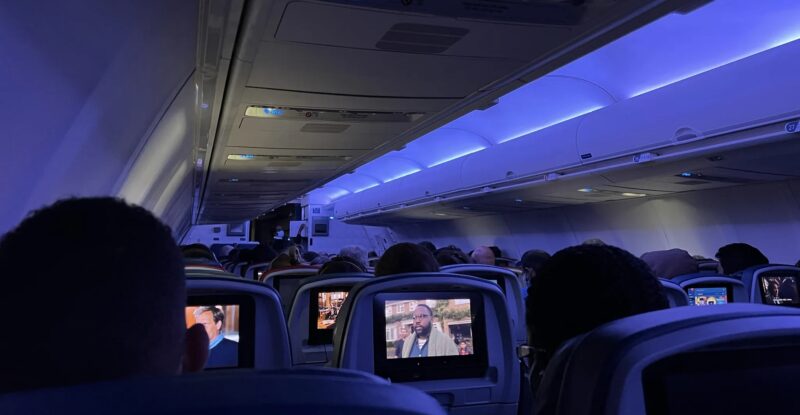
- Modernization strategy (Delta Air Lines and United Airlines): Doubled down on seatback IFE. Delta says they reduce passenger stress and boost satisfaction. United plans to add Starlink-powered seatback systems to about 1,000 planes by 2026.
This divergence highlights a key tension: replacing legacy promises customer satisfaction in the future, but it costs money. This does not always have to be a binary choice. Airlines should continue to search for a middle path — where modernization meets practicality.
The modernization mindset
Modernization doesn’t necessarily mean expensive new installations. Technology partners increasingly show that existing hardware can deliver richer digital experiences with creative software optimization.
IdeaNova, for instance, has spent nearly two decades helping airlines maximize the value of installed hardware. The company’s engineering teams have demonstrated that legacy systems can run contemporary features on surprisingly modest platforms — such as:
- Modern software can run even on small devices like Raspberry Pi 2, showing limited hardware can deliver good passenger experiences.
- Complex IFE systems still work on older 32-bit processors, even with DRM, keeping them useful in today’s 64-bit world.
- Modern QML interfaces can run on decades-old IFE displays, with solid performance and full features.
These examples underscore a critical point: “old” does not mean “obsolete.” With ingenuity and smart engineering, legacy infrastructure can perform far beyond its original design intent.
Case in point: Delta’s innovation arc
Building on this modernization mindset, Delta Air Lines faced a familiar challenge — modernizing its aging IFE systems without committing to a prohibitively costly hardware refresh. In support of its broader seatback innovation, the airline partnered with several specialists, including IdeaNova, to enhance capabilities atop existing architectures, even some that are over a decade old.
Through this collaboration, new functionality and performance improvements are being rolled out fleetwide at a fraction of full-replacement costs.
Glenn Latta, MD at Delta, stated, “IdeaNova has innovated something that no one thought could be done which significantly enhances the delivery of our personalized customer experience on these aircraft.” The project reinforced that modernization isn’t a stopgap — it’s a viable long-term strategy that balances fiscal discipline with passenger satisfaction.
Delta’s experience underscores a broader lesson for airlines industry‑wide: modernization requires more than technical updates — it demands strategic collaboration and creative re‑engineering.
Lessons from legacy integration
The technical and operational hurdles of legacy IFE integration are far from trivial:
- Compatibility issues: Older seatback systems don’t work well with modern connectivity solutions and loyalty programs.
- Data silos: IFE networks are isolated, blocking personalization and analytics.
- Costly upgrades: Replacing thousands of displays or servers across a fleet requires big investments and causes delays.
- Security risks: Outdated DRM and cybersecurity create compliance and data protection problems.
For many carriers, the path forward lies in phased integration, modular upgrades, and middleware solutions that extend the lifespan of current fleets while adding modern functionality. Incremental improvements often deliver more value — and faster — than waiting for the next clean-sheet platform.
Beyond AI: human ingenuity still matters
AI dominates current headlines, but aviation progress still relies on human insight. IdeaNova’s many projects, such as that with Delta, show that practical engineering — guided by experience and creative problem-solving — can achieve results that machines alone cannot.
Modernization is not just about code or hardware. It’s about stewardship — helping airlines maximize return on every investment they’ve already made.
Closing thought
Legacy IFE may not sparkle like AI or next-generation cabin connectivity, but it forms the backbone of today’s passenger experience. By modernizing instead of replacing, airlines are proving that technology renewal doesn’t always require starting from scratch. Sometimes, the smartest way forward is simply to breathe new life into what already works. Smart engineering is an enabler for deployment of today’s modern technology in the most cost effective way possible.
About the author:
 Juraj Siska is an IT executive and innovator with over two decades of experience creating business value with leading edge technologies. After a successful IT consulting career, he co-founded IdeaNova to provide high-quality IFE products and services to the avionics community. As CEO of IdeaNova, he oversees business and technical implementation of the next generation of IFE systems.
Juraj’s dedication to innovation and his ability to adapt to changing industry needs have positioned IdeaNova as a key player in the inflight entertainment space. His vision and expertise continue to drive the company forward, ensuring that passengers have access to high-quality entertainment options wherever they are. The author of numerous articles and papers, Juraj has served as a speaker at industry events around the world. He holds both a master’s degree and a PhD in engineering from Iowa State University.
Related Articles:
- Delta makes it easy to see dietary details via seatback IFE
- United, Delta tout NPS and wellbeing benefits of seatback IFE
- Op-Ed: Five key trends shaping the future of travel
- How Delta Sync demonstrably improves PaxEx
Featured image credited to Jason Rabinowitz