

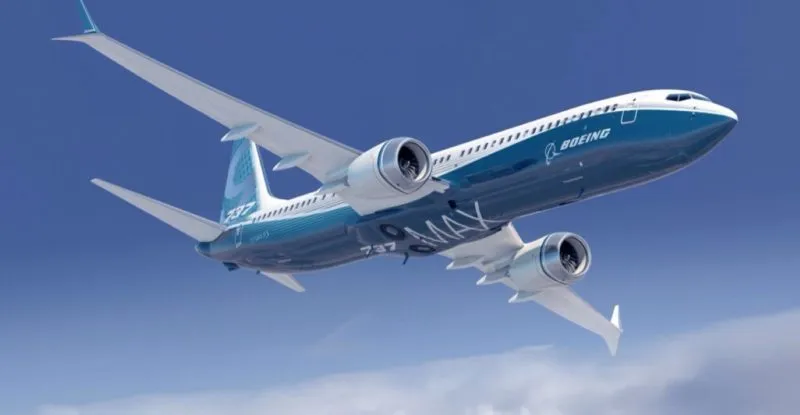

With recovery in “full force,” Boeing expects 737 MAX and 787 deliveries to grow in 2026 and believes aircraft production will be better aligned with deliveries, the airframer’s newly appointed CFO Jay Malave said this morning at the UBS Global Industrials and Transportation Conference.
“[B]ig picture,” said Malave, “we expect deliveries both on the 737 and 787 to grow in spite of the fact that we have less aircraft coming out of inventory to be delivered” in 2026.
At present, Boeing has a stockpile of 737 and 787 twinjets that have been completed but are undelivered, as production output is not in sync with deliveries due to certification delays, supply chain disruptions and geopolitical tensions.
For context, Boeing is eyeing a range of 440 to 450 deliveries for the 737 MAX in 2025, but some 50 narrowbodies are being delivered from inventory.
Said Malave,
When you now fast forward to 2026 we’re going to be increasing our deliveries, but there won’t be hardly any aircraft, if any at all, that will be coming out of inventory.
So, it’ll be really through the production rollout system that will be the source of the deliveries.
One item where there will be “a little bit of a difference between deliveries and production builds,” he said, is on the 737 MAX 10 program.
“We’re expecting certification of that aircraft to be later in the year, so we are unlikely to deliver all the aircraft that we build, just because of the timing of the certification process.”
737 MAX rate hike in 1Q 2026
The FAA capped Boeing’s 737 MAX monthly production rate at 38 after a door plug failed on an Alaska Airlines MAX 9 twinjet in January 2024. After much work on the part of Boeing to improve its corporate culture and embrace lean business practices, the FAA in October gave Boeing its blessing to increase the production rate to 42 aircraft per month.
Since then, Boeing has been prepping for the increase, with Malave confirming that the work is “going according to plan.”
Noting that it takes “a few months to take the production cadence and move that into output” and that November 2025 “is going to probably be a little bit light on deliveries” due in part to the shorter month, he said: “It’ll take us a few months to turn this into output, and I would expect that to occur starting probably in the first quarter of next year.”

Once the rate increase has been achieved, it takes a minimum of six months to stabilize production, “though “our history tells [us] it takes a bit longer than that,” confided Malave
And so, as the production system stabilizes, “the team starts thinking about how they’re going to break the next rate, and they start positioning for that next rate break.”
Boeing has said it would like to hit a potential production rate of 53 737 MAXs per month by the end of 2026.
787 rate increase in 2026
The Boeing 787 program is also in line for a rate increase, with Boeing looking to boost its seven-aircraft per month output to eight. Here again, “it’s going to take a little while before this turns into output. And I would expect that to occur sometime next year as well, and it will, as we evaluate and stabilize, we’ll start thinking about when the next rate break will be,” Malave said.
Boeing 777X deliveries are not expected until 2027, however.
Malave pointed to new regulatory requirements as the main reason why the 777X program has suffered numerous delays. Last month, Boeing was approved to move to Phase 3 of the Type Inspection Authorization (TIA) process “so we’ve been positioning aircraft for flight-testing there,” said the Boeing CFO.
Related Articles:
- How Boeing Global Services is supporting Starlink installs on 787s
- Excitement builds for Boeing 777X as cabin video goes viral
- Press Release: 777X delays surge 777-30ER values 78%, reports IBA
Featured image credited to Boeing