

 After reviewing American Airlines’ inaugural Airbus A321XLR revenue flight from the vantage point of a Flagship Suite Business Class seat, I jumped on the return flight from Los Angeles to New York JFK in order to take its Premium Economy product for a spin — yes, on the very same day.
This, after all, is a high-traffic corridor long shaped by American A321T Flagship First expectations and widebody thinking so I was eager to observe the value of American’s ‘tweener’ cabin on this the world’s first A321XLR with three cabin classes.
In contrast to the festivities at JFK, there was no celebration at LAX. Still, the airplane drew plenty of attention during the turnaround. A steady stream of influencers, bloggers and journalists cycled through for a look, and American brought in two full cleaning crews to reset the cabin. It felt very deliberate, even without the fanfare.
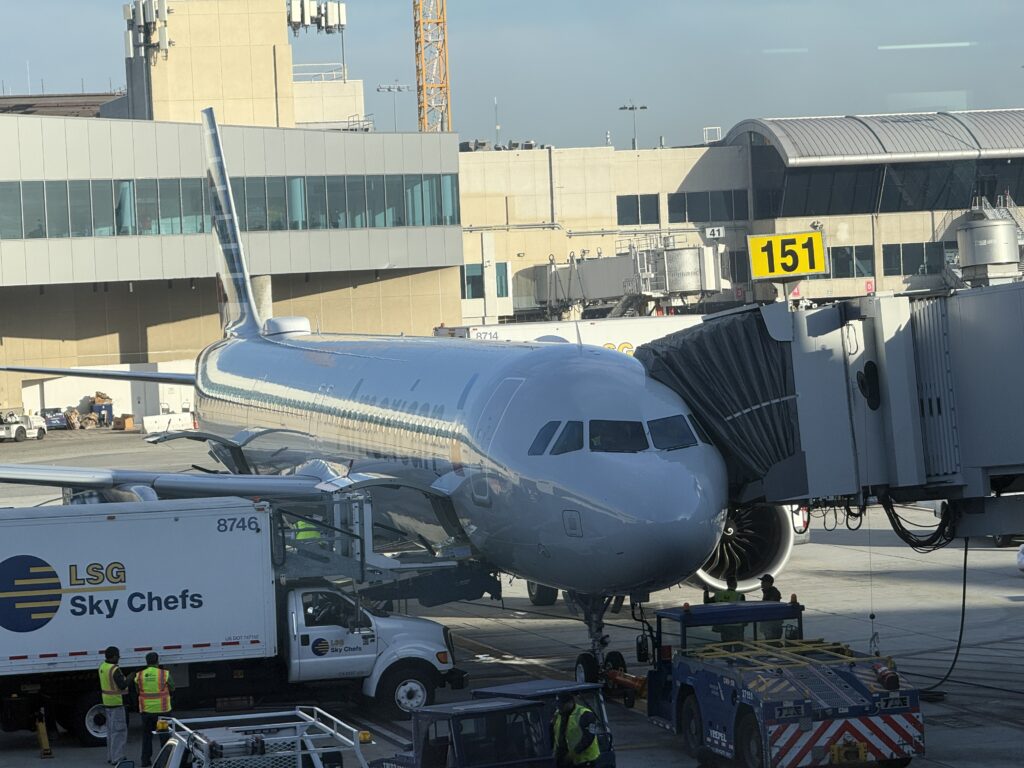
While Premium Economy has been part of American’s international offering since 2016, this is still new ground for American on domestic routes.
Indeed, the inaugural JFK-LAX-JFK roundtrip represents a number of firsts: not only is this the first A321XLR to sport three cabin classes, it is the first time a proper Premium Economy product has been deployed on a flagship US transcontinental route.
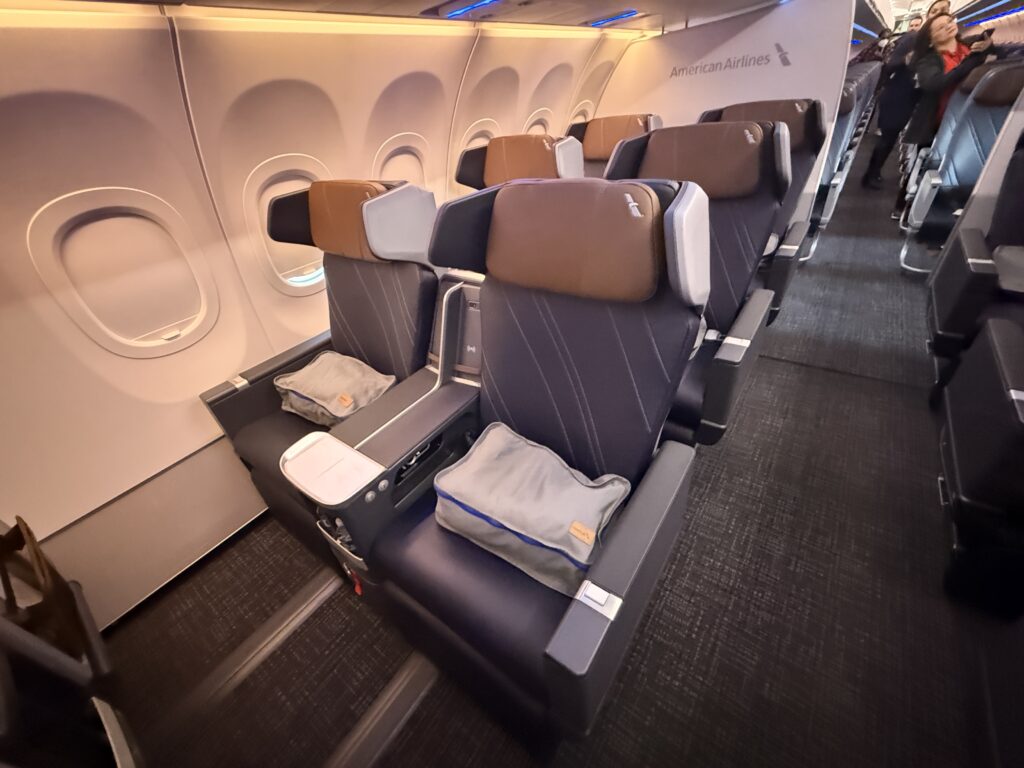 The cabin largely mirrors what American has just introduced on its new premium-heavy Boeing 787-9P twinjets, complete with what is believed to be Recaro’s popular R5 recliners.
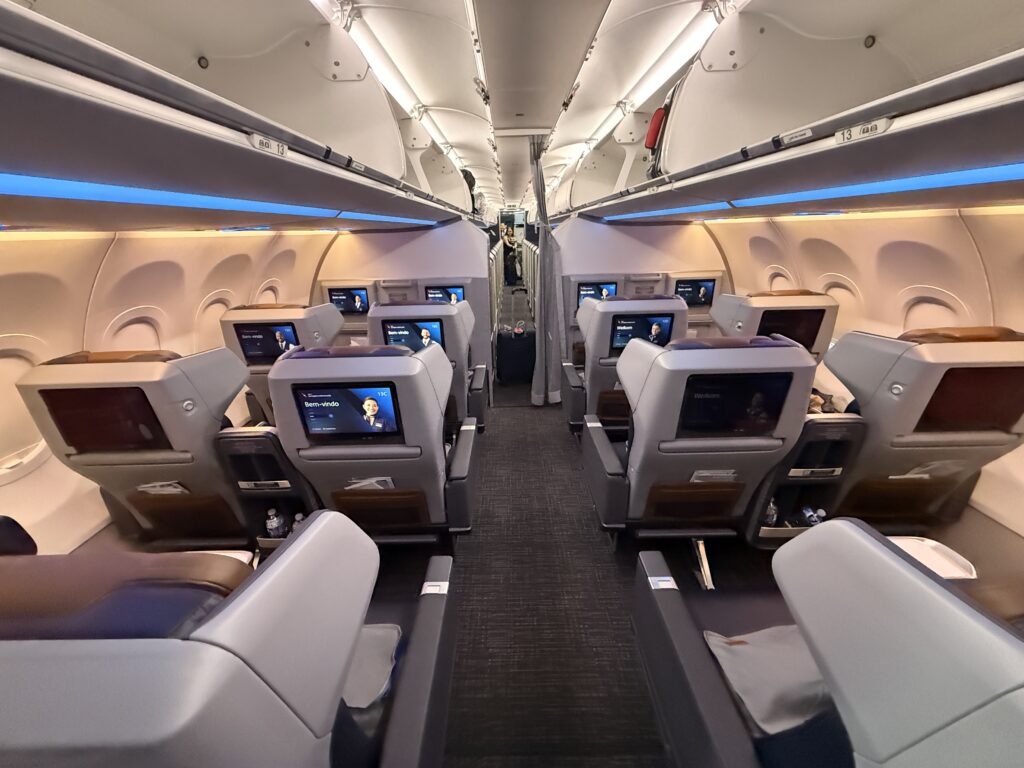
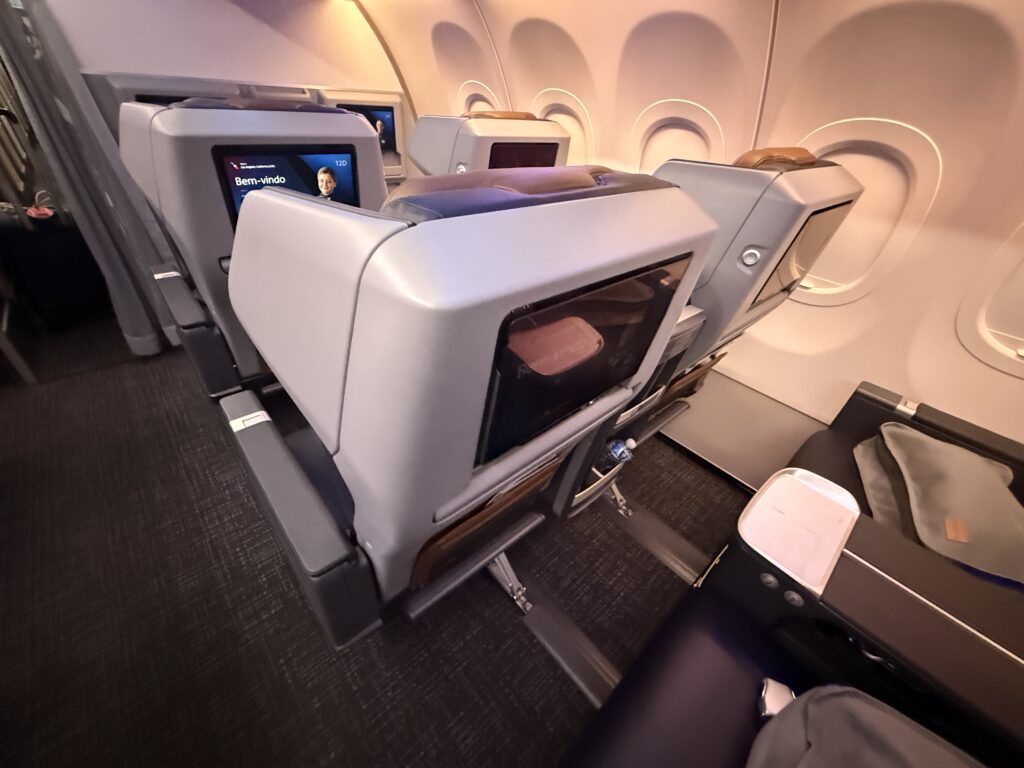
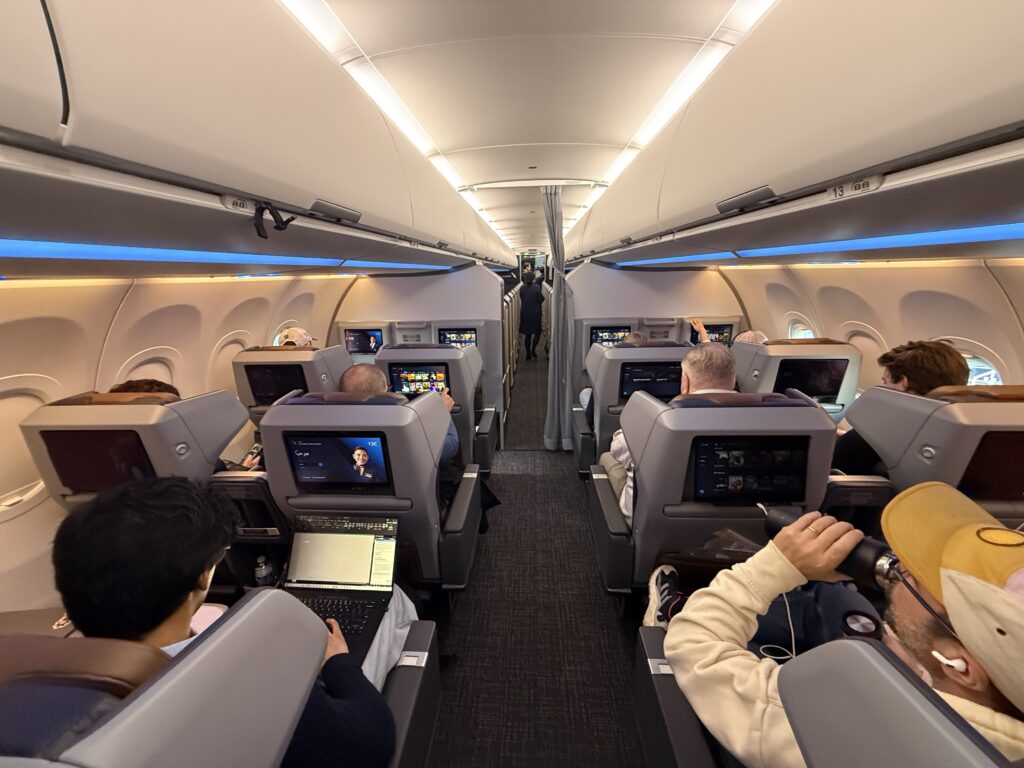
There are 12 seats in total, arranged 2-2 across three rows, and that small scale matters. Quiet and contained, the cabin immediately felt more intimate than anything that would normally be sold as extra legroom economy class on a domestic flight.
 The return flight was not without its issues. We left about an hour late, which inevitably dulled the premium edge a bit. After a full day of flying, including the inaugural westbound leg, the delay landed harder on your author than it otherwise might.
Even so, once I settled in, I could see the appeal of Premium Economy on the A321XLR. This feels like the sweet spot on the airplane, one that could easily support more seats.
 The seat: close to widebody comfort, with narrowbody compromises
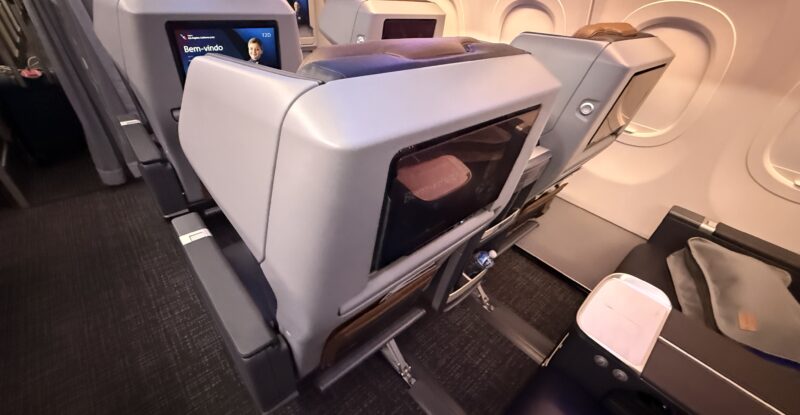
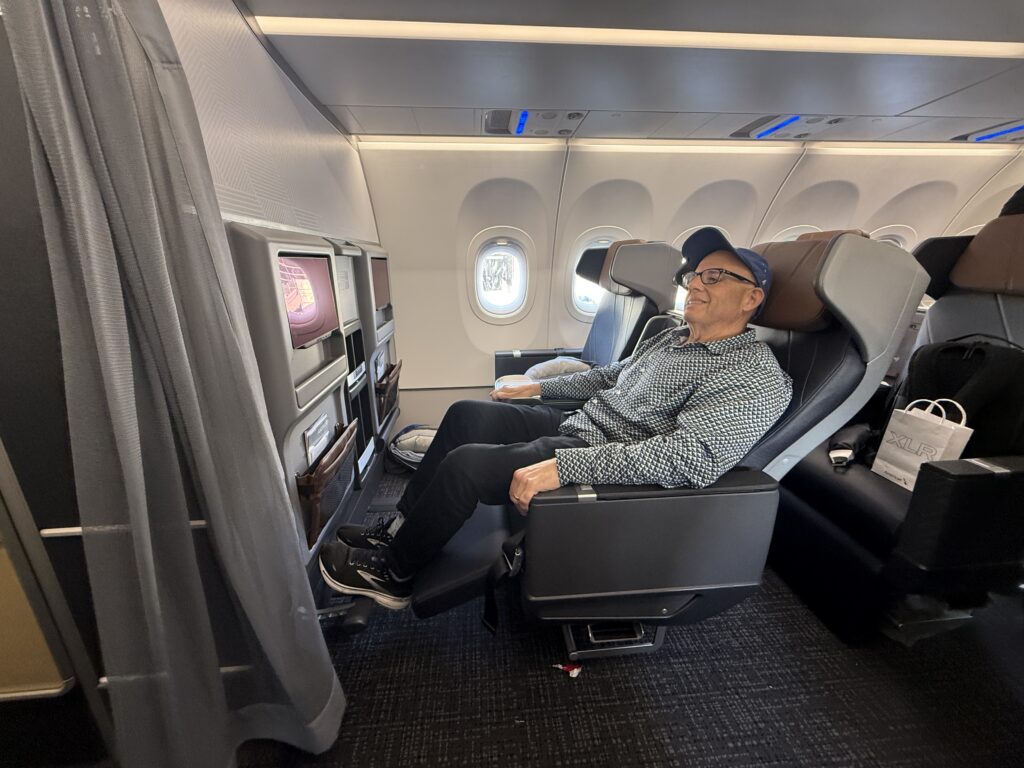
Having flown Premium Economy on the 787-9P, this recliner felt immediately familiar, and that’s a good thing. It’s width is generous for Premium Economy, even if the seat is a bit narrower than the widebody version.
Pitch is about 37 inches, roughly an inch less than found on the 787-9P, and recline comes in at around eight inches — enough to actually relax without dumping into the person behind you.
I was in 11C, the front bulkhead aisle seat. That meant no under-seat storage, but the bulkhead is carved out in a way that gives you real legroom, and I never felt hemmed in. 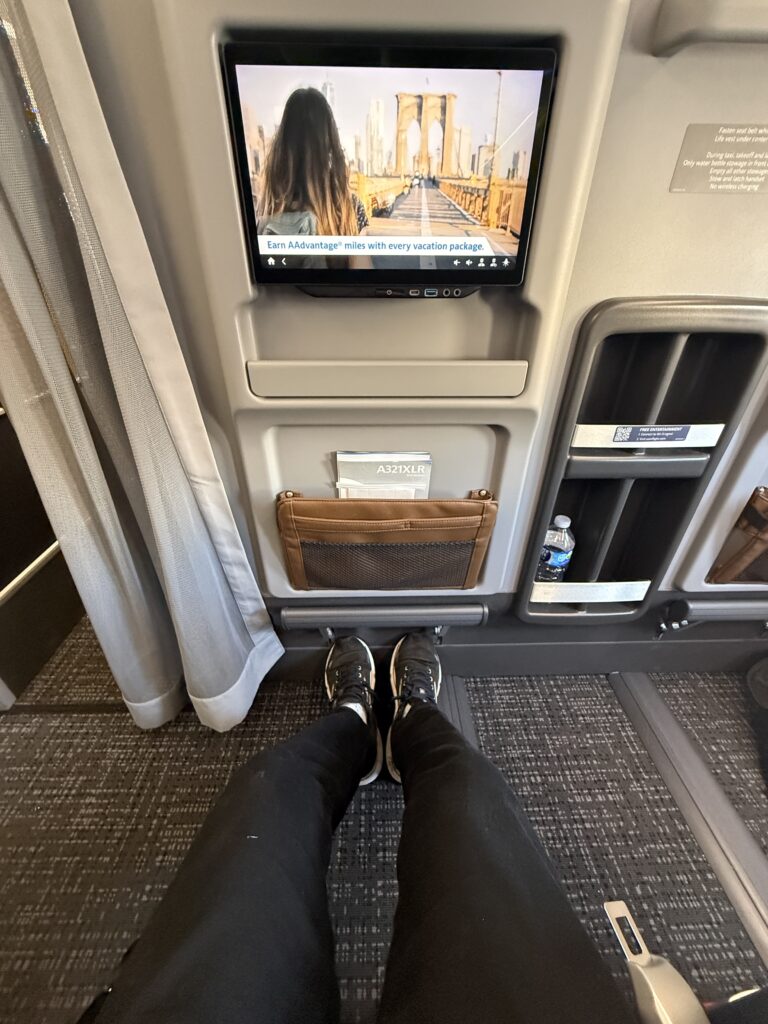
The leather upholstery here also felt noticeably less firm than the Flagship Suite seats up front. After a full day of flying, my back was not feeling good, and the combination of recline, calf rest and footrest made a real difference.
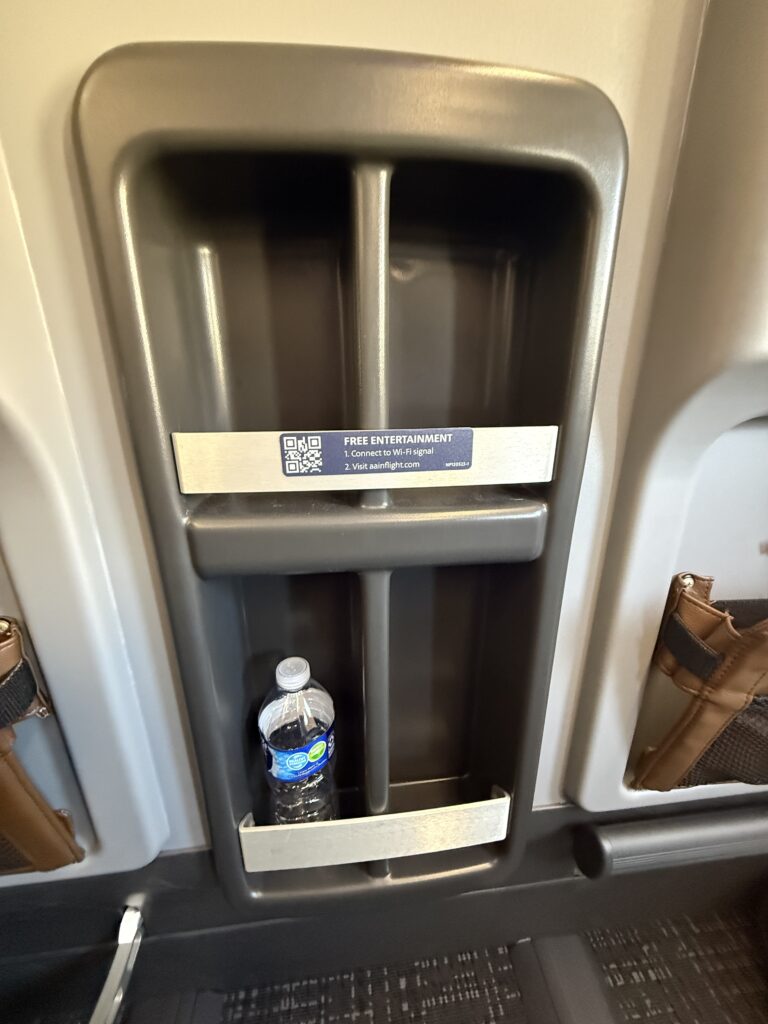
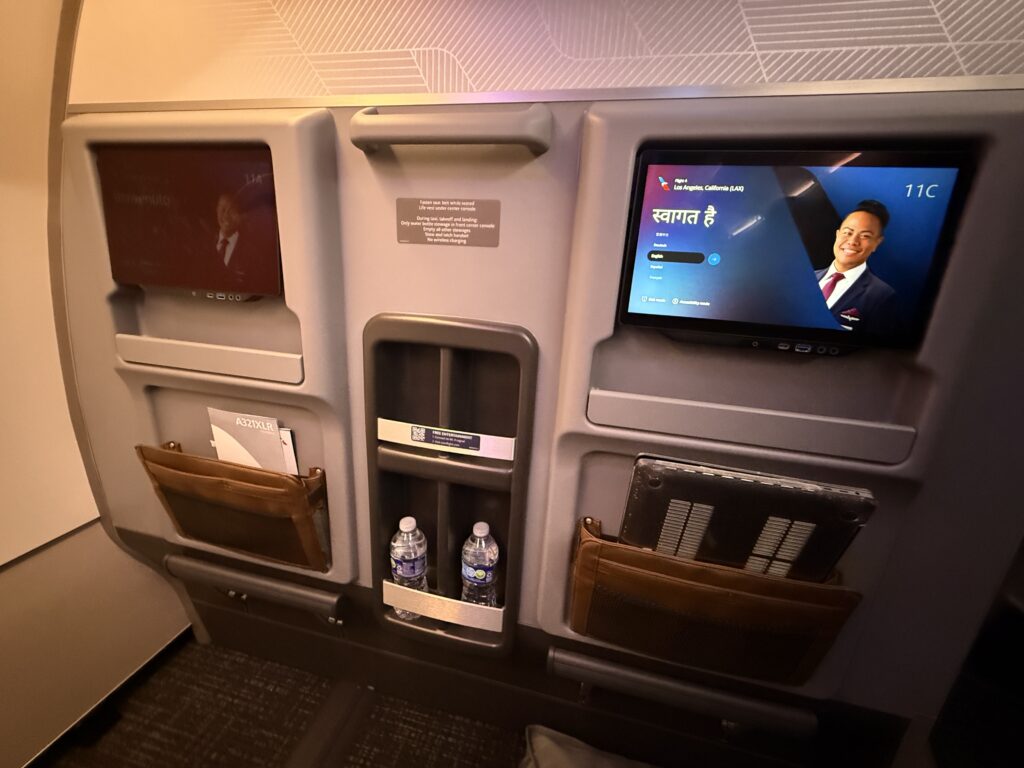
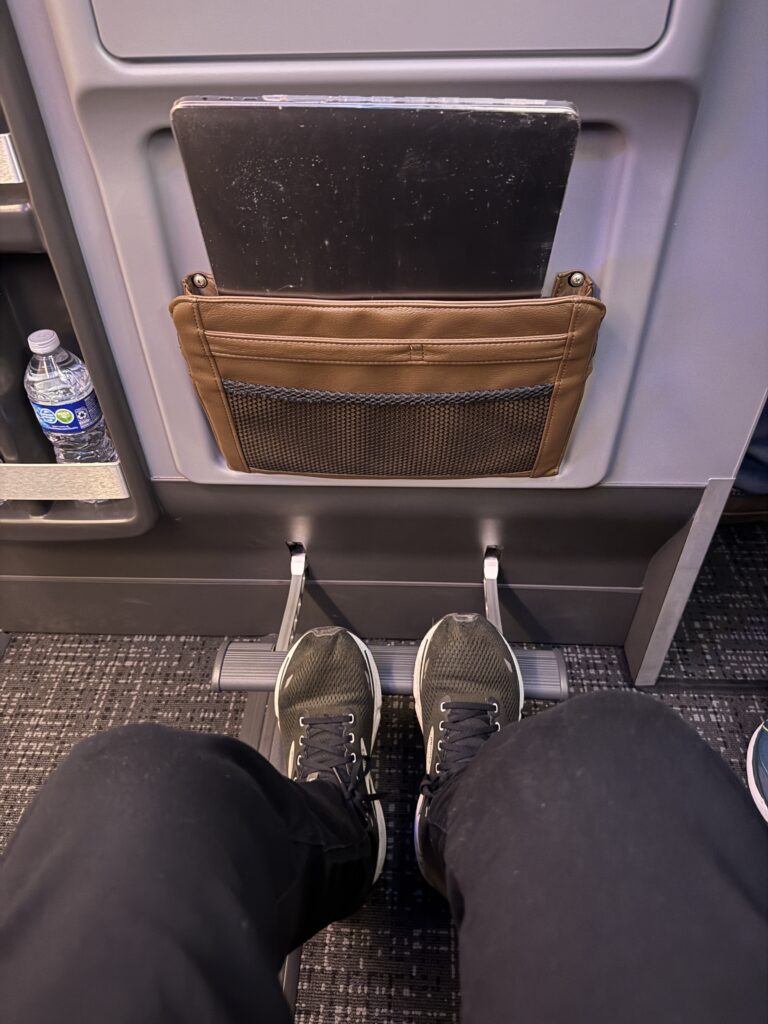 Storage is better than I expected for a bulkhead, with four water bottle holders in total — two in the seat and two built into the bulkhead wall. Water bottles were placed at seats before boarding. Is American gently insisting that we stay hydrated? Good call.
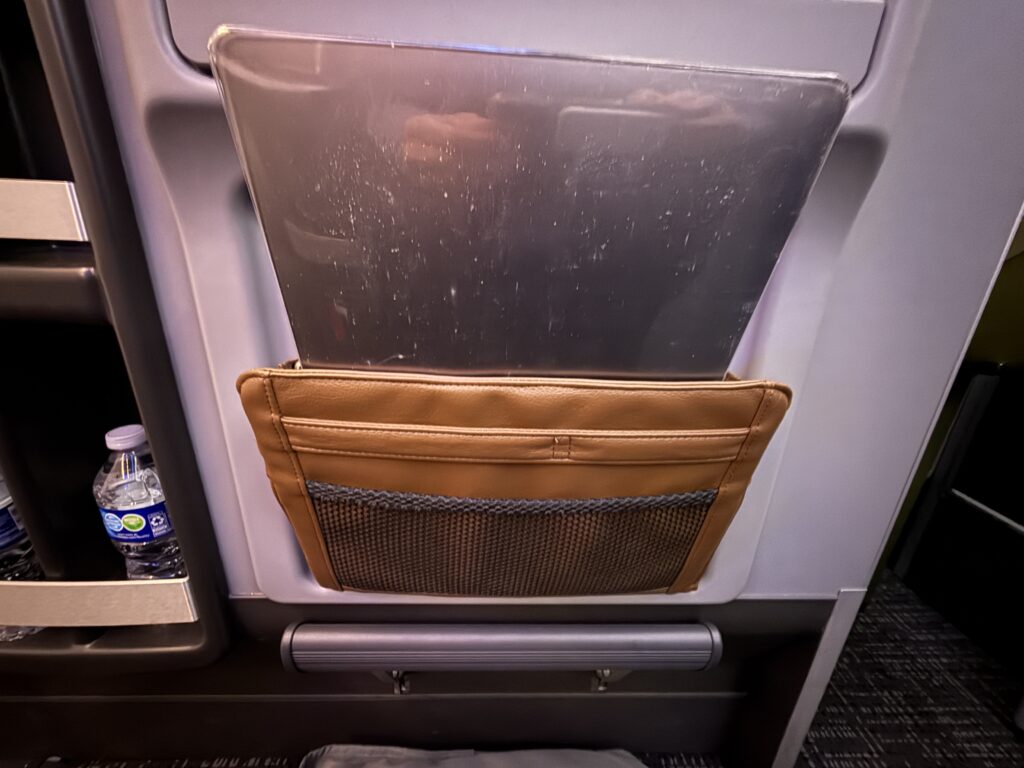
There are also two leather storage pockets, and my laptop slid in easily. Overhead, Premium Economy gets dedicated space in the extra-large Airspace XL bins, meaning there was no scramble for space during boarding.
Compared to the old A321T Business Class — also configured 2-2 but with far more pitch and near-full recline — this is obviously a different product. Still, it works. The privacy headrest wings, proper footrest, and sensible recline make it comfortable for a transcon without trying to be something it isn’t.
Visually, this is one of the nicer cabins American is flying right now. The deep blue upholstery, tan headrest accents, and subtle American eagle insignia soften the space and move it far away from the grey, utilitarian cabins that still dominate much of the fleet. The tan tones in particular give it a more upscale feel.
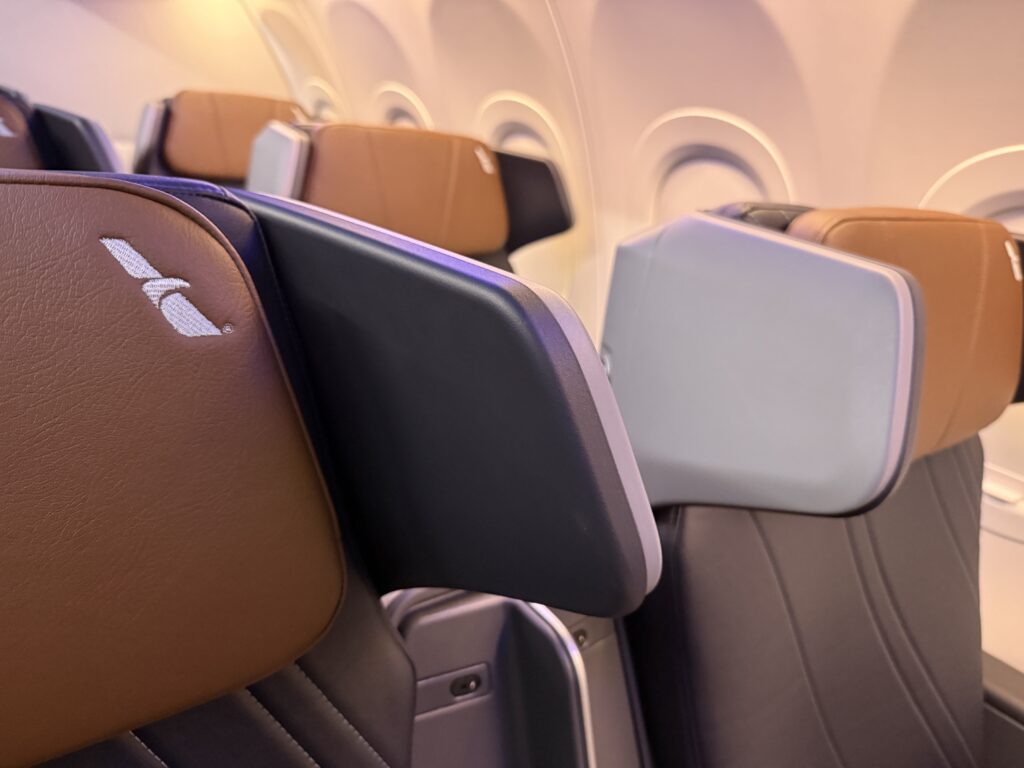
What surprised me most is how much I enjoyed Premium Economy on the A321XLR. In some ways, I actually prefer the openness of this cabin to the tighter feel up front, and it brought back memories of what worked so well in Business Class on the A321T.
The Airspace XL LED mood lighting really shows the cabin at its best, reinforcing the fact that this isn’t just economy class with a few extra inches — it’s a space you can actually settle into.
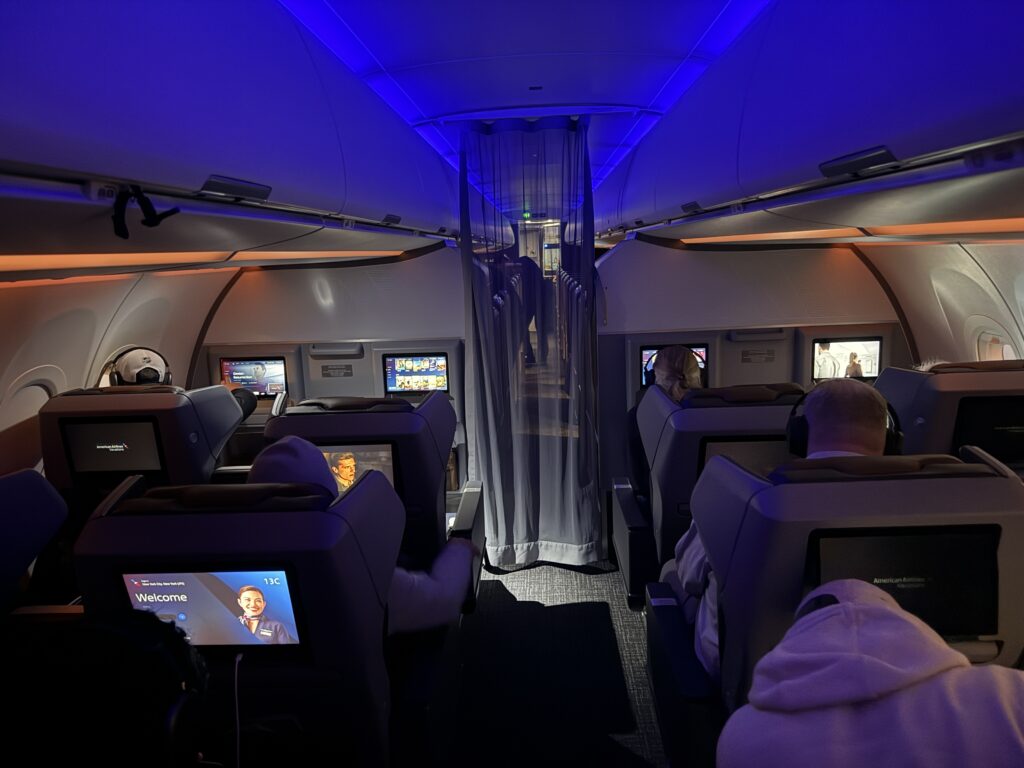
Soft product
Compared to Flagship Suite Business Class, the soft product in Premium Economy is obviously pared back, but I found it to be quite sufficient. A crepe-weave blanket struck a good balance between warmth and bulk, while the Ostrichpillow lumbar pillow was a standout; it actually provided meaningful lower-back support rather than just serving as branding.
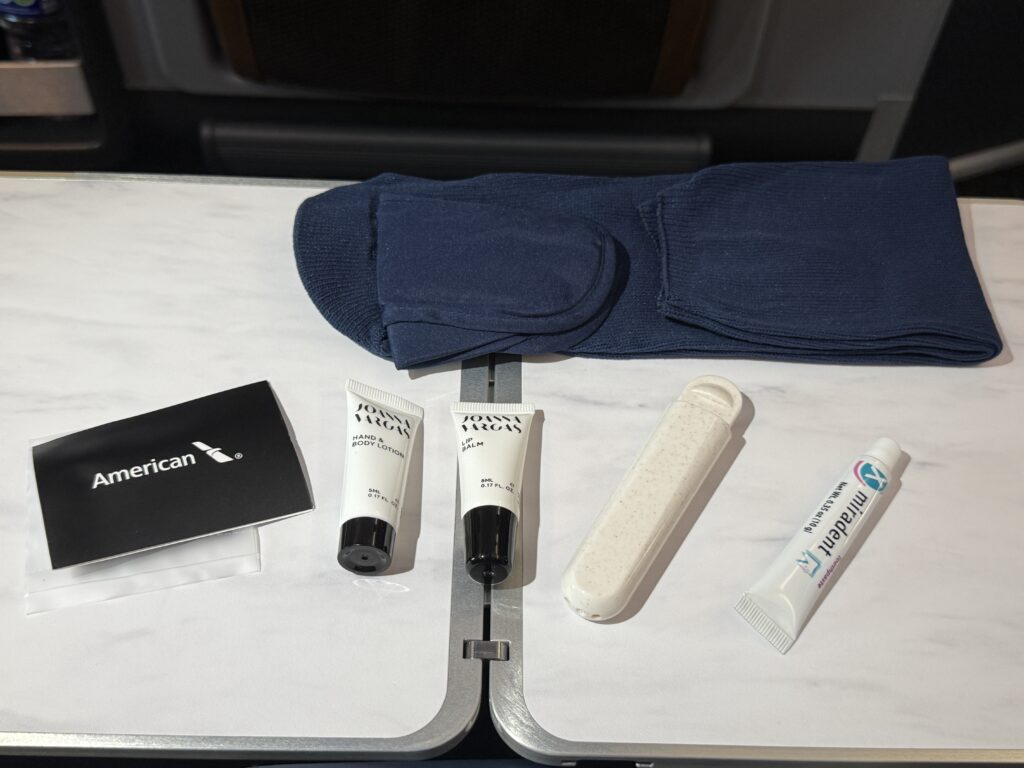
Continuing its partnership with skincare specialist Joanna Vargas, American’s Premium Economy amenity kit feels appropriate for a flight of this length with genuinely useful products.
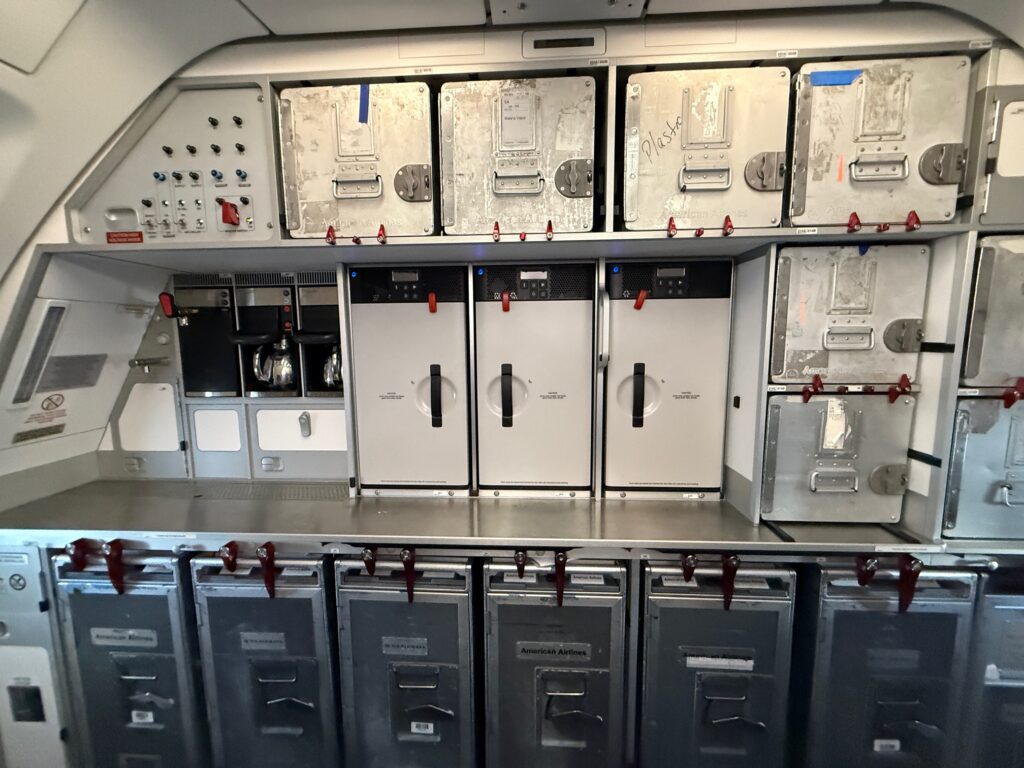
Catering is where the limitations of the aircraft started to show. The galley serving Premium Economy and Main Cabin is impossibly small, with very limited oven space to support multiple meals.
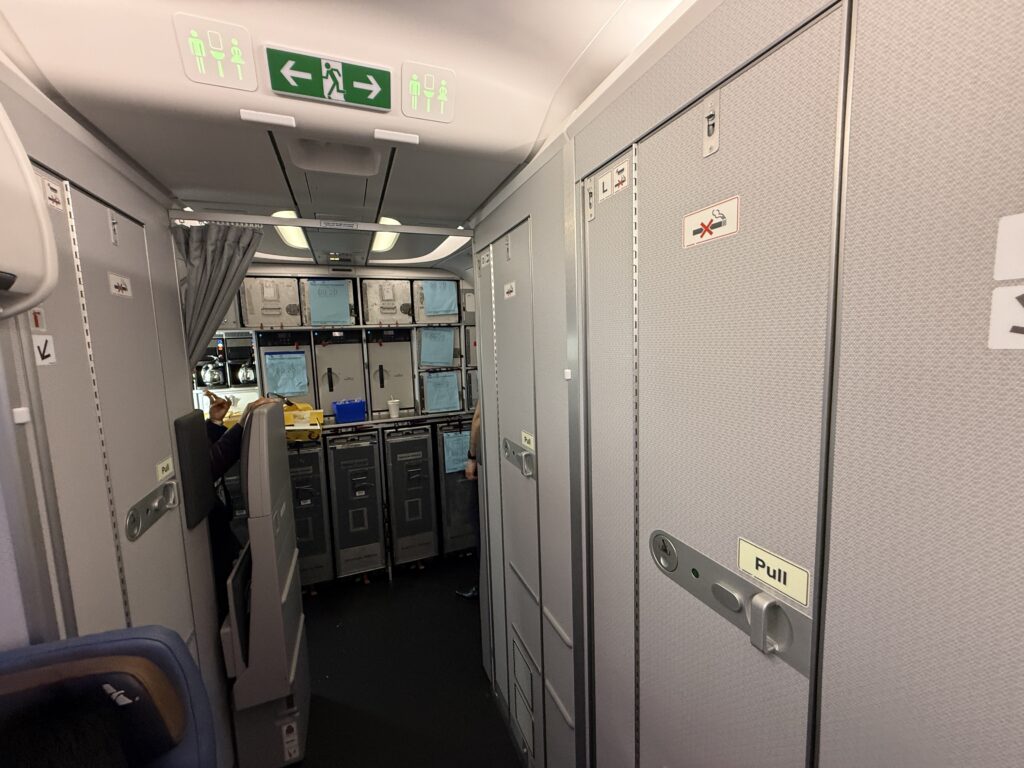 I overheard crew grumbling about it — and this was a notably cheerful, professional crew — which tells you the setup is challenging.
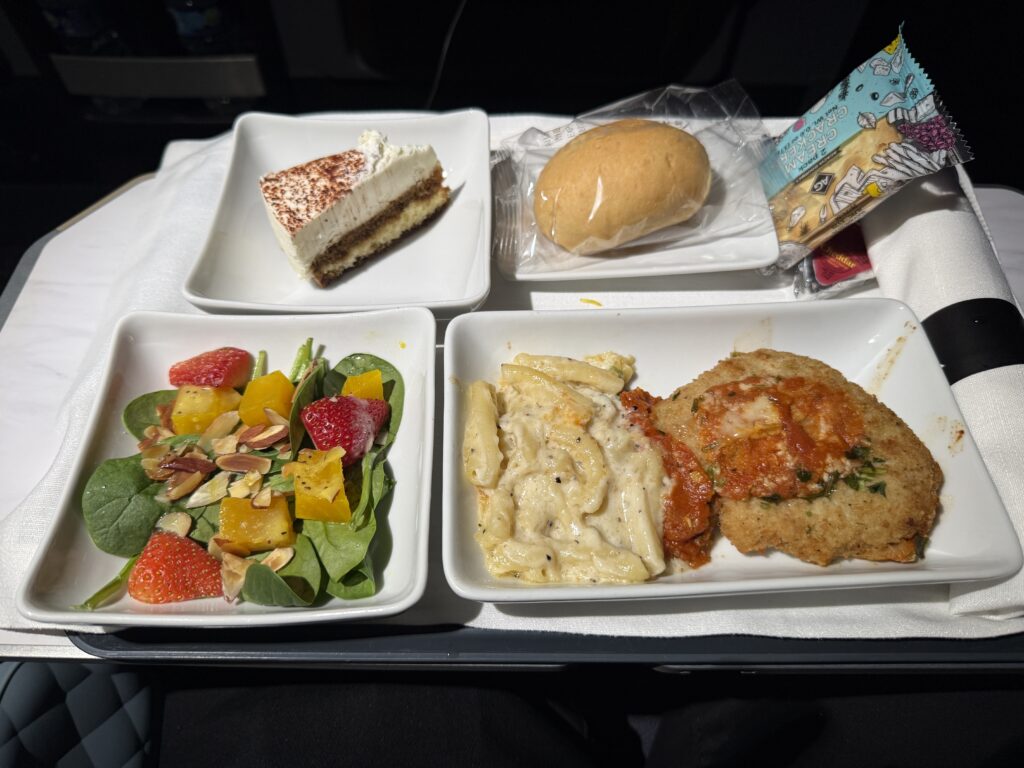
 For the meal, I chose the chicken parmigiana with fettuccini alfredo, accompanied by a salad with strawberries and almonds, and tiramisu for dessert.
I’d call the food ‘Olive Garden quality,’ and I don’t mean that dismissively. The chicken was very tender, the pasta was comforting, and the meal was satisfying in a way that works well at altitude.
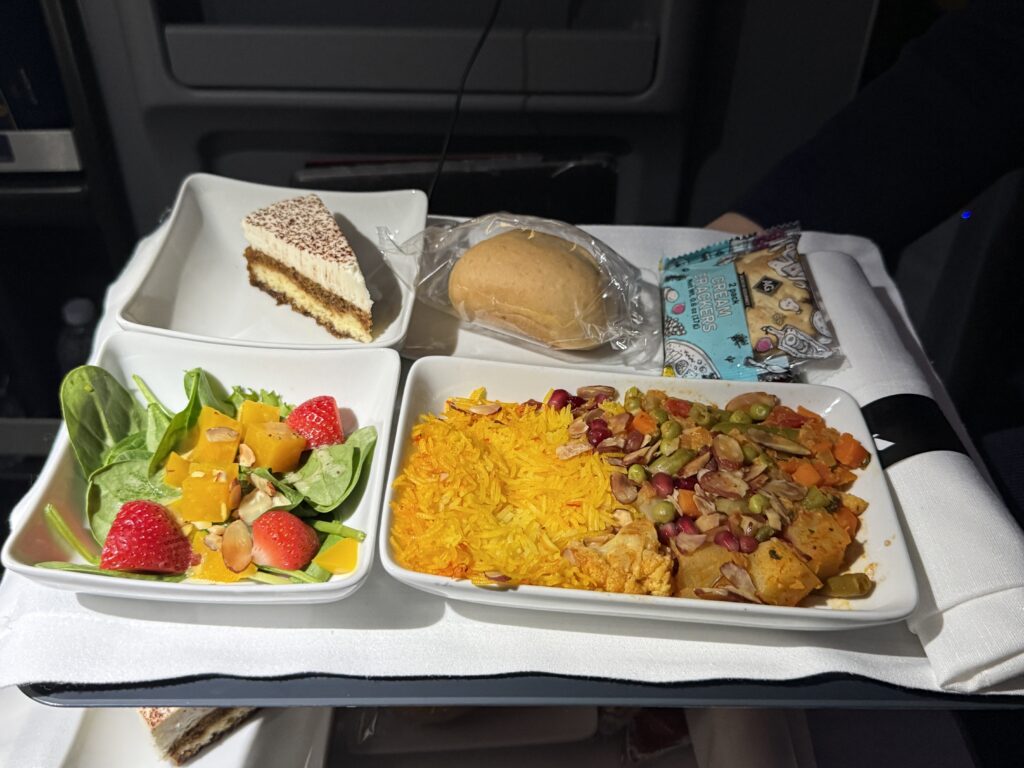
This felt closer to domestic First Class catering than standard economy, though the wrapped dinner roll and single-tray service is a reminder there is still a cabin hierarchy. A cauliflower biryani was offered as the vegetarian option. Portions were uniformly generous!
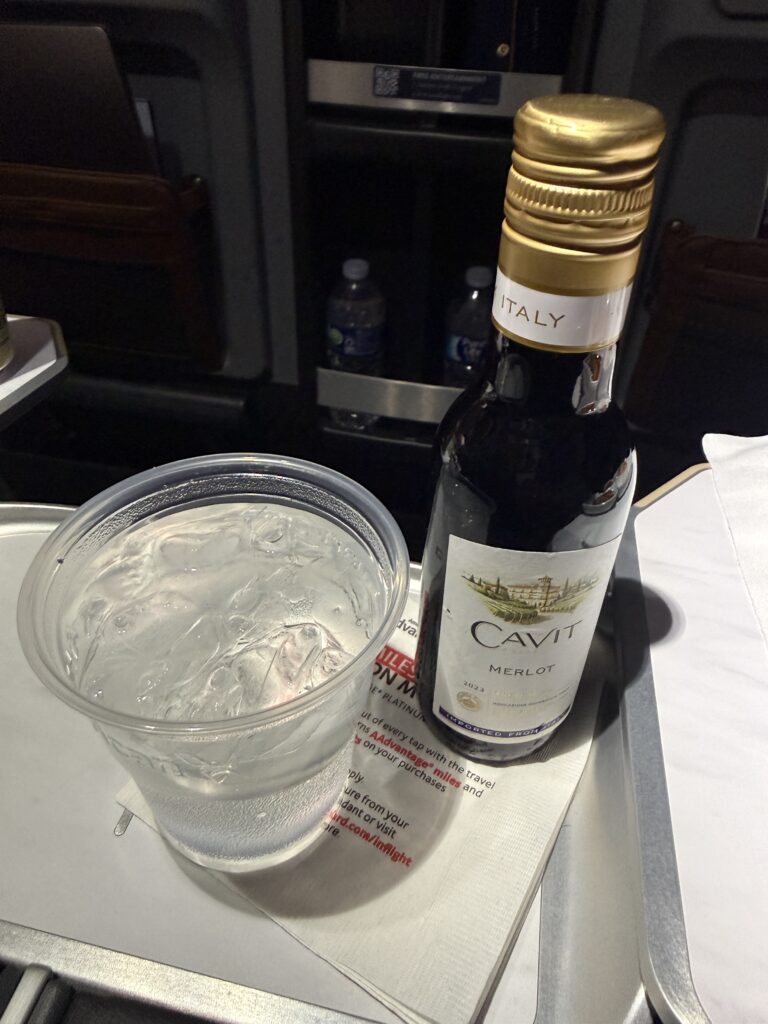
Stainless steel cutlery and china were used, which is a nice touch, though drinks were served in plastic cups. The large cocktail table at the seat proved genuinely useful here, easily accommodating multiple beverages. There’s no pull-out drink table like you’d find in domestic First Class, but I didn’t miss it.
Service was briskly and cheerfully handled by three flight attendants covering both Premium Economy and Main Cabin, and they kept things moving despite the galley constraints.
IFE, connectivity, power, and something odd…
Premium Economy gets the same Thales AVANT Up IFE platform as Flagship Suites, just with a smaller 13-inch screen. It’s still 4K, and it still looks excellent. My display was bright, sharp, and very responsive, with the same smooth performance I had noticed up front.
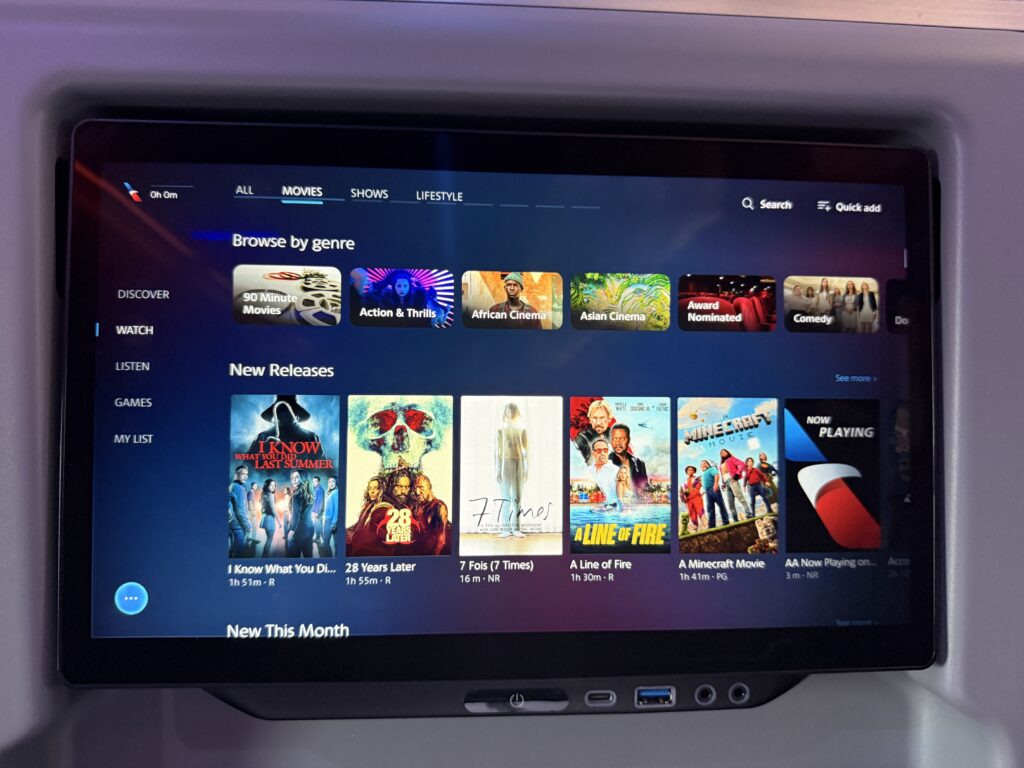
Here too, the IFE system offered picture-in-picture functionality, which allowed me to keep the moving map or flight information on screen without interrupting my other content.
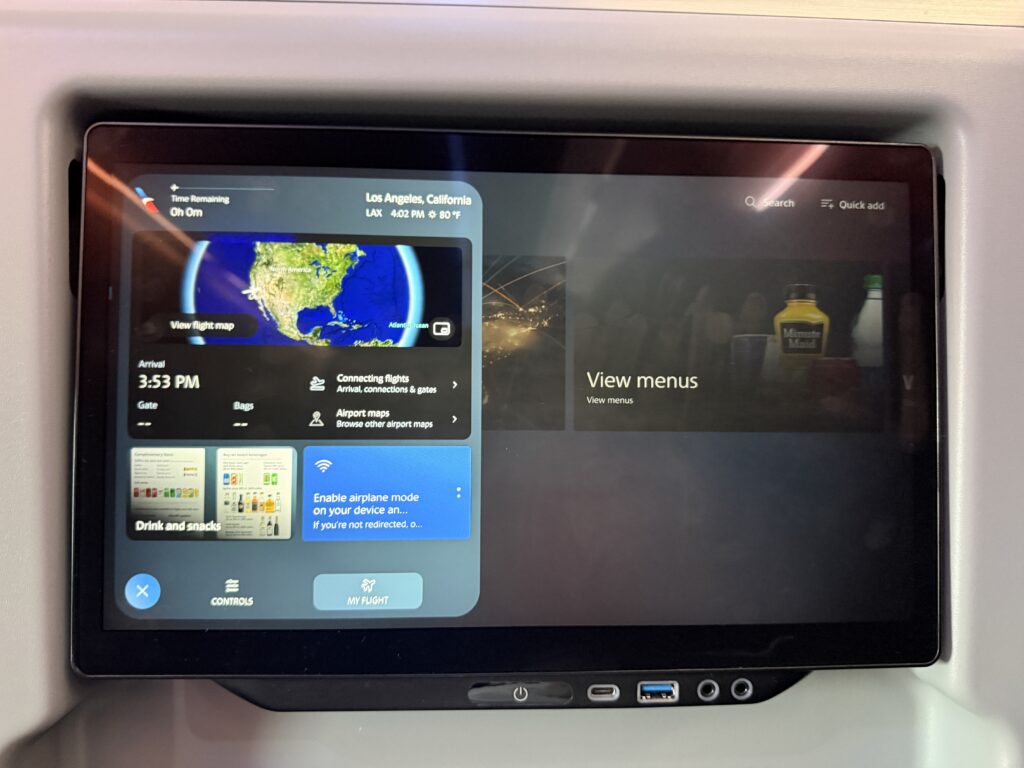 Bluetooth audio worked well, and this time, my AirPods paired without issue — in contrast to my Flagship Suite experience just hours before.
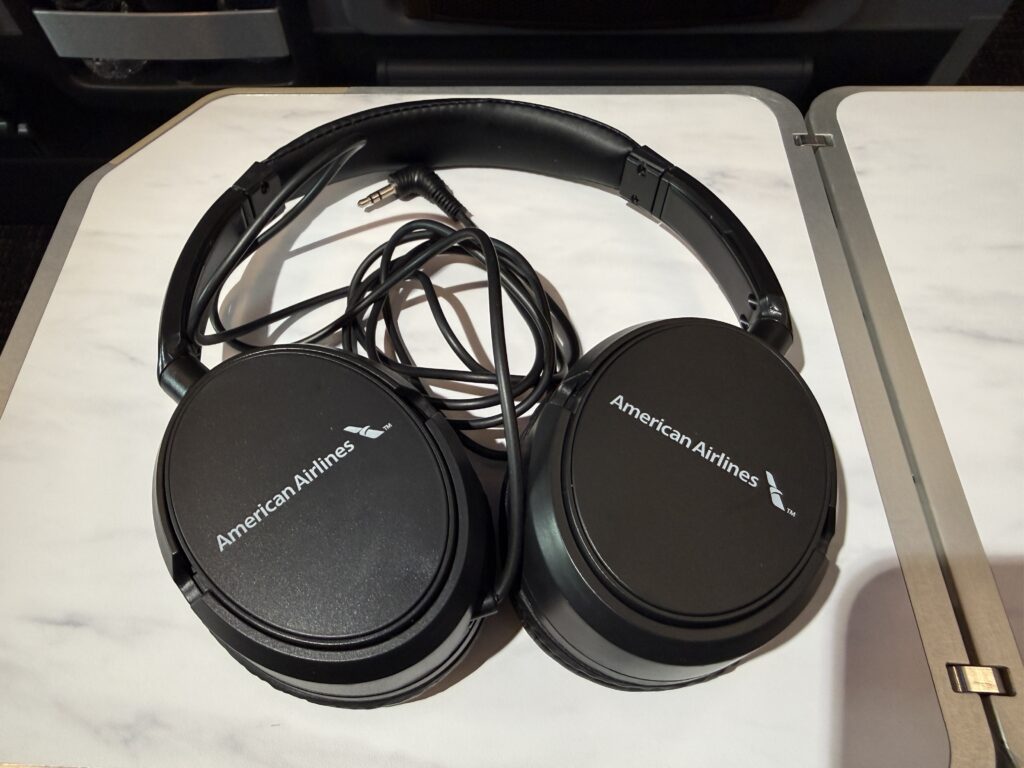
American also provides Premium Economy passengers with noise-canceling headphones. They’re better than the usual economy class fare, with surprisingly crisp, high-fidelity sound and effective noise reduction.
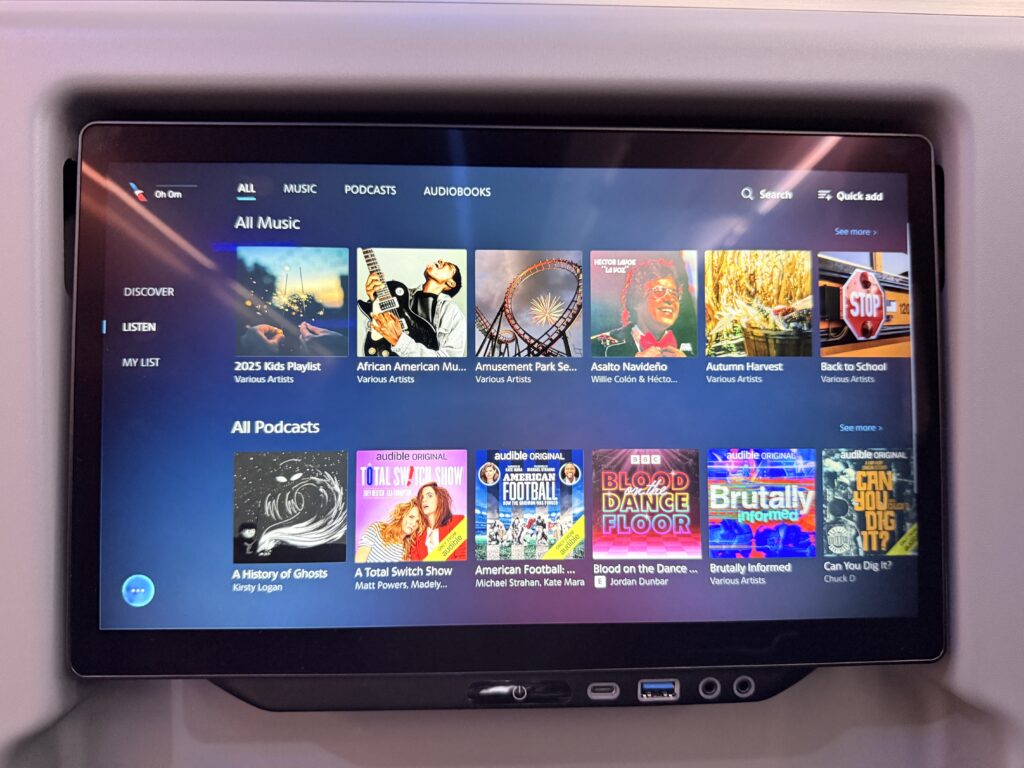
One oddity is the music library. Much of it was made up of unfamiliar artists and generic-sounding tracks. It’s not unusable, just strangely bland compared to the rest of the experience.
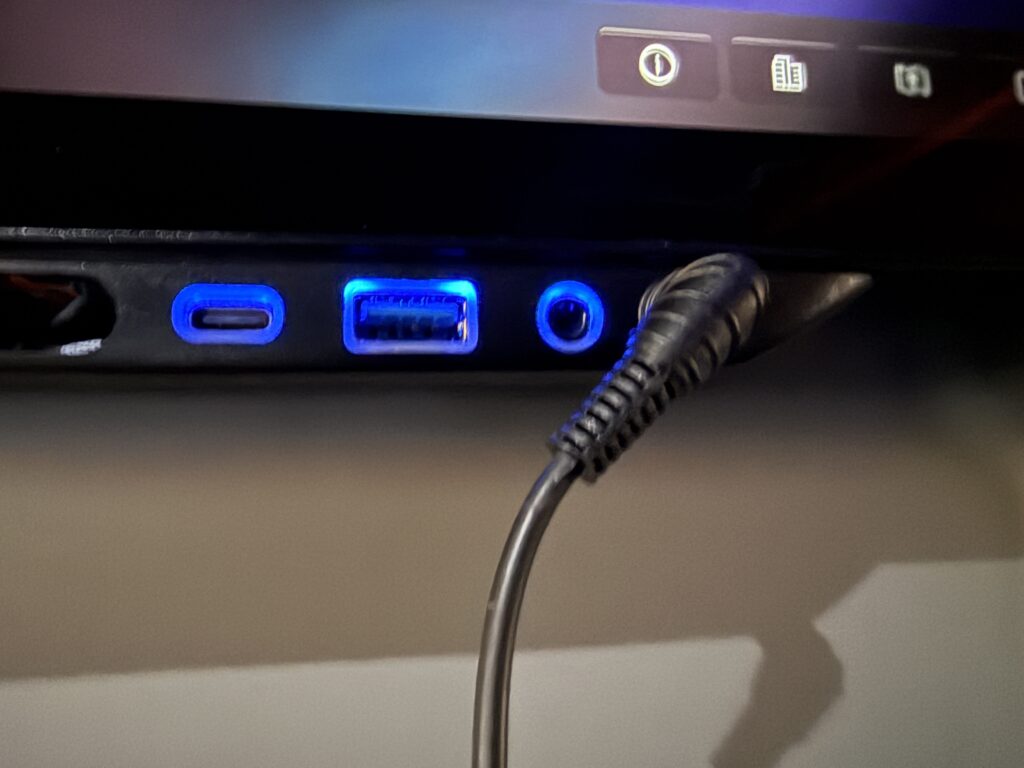
In-seat power is plentiful and thoughtfully laid out. There’s USB-C and USB-A beneath the monitor.
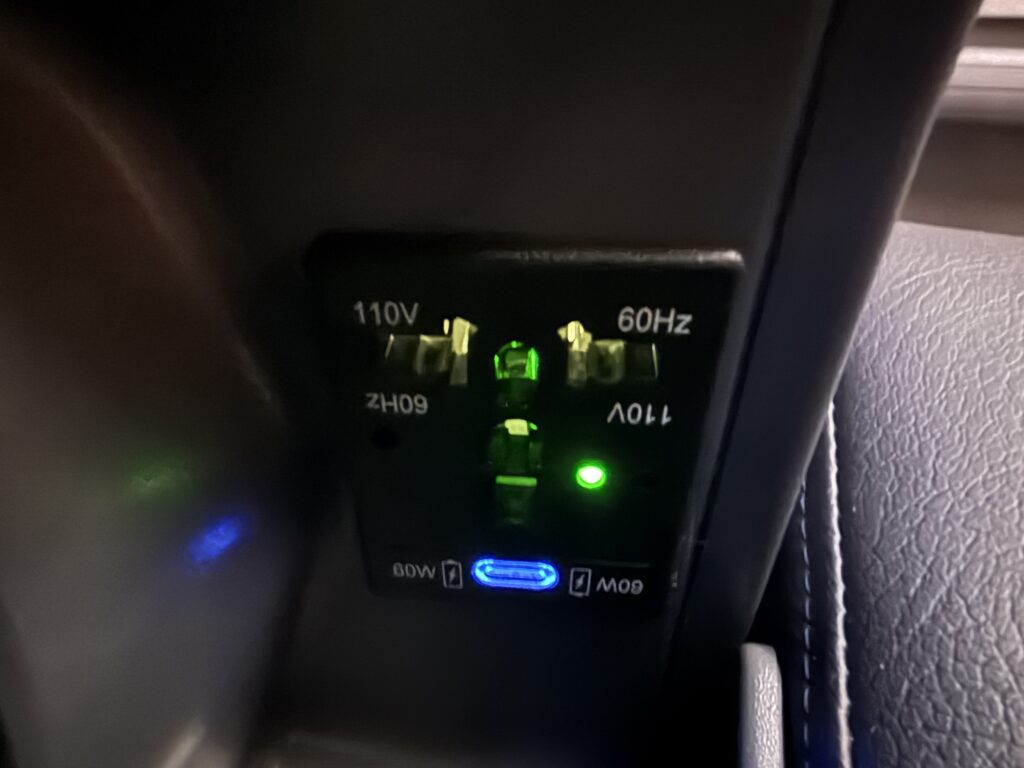
You’ll find USB-C and AC power in the armrest.
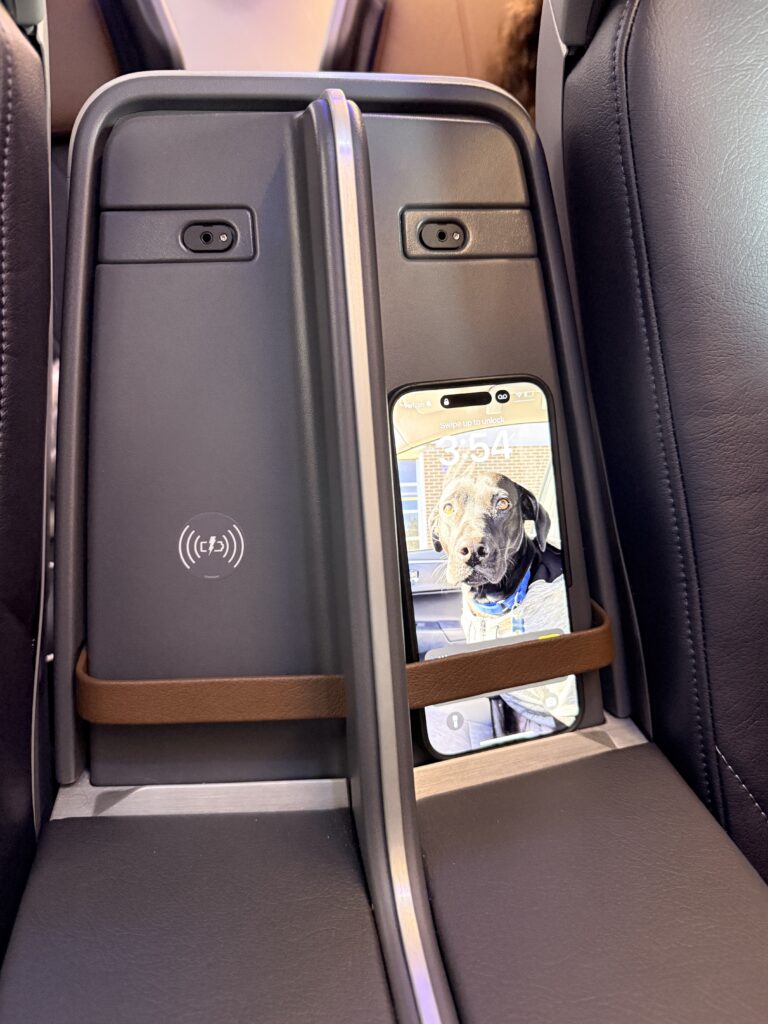
There’s also wireless charging between the seats. Suffice it to say, I never thought about battery management even once during the flight.
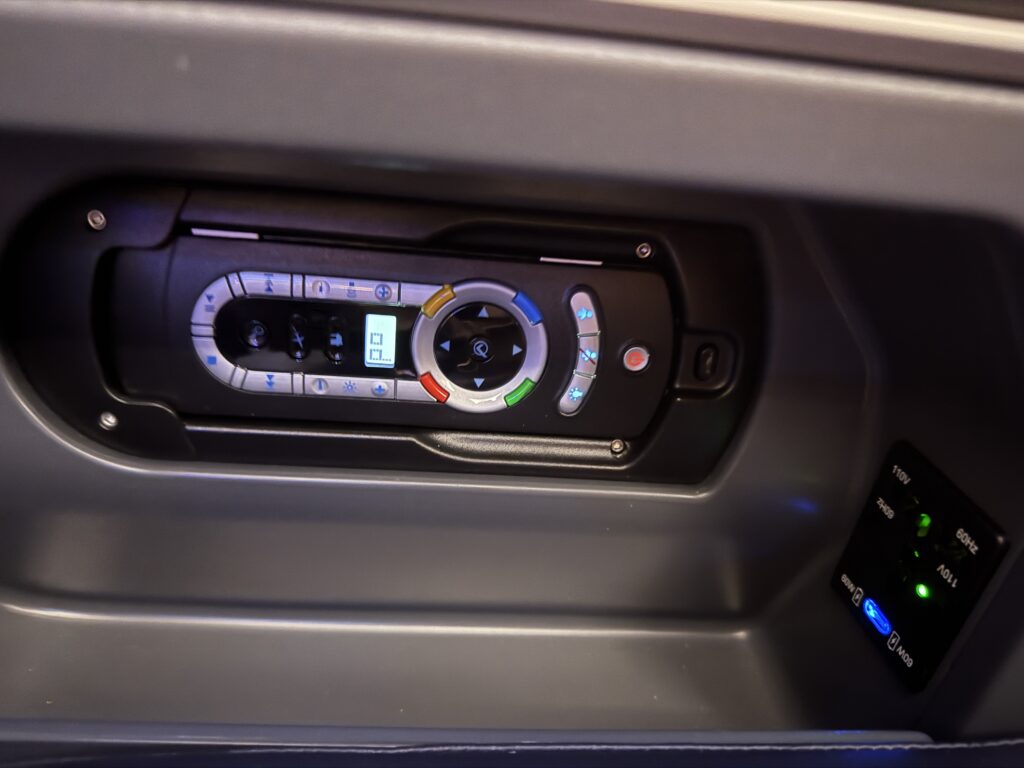
The IFE remote control turned out to be more useful than expected. It saved me from leaning forward to reach the screen repeatedly, which was especially welcome in a bulkhead seat.
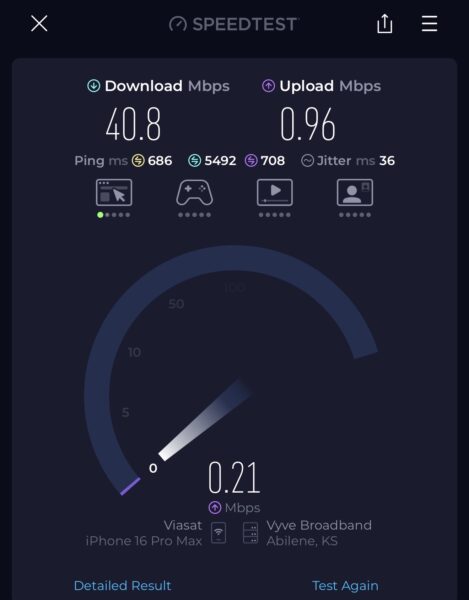
The Wi-Fi performed better on this flight than the JFK-LAX leg, perhaps due to less congestion in the evening. Download speeds were noticeably better, clocking in at 40.8 Mbps down, though uploads didn’t eclipse 1 Mbps.
Main Cabin: not flown, but impossible to ignore
I didn’t fly in the Main Cabin on this trip, but it’s still worth addressing because the A321XLR is a clear departure from the old A321T — and not all of it works in economy’s favor.
There are 123 economy seats in a standard 3-3 layout, plus 12 extra-legroom Main Cabin Extra seats up front. That’s a big change from the A321T, which carries 72 economy seats total, evenly split between standard Main Cabin and a much more generous Main Cabin Extra section.
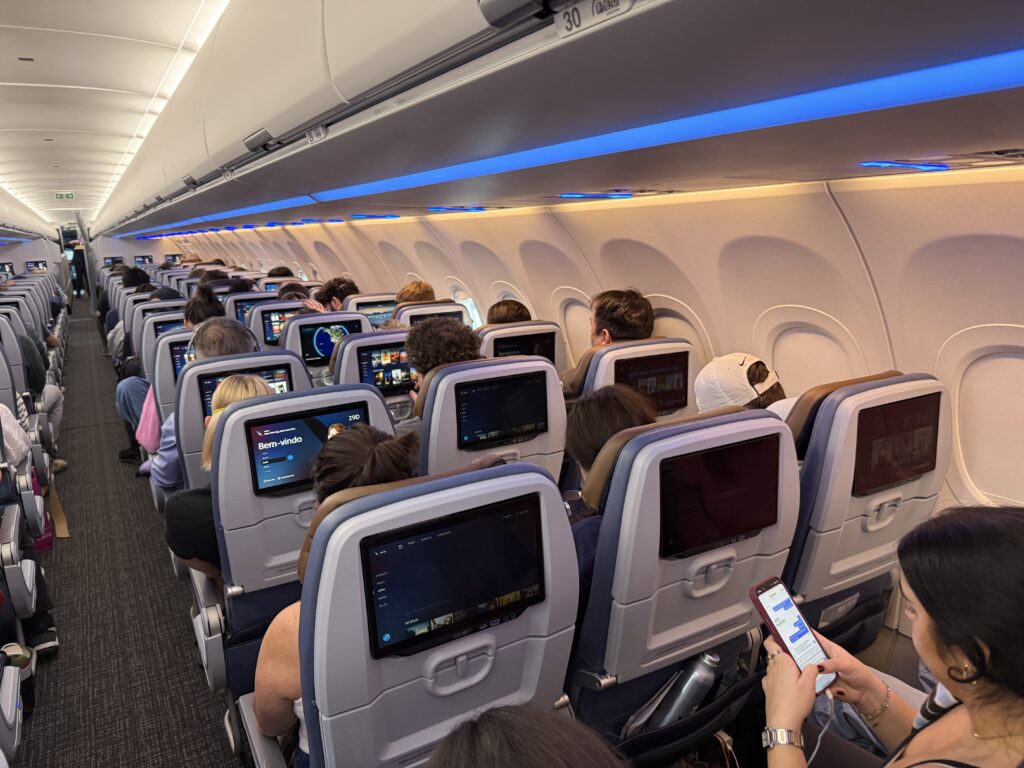 On the A321XLR, Main Cabin Extra is noticeably smaller, a trade-off made to support the premium-heavy LOPA further forward.
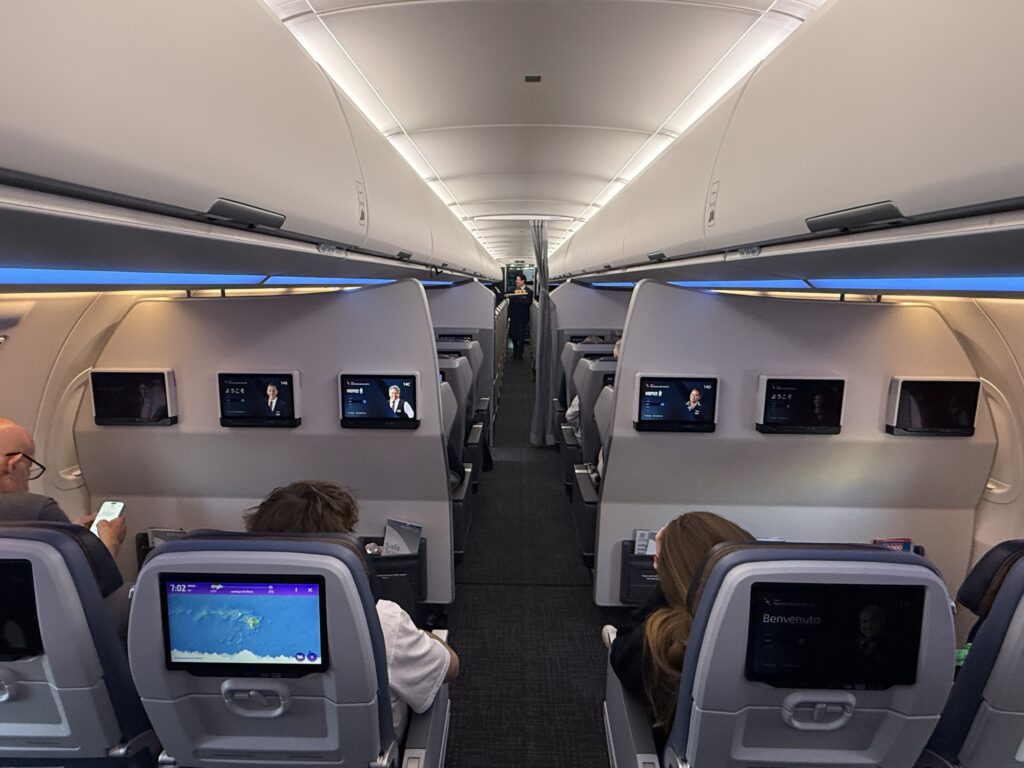 The tech is better, however, with every seat offering power, Bluetooth connectivity, and a larger screen. The new 11.6-inch monitors are a big step up from the 9-inch displays on the A321T.
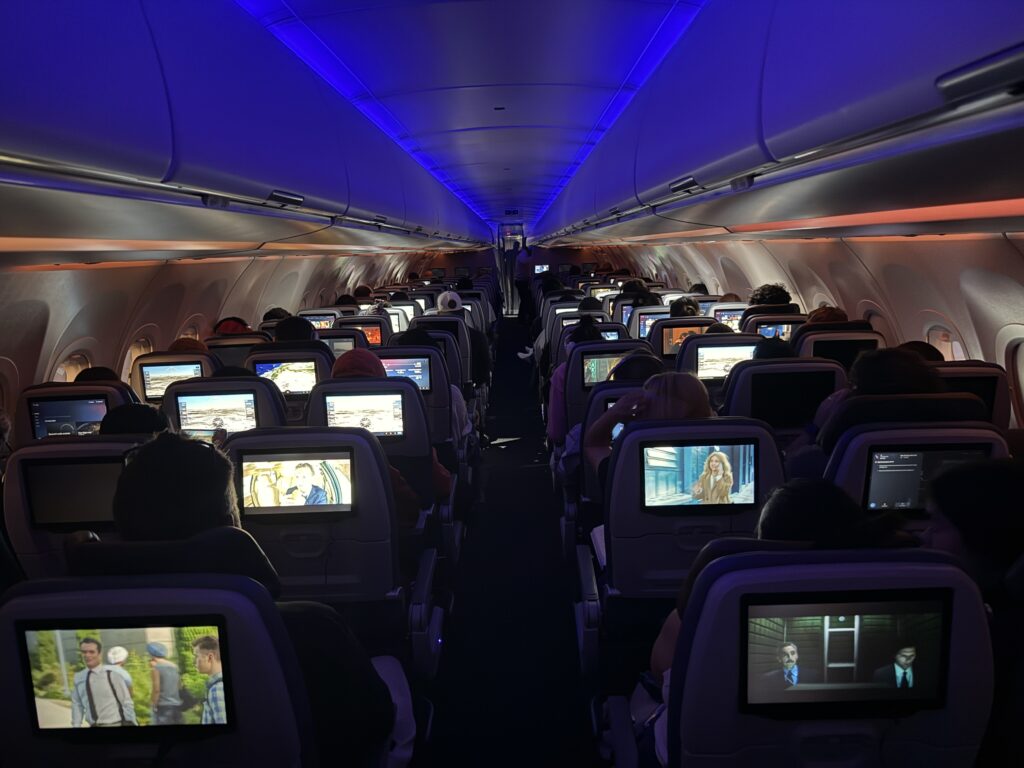
Notably, catering isn’t a buy-on-board affair. There are actual domestic meals in economy!
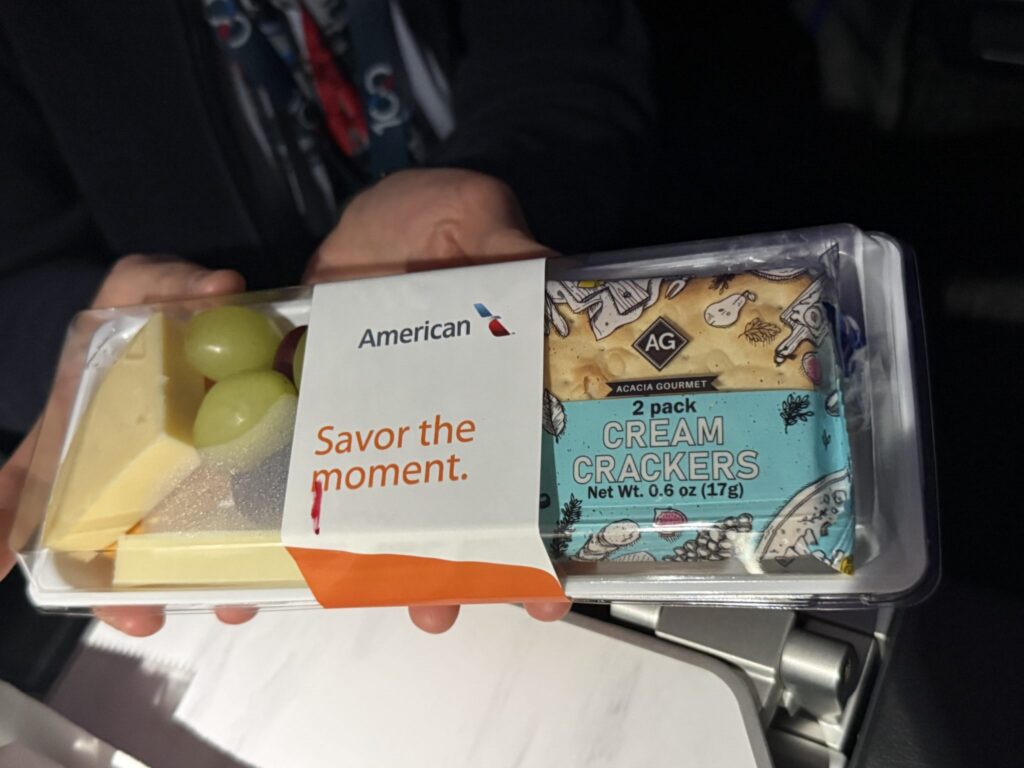
Main Cabin passengers were offered options like a fruit and cheese plate and a chicken wrap, which is far more than American typically provides on standard domestic routes.
Lavatories and galleys: the weak spot
The biggest compromise in the back of the aircraft is the galley and lavatory area, and it’s immediately apparent how tight things are for the crew. I genuinely don’t know how there will be room to comfortably support multiple meal services on longer flights without serious congestion. Space is at a premium back here, and it shows once carts, crew, and passengers converge in the same area.
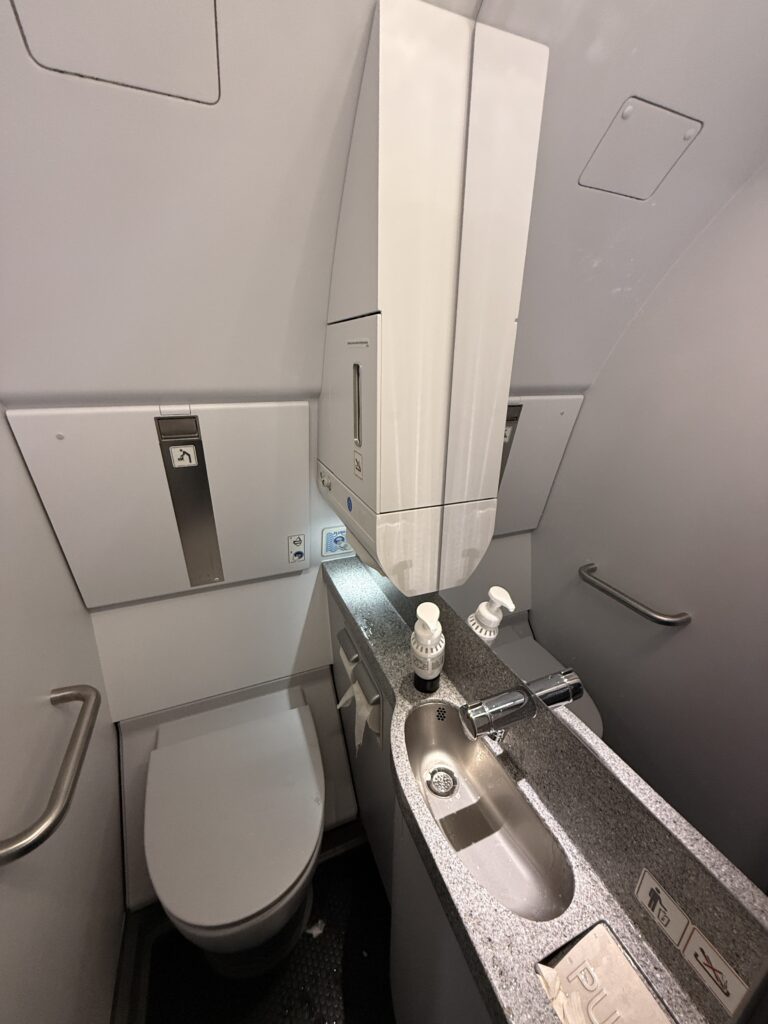
Rather than stuffing multiple lavatories into the galley footprint, American has adopted a two-on-one-side, one-on-the-other configuration adjacent to the rear galleys.
That’s a more workable solution than what I’ve seen on aircraft operated by Iberia and Aer Lingus, where two or even three lavatories are packed into the galley, sometimes with one effectively hidden behind a jump seat. Those layouts feel especially punishing once service is underway.
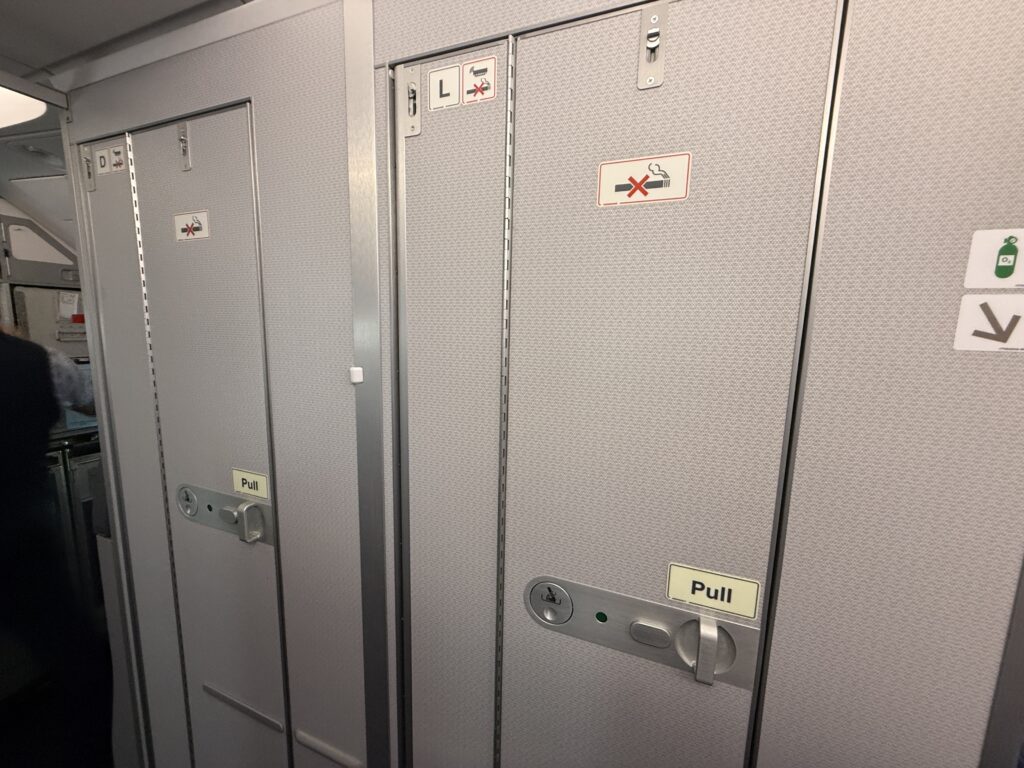
The lavatories themselves are small, but they’re not 737 Space Lav small in my view. They’re usable, and that’s not always a given on long missions like these.
Even so, I still wish there was a mid-cabin lavatory. It would shorten the walk for passengers seated forward and reduce the constant stop-and-start around the rear galley during service.
As American pushes this aircraft deeper into long-haul flying, the absence of a mid-cabin lav is something both passengers and crew are likely to feel.

American’s planned A321XLR routes
A core mission for the A321XLR at American is transatlantic service. The first long-haul assignment will be JFK–Edinburgh, launching on 8 March 2026. From there, the aircraft will fan out from American’s Northeast hubs — Philadelphia, Charlotte and New York JFK — onto longer, thinner European routes where a widebody doesn’t make sense year-round.
Looking further ahead, American sees real opportunity to serve secondary cities across France, Spain, Italy, Germany and the UK — markets that would benefit from a premium-heavy narrowbody with real range, especially one with a proper Premium Economy product.
 Beyond the Atlantic, there are longer-term plans to deploy the XLR on selective South American routes, including potential services to Brazil from hubs like Miami and Dallas/Fort Worth.
By the end of 2026, American expects to have 16 A321XLRs in service, two more twinjets than the 14 A321Ts that currently underpin the flagship transcontinental network. With that scale, American plans to largely convert its flagship transcon routes — JFK–LAX, JFK–SFO, JFK–Orange County and BOS–LAX — to the XLR by the end of 2026, bringing consistency and flexibility the old fleet couldn’t offer.
 Pricing and Conclusions
For my Thursday round-trip, with a midday outbound and a late return, fares on the LAX–JFK leg broke down as follows: Basic Economy at $379, Main Cabin at $421, Main Cabin Extra at $526, and Premium Economy at $1,050.
Premium Economy was nearly triple the cost of Basic Economy. This is not priced as a casual upgrade. But, after flying in Premium Economy, I understand why.
On longer flights, especially with family, this is the cabin I would choose with my own money. The extra space, quieter environment, and more comfortable seat made the flight noticeably easier.
With only 12 Premium Economy seats on the aircraft, availability will be limited. As the A321XLR moves into transatlantic service, I expect this cabin to see steady demand. If I am not booking a suite, this is where I will sit.
 Related Articles:
- Welcome to American’s A321XLR inaugural in a Flagship Suite
- American’s premium push continues with A321XLR arrival, 777 retrofits
- American Airlines’ 787-9P ups the ante for Premium Economy
- Flagship Suite Preferred impresses on American 787-9P inaugural
- Finding the easter egg in economy class on Aer Lingus’ A321XLR
- Airbus highlights benefit of A321LR/XLR complement to widebodies
- What to expect in Iberia economy on world’s first A321XLR
All images credited to the author, Chris Sloan