
 Nearly 12 years ago in January 2014, I was on board American Airlines’ inaugural A321T flight from Los Angeles to New York JFK, and it’s hard to forget just how disruptive that airplane was at the time. On the most prestigious route in the United States, American blew up the narrowbody playbook, though JetBlue’s first version of Mint arrived shortly thereafter. High-frequency service, lie-flat seats up front and a true three-class cabin replaced American’s aging 767-200s and instantly reset expectations. No other U.S. airline was doing anything quite like it.
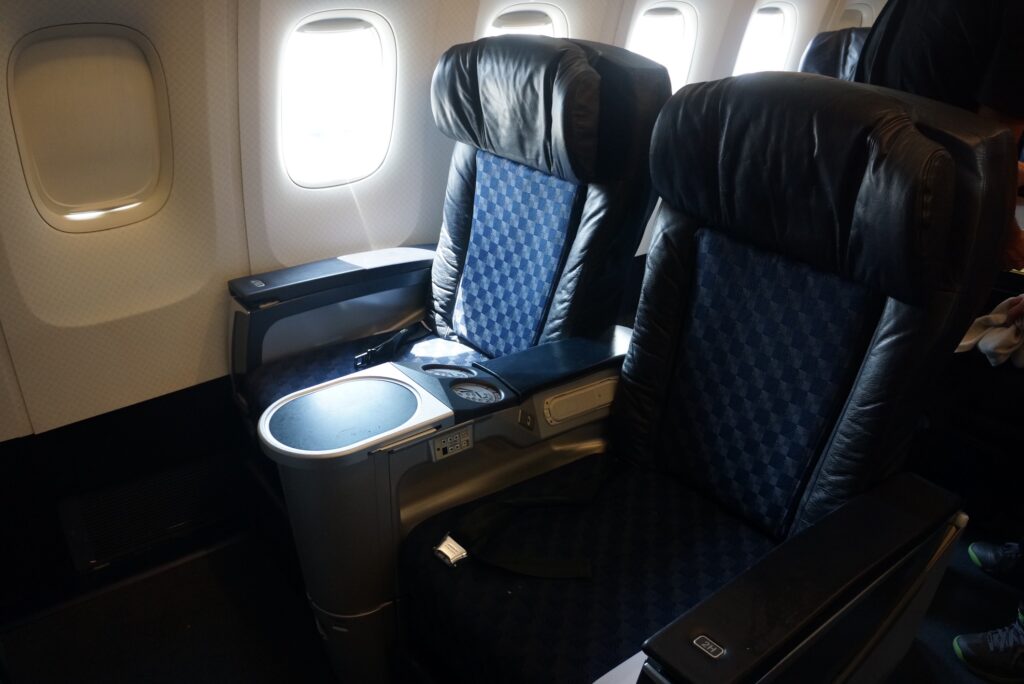
Those old 767-200s, with their oversized recliners up front — who can forget the center “throne” seat in First? — still inspire a surprising amount of nostalgia. People remember them fondly, a throwback to when American was the market leader on transcon, setting the pace rather than chasing it.
 The A321T carried that leadership forward, and for years American stood alone in offering a genuinely three-class product coast to coast. It still does, but not as before. A lot has changed since then.
 In the years that followed, American ceded ground while Delta Air Lines and United Airlines poured money into premium cabins and long-haul hard product. American became the luxe laggard in the U.S. global carrier premium arms race. The debut of the new 787-9P earlier this year was the clearest signal yet that the airline is ready to re-enter the chat. The A321XLR feels like the natural next chapter — and in some ways, the more consequential one.
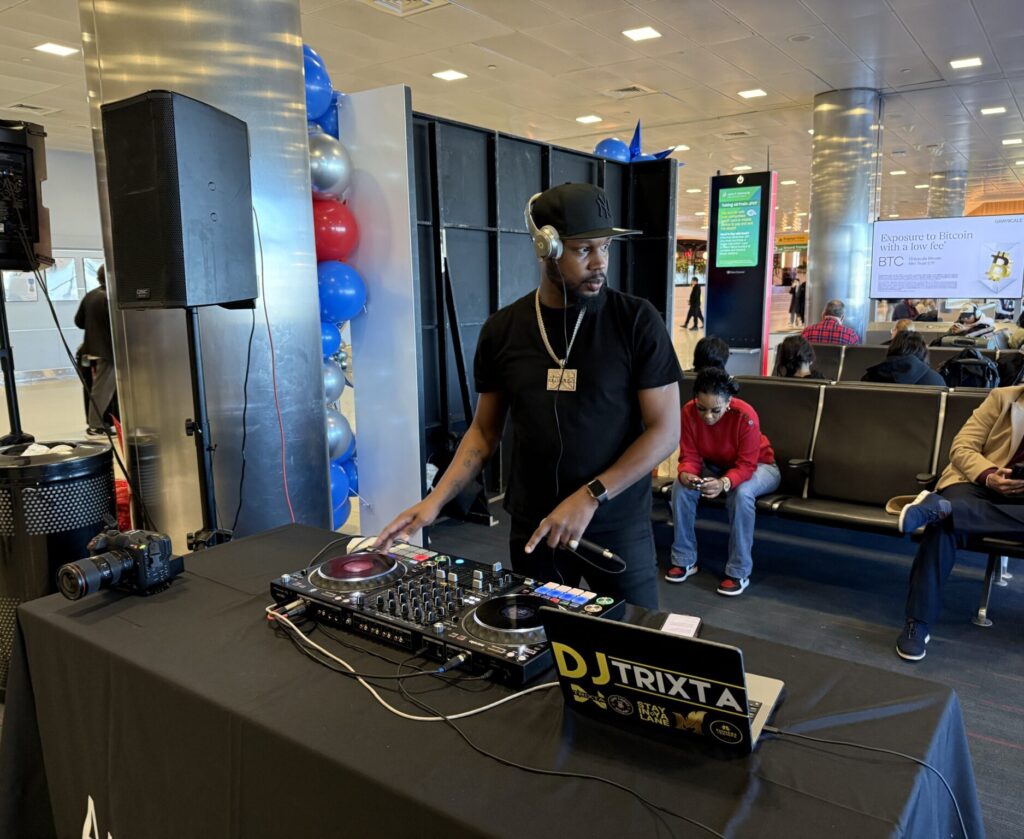
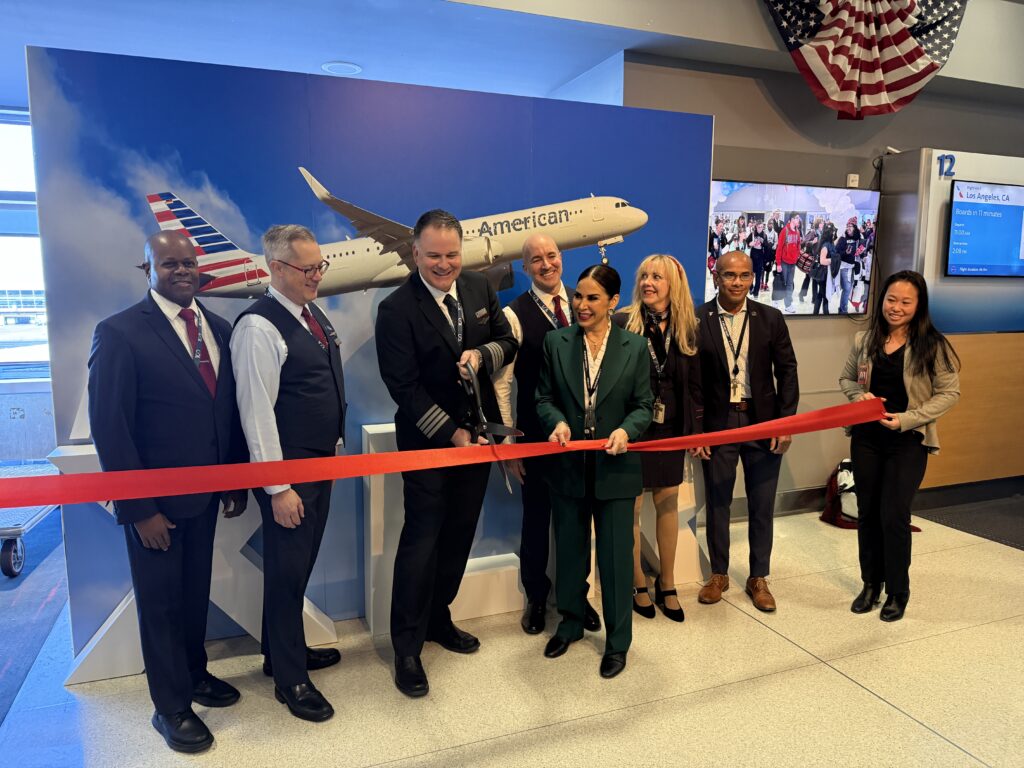
American certainly treated it that way on 18 December, the day of launch. This wasn’t a quiet inaugural. The gate area felt more like a brand activation than a boarding zone, complete with a DJ and a selfie backdrop.
American also held a formal ribbon-cutting ceremony, and it even rolled out a red carpet in the jetway.
For this the first A321XLR flight from JFK to LAX, I flew up front in Flagship Suite Business Class, returning later the same day in Premium Economy in order to pen a separate review (publishing soon).
The first international assignment, JFK–Edinburgh, will launch on 8 March 2026, a route that plays perfectly to the XLR’s long-haul, long-thin strengths.

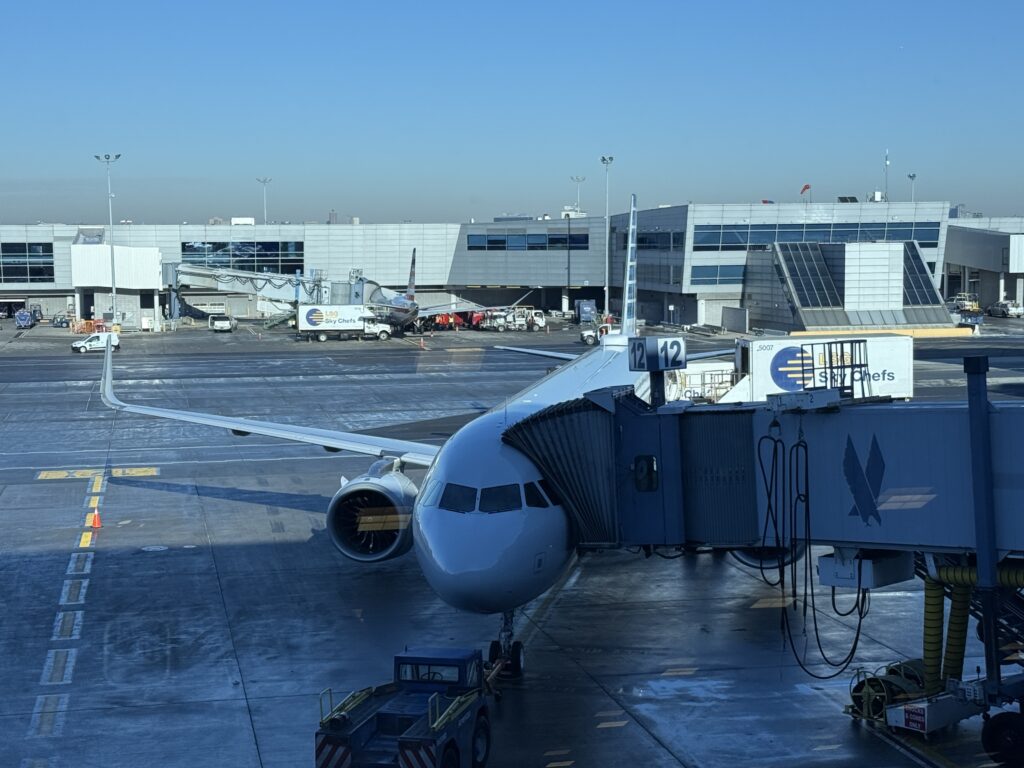
Operationally, the debut was very much a New York affair. Pushback to takeoff took just over an hour, including what amounted to a 52-minute tour of JFK’s taxiways. But once we finally lined up, the airplane showed its hand.
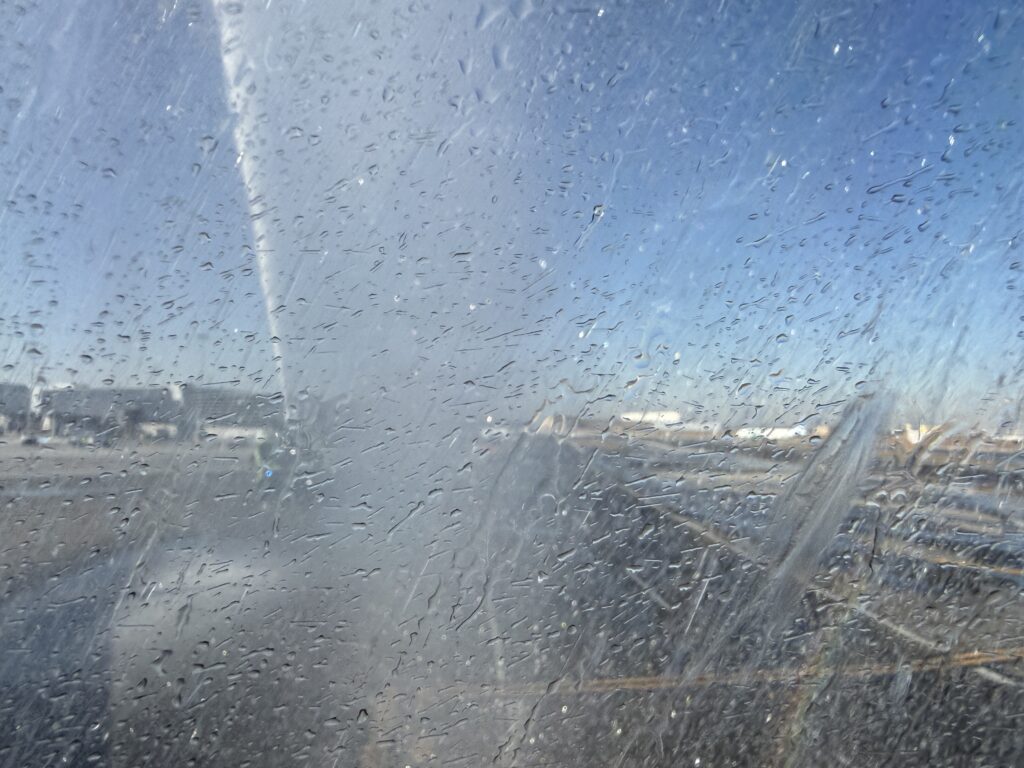
 The takeoff roll was notably short and remarkably quiet, powered by CFM International LEAP engines, with smooth acceleration and restrained noise levels. As we lifted off, a water-cannon salute arced over the fuselage — a fitting send-off for an aircraft that American has been talking about for years.
 There’s also a notable industry first here: while American has become the fifth airline globally to operate the A321XLR, it is the first in the world to operate the type in a three-class layout.
For a carrier long accused of lagging, that’s a meaningful flex that shows American is serious about challenging its premium competitors.
A luxury LOPA
The cabin specs tell you a lot before you even step on board. American’s A321XLR seats 155 passengers, including 20 Flagship Suite Business Class seats in a proper 1-1 configuration, 12 Premium Economy seats in 2-2, and 123 economy seats, split between Main Cabin Extra and standard Main Cabin.
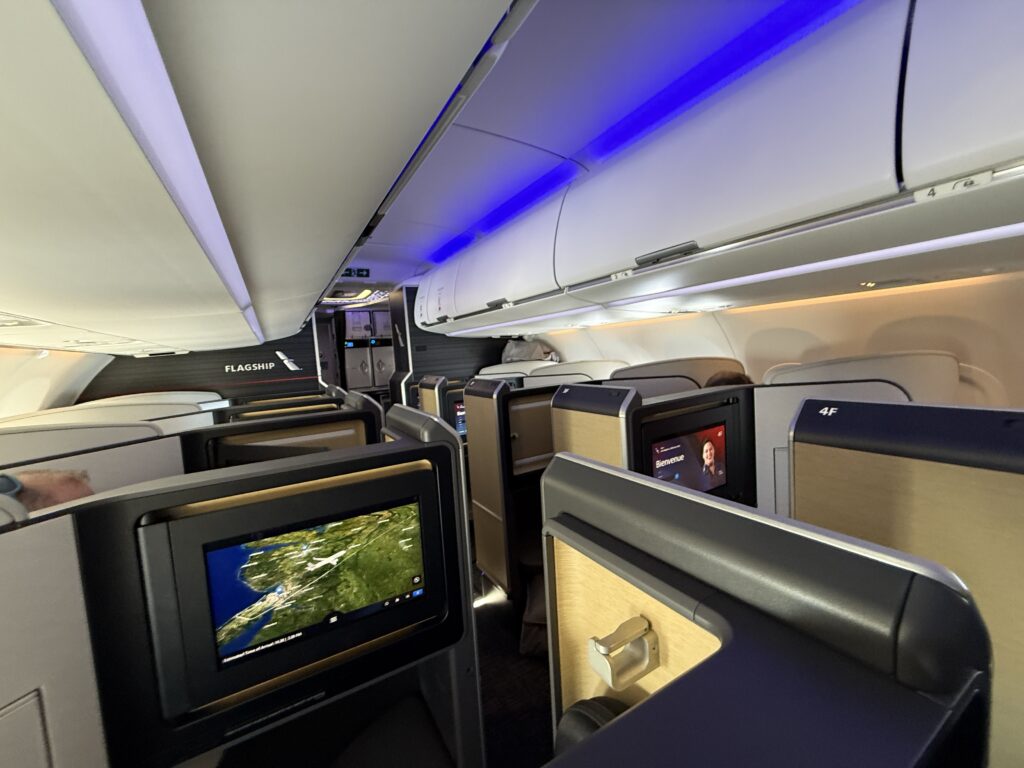
What jumps out immediately is how much real estate the premium cabins occupy.
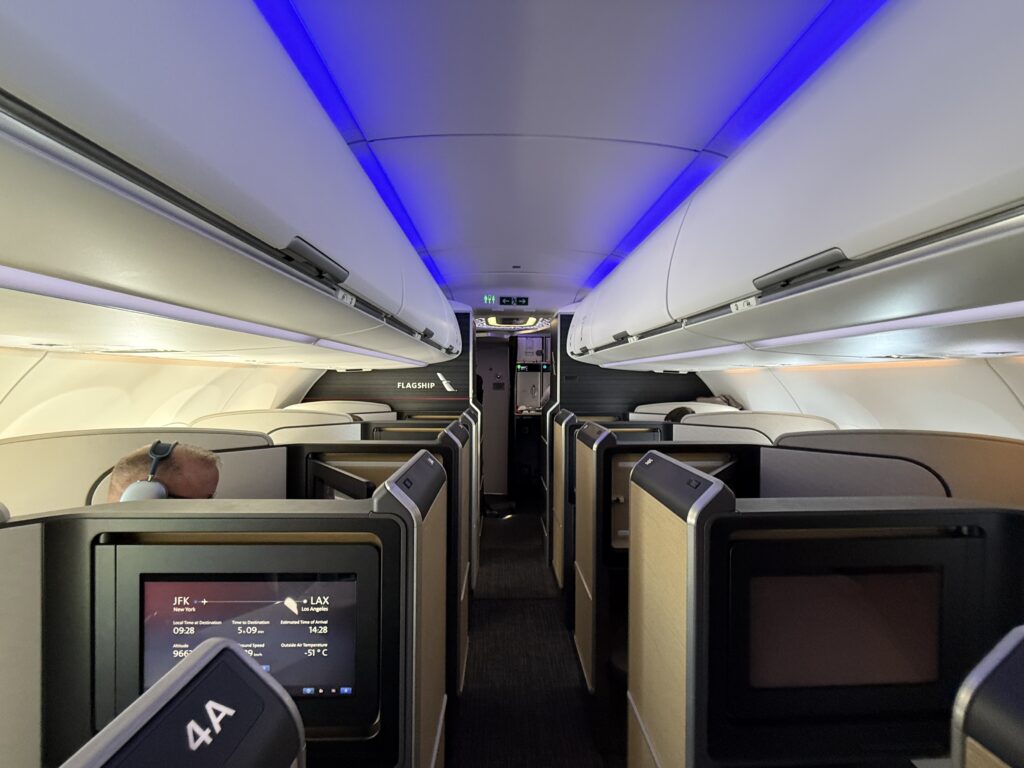 Business Class stretches nearly to the leading edge of the wing, creating an unusually long forward cabin for a single-aisle jet. This doesn’t feel like a narrowbody reluctantly dressed up for premium flying — it feels like an airplane designed from the nose back.
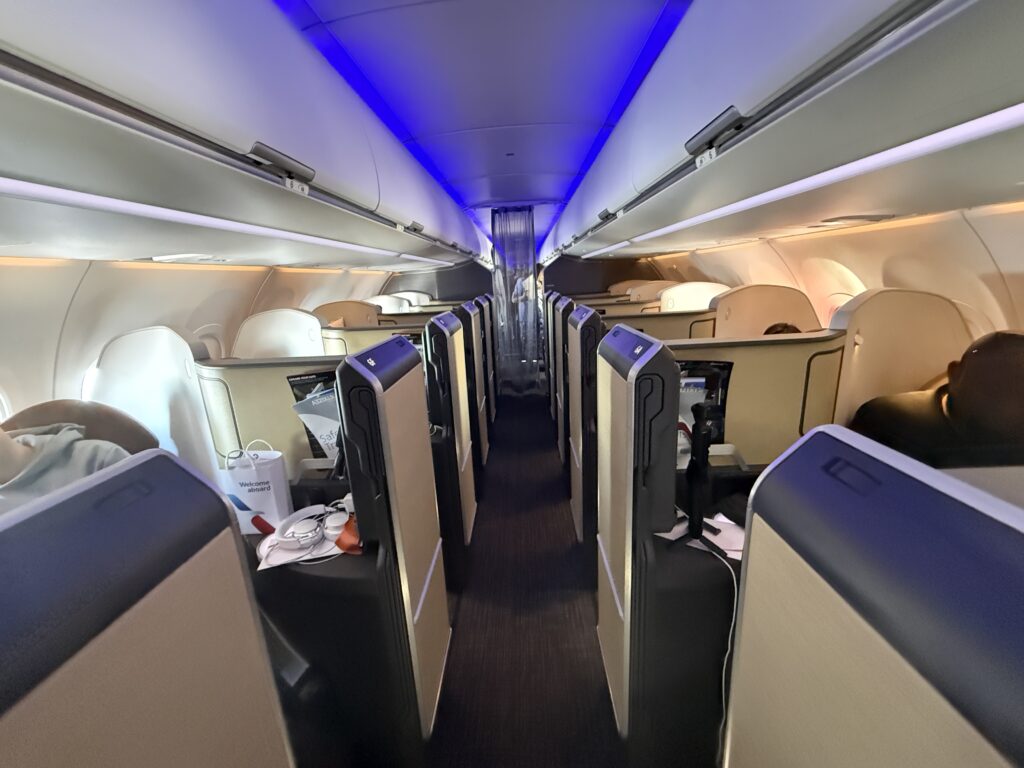
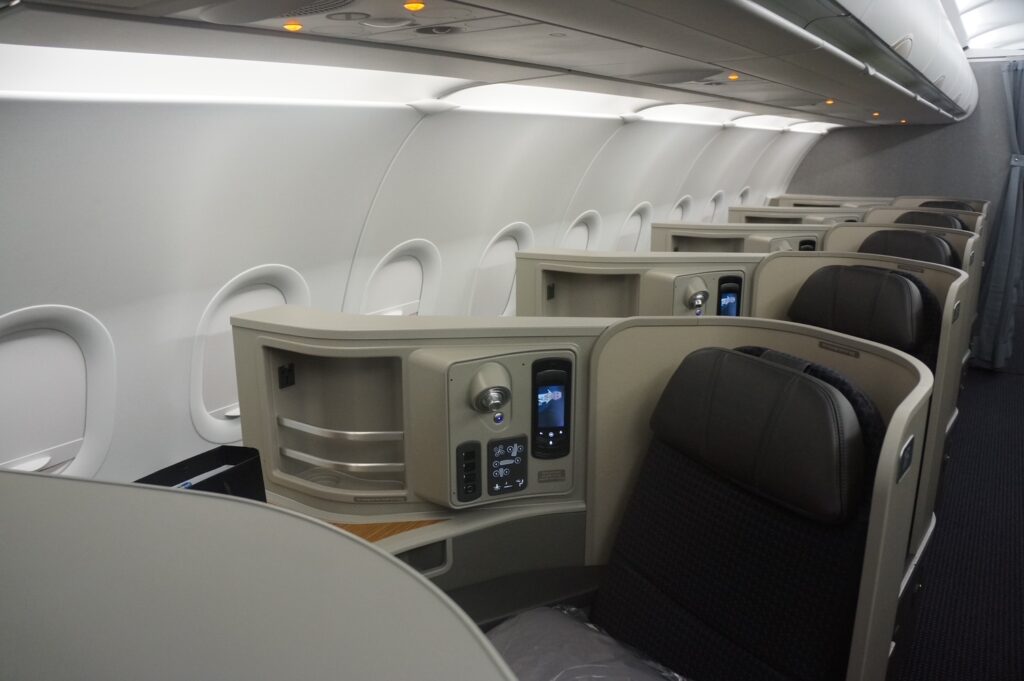
For context, the outgoing A321T was a much lower-density proposition:
- 102 seats total
- 10 Flagship First
- 20 Flagship Business
- 36 Main Cabin Extra
- 36 Main Cabin
On the XLR, Flagship First disappears, just as it has on American’s reworked 777-300ERs. In its place are enclosed suites, the addition of Premium Economy, and a cabin that can just as easily cross the Atlantic as it can sprint between coasts.
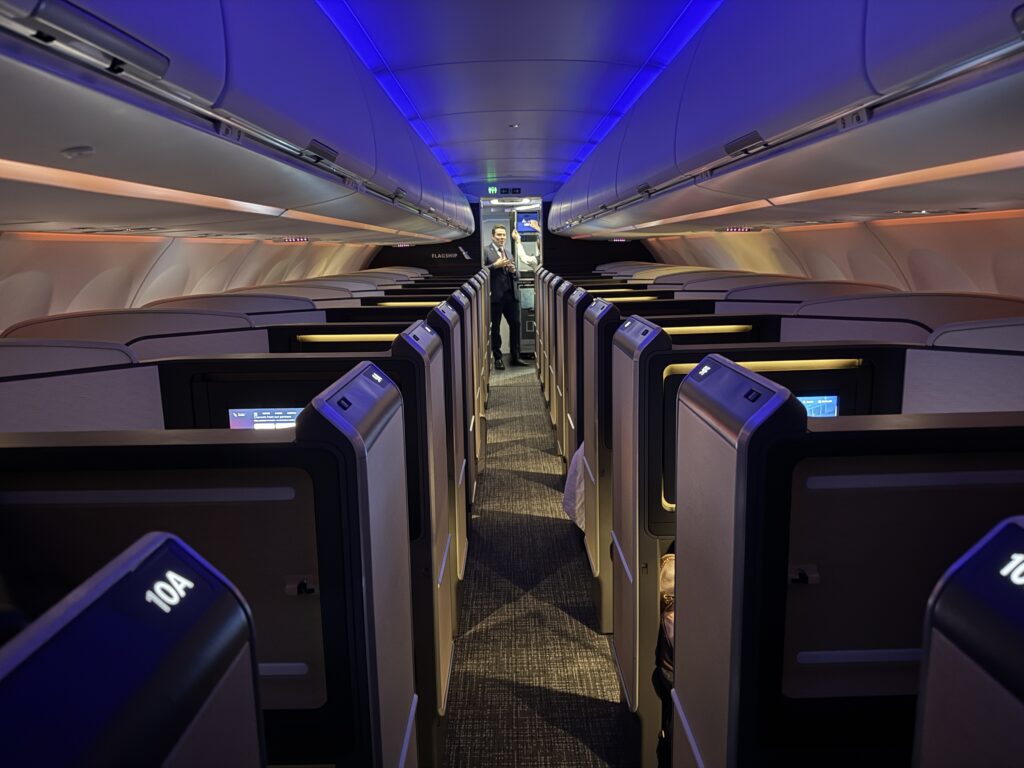 Finishes, branding and a real sense of Flagship
Once fully inside the cabin, the difference between American’s older narrowbodies and the A321XLR is impossible to ignore. This finally feels like a Flagship product again — not the austere, grey-heavy cabins American leaned on for years, but something deliberately upscale.
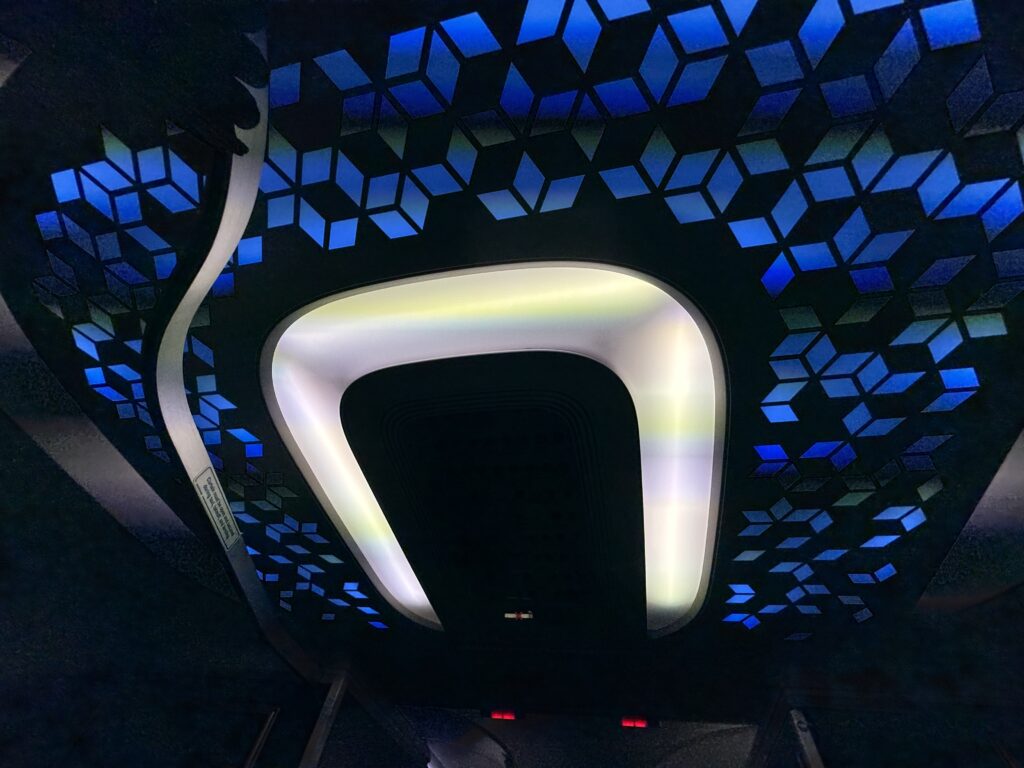
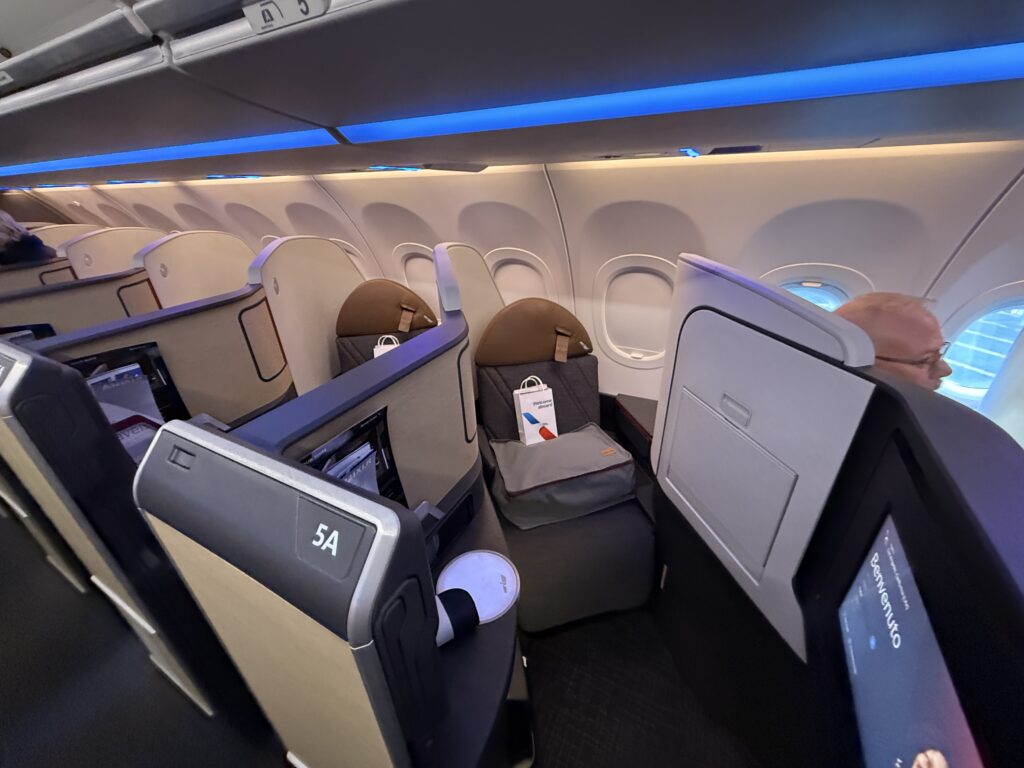
The materials do a lot of the work. There’s rich wood-effect finishing, including on the suite doors, paired with white marble-look surfaces on the tables that immediately elevate the space.
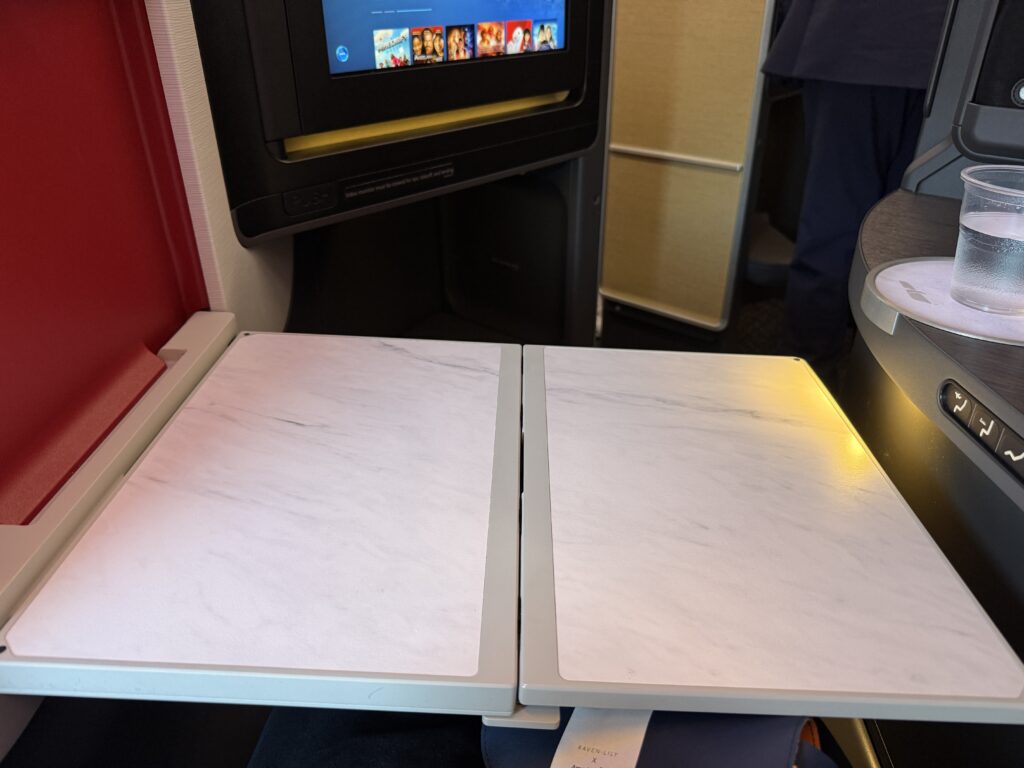
Flagship branding is present but restrained, and the subtle pop of red adds just enough contrast without tipping into flash.
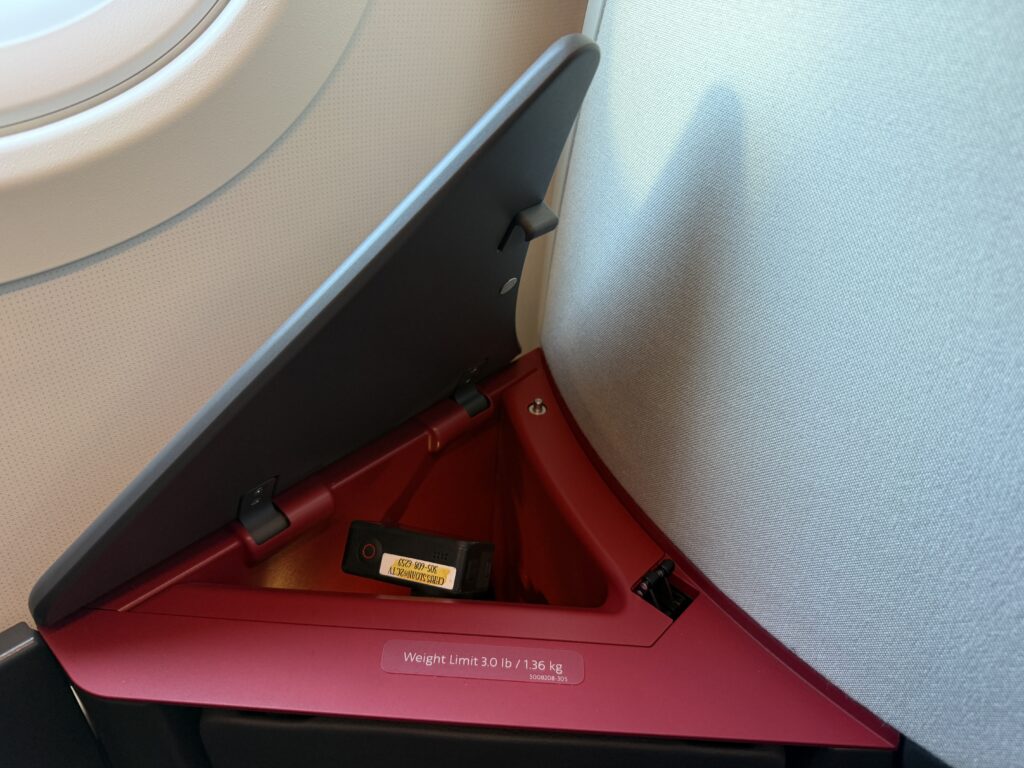
The color palette lands well. Dark blue, ribbed cloth seats anchor the cabin, softened by beige headrests that add warmth and break up the darker tones.
Hard product: the seat, the suite, the trade-offs
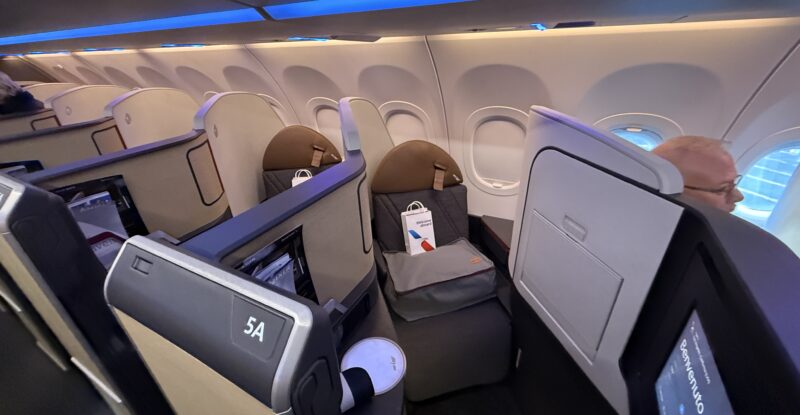
There are 20 Flagship Business Suites up front, all lie-flat, all with direct aisle access in a 1-1 layout. Seat width comes in around 21 inches, and the bed stretches to just over six feet in lie-flat mode. For most people, that’s plenty — and it’s a big leap forward from what American was flying here before.
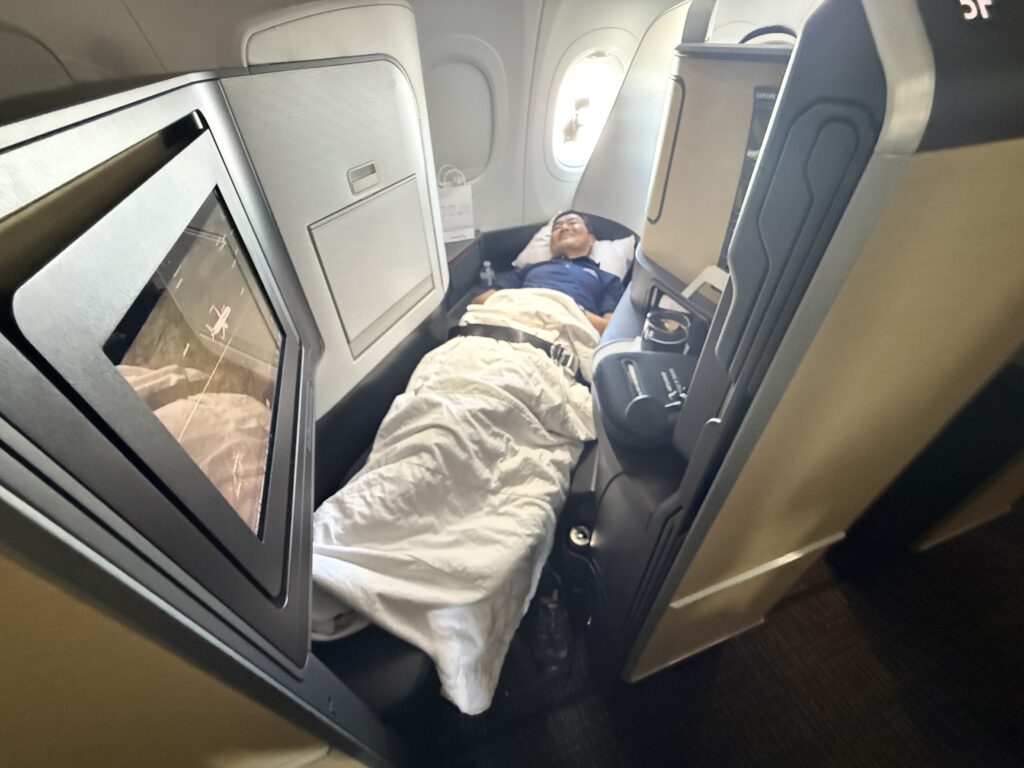
This is an inward-facing herringbone, angled slightly away from the window, and built around the Collins Aerospace Aurora platform. There’s no ‘business-plus’ Flagship Preferred seat here like you’ll find on the 787-9P, and nothing like JetBlue’s Mint Studio either. Every suite is the same.
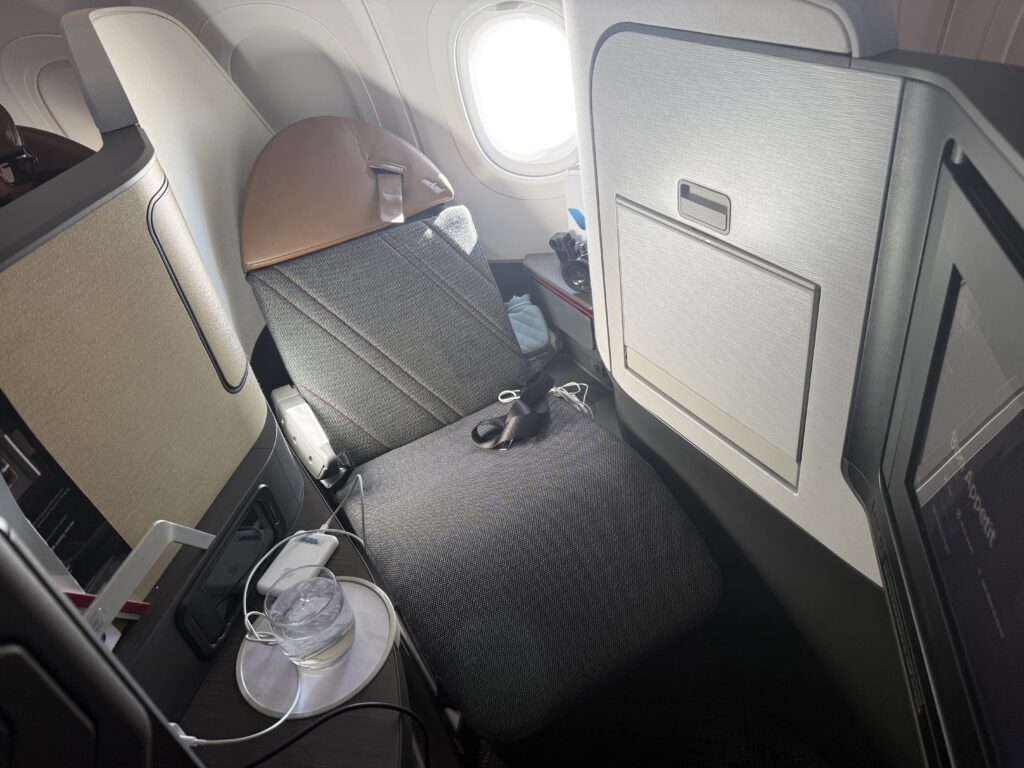
Compared with American’s new Boeing 787-9, the A321XLR’s execution of Flagship Suite Business Class is understandably tighter. The seat is slightly narrower, the bed a bit shorter, and shoulder room in bed mode is more constrained. That’s the price of doing serious premium flying on a single-aisle aircraft.
One important footnote: the suite doors aren’t active yet. Just as American had to wait for FAA certification of the doors on the 787-9P, it is now waiting for certification on the A321XLR. For now, the doors are simply there visually, not functionally.
I understand why American opted for the inward-facing herringbone — it’s an efficient way to make a true 1-1 layout work in a constrained narrowbody cross-section. But I prefer facing the window, especially on a daytime transcon where the outside world is part of the experience.
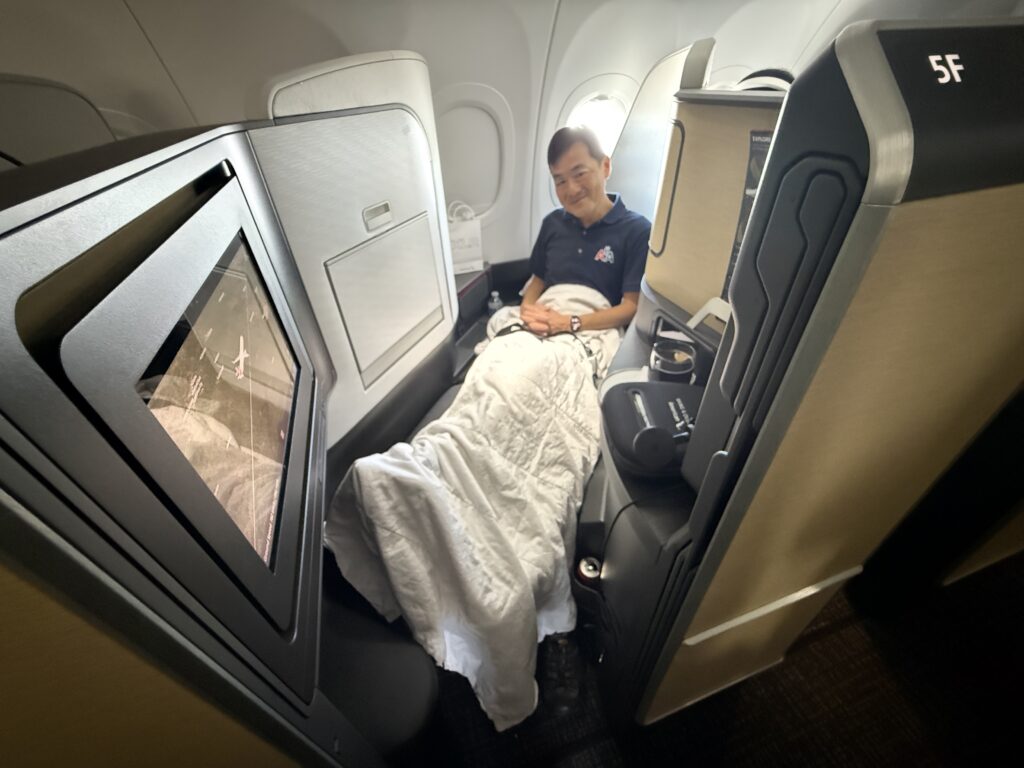
Seated in 5A, and angled roughly 45-degrees toward the aisle, I felt very deep in the pod.
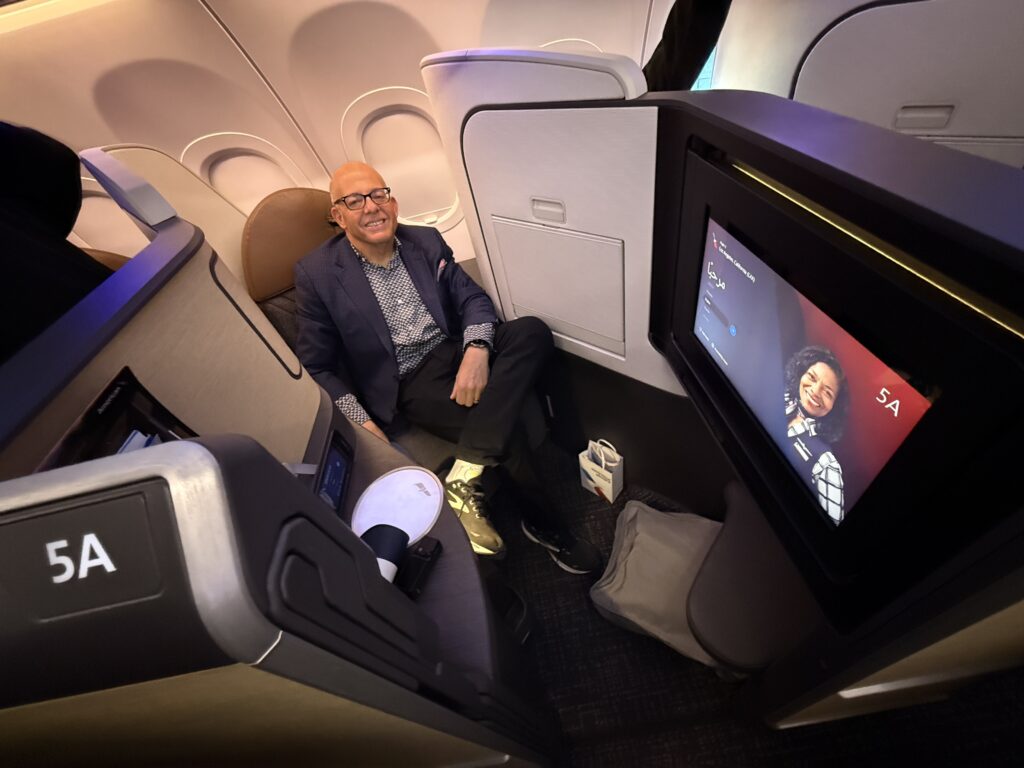
Even with the privacy doors not operating at launch, the suite felt genuinely private. Being set so far back from the aisle helps, and the high fixed suite walls did the heavy lifting visually and acoustically.
With the doors open, I couldn’t see any other passengers at all — and interestingly, I didn’t miss the doors. In fact, if they were closed, I suspect I might have felt a bit claustrophobic in a space this snug. American at least acknowledged the situation, and credited 5,000 AAdvantage miles to my account for the doors not being functional yet — a small but appreciated gesture.
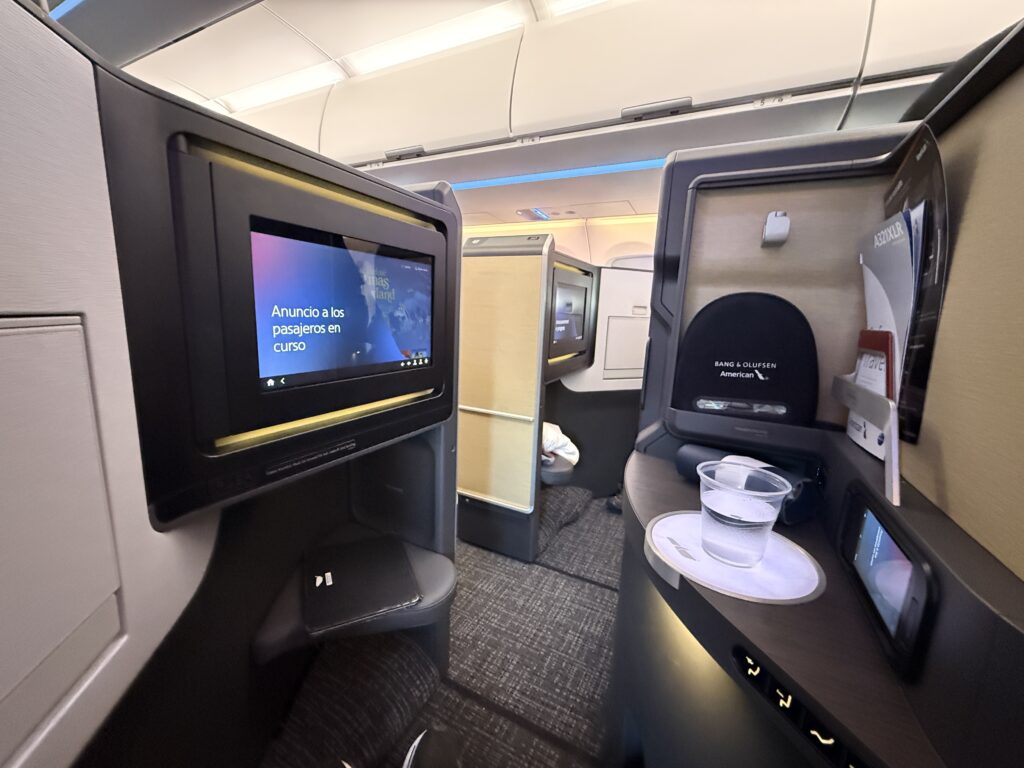
Seat controls are handled via the Passenger Control Unit, with clearly labeled presets for taxi, takeoff and landing, dining, relaxing and bed mode.
I found the backrest and leg rest adjustments to be intuitive. The chaise lounge seat belt is required when lounging — something frequent flyers will recognize immediately. There’s also a ‘Do Not Disturb’ function: activate it and the indicator glows orange, mirrored by a corresponding orange light on the aisle-side row marker. It’s subtle, but effective.
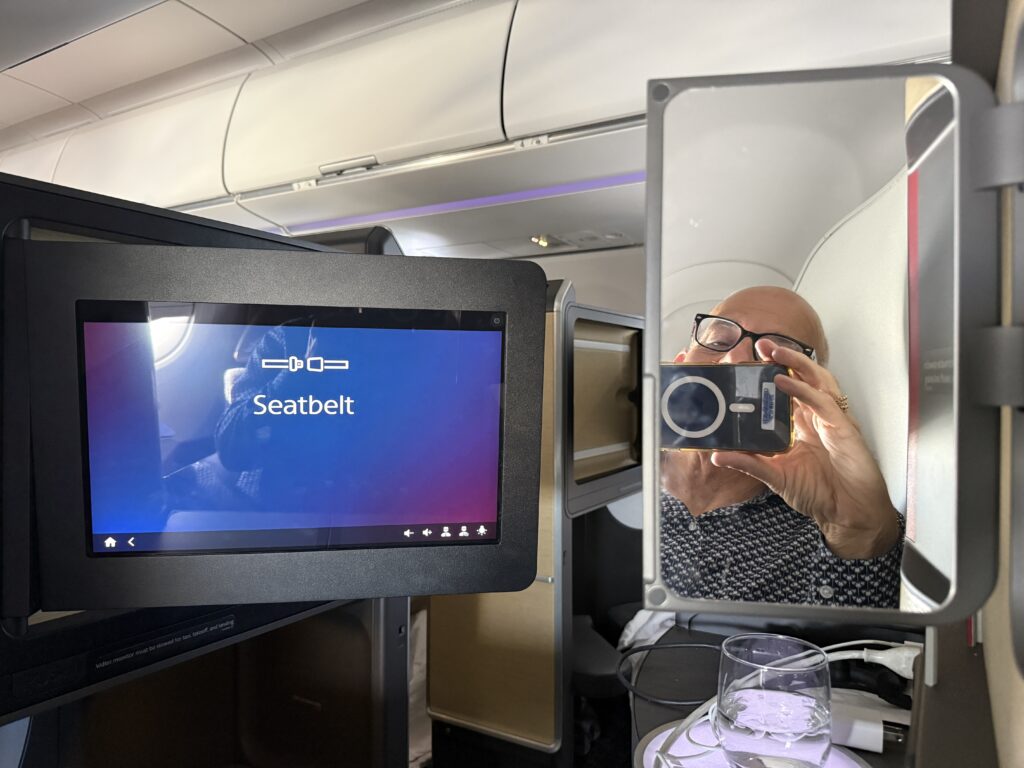
Assessing comfort is where the narrowbody realities start to show. The seat itself is very firm. I expect these will break in over time, but on this flight it was noticeable.
I have back pain, so finding sustained comfort was a bit of a chore, though reclining the seat did help somewhat. When converting the seat into bed mode, the mechanism felt slightly sticky around the 130-degree mark — not a dealbreaker, but something I noticed.
Once fully flat, the bed stretched just over six feet. It’s comfortable enough, but definitely snugger than a widebody herringbone implementation, especially around the shoulders.
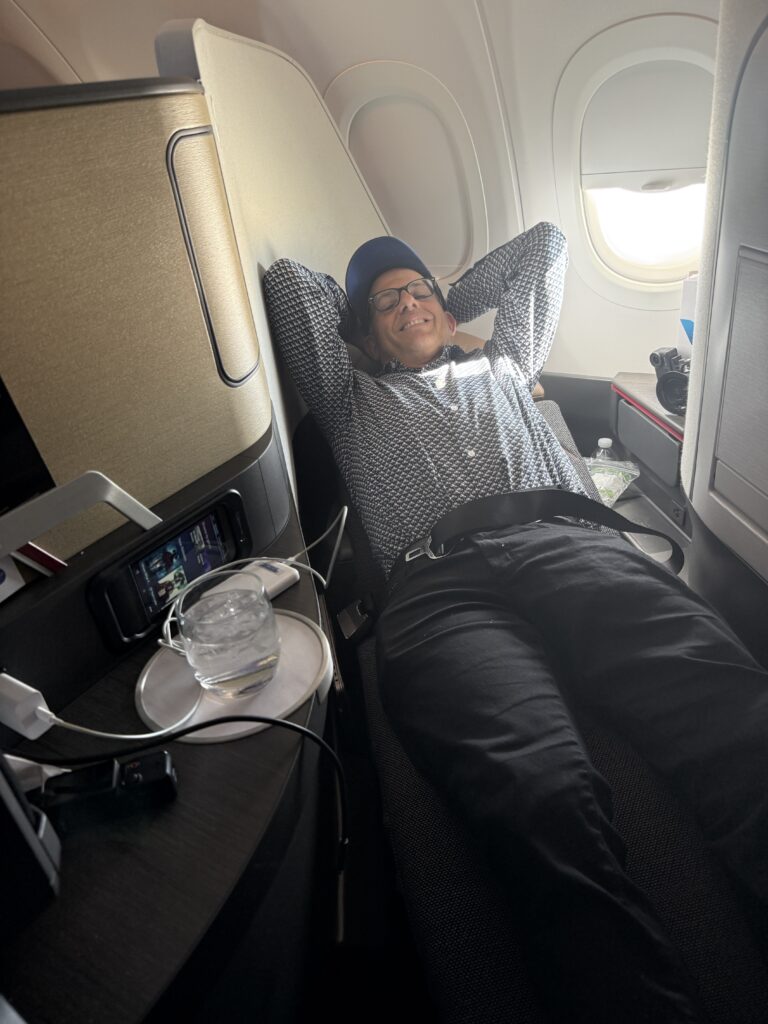 Compared to the Boeing 787-9, this feels narrower, and there’s no Flagship Preferred option here to buy extra space.
Storage is, however, excellent and thoughtfully laid out, and includes two separate water bottle storage areas.
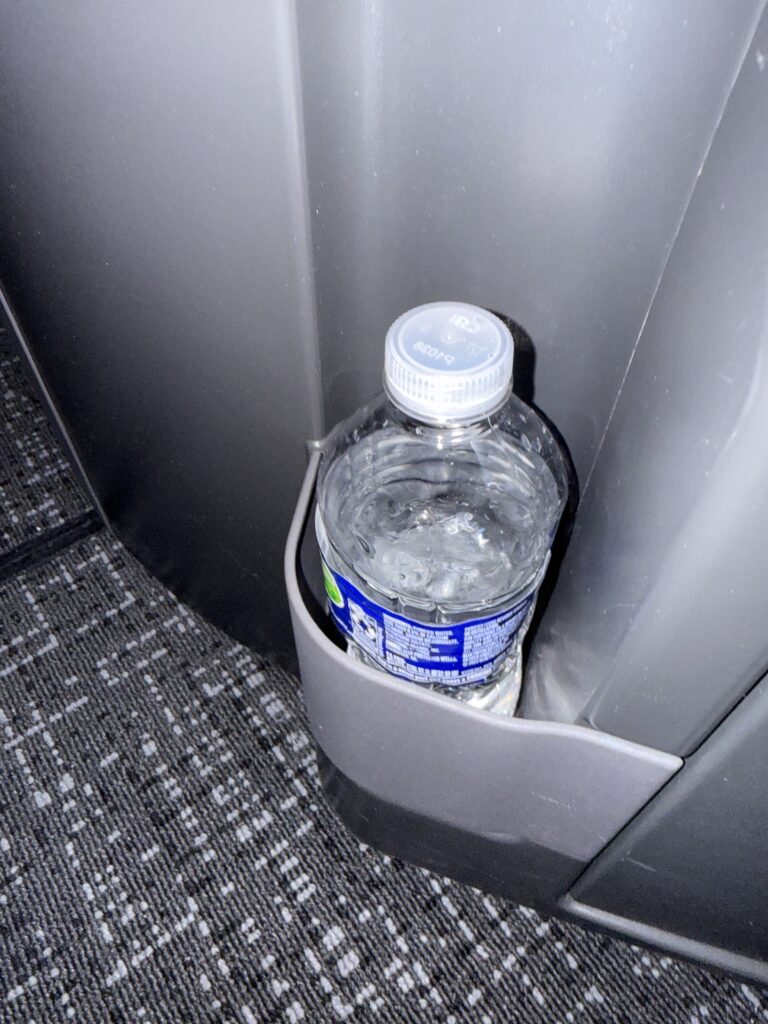
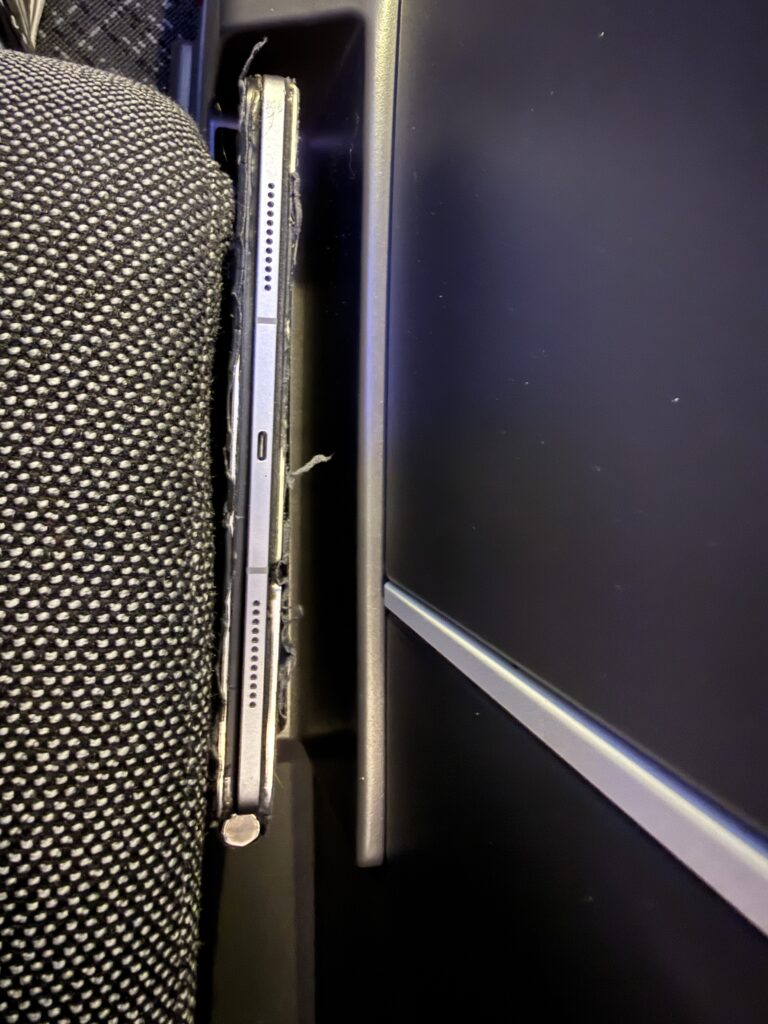
A nice cubby and small side table can be found on the left, while dedicated storage to the right provides space for a laptop or tablet.
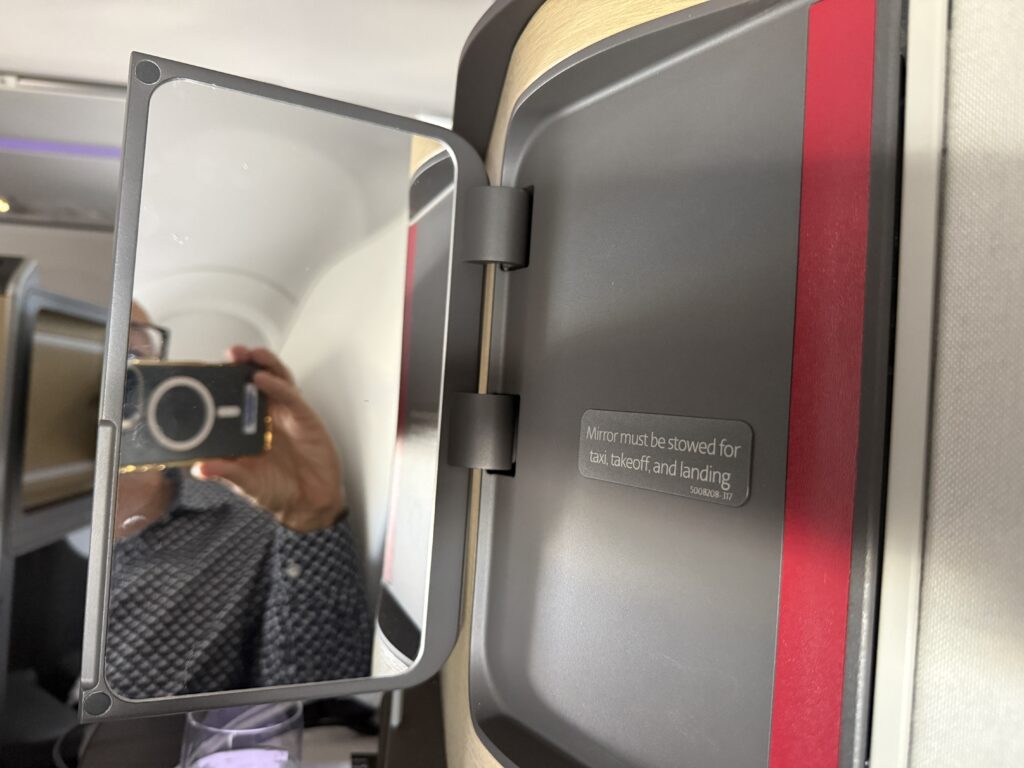
There’s also an amenity cabinet with a vanity mirror positioned at eye level, which turned out to be genuinely useful.
Additional general storage bins illuminated automatically when opened, and nightstand-style storage was revealed when the adjustable armrest was raised. A foldable armrest on the left side was a particularly welcome touch, making it easier to shift positions.
The lighting is layered and well executed. An adjustable reading light popped open with a push, rotated easily, and allowed for fine brightness control. And the video monitor with backlight added a soft ambient glow without glare.
Dining surfaces are mostly well done. The cocktail table is backlit, which is a nice premium detail.
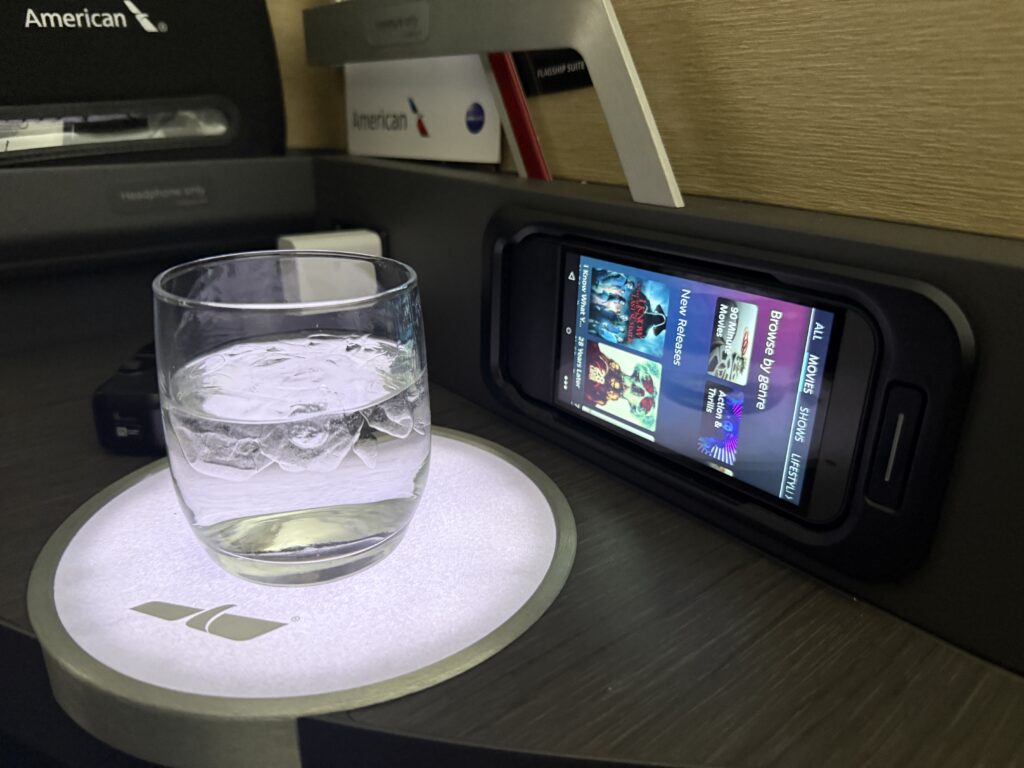
The tray table itself is very large, folds neatly, and can slide closer or farther away from me.
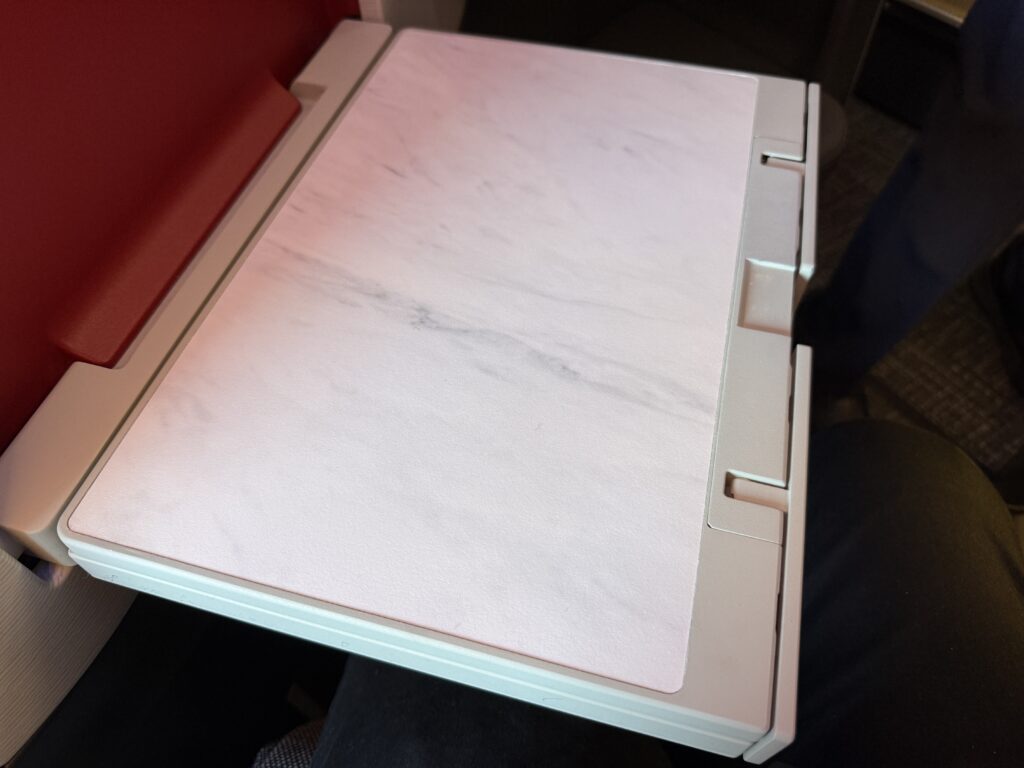
That said, when it was fully deployed, it wasn’t perfectly level in 5A — my laptop slowly slid down, which became annoying over time.
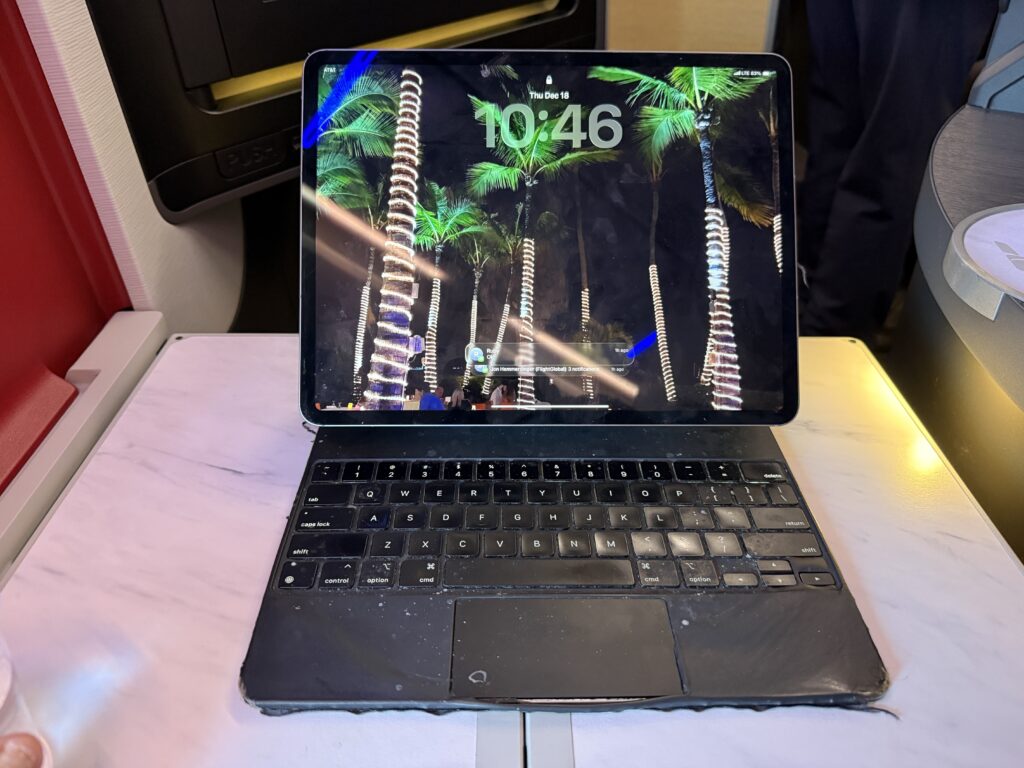
One drawback I noticed immediately is the aisle width. It feels tight, and I heard other passengers commenting on it during boarding. It also clearly makes things more challenging for the crew as they move through the cabin.
Still, the overall effect inside the suite is one of isolation. Even with the doors open, I don’t see fellow passengers at all.
IFE, power and connectivity: upgrades abound
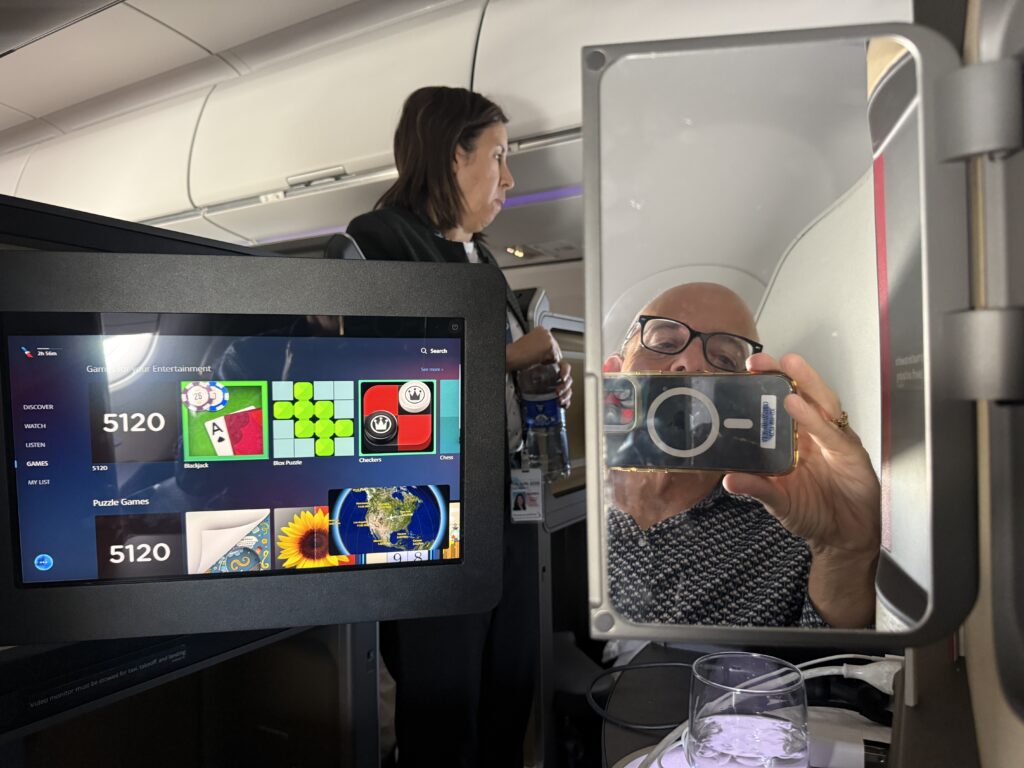
The IFE is one of the first things I really noticed once I settled in. The 17.3-inch 4K screen feels big, and it’s a huge step up from the 15.4-inch HD displays on the old A321T. Unlike the screens on the 787-9P, this one doesn’t feel small or awkwardly bezeled. And it looks excellent from every angle. The jump to 4K here isn’t subtle either — the image is genuinely, strikingly sharp.
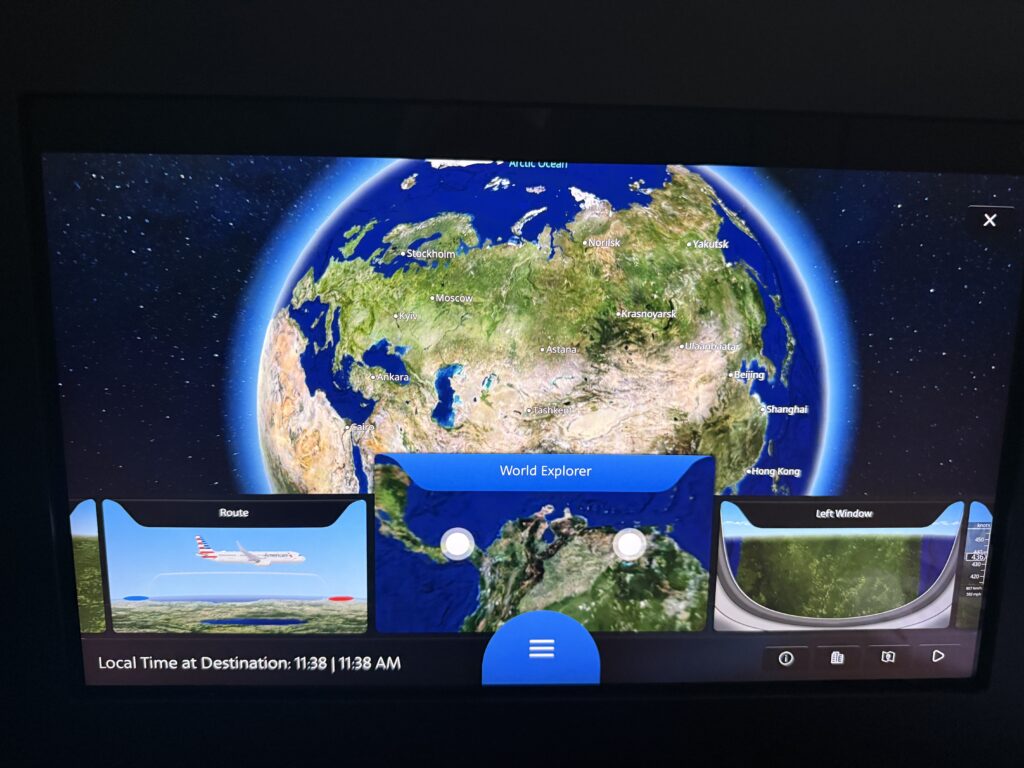 Of note, however: the only actual 4K movie on board was Interstellar.
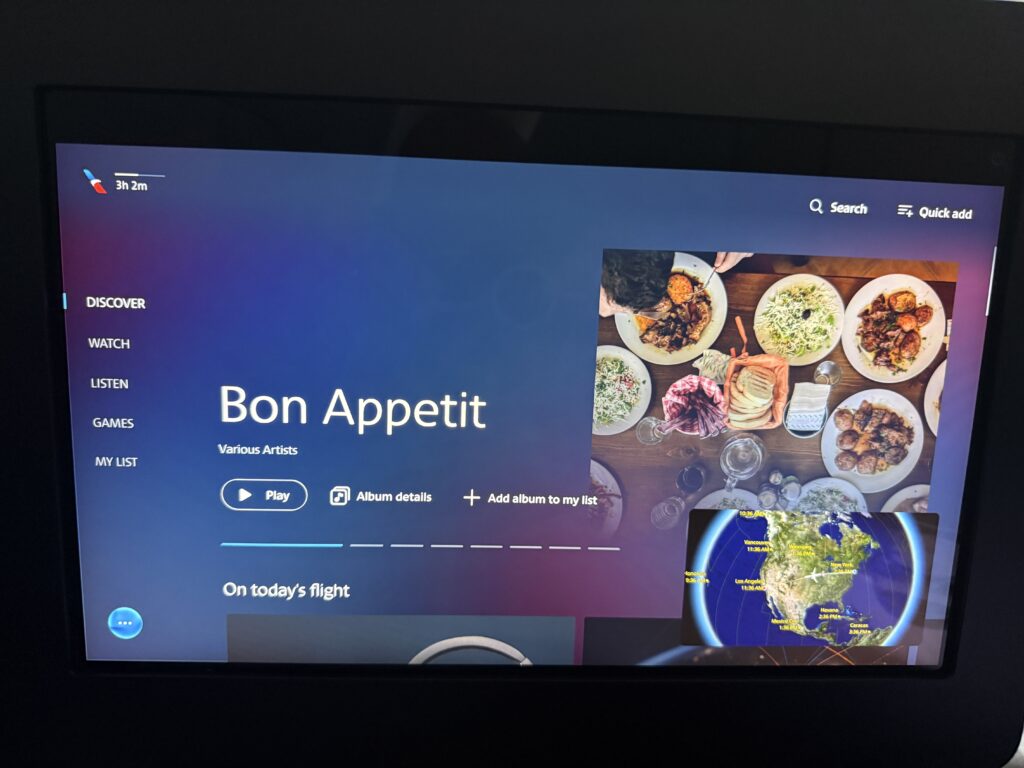
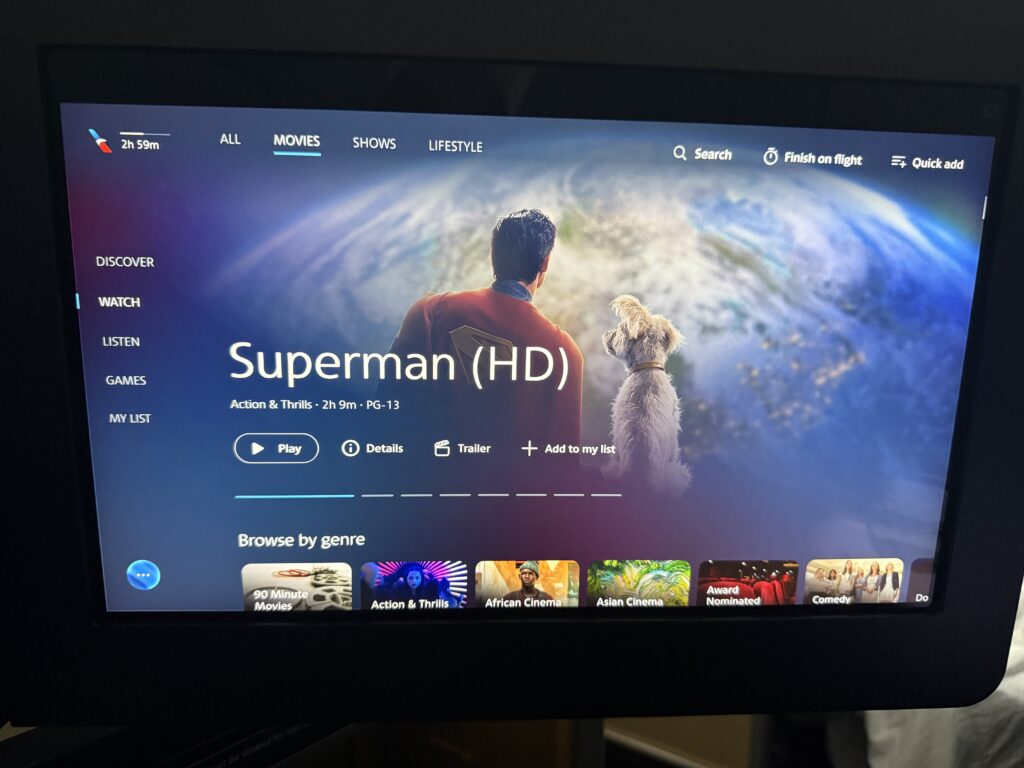 This is Thales’ AVANT Up platform, as also found on the 787-9P, and American is the first operator in the United States to fly it. From the moment I started using it, it felt like a next-generation system.
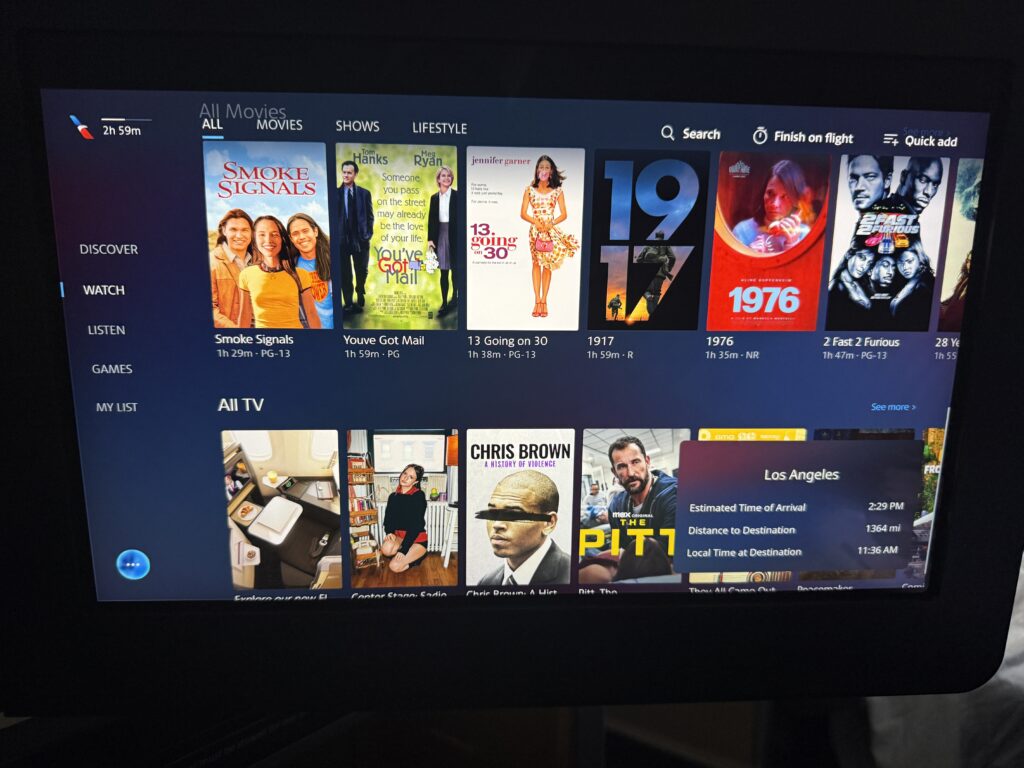
Touch inputs registered instantly, scrolling was smooth, and there was none of the lag that still plagues older platforms. I also found myself using the second handset more than expected, especially once the seat was reclined into bed mode.
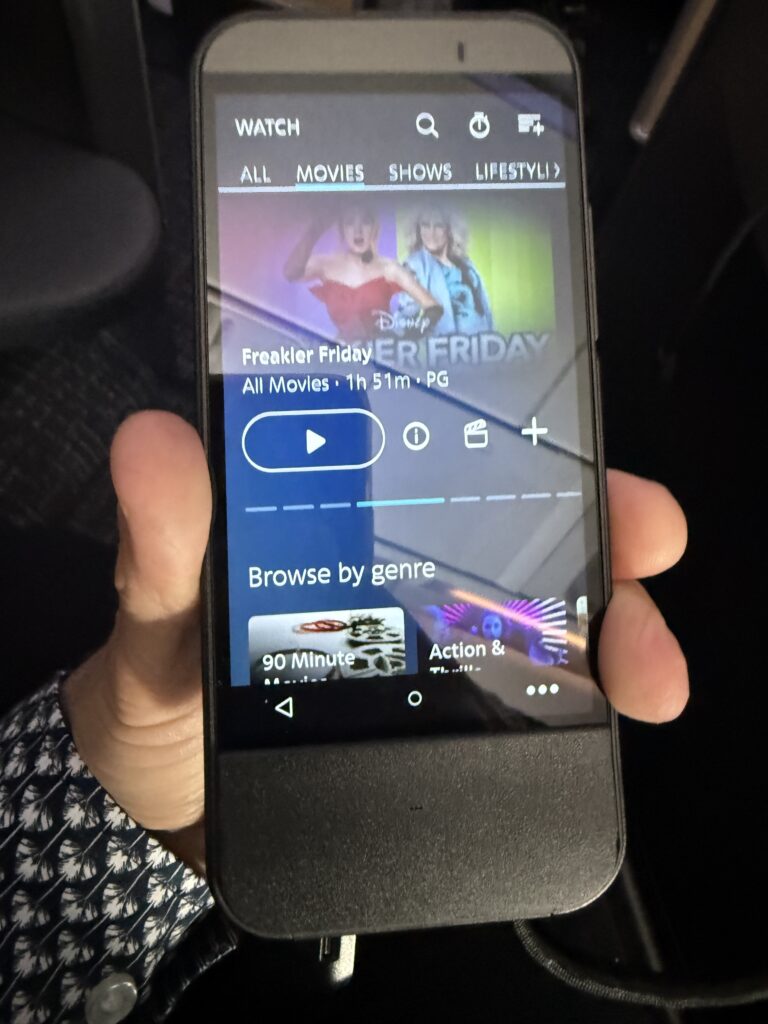
One feature I particularly like is picture-in-picture, which let me keep the moving map or flight information onscreen while watching content. It’s one of those small usability touches that ends up getting used constantly.
There are, however, a few operational quirks. The monitor has to be stowed during meal service, as it blocks the service flow. That puts the burden on the crew to repeatedly ask passengers to put their screens away.
 Bluetooth pairing didn’t work for me.
A Thales representative on board demonstrated how she was able to pair with the system. But my AirPods never successfully paired, which was frustrating.
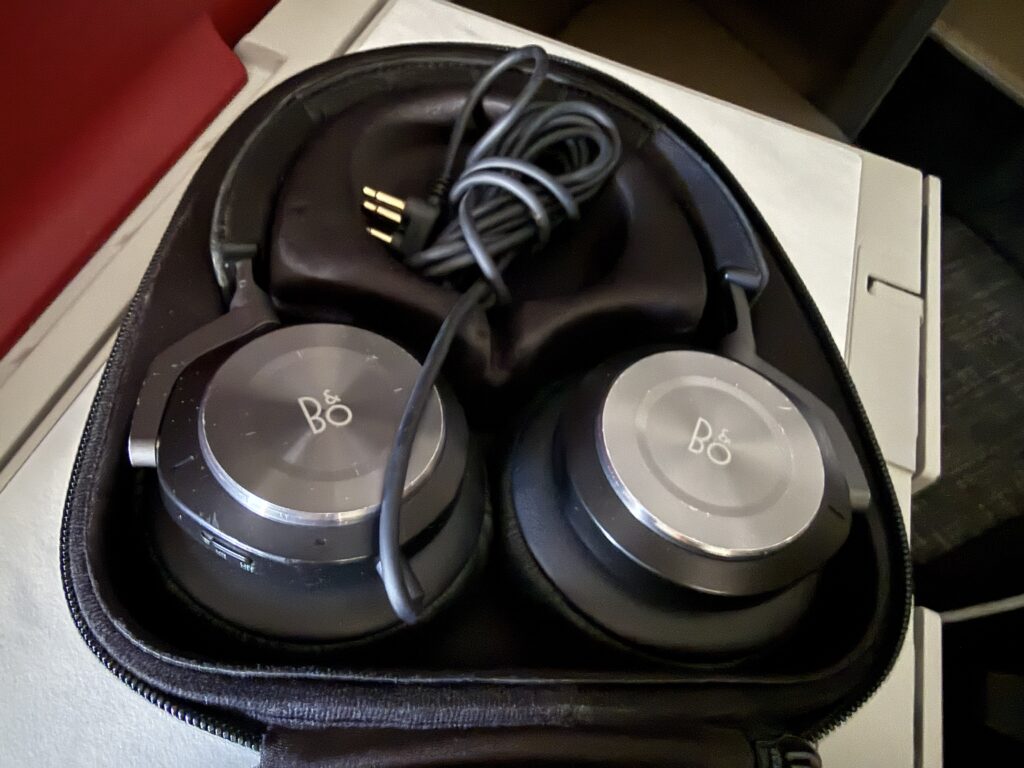
I appreciate the Bang & Olufsen headphones for their sound quality, but I am even more appreciative that American no longer collects them an hour before landing.
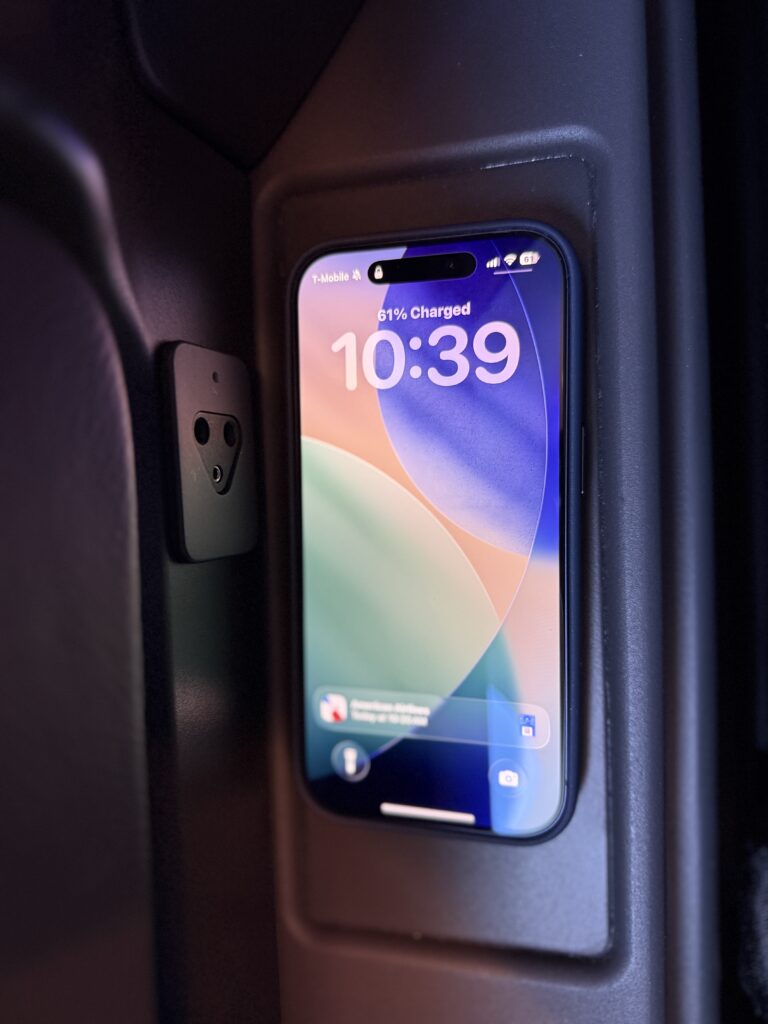
Power is of the now: my seat offered a wireless charging pad, plus a USB-C port and a universal AC outlet. USB-A is a thing of the past on this XLR.
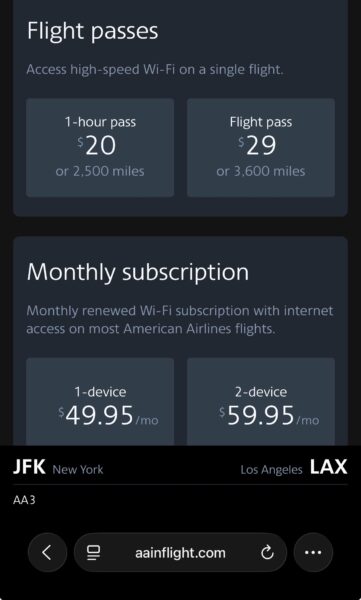
Connectivity, for now, is very much a work in progress. Wi-Fi isn’t free yet — that starts in January 2026, and on this flight it was priced at $29 for the full journey. I’ll admit I briefly wondered if American might surprise and delight by flipping the switch on free Wi-Fi for a flagship inaugural, but we had no such luck.
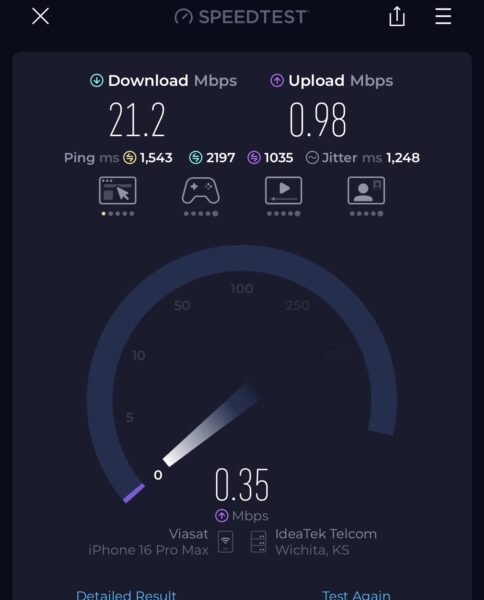
Viasat’s performance reflected a heavily congested network: about 21 Mbps down and 1 Mbps up on a speed test. It was usable but far from impressive.
Soft product: comfortable, considered, and very Flagship
The soft product in Flagship Suite Business Class is noticeably more polished than what American has offered in the past. Once the seat was in bed mode, the mattress pad added a welcome layer of cushioning, helping to offset the firmer feel of the platform.
A full-size duvet was weighty enough to feel premium, while a dual-sided cool-touch pillow was a standout. Even as the cabin warmed up, the pillow stayed comfortable and genuinely cool to the touch.
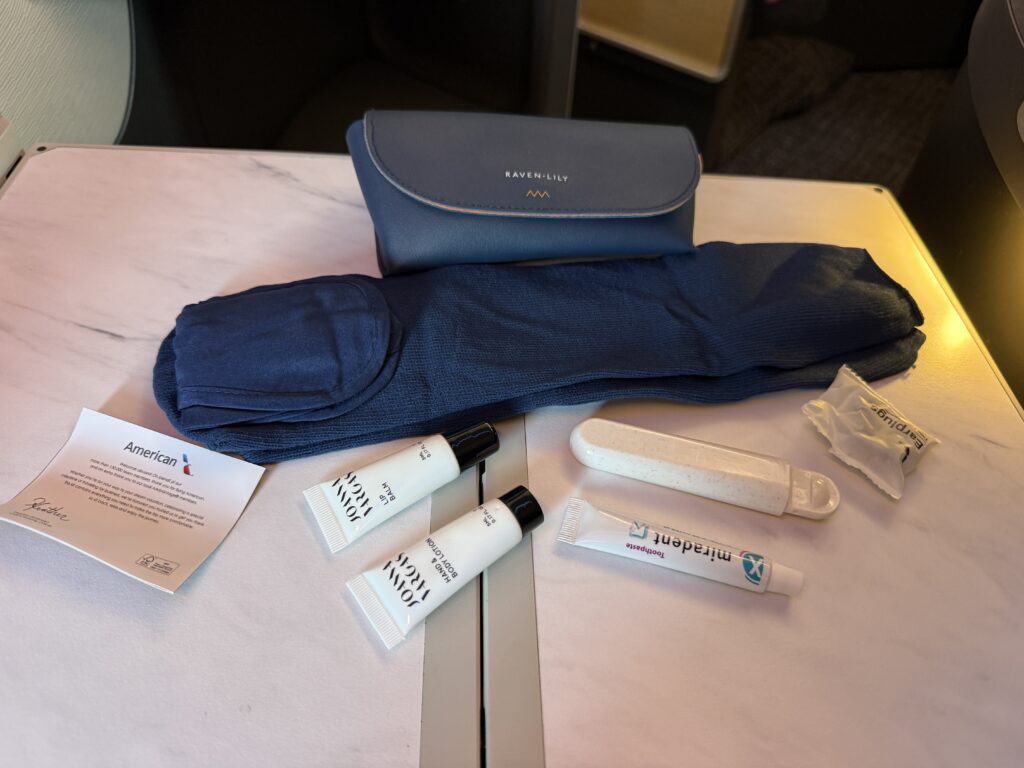
 For its amenity kits, American has continued its partnership with Joanna Vargas, with thoughtfully selected products including useful skincare and thick, well-made socks.
Everything was presented in a way that aligns with the upgraded cabin around it.
Elevated food and beverage
American has staffed the A321XLR to support the premium experience. The twinjet carries a minimum of five flight attendants, up from four minimum on the A321T, and it shows.
The crew members on this flight were professional, efficient and businesslike. I’m particularly grateful for how quickly — and repeatedly — they responded to my requests for zip-lock bags of ice and a heated water bottle to help manage my back pain.
 An expansive menu featured greens and a grain bowl with optional grilled salmon, plus smoked mozzarella manicotti, beef short rib, seared Atlantic salmon, tamarind-glazed chicken, and a fruit and cheese plate.
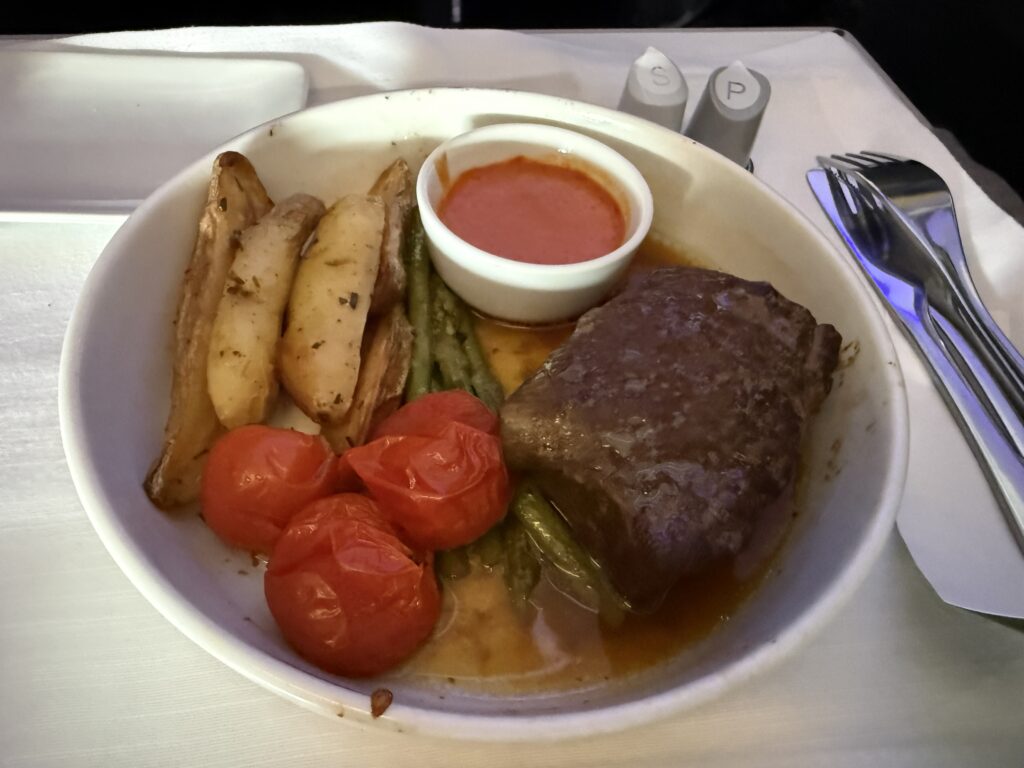
I chose the beef short rib, served with a smoky tomato hollandaise, roasted fingerling potatoes, cherry tomatoes and asparagus.
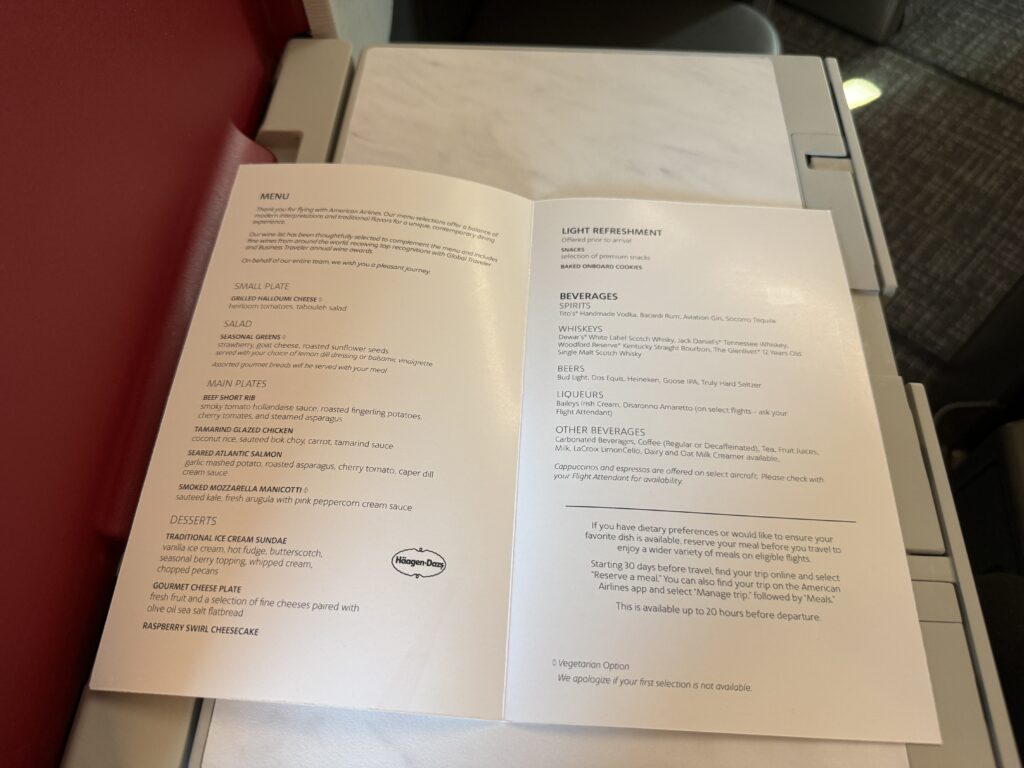
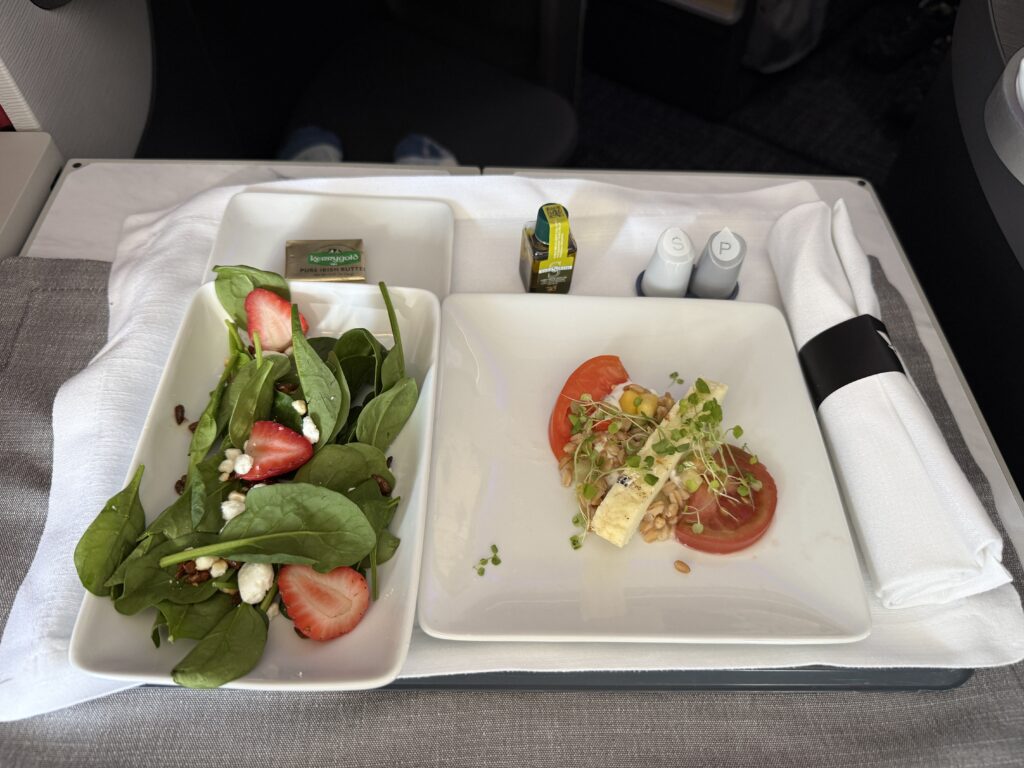
The meal started strong. A small plate of grilled halloumi cheese with heirloom tomatoes and tabbouleh arrived first. I’m not generally a cheese person, but this was sharp and surprisingly enjoyable. The seasonal greens salad — with strawberries, goat cheese and roasted sunflower seeds was crisp, fresh and well dressed.
The short rib was the highlight. It was tangy, juicy and genuinely satisfying, with a presentation that looked considered rather than dumped onto the plate. I used liberal amounts of pretzel bread to sop up the juice.
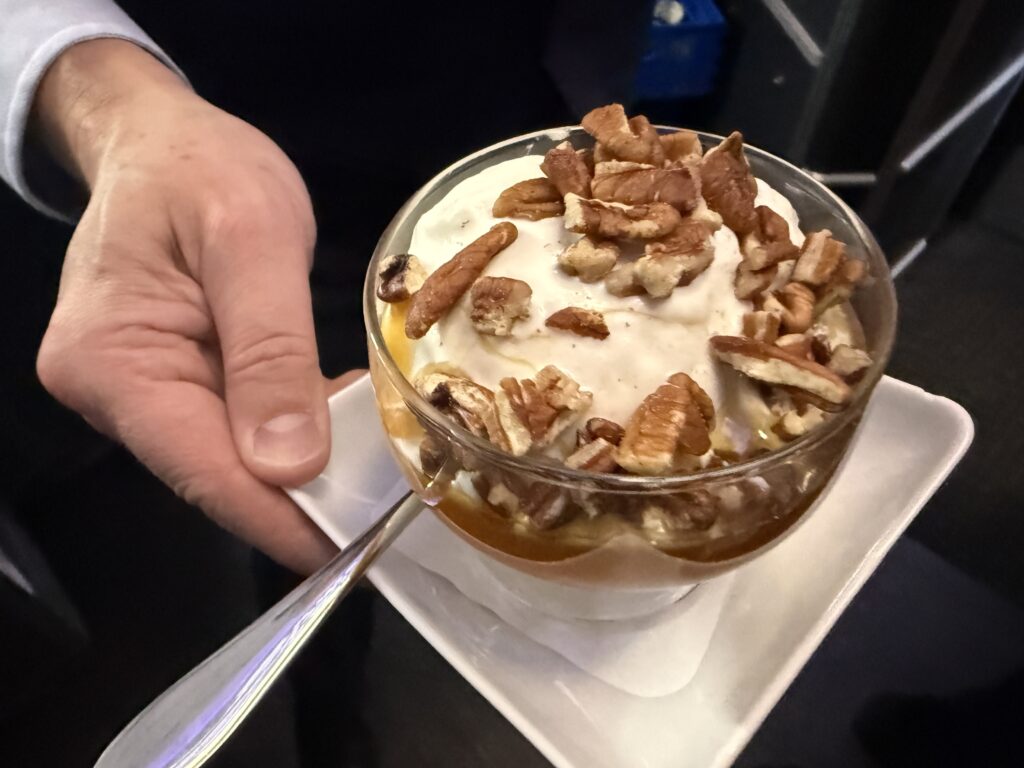
Dessert is where my dietary limitations kicked in. While I can handle a little bit of lactose, I didn’t want to take a chance with the raspberry swirl cheesecake or the signature American ice cream sundae with vanilla ice cream, hot fudge, butterscotch, seasonal berries, whipped cream and chopped pecans. It looked divine, however.
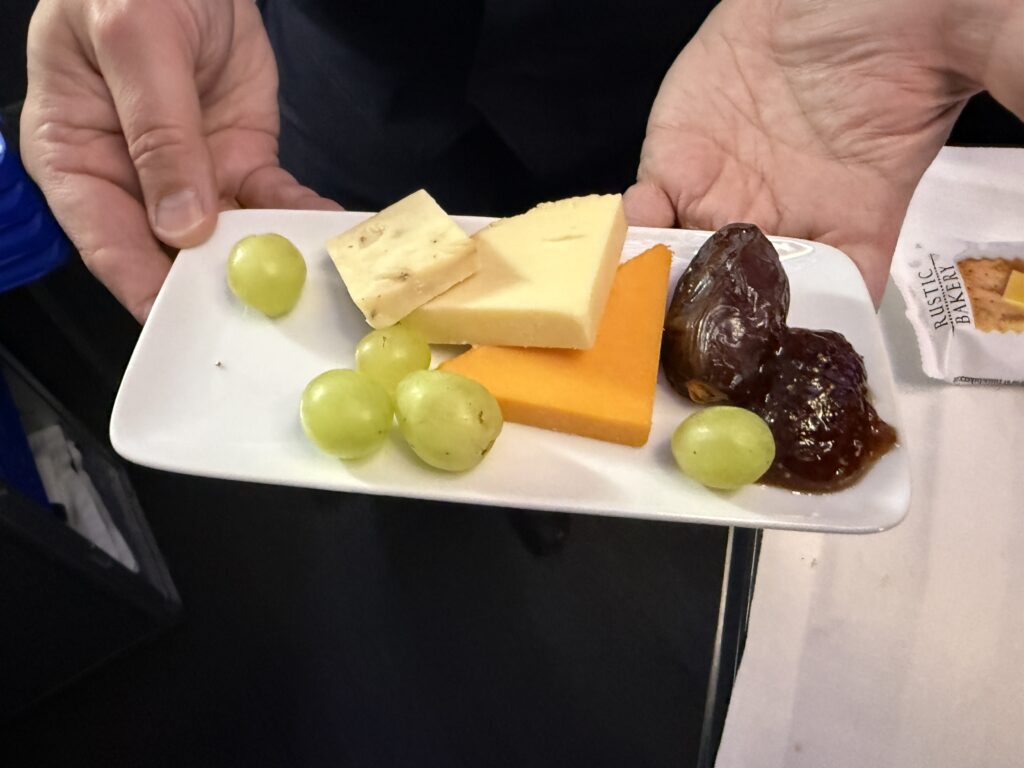
The gourmet cheese plate, served with fresh fruit and olive-oil sea-salt flatbread, was solid as well.
I’m told the only real catering difference between Flagship Suite Business Class on the A321XLR and Flagship First on the A321T is the elimination of soup — otherwise the food and beverage program is identical.
Before arrival, a light refreshment was offered along with a selection of premium snacks and baked-on-board cookies, which was a nice final touch.
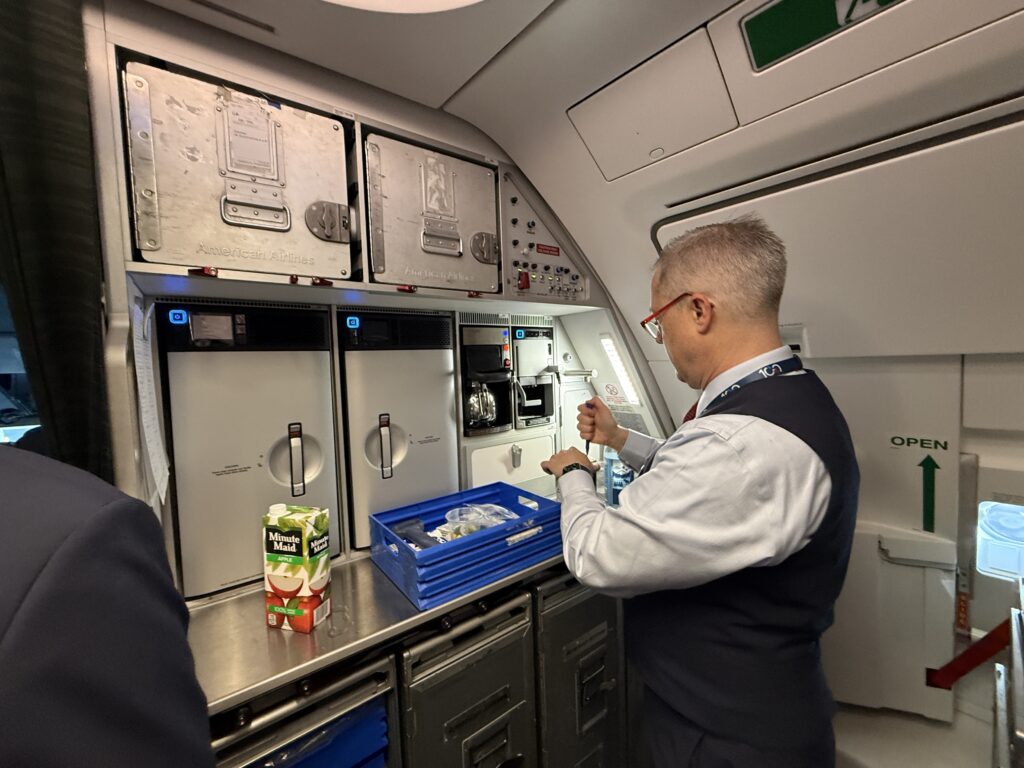 Overall, the meal was a reminder of how bifurcated American can be. When it wants to, the airline can deliver genuinely strong catering in Flagship. It just makes the contrast with the far more basic, and often disappointing food on standard domestic routes that much more stark.
Lavatory: functional, familiar
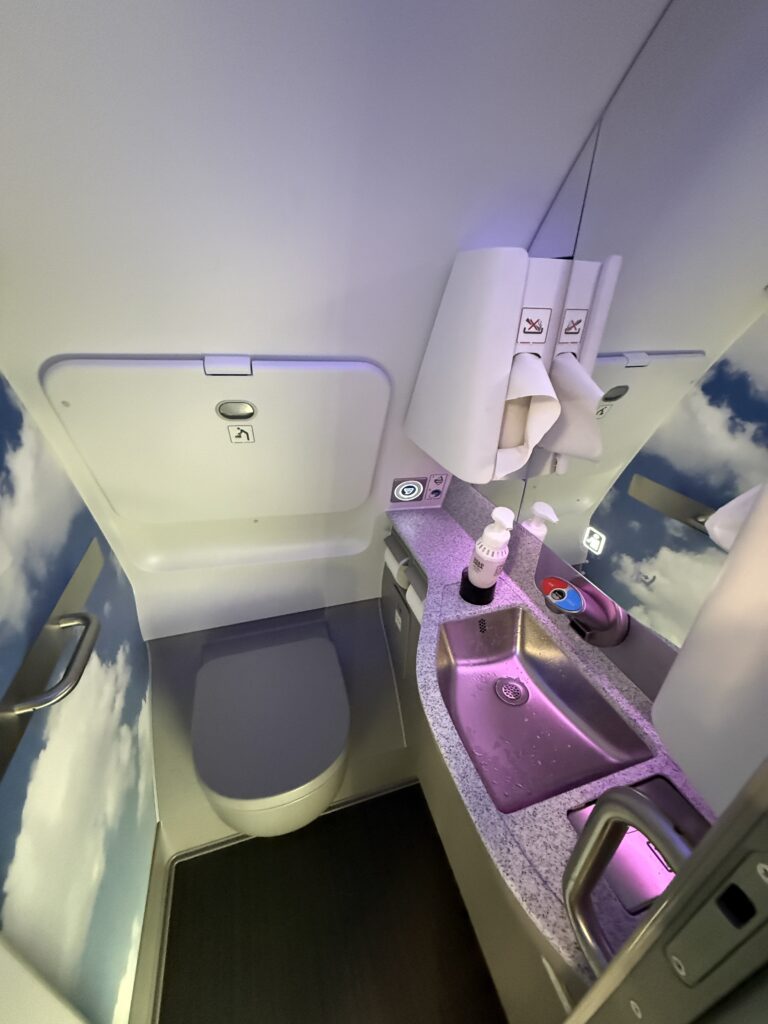
Up front there’s one lavatory located ahead of L1 serving the Flagship cabin. It carries over the same cloud-style wall treatment introduced on the Boeing 787-9. Personally, I’m not a huge fan of the cloud wallpaper — it feels a bit busy — but it does at least distinguish the space from the standard economy lavs.
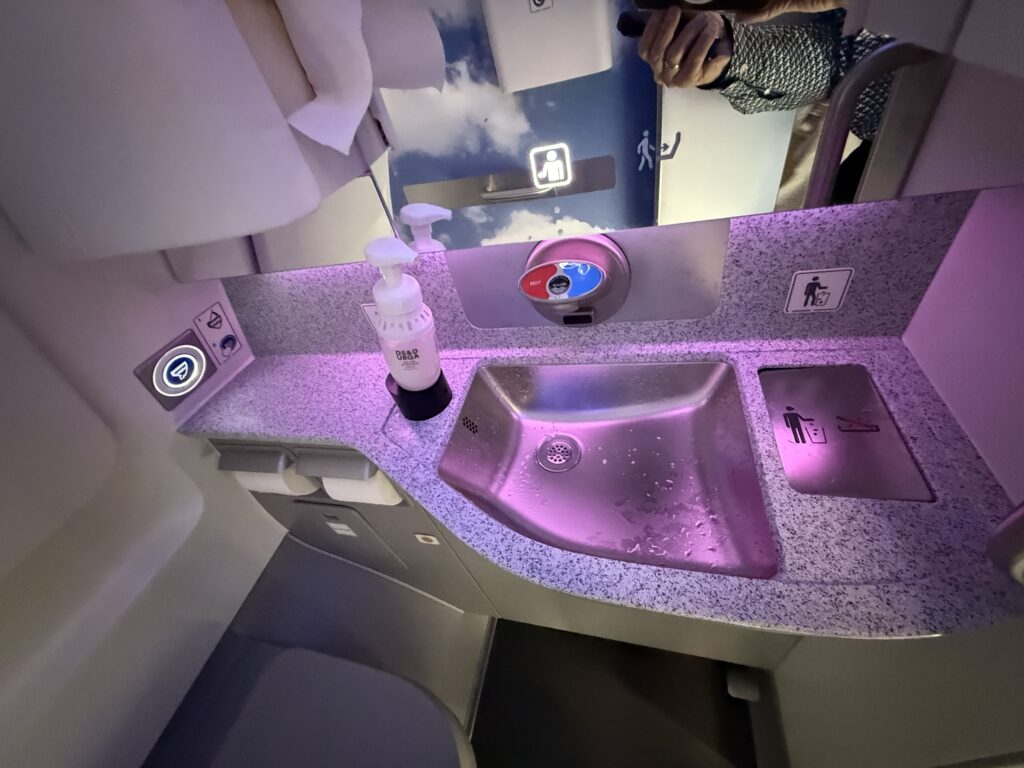
Size-wise, it’s what you’d expect for a premium narrowbody lav: noticeably larger than economy, without being generous. With 20 business class passengers sharing a single lav, it’s workable on a transcon like this, though it’s easy to imagine pinch points on longer international sectors.
Pricing: the premium is real
Pricing on this flight made it clear how American is positioning the A321XLR. Flagship Business is almost double the price of Premium Economy, even on a domestic route.
On this inaugural:
- Premium Economy was priced at $1,050
- Flagship Suites Business Class came in at $1,850
By the end of next year, American expects to have 16 A321XLRs in service. That’s already more than the 14 A321Ts that currently underpin the flagship transcontinental network, and the extra frames matter.
 Replacing two cabins with one
Comparing the A321XLR to the old A321T isn’t straightforward, because Flagship Suite Business Class is effectively replacing both Flagship First and Flagship Business.
Against the old 2-2 Flagship Business, this is a total transformation. Moving from paired seating to private suites with direct aisle access completely changes the experience, especially on a five-plus-hour transcon.

Against Flagship First, the difference is more nuanced. The new suites are unquestionably more modern and far more private, thanks to the sliding doors and high shells. But the cabin feels less exclusive, and the aisles are tighter.
The suite walls, while great for privacy, make the space feel more enclosed. The old Flagship First seats on the A321T offered more shoulder room, a more open feel, and a greater sense of personal space once fully reclined.
In short, this is a clear upgrade for Business Class passengers, but not a clean sweep over the old Flagship First. Some will miss that openness.
 Related Articles:
- American’s premium push continues with A321XLR arrival, 777 retrofits
- American Airlines’ 787-9P ups the ante for Premium Economy
- Flagship Suite Preferred impresses on American 787-9P inaugural
- Collins breaks 45-degree barrier for side-on Aurora inward herringbone
All images credited to the Author, Chris Sloan